8 Fall Fruit Tree Care Tips for a Bigger Harvest
Learn what to do after harvest: clean the orchard floor, water deeply, mulch correctly, delay major pruning, and plan pollination and crop load.
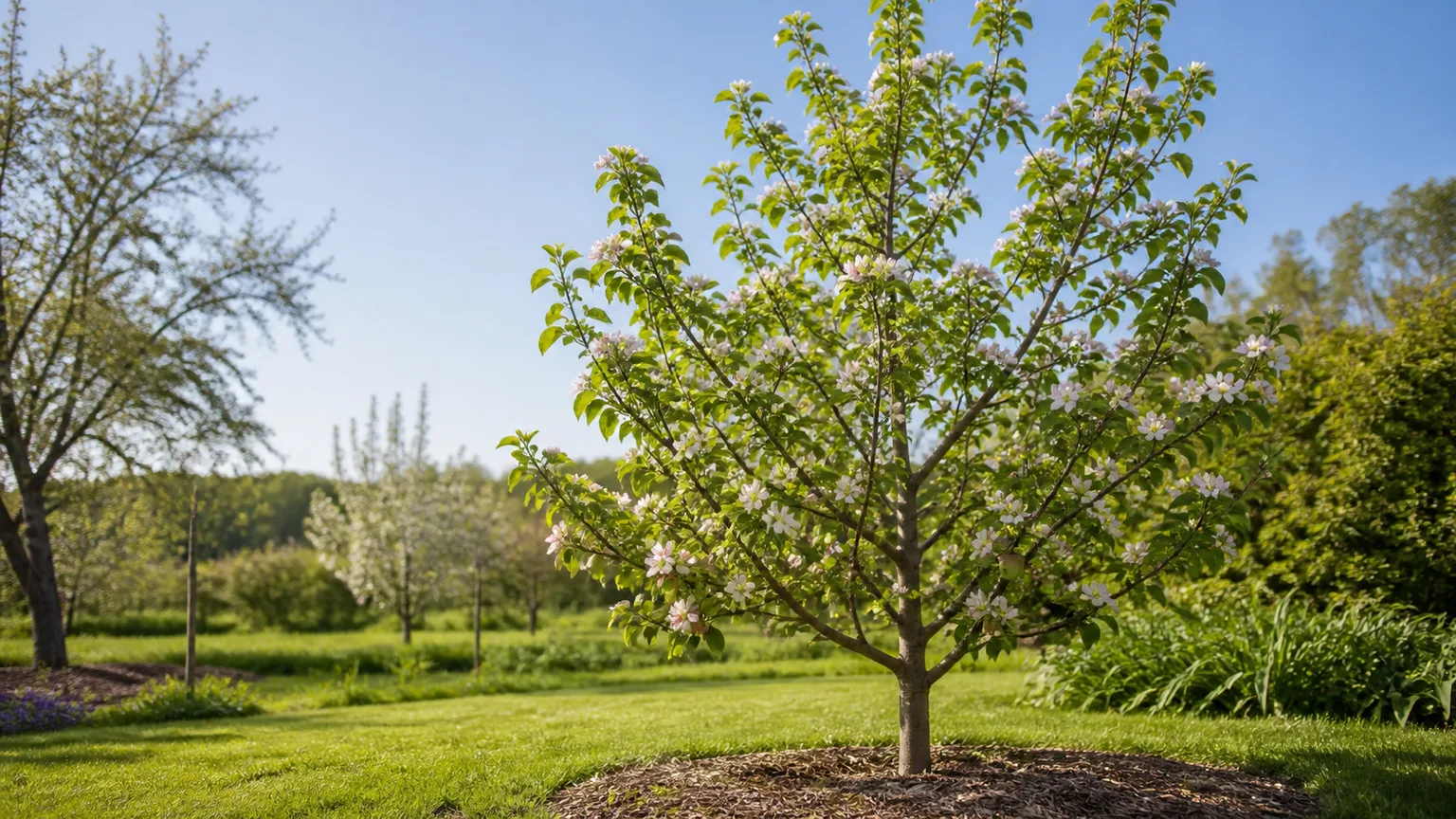
The work that leads to a bigger fruit-tree harvest often happens after the last fruit is picked. Fall is when a deciduous tree shifts from producing leaves and fruit to storing carbohydrates, hardening tissue, and preparing buds and roots for winter. Your job is not to force new growth. It is to remove sources of trouble, correct moisture and soil problems, protect vulnerable wood, and make a better plan for bloom and crop load next year.
These eight fall fruit tree care tips apply broadly to apples, pears, peaches, plums, cherries, apricots, and similar temperate trees. Citrus, avocado, figs in warm climates, and other evergreen or subtropical fruit trees follow different seasonal rhythms, so use this as a framework rather than a substitute for crop-specific local guidance.
Why fall care affects next year’s fruit
A tree that looks finished after harvest is still managing next year’s crop. Leaves continue photosynthesis while they remain healthy, and the tree moves stored carbohydrates into its trunk and roots as it enters dormancy. The University of Minnesota Extension explains that fall acclimation and dormancy help perennial fruit crops survive winter and retain the reserves needed for spring bud break. Its discussion of chilling hours also shows why a tree’s winter rest is a biological process, not a signal to keep feeding or pruning it into action.
That timing explains the most important fall rule: protect healthy leaves and roots, but avoid stimulating a flush of tender new shoots late in the season. A late nitrogen application, hard cutback, or constantly wet root zone can leave the tree less prepared for cold. Conversely, dry soil, diseased fruit left below the canopy, girdled bark, and a tree overloaded with fruit can reduce next year’s performance before spring arrives.
Do a 10-minute postharvest audit
Before reaching for fertilizer, pruners, or spray, walk around the tree and record what actually happened. A quick audit prevents you from treating the wrong problem and gives you a useful baseline for next season.
Read the tree’s harvest clues
Start with the canopy. Healthy leaves that stayed green until normal fall color suggest the tree had a reasonable balance of water, light, and nutrients. Premature leaf drop, widespread spotting, scorched edges, or a canopy that stayed excessively lush may point to disease, drought, root stress, or excess nitrogen. Photograph unusual symptoms while they are still visible; a local extension office can identify a problem more easily from clear images than from a winter description.
Look at the crop, too. No flowers is a different problem from flowers with no fruit, and flowers with fruitlets that later drop is different again. A very heavy crop of small fruit suggests that next spring’s thinning and perhaps winter pruning need more attention. A light crop after a huge crop may be the beginning of biennial bearing, in which a tree’s overproduction one year is followed by too few flower buds the next.
Check the root zone before you act
Probe the soil several inches down in at least two places beneath the canopy, not just beside the trunk. If it is dusty and dry below the surface, plan a slow, deep watering before the ground freezes. If it is sticky, puddled, or sour-smelling, improve drainage and reduce irrigation rather than adding more water. Roots need both moisture and oxygen; “deep watering” is not a license to saturate compacted soil.
Inspect the trunk for mower scars, rodent chewing, cracks, loose ties, and a buried graft union. Then look upward for broken limbs, hanging branches, narrow branch unions, and support stakes that rub the trunk. This audit turns fall work into a priority list: sanitation first if disease is present, water first if the root zone is dry, and protection first for a young or damaged tree.
Tip 1: Clear fallen fruit, leaves, and mummies
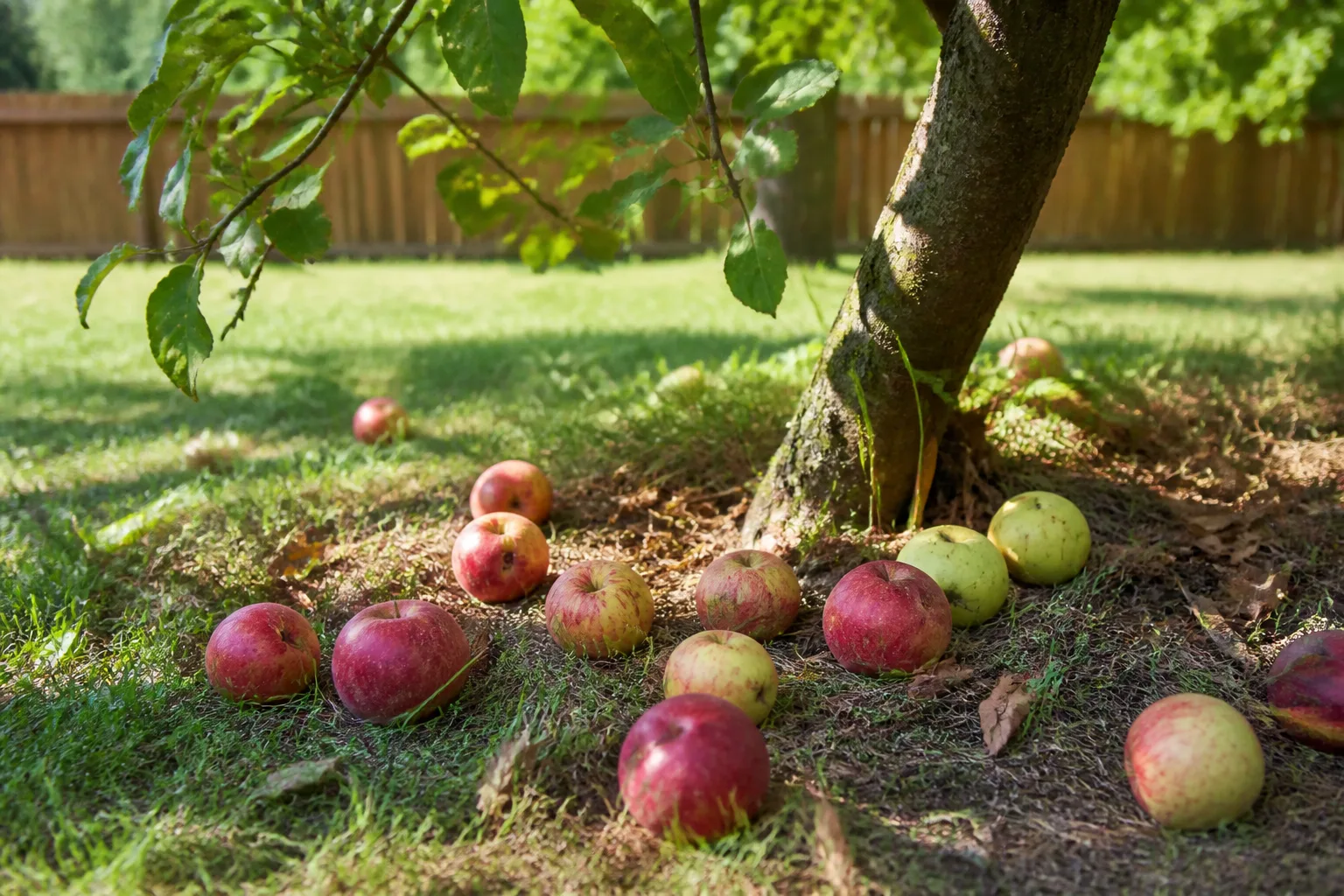
Remove fallen fruit, shriveled fruit still hanging in the canopy, and leaves or pruned pieces that show disease. A fruit mummy is a dried, shrunken fruit that remains attached or lies beneath the tree; it can carry disease organisms into the next season. Pick it rather than leaving it to dissolve among the mulch.
Separate healthy debris from disease debris
This is not just cosmetic cleanup. Washington State University Tree Fruit notes that fungal pathogens can overwinter on dried leaves, pruned limbs, and decaying fruit, then spread in spring through rain, irrigation splash, and wind. The same orchard-floor management guidance explains why sanitation, weed control, water management, soil condition, and rodent pressure are connected rather than separate chores.
Make one pass after the final harvest and another after most leaves fall. Collect fruit from the ground, remove mummies from branches without tearing fruiting spurs, and rake or mow diseased leaves so they break down away from the tree. If you know a disease was present, bag the debris or follow local disposal guidance instead of putting it in a home compost pile. Healthy leaves can be composted where appropriate, but uncertain material is not worth spreading around a tree you are trying to protect.
Do not confuse every fallen leaf with a threat. Leaves under a healthy tree can return organic matter to the soil, but a history of apple scab, rust, fire blight, brown rot, or another recurring disease changes the calculation. In that situation, sanitation lowers the starting disease pressure; it does not replace a crop-specific management plan for spring.
Tip 2: Refill soil moisture before the ground freezes
Fruit trees still lose water after leaf drop, especially in windy sites, warm autumns, sandy soil, and areas protected from rainfall by a roof or dense canopy. Water a dry tree slowly and broadly so moisture reaches the active root zone. Aim the water at the soil beneath and just beyond the canopy, not against the trunk, and pause if water begins to run off.
The right amount depends on soil, tree size, recent rain, and drainage, so a fixed number of minutes is less useful than a depth check. Water until the soil is moist well below the surface, then allow the upper layer to begin drying rather than keeping it continuously wet. A newly planted or dwarf tree may need attention more often than an established standard tree because its root system occupies less soil and may be less drought-buffered.
Use a depth check instead of a timer
Push a long screwdriver, soil probe, or narrow trowel into the ground at the edge of the canopy. Moist, workable soil that clings lightly to the tool indicates recent water; hard, dusty soil that resists penetration indicates that rainfall has not reached the root zone. Check more than one location because a hose can wet one patch while roots elsewhere remain dry.
Continue checking during dry fall weather while the soil is still workable. Stop routine watering when the ground freezes or when the site is already saturated, but do not assume a cold week automatically means the roots have enough moisture. Winter injury is more likely when trees enter dormancy under stress, yet waterlogged roots can suffer as badly as dry ones. The goal is moist, oxygenated soil, not a permanent puddle.
The practical winter-preparation checklist from Harvest to Table makes the same useful distinction: water before the ground freezes, check soil during dry spells, and avoid waterlogging. Treat its calendar examples as a starting point, then let your soil and local weather make the final call.
Tip 3: Feed only when the soil and tree call for it
Fall is a good time to test soil, but it is not a good time to scatter a general-purpose fertilizer by habit. A soil test can reveal pH, phosphorus, potassium, and sometimes other nutrient conditions, while the tree’s shoot growth and leaf color provide context. If the tree grew excessively long, soft shoots, stayed dark green late, or produced leaves but little fruit, more nitrogen is unlikely to be the answer.
The University of Minnesota Extension recommends using soil testing to guide pH changes and nutrient decisions. Its fall soil-pH guidance explains that nutrients can become less available outside the appropriate range and that amendments such as sulfur take time to work. That makes fall a useful planning window for a measured correction, not a reason to apply an untested dose around an established tree.
Avoid high-nitrogen fertilizer and fresh manure late in the season unless a local recommendation and soil test specifically call for it. Read the product analysis, count nutrients from every source, and keep fertilizer away from the trunk. If a deficiency is confirmed, use the rate and timing recommended for the crop, soil, and region. A modest spring feeding may be more appropriate than a late autumn application because it matches nutrient availability with active growth.
Compost and mulch are not interchangeable with fertilizer. A thin layer of finished plant-based compost can support soil structure, but thick or immature material against the trunk can retain moisture, settle over the root collar, or complicate diagnosis. Nutrient balance beats the comforting idea that every tree needs “one more handful.”
Tip 4: Save major pruning for the right season
Do not use fall as the default season to reshape a fruit tree. Major structural pruning can expose fresh wounds to cold and can remove buds or fruiting spurs that would otherwise produce next year’s crop. The correct pruning window varies by fruit type, climate, tree age, and the goal of the cut, but late winter or the crop-specific dormant season is often safer for the main framework work.
University of Georgia Extension explains that pruning response changes with season: dormant pruning can invigorate growth, while summer pruning can reduce vigor. Its fruit-tree training and pruning guide also emphasizes that an open canopy improves light penetration and air movement, but warns that removing too much growth can divert stored energy into excessive vegetative shoots rather than fruit.
Make a safe fall pruning list
Fall is still the right time to remove an immediate hazard. Cut out a branch that is broken, hanging, rubbing dangerously, or clearly dead. Remove a small amount of diseased wood only when you can identify the affected section and can disinfect tools between cuts. For fire blight or a canker disease, do not leave infected cuttings beneath the tree; seek local guidance on how far to cut and how to dispose of the material.
Mark branches that need structural decisions and wait for the appropriate dormant window. Use photographs, flagging tape, or notes rather than making a large number of “while I’m here” cuts. If you have an early-blooming peach or a tree with a history of winter injury, local timing matters even more. The UGA pruning calendar guidance makes the useful point that plants respond to weather, not a universal calendar date.
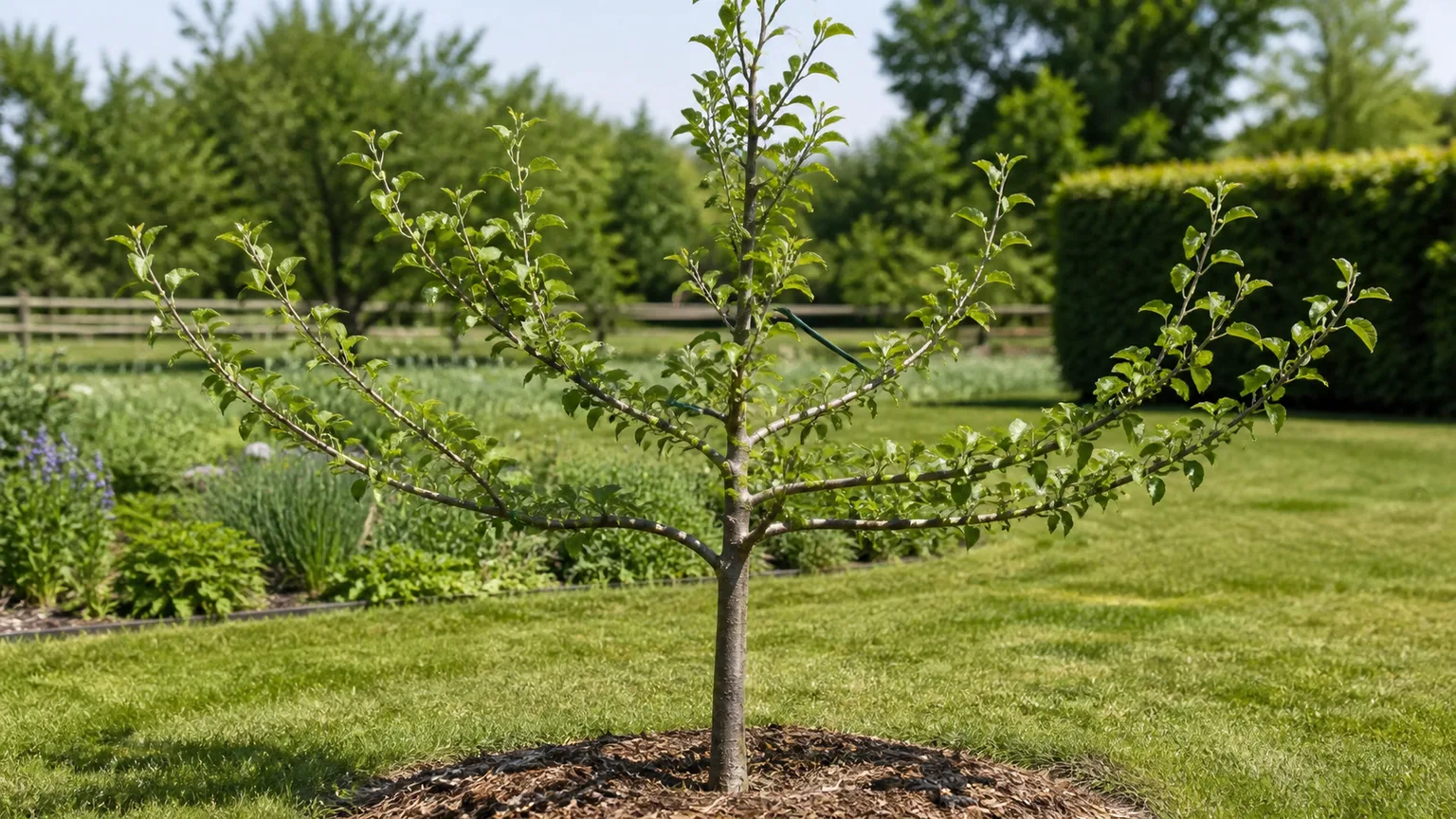
The aim of the eventual pruning job is not to make the tree look empty. Retain healthy fruiting wood, remove branches that compete or shade, and preserve a strong framework that can carry a reasonable crop. A tree pruned too hard may produce a spectacular flush of water sprouts and fewer apples or peaches, while a tree left completely congested may make small, poorly colored fruit.
Tip 5: Protect young trunks, roots, and supports
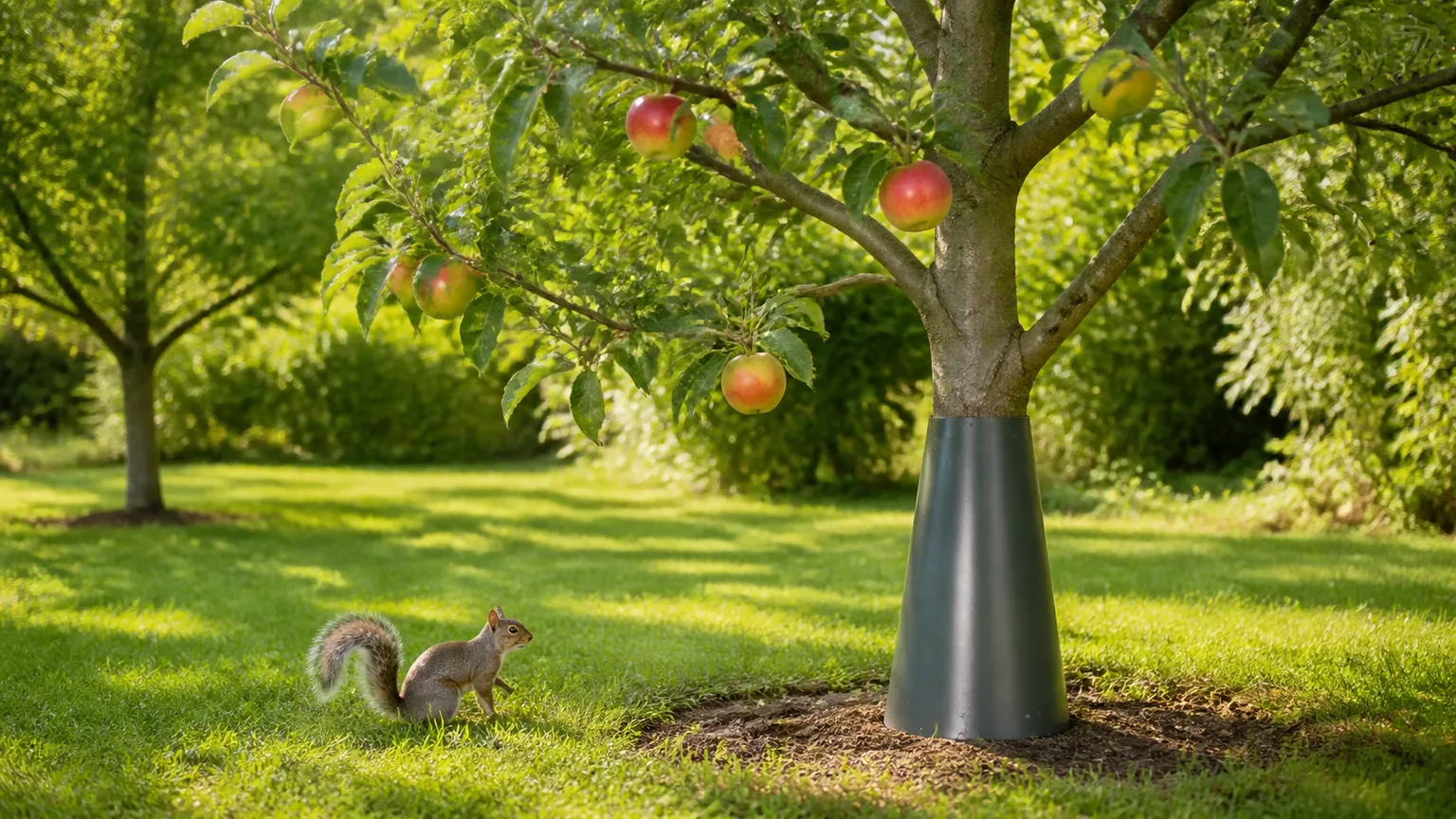
Young fruit trees are the easiest to lose in winter because their trunks are thin, their roots are still limited, and wildlife can reach every tender section. Use a rigid tree guard or hardware-cloth cage that stands away from the bark and extends high enough to deter the animals present in your yard. A rabbit barrier needs to protect the lower trunk; deer may require a taller enclosure that also keeps browsing and antler rubbing away from branches.
Do not tie a tree tightly to a stake for convenience. A support should stabilize a newly planted tree while the roots establish, allow a small amount of natural movement, and use wide, flexible ties that do not cut into bark. Correct a leaning tree while the soil is workable, check the tie after storms, and remove or adjust the system before it begins to girdle the trunk.
Winter sunscald is another reason to protect thin bark. Rapid warming in bright winter sun followed by freezing temperatures can crack exposed southwest or south-facing bark. A light-colored trunk guard or a properly prepared tree wrap can reduce temperature swings, but inspect it periodically and remove seasonal wraps when they are no longer needed. Do not leave plastic or tight material in place long enough to trap moisture or shelter insects.
A fall fruit-tree care checklist from Gardening Know How also treats seasonal trunk protection as something to inspect and remove in spring, not a permanent bandage. That small follow-up matters: a guard should block chewing and temperature swings without becoming a damp hiding place.
Build a mulch donut
Spread two to four inches of coarse organic mulch over the root zone, widening the ring toward the drip line when practical. Keep the mulch several inches away from the trunk and root flare so the bark stays dry and visible. The finished shape should look like a donut, not a volcano: deeper around the outer root zone, open at the center, and low enough that rain can move into the soil.
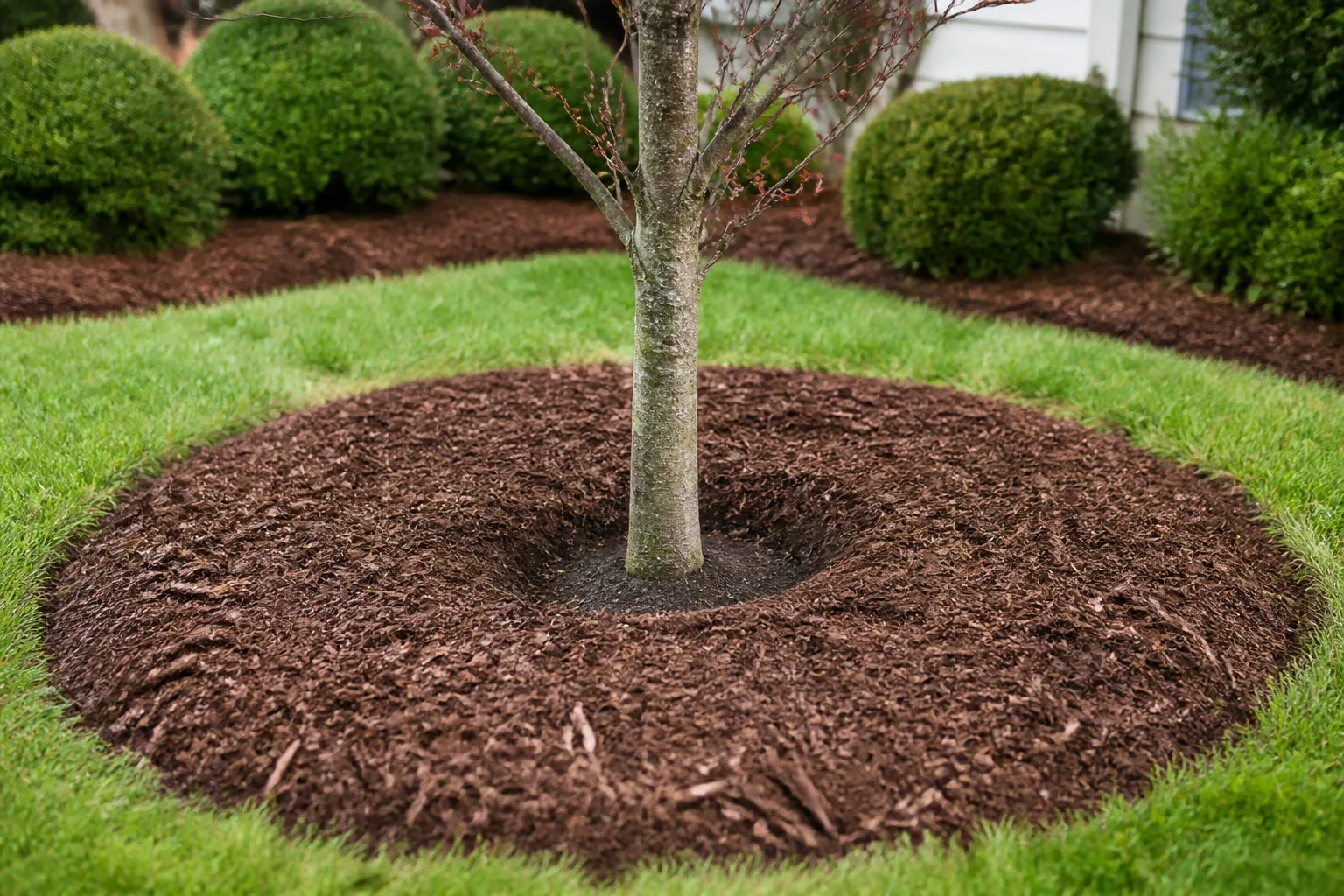
Mulch moderates soil temperature, slows evaporation, and reduces competition from grass. It does not make poor drainage disappear. Thick layers of fine material can stay wet, and a deep straw layer can provide shelter for rodents that then chew bark under cover. If voles or mice are common, keep vegetation short near the trunk, use a proper guard, and inspect under the mulch after storms and snow.
Tip 6: Reduce competition under the canopy
Grass and weeds can take water and nutrients from a fruit tree, especially a young one. Maintain a weed-free or lightly mulched ring under the canopy, but avoid deep cultivation that cuts shallow feeder roots. A shallow hoeing, hand removal, or replenished coarse mulch is usually safer than repeatedly digging around the trunk.
The area under the canopy is an orchard floor, not empty ground. Washington State University describes how its management affects soil structure, nutrient availability, irrigation, weeds, insect habitat, and rodents all at once. That is why the best ground cover depends on the site: a mowed alley may work between trees, while a young tree needs less competition close to its roots. A living cover crop can help soil in some systems but may compete for water or shelter rodents, so do not add one automatically.
Keep fallen fruit out of the weed patch and make sure irrigation reaches the tree rather than stopping at the edge of a lawn sprinkler pattern. Also protect the trunk from string trimmers and mowers. A narrow strip of damaged bark can become a long-term entry point for pests and disease, undoing the benefit of otherwise careful fall maintenance.
Tip 7: Plan pollination and crop load now
Fall is the easiest time to notice a pollination problem and the best time to solve it before bloom. If an apple, pear, or sweet cherry flowered heavily but set little fruit, check whether a compatible partner blooms at the same time, whether cold or wet weather limited pollinators, and whether insecticide was used while flowers were open. A single self-fertile tree may still crop poorly if its variety, weather, or pollinator activity is not a good fit.
Write down the cultivar names, bloom dates, harvest dates, and nearby pollinizers. For apples, the University of Minnesota Extension explains that pollen from a compatible variety must reach the flower and that timing depends on bloom overlap and temperature. Its apple thinning research also shows why pollination and crop load are linked: too many fruitlets compete for resources and can contribute to small fruit, fruit rot, or a weak bloom the following year.
Do not plant a second tree based only on a similar name. Check the bloom group, compatibility, mature size, and local chill requirement. The University of Minnesota’s discussion of dormancy and chilling hours notes that requirements differ by variety and that chilling estimates are useful guides rather than perfect predictions. A tree that is poorly matched to a mild or short winter may break bud unevenly or flower at a risky time.
Turn this year’s harvest into next year’s plan
Record whether the crop was absent, light, balanced, or excessive. In spring, apples often benefit from hand thinning after natural fruit drop: keep the strongest fruit in a cluster and leave enough space for the remaining fruit to size without rubbing. The exact spacing depends on variety, tree size, and branch strength, but the principle is consistent—one tree cannot carry every fruitlet it forms.
Thinning is not a trick for making the total harvest infinite. It trades quantity for size, quality, branch safety, and more reliable annual production. The University of Minnesota’s dropped-fruit guidance notes that some fruit drop is normal and that an oversized crop can contribute to preharvest drop. Mark this job on your spring calendar now, while the memory of this year’s crop is fresh.
Tip 8: Treat dormant sprays as a targeted tool
Do not spray every fruit tree simply because the leaves fell. Dormant oil, horticultural oil, copper, and other products have different targets, timing, plant-safety limits, and weather requirements. A dormant treatment may be useful where a known pest or disease has a documented overwintering stage, but it cannot repair poor pollination, compacted soil, drought, or an unsuitable cultivar.
Start with identification. Note the disease or insect, the part of the tree affected, how severe it was, and whether local extension guidance recommends a dormant treatment for that crop. Remove mummies and diseased wood first; a spray is not a substitute for sanitation. For any pesticide, read the current label, confirm the product is registered for the crop and use, avoid open blooms and active pollinators, and follow temperature, rain, protective-equipment, and re-entry instructions.
Copper products and oils can injure plants when applied at the wrong growth stage or under unsuitable conditions. They can also affect beneficial insects and create resistance or environmental problems when used repeatedly without a plan. If you are uncertain, a local extension office or certified arborist can help distinguish a treatment-worthy problem from harmless leaf damage. Sometimes the best fall spray is no spray, paired with better sanitation and a spring monitoring plan.
A simple fall-to-spring fruit-tree timeline
Use the following sequence as a flexible checklist, then adjust it for local frost dates and the fruit type you grow:
- After harvest: record the crop, photograph symptoms, collect fallen fruit, remove mummies, and inspect the trunk, ties, and supports.
- As leaves begin to fall: separate diseased debris from healthy material, manage weeds without damaging roots, and take a soil sample if a nutrient or pH problem is suspected.
- Before the ground freezes: water dry soil deeply and broadly, correct support problems, install wildlife guards, and apply a two- to four-inch mulch donut.
- Late fall into winter: avoid high-nitrogen feeding and major shaping cuts unless a crop-specific recommendation says otherwise. Monitor wraps, guards, mulch, drainage, and rodent activity.
- Late winter or the local dormant window: complete structural pruning, review pollination partners, and prepare clean tools and a crop-load plan. Apply a dormant product only if a confirmed problem and the current label support it.
- Bloom through early fruit set: protect pollinators, watch for frost, confirm fruit set, and thin when the crop and tree strength make it appropriate.
The timeline is deliberately more specific than “do everything in fall.” It separates jobs that protect the tree now from jobs that are safer when buds are close to breaking. It also gives you a way to adapt: a dry, mild autumn calls for more moisture checks; a wet site calls for drainage and less irrigation; a young tree needs more physical protection; and a diseased tree needs sanitation and identification before any spray decision.
Conclusion
A bigger fruit-tree harvest starts with a healthier, better-balanced tree, not a single magic fertilizer or spray. Clean up fruit and disease debris, refill dry soil without waterlogging it, test before feeding, reserve major pruning for the right season, protect young bark and roots, reduce grass competition, and use fall observations to plan pollination and thinning.
The most useful fall habit is to record what the tree did and respond to evidence. When you match care to the species, local weather, soil, tree age, and past crop, the tree enters winter with fewer avoidable problems—and reaches spring with a much better chance of carrying a productive, high-quality crop.



