7 Things to Add to Your Garden This Fall for Blooms
Prepare for spring flowers with seven smart fall garden additions: finished compost, leaves, mulch, bulbs, cover crops, biochar, and test-led amendments.
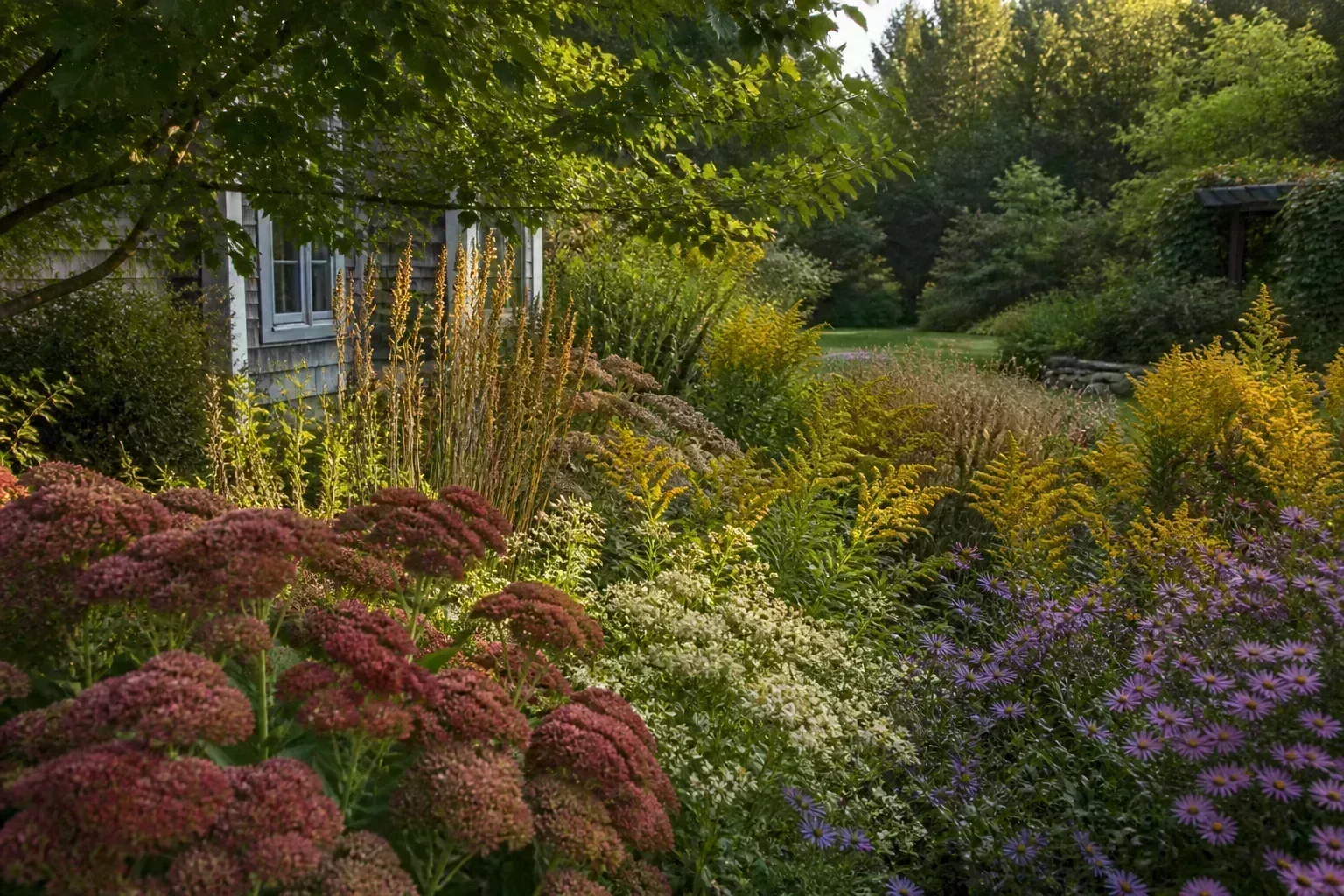
The best fall additions depend on the job your bed needs
The smartest fall garden additions are not a random pile of amendments. They solve four different problems: feeding the root zone, protecting soil through winter, putting next season’s plants in place, or correcting a measured soil issue. If you match the material to the job, you can improve the odds of a vigorous spring without overfertilizing, smothering crowns, or changing your soil chemistry unnecessarily.
For most established flower beds, start with finished compost, shredded leaves, and a correctly applied mulch. Add spring bulbs if you want more flowers rather than merely healthier soil. Use a cover crop only on ground that will genuinely be empty, and treat biochar and sulfur as optional, evidence-led tools—not automatic fall rituals.
The calendar needs local interpretation. A September deadline makes sense in some northern gardens and is far too early or late elsewhere. Let your first frost, soil temperature, plant dormancy, and the time needed for a cover crop to establish guide the work. The RHS recommends late summer to early autumn for many green manures, while LSU AgCenter guidance emphasizes testing and amending ahead of spring planting. Those principles travel well; the exact date does not.
Before you add anything, clean, test, and map the bed
Remove disease-prone debris and weeds first
Walk the bed before bringing in bags or wheelbarrows. Pick remaining flowers for seed or cut bouquets, remove fallen fruit and rotting stems, and pull weeds while the soil is soft after rain. Do not bury suspicious material under compost or mulch: leaves or stems with obvious disease, heavy mildew, or soft rot belong in the appropriate yard-waste stream for your area, not in a casual home compost pile.
Healthy, noninvasive plant residue can often be composted, but keeping a known diseased crop in the bed is a different decision. Epic Gardening’s fall-bed workflow makes the same practical distinction: clean plant material can go to compost, while diseased material should be removed because many home piles do not reliably reach the heat needed to destroy pathogens.
Pull weeds before they set seed, but do not reach for a broad-spectrum weed killer just because the bed looks untidy. A herbicide can drift onto plants you want to keep, and a homemade salt or vinegar mixture can damage soil and nearby roots. Hand-pulling, hoeing on a dry day, or covering an empty bed are more controlled options. If a weed is a valued self-seeder, mark the plants you want before clearing everything.
Test soil before changing pH or fertility
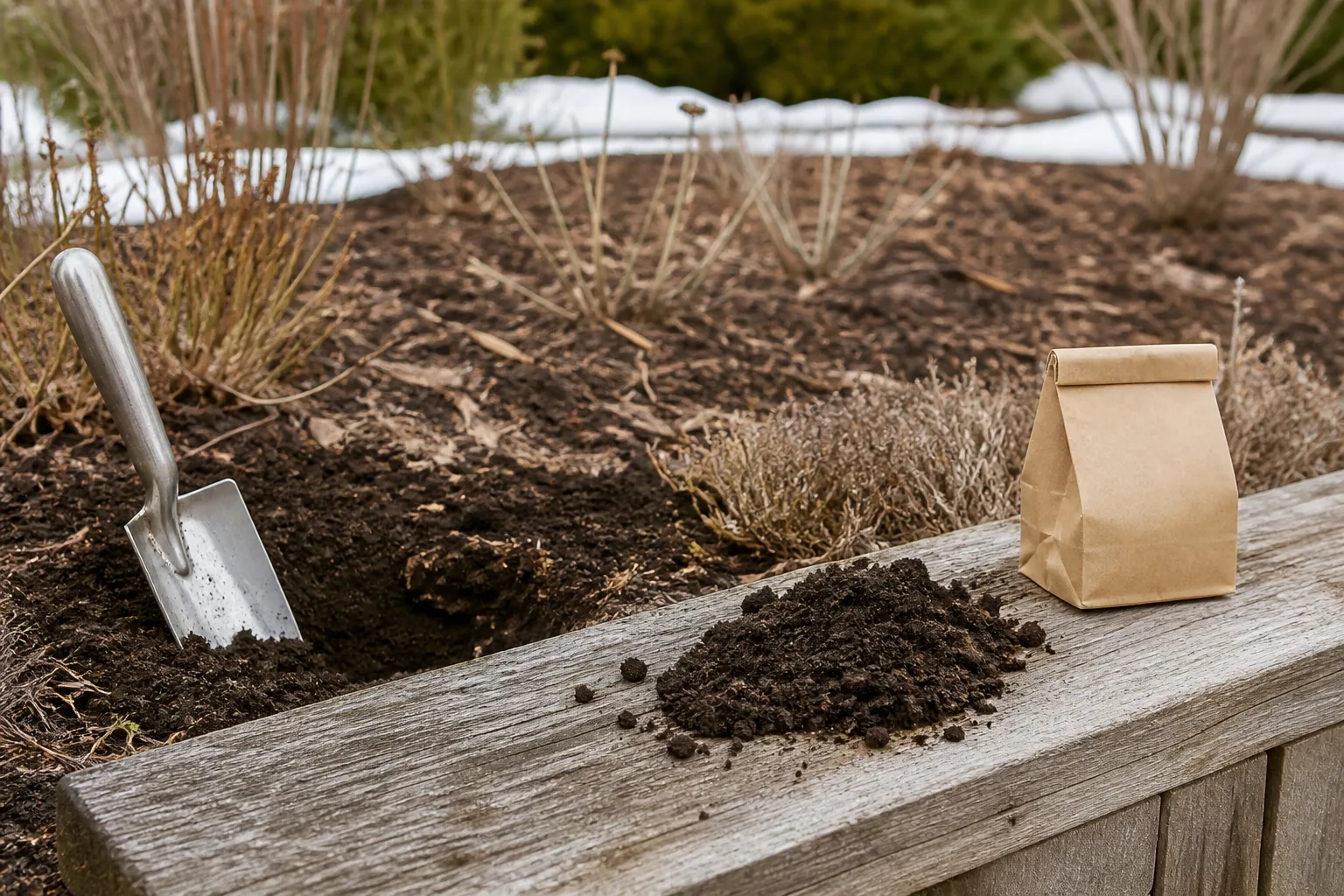
Take a soil sample before adding sulfur, lime, a heavy fertilizer, or a large quantity of specialty amendment. Sample the actual flower bed—not the compost pile, a driveway edge, or a spot under a recently fertilized plant—and follow the laboratory’s sampling instructions. One test cannot describe every corner of a large property, so separate beds with visibly different soil, drainage, or past plant history.
The test gives you a useful baseline for pH, organic matter, and nutrients. It also protects you from solving the wrong problem. Pale foliage, weak stems, and disappointing flowers can come from low light, drought, waterlogged roots, overgrown shrubs, or the plant simply being too young—not just from a missing fertilizer ingredient. University of Nevada, Reno Extension warns that common amendments are not universally appropriate and recommends testing before spending money on them.
Make a quick map while you are there. Note full-sun and shade pockets, places where water stands, bulbs already in the ground, plants that will be moved, and empty patches. This map determines where a cover crop is safe, where mulch should stay thin, and where bulbs need better drainage.
1. Finished compost for the root zone
Finished compost is the most broadly useful fall addition because it improves the soil environment rather than promising instant flowers. It adds organic matter, helps sandy soil hold water, supports aggregation in many compacted soils, and gives soil organisms material to work on over time. It is a foundation for spring growth, not a bloom switch.
Use compost that is dark and crumbly, smells earthy, and has no obvious food scraps, hot spots, or recognizable fresh weeds. If it is still warm or sour-smelling, let it mature longer. Immature compost can temporarily compete for oxygen or nitrogen as it continues decomposing, which is an especially poor trade in a small bed where spring roots need reliable conditions.
Spread a modest, even layer over the bed after removing debris. For an established ornamental bed, about 1–2 inches across the surface is a practical starting point; new beds with poor soil may need a more deliberate soil-building plan based on a test and the site’s texture. Blend it only into the upper few inches if you are improving bare soil. Around established perennials, top-dressing is safer than chopping through the root zone.
Do not assume more compost means more flowers. Excess nitrogen can push lush foliage while delaying or weakening bloom, and a deep layer can bury crowns or alter drainage. Compost is most helpful when it improves the root zone without turning the bed into a wet, overly rich planting pocket.
2. Shredded leaves for free organic matter
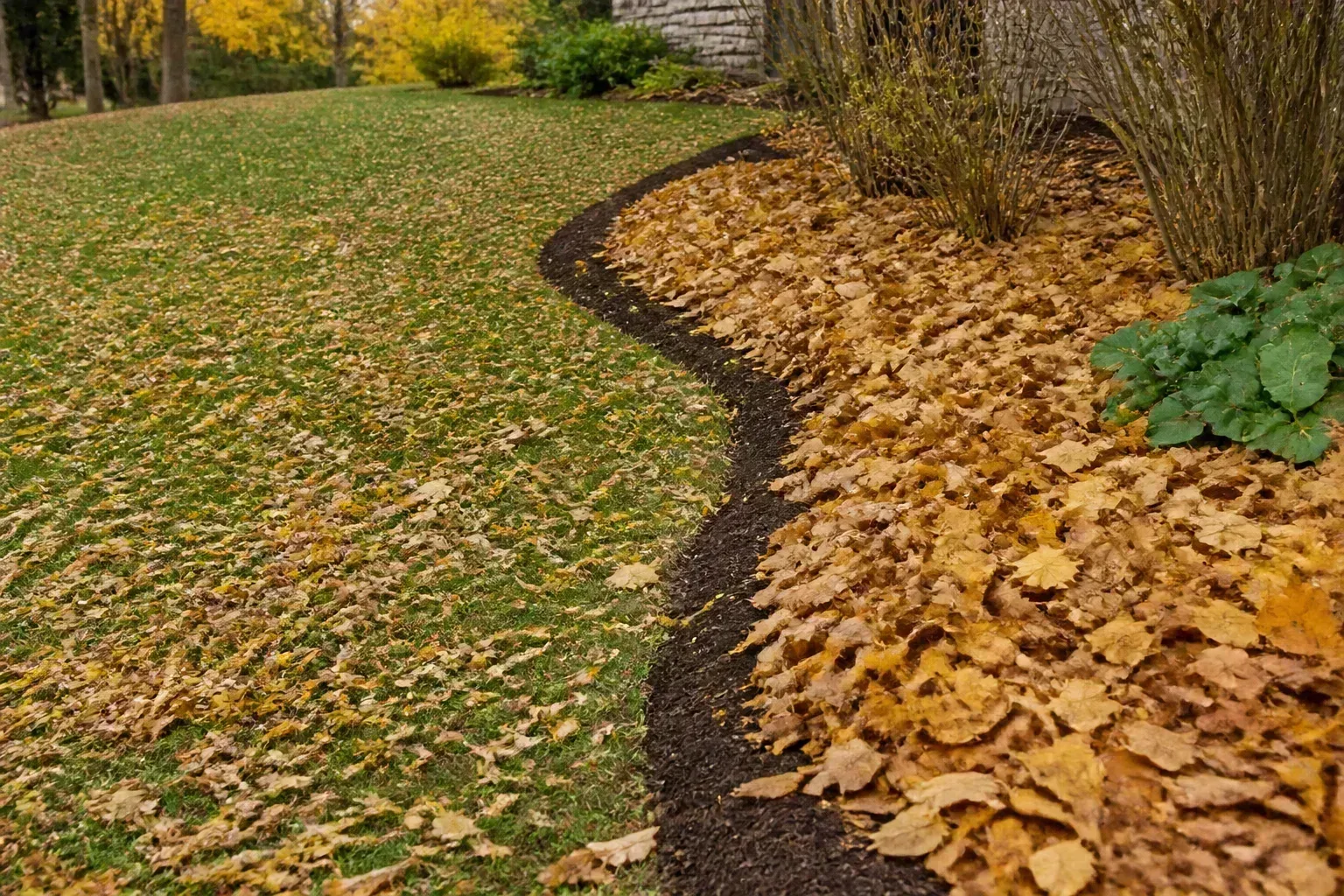
Fallen leaves are a useful fall resource because they can become surface mulch, compost browns, or leaf mold. Shredding them with a mower or leaf mulcher breaks up the mat-forming pieces and lets moisture move through the layer. Gardener’s Path describes leaves as a carbon-rich “brown” that balances nitrogen-heavy kitchen scraps, which is why a leaf pile can be more valuable than a bag at the curb.
Use dry, reasonably clean leaves from trees and shrubs—not leaves mixed with trash, lawn chemicals, invasive seed heads, or a large amount of diseased foliage. A light layer of shredded leaves can go over open soil or around dormant perennials. Keep the material away from the plant crown, where a wet, packed layer can trap moisture and encourage decay.
Choose the destination based on the job. Put shredded leaves directly on a bed when you want a temporary protective cover that will break down in place. Put them in the compost pile when you need carbon to balance grass clippings and kitchen scraps. Build a separate leaf-mold pile when you want a slower, crumbly soil conditioner rather than finished compost.
Whole leaves are not automatically bad, but a thick unshredded blanket can shed water and press down on low plants. If the layer has matted after rain, loosen it with a rake. In a wet climate, use less at a time; in a dry, windy garden, water the layer lightly so it settles without becoming a soggy sheet.
3. Protective organic mulch for winter
Mulch and leaves overlap, but they are not exactly the same tool. Shredded leaves are a fast-breaking organic material; bark, clean wood chips, pine straw, or well-aged composted mulch can form a longer-lasting surface blanket. The purpose of fall mulch is to moderate soil temperature, reduce erosion, slow moisture loss, and limit late-season weed establishment—not to feed a plant on demand.
Apply mulch after the soil has cooled and plants are moving toward dormancy, rather than sealing warm, wet soil under a thick blanket. A 2–3 inch layer is enough for many perennial beds. If you are protecting a newly planted bulb bed or a shallow-rooted perennial in a colder climate, let local extension guidance and the plant’s hardiness determine whether a little more protection is warranted.
Leave a visible gap around stems and crowns. Mulch piled against a woody trunk or perennial crown creates a damp contact zone and can invite rot, rodents, or stem damage. Shape the layer like a shallow doughnut, not a volcano. Keep paths and drainage channels clear so winter rain can leave the bed.
Avoid fresh, nitrogen-hungry wood material mixed into the planting soil. Use wood chips as a surface mulch, not as a deep soil amendment. Skip dyed or treated material and be cautious with unknown straw or hay, which may contain viable weed seed or herbicide residues. A simple, clean organic mulch is usually easier to evaluate than a clever blend with an unclear source.
4. Spring-flowering bulbs for a head start
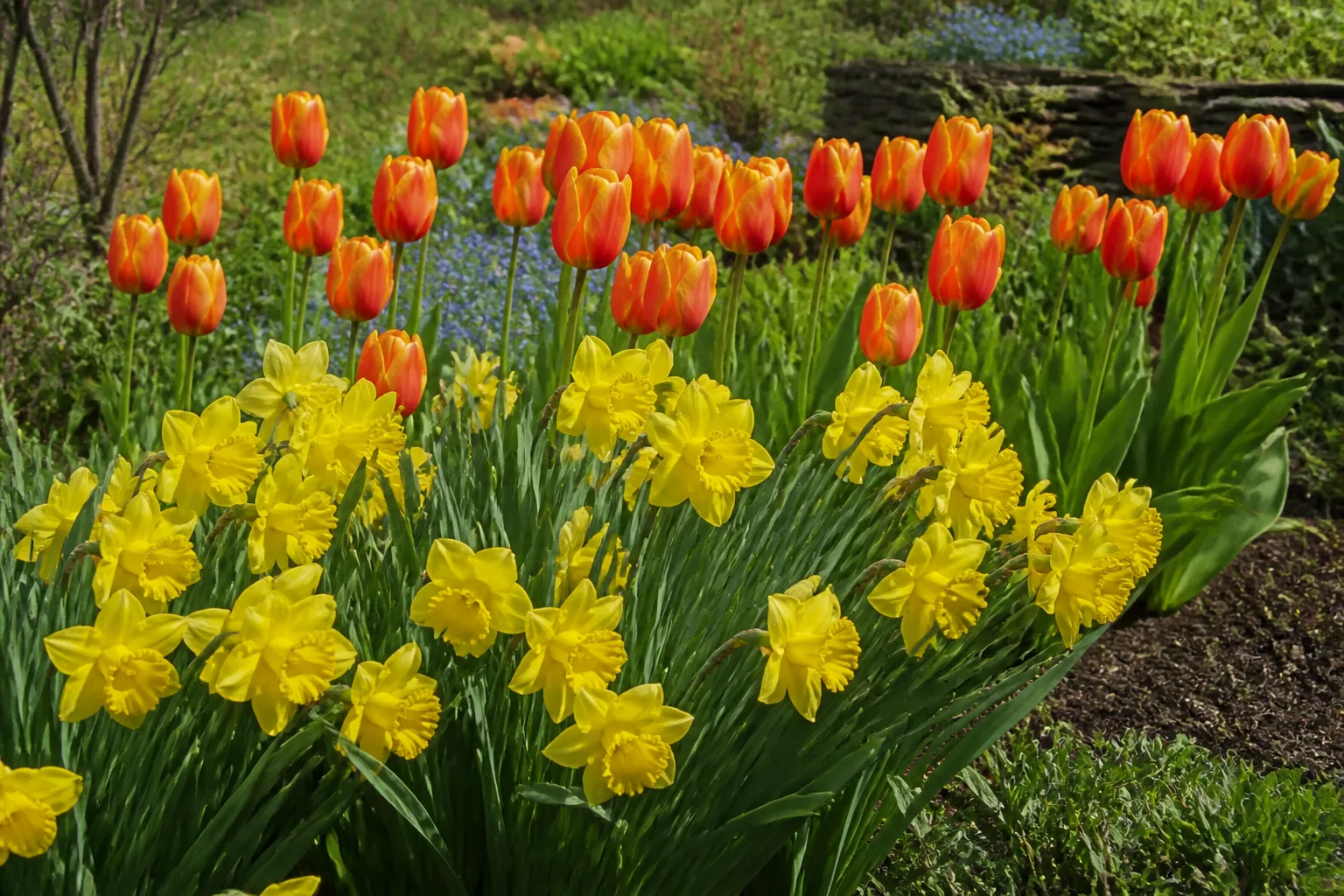
If the goal is visibly more flowers next year, fall is the time to add plants—not only amendments. Spring-flowering bulbs such as daffodils, crocus, hyacinths, tulips, and many alliums use the cool season to establish roots and prepare for their seasonal display. RHS guidance places spring-flowering bulbs in the autumn planting window, but local soil temperature and species-specific instructions still matter.
Buy firm bulbs without soft spots, mold, or a strong rotten smell. Match the bulb to the site: many tulips and daffodils want sun and drainage, while woodland bulbs prefer different moisture and light conditions. If the bed stays saturated after rain, fix the drainage or choose a better site before buying a large bag of bulbs. Rot is a site problem that fertilizer cannot solve.
Plant bulbs for drainage, depth, and repeat bloom
Prepare the soil before planting by removing perennial weeds and loosening only as deeply as needed. Mix a small amount of finished compost through the planting area if the soil needs organic matter, but do not create a rich, water-holding pocket in heavy clay. Set most bulbs with the pointed shoot facing upward at roughly two to three times the bulb’s height; the package or a reliable plant source takes priority when the species differs.
Firm the soil gently, water once if the ground is dry, and label unusual varieties. Grouping bulbs in drifts or clusters produces a stronger visual effect than scattering a few bulbs across a large bed. RHS suggests planting groups of at least six for a more convincing display. Waterlogged soil, shallow planting, hungry rodents, and cutting foliage too early after flowering are more common reasons for a poor return than a lack of fall fertilizer.
Add mulch after the bed is planted, but do not bury small emerging shoots under an unnecessarily deep layer. In warm-winter climates, some bulbs may sprout during a mild spell; that is not automatically a failure. In areas with little winter chill, choose bulbs and cultivars recommended for your region rather than expecting every tulip or hyacinth to perennialize.
5. A winter cover crop for empty ground
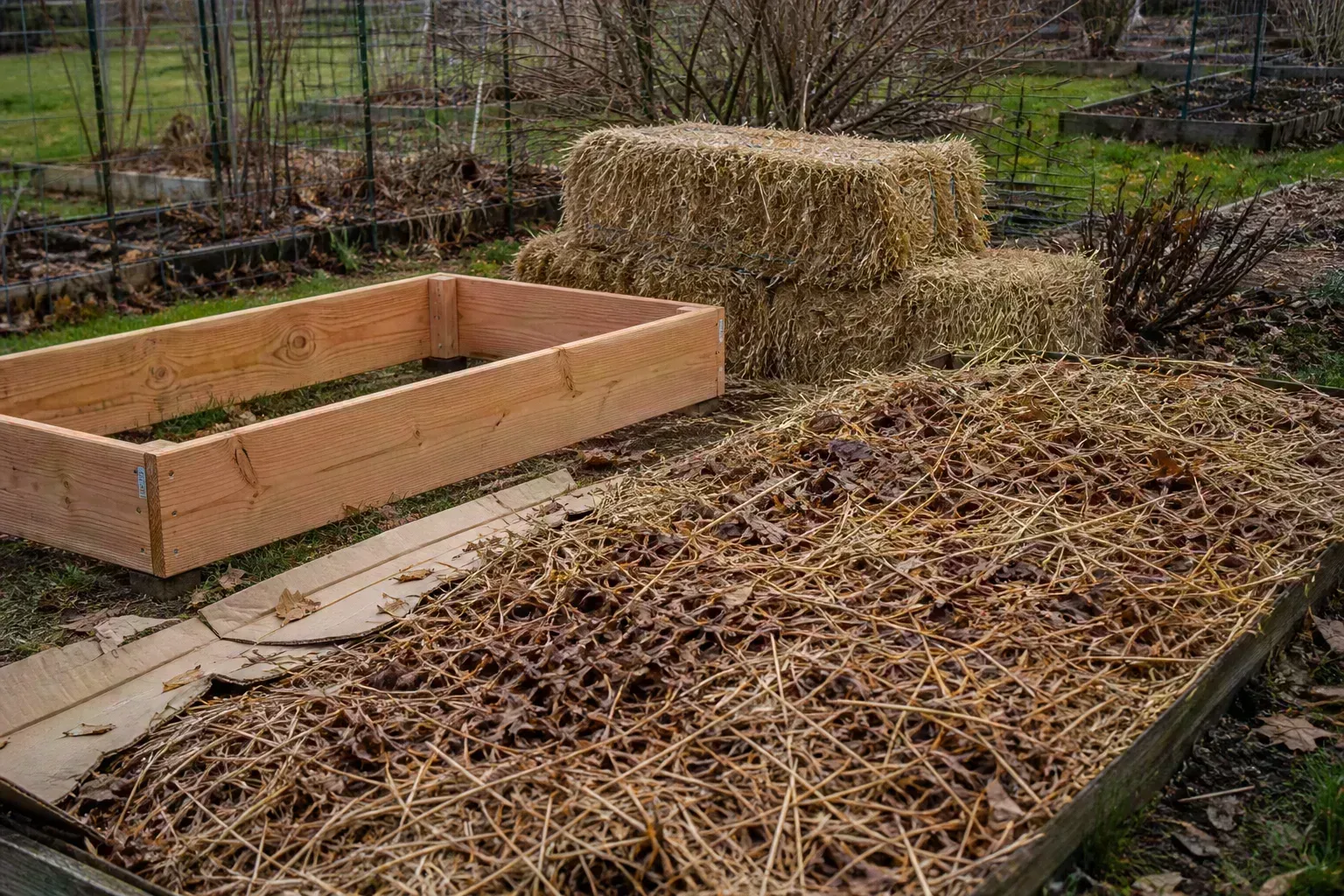
A cover crop, also called a green manure, is a temporary plant grown to keep bare soil covered during an off-season. Its roots help hold the soil, its foliage competes with winter weeds, and its eventual residue returns organic matter. The RHS defines green manures as fast-growing plants that cover bare soil, suppress weeds, reduce erosion, and can be incorporated to improve soil structure.
This is most useful in a vegetable bed, new planting area, or large empty patch—not in a crowded perennial border where you will disturb established roots. It also competes with fall-planted bulbs if you sow it over the same area. Reserve cover crops for ground that will remain open long enough for the roots to establish and for you to terminate the crop before spring planting.
Options vary with climate and timing. Oats and buckwheat can be useful short-season choices where winter kills them; rye, wheat, vetch, and clover may overwinter and need deliberate cutting or smothering. Mustard and other brassica-family covers may not fit a rotation that will soon grow brassicas because disease can move through related crops. Choose the seed, sowing rate, and termination method from a local source or the seed label rather than treating every green cover as interchangeable.
Choose a cover crop you can terminate on time
Count backward from your intended spring planting. The cover needs enough mild weather to germinate, but it must be cut, mowed, tarped, or otherwise stopped before it produces viable seed. If you cannot explain how you will end the crop when the bed is wet, cold, or full of spring bulbs, choose leaves or mulch instead.
For a dig-in green manure, chop the foliage while it is young, work it into the top layer if your system uses tillage, and allow roughly a month before sowing or planting. RHS cautions that decaying green manure can suppress plant growth and recommends waiting about a month after incorporation. In a no-dig bed, cutting the top growth and covering it with cardboard or a light-blocking tarp can be less disruptive, though the material still needs time to soften.
Watch for slugs under dense cover, and keep rotation in mind. A cover crop is not automatically beneficial simply because it is green. Its value comes from the match between species, bed, weather, and the gardener’s ability to end it cleanly.
6. Charged biochar for a specific soil problem
Biochar is porous carbon made by heating organic material with limited oxygen. Its pores can hold water and nutrients and provide habitat for microorganisms, but those properties do not make every bag of charcoal a good addition to every flower bed. Feedstock, processing, ash content, particle size, and pH vary, so biochar is a tool for a specific soil-building experiment—not a universal bloom booster.
If you choose to use it, do not mix a large quantity of raw biochar into hungry soil and expect instant fertility. “Charge” it first by blending it with finished compost or another nutrient-containing organic material so its pores are not initially competing with the root zone for available nutrients. Gardening Know How recommends charging biochar with compost before use and notes that products can vary widely. Cornell Cooperative Extension also advises monitoring plants after application because early nutrient interactions can show up as nitrogen deficiency in some situations.
Choose a horticultural product with a clear source and label. Never use barbecue briquettes, ash from lighter-fluid charcoal, painted wood, or treated lumber. Start with a small test area, follow the product’s application directions, and compare the test area with an untreated section over the next growing season. If your soil already has good organic matter and drainage, finished compost and a surface mulch may deliver more obvious value for less money and uncertainty.
7. A soil-test-guided pH amendment
Sulfur belongs on this list only with a reason. Elemental sulfur can lower soil pH as soil microorganisms convert it into forms that affect acidity, which may help an acid-loving plant in genuinely alkaline soil. It will not make every flower bed bloom more, and it should not be confused with gypsum: University of Nevada, Reno Extension notes that gypsum does not lower soil pH, while elemental sulfur works slowly and should be used with testing.
Use the soil report, the plant’s preferred pH, and the product label together. Sandy soil, clay soil, organic matter, temperature, moisture, and existing lime all affect how much sulfur is needed and how quickly it works. Never copy a rate from a different bed. Overcorrecting pH can create new nutrient problems that are harder to repair than the original issue.
Fall is an excellent time to test, plan, and order the amendment. Whether you should apply sulfur immediately depends on the product, your climate, and the test recommendation. Epic Gardening’s sulfur guidance explains that the microbial conversion is slow, works best in warm, moist, aerated soil, and can take months to show a pH shift. In a cold or waterlogged bed, a fall application may sit inactive until spring.
The reverse is also true: use lime only when a soil test shows the bed is too acidic for the plants you are growing. Most garden plants do not need a yearly pH correction. Often the best “amendment” is choosing a plant suited to the site, improving drainage, and adding moderate organic matter over time.
What to skip or delay this fall
Skip the instinct to add every soil product at once. Do not combine sulfur, lime, wood ash, high-nitrogen fertilizer, biochar, and a thick layer of manure as a trial-and-error cocktail. If spring growth is weak, you will not know which ingredient helped or harmed, and several changes can push pH or soluble salts in the wrong direction.
Delay fresh manure unless it is properly composted and appropriate for the crop. Delay deep digging around established perennials and bulbs. Delay heavy pruning of plants that hold winter structure, shelter wildlife, or form next year’s buds on old wood. Fall cleanup should reduce disease and damage without stripping the bed of every stem and leaf simply to make it look empty.
Do not leave the soil bare while waiting to decide. If you are not ready for a cover crop, use a clean surface mulch or shredded leaves. If a bed will be planted with bulbs, plant and label them first, then protect the surface lightly. If a bed has drainage problems, solve water movement before adding organic material that could hold even more moisture.
The low-stress order of operations
If you have one afternoon, use this sequence:
- Photograph and map the bed. Record sun, standing water, existing bulbs, and plants you want to preserve.
- Harvest seeds and remove debris. Compost only clean material; discard or properly dispose of diseased material.
- Pull weeds before they seed. Use hand tools or a controlled cover instead of defaulting to a bed-wide herbicide.
- Take the soil sample. Wait for the report before adding sulfur, lime, or a strong fertilizer.
- Plant fall bulbs. Improve drainage, set bulbs at the correct depth, water if dry, and label them.
- Add finished compost. Top-dress established beds or shallowly blend it into bare soil.
- Choose one winter surface strategy. Use shredded leaves, organic mulch, or a cover crop according to the bed’s next use.
- Add optional biochar only as a small, charged experiment. Do not let a specialty amendment displace basic soil care.
Come spring, remove only enough mulch to let shoots emerge, check that bulbs are not sitting in water, and avoid cutting bulb foliage while it is still green. The fall work improves the starting conditions; it does not replace spring light, moisture management, pollination, or the plant’s own bloom cycle.
Conclusion
For bigger spring displays, the most dependable fall additions are the unglamorous ones: finished compost for the root zone, shredded leaves for organic matter, and a correctly placed mulch layer for winter protection. Add spring-flowering bulbs when you want more flowers, and use a cover crop only where you can establish and terminate it on time.
Biochar can be worthwhile in a carefully chosen test area, but charge it first and watch the plants. Sulfur can help an acid-loving plant in alkaline soil, but only after a soil test and with realistic patience. A clean, covered, well-drained bed gives spring roots a better starting point than a bed crowded with unmeasured products. Start with the task that matches your bed’s actual problem, and next year’s blooms will have a stronger foundation.



