Is Sugar Water Good for Christmas Cactus? The Truth
Is sugar water good for Christmas cactus? Learn why it is not a fertilizer, what to use instead, and how light, temperature, and watering set buds.
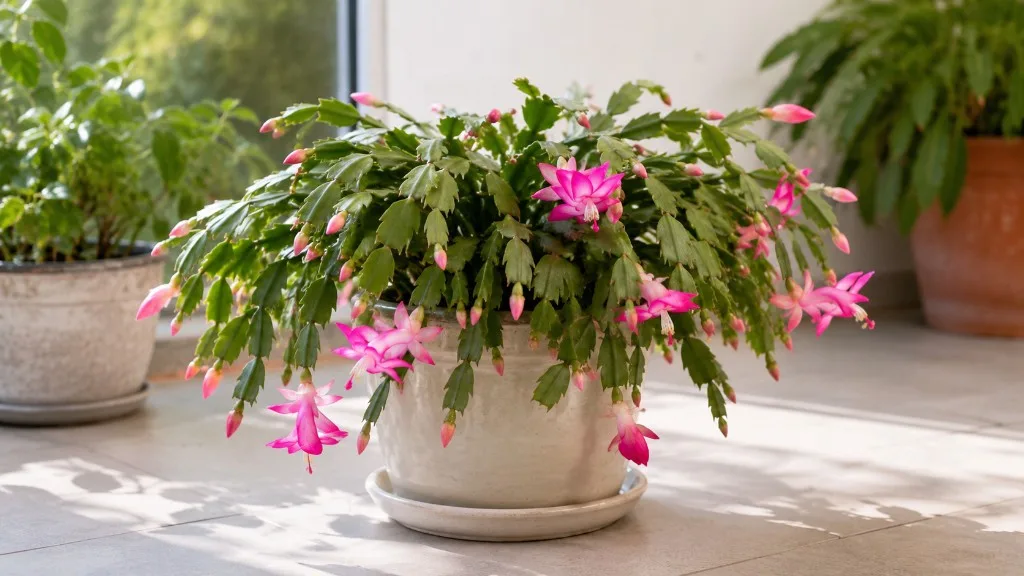
The Short Answer: Skip Sugar Water
No—sugar water is not a good treatment for a Christmas cactus, and it will not make the plant bloom. A potted holiday cactus already makes the carbohydrates it needs through photosynthesis. Table sugar adds carbohydrate to the pot, but it does not supply the nitrogen, phosphorus, potassium, calcium, magnesium, sulfur, and micronutrients that houseplants need for steady growth.
That distinction explains why advice for cut flowers does not transfer neatly to a rooted plant. A cut stem sitting in a vase has no living root system or potting mix to protect. A Christmas cactus has roots that must balance water, air, and dissolved minerals in a small container. The University of Connecticut’s Home and Garden Education Center explains that plants manufacture their own sugars during photosynthesis and that houseplants rely on fertilizer to receive the other nutrients they cannot obtain from air and water alone (UConn Home and Garden Education Center).
If your plant is not flowering, treat that as a light, temperature, watering, timing, identity, or root-health question. Sugar water skips the diagnosis. In the best case it does nothing; in the worst case, a strong or repeated solution adds a new root-zone problem to the one you were trying to solve.
Why the Sugar-Water Myth Sounds Plausible
The myth has one true idea buried inside it: plants use sugars. Leaves produce sugars from light, carbon dioxide, and water, then use and transport those carbohydrates to support new tissue, roots, and flowers. It is an easy mental leap to assume that pouring sugar over the roots gives the plant a helpful shortcut.
The shortcut does not work that way. A plant’s sugar production is integrated with photosynthesis, mineral nutrition, water movement, and respiration. A spoonful of table sugar is not a balanced plant food, and it cannot replace the conditions that tell a holiday cactus when to form flower buds.
Cut Flowers and Potted Cacti Need Different Inputs
Some cut-flower recipes use a small amount of sugar because a cut stem can take up dissolved carbohydrate while it is held in water. That is a temporary vase system, not a recommendation for drenching living roots. Once sugar enters potting mix, it becomes part of a biologically active root zone where concentration, drainage, oxygen, and microbes all matter.
This is also why “my neighbor tried it and the plant recovered” is not proof that sugar caused the recovery. A plant may have improved because it finally received enough plain water, moved away from a hot window, or simply recovered with time. When a stressed Christmas cactus is given sugar water and a new location in the same week, the sweet solution gets credit for every change that happened at once.
What Sugar Water Does in a Pot
The risk depends on how much sugar was added, how wet the pot already was, how quickly the mix drains, and whether the roots are healthy. A one-time accidental splash is not a reason to panic, but repeated sweet watering is an unnecessary experiment with little upside.
First, dissolved sugar raises the concentration of the water around the roots. Very concentrated solutions can make it harder for roots to take up water, much as excess fertilizer salts can cause wilting even when the pot feels damp. UConn notes that high concentrations of nutrient salts can desiccate roots and interfere with water uptake; sugar water is not the same as fertilizer, but the root-zone lesson is similar: stronger is not better.
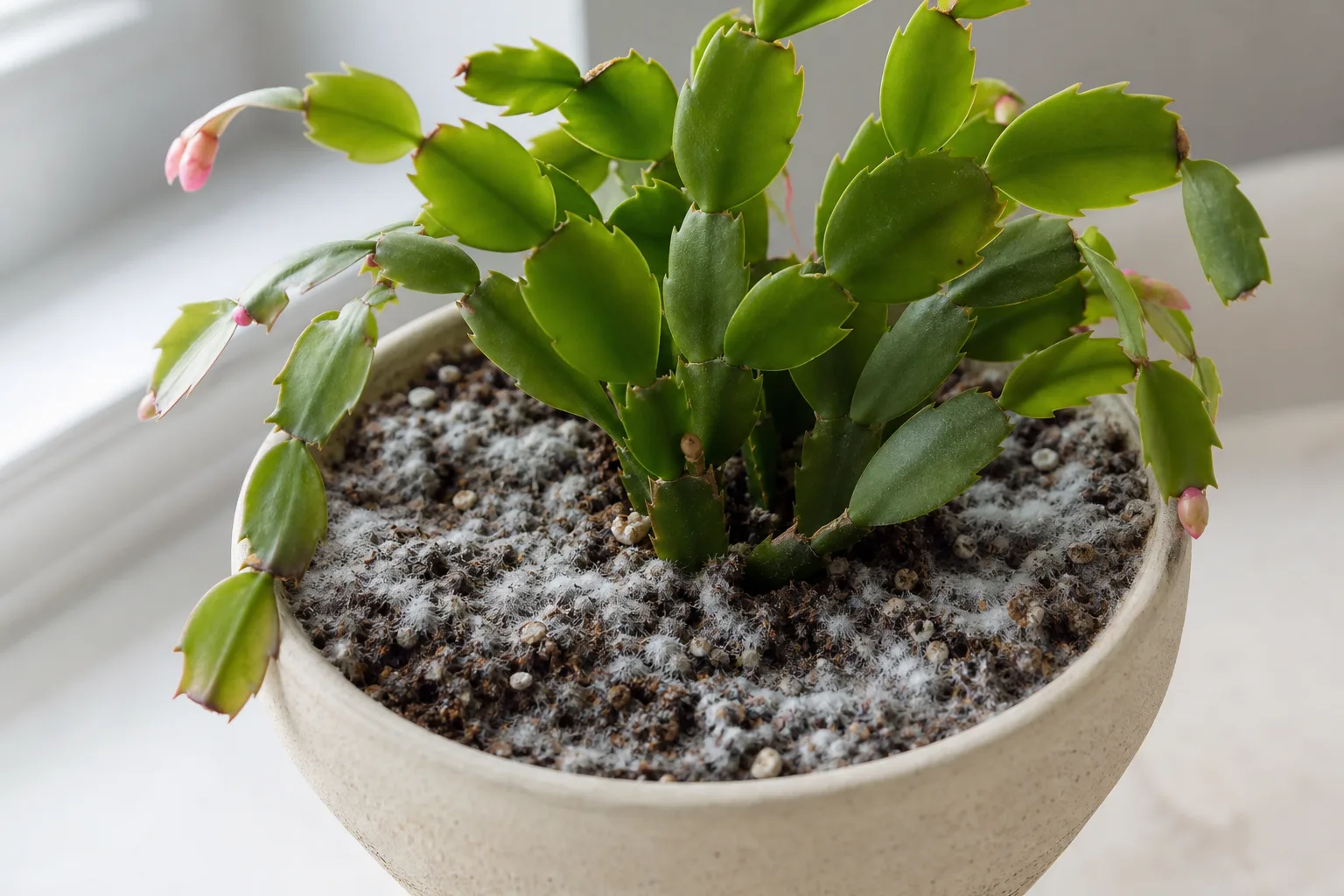
Second, the added carbohydrate can be used by microorganisms living in the potting mix. That does not turn the soil into a reliable fertilizer system. It can instead create a temporary burst of microbial activity, residue at the surface, sticky soil, or conditions that encourage mold and small flies. If a sweet solution is followed by a white fuzzy film, sour odor, or fungus gnats, the plant needs a cleaner root-zone plan—not another dose.
Third, sugar water does not correct the reasons a Christmas cactus fails to bloom. It cannot supply the uninterrupted dark period that initiates buds, cool nights that reinforce the signal, bright indirect light for photosynthesis, or well-drained soil that keeps roots alive. The plant can be green and alive while still missing the seasonal cue that starts flowering.
The practical rule is simple: do not use table sugar as a fertilizer, bloom booster, rooting tonic, or revival drink for a Christmas cactus. Use plain water for hydration and a labeled houseplant fertilizer during active growth.
Identify Your Holiday Cactus Before Chasing Blooms
“Christmas cactus” is often used as a catch-all name for several related holiday plants. The distinction matters because a perfectly healthy plant can appear “late” when it is actually a Thanksgiving cactus that finished early, or an Easter cactus that follows a spring schedule.
Christmas Cactus vs. Thanksgiving Cactus
Both are in the genus Schlumbergera, and hybrids make identification imperfect. A Thanksgiving cactus (Schlumbergera truncata) usually has sharper, claw-like projections along the segment edges and tends to bloom earlier. A true or hybrid Christmas cactus has smoother, more rounded, scalloped edges; its flowers often hang downward from the ends of the segments.
The University of Wisconsin–Madison Extension describes S. truncata as the earlier-blooming parent and S. × buckleyi as the rounder-edged type that blooms closer to Christmas (Wisconsin Horticulture). Store labels are not always precise, so use the plant’s segment shape and bloom history as clues rather than forcing every specimen to flower on December 25.
Easter Cactus Follows a Different Clock
An Easter cactus, usually sold as Hatiora gaertneri or under older Rhipsalidopsis names, is a separate genus and generally flowers in spring. Its segments are more rounded and its flowers are flatter and star-like. It may need a later or longer short-day routine than a Christmas cactus.
Penn State Extension notes that Thanksgiving and Christmas cacti belong to Schlumbergera, while Easter cactus belongs to a different genus, and that the three types do not share exactly the same flowering schedule (Penn State Extension). Before adding sugar, bloom booster, or extra water, ask whether the plant is being judged against the wrong holiday.
What Actually Makes a Christmas Cactus Bloom
Flowering is an environmental response, not a reward for adding sweetness. A healthy plant needs enough mature segments to support buds, then a consistent combination of long nights and cooler conditions. Nutrition and water support the process, but they do not replace the signal.
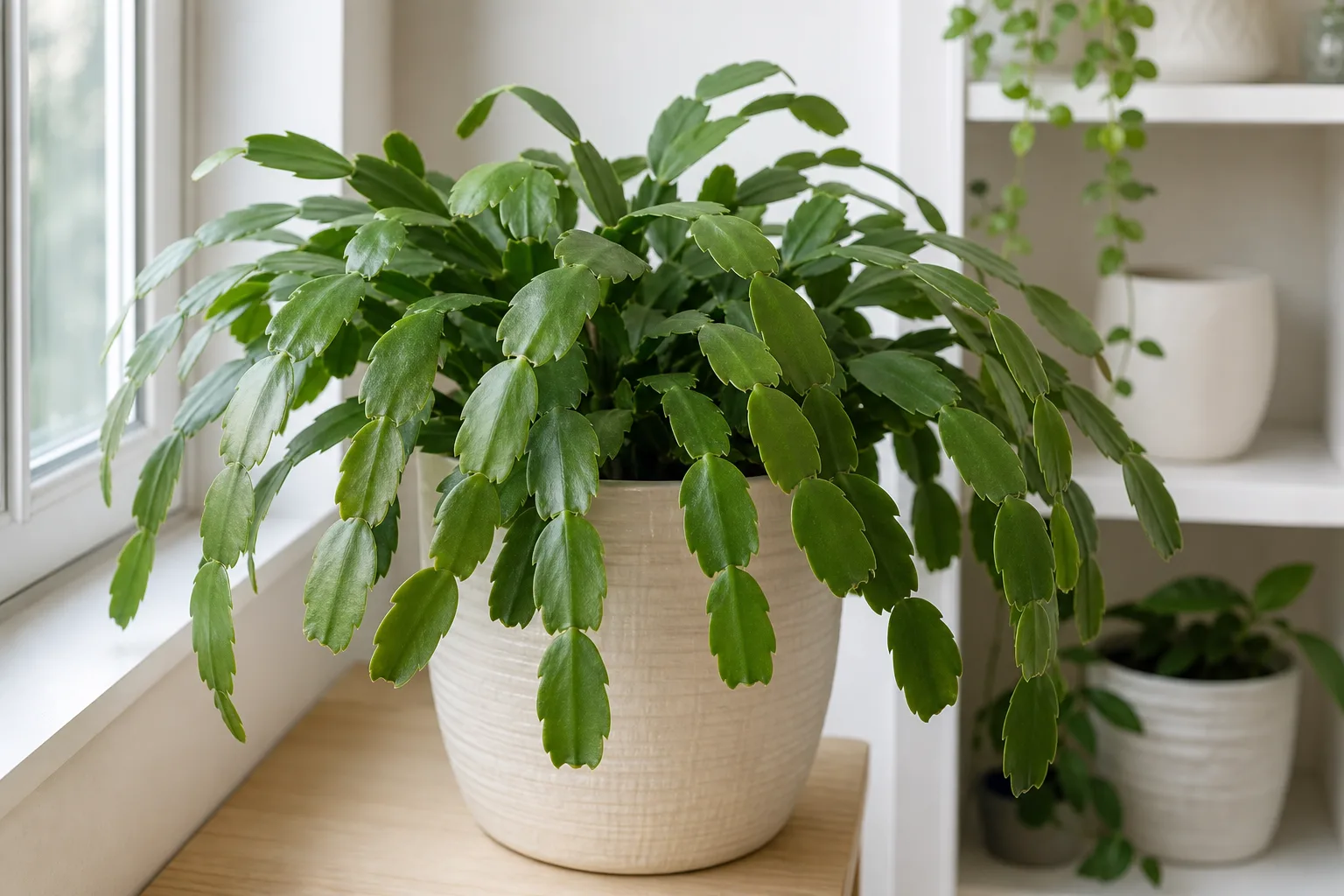
Light and Darkness Set the Buds
Holiday cacti are short-day plants: they form buds when the night is long enough and uninterrupted. A dependable starting point is 12 to 14 hours of complete darkness every night for about 6 to 8 weeks, followed by bright indirect light during the day. Penn State Extension uses at least 12 hours of uninterrupted darkness as the flowering cue, while other extension and horticulture guidance gives a 12-to-14-hour range.
“Dark” means dark. Room lamps, television light, bright hallway lighting, and some grow lights can interrupt the night. If your home naturally has a long, dark room, no special equipment is needed. Otherwise, place the plant in a room that is not used at night or cover it with a breathable box that does not crush the stems; uncover it each morning.
Once buds are visible, stop experimenting with the light schedule. Keep the plant in bright, indirect light and avoid moving it from a cool, stable location to a hot, sunny window. Direct winter sun through glass can still heat or scorch segments, even though the outdoor air feels cool.
Cool, Stable Temperatures Protect the Buds
During bud initiation, aim for mild daytime temperatures and cooler nights. A useful home target is roughly 65–75°F during the day and 55–60°F at night, with the plant protected from frost and from sudden swings. Penn State lists about 68°F by day and 60°F at night for winter conditions; Wisconsin Extension emphasizes that holiday cacti tolerate cool conditions but not frost.
The number on the thermostat is less important than the pattern. Keep the plant away from heat vents, fireplaces, drafty doors, and a cold window that freezes the pot at night. Do not carry a budded plant between a warm kitchen and a cold porch for decoration. Sudden changes in light, temperature, watering, or location are common reasons buds abort.
A No-Sugar Bloom Plan by Season
Instead of looking for a one-day bloom hack, use a repeatable annual cycle. The dates below are starting points for the northern-hemisphere holiday calendar; your cultivar, latitude, indoor temperature, and natural daylight may shift the schedule by several weeks.
After Bloom: Rest and Reset
When the last flowers fade, remove spent blooms gently and let the plant rest. Reduce watering slightly, keep it in bright indirect light, and avoid feeding while it is slowing down. The goal is not to make the segments shrivel; it is to let the mix dry more between waterings without allowing the plant to stay bone-dry for weeks.
This is a good time to assess the pot. If water takes a long time to drain, the soil stays wet long after watering, or roots circle the container, plan repotting after the active bloom period. Use a pot with a drainage hole and a loose mix containing organic potting soil plus perlite, fine bark, or another material that keeps air spaces open.
Spring and Summer: Grow Strong Segments
As days lengthen and you see fresh segment growth, gradually return to the active-growth routine. Water thoroughly when the top inch or two of mix has dried, then let excess water leave the drainage hole. Do not water by a fixed weekly rule; a small pot in a bright room may dry faster than a large pot in a cool, dim room.
Feed during active growth with a balanced liquid houseplant fertilizer diluted exactly as the label directs. If the plant is recently repotted into fresh, pre-fertilized mix, wait rather than stacking another nutrient source on top. UConn explains that fertilizer labels list the primary nutrients and that excess fertilizer can damage roots and leaves; more feed is not a shortcut to more flowers.
Use late spring or early summer for light shaping. Pinching a few mature stem tips encourages branching, and more healthy branch ends can mean more places for flowers later. Do not remove a large portion of an already weak plant, and do not prune while it is carrying buds.
Early Fall and Budding: Protect the Signal
By late summer or early fall, stop routine fertilizer so the plant can shift toward bud formation. Begin the cool, long-night routine about 6 to 8 weeks before the bloom date you want. Keep watering moderate: the mix should not be saturated, but a bud-setting plant should not be left so dry that the segments wrinkle.
When small buds appear, return the plant to its flowering position gradually and leave it there. Maintain bright indirect light, stable temperatures, and consistent moisture. A Christmas cactus is more likely to reward a boring six-week routine than a last-minute dose of sugar, fertilizer, or water.
Watering and Feeding Without Guesswork
Think of watering as a root-health job and fertilizing as a growth-season job. For most indoor plants, UConn recommends applying fertilizer to already moist soil and following the product label; that prevents a concentrated fertilizer solution from contacting dry roots. The same caution applies to holiday cactus: never try to correct a dry plant with a strong fertilizer or sugar solution.
Water from the top until the entire mix is moistened and a little drains from the bottom. Empty the saucer or decorative cachepot after several minutes. Holiday cacti are tropical forest epiphytes, so they appreciate more regular moisture than desert cacti, but their roots still need air and rapid drainage. A constantly wet pot is not a sign of good humidity.
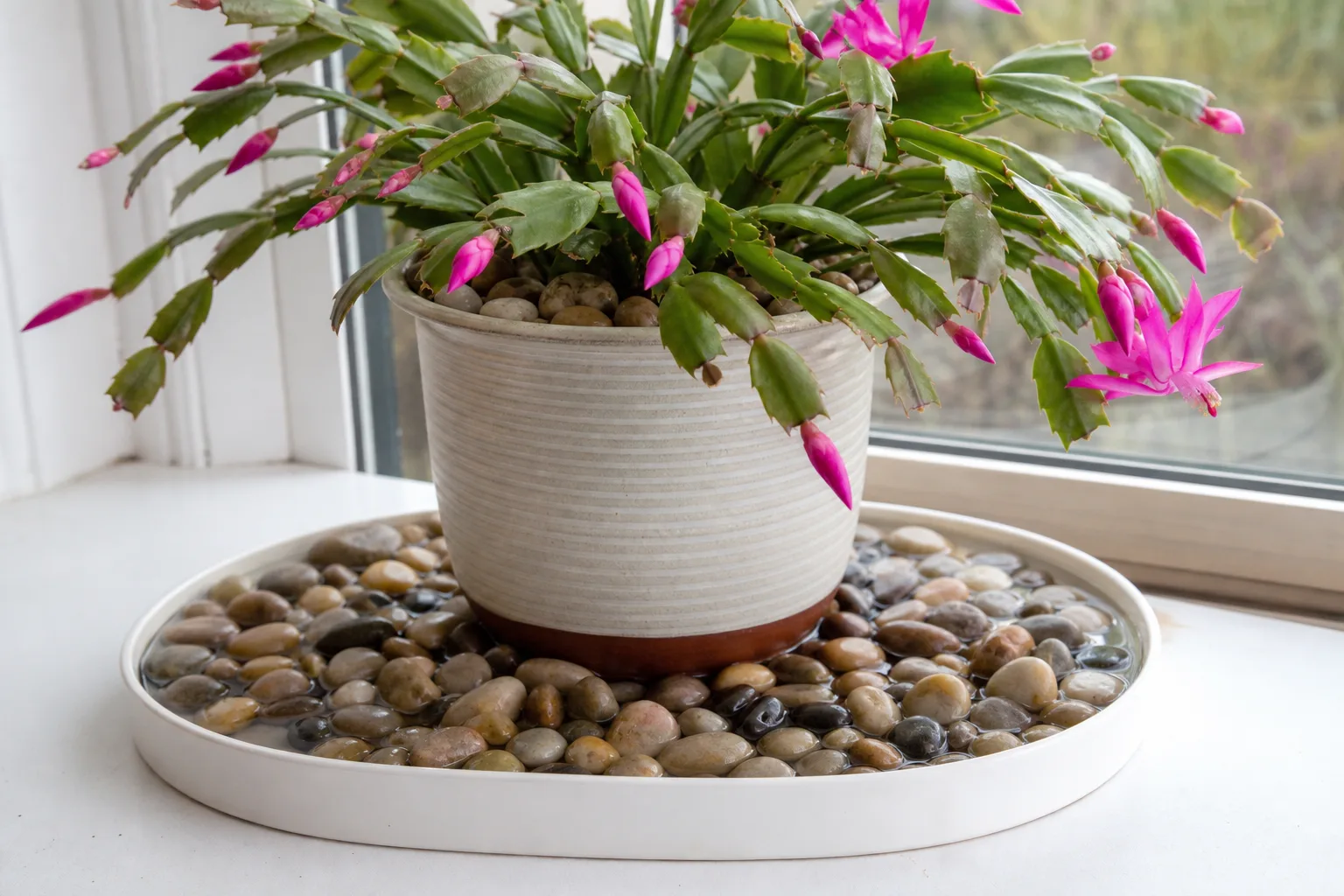
Humidity can help in a heated, dry home, but it is secondary to light and root-zone drainage. A pebble tray is safe only when the pot sits above the waterline on the stones; the pot base should not stand in water. A humidifier placed nearby can be more predictable, especially when the plant is away from a bright bathroom or kitchen.
Read the pot by feel and weight instead of following a calendar. A dry surface does not always mean a dry root ball, especially when the container is deep or the mix has compacted. Push a finger into the upper layer, lift the pot before and after watering, and notice how quickly it becomes light again. Those observations let you adjust for winter heating, a cool room, a hanging basket, or a glazed pot without turning sugar water into a guess at what the plant needs.
Fertilizer labels are useful because they disclose what is actually being supplied. The three numbers describe nitrogen, available phosphorus, and soluble potassium; a balanced product also may include the smaller amounts of calcium, magnesium, sulfur, and micronutrients that a soilless mix lacks. Table sugar supplies none of that complete package. Avoid stacking fertilizer, compost tea, Epsom salt, and homemade additives simply because the plant is not blooming. One appropriate product, used during active growth, is easier to evaluate and less likely to burn roots than a rotating set of remedies.
Water quality can matter over years, but it is not a reason to switch to sugar. If your tap water leaves a heavy white crust on the soil or pot rim, occasionally flush with plain water that drains freely, or use a suitable filtered source. Do not make a sudden water change while the plant is in bud unless there is a clear problem; consistency still matters more than chasing an ideal recipe.
Diagnose the Real Cause of a Stressed Plant
If you are considering sugar water, pause and inspect four things in order: the soil, the roots, the light, and the temperature history. The same symptom can have opposite causes. Limp segments in dry soil suggest thirst; limp segments in wet soil suggest root trouble, and adding more liquid to the second plant makes the problem worse.
Wrinkled or limp segments: Check the pot before watering. If the mix is dry several inches down and the pot drains freely, soak it with plain water and let it drain. If the mix is wet, smells sour, or the plant remains limp for days, unpot it and inspect for brown, mushy, or collapsing roots.
Yellow, soft, or dropping segments: Overwatering, cold wet soil, root loss, and harsh direct sun are more useful starting points than presumed sugar deficiency. Wisconsin Extension lists prolonged moisture, shriveling despite watering, reduced growth, and self-pruning as possible signs of root loss. Do not fertilize or sweeten the water until the root system is known to be functional.
No buds: Check whether the plant is actually a Thanksgiving or Easter cactus, then review the last 6 to 8 weeks. Missed darkness, warm nights, artificial light, a major move, too much nitrogen, low light, or a plant that is still rebuilding after root damage can all delay flowering.
Buds falling: Look first for a change. A moved plant, cold draft, heat vent, sudden sun, dry spell followed by flooding, or waterlogged mix can each cause bud drop. Gardening Know How recommends a process of elimination for bud drop because watering, humidity, temperature, light, and feeding can overlap (Gardening Know How). Keep the plant steady while you correct one variable at a time.
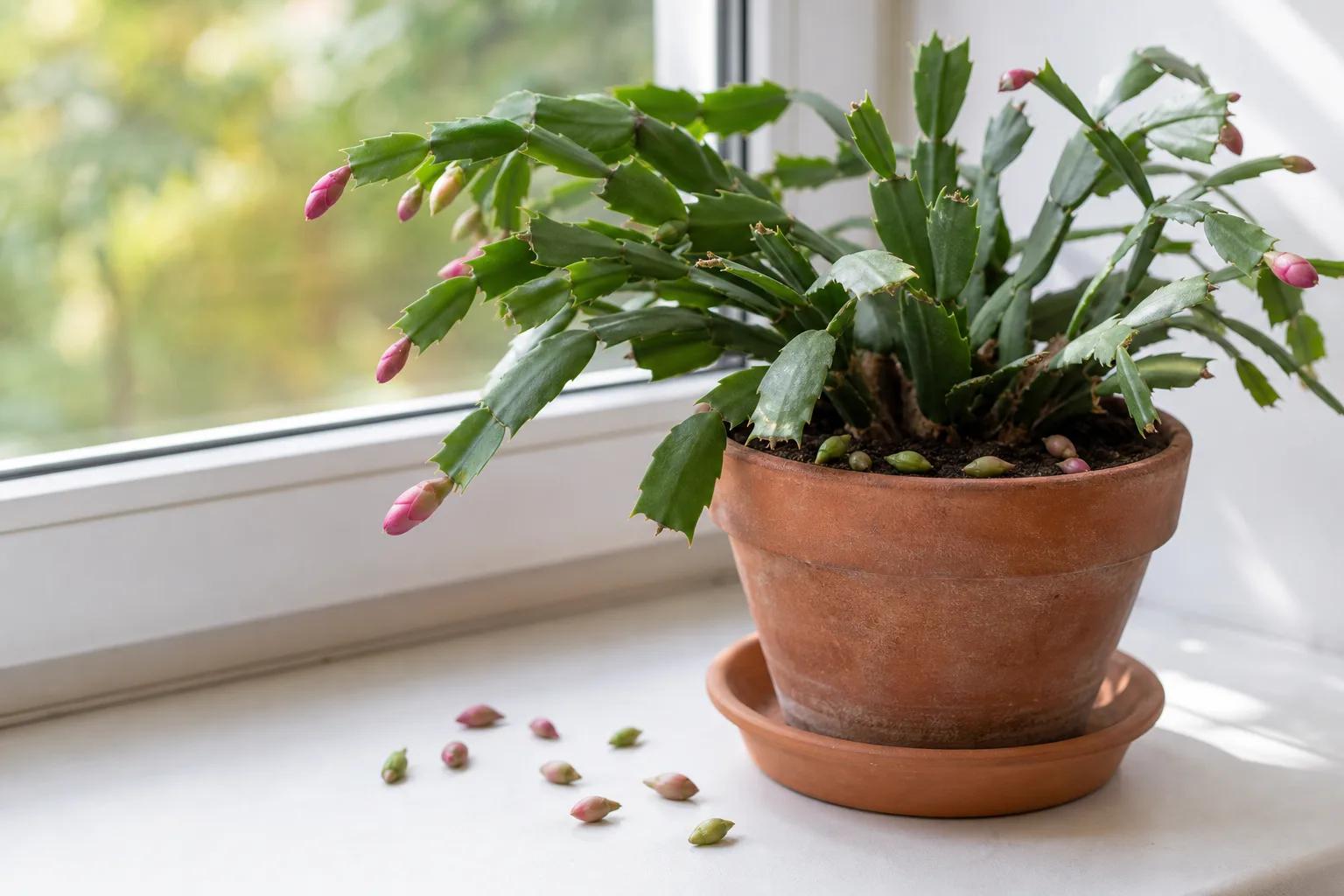
Mold, gnats, or sticky soil: If these appeared after sugar water, remove fallen debris and let the surface dry to the plant’s normal watering threshold. Scrape away a thin contaminated surface layer if the roots and mix otherwise look healthy. Persistent mold, a sour smell, or a pot that stays wet calls for a root inspection and fresh, airy mix—not a stronger home remedy.
If You Already Used Sugar Water
Do not try to counter sugar water with fertilizer, vinegar, baking soda, cinnamon, or another additive. The safest response is to stop the experiment and return to the plant’s normal care while you check the drainage and the roots.
If the plant is healthy, the solution was weak, and the pot drains freely, water once with plain room-temperature water until some runs from the bottom. Discard the runoff and let the mix return to its normal moisture level. This is a practical rinse, not a reason to keep the soil saturated; repeated flushing is risky in a poorly draining pot.
If the pot stays wet, the segments are soft, or there is a sour odor, skip the rinse and inspect the root zone instead. Remove dead roots with clean scissors, repot into fresh well-drained mix, and place the plant in bright indirect light while it recovers. Take a few healthy segment cuttings as insurance if the main root system is severely damaged; holiday cacti root readily from short, callused stem cuttings, but a stressed plant may take time to rebound.
For the next several weeks, do not add fertilizer until you see clear new growth. A single application of sugar water is unlikely to determine the plant’s fate, but continuing it can hide the real diagnosis. Record when you watered, where the plant sits, and whether the soil was dry; that simple log is more useful than trying several remedies at once.
Conclusion
Sugar water is not good for a Christmas cactus. It does not replace photosynthesis, does not provide complete nutrition, and does not supply the long nights and cool, stable conditions that trigger holiday flowers. A strong or repeated solution can also create concentration stress, residue, mold, and pest problems in a small pot.
Give the plant what the biology actually calls for: bright indirect light, a freely draining mix, plain water applied when the soil has partly dried, balanced fertilizer only during active spring and summer growth, and a consistent 6-to-8-week period of long nights and cool temperatures before bloom. If the plant is already struggling, inspect the soil and roots first. The most reliable bloom “secret” is not a sweetener—it is a calm, seasonal routine.



