How to Grow and Care for Calathea Indoors
A complete calathea care routine: choose the right window, water by soil moisture, prevent root rot, raise humidity, and fix common leaf problems.
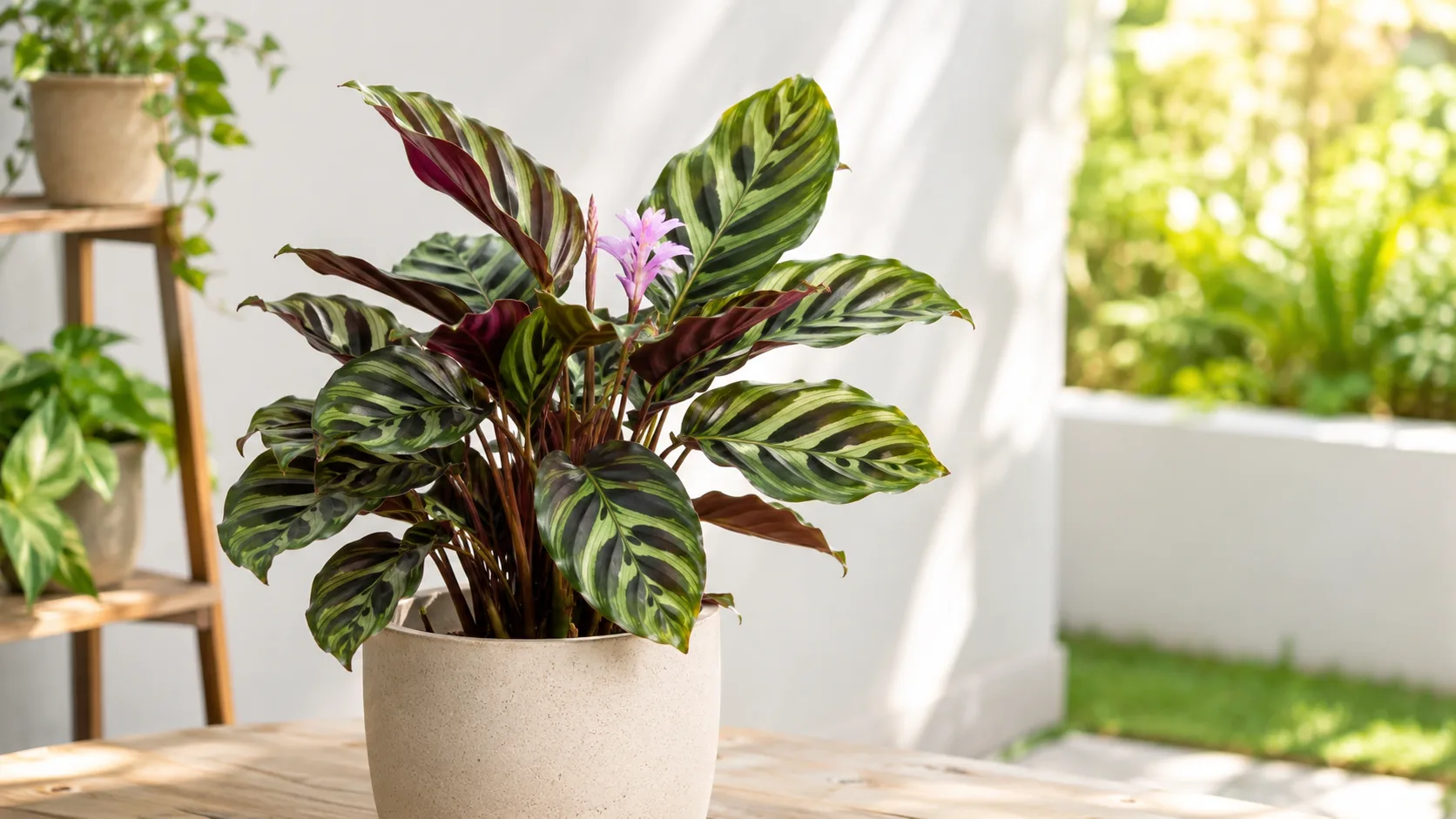
Put a Calathea in bright, filtered light, then water it when the upper layer of mix has started to dry—not when the calendar says it is Thursday. The combination that keeps these patterned leaves attractive is moisture without saturation, humidity without stagnant air, and warmth without hot drafts.
Calatheas are tropical foliage plants in the prayer-plant family, and the name covers plants now often sold under related genera such as Goeppertia, Ctenanthe, and Stromanthe. Their care is similar enough for an indoor routine, but the leaves give you the final vote: crisp edges, fading color, yellowing, or stalled growth tell you which part of the setup needs a closer look.
Calathea care at a glance
Use this table as a starting point, not a substitute for observing the pot. The best schedule changes with pot size, season, window exposure, mix, and whether your home runs heating or air conditioning.
| Care factor | Reliable indoor starting point | What tells you to adjust |
|---|---|---|
| Light | Bright, indirect or filtered light; no hot afternoon sun | Bleached or scorched patches = too much; weak growth = too little |
| Water | Water when the top 1–2 inches feel partly dry; soak and drain fully | Wet mix for many days = too much; dry, curling edges = too little or too much moisture loss |
| Soil | Moisture-retentive but airy, peat-free mix in a pot with drainage | Sour smell, slow dry-down, or mushy stems = root-zone trouble |
| Temperature | About 65–75°F (18–24°C), with few swings | Curling, wilting, or damage after a draft = move from the stress |
| Humidity | Stable moderate-to-high humidity; 50–60% is a useful household target, with 60–80% more forgiving for sensitive plants | Brown tips plus a dry room = check humidity at leaf height |
| Fertilizer | Half-strength balanced liquid feed during active growth, about monthly | Crust, brown margins, or stalled roots = pause and flush |
| Repotting | Only when the clump fills the pot or the mix stays wet too long | Roots circling tightly, fast dry-down, or poor drainage |
The Royal Horticultural Society’s Calathea growing guide gives the same underlying priorities: warm, humid conditions; bright but indirect light; evenly moist compost while growing; less water in winter; and peat-free compost when repotting.
Understand the plant before changing its care
Calathea leaves emerge rolled from the center of a clump and may lift or fold after dark. This movement, called nyctinasty, is normal for many members of the prayer-plant family; it is not proof that the plant is thirsty or wilting. A leaf that rises at night and opens again with daylight is behaving normally. A leaf that stays curled, limp, or crispy all day needs diagnosis.
These plants come from warm, shaded environments where rain is frequent during active growth, but the root zone still has air and drainage. That combination explains the classic Calathea contradiction: the plant dislikes drying to dust, yet a pot that stays saturated can decline faster than one that dries slightly between waterings.
The care label can also be confusing. The RHS notes that many plants sold as Calathea have been reclassified into Goeppertia, Ctenanthe, or Stromanthe. For a home grower, the useful takeaway is not to argue with the label; it is to match the plant’s leaf size, pot size, and drying speed to the routine.
Choose light by the leaves, not the label
Calathea needs enough light to grow, but direct summer sun through glass can scorch or bleach patterned foliage. A spot a few feet back from a bright east- or west-facing window, or behind a sheer curtain, is a safer starting point than a dark corner or an exposed south-facing sill. The RHS recommends bright light out of direct sun and suggests adjusting the window position seasonally as winter light weakens.
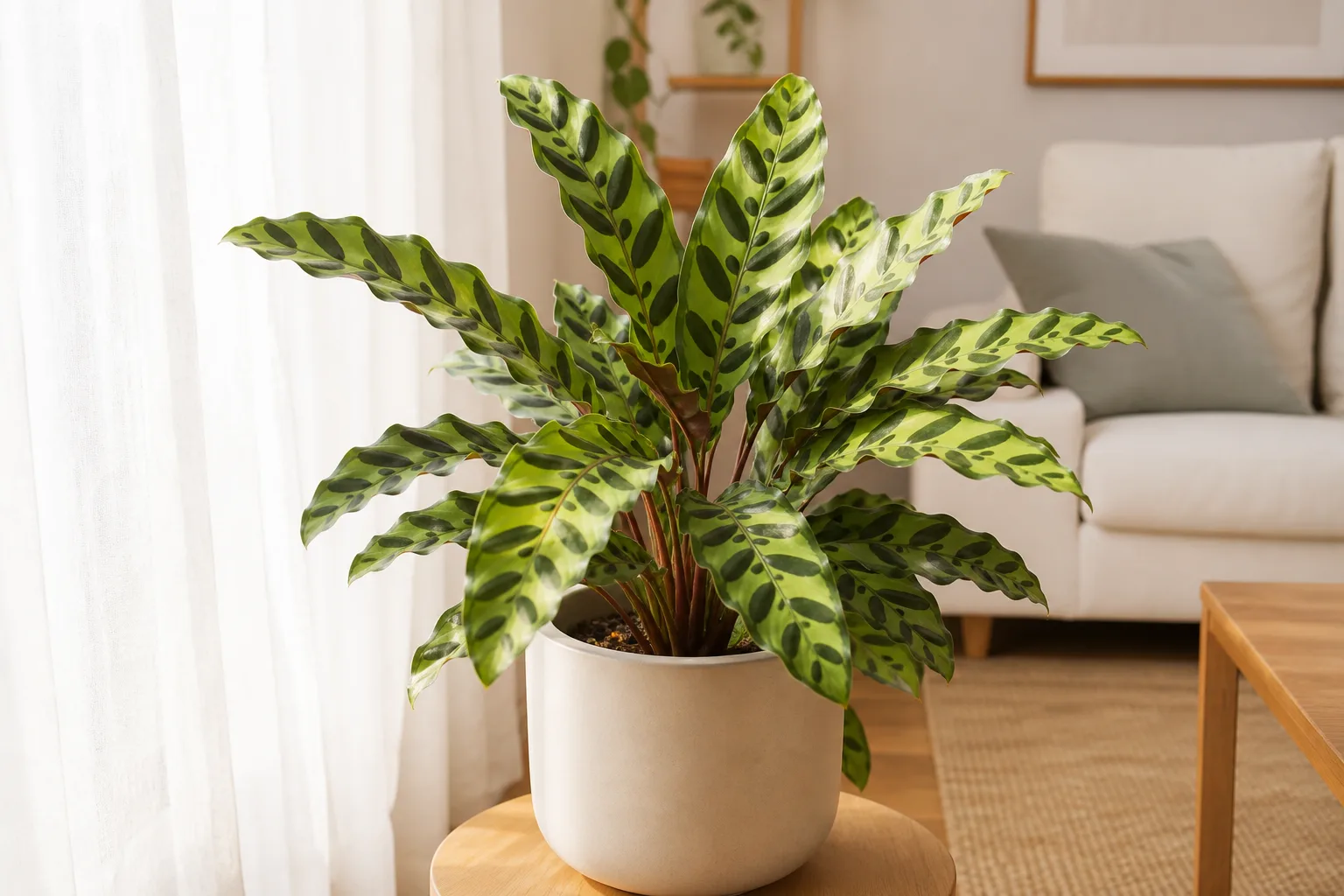
If the plant is growing slowly but leaves retain strong color and do not stretch, give it more time before adding a grow light. If new leaves are much smaller, stems are reaching toward the window, or the center of the clump looks sparse, move it closer to filtered light or use a grow light on a regular timer. Low light also slows evaporation, so a plant in a dim room must be watered less often than the same plant in a brighter room.
Watch the pattern of damage. Pale, tan, crispy patches on the window-facing side point toward direct sun. Uniformly dull color with weak new growth points toward insufficient light. Move gradually; a plant grown in shade can burn if transferred directly into intense sun, even if the species can tolerate brighter conditions after acclimation.
Build a pot and soil system that stays airy
The goal is not “wet soil.” The goal is a root zone that holds water long enough for the plant to use it, then releases excess water and pulls air back in. Use a container with an unobstructed drainage hole and place it inside a cachepot only if you can lift the inner pot out to drain after watering.
Avoid choosing a much larger pot to give the plant room to grow. Extra mix around a small root ball remains wet longer, which raises the risk of root rot. The RHS recommends moving up only one or two pot sizes when the root ball has filled the existing container.
A practical indoor Calathea mix
For a simple peat-free blend, combine two parts quality indoor potting mix, one part fine orchid bark, and one part perlite or pumice. The mix should clump lightly when squeezed, then fall apart when tapped. If water races straight through a dry root ball, add a little more moisture-retentive mix; if the center stays wet for a week in a warm room, add more aeration and check that the drainage hole is open.
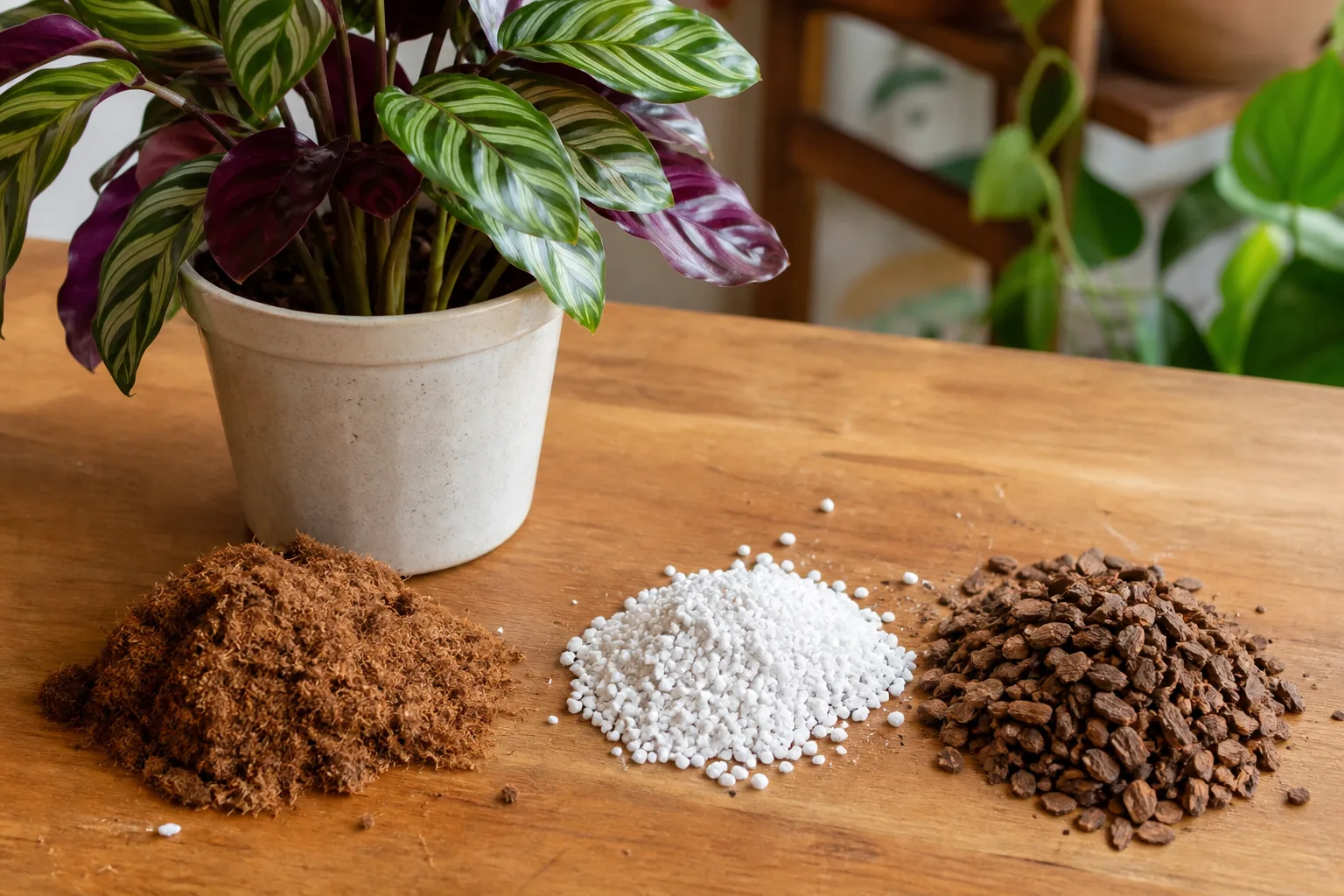
Do not put a layer of gravel in the bottom of the pot as a substitute for drainage. It reduces the volume available for roots and does not make a pot with blocked holes drain properly. Improve the mix throughout the root zone, and keep the crown—the point where stems meet the soil—at the same depth it had before.
Water by root-zone moisture, not by calendar
Check the soil with a finger or wooden skewer about an inch or two below the surface. When that layer feels partly dry but the root ball is not bone-dry, water thoroughly until excess runs from the drainage hole. In a warm, bright room this may happen weekly; in winter, a dim or cool room may take much longer. A fixed weekly schedule is only a reminder to test, not a rule.
The Epic Gardening watering guide for Calathea similarly recommends using the soil-touch test and adjusting for season, container, light, and potting medium. It cautions that a Calathea can show brown or yellow leaves after both overwatering and underwatering, which is why the feel of the mix matters more than the symptom alone.
Water quality is the second half of the routine. If a plant is kept evenly moist but develops recurring brown margins, try filtered, reverse-osmosis, distilled, or collected rainwater for several waterings. Hard-water minerals, fluoride, fertilizer salts, and chlorine-related treatment can all complicate leaf-edge damage. The RHS notes that letting tap water stand can allow chlorine to dissipate, but standing water does not remove hardness or fluoride; do not expect an overnight rest to solve a mineral problem.
The watering method that prevents wet feet
- Test the mix before watering. If it is still wet at the test depth, wait and check again later.
- Take the inner pot to a sink or tray and water the soil surface slowly until water drains freely.
- Let the pot drain completely. Empty the saucer or cachepot within about 15 minutes rather than leaving roots in runoff.
- Return the plant to its light position and check the soil again before the next watering.
If the soil has become so dry that water runs down the gap at the pot edge, water once, wait 10 minutes, then water again so the root ball can rehydrate. Do not respond to one wilted afternoon by watering every day; that turns a short dry spell into a prolonged saturation cycle.
Give Calathea stable warmth and useful humidity
Keep Calathea in a stable room around 65–75°F (18–24°C), away from heating vents, radiators, exterior doors, and cold window glass. The RHS recommends roughly 61–70°F (16–21°C) and avoiding drafts and rapid changes; the Missouri Botanical Garden rattlesnake plant profile lists 65–75°F as a typical indoor range. The overlap matters more than a single perfect number: steady conditions beat a warm room that swings sharply.
Humidity affects how quickly leaves lose water through transpiration. In a dry room, a Calathea can have moist soil and still develop crisp edges because the leaves are losing water faster than the roots can replace it. Measure with a hygrometer near the foliage rather than trusting a bathroom label or a pebble tray that sits across the room.
As a practical target, start around 50–60% relative humidity. If the room is consistently below 40% and the plant shows crisp edges, raise it; a stable 60–80% can be more forgiving for sensitive cultivars, but only if air moves gently and leaves are not kept wet. Fine Gardening’s account of a large Calathea collection describes higher humidity and protection from direct sun as the changes that made the clearest difference for one experienced grower.
Pebble trays, grouping, or a humidifier?
A humidifier is the most predictable way to raise humidity across a room. Grouping plants can create a slightly more humid pocket, but it works best in an already reasonably humid room and should not become a dense, stagnant cluster. A bathroom can be excellent when it has a window or grow light; a windowless bathroom is still a dark room.
A pebble tray is a small-scale option. Put pebbles in a shallow, watertight tray, add water below the tops of the stones, and set the pot on the stones so the pot base stays above the waterline. It can add moisture immediately around the foliage, but it cannot turn a dry, heated room into a greenhouse. Keep the tray clean, refill it before it dries, and skip it if it encourages you to leave the nursery pot sitting in water.
Feed lightly during active growth
Feed only when the plant is actively producing leaves and has adequate light. Use a balanced liquid houseplant fertilizer at half the label strength about once a month in spring and summer, and reduce or stop feeding during the darker, slower months. The RHS recommends monthly feeding during the growing season and avoiding autumn and winter feeding.
Never fertilize bone-dry mix. Water the plant first if the soil is dry, then feed at the next appropriate watering. A white crust on the mix or pot rim, brown margins that appear after repeated feeding, or a sudden decline after fertilizer suggests salt accumulation or root stress; pause feeding and flush the pot with clean, low-mineral water, allowing it to drain fully.
Prune, clean, and rotate without stressing the plant
Calathea does not need shaping. Remove a fully brown or yellow leaf by cutting its stalk close to the soil with clean scissors. A leaf that is only partly damaged can stay if it is still contributing energy; trimming a green leaf into a decorative shape does not repair the damaged tissue and creates another wound.
Dust patterned leaves gently with a soft, damp cloth or rinse them with lukewarm water when the plant can dry quickly afterward. Clean foliage lets you inspect the undersides for pests and helps the plant use the light it receives. Rotate the pot a quarter turn every week or two if the clump leans toward a window, but do not keep moving it between rooms while it is recovering.
Repot when the root ball says it is time
Repot in spring or early summer when the plant is actively growing, unless a drainage failure or root rot requires earlier action. Signs include roots circling tightly around the root ball, water running straight through without wetting the mix, a pot that dries out unusually fast, or old mix that has collapsed into a dense, slow-draining mass.
Choose a container only one or two sizes larger, loosen the outer roots gently, and use fresh airy mix. Keep the crown at its previous depth and water once to settle the soil. A Calathea may pause or lose a leaf after repotting; give it stable warmth, filtered light, and normal dry-down time rather than adding fertilizer or moving it repeatedly.
If the plant is declining in wet mix, unpot it and inspect the roots. Healthy roots are firm and light; brown, mushy, foul-smelling roots need to be removed with clean scissors before the plant goes into fresh mix. A larger pot does not fix root rot, and adding humidity does not compensate for roots that cannot function.
Propagate a healthy clump by division
Division is the dependable home method for Calathea because a mature plant naturally grows as a clump. The RHS recommends dividing in spring and giving each section several leaves, then keeping new divisions warm, humid, and moist until growth resumes.
Water the parent plant the day before dividing. Slide it from the pot, brush away just enough mix to see where the clump separates, and pull apart sections that have their own roots and several shoots. Use a clean knife only when roots are tightly interwoven; do not turn one tiny crown with no roots into a “division.”
Pot each section in a small container of fresh mix at the original depth. Water once, let excess drain, and keep the divisions in bright indirect light with steady warmth. They may look still for several weeks while roots settle. Seeds are possible in specialist conditions but are slow and unpredictable for a home grower; a healthy clump is a much better starting point.
Choose a Calathea that fits your room
Choose by space, light, and tolerance—not only by the leaf pattern in the store.
- Calathea makoyana, the peacock plant, has a manageable size and is often suggested as one of the easier Calatheas for a beginner. Fine Gardening’s experienced collector specifically recommends it as a starting species.
- Calathea orbifolia has broad, silver-striped leaves that make a dramatic focal point, but it needs room for a wide clump and shows dry edges quickly when the air is harsh.
- Calathea lancifolia, the rattlesnake plant, has long, wavy leaves and purple undersides. Missouri Botanical Garden describes it as a tropical perennial usually grown indoors outside frost-free regions.
- Calathea roseopicta cultivars, including medallion types, are valued for painted, rounded leaves. Keep the plant away from direct sun so the contrast does not fade or scorch.
- Calathea crocata, sometimes sold for its orange flowers, is the better choice if blooms matter, but flowering indoors still depends on light, maturity, and a stable growing cycle. Most Calatheas are primarily foliage plants in the home.
Troubleshoot the symptom before treating it
Start with the newest leaves and the soil, then inspect the room. Change one major variable at a time when possible; changing light, pot, fertilizer, water, and humidity all in one afternoon makes the next symptom impossible to interpret.
Brown tips or brown edges
Check in this order:
- Dry root ball: If the mix is dry well below the surface, water deeply and return to a soil-test routine.
- Dry air or hot draft: Measure humidity at leaf height and move the plant away from vents, heaters, and exterior doors.
- Minerals or fertilizer salts: If moisture and humidity are reasonable but browning continues, switch to low-mineral water and pause fertilizer; flush the mix if there is visible crust.
- Direct sun: Damage concentrated on the window-facing side suggests scorch. Filter the light rather than moving the plant into darkness.
- Pests: Fine stippling, webbing, cottony clusters, or sticky residue needs an insect check, not simply more water.
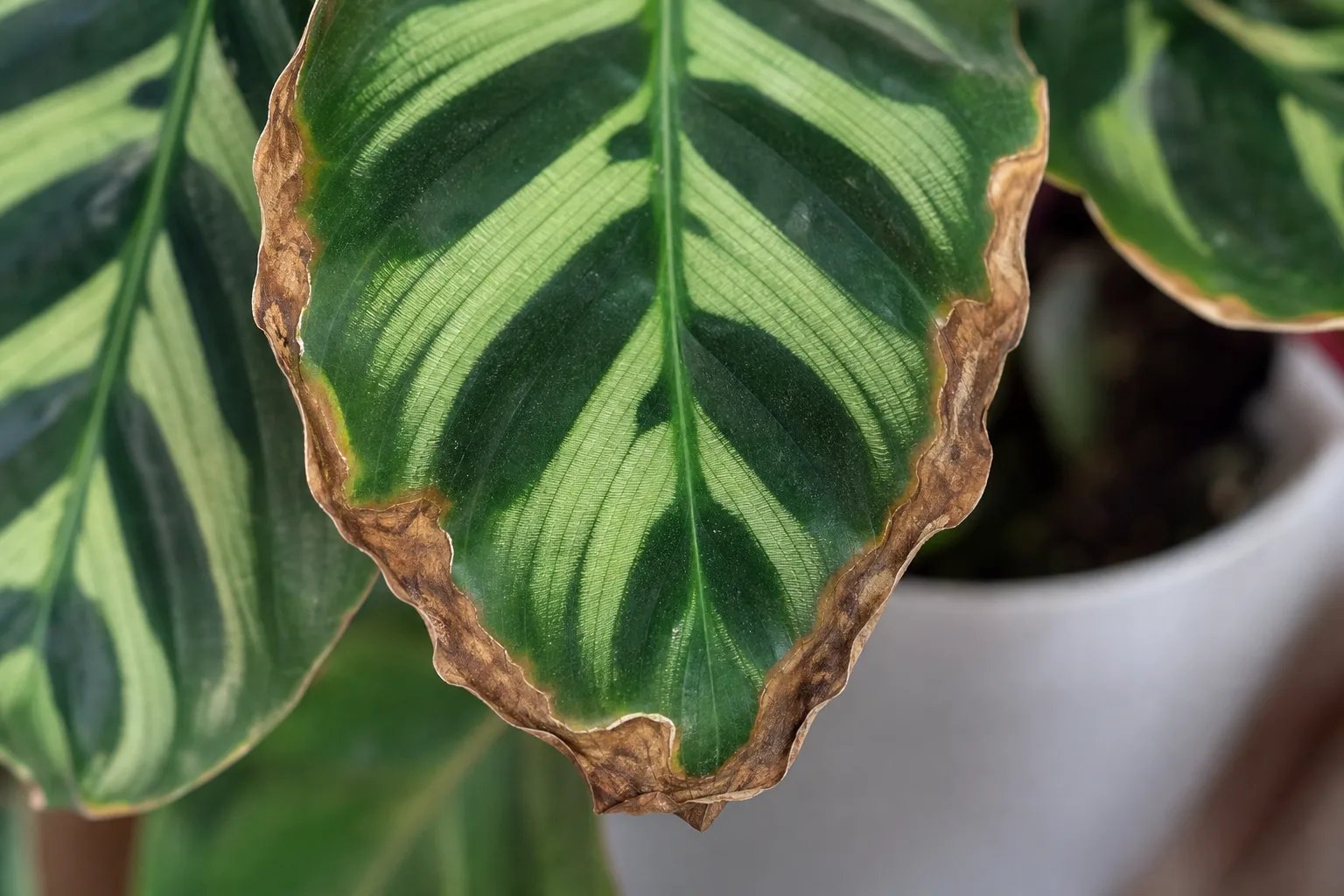
RHS identifies low humidity as a common cause of browning, while Epic Gardening also flags inconsistent moisture, water quality, and fertilizer buildup. The practical lesson is that brown tips are a symptom, not a diagnosis. Existing brown tissue will not turn green again; judge a fix by whether new leaves emerge healthier and the damage stops spreading.
Yellow leaves, curl, or droop
One old lower leaf yellowing can be normal aging. Widespread yellowing, especially while the mix remains wet, points toward overwatering, poor drainage, low light, or roots that are no longer functioning. Let the mix dry to the appropriate test depth, verify that water exits the pot, and inspect roots if the soil stays wet for an unusually long time.
Leaves curling inward can mean dry soil, low humidity, direct sun, a cold draft, or natural nighttime movement. If the leaves reopen in the morning, leave them alone. If they stay curled in daylight, compare the soil and room conditions before watering again.
Soft stems at the soil line, a sour smell, and persistent droop are more urgent than a few crispy edges. Unpot the plant, cut away mushy roots, and repot into fresh airy mix. Do not keep a rotting plant standing in a pebble tray or sealed humidity dome.
Pests, fungus gnats, and root problems
Inspect the undersides of leaves, petioles, and the soil surface every time you water. Fine webbing and pale stippling suggest spider mites; white cottony clusters suggest mealybugs; firm bumps on stems suggest scale; clusters of tiny flies suggest fungus gnats. The RHS problem guide lists spider mites, mealybugs, scale, and fungus gnats among the issues that appear when Calatheas are stressed.
Isolate a visibly infested plant first. Remove what you can see, clean the foliage, and use only a product labeled for the pest and plant, following its directions and repeat interval. Fungus gnats are a signal to correct persistently wet soil: use sticky traps for adults, improve the dry-down cycle, and do not turn a humidity-loving plant into a waterlogged one. The Epic Gardening problem guide also emphasizes quarantine and repeated checks because one treatment rarely reaches every life stage.
Move Calathea outdoors only with a plan
Calathea can enjoy a warm summer outdoors, but “tropical” does not mean “full sun.” Choose deep shade or bright dappled shade with protection from wind and hard rain. Acclimate over a week by starting in sheltered shade and increasing morning light gradually; never move a plant from a dim room straight into afternoon sun.
Bring it back indoors before cool nights, drafts, or a sharp temperature drop. Gardening Know How’s winter-care guidance also recommends inspecting an outdoor Calathea for pests and acclimating it gradually before bringing it inside. Check leaf undersides, stems, pot rims, and drainage holes before the plant rejoins your indoor collection. If you grow a Calathea outside year-round, confirm the species’ requirements for your climate; the Missouri Botanical Garden profile lists rattlesnake plant as hardy only in warm Zones 11–12.
Flowers, nighttime leaf movement, and pet safety
The foliage is the main event. Some Calatheas can flower, and C. crocata is especially associated with orange blooms, but many indoor specimens never flower. Give a blooming plant the same stable light, water, and warmth; do not increase fertilizer sharply to force flowers.
Calathea is also one of the more reassuring choices for cat households. The ASPCA lists Calathea spp. among plants non-toxic to cats. Non-toxic does not mean edible: chewing any plant can cause stomach upset, and an animal that is ill after ingesting plant material should be discussed with a veterinarian.
Conclusion
Successful Calathea care indoors comes down to reading the whole system. Give the plant bright filtered light, a small pot with airy mix, water only after the surface layer begins to dry, and stable warmth with humidity that matches your room. Then use symptoms as clues: brown edges trigger a moisture, air, water-quality, sun, and pest check; yellowing triggers a soil and root check; folded leaves trigger a distinction between normal nighttime movement and all-day stress.
Do not chase perfect numbers or rescue every damaged leaf. Calathea grows best when you make one measured change, watch the next leaves, and protect the roots from the two extremes they dislike most: drying completely and staying wet for too long.