How to Grow and Care for Blue Poppy
Himalayan blue poppy care for cool, shady gardens: soil, watering, seed sowing, division, and the climate test that decides success before you buy.
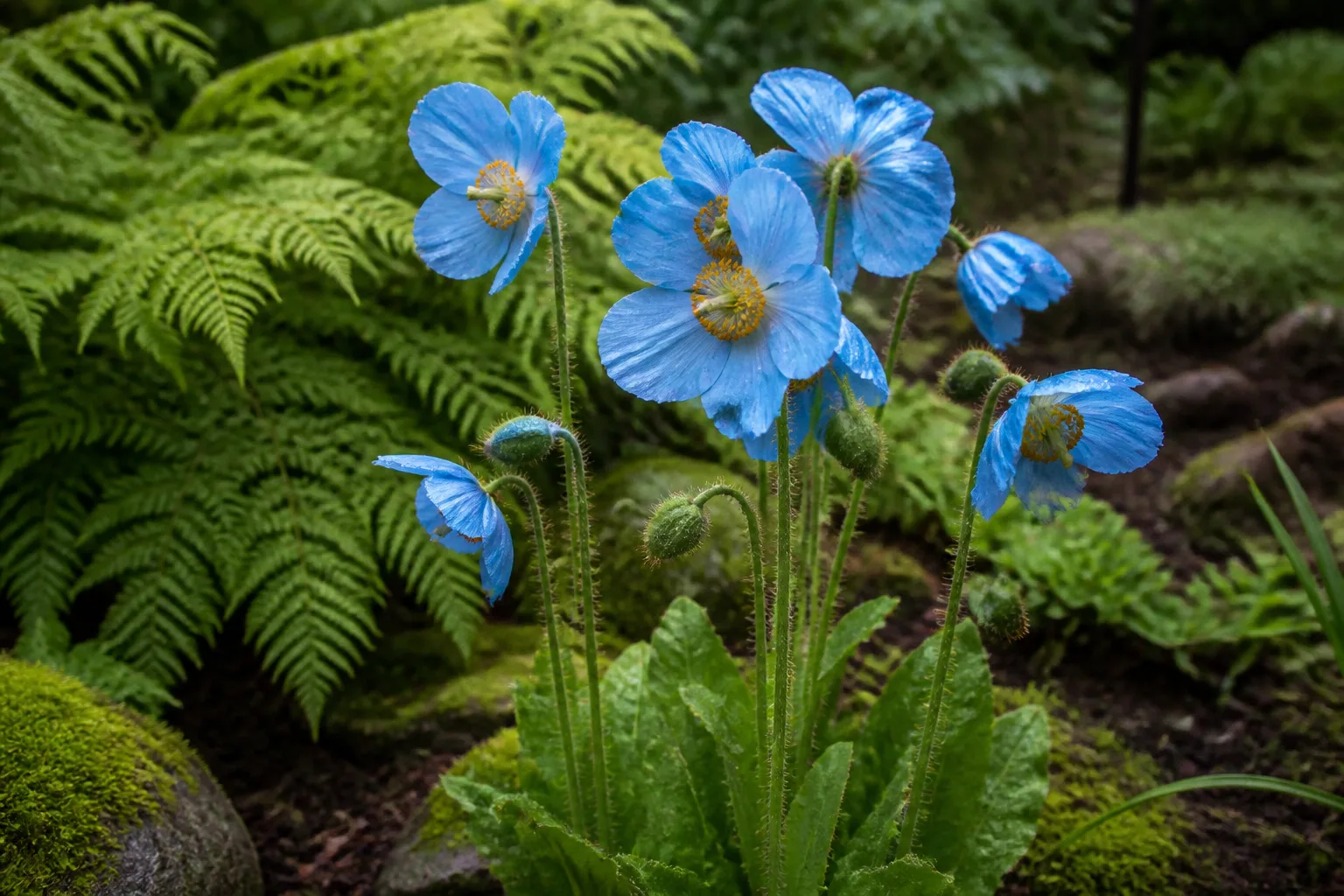
Himalayan blue poppies (Meconopsis) produce some of the clearest true-blue flowers in temperate gardening—and some of the sharpest disappointment when sited in the wrong climate. These are not sun-baked border poppies. They are cool woodland perennials that expect dappled shade, evenly moist humus-rich soil, and summers that stay mild. Get that combination right and a clump can stop traffic in late spring. Force them into a hot, dry, or alkaline yard and they will sulk, fade to purple, or vanish within a season.
Before you order a plant or sow seed, run the climate test below. It saves more heartbreak than any fertilizer ever will.
Is a Blue Poppy Right for Your Garden?
Blue poppies reward gardeners who can mimic a Himalayan woodland floor: filtered light, rich acidic to neutral soil, steady moisture in growth, and dry crowns in winter dormancy. They punish the opposite—baking afternoon sun, sticky summer humidity, drought swings, and heavy winter wet around the crown.
The RHS profile for Meconopsis baileyi describes a short-lived, clump-forming perennial suited only to particular sites: neutral to slightly acid soil enriched with leaf mould, partial shade, shelter from cold dry winds, and areas with cool, damp summers. That is not poetic language. It is a filter. If your summers regularly push past the low 80s °F (27 °C) with low rainfall, or your winters keep soil soggy around dormant crowns, this plant belongs on a wish list—not in your cart.
The Climate Test Most Gardeners Skip
Ask four questions before planting:
Do your summer highs stay mostly below 80 °F (27 °C)? The Missouri Botanical Garden notes that Meconopsis prefers woodland-like conditions with summer temperatures typically below 80 °F. In St. Louis and similar hot-summer interiors, even expert care often fails. Coastal Pacific Northwest, northern New England, upland Scotland, coastal Alaska, and other cool maritime regions are the realistic home range.
Can you keep soil moist but never waterlogged? Blue poppies need constant moisture during active growth yet rot quickly in stagnant winter soil. That tension defines every other care decision.
Do you have partial shade with wind shelter? Open west-facing beds that fry by 2 p.m. are wrong. A fence line, shrub skirt, or tree canopy that delivers bright indirect light is right.
Will someone water while you travel in June? RBGE horticulturists warn that a two-week summer vacation without irrigation can finish a promising clump. Plan automated drip or a reliable neighbor before you invest.
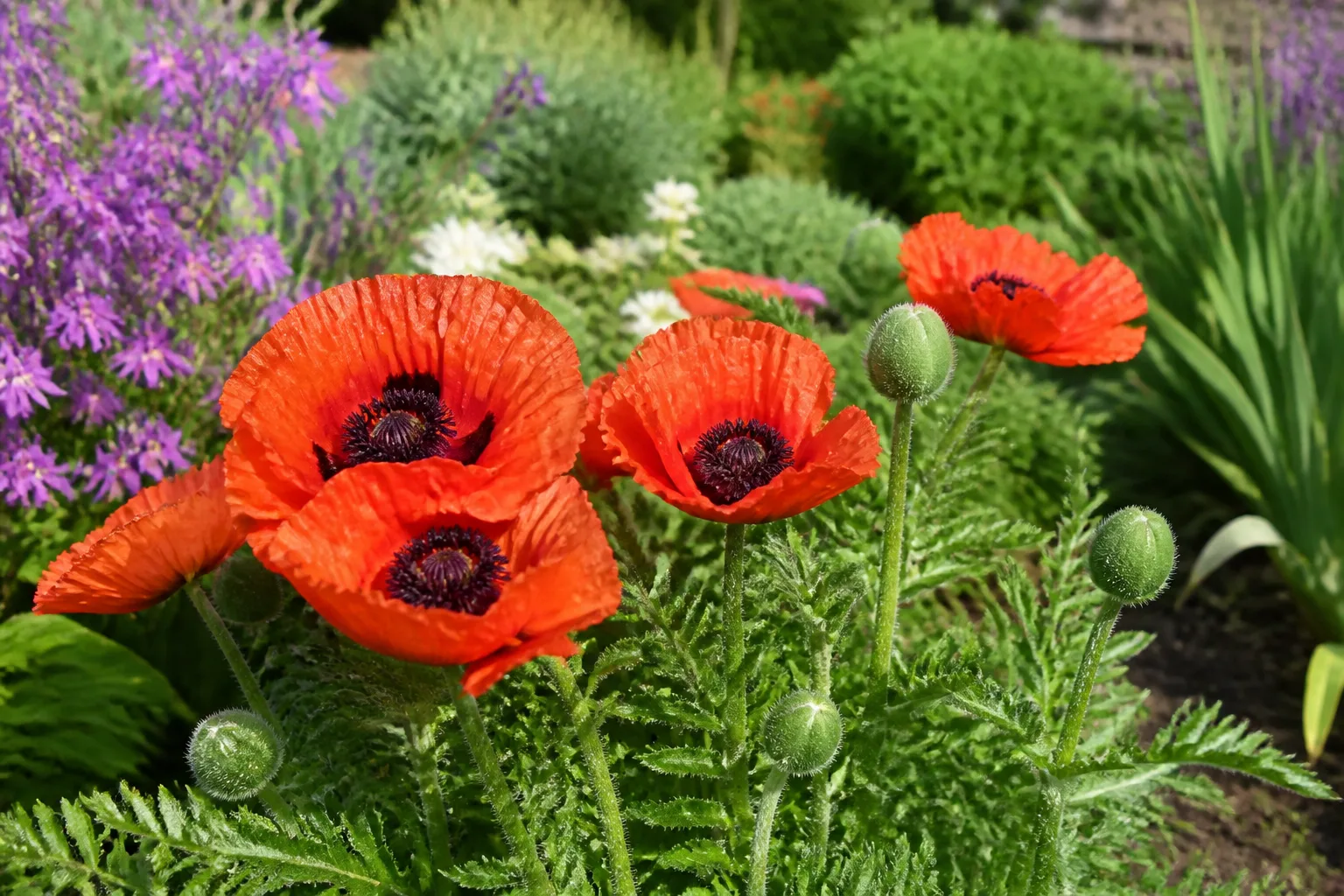
If you answered no to the first question, choose Oriental poppies (Papaver orientale) or another sun-loving perennial instead. If you answered yes to the rest, you have a fighting chance.
Know Your Plant: Names, Types, and True Poppies
“Himalayan blue poppy” refers to big blue-flowered Meconopsis species and hybrids—not the red and orange Papaver poppies most gardeners know. Meconopsis and Papaver both sit in the poppy family (Papaveraceae), but their needs diverge sharply.
| Trait | Himalayan blue poppy (Meconopsis) | Oriental poppy (Papaver orientale) |
|---|---|---|
| Typical light | Partial shade, dappled | Full sun |
| Soil | Humus-rich, acid–neutral, moist | Average, well-drained, tolerates drought once established |
| Summer heat | Poor tolerance above ~80 °F | Tolerates hot dry summers |
| Seedhead shape | Elongated, slender pods | Rounded “pepper pot” capsules |
| Lifespan | Often short-lived clump; some species monocarpic | Long-lived perennial |
True poppies (Papaver) seed freely in sunny borders. Meconopsis may self-sow in ideal cool shade but is finicky about germination and transplanting. Treat them as different plants entirely.
Meconopsis baileyi and the ‘Lingholm’ Hybrid
Naming confusion trips up buyers constantly. Meconopsis baileyi (Bailey’s Himalayan blue poppy) is the currently accepted name for the classic sky-blue species many catalogs still label Meconopsis betonicifolia. The RHS lists betonicifolia as a misapplied synonym of baileyi. Both names appear in commerce; verify you are buying a big blue Meconopsis, not a Welsh poppy (Meconopsis cambrica) or a monocarpic alpine species with different rules.
For most home gardeners, Meconopsis ‘Lingholm’ is the smarter starting point than straight species seed. Discovered in 1996 at Lingholm Gardens near Keswick, England, ‘Lingholm’ is a fertile hybrid of M. betonicifolia (Tibetan blue poppy) and M. grandis (Himalayan blue poppy). Missouri Botanical Garden describes it as producing large sky-blue flowers to 4 inches across on 3–4 foot stems, spreading slowly by offsets in optimum conditions, and setting viable seed—unlike many sterile blue hybrids. RBGE recommends ‘Lingholm’ and ‘Slieve Donard’ as widely available introductions for beginners.
Some Meconopsis species are monocarpic: they flower once, set seed, and die. The big blue garden hybrids are usually clump-forming perennials, but even those are short-lived—often performing well for a handful of years before declining. Plan to propagate replacements rather than assuming a decade clump.
Blue Poppy at a Glance
| Need | Practical target |
|---|---|
| Common names | Blue poppy, Himalayan blue poppy |
| Botanic names | Meconopsis baileyi; often sold as M. betonicifolia; hybrid M. ‘Lingholm’ |
| Family | Papaveraceae |
| Type | Herbaceous perennial (short-lived clump-forming) |
| Mature size | 3–4 ft tall × 1–2 ft spread (M. ‘Lingholm’); species vary |
| Light | Partial shade; bright indirect or dappled light |
| Soil | Humus-rich loam; moist but well-drained; pH 6.0–7.0 (acid to neutral) |
| Hardiness | USDA zones 5–7; RHS H5 |
| Bloom time | Late spring to early summer (often May–July) |
| Flower | Bowl-shaped sky blue, 3–5 in. across, yellow stamens; not fragrant |
| Native range | Eastern Himalaya, Tibet, Myanmar, northwestern Yunnan (China) |
| Maintenance | High — moisture, slugs, site-specific |
Light Requirements for Himalayan Blue Poppies
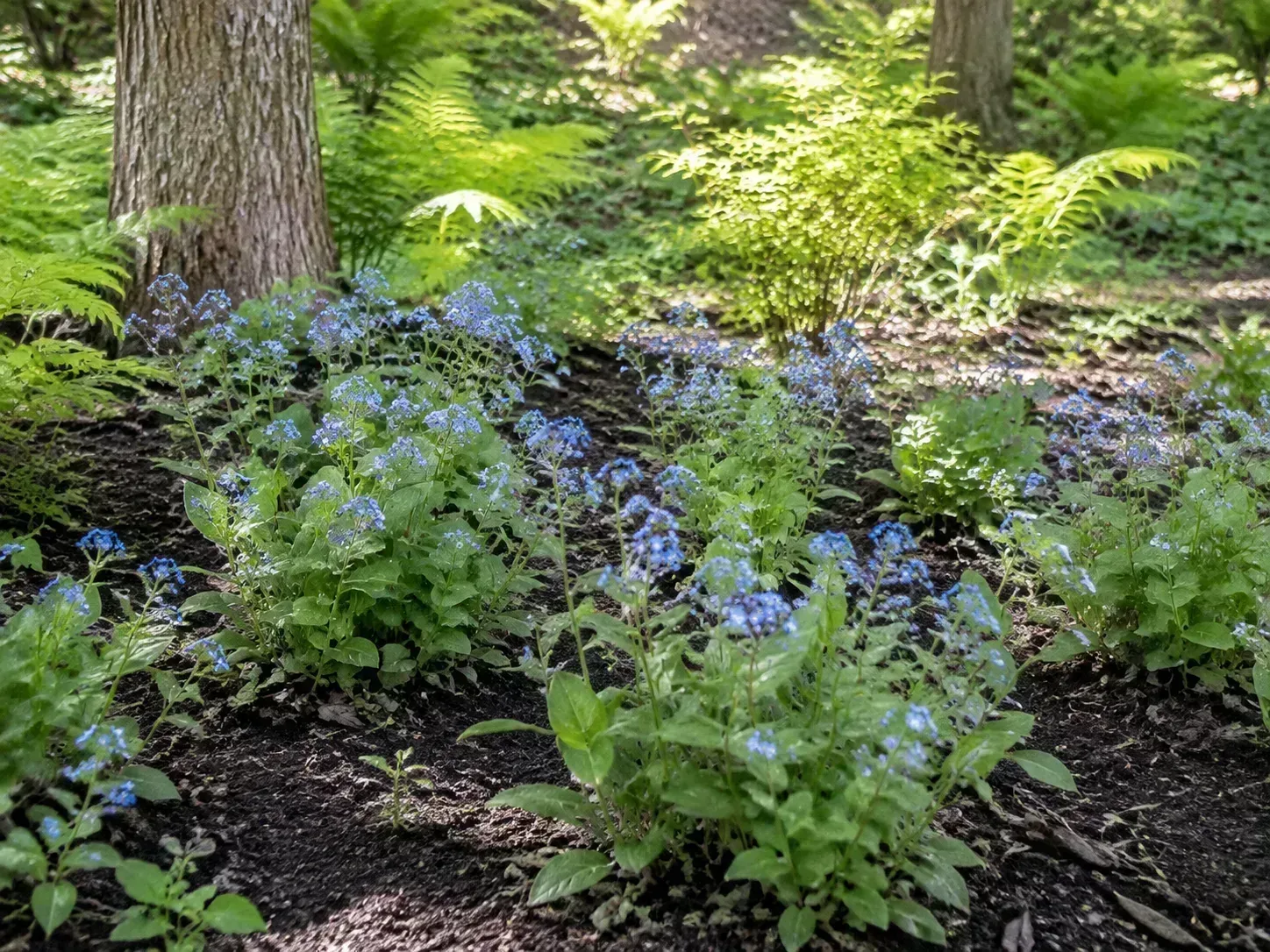
In native woodlands, blue poppies grow beneath deciduous canopy with bright but indirect light. Replicate partial shade: east-facing beds, north-facing borders in cool climates, or spots under high tree canopy that receive morning sun and afternoon protection.
Direct midday sun scorches the hairy foliage and wilts flowers within hours. The exception is genuinely cool maritime gardens where summer afternoons stay mild—in those sites, light morning sun on east exposures can work. Never plant in a south-facing open bed in zone 7 unless something taller filters the afternoon blast.
Wind matters as much as sun. Brittle flower stems snap in exposed gusts. RBGE advises sheltered positions where wind will not bend or shred stems. A hedge, fence, or shrub backdrop reduces desiccation and physical damage.
Soil, Drainage, and Why pH Changes Flower Color
Blue poppies demand moist but well-drained humus-rich soil. Think woodland loam amended with leaf mould or composted bark—not heavy clay that holds winter water, and not sandy grit that dries in a day.
Prepare planting areas deeply. Gardenia’s genus guide recommends digging in 2–3 inches of compost or rotted manure plus fine bark, working amendments 18 inches down, and building a slightly raised mound so winter moisture sheds away from the crown—mimicking snow cover that keeps wild plants dry while dormant.
pH directly affects flower color. Neutral to slightly acid soil (roughly pH 6.0–7.0) produces the clearest sky blue. Alkaline soil pushes blooms toward purple or pink-violet. Test before planting; adjust with sulfur or acidifying organic mulch only if your baseline is high. Lime-heavy beds are a poor match unless you enjoy purple.
Clay can work if structure and drainage are improved with organic matter and grit. Pure sand without humus fails because it cannot hold the steady moisture roots expect during spring growth.
Watering Through the Growing Season and Winter Dormancy
From spring emergence through bloom, never let the root zone dry completely. Blue poppies are not drought-tolerant during active growth. Check moisture weekly; water deeply at the base when the top inch feels dry. Drip irrigation or soaker hoses beat overhead sprinklers, which wet foliage and invite mildew.
After flowering, reduce but do not abandon watering until foliage yellows. In winter dormancy, crowns should stay dry-ish: wild plants endure deep dry snow; saturated crowns rot. The raised mound, sharp drainage, and avoiding low frost pockets where water collects are your winter insurance.
If you garden in a summer-dry climate that still stays cool, mulch heavily and irrigate on a schedule. If summers are both hot and dry, no amount of watering compensates—see the climate test above.
Temperature Limits and Regional Suitability
USDA zones 5–7 appear on most labels, with RHS H5 hardiness (down to around −15 °C / 5 °F). Hardiness numbers describe winter cold tolerance, not summer survival. A zone 6 garden with 95 °F July weeks will fail where a zone 7 coastal garden with fog and 72 °F highs succeeds.
Best regions: Pacific Northwest, coastal British Columbia and Alaska, northern England and Scotland, cool parts of New England, and similar maritime climates. Poor regions: humid Southeast, hot Midwest and Plains summers, low desert, and any interior where summer nights stay warm.
Your Flowers Guide notes peak performance where summers are cool and moist—outside those climates plants are often short-lived even with careful care. That is not a moral failing; it is biology.
Feeding and Mulching
Blue poppies are hungry plants. RBGE mulches with leaf mould and feeds with chicken manure pellets each March. In home gardens, a spring layer of compost or leaf mould (about 2 inches, kept back from the crown) plus a light balanced slow-release fertilizer or diluted liquid feed during active growth matches their nutrient expectations.
Avoid heavy nitrogen that pushes leafy growth at the expense of flowers. A second light feed in midsummer can support offsets in cool climates. Do not bury the crown under mulch—rot starts at the center first.
How to Plant Blue Poppies
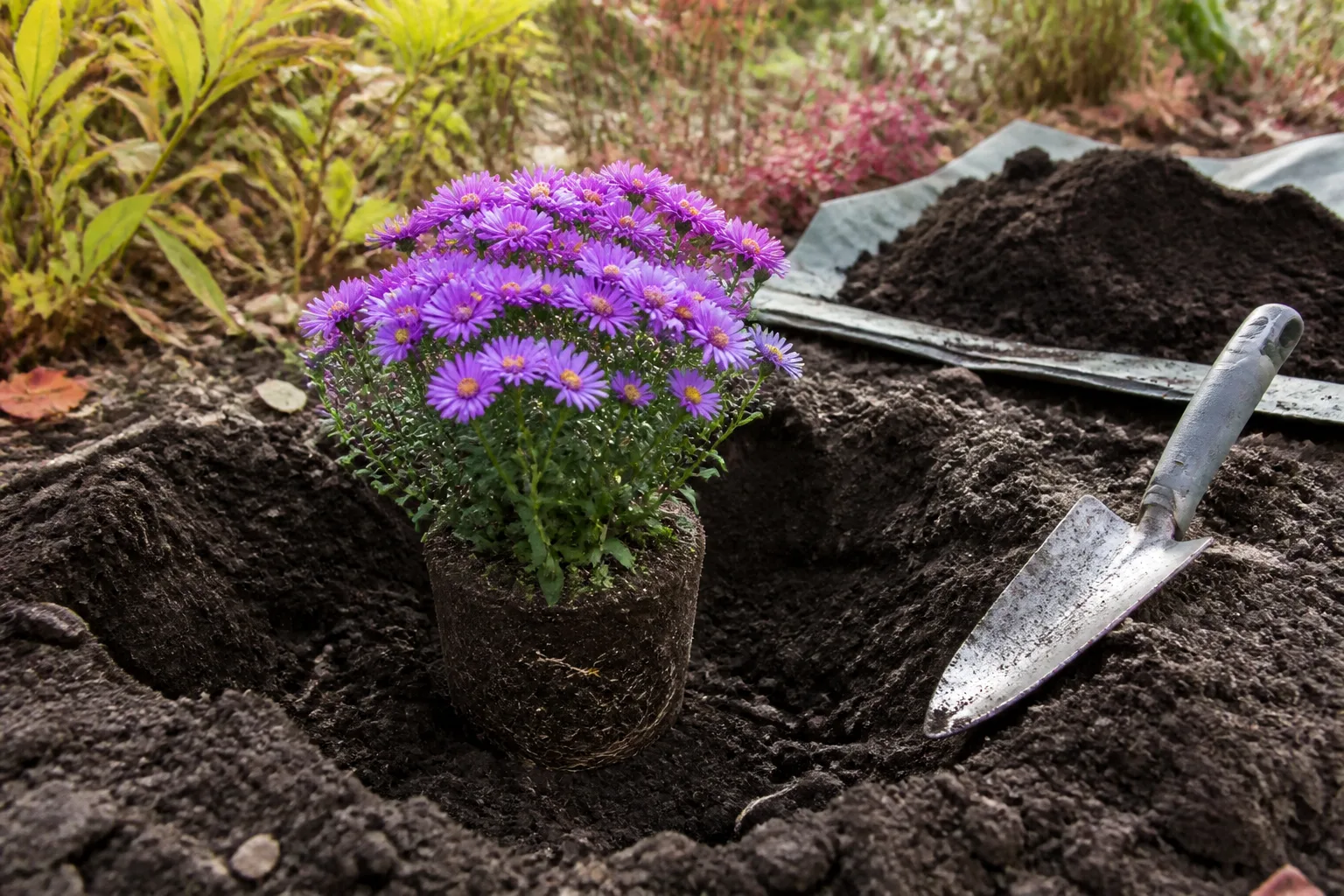
Timing: Plant container-grown plants in spring or autumn when soil is cool and workable. Autumn planting lets roots establish before winter; spring planting suits nurseries that ship dormant crowns.
Spacing: Allow 18–24 inches between plants so air circulates and clumps can expand over several years without immediate crowding.
Steps:
- Test soil pH and drainage. Amend with leaf mould and compost; build a low mound if winter wet is a concern.
- Dig a hole wider than the root ball. Set the plant at the same depth it grew in the pot—never bury the crown.
- Backfill with amended soil, firm gently, and water thoroughly.
- Mulch lightly, leaving a gap around stems.
- If planting first-year seedlings, consider removing any flower buds (see pruning section).
Transplant shock kills more seedlings than slugs. Direct-sow or grow in deep pots/peat pots you can plant whole, minimizing root disturbance at final placement.
Pruning, Deadheading, and First-Year Bud Removal
First-year buds: Snip off flower stems before they open on young plants in their inaugural year. The plant redirects energy into roots and foliage, extending lifespan in a genus known for dying young. Once a clump is established (year two or three), allow blooms.
Deadheading: Remove spent flowers to tidy plants. It may encourage a small second flush in cool, moist summers but do not depend on rebloom.
Autumn cleanup: Cut stems to the base in late autumn after foliage dies back, as RHS cultivation guidance recommends. Leave the crown on its raised, well-drained mound through winter.
Propagation by Seed
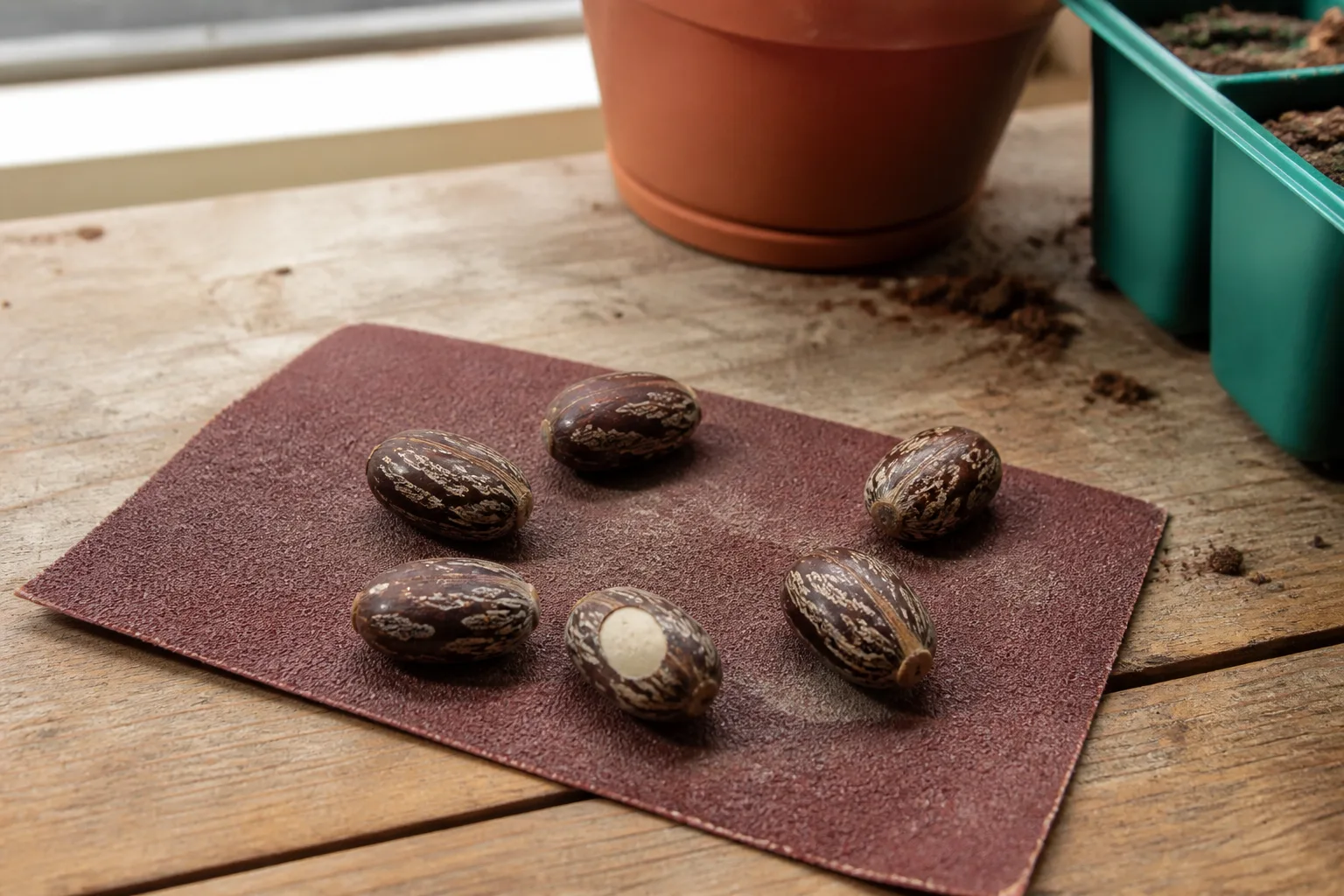
Seed is the primary way to multiply species and fertile hybrids like ‘Lingholm’, but germination is slow and seedlings fragile.
Harvest: Collect when pods split and black seeds rattle inside. Store in paper envelopes in the refrigerator (~4 °C) until sowing.
When to sow: RBGE recommends sowing December through February so seed experiences cold stratification naturally. Some growers sow fresh seed immediately after harvest with good results. Exceptions exist for species like M. punicea that prefer immediate sowing—check your seed source.
How to sow:
- Use airy seed compost mixed with fine grit or pumice for drainage.
- Surface-sow thinly—do not cover seed; light aids germination.
- Optionally top with a thin grit layer to anchor seed without burying it.
- Keep evenly moist always; never let germinating seed dry out.
- Maintain cool temperatures around 55–60 °F (13–16 °C).
- Grow seedlings in bright shade; prick out early into individual pots before roots coil.
- Liquid-feed small plants and pot on before they become root-bound.
- Plant out when several inches tall and after hardening off in cool weather.
Damping-off fungus thrives in stale wet compost—ventilate, water from below, and avoid overcrowding. Transplanting large seedlings often fails; move them young.
Propagation by Division
Division rejuvenates old clumps and produces new plants faster than seed for sterile hybrids—but divided pieces may still be short-lived.
Timing: Autumn, after flowering, as RBGE advises. The plant enters dormancy and roots into cool moist soil without summer heat stress.
Method:
- Lift the clump with a border fork from the edges; avoid spearing the crown.
- Tease apart offsets by hand. Do not chop with a spade—brittle roots die.
- Replant divisions immediately at the same depth, water in, and mulch lightly.
- Expect 2–3 years before divisions reach full flowering size. A mature 3–4 year clump may yield 10–20 pieces.
Repeat division annually only if clumps remain vigorous. Over-dividing weak plants accelerates decline.
Popular Blue Poppy Cultivars
Beyond straight M. baileyi, consider these garden forms:
- Meconopsis ‘Lingholm’ — Reliable fertile hybrid; large sky-blue flowers; best beginner choice.
- Meconopsis ‘Slieve Donard’ — RBGE-recommended blue; similar cool woodland culture.
- M. baileyi ‘Alba’ — White petals with gold centers; same care, different color.
- M. baileyi ‘Sue’s Violet’ / ‘Hensol Violet’ — Purple-violet selections for acid soil lovers who want variation.
- M. baileyi ‘Blue Towers’ — Clustered lighter blue flowers on shorter stems.
- M. baileyi ‘Pink Icing’ — Rare compact pink form for collectors.
Always confirm hardiness and monocarpic status on the label. Alpine Meconopsis species belong in specialist rock gardens, not general shade borders.
Pests, Diseases, and Common Problems
Slugs and snails shred young leaves and stems overnight. Use organic controls—hand picking at dusk, iron phosphate baits, nematodes, or wool pellets—especially in spring when new growth emerges.
Downy mildew appears as yellow spots on upper leaf surfaces with gray-white fuzz underneath in humid, crowded plantings. Remove infected leaves, improve spacing and airflow, water at soil level, and avoid wet foliage at night. Copper fungicides can help as preventatives in high-risk beds.
Root rot follows winter waterlogging. Symptoms: collapsing rosette in spring despite wet soil. Prevention beats cure—mound planting, grit amendment, and no mulch piled on the crown.
Purple instead of blue flowers: Test soil pH; alkalinity is the usual cause. Iron deficiency in high pH can also yellow leaves while flowers shift hue.
No bloom on established plants: Too much shade or root competition, drought stress last summer, or division too recent. Evaluate light and moisture before fertilizing harder.
Sudden death after flowering: Possible monocarpic species, or crown rot after a wet winter. Confirm identity and drainage.
Conclusion
Blue poppies are not impossible—they are conditional. Give them cool summers, dappled shade, humus-rich acid-to-neutral soil that stays moist in growth and drains in dormancy, and protection from slugs and wind, and Meconopsis ‘Lingholm’ or M. baileyi can deliver unforgettable blue bowls on 3-foot stems every late spring. Skip the climate test, plant in full sun against a south wall, or forget winter drainage, and you will join the long line of gardeners who declare the plant “impossible.”
Start with ‘Lingholm’ if you are new to the genus. Remove first-year buds. Sow seed on the surface in winter cold. Divide in autumn when clumps mature. Accept that even success is temporary—and plan propagation so the blue returns when the original clump fades. That mindset, more than any single product, is what separates the gardeners who grow Himalayan blue poppies from those who only photograph them in botanical gardens.



