Growing Zucchini in Pots vs. Ground: Which Wins?
Growing zucchini in pots vs. ground comes down to root room and moisture. Compare containers, beds, spacing, watering, pollination, pests, and harvests.
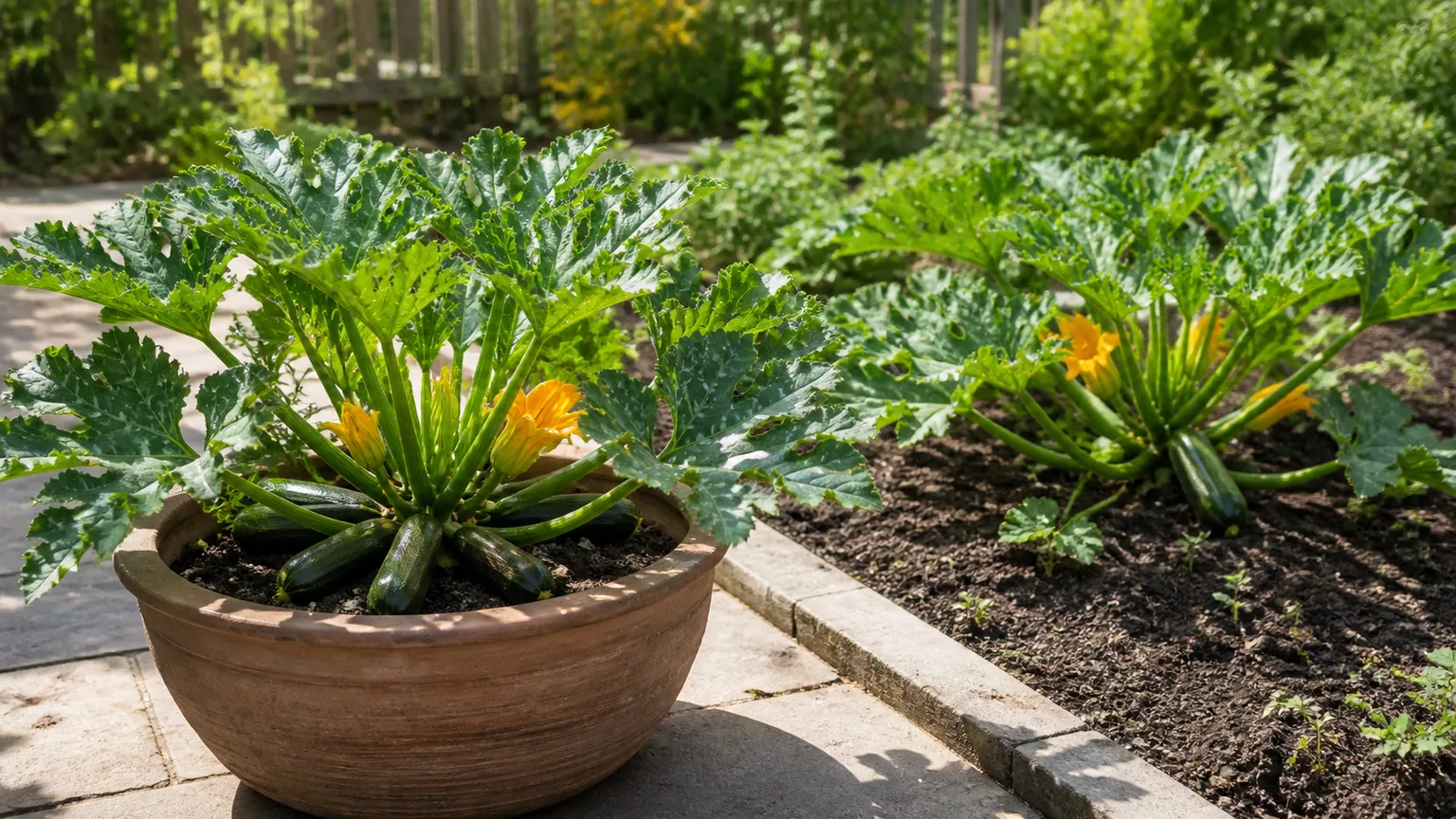
If you have a sunny garden bed, grow zucchini in the ground. It gives a large, hungry plant more root-zone volume, a bigger moisture buffer, and better physical support with less daily attention. If your only space is a patio, balcony, or small raised bed, a pot can still produce well—but only when the container is large enough and you can keep the mix consistently moist.
The deciding factor is not whether zucchini “likes” pots. It is how much root room and water stability you can provide. A compact bush variety in a wide, heavy container can be a sensible patio crop; a sprawling variety crammed into a small bucket becomes a cycle of wilt, nutrient shortages, and disappointing fruit.
The Short Answer: Match Root Room to Your Routine
Choose the ground when you have a sunny patch, reasonably fertile soil, and room for the plant to spread. Choose a pot when soil is poor or contaminated, space is paved, mobility matters, or you want complete control over the growing medium. A raised bed belongs between those choices: it offers better soil control than native ground while retaining more moisture than a freestanding pot.
Penn State Extension puts the trade-off plainly: zucchini is better suited to in-ground gardening than to containers, while its general container guidance warns that pots need regular watering and additional feeding. That does not make container zucchini a bad idea; it means the container is a smaller root ecosystem that you must manage deliberately.
Cornell University’s summer-squash profile lists full sun, high fertility, well-drained soil, consistent moisture, and a large container with frequent watering for container-grown plants. Those needs explain why a location that looks spacious at planting time can feel too small once the leaves and fruit arrive.
Compare the Two Setups Before You Plant
| Growing method | Main advantage | Main constraint | Best fit |
|---|---|---|---|
| Large container | Control over mix, mobility, fewer weeds, no digging | Dries and depletes faster; can tip in wind | Patio, balcony, rental, poor native soil |
| In-ground bed | More root room, steadier moisture, stronger anchoring | Needs good soil and substantial floor space | Gardeners who want a lower-maintenance crop |
| Raised bed | Controlled soil with more volume than a pot | Still needs spacing and can heat or dry at the edges | Small yards, compacted soil, accessible beds |
When a pot is the smarter choice: A pot makes sense when the ground is unavailable or unsuitable, not merely because containers sound convenient. You can place a plant on a sunny patio, move it away from a cold snap, replace a tired mix, and inspect the undersides of leaves without walking through a bed. UF/IFAS Gardening Solutions also notes that container media give the gardener control over the growing medium and can reduce some soil-related problems.
The cost of that control is attention. Container roots cannot chase moisture beyond the pot wall, and a hot dark pot on paving can lose water far faster than a mulched bed. If you are away for several days during a heat wave, a pot is a risk unless you arrange drip irrigation, a reservoir system designed for vegetables, or reliable help.
When the ground is the smarter choice: The ground is the better default when you want sturdy growth with a wider margin for missed waterings. Roots can explore beyond the planting hole, the surrounding soil moderates temperature, and the plant is less likely to topple when large leaves catch wind.
That advantage is not a license to plant anywhere. Heavy clay that stays wet, shallow soil over rock, and beds with a history of cucurbit disease can still make an in-ground plant struggle. Improve drainage and fertility first, or use a raised bed rather than assuming “in the ground” automatically means “healthy.”
Choose a Variety for the Space You Actually Have
The mature habit on the seed packet matters more than the size of the seedling. Cornell describes most summer squash as compact, bushy vines with a spread of roughly 2 to 4 feet, but cultivars vary widely, and some are bred to climb while others trail across the soil.
Bush and compact zucchini for containers
Look for words such as bush, compact, patio, or container in the cultivar description. Fine Gardening recommends avoiding “mammoth” vegetables in containers and choosing bush squash instead. A compact plant may still occupy a broad circle of leaves, so treat “compact” as relative—not as a promise that the plant will behave like a tomato.
Plan on one zucchini plant per large container. Multiple seedlings in the same pot compete for the same finite water and nutrients, and their leaves create a humid, crowded canopy that is harder to inspect and more likely to stay wet.
Vining zucchini and trellises
Climbing or vining zucchini can save floor space if the variety is genuinely suited to training and the support is installed before the plant becomes heavy. Use a strong trellis or stake anchored outside the root zone, tie stems loosely as they extend, and check that developing fruit will not hang where it can snap the vine.
Do not force a sprawling variety into an upright system just because the container is small. A trellis changes the plant’s shape; it does not shrink the roots, and it does not remove the need for a wide, stable container.
Build a Container Setup That Can Carry a Crop
Pot size, depth, drainage, and stability
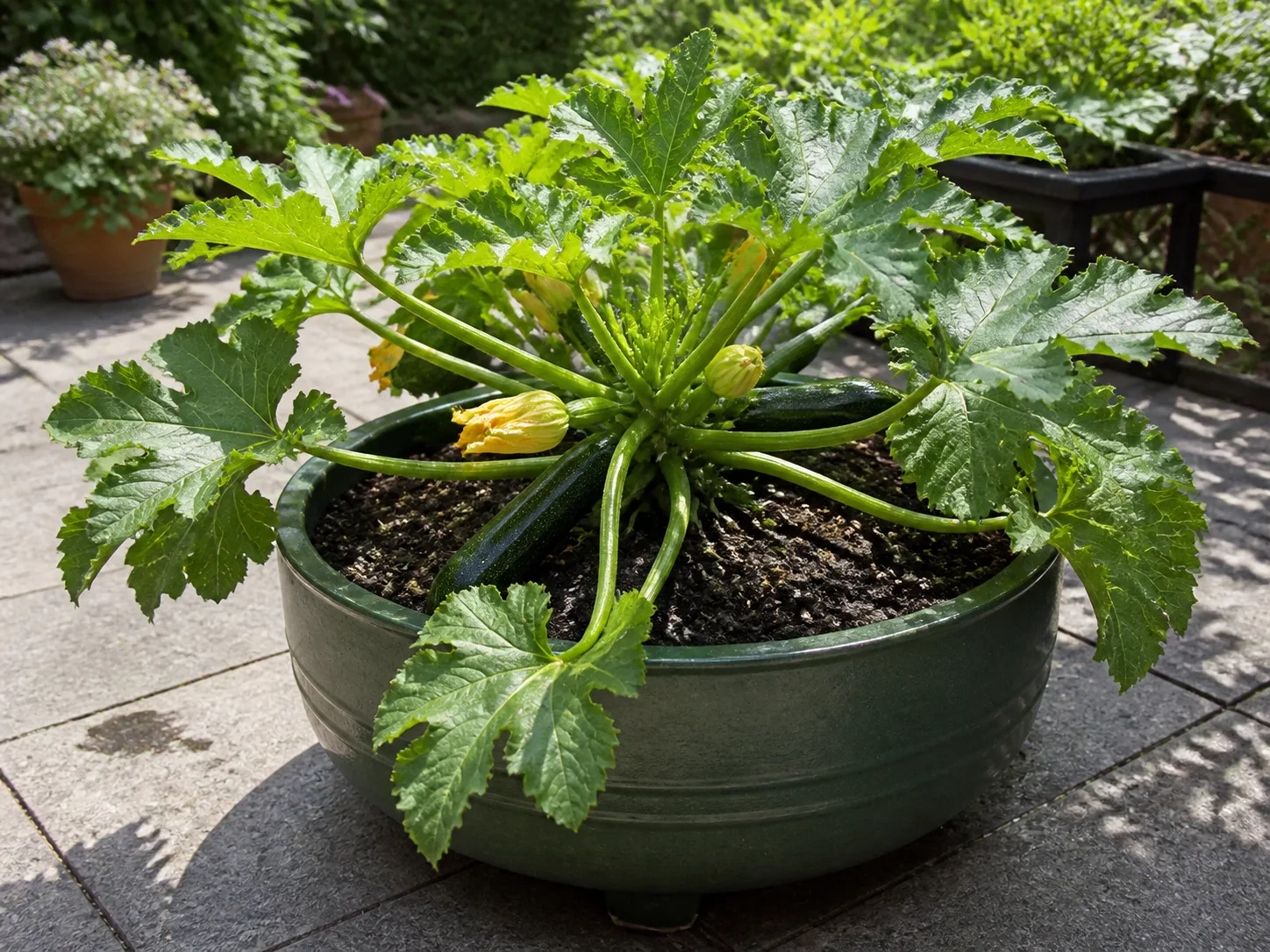
Use a container at least 18 inches wide and 18 inches deep for one compact zucchini, with more volume preferred for a full-season crop. BBC Gardeners’ World Magazine gives a similar minimum of about 45 centimeters wide and high and notes that an individual plant can occupy roughly 1 meter by 1 meter above ground. A five-gallon bucket can grow a plant only if it is truly large enough for the cultivar and has excellent drainage; for most zucchini, a wider 10- to 15-gallon grow bag or pot is the more forgiving choice.
The exact gallon label matters less than the root-zone dimensions. A narrow, tall pot may hold a surprising volume but can be unstable under a broad canopy; a broad container keeps the center of gravity low. Penn State Extension also recommends pots with drainage holes and says containers should be at least as tall as they are wide for healthy root growth.
Use a food-safe container with several unobstructed drainage holes. Set it on feet or a slatted surface so the holes can drain, and empty any saucer after watering. A hole does not help if the pot sits in a tray of standing water.
Fill the pot with a quality potting mix or soilless container medium, not straight garden soil. Penn State Extension explains that garden soil is heavy and can impede drainage in a container; UF/IFAS similarly recommends media that hold moisture and nutrients while remaining porous enough for root oxygen. Mix in finished compost only when it is mature and clean, and do not turn the pot into a dense compost box.
Place the pot where it receives at least 6 to 8 hours of direct sun, has enough airflow, and is protected from the strongest wind. Put the container in its final position before filling it if it will become too heavy to move. Keep leaves off hot walls and pale paving when possible, and use a heavy pot or a broad base if the plant will be trellised.
Prepare an In-Ground Bed for a Larger Moisture Buffer
Sun, fertility, and spacing
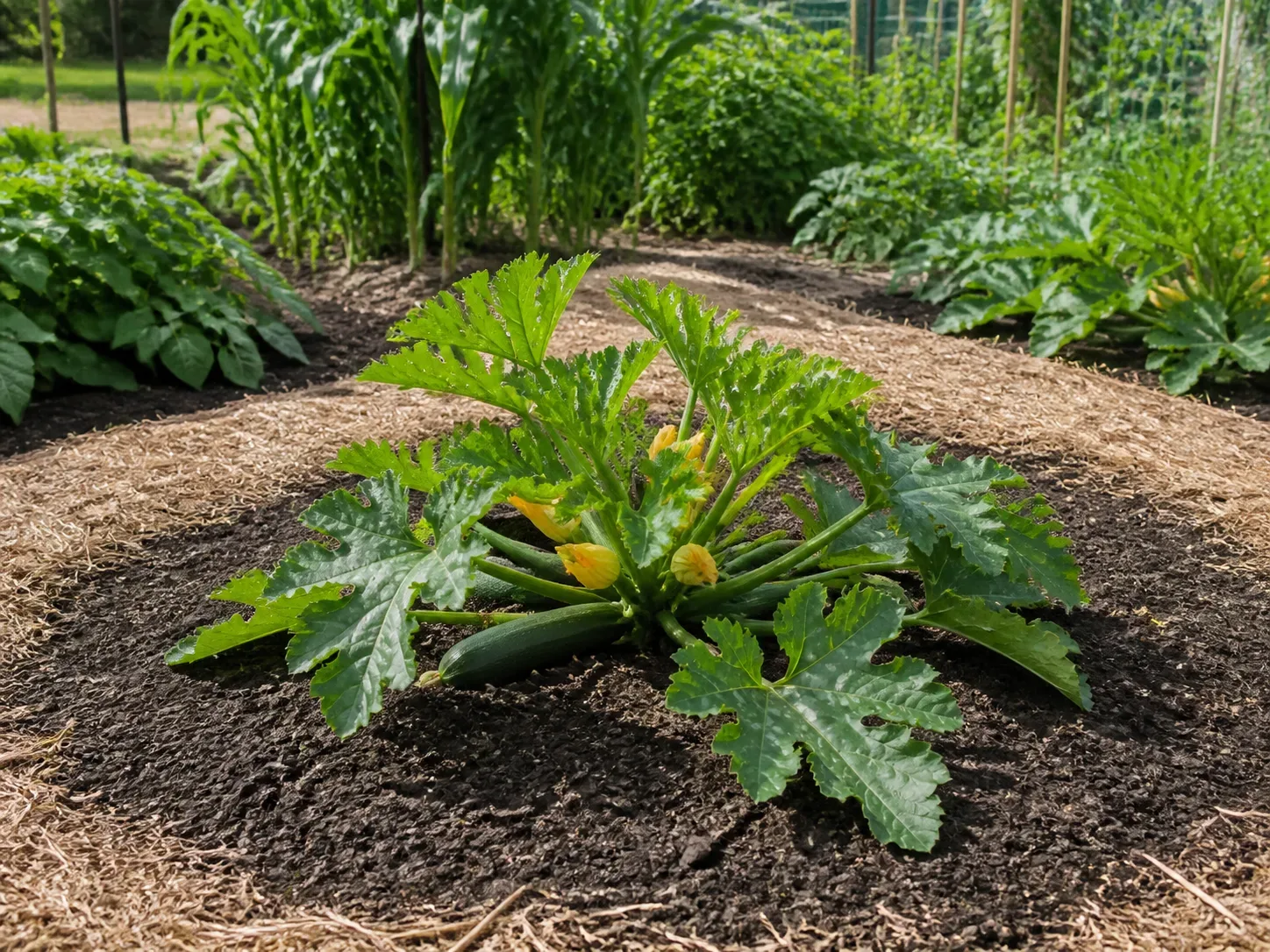
Choose a spot with full sun, good air movement, and soil that drains after rain rather than staying saturated. Work finished compost into the root zone before planting, but do not create a rich pocket surrounded by hard, compacted soil; roots need a gradual transition so water does not collect at the planting hole.
Give a bush zucchini at least 2 to 3 feet of personal space, and use more room when the cultivar description says it trails or sprawls. Cornell gives several spacing options depending on whether squash is planted in hills, rows, or transplants, while GrowVeg lists about 2 feet as a minimum for single plants. In practice, the seed packet’s mature spread should beat a generic number.
Space plants so you can reach the stem and look beneath leaves without stepping into the crown. Mulch the soil surface after it warms to conserve moisture and suppress weeds, keeping the mulch a few inches away from the main stem. Leave enough room between plants for leaves to dry after rain and for you to remove fruit without bruising the plant.
Plant After Frost and Protect Young Plants
Zucchini is a warm-season annual and does not tolerate frost. Cornell advises waiting until the danger of frost has passed and the soil has warmed to roughly 65–70°F, while the exact calendar depends on your climate, soil, and whether you are transplanting or direct-sowing.
Do not rush a transplant into cold, wet ground just to gain a week. Cold roots grow slowly, and a stressed young plant is easier for slugs, snails, and chewing pests to overwhelm. Direct-sow after warm conditions arrive, or start seeds in small pots and transplant carefully once the plant is actively growing and the weather has settled.
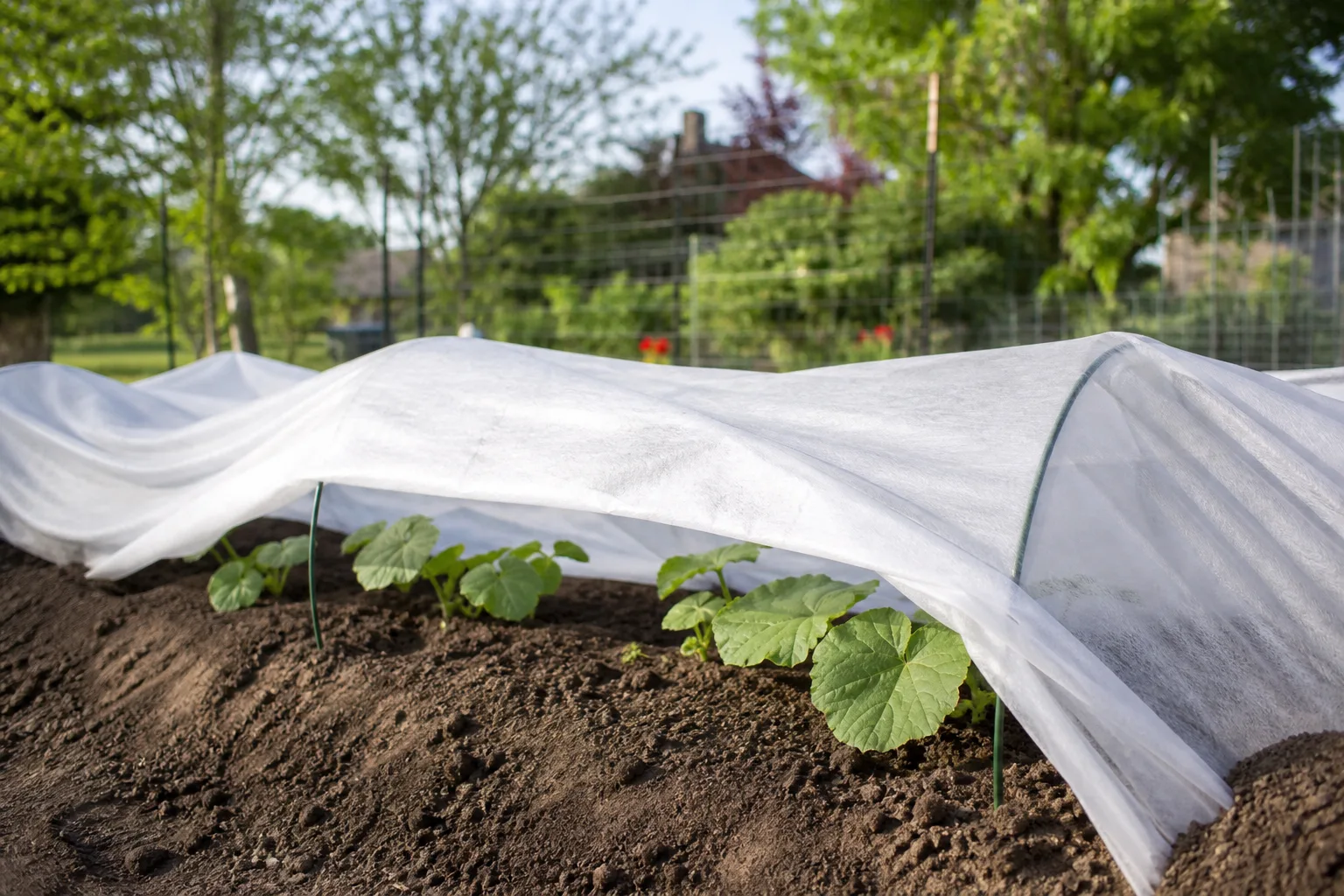
Use a floating row cover over young plants when pests are a recurring problem, but remove it when flowers open so bees can reach them. A cover protects a seedling; leaving it sealed over a flowering zucchini can solve the pest problem while creating a pollination problem.
Water and Feed Without Creating New Problems
Water the root zone deeply enough that excess exits the container or soaks beyond the surface of the bed. UF/IFAS recommends watering containers until water runs from the bottom, then emptying saucers; it also notes that small pots, porous pots, and hot, dry conditions increase watering frequency. Check the pot’s moisture just below the surface and lift it, when possible, to learn how a hydrated container feels.
Container zucchini may need a daily check and sometimes daily watering in hot weather, but “daily” is a monitoring schedule, not a command to water on autopilot. If the mix is still heavy and wet, wait; if it is dry several inches down and the plant is entering midday heat, water thoroughly. A brief afternoon droop that resolves overnight can be heat response, while a plant that remains limp after the soil is moist needs a root, stem, or pest inspection.
In-ground zucchini usually needs less frequent watering because the surrounding soil holds a larger reserve, but it still needs steady moisture while flowers and fruit develop. Irregular drought followed by flooding can cause weak growth, poor fruit set, and fruit rot; mulch and a soaker hose can make the moisture pattern more even without wetting the leaves.
Pots also exhaust nutrients sooner. Start with a controlled-release vegetable fertilizer or a well-balanced preplant feeding, then use a dilute soluble fertilizer only according to the label and the plant’s growth. Penn State Extension recommends a slow-release fertilizer at planting and soluble fertilizer every two to four weeks for productive container vegetables; avoid stacking several strong products because excess fertilizer can damage roots and create lush leaves without solving a watering or pollination problem.
BBC Gardeners’ World recommends a high-potash feed after flowering begins, while other fertilizer programs use balanced formulations. The useful principle is consistent nutrition during active growth, not a specific brand or a stronger dose. Follow the product label, and reduce feeding if the plant is stressed by waterlogging, heat, or disease.
Pollination: Why Flowers Appear but Fruit Fails
Zucchini produces separate male and female flowers on the same plant. The female flower has a tiny swelling resembling a miniature zucchini behind its petals; the male flower sits on a slender stem. Cornell notes that early fruits can wrinkle, darken, or rot because of poor pollination, and dry conditions can also reduce productive flowering.
If flowers open but the tiny fruits turn yellow and fall, first check moisture and insect access. A row cover left on too long, very rainy weather, a balcony with few pollinators, or a plant producing mostly male flowers can all reduce fruit set. Do not diagnose a fertilizer shortage first when the fruit fails at the blossom.
Hand-pollination is a useful backup, not a reason to remove every flower. In the morning, when flowers are open, use a clean small paintbrush or cotton swab to collect pollen from the male anther and gently transfer it onto the sticky center of a female flower. Repeat on a newly opened female flower, then leave the swelling undisturbed and watch whether it continues enlarging over the next few days.
To invite natural pollination, grow the plant where bees can reach the flowers, avoid spraying blooms, and add nearby flowering plants that suit your climate. A single zucchini plant can fruit, but several compatible summer-squash plants often provide more flowers and a steadier pollen supply.
Harvest Young Fruit to Keep the Plant Productive
Begin checking beneath the leaves as soon as female flowers appear. Zucchini can grow from tender to oversized in a few days, especially after rain, and a large neglected fruit diverts energy while hiding other harvests.
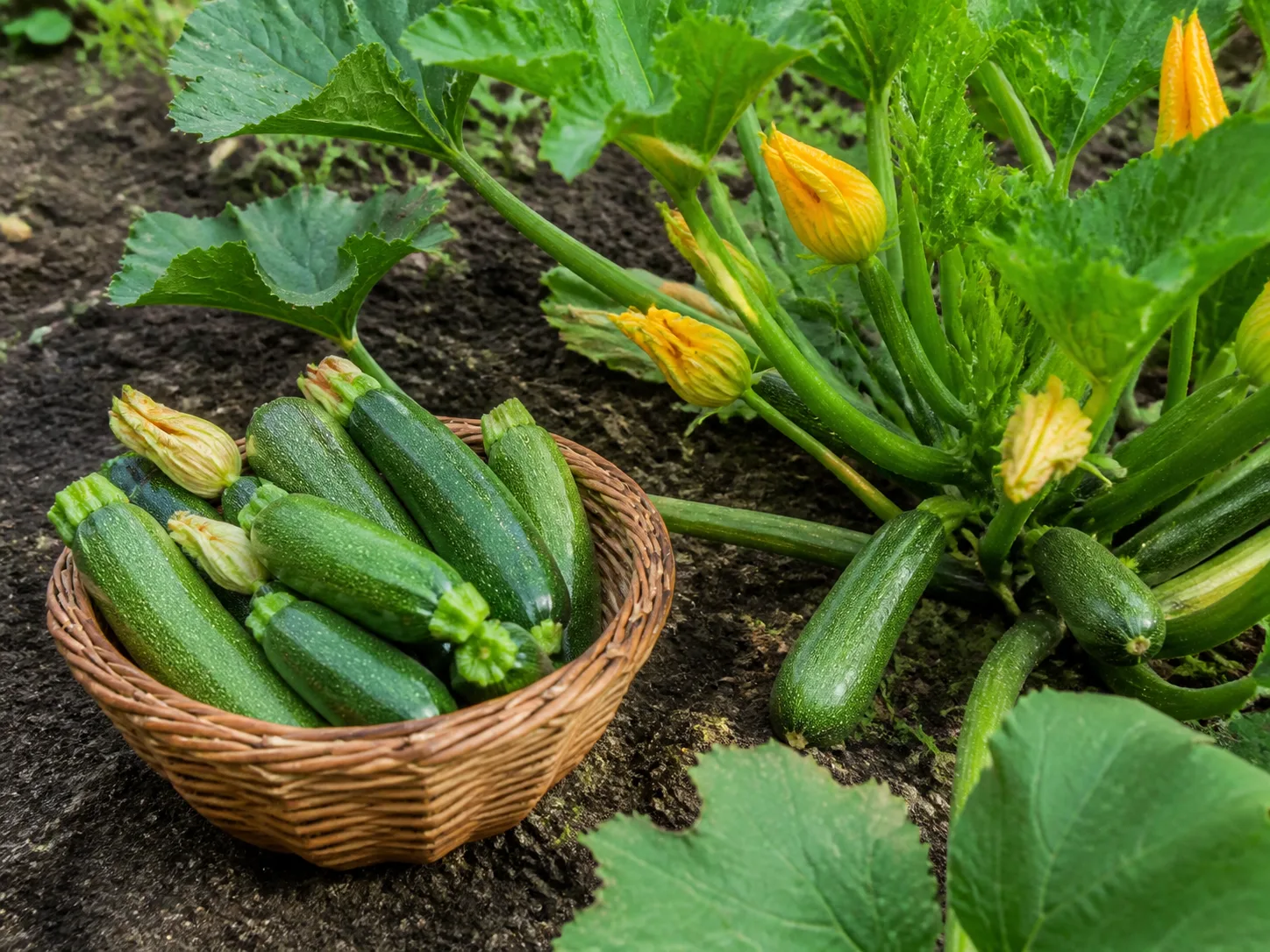
Pick when the fruit is about 6 to 8 inches long, or earlier if you prefer very tender zucchini. GrowVeg uses about 6 inches as a young harvest target, while BBC Gardeners’ World recommends roughly 10 centimeters; both point to the same practice: pick small and pick often rather than waiting for a giant marrow.
Cut the stem with a clean knife or sturdy pruners instead of twisting hard against the plant. Check every day or every other day during peak production, wear gloves if the stems are prickly, and remove misshapen or damaged fruit so the plant is not carrying a crop that will never mature well.
Troubleshoot Wilt, Rot, Yellow Leaves, and Mildew
Start with the root zone, then inspect the stem, leaf undersides, and developing fruit. The same wilted leaf can result from heat, dry soil, damaged roots, a borer inside the stem, or a disease that has already interrupted water movement.
Afternoon wilt that recovers overnight
Check the soil before watering. If the container is dry several inches down, water slowly until it drains; if the mix is already wet, do not add more. Move a potted plant away from reflected heat and check that the pot is not too small for the leaf canopy.
If the plant stays wilted after the root zone is properly moist, inspect the stem base for holes, sawdust-like frass, split tissue, or chewing damage. A squash vine borer can interrupt water movement even when soil moisture looks adequate; remove and destroy badly affected material and contact your local extension office for region-specific identification.
Yellow leaves, rotting fruit, and white coating
A few older yellow leaves can be normal, but widespread yellowing in a pot often follows depleted mix, waterlogged roots, or a root-bound plant. Check drainage and root health before adding fertilizer. Feeding a saturated pot can intensify the problem.
If a young fruit shrivels or rots at the flower end, check pollination, moisture swings, and whether a wet, spent flower is stuck against the fruit. Keep water on the soil, remove soggy flowers, and improve airflow. White powder on leaves suggests powdery mildew; remove heavily affected leaves, avoid crowding, water at the soil line, and dispose of diseased material rather than composting it if the disease is severe.
Manage Squash Bugs, Borers, and Cucumber Beetles
Inspect zucchini at least twice a week, and more often when plants are young or pests are active. Look under leaves for squash bug eggs, along the stem base for borer entry points, and on flowers and new growth for cucumber beetles. A container does not make zucchini pest-proof; it simply makes close inspection easier.
Hand-pick visible squash bugs and egg masses when practical, remove damaged leaves, and clear spent vines at the end of the season. Cornell recommends row covers over young squash for insect protection, with removal at flowering; GrowVeg also identifies squash bugs and vine borers as serious pests that can be excluded from young plantings with row covers.
Use integrated pest management rather than reaching for a spray at the first hole. UF/IFAS recommends identifying the pest, monitoring regularly, using prevention first, and following the label if a pesticide is truly needed. Because zucchini flowers attract pollinators and the fruit is eaten, do not spray open flowers or apply a product unless its label permits use on edible vegetables and gives the required harvest interval.
Raised Beds Are the Practical Middle Ground
Choose a raised bed when your native soil is compacted, contaminated, poorly drained, or simply difficult to work. It gives you a controlled, fertile root zone without confining the plant to the small soil volume of a freestanding pot. You still need to provide enough width for the leaves and enough depth for roots, so a tiny raised planter is not automatically better than a large container.
Raised beds can dry at their edges and warm quickly in full sun, especially when filled with a light, fast-draining mix. Mulch the surface, water deeply, and avoid placing zucchini where a tall crop will shade it. If access is the reason you prefer a raised bed, leave a path that lets you reach the plant’s center for harvesting and pest checks.
Conclusion
For most gardeners with usable soil and enough space, in-ground zucchini is the easier, more forgiving choice. The larger root zone holds moisture, anchors the plant, and reduces the constant cycle of watering and feeding that containers demand.
For patios, balconies, rentals, and poor soil, a container is a perfectly reasonable choice when you give one compact plant a wide, stable, well-drained pot, fertile potting mix, full sun, and frequent moisture checks. Plant after frost, protect young plants from pests, keep flowers accessible to pollinators, and harvest fruit while it is still small.
If you remember one rule, make it this: choose the growing space by the root-zone volume you can provide and the watering routine you can sustain. That rule will steer you toward the ground, a raised bed, or a pot before the zucchini has a chance to outgrow its home.