15 Plants That Thrive in Poor Soil: Flowers and Shrubs
Find 15 plants for poor soil, from dry rocky beds to heavy clay. Match each flower or shrub to your site, avoid invasive picks, and improve the soil only when needed.
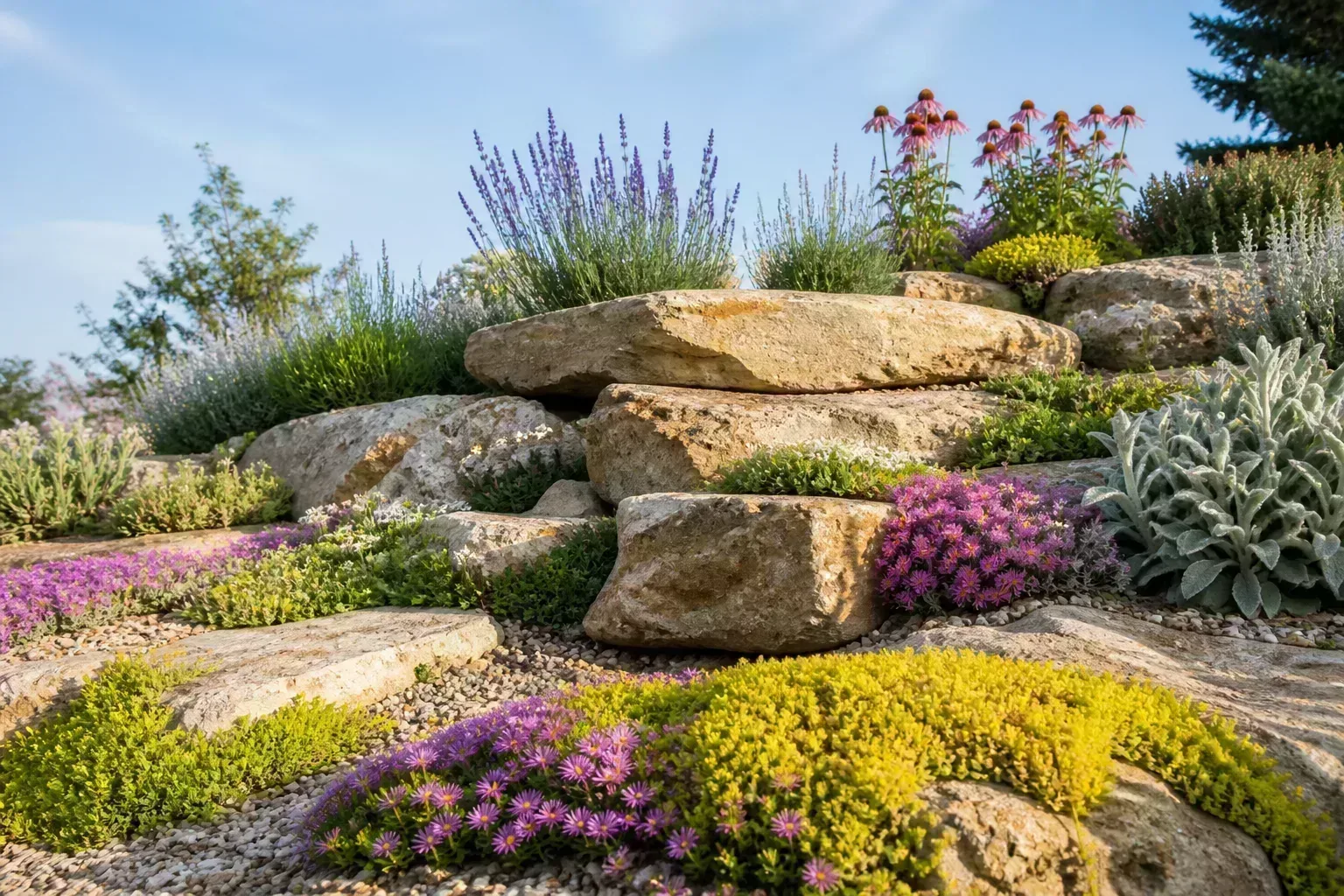
A thin layer of topsoil, a rocky slope, or a stubborn patch of clay does not have to become a constant compost-and-fertilizer project. The better move is to identify what makes the site difficult, then choose plants whose roots and water needs suit it.
The 15 plants below are resilient, but “poor soil” is not one growing condition. Some handle dry, lean ground; others are useful in clay that stays moist but drains. None is a dependable choice for every combination of compacted, waterlogged, salty, extremely acidic, or shallow soil.
What “poor soil” means—and what it doesn’t
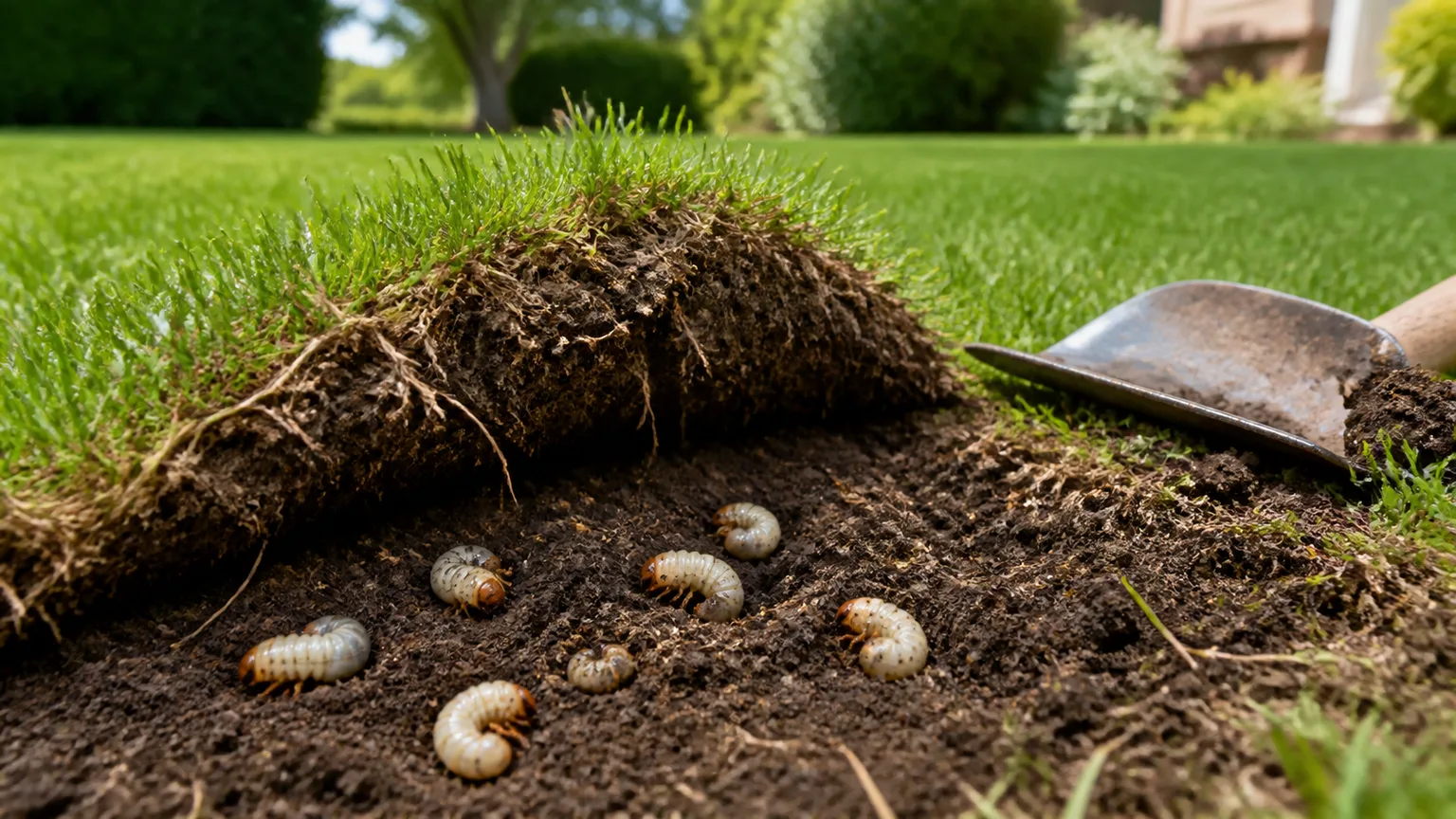
Gardeners often use “poor soil” to describe several different problems. Low fertility means plants have limited access to nutrients; sandy or rocky soil drains quickly and may not hold water; clay can retain both water and nutrients; and compaction reduces the air spaces roots need. A soil can be nutrient-rich yet still be a poor home for a plant that cannot tolerate standing water.
Texture describes the proportions of sand, silt, and clay, while structure describes how those particles form aggregates and pores. Clay soils, for example, can be fertile and hold moisture well, but they are easy to damage when wet; walking or digging then can compact and puddle them. The RHS guide to clay soils explains both sides of that trade-off, and Fine Gardening’s soil-texture guide offers a practical way to examine a sample rather than guessing from the surface.
Before choosing plants, notice what happens after a steady rain: does water disappear within a few hours, sit in the bed until the next day, or run off without soaking in? A ribbon of moist soil that holds its shape suggests more clay; gritty soil that falls apart quickly points toward sand. These observations are a starting point, not a nutrient or pH test. A soil test can help determine whether pH or nutrient levels need attention, but it will not fix poor drainage or compaction by itself. Colorado State University Extension recommends testing the site and grouping perennials by their light and water requirements, rather than expecting one watering routine to suit every plant.
Use the list by matching the plant to the limiting factor. For a dry, sunny, rocky spot, start with butterfly weed, lavender, rosemary, yarrow, or a suitable stonecrop. For heavy but not permanently saturated soil, consider daylilies, asters, or a locally appropriate shrub. Bee balm is a better choice where the soil retains moisture. If the bed is wet for days after rain, improve the growing situation or choose a plant adapted to wet ground instead of relying on a “tough” label.
15 plants for specific poor-soil conditions
1. Asters (Symphyotrichum spp.)
Asters bring late-season color to sites where richer, fussier perennials may sulk, and many garden forms tolerate clay or average, less-than-perfect soil. They are most reliable in sun to light shade with soil that holds some moisture but does not stay waterlogged. Because “aster” covers many species and cultivars, check the mature height and moisture preference on the plant label; a prairie species and a woodland species are not interchangeable.
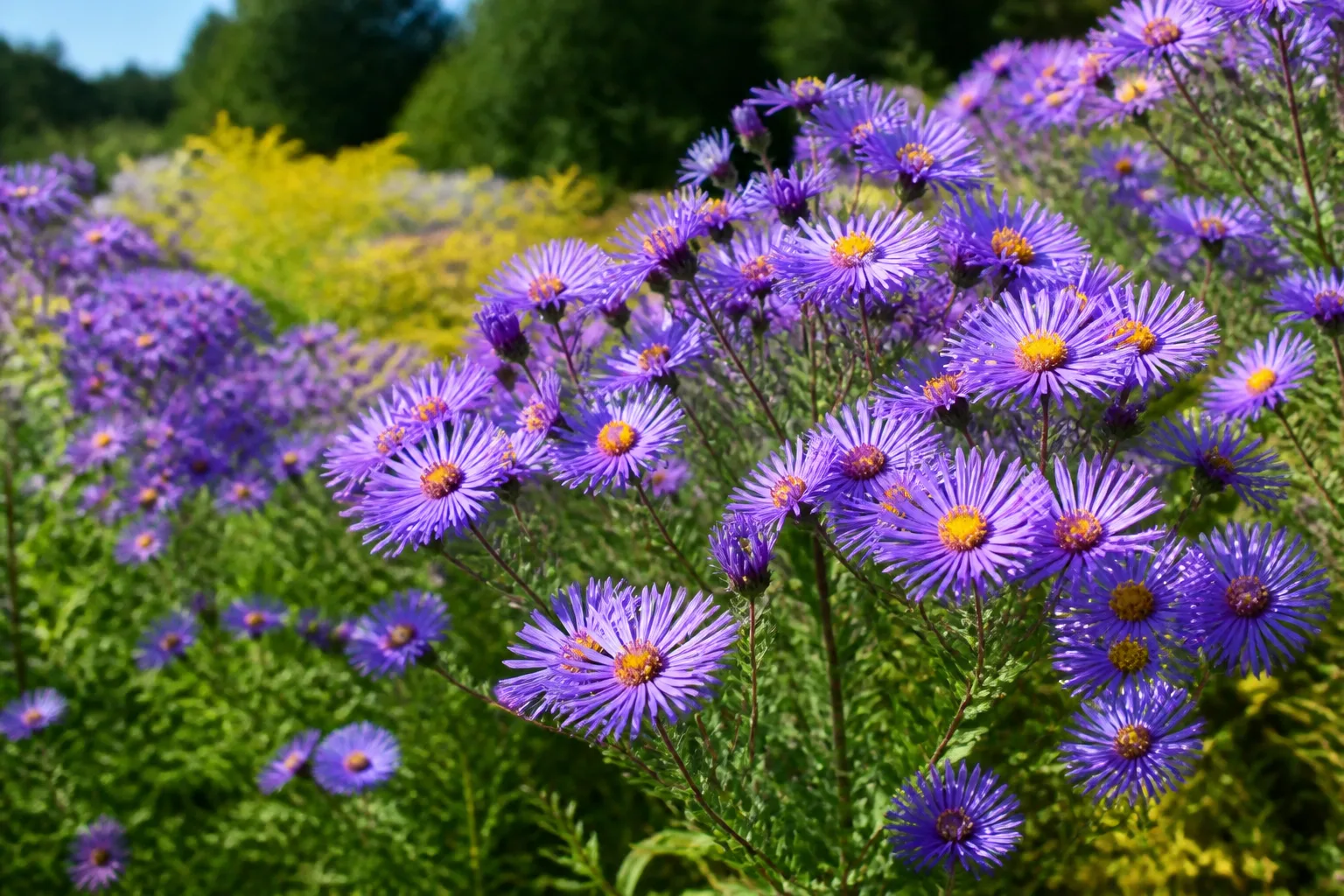
Give plants room for airflow, especially in humid regions, where crowded foliage is more vulnerable to powdery mildew. Avoid pushing them with nitrogen fertilizer: lush, soft stems can flop before bloom. If the soil is compacted, loosen a broad planting area when it is dry enough to crumble rather than digging a tight amended pocket in wet clay.
2. Bee balm (Monarda spp.)
Bee balm is a good fit for lean ground only when the site also meets its moisture needs. Wild bergamot (Monarda fistulosa) is a better candidate for a sunny, drier border than scarlet bee balm (M. didyma), which prefers moist, well-drained soil. North Carolina State Extension’s profile for scarlet beebalm notes its preference for moisture and its spreading habit, so do not treat every Monarda as drought-tolerant.
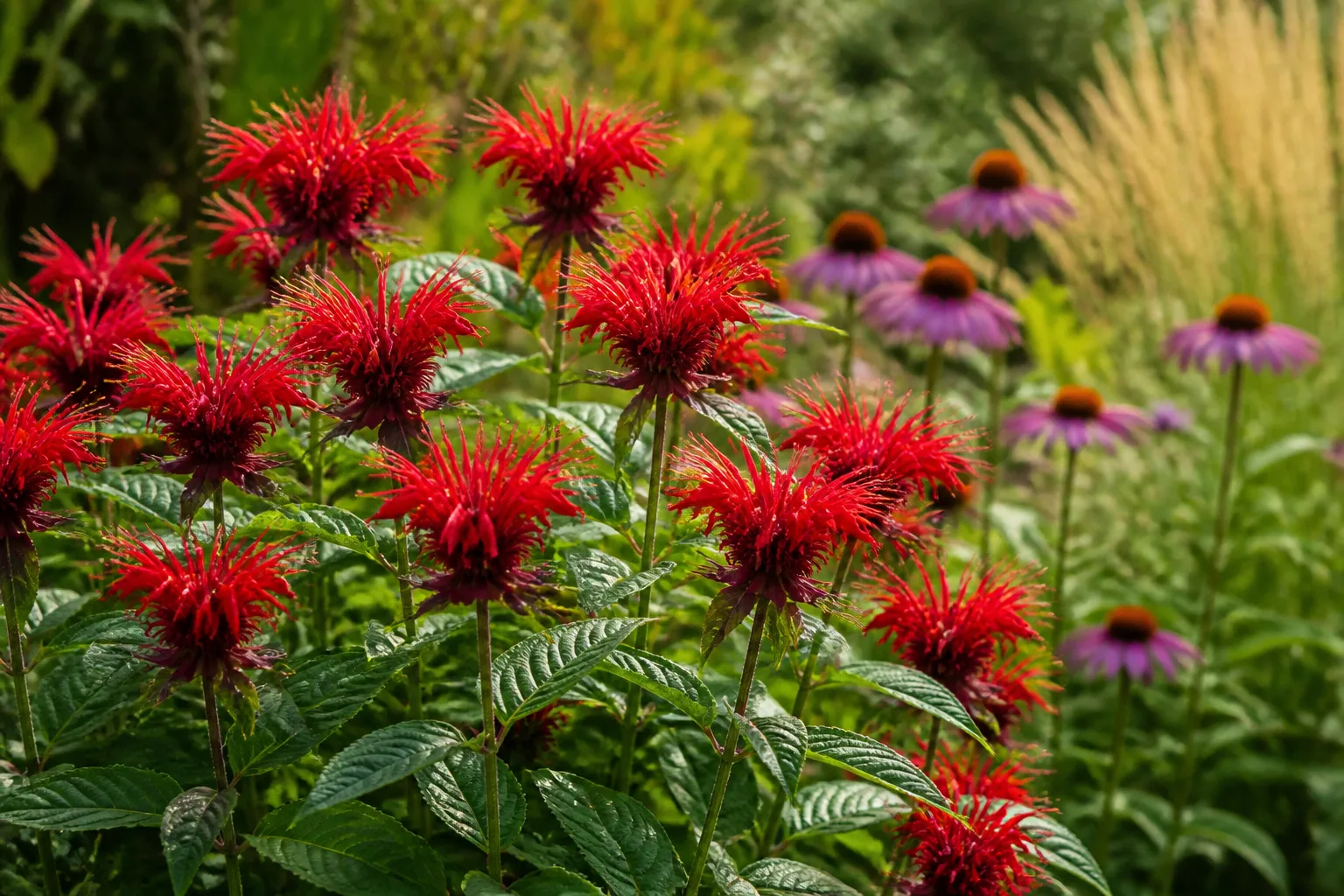
The flowers attract pollinators, but the plant spreads by underground stems and can fill a bed faster than expected. Allow room around the clump, divide it when it crowds its neighbors, and water at the soil line to limit leaf wetness. Powdery mildew is common in crowded or humid plantings; choose a resistant variety and provide air movement instead of trying to cure a poor site with extra fertilizer.
3. Butterfly bush (Buddleja davidii)
Butterfly bush grows in a range of soils, including lean ground, as long as excess water can drain away. It flowers best in full sun and may need less irrigation once established, but wet clay can still cause trouble. The shrub can also become a substantial plant, so leave room for its mature size rather than squeezing it beside a walkway or small perennial border.
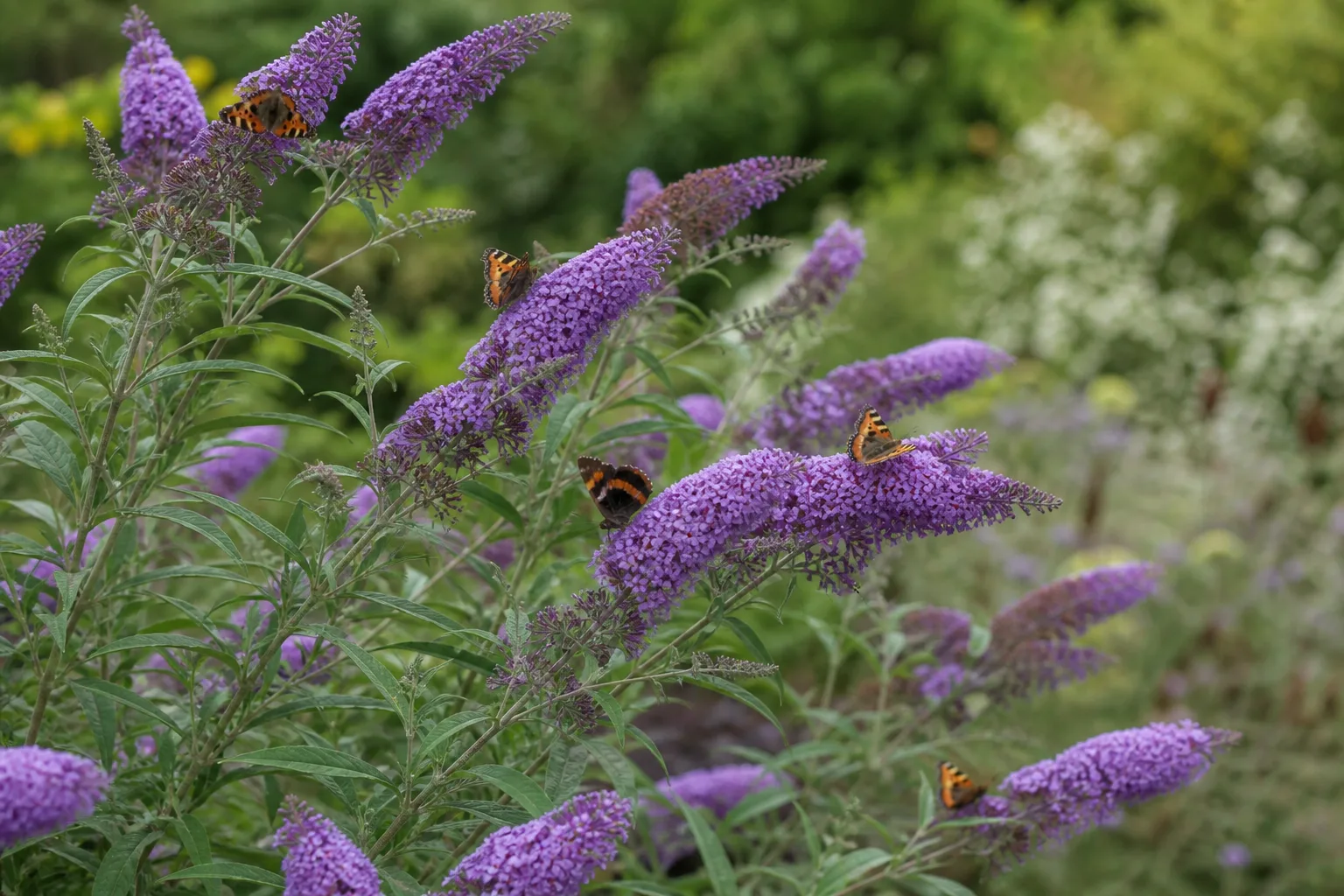
There is an important ecological trade-off: adult butterflies may drink its nectar, but the shrub is not a host plant for most native butterfly caterpillars. It can also self-seed and is considered invasive in some regions. North Carolina State Extension documents those limits in its butterfly-bush profile. Check your state or local invasive-plant list before planting; where it is a concern, choose a locally native shrub or a noninvasive alternative recommended by your extension service.
4. Butterfly weed (Asclepias tuberosa)
For sunny, dry, rocky, or sandy soil, butterfly weed is one of the clearest matches on this list. Its deep taproot helps an established plant cope with dry spells, but that same root makes mature plants difficult to move. Choose the permanent location first, and do not expect a newly planted seedling to behave like an established perennial during its first season.
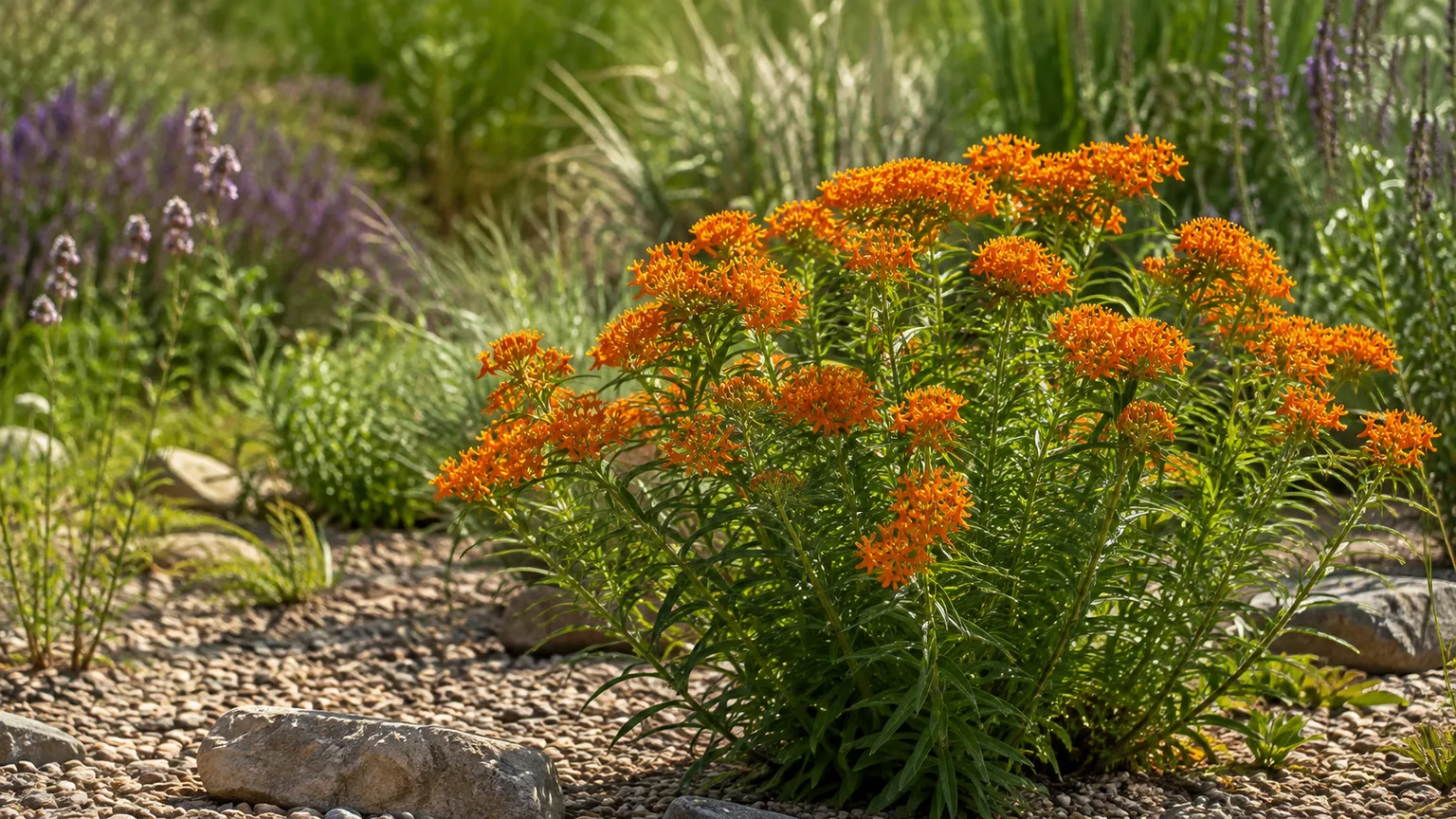
The orange flowers draw pollinators, and the plant is a native milkweed. It can be slow to settle in and may take more than one season to reach its full flowering rhythm. North Carolina State Extension’s profile describes its tolerance of dry, well-drained conditions and cautions against transplanting its taproot. Water young plants as needed while they establish, then avoid keeping the crown constantly wet.
5. Coneflower (Echinacea spp.)
Purple coneflower (Echinacea purpurea) is adaptable enough for many ordinary garden soils, including less-than-rich beds, if they drain. It can handle dry spells after its roots are established, but that does not mean it performs well in compacted soil that stays saturated. Plant it in sun for sturdier stems and more flowers; some shade is tolerated, though flowering may be lighter.
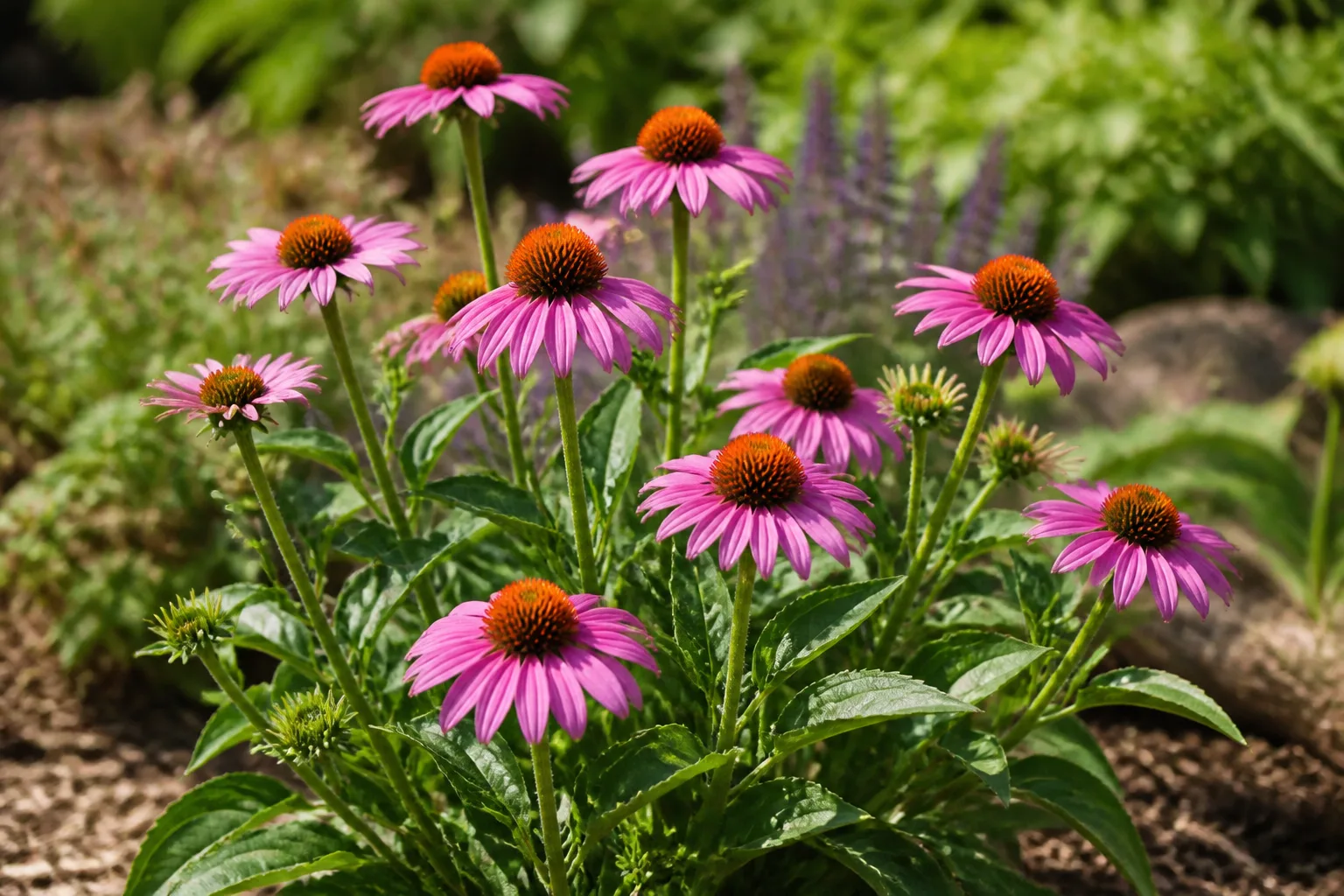
Let a few seed heads remain after bloom if you want winter structure and food for birds. Some cultivars are less vigorous or shorter-lived than the straight species, so a cultivar’s advertised color does not guarantee the same resilience. North Carolina State Extension describes purple coneflower as adaptable across soil types, while still favoring well-drained ground. That distinction matters: adaptability is not a license to plant it in a waterlogged hollow.
6. Catmint (Nepeta spp.)
Catmint is a useful choice for a sunny, low-fertility border with average to dry soil. Garden forms such as Nepeta × faassenii generally prefer drainage and are often more dependable than plants that need steady moisture. Check which Nepeta you are buying: the genus includes different species and cultivars, and “catmint” is not a promise that every one has the same size or spread.
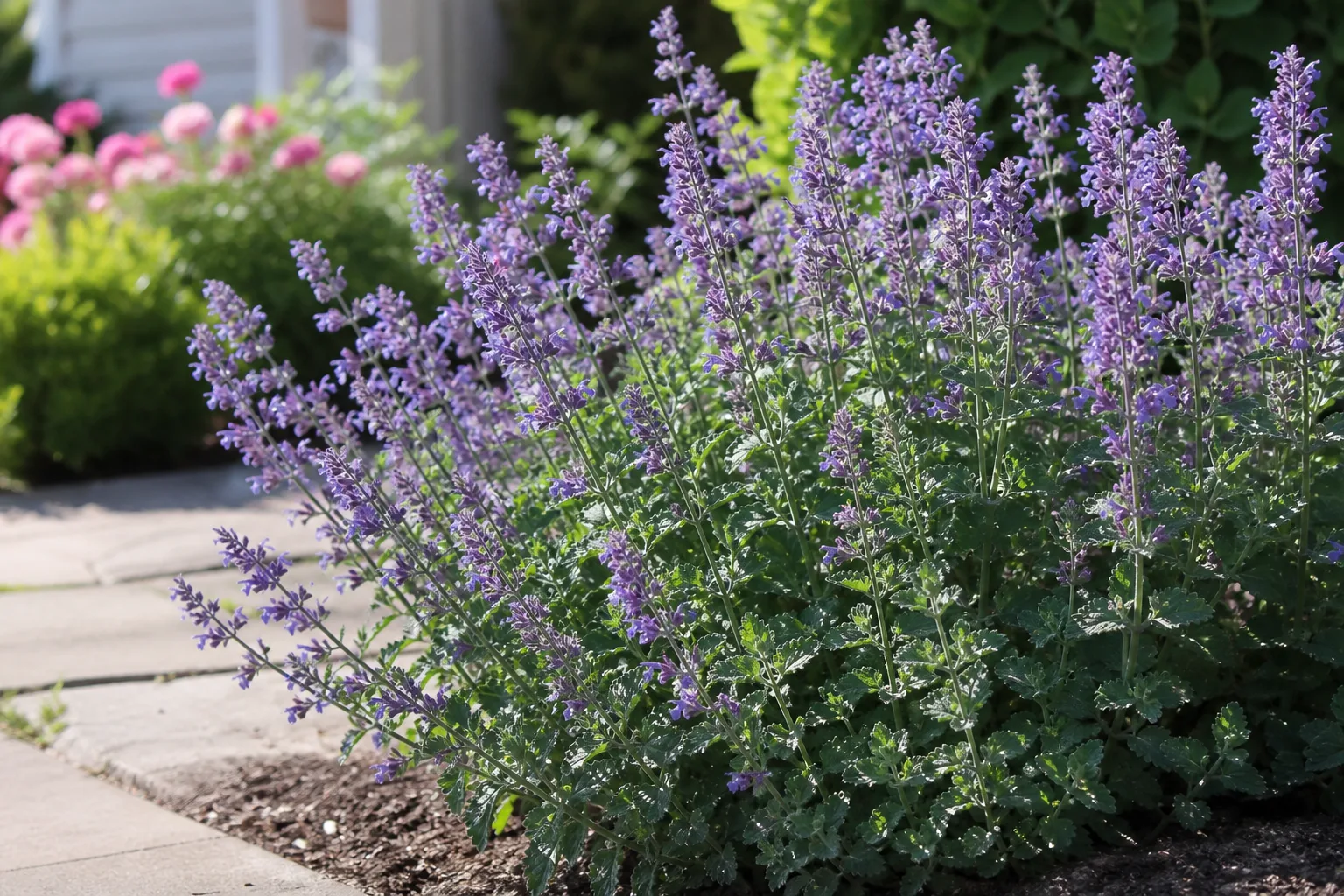
After the first flush of flowers fades, shear the plant lightly to encourage fresh foliage and another bloom period. Do not enrich the soil heavily or water on a fixed schedule if the root zone is still moist; overly lush growth can flop and require more trimming. A North Carolina State Extension profile for catmint is a useful reference for identifying the group and checking the needs of a particular selection.
7. Daylily (Hemerocallis spp.)
Daylilies are forgiving perennials for gardeners dealing with ordinary clay, variable fertility, or a bed that cannot be made into perfect loam. Their thick roots and spreading clumps help them persist after establishment, while a broad range of hybrids gives you choices in height and bloom time. They are not aquatic plants, however: a bed that remains soggy can still rot roots, and severe dryness can reduce bloom.
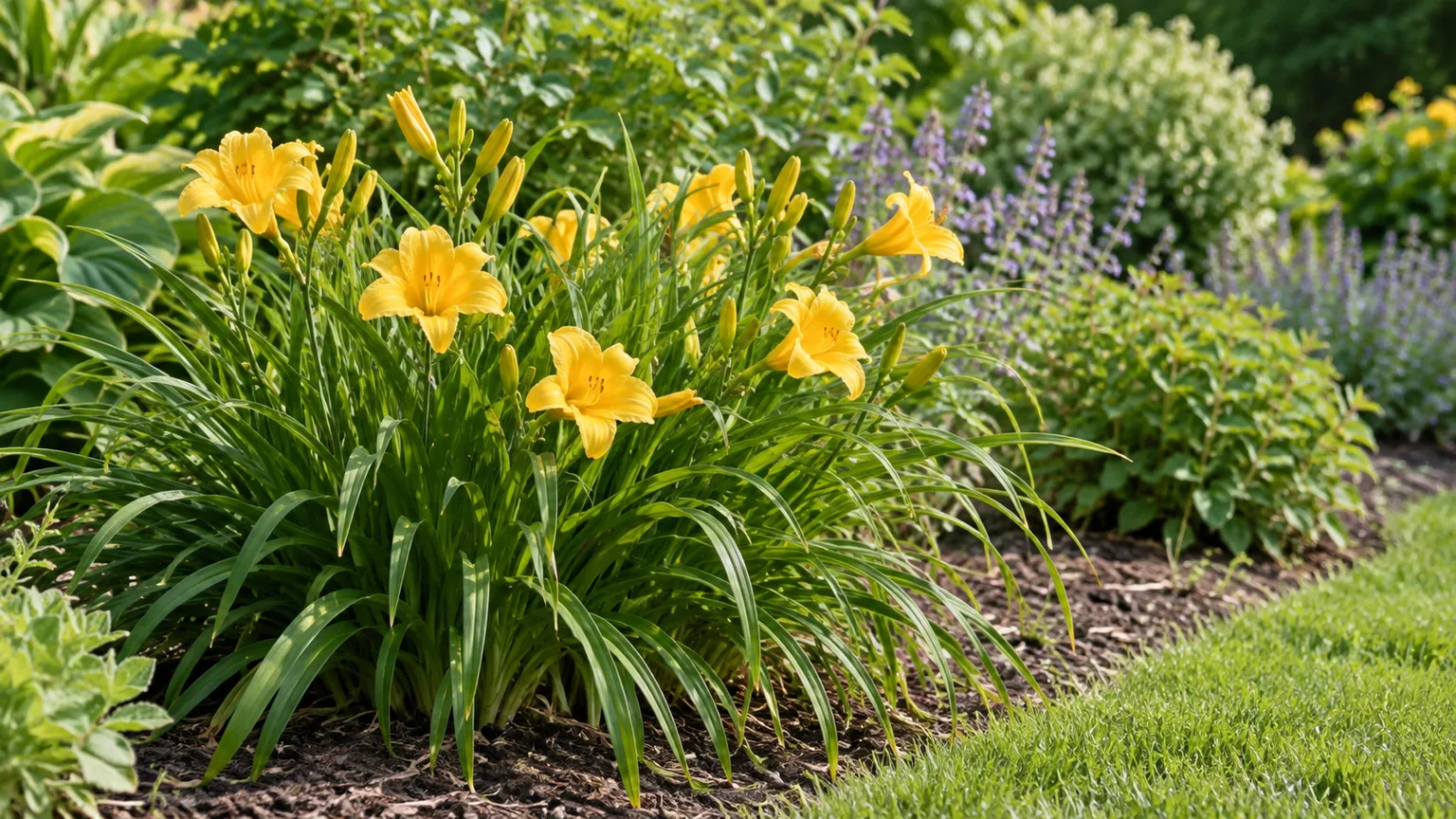
Give each clump room to expand and divide it when the center becomes congested or flowering declines. Water new divisions until they root into the surrounding soil, then adjust irrigation to rainfall and heat. The North Carolina State Extension daylily profile covers the genus and its landscape use; check the cultivar’s mature spread because compact rebloomers and large older varieties occupy very different amounts of space.
8. Goldenrod (Solidago spp.)
Goldenrod is a broad group, not a single plant with a single soil preference. For a sunny, lean site, showy goldenrod (Solidago speciosa) is one option: it tolerates dry-to-medium, well-drained conditions, while other goldenrods may prefer consistently moist ground. Choose a species or named cultivar suited to your region instead of buying a generic “goldenrod” without checking its mature height and water needs. North Carolina State Extension’s showy goldenrod profile describes that species’ light, soil, and drought tolerances.
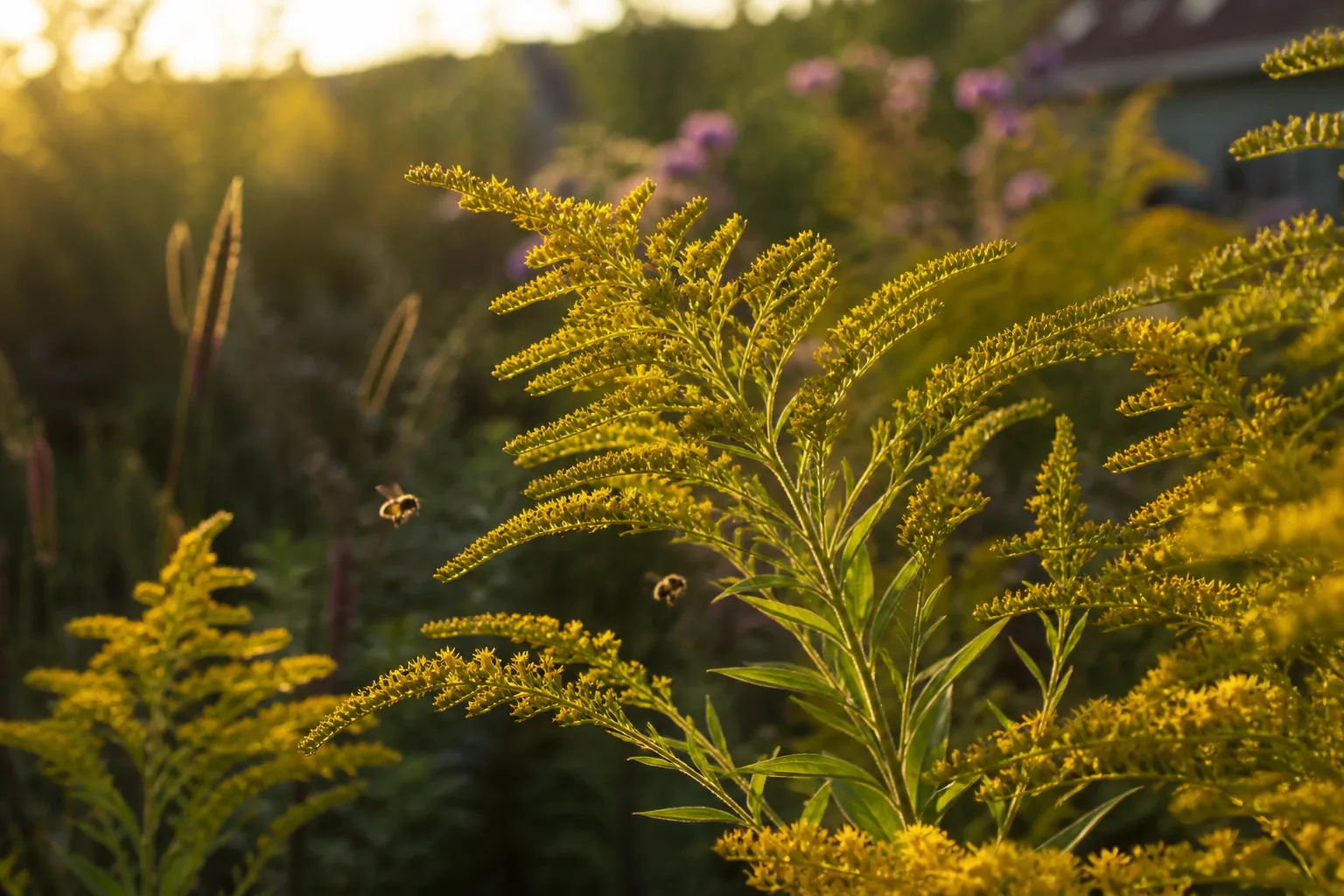
Some goldenrods spread vigorously by seed or underground rhizomes. That can be useful in a naturalized planting and frustrating in a small border. Give spreading types room, remove seed heads before they mature if you want to limit volunteers, or select a more compact cultivar. Goldenrod is not a shortcut to a maintenance-free bed: matching its eventual size to the site prevents years of digging out unwanted clumps.
9. Lavender (Lavandula angustifolia)
English lavender prefers lean, dry-to-moderate soil and full sun, so adding rich compost or frequent fertilizer is rarely the answer when it struggles. Its main vulnerability is poor drainage: roots and the woody crown can decline in persistently wet clay, especially through cool seasons. A raised mound or a genuinely well-drained location can help, but a low spot that holds water is still the wrong site.
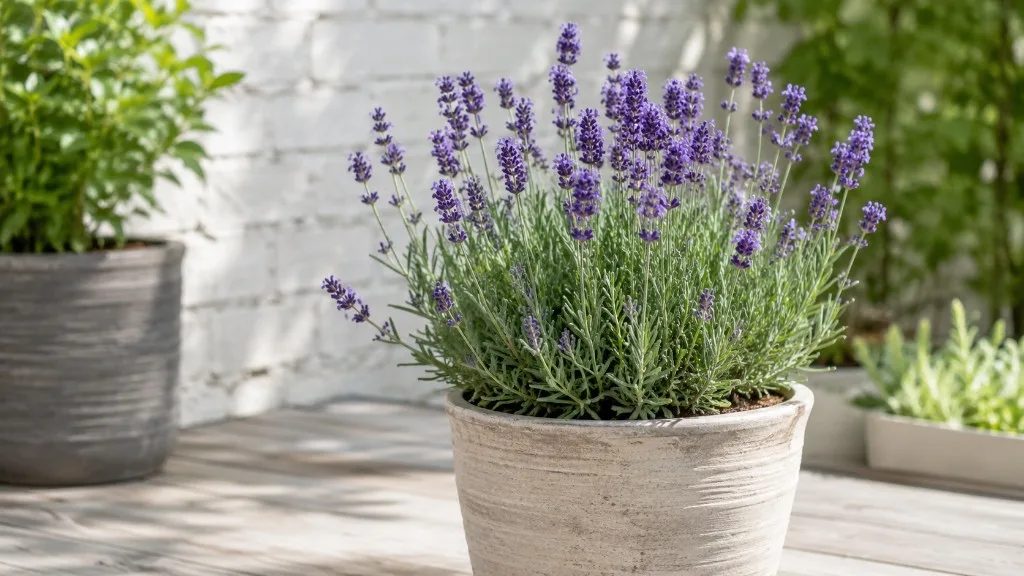
Prune lightly after flowering or in spring, keeping cuts in leafy growth rather than cutting hard into old bare stems. Cultivars differ in winter hardiness, so choose one suited to your climate; a lavender that survives a mild coastal winter may not survive a cold, wet inland one. North Carolina State Extension’s English lavender profile is a good starting point for species and site details. If your soil stays sticky after rain, select another plant instead of trying to amend a small planting hole into a drainage system.
10. Rosemary (Salvia rosmarinus)
Rosemary is another herb that often does better in lean, well-drained ground than in a heavily fertilized bed. Give it sun and avoid routine watering once it is established unless the root zone has actually dried. It is a poor match for dense, persistently wet clay: North Carolina State Extension notes that rosemary prefers dry-to-medium, well-drained soil and is intolerant of wet conditions. The plant’s most serious limitation in many U.S. gardens is winter cold and wet, not nutrient shortage; hardiness varies by cultivar and microclimate.
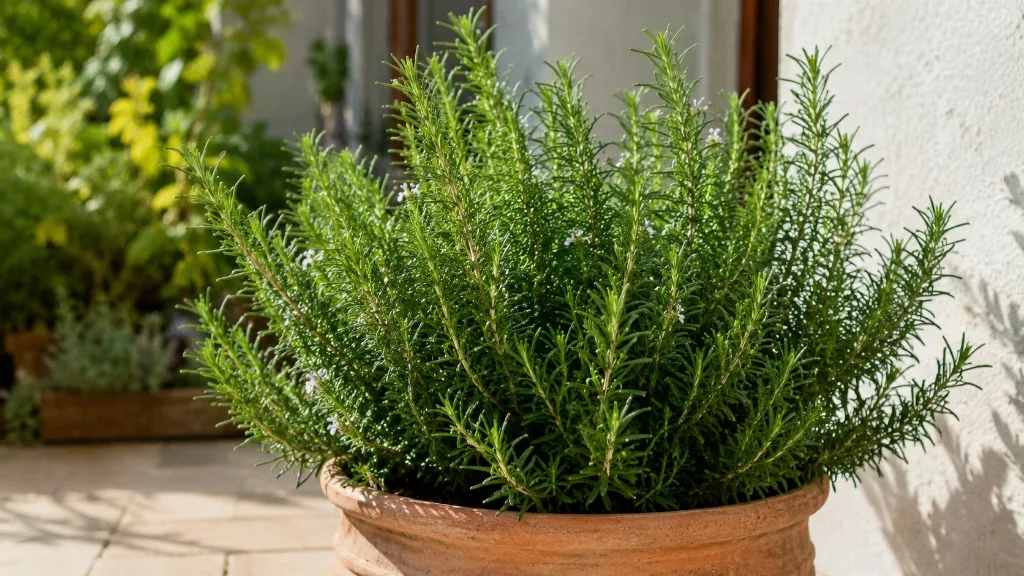
In colder regions, grow rosemary in a container that can be moved to a bright, cool shelter, or choose a locally hardy selection and protect it appropriately. Do not put it in a depression where winter rain and snowmelt collect. If the plant has a history of winter loss, changing the site or growing it as a container herb is more realistic than adding fertilizer to the same poorly drained bed. See North Carolina State Extension’s rosemary profile for its drainage and moisture limits.
11. Rose of Sharon (Hibiscus syriacus)
Rose of Sharon is a resilient flowering shrub that can cope with a range of average garden soils and some dry periods once established. It is a better fit for a difficult border than a shrub that demands constant feeding, but “tolerates poor soil” does not mean it will flower well in deep shade, waterlogged clay, or a tiny planting pocket surrounded by thirsty tree roots.
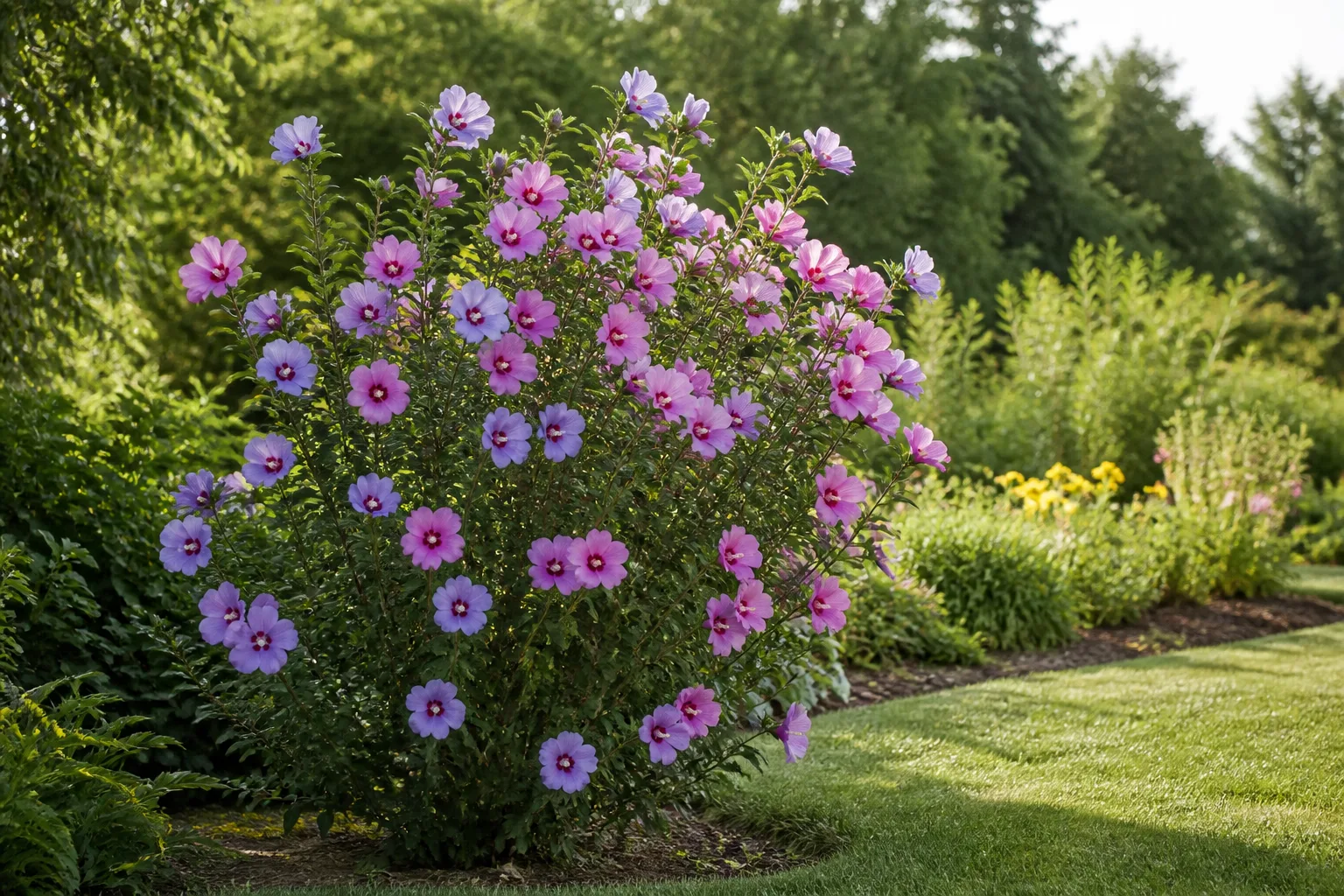
Allow for its eventual height and spread, and water regularly during establishment. Seedlings may appear around the parent, so remove unwanted ones while they are small; some forms self-seed more freely than others. North Carolina State Extension’s Rose of Sharon profile is useful for checking the species and cultivar traits before planting. If you need a compact shrub, choose a compact variety rather than planning on repeated hard pruning to control a naturally large one.
12. Sedum and stonecrop (Sedum and Hylotelephium)
Many sedums handle lean, dry soil because their fleshy leaves store water and their roots do not need a constantly moist bed. Low-growing stonecrops work between pavers or along a sunny slope, while upright types—often classified as Hylotelephium—make taller clumps with late-season flower heads. Those forms solve different design problems, so check the plant label rather than assuming every “sedum” stays low.
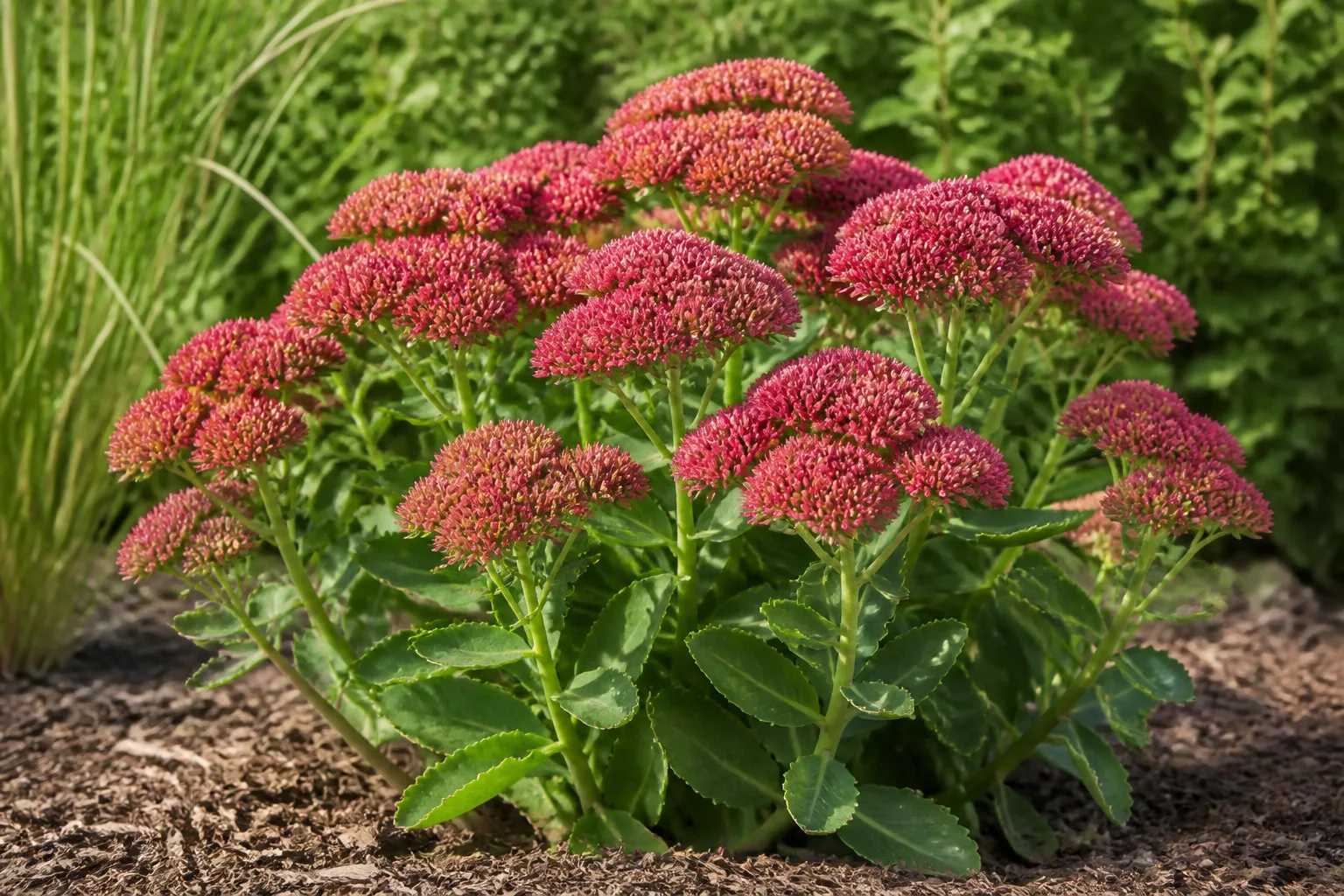
Drainage is more important than added fertility. A rich, wet bed can make upright stems weak and leave succulent roots vulnerable to rot; gravelly soil is often a better fit than heavy clay. North Carolina State Extension’s showy stonecrop profile describes its preference for well-drained soil and its drought tolerance. Water new plants while roots spread, then back off when growth is established. Use a site with good sun for a compact shape and stronger flowering, and avoid planting a drought-adapted stonecrop in a regularly irrigated lawn edge.
13. Spiraea (Spiraea spp.)
Spiraeas are hardy shrubs, but the genus includes species with different sizes, bloom times, and soil preferences. Many landscape varieties tolerate average or lean soil and are more forgiving than shrubs that need rich, consistently moist ground. Choose for the site: a compact summer-blooming spiraea can suit a sunny border, while an arching spring-flowering form needs more room and should be pruned at the correct time for its bloom cycle.
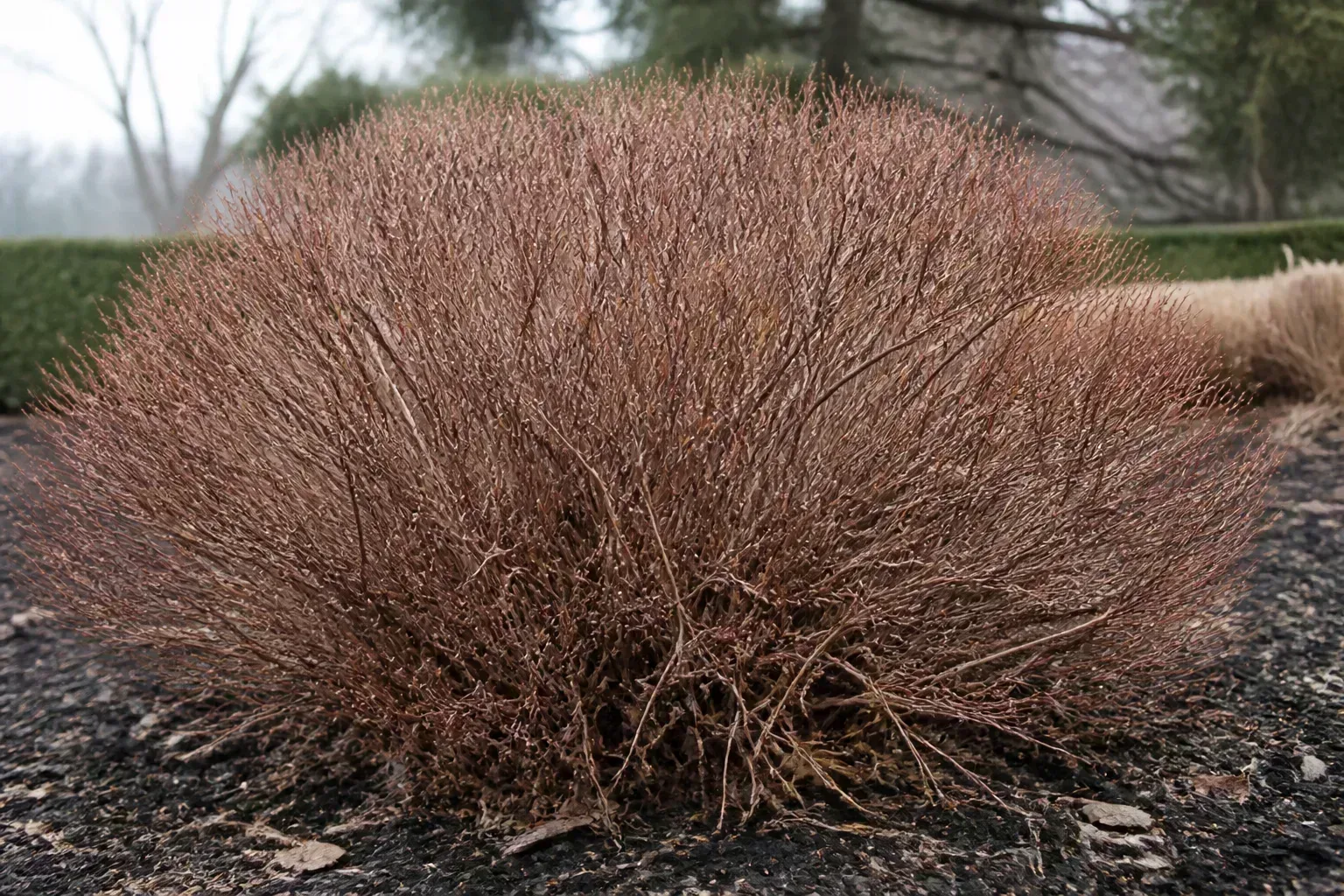
Do not buy by genus name alone. Check the mature spread, whether the plant flowers on old or new wood, and whether that species is listed as invasive in your area. The North Carolina State Extension profile for bridal-wreath spiraea is one example of how a species-specific profile can differ from advice for Japanese spiraea or another cultivar. If a shrub will need constant pruning to fit the bed, it is not a low-fuss match even if it tolerates the soil.
14. Viburnum (Viburnum spp.)
Viburnums can add screening, flowers, and berries to a challenging border, but this is another genus where choosing the right species matters. Some accept clay or a range of soil textures; others want more moisture or a different exposure. Start with a species native to your region when possible, and compare its natural habitat with your garden’s drainage and seasonal rainfall before buying.
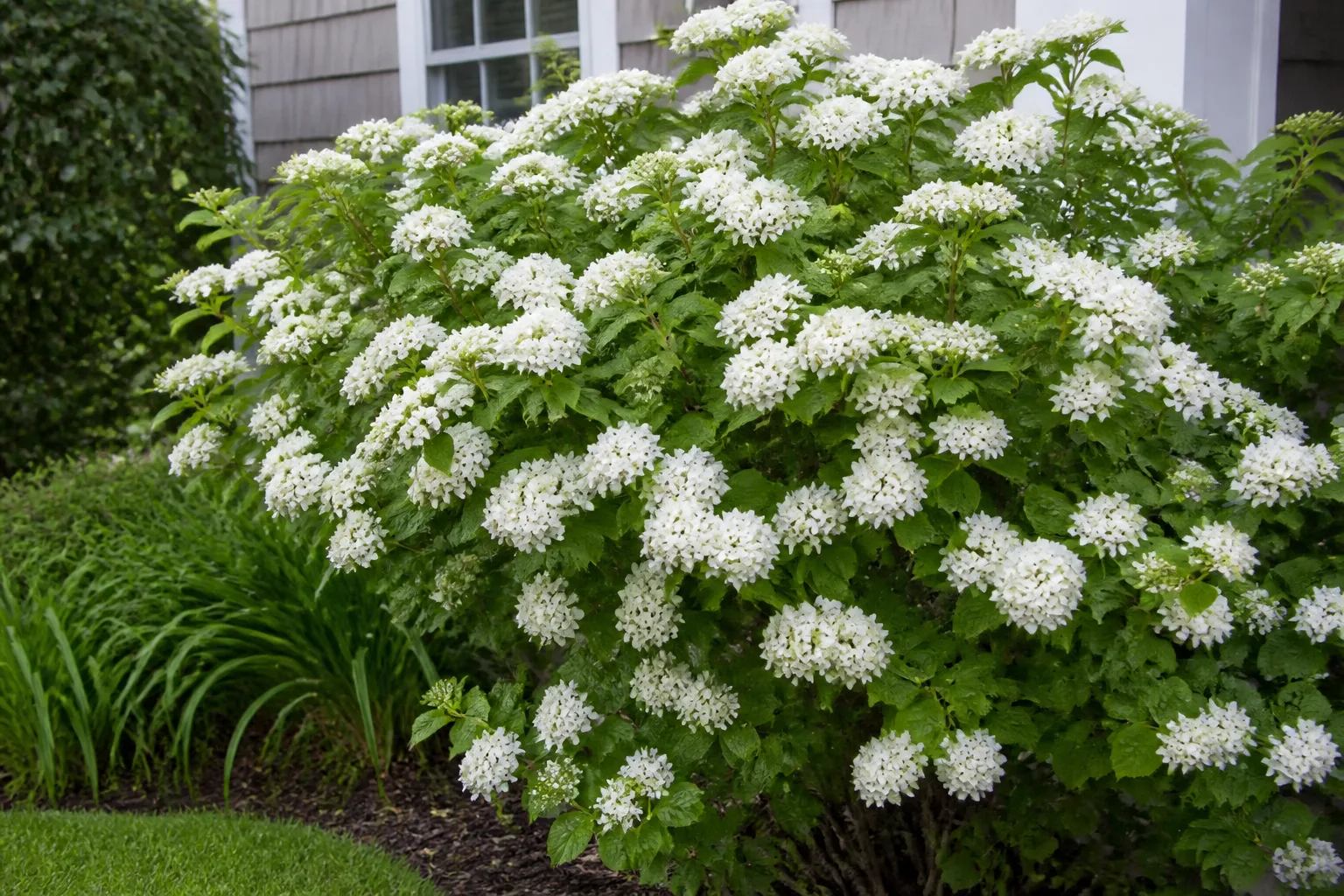
Most viburnums become shrubs with real long-term volume, so plan around their mature size. Pollination and fruiting can also vary by species and cultivar; do not assume one shrub will provide every wildlife benefit. A North Carolina State Extension profile for David viburnum illustrates the value of checking a particular species rather than applying one water or soil rule to the entire genus. For persistent standing water, choose a wet-site species or another plant instead.
15. Yarrow (Achillea millefolium)
Yarrow is a strong choice for sunny, dry, low-fertility ground where many lush perennials become floppy or need frequent watering. It produces flat clusters of flowers above finely divided foliage and tolerates lean soil better than rich, constantly moist conditions. Some cultivars have yellow, pink, red, or white blooms, but their vigor and spread can differ from the species.
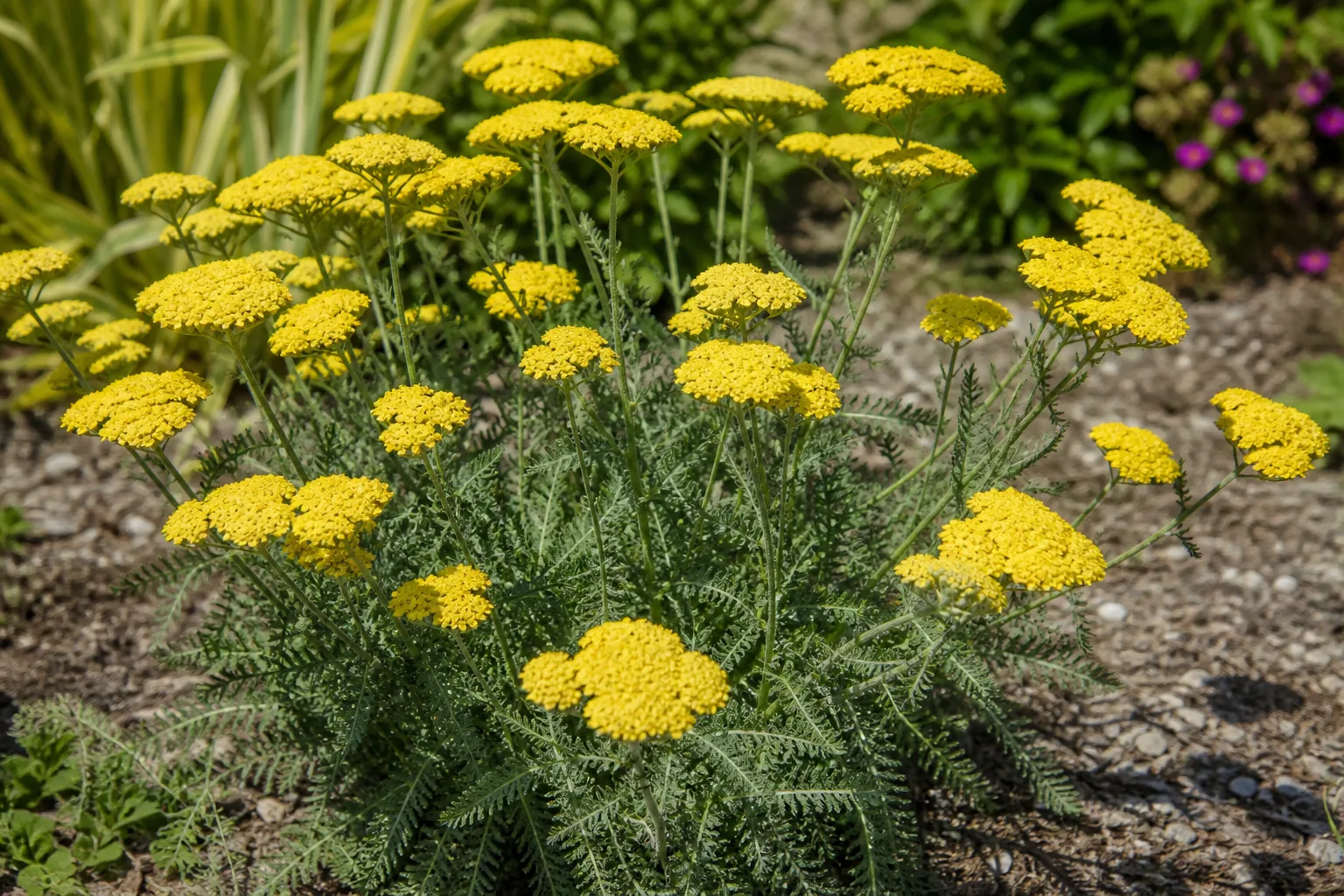
Give it enough space to form a clump, and divide or remove the edges if it starts moving into neighboring plants. In rich soil, tall stems may flop; avoid solving that by over-fertilizing or crowding it among plants with very different water needs. The North Carolina State Extension yarrow profile can help you compare species and cultivar traits. Once established, water based on drought and the plant’s condition, not a daily calendar.
Help tough plants establish without overcorrecting the soil
Even drought-tolerant plants need water while their roots are settling in. Water the root ball and nearby soil deeply enough to encourage outward root growth, then let the surface begin to dry according to the plant’s needs and the weather. A daylily or bee balm will need a different rhythm from lavender or stonecrop. Colorado State University Extension’s perennial-gardening guidance recommends grouping plants by water requirements and adjusting irrigation as new plantings establish.
If the site is low in organic matter, a broad, measured improvement is usually more effective than filling each planting hole with a different rich mix. Follow soil-test recommendations for pH and nutrients; do not add fertilizer simply because the surface looks pale or rocky. In clay, avoid digging or walking on the bed when it is wet. A small dose of sand is not a dependable fix for heavy clay, and an amended pocket can collect water when the surrounding soil drains slowly.
Before planting, map the bed into a few small zones. Note sun exposure and whether runoff from a roof or slope collects in each area, then inspect the root zone several inches down after rain and again during a dry spell. A dry-looking surface can hide moist soil below, while a sunny edge may dry faster than a shaded center. Placing each species in its best micro-site often solves more than another amendment.
For severe compaction or a bed that stays saturated, consider a raised bed, a broad change to the planting area, or plants adapted to wet conditions. For shallow rocky soil, preserve the drainage and choose small-rooted, drought-tolerant species rather than trying to make the whole slope behave like loam. Mulch can reduce weeds and soften moisture swings, but keep it away from crowns and shrub stems. The goal is not perfect soil; it is a stable root zone suited to the plant.
Conclusion
The most dependable plants for poor soil are the ones matched to the specific limitation. Butterfly weed, lavender, rosemary, yarrow, and many stonecrops suit lean, dry ground; daylilies, asters, and selected shrubs are more flexible in average or clay-rich soil that still drains. Bee balm needs more moisture, while butterfly bush deserves a local invasiveness check before it goes into the garden.
Test before adding amendments, protect wet clay from compaction, and water new plants until they establish. With that small amount of diagnosis, a difficult bed can become a place to grow resilient flowers and shrubs—not a reason to keep buying fertilizer.