Mustard Greens Soil Guide: Mix, pH & Drainage
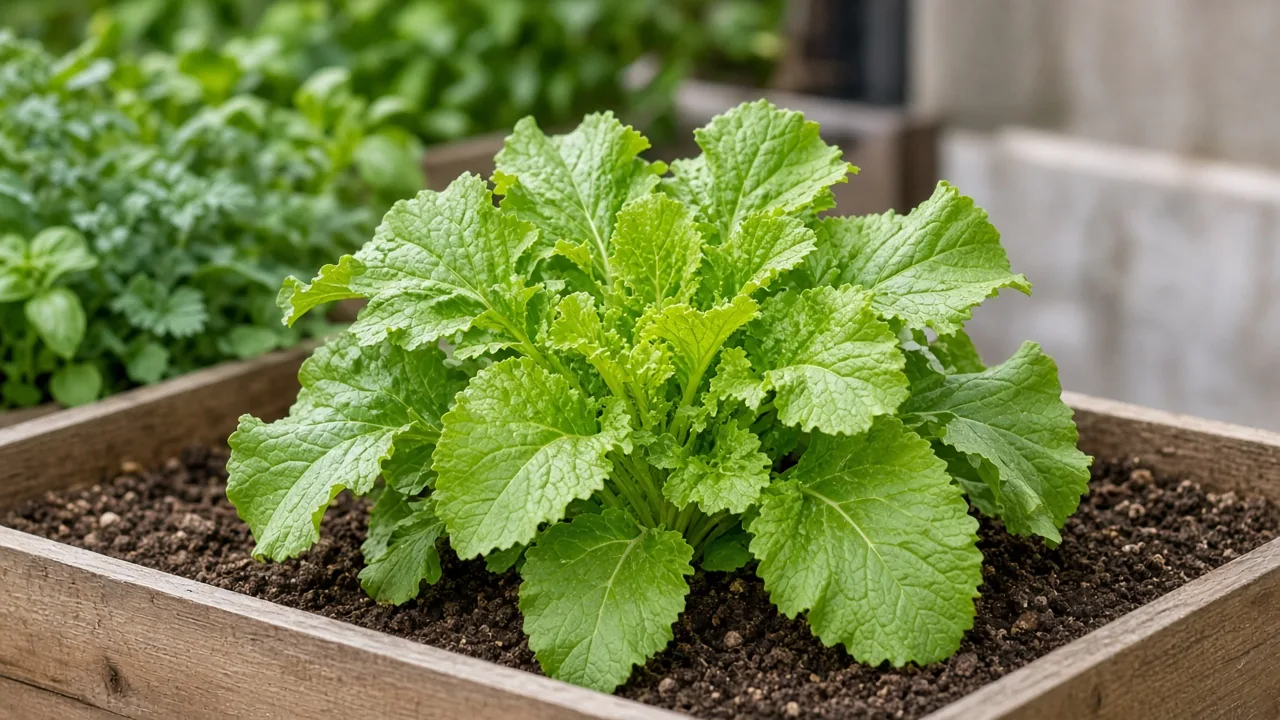
Mustard Greens Soil Guide: Mix, pH & Drainage
Mustard Greens Soil Guide: Mix, pH & Drainage
Mustard greens (Brassica juncea) are grown for fast, peppery leaves—not for a long-lived ornamental in a moisture-holding indoor mix. Sarson and rai saag crops on Indian terraces and in winter kitchen gardens live or die on fertile, moisture-retentive soil that still drains freely. Roots stay fairly shallow, leaves mature in weeks, and stress from drought or waterlogging shows up quickly as tough, sharply flavored foliage.
This guide covers texture, organic matter, pH, container blends, and early warning signs. For how often to irrigate once the mix is right, use the Mustard Greens watering guide. For sowing windows and harvest rhythm, start with the Mustard Greens overview.
What mustard greens roots need from soil
NC State Extension describes mustard as performing best in well-drained, rich, consistently moist soil, with cultural notes calling for high organic matter, good drainage, and a moist (not saturated) root zone. UF/IFAS lists well-drained fertile soils with pH 6.0 to 7.5 for Chinese mustard (B. juncea), with tolerance for slightly acid or alkaline conditions when structure is sound.
That combination—open pores plus organic matter—is what keeps winter leaves tender between waterings without leaving the crown in anaerobic mud.
Shallow feeders and fast leaf turnover
Mustard puts on edible leaves in a few weeks, so most daily water uptake happens in the upper few centimetres of mix. Bonnie Plants notes that many leafy greens, including mustard, have shallow root systems, which is why a deep soak followed by a baked surface can wilt plants even when lower soil still feels cool.
Wide terrace trays and broad pots outperform narrow tall cylinders for this species: the hub profile for mustard greens recommends at least 15–20 litres for one full-size plant, or dense baby-leaf sowing in a wide shallow tray, because roots do not dive deeply like a carrot.
Even moisture versus air in the root zone
NC State warns that moisture and temperature stress push spicier, unpleasantly strong flavor. UF/IFAS ties consistent moisture—especially in dry spells—to avoiding slow development and off flavors. Soil that swings from dust to swamp forces the plant to harden leaves instead of producing soft saag.
Aim for steady moisture buffered by compost, not constant sogginess. If saucers hold standing water after monsoon rains, fix drainage before blaming the cultivar.
Why mustard soil is not houseplant potting mix
Bagged indoor mixes are engineered for fibrous houseplant roots in small pots. Mustard is a cool-season vegetable that wants fertile loam or improved garden soil with compost worked through the profile. Pure peat-heavy indoor mix without drainage amendments often dries unevenly on a sunny winter terrace, then repels water once crusted.
Leafy brassicas need fertility and tilth
NC State’s plant profile tags mustard cultural soil as high organic matter with good drainage and moist conditions—closer to a vegetable bed than a succulent blend. Field guides for mustard crops likewise stress fertile, well-drained loam and note that plants will not tolerate waterlogged soils because growth stalls (Wisconsin crop reference).
You are feeding rapid leaf expansion, not maintaining a slow-growing houseplant on lean mix.
Wide containers beat tall narrow pots
Because roots explore outward more than downward, a wide 30–40 cm pot usually outperforms a skinny tower with the same volume. Match vigor to spacing on the Mustard Greens propagation page—dense baby-leaf trays need a moist, fine seedbed; full-size Florida Broadleaf types need more root room and compost per plant.
Ideal texture and drainage for sarson
Translate “well-drained yet moist” into two quick tests before sowing: a crumble test (squeeze a handful—crumbs should break apart, not smear) and a soak test (water should exit drainage holes within minutes, not pool on the surface for hours).
Loam, compost, and the crumble test
Target a loamy, organic-rich feel: mature compost or leaf mold blended through garden loam or quality potting base. Bonnie Plants recommends improving native soil by mixing several inches of aged compost into the top six inches, and growing in fertile, well-drained soil with steady moisture for the most tender leaves.
For sandy native soils on coastal terraces, compost supplies structure and nutrient holding; for heavy clay, compost plus coarse amendments improve pores—see below.
Drainage holes and monsoon terrace risks
Vegetables cannot tolerate standing water from excessive rain or irrigation while still needing soil moisture to grow (UF/IFAS Florida Vegetable Gardening Guide). On balconies, blocked holes and saucers full of rainwater are a common winter failure mode: leaves yellow, stems soften at the soil line, and flavor turns harsh.
Elevate pots, clear outlets, and prefer mixes that hold moisture in the root ball without becoming anaerobic. Pair soil work with sensible Mustard Greens light placement—weak sun plus soggy mix produces spindly, stressed plants.
pH range and soil testing
LeafyPixels hub data for mustard greens targets pH 5.5–7.0. Extension ranges overlap: NC State lists neutral pH 6.0–8.0 for B. juncea, while UF/IFAS cites 6.0–7.5 for Chinese mustard. Treat roughly 6.0–7.0 as the practical home-garden band unless a soil test says otherwise.
Slightly acid to neutral targets
For sandy Florida-type soils, UF/IFAS notes that many vegetable gardens perform well when pH sits between about 5.5 and 7.0 without adjustment. In alkaline pockets of the Indian plains, mustard often still grows if texture and drainage are good—fix waterlogging before chasing minor pH tweaks.
Run a simple soil test before adding lime or sulphur. Bonnie Plants suggests maintaining about pH 6.5–6.8 to help discourage clubroot, a brassica soil disease—rotation matters as much as chemistry.
Lime, clubroot, and brassica rotation
If clubroot has appeared in a bed that held cabbage or mustard relatives, do not sow mustard in the same spot year after year. Move containers to fresh mix or rotate beds on a three-year brassica break, and follow test-based lime only when pH is genuinely low.
Organic matter: compost, manure, and nitrogen
Organic matter buffers moisture and feeds soil biology. For mustard, mature, fully composted material is the safe default; raw manure belongs in the compost pile first, not in the seed row.
Mature compost as the default
UF/IFAS advises working liberal amounts of composted organics into vegetable beds and cautions that un-composted materials should be mixed in at least a month before seeding. Mustard rewards that steady humus layer with faster regrowth after cut-and-come-again harvests described on the Mustard Greens pruning page.
Fresh manure and overly rich seedbeds
Concentrated nitrogen from fresh manure or very hot compost can push soft, lush leaves that attract pests, and may leave salts that stress shallow roots. Plan gentle feeding on the Mustard Greens fertilizer page after the soil structure is set—soil day is about tilth and even moisture, not maximum nitrogen.
DIY bed and container recipes
You do not need a specialty “mustard soil” bag. You need uniform structure to the depth roots will explore in one cool season.
Hub blend for terrace pots
The LeafyPixels mustard profile suggests a workable starting blend:
- 50% good-quality potting mix or loam
- 30% mature compost
- 20% perlite, rice hulls, or coarse coco chips for aeration
Pre-moisten components before filling. Finished mix should hold together briefly when squeezed, then crumble. For seedlings moving up from nursery cells, see Mustard Greens repotting—transplant into this final blend while plants are still small.
Amending heavy clay in Indian gardens
For dense clay in plains kitchen gardens, raise the planting zone 15–20 cm and blend mature compost through the whole bed width—not just a compost plug in a clay cup. Mustard is more forgiving than long-rooted carrots, but compaction and waterlogging still produce yellow lower leaves and weak regrowth.
If native soil crusts after rain, incorporate fine compost and avoid walking on prepared rows. A light mulch of straw after seedlings establish can buffer moisture without sealing the surface.
Preparing the seedbed before sowing
Clear weeds and old brassica debris, spread compost evenly, and rake to a fine, level surface. Mustard seed is small; clods and crust block even emergence.
Fine surface tilth for small seed
Firm, moist seedbeds help shallow-planted mustard-family seed germinate evenly—think moist crumb, not brick. Water once lightly if the bed is dusty dry, then sow during your cool window (for many Indian plains growers, October into November on the hub overview).
Transplanting into the final mix
Direct sowing is common for baby leaves; larger types may start in cells. Either way, the final container or row should already match the texture above—there is little room to “fix” heavy clay mid-season without disturbing shallow roots.
Warning signs your soil mix is wrong
| Symptom | Likely soil cause | First fix |
|---|---|---|
| Tough, very peppery leaves | Droughty mix or uneven moisture | Add compost; steady watering |
| Yellow lower leaves, soft stem base | Waterlogged, anaerobic mix | Improve drainage; empty saucers |
| Slow growth, pale new leaves | Lean, exhausted mix | Top-dress compost; review fertilizer |
| Crusted surface, poor emergence | Heavy clay or lack of fine tilth | Rework top 5 cm with compost before re-sowing |
| Wilting while mix feels wet | Shallow roots damaged or rotting | Mulch; hand-weed; check drainage |
Persistently sour-smelling mix with gnats often means organic matter is breaking down in saturated conditions—replace or refresh container blend for the next sowing.
When to use this page vs other Mustard Greens guides
Use this soil guide when you are building beds, filling pots, testing pH, or diagnosing texture problems before sowing. Use Mustard Greens watering for moisture rhythm and saucer habits. Use Mustard Greens light for winter sun hours and heat stress. Use Mustard Greens fertilizer after the root zone is prepared. Use Mustard Greens propagation for sowing density, Mustard Greens repotting for moving seedlings, and Mustard Greens pruning for harvest cuts that interact with soil moisture demand.
Related Mustard Greens guides
- Mustard Greens overview — cool-season identity, cultivars, and cluster map
- Mustard Greens watering — even moisture without waterlogging
- Mustard Greens light — sun, shade, and bolting pressure
- Mustard Greens fertilizer — feeding after soil prep
- Mustard Greens propagation — sowing and spacing
- Mustard Greens repotting — seedling moves into final mix
- Mustard Greens pruning — harvest cuts and regrowth
Conclusion
Productive mustard greens soil is fertile loam or improved potting base, rich in mature compost, moist but never waterlogged, and roughly pH 6.0–7.0 unless a test guides you differently. Prep wide containers or raised beds before seed hits the mix, keep organic matter mature, and fix drainage before winter monsoon spells. Get that foundation right, and watering, light, and harvest timing on the rest of the cluster can do their job.