Why Are My Pumpkin Leaves Turning Yellow? 8 Common Causes
Learn why pumpkin leaves turn yellow, which symptoms need attention, and how to check watering, roots, nutrients, pests, and disease before acting.
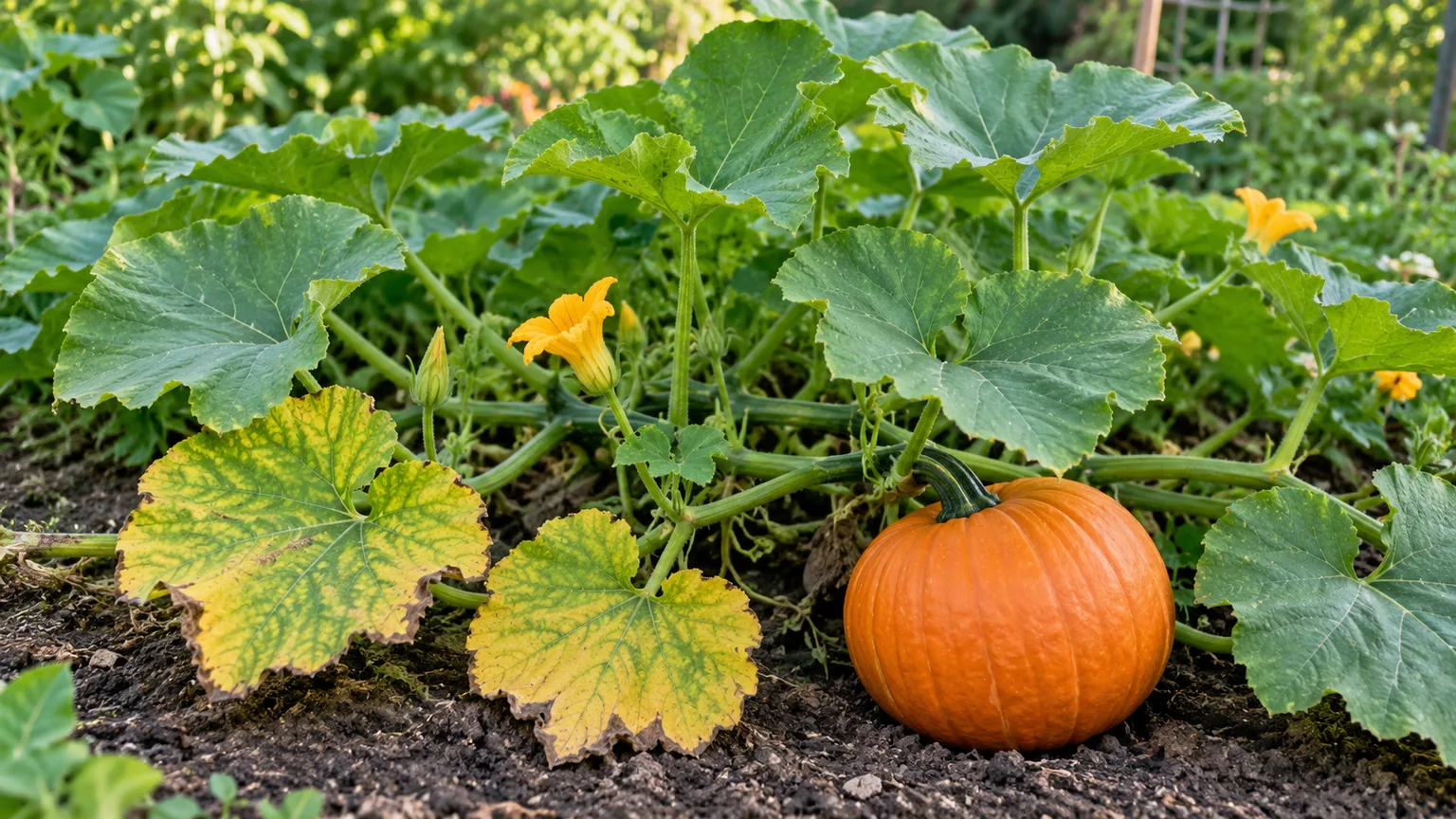
A pumpkin leaf turning yellow can be a normal old leaf, a response to dry or saturated soil, or an early sign of a pest or disease. The color alone cannot identify the cause. Start by noting which leaves changed, what the yellowing looks like, whether it is spreading, and how the soil feels before adding fertilizer or spraying anything.
Look at the whole vine before you focus on one leaf. A single yellow leaf low in a vigorous, fruiting plant is different from many leaves that are mottled, spotted, wilting, or declining over several days. This guide uses those differences to help you choose a sensible next check without treating a guess as a diagnosis.
Start with these five checks
Take a few minutes to inspect the plant in daylight. First, note the leaf’s age and position: is it one of the oldest leaves near the base, or fresh growth near the tip? Next, look at the pattern. Is the leaf uniformly pale, yellow between green veins, marked by angular patches, coated in white powder, or speckled with feeding damage?
Then check whether one leaf, one section of vine, or the whole plant is affected. Feel the soil several inches below the surface near the root zone rather than judging by its dry-looking top. Finally, turn over a few leaves and inspect the stems, leaf stalks, and base of the main vine for insects, eggs, holes, or sawdust-like material.
Write down when the change began, recent rain and watering, unusual heat, and any fertilizer or lawn treatment used nearby. A dated photo of the same leaves can show whether the pattern is stable or spreading. These observations are more useful than immediately changing several parts of care at once.
When one older leaf is simply aging
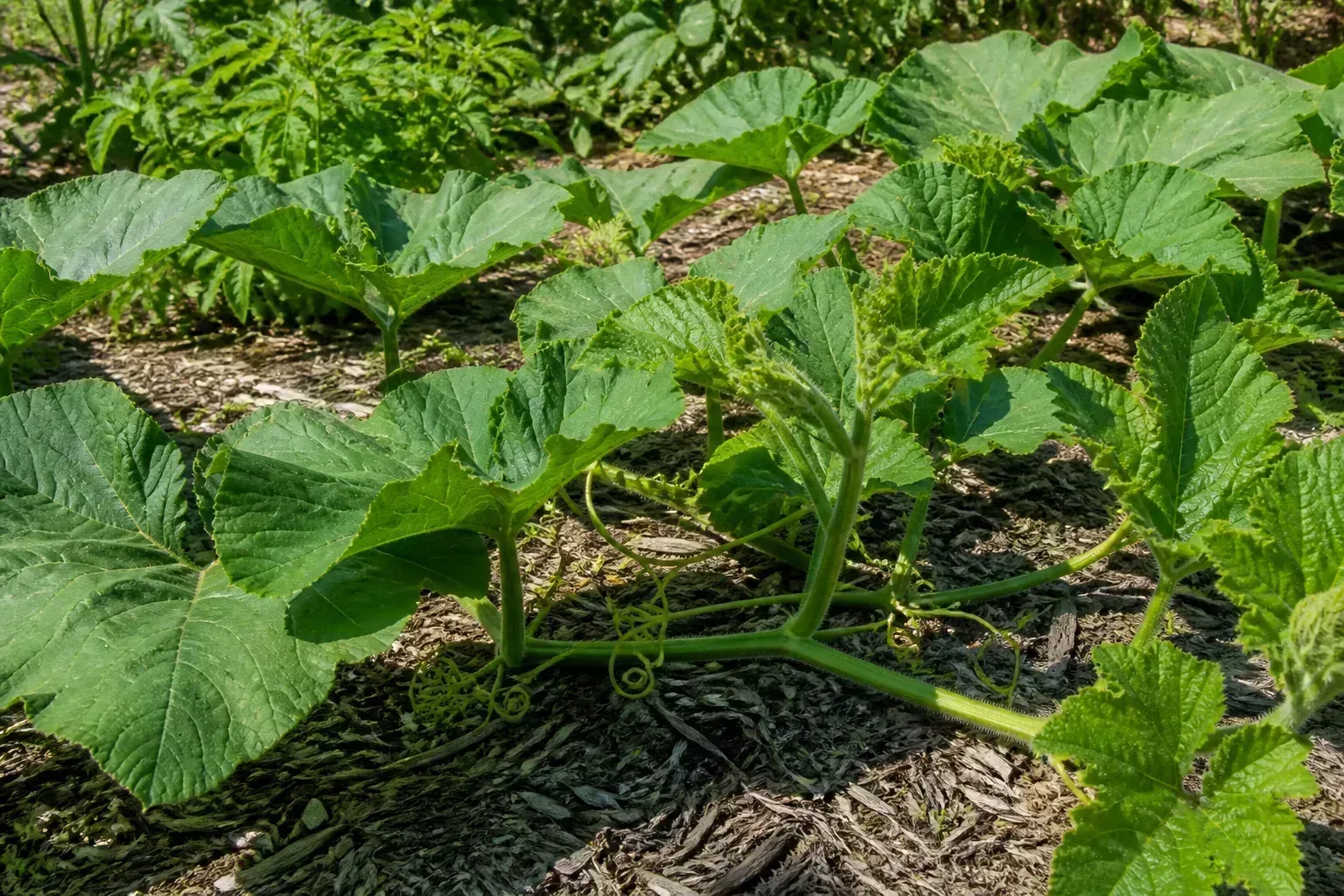
Pumpkin vines produce a broad canopy, and an old leaf can yellow as the season progresses, especially if it is shaded beneath newer growth. If one or two of the lowest, oldest leaves fade while the growing tips stay green, the vine remains firm, and fruit is developing normally, watch before intervening. Gradual decline confined to old foliage is less concerning than rapid yellowing across the canopy.
Normal aging becomes less likely if new leaves are also pale, the plant’s growth stalls, leaves wilt in the morning, or new spots appear day after day. Late-season decline can happen as a plant approaches the end of its life cycle, but the calendar alone is not enough to rule out a problem. Compare the condition of the fruiting vine and its newest growth, not just its oldest leaf.
Read the leaf pattern, not only the color
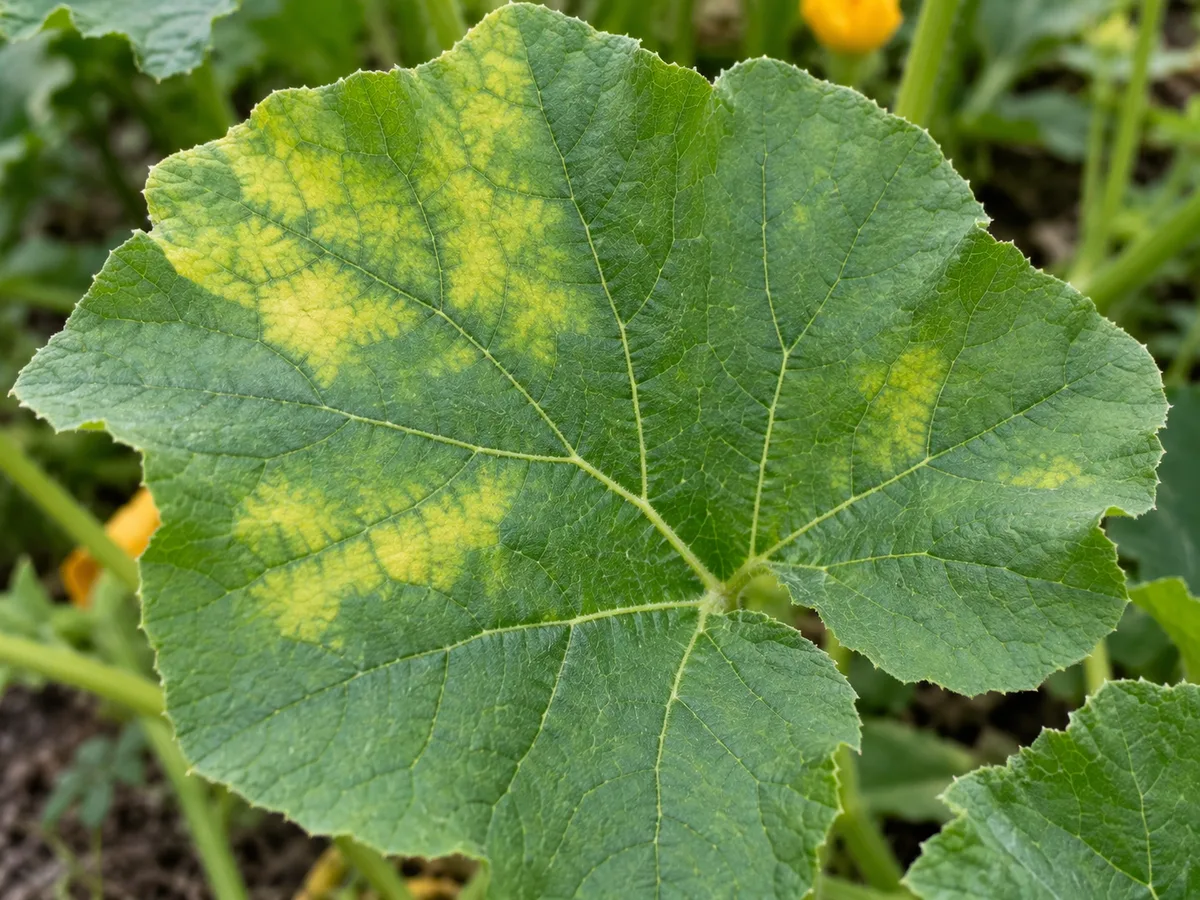
Yellowing may look similar even when the causes are unrelated. A whole leaf that turns pale can suggest general stress; older leaves with yellowing along their edges may point to a different issue than new leaves with yellow tissue between the veins. Spots, distorted growth, or a surface coating add important clues. None of these patterns proves a cause on its own, because root damage, soil conditions, and disease can overlap.
Compare a few leaves at different ages and check both surfaces. Disease lesions may have a distinct edge, follow veins, or develop a coating; insect feeding may leave holes, stippling, eggs, or insects nearby. The NC State Extension guide to cucurbit downy mildew notes that yellow-to-brown lesions can be angular and bounded by veins, while the Cornell cucurbit downy mildew guide describes how leaf symptoms can vary by cucurbit host. Treat these as recognition clues, then seek confirmation if the problem is progressing.
Dry soil and uneven watering
A pumpkin in dry soil may wilt during the hottest part of the day, then remain limp into evening if its roots cannot replace lost moisture. Long dry intervals followed by a heavy soaking can also stress roots and fruiting vines. Check the soil near the plant: if it is dry several inches down, water slowly at the base so moisture reaches the root zone. The surface can look dry while soil below is still damp, so avoid watering from appearance alone. Check a couple of spots along the root zone if the bed is large; soil beneath mulch or beside a drip line can differ from the exposed edge. A small trowel lets you inspect without pulling up the plant.
As Harvest to Table’s pumpkin-care guide recommends, check moisture rather than relying on a fixed calendar, and water near the base to keep foliage dry. How much and how often depends on rainfall, heat, soil texture, mulch, and the size of the vine. A clay bed may hold moisture longer than a raised sandy bed; a dry, windy week can change needs quickly. Aim for even soil moisture rather than a universal number of minutes or gallons.
Waterlogged soil and stressed roots
Yellow leaves with wilt can also occur when roots sit in saturated soil. Roots need air as well as water; if the bed stays soggy after rain or irrigation, they may not function normally even though the plant looks thirsty. Look for repeated puddling, slow drainage, compacted soil, or a soggy root zone before you water again. Do not respond to a wilted plant by adding more water until you check below the surface.
If the soil is wet, pause irrigation and allow it to drain. Avoid walking on or digging around saturated soil, which can compact it further or damage roots. Rainfall, a blocked drain, a low spot in the bed, or an irrigation leak can each keep only part of a planting wet, so check the affected section rather than changing the whole garden’s schedule. If the soil is saturated for days, address drainage before considering extra fertilizer; stressed roots may not take it up normally. For the rest of the season, consider a raised planting area, improved drainage, or a better-positioned drip line. If the roots or stem base are soft, dark, or decaying, or the plant continues to collapse despite correcting moisture, ask a local Extension office to help distinguish root disease from water stress.
Heat can cause temporary wilt and leaf stress
Large pumpkin leaves lose water quickly in bright sun, so they can droop on a hot afternoon even when the plant is adequately watered. If leaves recover in the evening or by the next morning, the root zone is moist, and no new spots or discoloration are developing, heat may be part of the explanation. A short-lived midday droop is different from a plant that stays wilted through the cool morning.
Check soil moisture before watering, especially after a rainy week followed by heat. Keep mulch over the soil to reduce rapid drying, but do not pile it against stems. A temporary heat response does not usually require removing leaves or changing fertilizer. If new leaves are repeatedly scorched, distorted, or persistently limp, check for root problems, uneven irrigation, and disease rather than assuming temperature is the only cause.
Nitrogen deficiency usually affects older leaves first
A lack of nitrogen can make foliage pale green or yellow and slow growth. The pattern often begins with older leaves, then becomes more widespread as the shortage worsens. The Alabama Cooperative Extension System’s plant-nutrient guide describes older leaves yellowing first with nitrogen deficiency, but that clue is not unique to nitrogen; waterlogged roots and other stresses can also limit a plant’s ability to use nutrients.
Check whether the vine is growing slowly and whether the pale color is fairly uniform across older leaves. Do not use a quick dose of high-nitrogen fertilizer as a diagnostic test. Pumpkins already make substantial vine growth, and excess nitrogen can encourage leaves and stems at the expense of flowering and fruiting. Review the soil-test results and the fertilizer label before feeding, and follow locally appropriate recommendations for the crop and soil.
Other nutrient patterns need a soil test
Some nutrient problems create recognizable patterns, but symptoms overlap. Potassium shortage may show as yellowing along the margins of older leaves; magnesium shortage can cause yellow or bronze areas between veins while veins stay green, usually on older leaves. Iron-related chlorosis is more often seen on younger leaves, but high soil pH, poor drainage, compaction, or damaged roots can make nutrients unavailable even when the soil contains them. These are broad plant clues, not a pumpkin-specific diagnosis.
A soil test is a safer next step than adding several nutrients at once. It can show whether pH or measured nutrients need correction and help prevent excess fertilizer from building up. Test the bed where the vines are growing and follow the laboratory’s directions for collecting and labeling a sample; mixing unrelated areas can blur a problem spot. A foliar spray may temporarily change leaf color without correcting the soil or root condition, so a greener leaf after treatment is not proof that the original diagnosis was right. For suspected nutrient issues, record which leaves are affected and whether veins stay green, then use your local Extension soil-testing service. If a test does not explain the symptoms, ask about root health and disease rather than repeating fertilizer applications.
Powdery mildew leaves a white surface coating
Powdery mildew is easier to recognize when you see white or gray powdery growth on the leaf surface. It can spread across cucurbit foliage and weaken the plant; yellowing may follow as affected leaves decline. A yellow leaf without powder is not enough to call it powdery mildew. Inspect multiple leaves in good light, especially within a dense canopy, and compare the coating with dust or dried spray residue before deciding what you are seeing.
The BBC Gardeners’ World guide to mildew on cucurbits describes the white powdery coating and recommends keeping plants healthy with airflow and consistent moisture. Its practical advice is consistent with the pumpkin and squash grow guide, which advises regular watering in dry weather and attention to affected foliage. Avoid handling wet leaves; if disease seems likely, consult a local diagnostic service before choosing a treatment.
Downy mildew makes angular yellow lesions
Downy mildew can produce yellow-to-brown lesions on the upper leaf surface that are restricted by veins. In favorable damp conditions, the underside of a lesion may show dark, fuzzy-looking spores, especially when humidity is high. NC State Extension notes that these angular patches may be confused with other foliar diseases, so a yellow pattern is a clue rather than a confirmed diagnosis. Different cucurbits can show different details, and lesions may become brown as tissue dies.
Inspect the top and underside of leaves early in the day, when moisture may make signs easier to see. Take clear photos of the whole plant and both sides of a representative leaf. If multiple leaves develop angular lesions or decline quickly after wet weather, contact your county Extension office or plant diagnostic clinic for guidance. Do not apply a fungicide just because leaves are yellow: a product meant for one disease may not solve another problem, and product labels and local recommendations vary.
Pests can damage leaves or interrupt water flow
Look under leaves for insects, eggs, and feeding marks, and examine the main stem near the soil line. Squash bugs feed on cucurbit foliage and can leave leaves wilted or damaged. Cucumber beetles chew leaves and flowers and can spread bacterial wilt; a plant that collapses rapidly is a different warning sign from a few yellow older leaves. Squash vine borer injury may cause sudden wilting, with a hole or sawdust-like frass around the lower stem. The Harvest to Table pest guide outlines these differences, but local identification is useful when the damage is unclear.
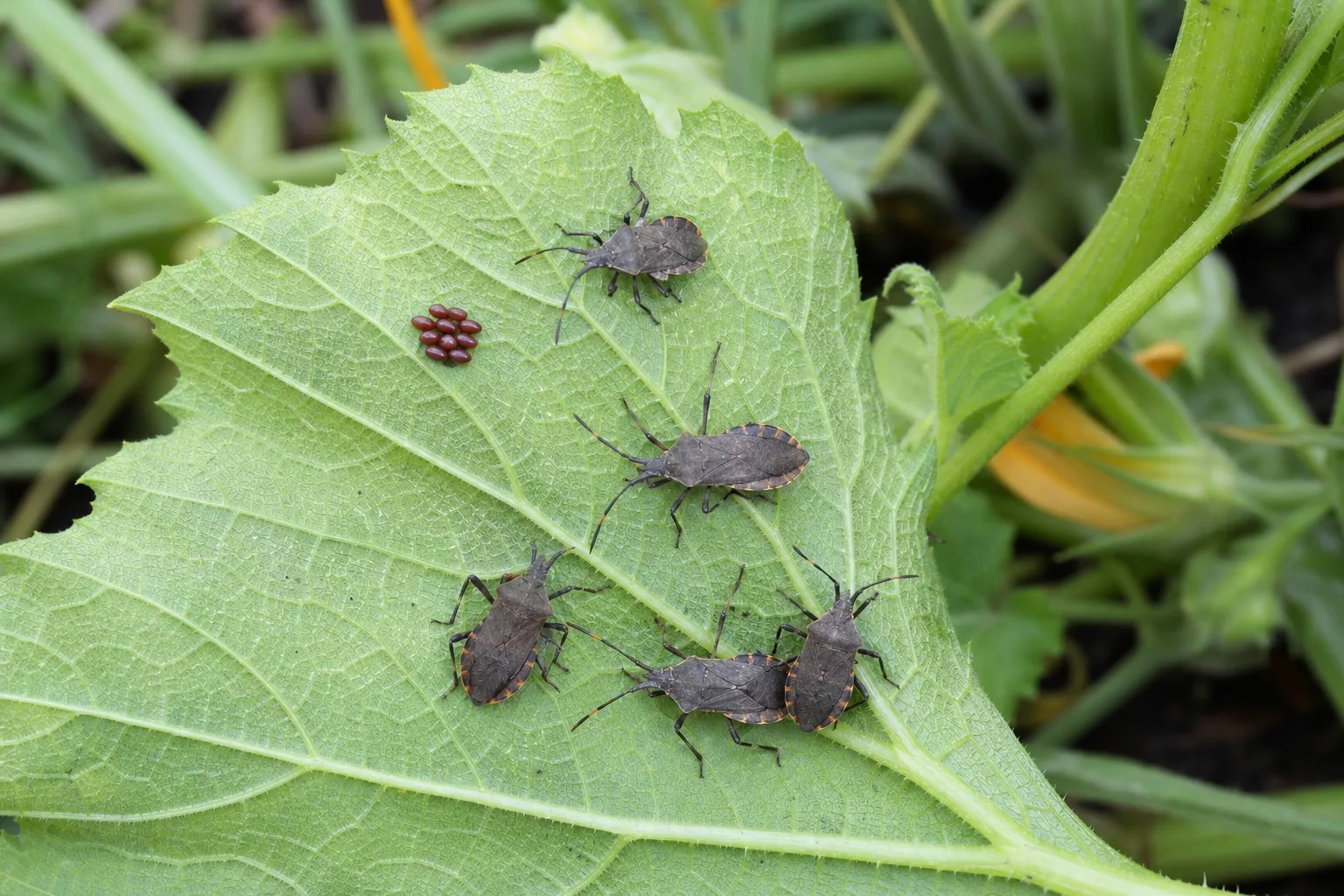
Seeing an insect nearby does not prove it caused the yellowing. Photograph the insect and affected leaf, note how many plants are involved, and inspect for matching feeding damage. Start with observation and physical removal only when you can safely identify the pest and the method fits the crop stage. Avoid broad-spectrum sprays as a guess; they can harm pollinators and beneficial insects, while failing to address disease, water, or root causes.
Herbicide injury and physical damage can mimic disease
If yellowing appears alongside curled, cupped, twisted, or unusually narrow new leaves, consider whether lawn weed killer, drift, contaminated compost, or another chemical exposure could be involved. A sudden change after nearby spraying, wind, or use of treated clippings is useful context. Physical damage from a broken petiole, vine movement, hail, or machinery may affect one portion of a plant while the rest remains normal.
Do not apply fertilizer or another chemical to counteract suspected herbicide injury. Record dates, products used nearby if known, weather, and which plants are affected; then contact an Extension office for a diagnosis. If the source is uncertain, keep suspect garden debris out of compost until you receive guidance. A single damaged leaf may not threaten the crop, but distorted new growth or repeated symptoms deserve a closer look.
A five-minute pumpkin-leaf diagnosis table
Use this table to choose your next inspection, not to make a final diagnosis from one symptom. The most useful pattern is the combination of leaf age, spread, soil moisture, and any visible lesion or pest.
| What you notice | What it can suggest | Check next |
|---|---|---|
| One lowest, shaded leaf fades; tips and fruit look healthy | Normal aging or shading | Watch the rest of the vine for several days |
| Several older leaves turn uniformly pale and growth slows | Nitrogen shortage or root stress | Check root-zone moisture, then soil-test before feeding |
| Leaf margins yellow on older leaves | Potassium or other stress | Compare other leaves and use a soil test |
| Yellow between veins on older leaves | Magnesium-related pattern or root/pH issue | Check new leaves, drainage, and soil-test results |
| New leaves yellow between veins | Iron availability, pH, or root trouble | Check drainage and ask Extension about testing |
| Leaf droops in afternoon but recovers overnight | Heat-related water demand | Check moisture below the surface before watering |
| Plant wilts while soil stays wet | Saturated soil or impaired roots | Stop watering until drainage is assessed |
| White powder coats leaf surfaces | Possible powdery mildew | Inspect multiple leaves; seek local disease guidance |
| Angular yellow patches follow veins | Possible downy mildew or look-alike disease | Check undersides and send photos for confirmation |
| Rapid collapse, stem hole, frass, or heavy feeding | Pest injury or disease | Inspect the stem and seek prompt identification |
What to do during the first 48 hours
When the cause is uncertain, choose actions that preserve evidence and avoid adding new stress. Photograph the whole vine and a close-up of the affected leaf, including its underside. Mark or remember which leaves are affected, then check the soil several inches down and inspect the plant for insects, eggs, powder, lesions, and stem damage. Record recent rain, heat, irrigation, fertilizer, and any nearby herbicide use.
Correct an obvious moisture problem carefully: water at the base if the soil is dry below the surface, or pause irrigation if the root zone is saturated. Do not change watering and fertilizer together, because you will not know which condition mattered. If the symptoms are stable and limited to one old leaf, observe before pruning. If the pattern spreads, the plant collapses, or several vines show similar signs, send your photos and notes to a county Extension service or plant clinic.
When to remove yellow leaves
A yellow leaf is not automatically contagious and does not always need to be cut off. Leave a single aging leaf in place if it is mostly intact and the rest of the vine is healthy. Removing green foliage reduces the plant’s photosynthetic area, so avoid stripping leaves just to make the plant look tidy. Do not pull a leaf from the stem; tearing can injure the vine.
If a leaf is mostly dead, badly broken, or clearly infected and an Extension source advises removing it, use clean pruners and avoid working when foliage is wet. Place diseased debris in the disposal route recommended locally rather than leaving it against the vine. Pruning a few damaged leaves will not fix saturated soil, a nutrient imbalance, a virus, or stem-borer damage, so address the underlying cause as well.
Prevent repeat stress through the growing season
Give pumpkin vines a sunny site with room for airflow, and use mulch to slow rapid swings in soil moisture. Water the root zone consistently during dry weather, adjusting for rainfall and soil rather than following a rigid calendar. Avoid prolonged wet foliage when possible, and handle vines when they are dry. Inspect the undersides of leaves and the lower stems regularly so pest eggs, feeding, or disease patterns are easier to catch early.
Before planting, use a soil test to guide pH and nutrient amendments. Avoid adding fertilizer simply because a leaf looks yellow; excess nitrogen can create lush growth without solving the underlying problem. Rotate cucurbit crops when space allows and remove spent vines at season’s end according to local disease guidance. Healthy growing conditions reduce stress, but they cannot guarantee that pests or diseases will never appear.
When to contact your local Extension office
Get help when yellowing spreads quickly, new growth is distorted, many leaves show angular or unusual lesions, the plant wilts despite moist soil, or the main stem has holes or frass. A sudden collapse can have several causes, and waiting to test an uncertain spray may cost time. Contact your county Cooperative Extension office or a university plant diagnostic clinic; ask what sample or photos they need before sending plant material.
Include close photos of the top and underside of leaves, one image of the whole plant, and a photo of the stem base if it looks damaged. Note the variety if known, planting date, recent weather, irrigation, fertilizer, and any chemical exposure in or near the garden. Keep a sample in the condition and packaging requested by the diagnostic service; do not mail a wet, sealed leaf unless the lab asks for it. Local services may charge a fee or require a submission form, so check their instructions first. Clear observations help an expert separate a disease from stress that only looks similar. A specific diagnosis makes follow-up more useful and helps avoid a treatment that targets the wrong problem.
Conclusion
Yellow pumpkin leaves are a symptom, not a diagnosis. Check whether the affected foliage is old or new, whether the color is uniform or patterned, whether the soil is dry or saturated, and whether the problem is spreading across the vine. Those clues can separate normal aging and short-term heat stress from root, nutrient, pest, or disease problems.
Make one measured change at a time, use soil tests before adding nutrients, and ask Extension to identify persistent or fast-moving symptoms. Most importantly, do not reach for pesticide or fertilizer based on color alone. A careful inspection is the fastest way to protect a healthy vine and choose the right next step.