Quick Fire Hydrangea Care: Growing and Pruning Guide
Grow Quick Fire hydrangea with the right light, moisture, spring pruning, and spacing. Learn why its flowers turn pink and how to troubleshoot weak blooms.
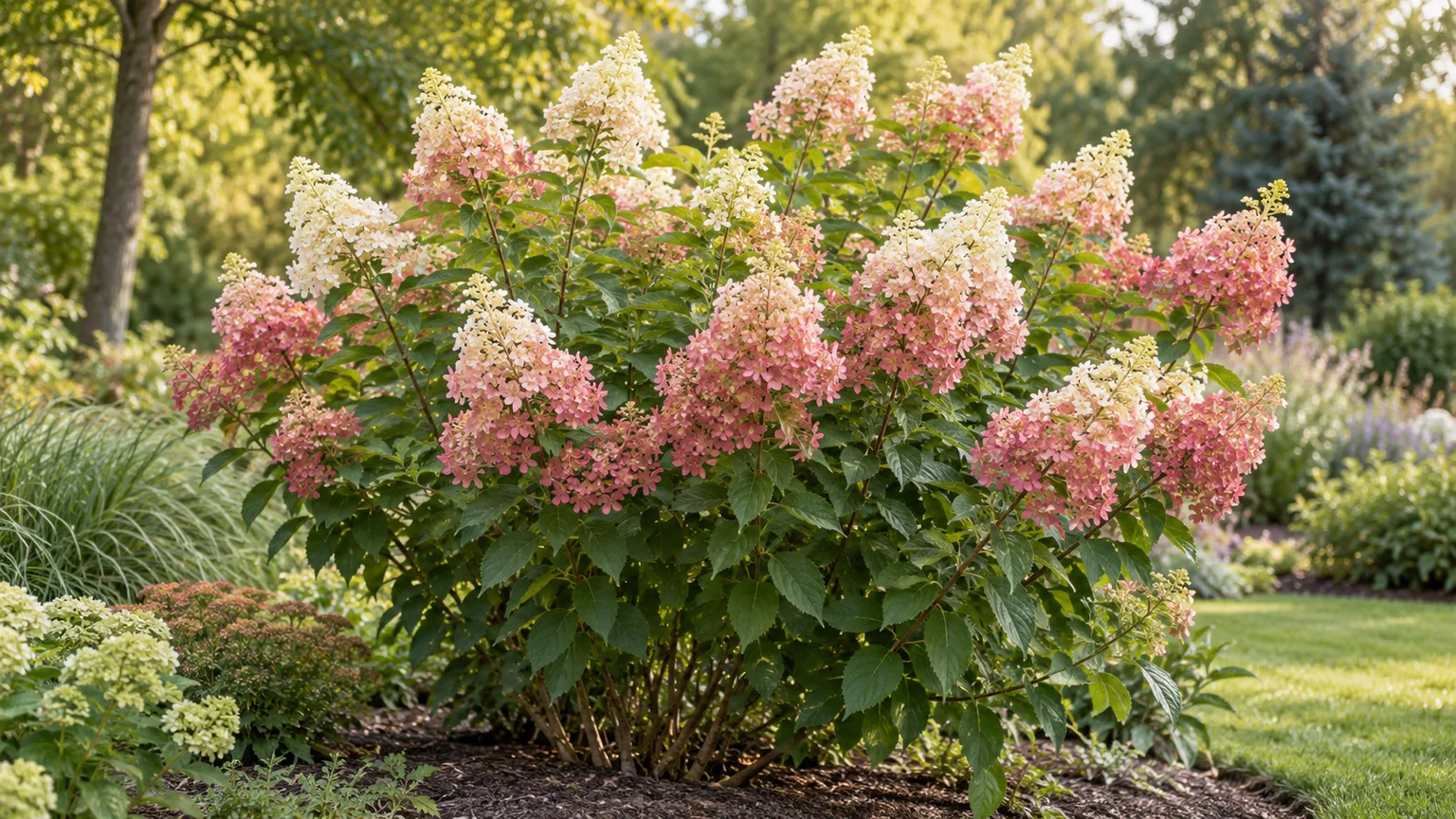
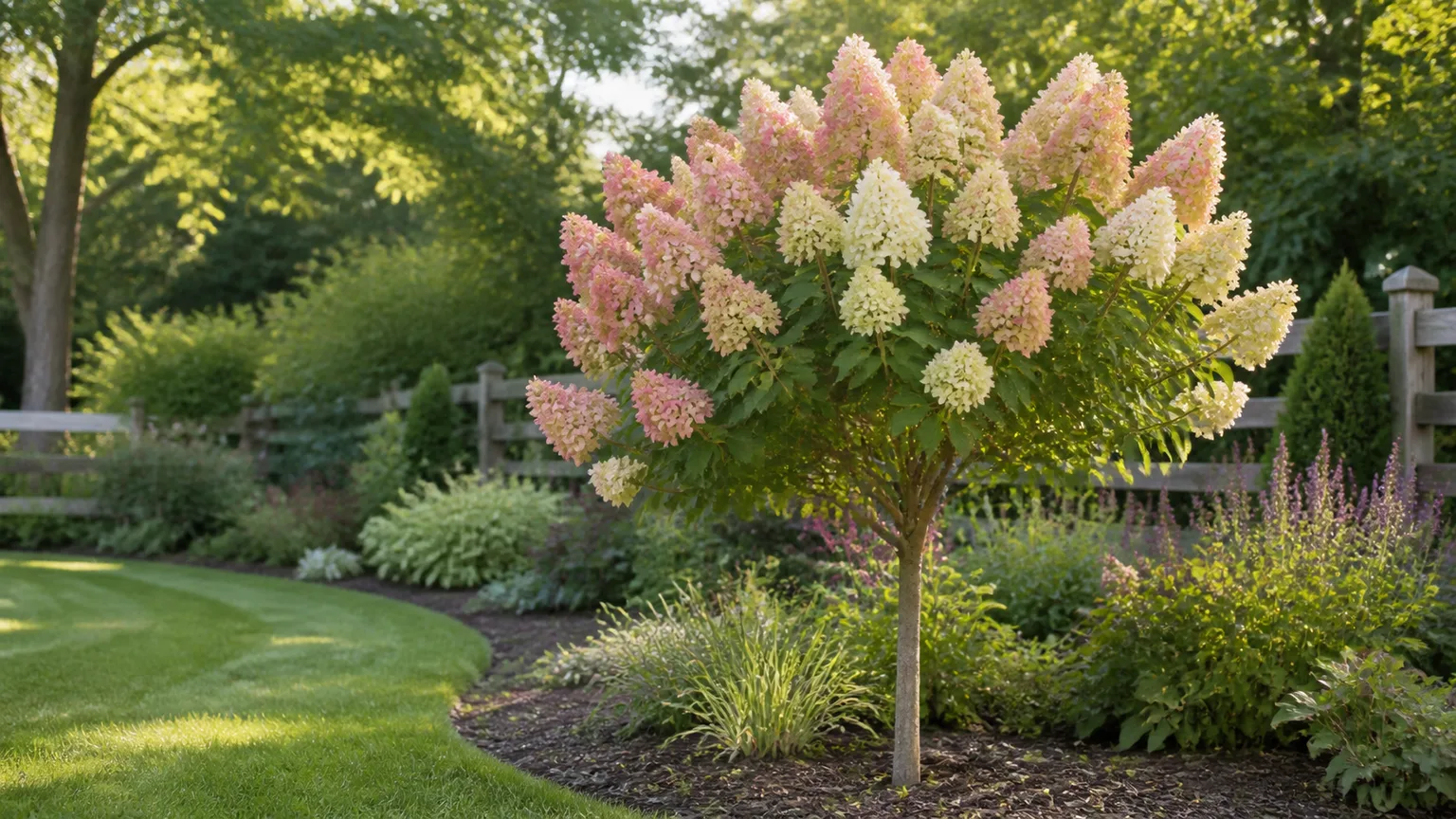
Quick Fire hydrangea is a panicle hydrangea chosen for a head start on summer color: its flower clusters open pale, then age through pink and rosy red while the shrub’s foliage develops fall color. The best results come from treating it as a large, sun-loving shrub that needs consistent root-zone moisture, not as a bigleaf hydrangea whose flower color can be changed with soil pH.
Its botanical name is Hydrangea paniculata ‘Bulk’; Quick Fire is the registered name used for the cultivar. It flowers on new wood, so a cold winter does not destroy preformed flower buds the way it can on some old-wood hydrangeas. That makes pruning more forgiving, but it does not make every pruning cut useful.
Quick Fire hydrangea at a glance
Quick Fire grows as an upright, multi-stemmed deciduous shrub. The cultivar’s supplier lists a typical mature size of about 6 to 8 feet tall and wide, flowering in summer and fall, with full sun to part sun and well-drained soil. Use those dimensions when choosing a site; a nursery pot can look small beside the shrub it will become. Proven Winners’ Quick Fire profile gives the cultivar details, while NC State Extension’s panicle hydrangea profile describes the broader species.
| Feature | What to expect |
|---|---|
| Botanical name | Hydrangea paniculata ‘Bulk’ |
| Habit | Upright, multi-stemmed shrub |
| Typical size | About 6–8 feet tall and wide; verify the plant label |
| Supplier hardiness range | USDA zones 3a–9b; local heat and moisture still matter |
| Flowers | Conical panicles that open light and age pink to rosy red |
| Blooming wood | New growth from the current season |
| Light | Sun to part sun; shade the root zone from harsh afternoon heat |
| Soil | Moist but well drained |
| Flower-color control | Soil pH does not turn Quick Fire flowers blue or pink |
The supplier reports that Quick Fire blooms about a month before other panicle hydrangeas in its West Michigan trials, often near early July there. That is a useful comparison, not a calendar promise: latitude, spring temperatures, exposure, plant age, and local weather shift the first bloom. Expect the sequence of color change, but use your own climate rather than a printed date to plan a garden event or cut stems.
Quick Fire, Little Quick Fire, and Quick Fire Fab are different plants
Read the entire plant tag before buying. Standard Quick Fire is the full-size shrub described here; Little Quick Fire is a separate, compact cultivar listed at about 3 to 5 feet tall and wide, while Quick Fire Fab is selected for fuller, denser mophead-style flower heads. Their Little Quick Fire profile and Quick Fire Fab profile show why the names should not be treated as interchangeable; neither a compact plant nor a dense flower form should be assumed from the words “Quick Fire” alone.
This distinction matters most when you are trying to fit a shrub near a walk, window, or fence. If there is not room for a shrub roughly six feet across, choose a labeled compact cultivar instead of planning to keep standard Quick Fire permanently small through hard annual cuts. Panicle hydrangeas also differ from bigleaf hydrangeas: their seasonal color is an aging process, not a soil-acidity adjustment.
Hydrangea paniculata is listed by the RHS as harmful to dogs and cats if eaten. Keep prunings and fallen leaves away from pets; if an animal chews the shrub, contact a veterinarian for case-specific advice instead of trying a home remedy. RHS plant details
Choose a site with morning sun and moisture
Quick Fire flowers best with good light, but “full sun” needs context. In cooler regions, a site with six or more hours of sun can support strong flowering; in a hot summer climate, morning sun with some protection from the most intense afternoon heat can reduce leaf scorch and water stress. The RHS lists panicle hydrangea for full sun or partial shade when the soil remains reliably moist, and NC State notes its greater sun tolerance compared with other hydrangea species. RHS plant details
Do not judge a spot only by its midday brightness. Observe it through a warm day: a location that bakes against a south- or west-facing wall may dry too quickly, while deep shade beneath a dense tree can limit flowers and compete for water. In hotter areas, choose the brightest site that still allows the root zone to stay evenly moist.
Air movement matters because broad shrubs planted tightly together hold humidity around their leaves. Give the branches room to dry after rain, and avoid crowding the shrub against a downspout or a regularly irrigated lawn edge. A sunny, ventilated position is especially useful if powdery mildew or leaf spot has been a recurring problem in your garden.
Plant for the mature shrub, not the nursery pot
Spring and fall are usually easier planting seasons than midsummer because roots can settle before heat or hard freezes arrive. If you must plant during a warm spell, water the container thoroughly first, plant on a cooler day, and check the root ball more often until new roots spread into the surrounding soil. In a mild climate, fall planting can work well if the plant has time to establish before the ground freezes.
Use the mature dimensions on the specific nursery label to set spacing. For a single specimen, leave enough room that mature branches do not press into walls, paths, or neighboring shrubs; for a loose screen, closer spacing can create a fuller line but raises competition for light and water. The cultivar profile lists a spacing range of roughly 8 to 10 feet, so use that as a starting point and adjust to the look you want and your local nursery’s guidance.
Set a container-grown plant correctly
Water the pot before planting so the root ball does not pull moisture away from the surrounding soil. Dig a hole about as deep as the root ball and wider than it, loosen circling roots gently, and set the shrub so the top of the root ball sits level with the surrounding grade. Backfill with the native soil, firm it lightly, then water slowly to settle soil around the roots.
Do not bury the stem bases or pile compost against them. If the planting hole repeatedly fills with water after rain, the site drains poorly; move the plant or improve the broader bed rather than placing a rich, loose pocket inside heavy soil. Water again when the root zone begins to dry, not because a fixed number of days has passed.
Water deeply while roots establish
During the first growing season, check the root ball and nearby soil every few days during dry weather. A plant in a small nursery pot may dry faster than the garden soil around it, so feel the soil several inches down near the original root ball; if it is dry, water slowly enough for the whole root zone to absorb the moisture. As roots grow outward, widen the area you check and water.
Once established, Quick Fire is not a bog plant and should not sit in saturated soil. During a prolonged hot, dry stretch, give it a slow, deep soak at the soil line when the root zone is dry; a quick splash over the leaves does little to replenish shallow roots. NC State describes panicle hydrangea as shallow rooted and notes that mulch can help protect the root zone. NC State Extension
A brief midday droop during hot sun is not automatically a signal to irrigate. Check again in the evening or early morning and feel the soil first: if the foliage recovers and the root zone is moist, extra water can make drainage problems worse. If the plant remains limp and soil is dry, water deeply and reassess the next morning.
Keep soil cool and free draining
Quick Fire grows in many ordinary garden soils as long as water drains through them and the roots do not dry completely between rain or irrigation. The RHS recommends moist but well-drained soil and allows full sun when moisture is reliable. Improve a poor bed across a broad area with organic matter if needed, but do not assume that a handful of compost in one planting hole will fix compacted or waterlogged ground.
A moderate layer of organic mulch helps reduce evaporation and temperature swings. Keep the mulch over the root zone but pull it a few inches away from the stems so the crown is not held wet; refresh it when it breaks down rather than building a thick mound year after year. Mulch supports moisture retention, but it cannot substitute for a site with working drainage.
Soil pH does not determine whether Quick Fire blooms white, pink, or blue. That color rule applies to certain bigleaf hydrangeas, not to this panicle cultivar, so adding aluminum sulfate, lime, or other amendments to change its bloom color is unlikely to achieve the intended effect. Use a soil test for a genuine soil problem, not as a method for recoloring the flowers.
Fertilize only when soil and growth call for it
A healthy Quick Fire planted in reasonably fertile ground may not need routine fertilizer. A high-phosphorus “bloom” formula is not a universal recipe: a fertilizer ratio does not identify what your soil lacks, and more fertilizer will not make the flowers turn pink. If the shrub has weak growth, first check light, water, planting depth, and drainage.
If you are considering fertilizer, get a soil test and follow the lab’s recommendation for your region and plant. UGA Extension’s soil-testing guidance explains why testing is a better starting point than guessing; apply only the product and amount the result calls for. Do not keep adding nitrogen late in the season, when the plant should be hardening off rather than being pushed into tender growth.
Prune new growth in early spring
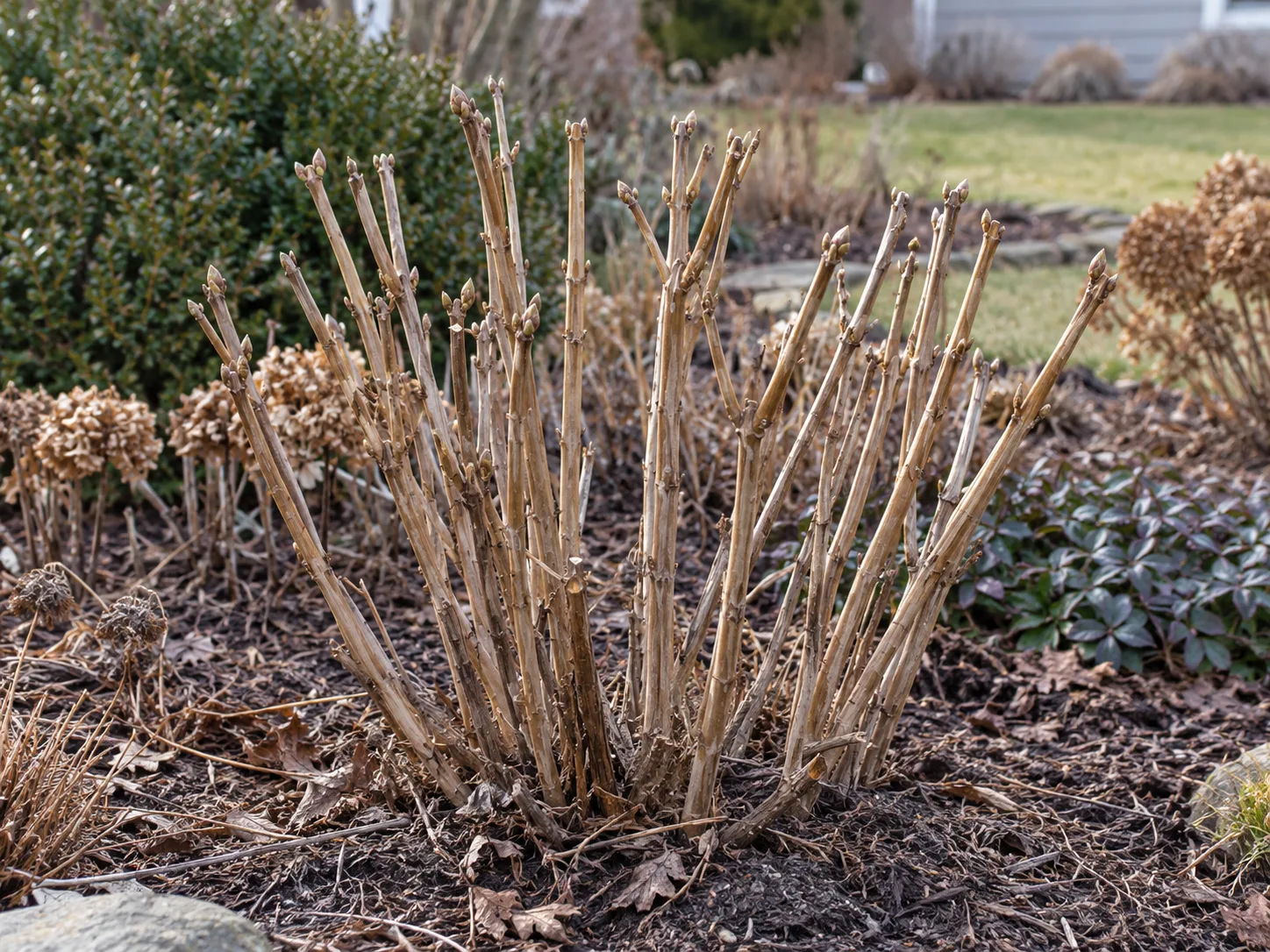
Quick Fire flowers on new wood, meaning stems produced in the current growing season. That gives you a wider pruning window than an old-wood hydrangea, but the most useful time is late winter to early spring, before new shoots have lengthened. In cold regions, wait until the worst winter weather has passed and you can distinguish dead stems from live buds; the cultivar’s supplier recommends reducing the previous season’s growth by about one-third as new growth begins. Proven Winners’ pruning notes and Epic Gardening’s hydrangea pruning guide both describe the new-wood timing.
Start by removing clearly dead, damaged, rubbing, or inward-growing stems. Then shorten selected live stems to an outward-facing bud or side branch, keeping the shrub’s natural rounded outline rather than shearing every cane to one flat height. If you like a larger, more natural shrub, light structural pruning is enough; annual hard cuts are not required for flowering.
Use the cut that fits the job
Pruning to remove dead wood, control size, and encourage sturdy branching are different tasks. A damaged cane can be removed at its base; an overlong live branch can be shortened above a strong bud; a shrub that has outgrown its space may be better replaced with a compact cultivar than repeatedly cut down. These choices preserve a layered framework instead of creating a dense thicket of weak, crowded stems.
Avoid cutting the entire plant to a few inches simply to chase oversized flower heads. Very hard pruning can produce fewer, vigorous shoots carrying large panicles, which may lean after rain, and the shrub will have an unnaturally short framework for part of the season. Gardeners’ World and Epic Gardening both advise matching pruning timing to the hydrangea type; the safe shortcut here is to confirm that the label says panicle hydrangea before using a new-wood pruning schedule. Gardeners’ World’s pruning guide explains why the timing differs among hydrangea groups.
Deadhead only for tidiness or cutting
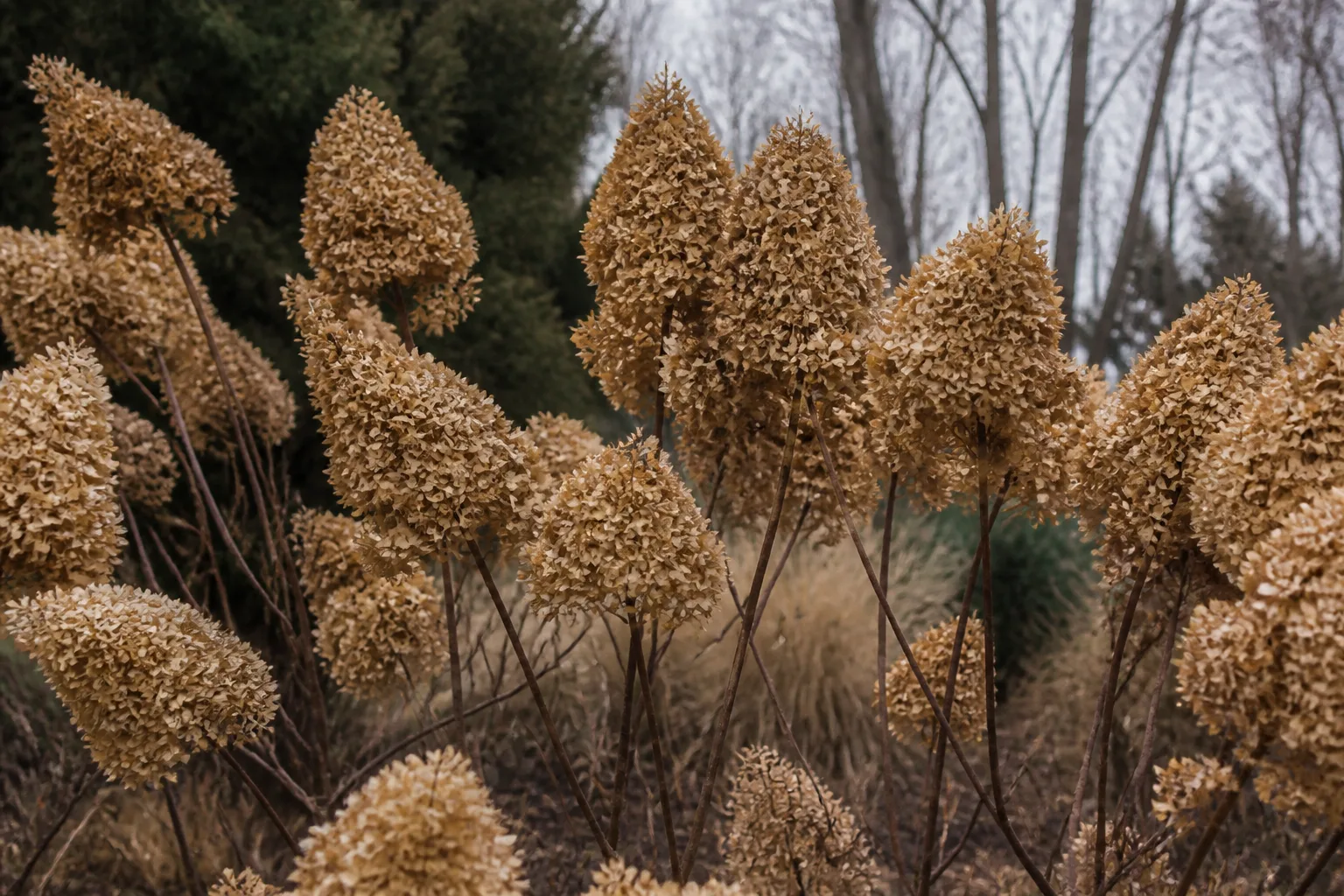
Deadheading is optional. Remove a dry flower head if you prefer a neater winter silhouette, but it does not trigger a second flush of Quick Fire flowers; its extended display comes from panicles aging through color on the same stems. You can also leave the dry cones in place for winter texture and cut them off during spring pruning.
For a vase, cut a few stems when the flowers have developed enough color to suit the arrangement, and avoid stripping the whole shrub of its display. Quick Fire is used for fresh and dried flowers, according to the cultivar profile. If you dry stems, choose blooms that feel papery rather than soft and fresh, and hang them in a dry, airy place away from direct sun.
Read the white-to-pink bloom sequence
Quick Fire’s flowers open white or creamy white, then gradually gain blush and deeper pink or rosy-red tones as the season advances. This transition happens as individual florets age; it is not a blue-to-pink response to soil chemistry. A pink panicle hydrangea and a blue bigleaf hydrangea can be side by side in a landscape, but they do not share the same color-control rule.
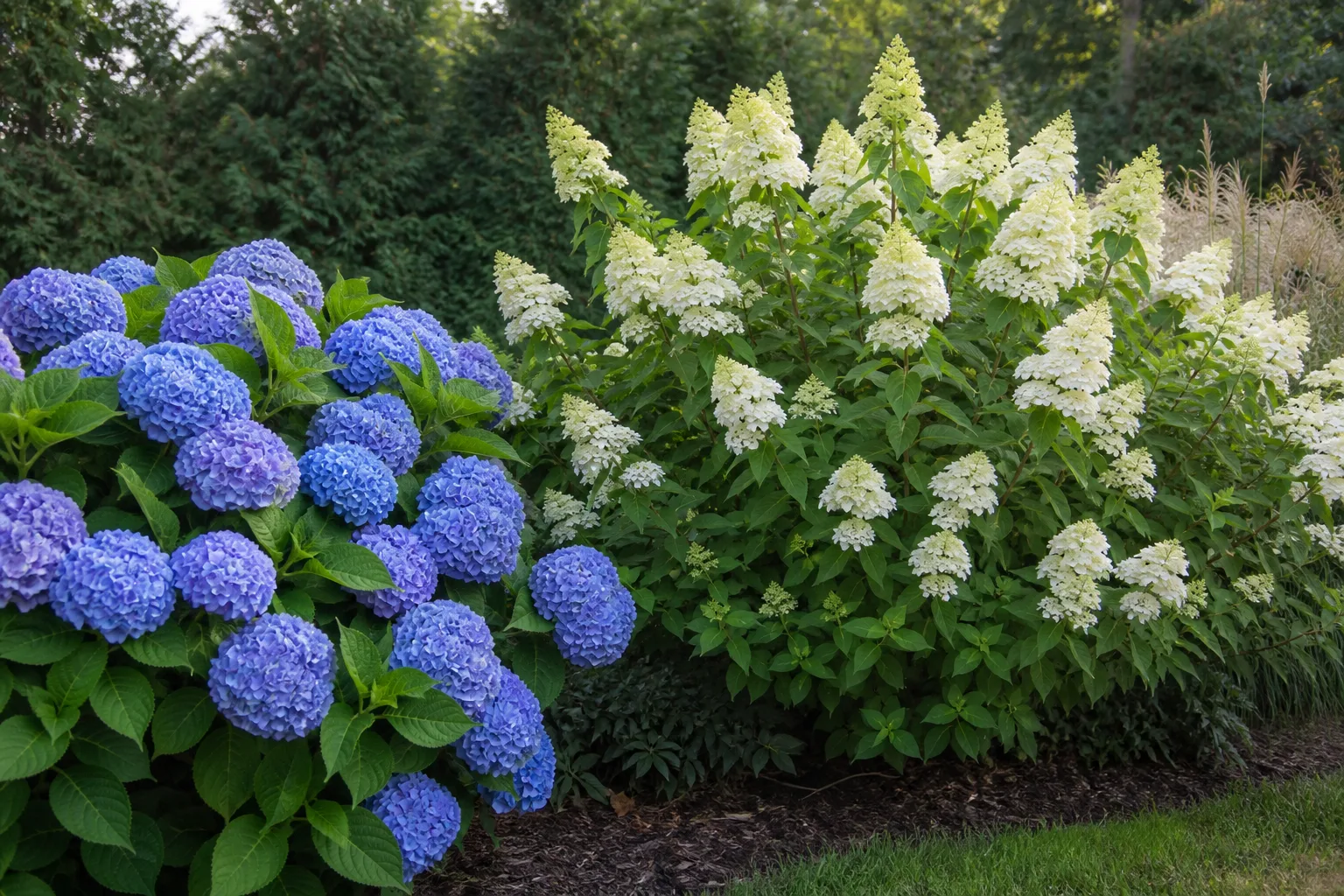
Light and weather affect how rich the late-season color looks. The cultivar’s supplier reports that too much shade, drought stress, and unusually warm nights can keep flowers from aging to their deepest pink or red; those are useful conditions to check, not a guarantee that changing one factor will produce a specific shade. Give the plant good light and steady moisture, then let the local season determine the finish.
Follow a season-by-season routine
Spring: Remove winter-killed wood, shape lightly, refresh mulch, and check whether the soil drains after heavy rain. If the shrub is newly planted, keep checking the original root ball as temperatures rise; the surrounding garden may be damp while the container-grown roots are still dry.
Summer: Watch moisture during heat waves, especially in the first year or in sandy soil. Water at the base when the root zone is dry, leave healthy leaves in place, and avoid heavy pruning while the plant is building flower-bearing shoots.
Fall and winter: Let flowers age naturally, collect diseased leaves if leaf spot or mildew was present, and avoid fertilizer or unnecessary shaping late in the season. The new-wood flowering habit makes Quick Fire more dependable after cold winters than old-wood hydrangeas, so established plants usually do not need flower-bud protection; newly planted shrubs still benefit from a well-mulched root zone in exposed sites.
Troubleshoot weak blooms, droop, and leaf disease
If the shrub flowers poorly, first confirm the label and check how much direct light it receives. A plant in deep shade may grow plenty of leaves but produce fewer panicles, and a recently planted shrub may spend its first season establishing roots before it reaches its full display. Quick Fire blooms on new wood, so a normal winter does not remove the next season’s flower buds, though severe cold after spring growth begins can still damage tender shoots.
If the flowers remain pale, compare the plant’s exposure and water history with the cultivar’s needs before changing soil chemistry. Shade, drought, and very warm nights can all affect the color progression; changing pH will not correct this cultivar’s seasonal aging pattern. If leaves wilt, feel the soil: dry soil calls for a deep soak, while wet soil calls for checking drainage and easing irrigation.
Panicle hydrangeas can develop powdery mildew, leaf spot, rust, or other foliage problems, particularly where airflow is poor or leaves stay wet. Remove badly affected fallen leaves, water at soil level, and give mature shrubs enough room to dry after rain; if symptoms spread or the plant declines, ask a local extension service to identify the problem before applying any treatment. Aphids and mites may also appear, but inspect leaf undersides first and avoid treating an insect you have not identified. NC State Extension’s problem list describes common panicle-hydrangea pests and diseases.
Use timing and soil condition before changing care
A shrub that droops only during the hottest part of the day but recovers overnight may be responding to heat rather than running out of water. A shrub that remains limp at dawn and has dry soil needs a deep soak; one with wet soil, yellowing, or a sour-smelling root zone may be suffering from poor drainage instead. These cues are more useful than watering on a fixed weekly schedule.
A flower head that bends after a hard rain is different from a whole shrub wilting. Quick Fire is known for sturdy stems, but heavy wet panicles can still weigh a branch down; prune lightly for a balanced framework and remove only a broken stem, rather than shortening every branch to solve one storm’s damage. If the same branches flop every year, improve light and structure at spring pruning or choose a smaller plant for that location.
Use Quick Fire for a hedge, border, or vase
Standard Quick Fire works best where its mature width is welcome: as a specimen, in a mixed shrub border, or in a loosely spaced screen. Its upright habit and early panicle bloom make it useful where a garden needs summer flowers before some later-blooming panicle cultivars, while its pinking flowers and autumn foliage extend seasonal interest. For a narrow path or small foundation bed, a true dwarf cultivar is usually a better long-term fit than trying to hold standard Quick Fire at half its natural size.
The showy parts of hydrangea panicles include sterile florets, while smaller fertile florets provide the reproductive function and can attract visiting insects. Leave some blooms for the garden and cut selectively for arrangements; this preserves both the shrub’s late-season display and its value to the landscape. If you bought a tree-form Quick Fire, follow the trained trunk and crown rather than pruning it like the natural multi-stem shrub.
Conclusion
Give Quick Fire enough sun for flowering, reliable moisture without waterlogging, and space for a six- to eight-foot shrub. Prune selectively in early spring because it flowers on new wood, and do not use soil pH or a high-phosphorus fertilizer to force a color change. When color or vigor disappoints, check light, root-zone moisture, drainage, and cultivar identity before making a major change.