Your Fall Garden Doesn't Have to Be Drab—12 August Picks
Plant 12 heat-tolerant perennials in August for fall color, with frost-timing rules, sun and soil matches, and realistic first-bloom expectations.
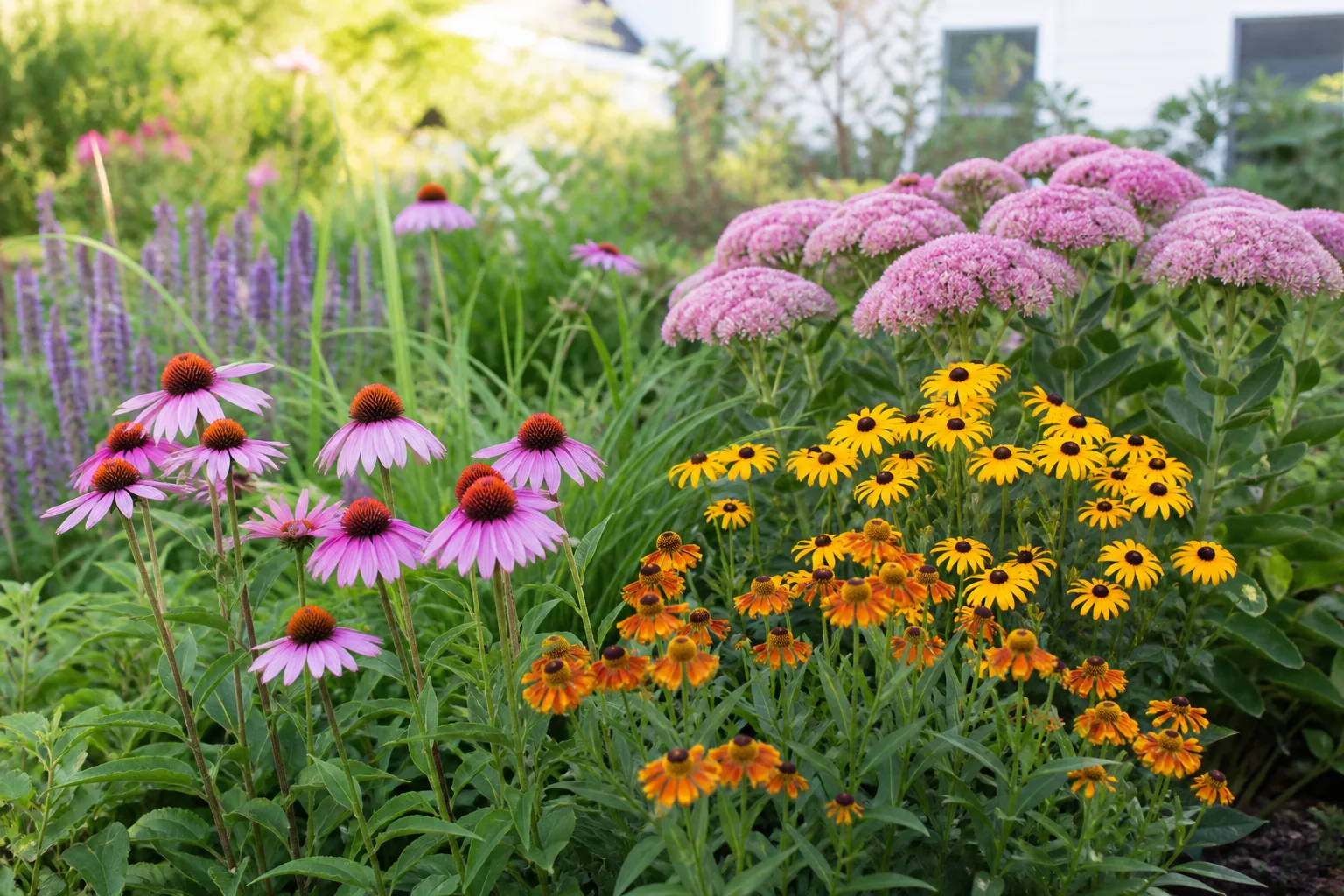
August feels like a deadline, but for many temperate gardens it is closer to a second planting window than an end credit. Warm soil still encourages root growth, nights are starting to cool in a lot of regions, and nursery benches are full of perennials that were bred to flower in late summer and fall. The mistake is treating every August day the same: a heat wave in zone 9 and a frost six weeks away in zone 5 call for different purchases and different expectations.
This guide covers twelve perennials you can still plant in August when you match the plant to your frost clock, sun exposure, and soil drainage. Some may bloom this fall if you buy budded container stock. Others will spend the season rooting and reward you next year. Both outcomes are valid—you just need to know which you are buying before you check out.
Why August Is Still a Planting Month, Not a Shutdown Date
Late summer is when many gardeners finally have open space after spring annuals fade or early vegetables come out. That empty bed is an opportunity, not proof that the season is over. Perennials planted while the soil is warm can establish roots faster than the same plant set out in cold, wet spring mud, provided you give consistent water through the first heat spell.
The limiting factor is not the calendar page. It is how many frost-free weeks remain and whether the plant you bring home is already sized to use them. A one-gallon sedum with tight buds and a dry, rootbound mum in decorative foil are both “August plants,” but only one is a fair bet for fall color.
The six-to-eight-week frost rule
Use your local average first frost date as the anchor, not a national planting meme. Iowa State University Extension identifies late August through mid-September as an excellent window for planting many perennials in Iowa, because roots can grow while air temperatures moderate. That guidance still depends on your frost date: if hard freeze arrives in six weeks, you need a healthy container plant today, not a seed packet and optimism.
Work through this simple table before you spend money:
| Time before average first frost | What August planting can realistically do |
|---|---|
| Eight weeks or more | Plant most container perennials; focus on watering and mulch |
| Six to eight weeks | Favor budded or well-rooted stock; skip slow starters |
| Four to six weeks | Choose small but healthy plants; plan winter mulch |
| Fewer than four weeks | Skip new in-ground perennials unless your climate stays mild well past average frost |
Add a 7–14 day buffer beyond the frost date for slower fall growth and unexpected early cold. Fall days shorten, and establishment slows even when temperatures feel pleasant.
Container plants beat August seeds for fall color
Generic late-summer lists sometimes blur “plant” into “sow,” which creates disappointment. Most of the twelve perennials below are container-grown transplants in August, not direct-sown seed expecting a show this autumn. Hardy mums may be sold as small starts, but garden mums started from seed in August will not deliver the September display you see on nursery benches.
Buy plants with a root ball that holds together when you gently slip the pot off, foliage that is firm rather than crispy, and—when fall color is the goal—visible buds or late-season bloom habit on the label. Clearance racks can be fine, but pass on anything wilted, waterlogged, or so rootbound that roots circle the entire root mass like a dense mat.
How to Shop and Plant Through Late-Summer Heat
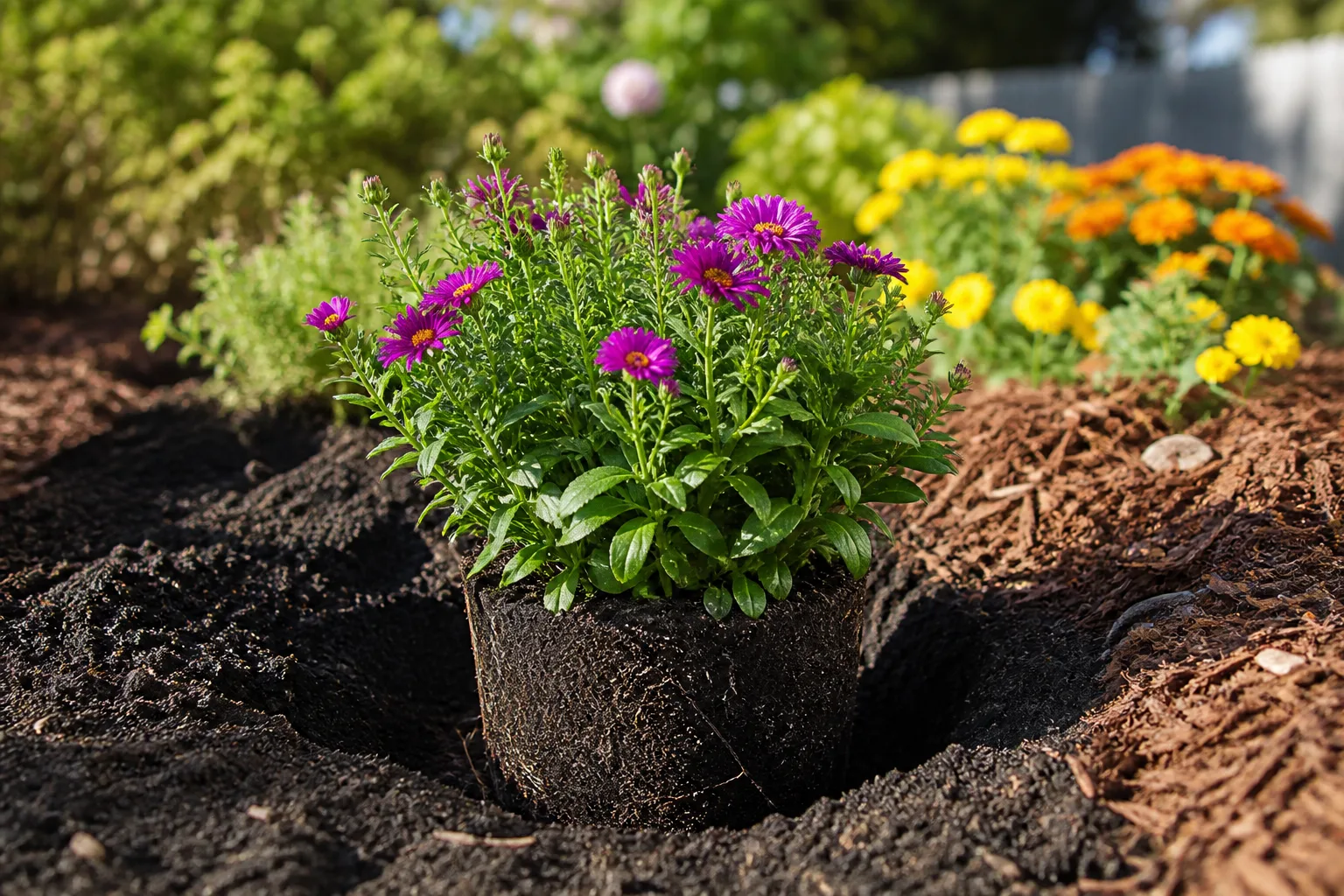
August planting succeeds or fails in the first two weeks after transplant, not in the plant name printed on the tag. Plant in the evening or on a cloudy day when you can. Dig a hole as deep as the root ball and twice as wide, loosen the sides, and set the plant so the crown sits at the same level it grew in the pot—never buried deeper “to help it hold moisture.”
Backfill with native soil unless drainage is truly poor. Water deeply at planting, then check the root zone every day or two until you see new growth or stable turgidity. In heat, that may mean deep watering every two to three days for sandy soil, or slightly less often for heavy clay—touch the soil, do not obey a generic schedule.
Water, mulch, and the first fourteen days
Mulch two to three inches deep, keeping it off the crown, cuts evaporation and keeps soil temperature steadier. Skip heavy nitrogen fertilizer at planting; new roots and stable moisture matter more than forcing soft leafy growth that wilts in afternoon sun. If a soil test shows a clear deficiency, follow label rates lightly and save the main feeding for spring.
Staking may be needed for tall Japanese anemones or asters planted late in windy sites. A low ring stake at planting beats emergency twine after a thunderstorm lays stems across the path.
12 Plants You Can Still Grow in August for Fall Color
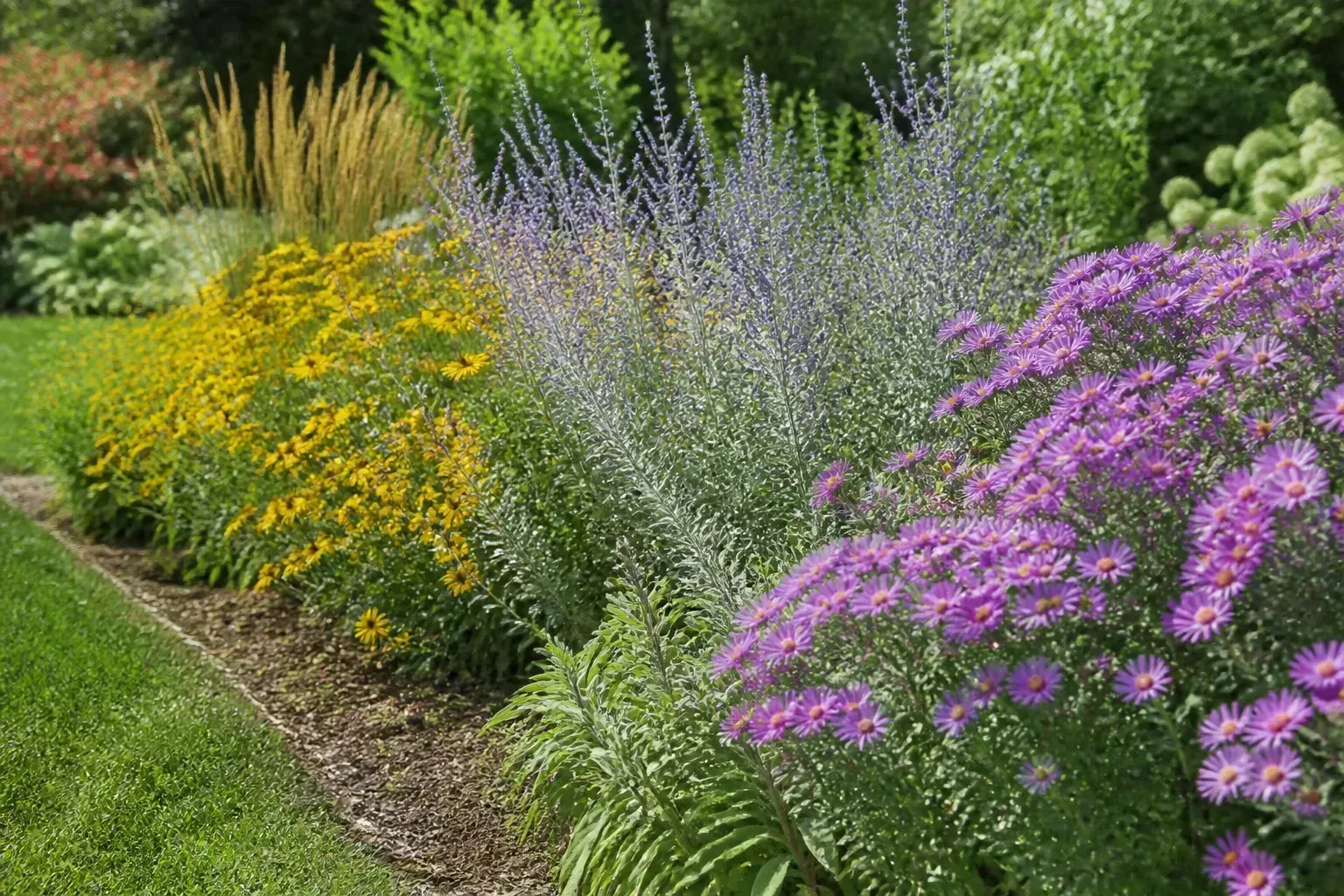
The twelve below are grouped by the site conditions that actually determine success. All can be planted in August when your frost window and current weather cooperate, but they are not interchangeable. A Russian sage that thrives in baking gravel will sulk in a damp shade bed, and a Japanese anemone that loves filtered light will burn in all-day reflected heat.
Likely to bloom this fall if budded: hardy mums, bluebeard, Autumn Joy sedum, helenium, and sometimes asters or dahlias already in flower.
More often roots-first this year: daylilies, coneflowers, coreopsis, and black-eyed Susans— they may flower lightly if established, but peak display often comes next season.
Bluebeard and hardy mums for immediate late-season impact
Bluebeard (Caryopteris spp.), also called blue mist shrub, is a compact woody perennial valued for blue, purple, or pink late-summer spikes and silvery foliage. It wants full sun and well-drained soil, making it a strong match for August heat in zones roughly 6–9. Plant it where air circulates; wet winter soil is a bigger long-term enemy than August afternoon sun. Because it flowers on new wood, a late-summer planting can still contribute color if the specimen is healthy and your frost window is adequate.
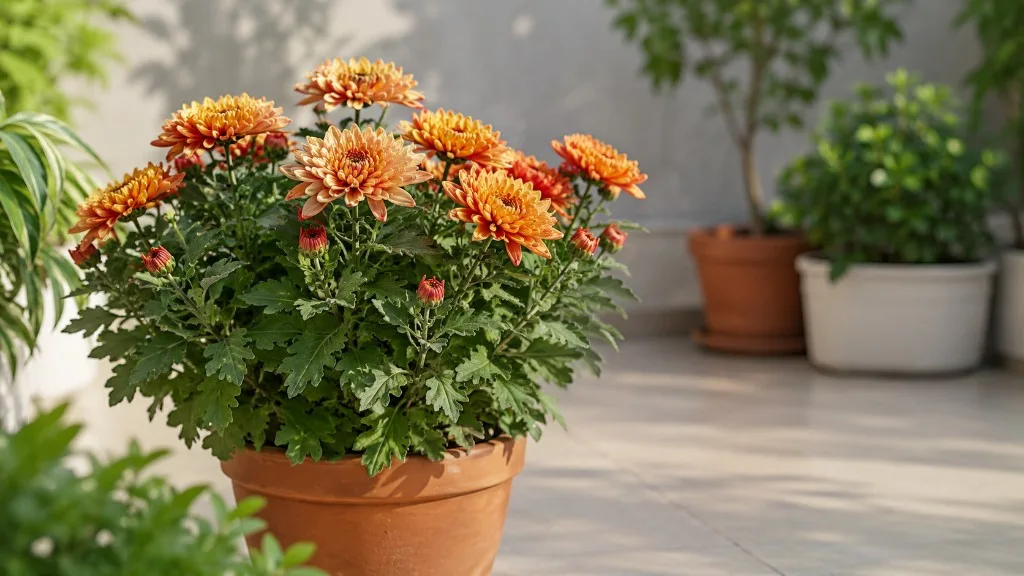
Hardy garden mums (Chrysanthemum x morifolium) are the classic fall porch plant, but not all mums are equal. Garden or hardy mums differ from short-lived florist types meant for indoor display. The Old Farmer’s Almanac notes that hardy mums prefer full sun, steady moisture, and pinching through early summer for bushier habit—something you inherit when you buy nursery-grown stock in August rather than starting seed. Look for plants labeled hardy or garden mums, already showing color buds, and plant immediately after purchase. Afternoon shade can help in the hottest climates, but deep shade reduces bloom.
Japanese anemone and New England asters for pollinator borders
Japanese anemone (Eriocapitella x hybrida, formerly Anemone x hybrida) brings white, pink, or lavender saucer flowers on tall stems from late summer into fall. NC State Extension’s Plant Toolbox lists season as late summer to fall, with propagation by division or root cuttings and a note that taller selections may need staking. It tolerates partial shade better than many August choices and is often cited as deer resistant, though no plant is deer-proof.
Important safety note: NC State rates Japanese anemone as high severity poison if ingested. Wear gloves if you are sensitive, keep children from chewing stems, and do not confuse it with edible plants.
New England asters (Symphyotrichum novae-angliae) are native fall workhorses with pink, purple, or white daisy flowers that feed late-season pollinators. They prefer six to eight hours of sun and even moisture; extreme heat can make open flowers wilt by afternoon even when the plant is healthy. Plant where you can water during dry spells, and give them room—mature height often reaches three to six feet. A well-rooted August transplant can bloom the same fall; a tiny liner may only anchor roots before frost.
Russian sage and Autumn Joy for hot, dry beds
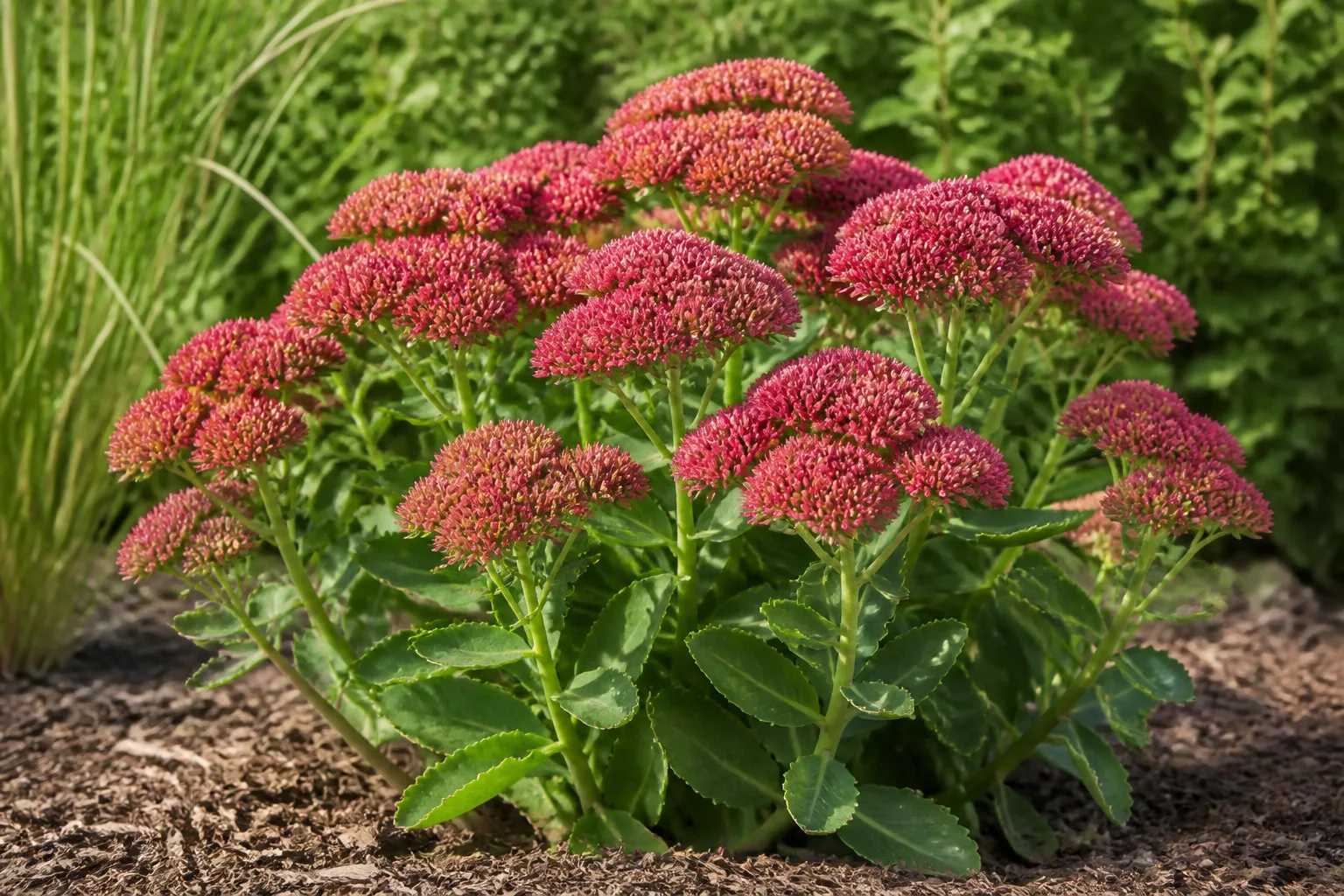
If your August is dry and your soil drains fast, this pair belongs on the short list.
Russian sage (Salvia yangii, formerly Perovskia atriplicifolia) produces airy blue-purple spikes on silvery stems from midsummer into fall. It is extremely drought tolerant once established and thrives in full sun across roughly zones 3–9. It is related to mint and can spread by underground runners in some gardens—give it space or a defined border where sprouting shoots are easy to remove.
Autumn Joy stonecrop (Hylotelephium spectabile, often sold as sedum ‘Autumn Joy’) offers broccoli-like pink flower heads that deepen toward rust red in fall. NC State’s showy stonecrop profile describes the plant as tolerating drought, poor soil, and heat, with bloom in late summer to fall. It hates soggy soil, so raise beds or amend heavy clay before planting. A budded one-gallon plant installed in August is one of the most reliable bets for color the same season.
Coneflower, black-eyed Susan, and coreopsis for sunny meadows
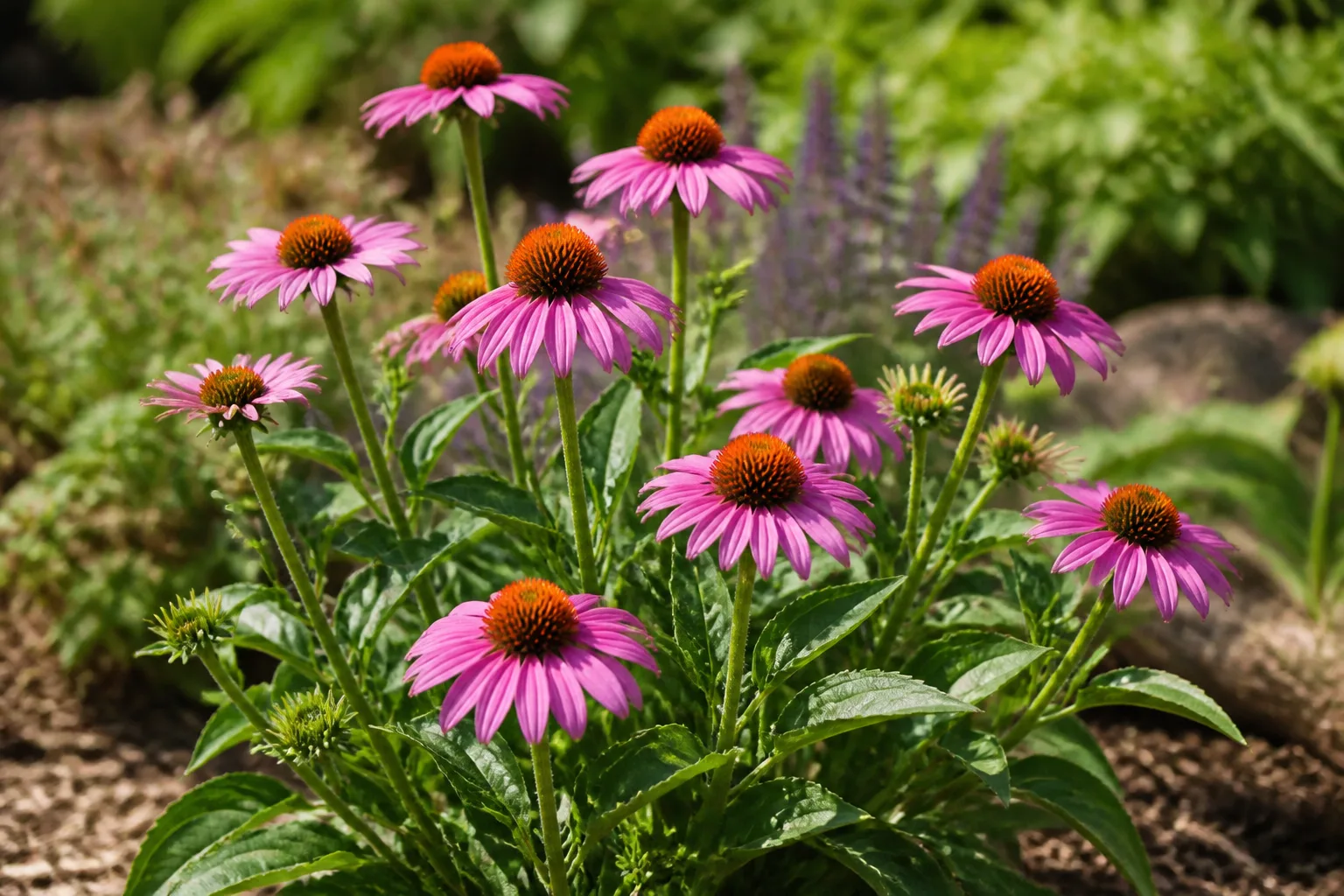
These three daisy-family perennials anchor sunny borders and naturalistic plantings, and August is a workable time to add them if you accept that many purchases prioritize root establishment over instant bloom.
Purple coneflower (Echinacea purpurea) supports pollinators and finches that feed on seed heads later. NC State’s purple coneflower profile emphasizes full sun to part shade, dry to medium moisture, and good drainage—wet winter feet cause more trouble than August heat. Coneflowers often bloom lightly after late planting; deadheading can tidy spent flowers but leave some seed heads if you want winter bird food.
Black-eyed Susan (Rudbeckia hirta and perennial selections) wants sun and regular water at first, then becomes more drought tolerant as roots deepen. NC State’s black-eyed Susan profile notes yellow daisy flowers on plants that prefer full sun and tolerate drought once established. Biennial types behave differently from long-lived cultivars, so read the tag before assuming permanence.
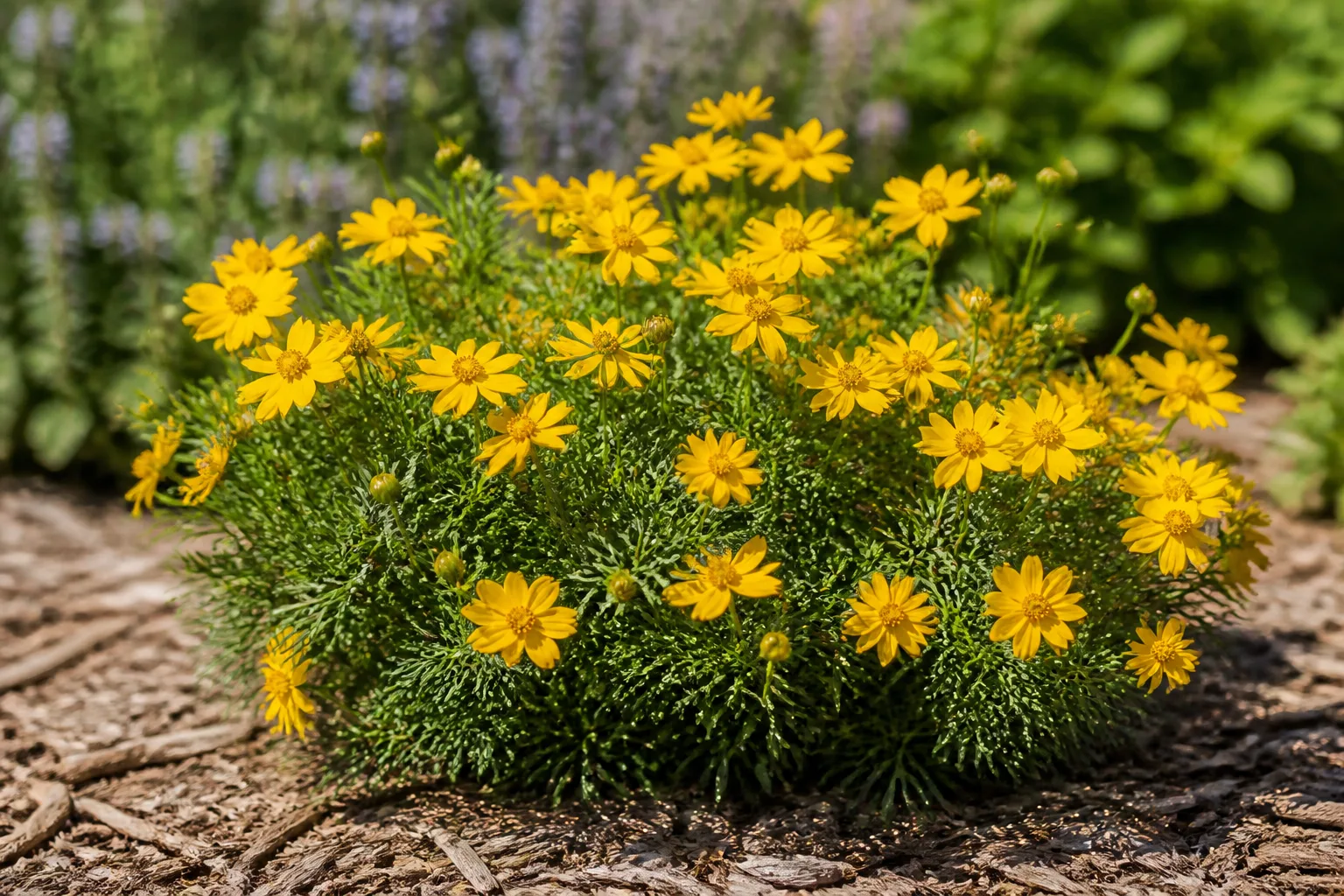
Coreopsis (tickseed) needs six to eight hours of direct sun and tolerates warm temperatures well. Some species are short-lived or self-seed freely; treat volunteer seedlings as a feature or weed them early, depending on your design tolerance.
Daylilies, dahlias, and helenium for bold late-season flowers
Daylilies (Hemerocallis spp.) are tough, drought-tolerant once settled, and available in sizes from compact to five-foot backgrounds. August division or transplanting is common in many regions because warm soil supports root recovery. Each flower lasts a day, but reblooming cultivars extend the show. Cat owners should note: true lilies (Lilium spp.) are extremely toxic to cats, but daylilies are a separate genus; still, keep curious pets from chewing any unfamiliar garden plant and consult your veterinarian if ingestion occurs.
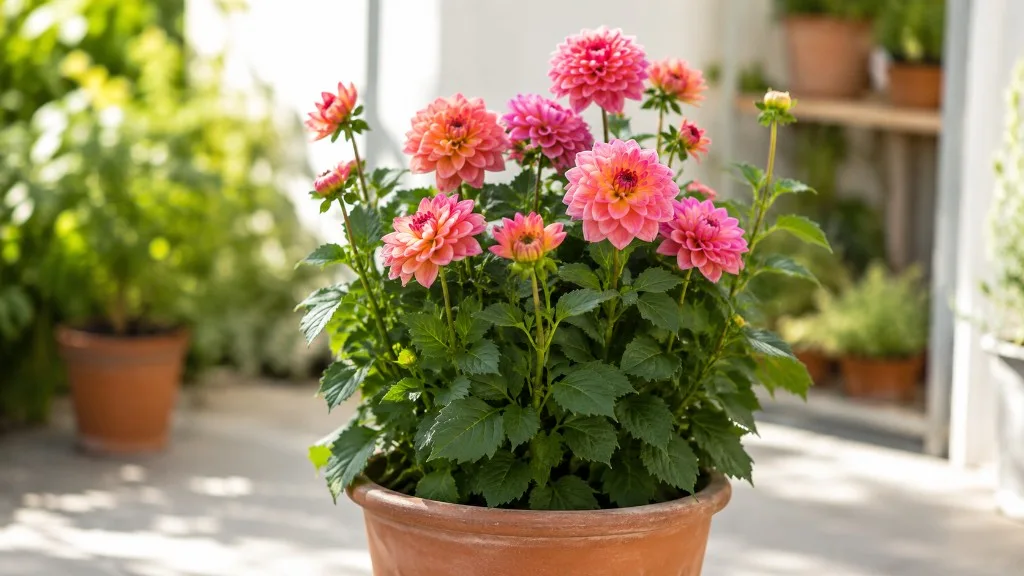
Dahlias blur the line between perennial and tender bulb. In zones 8–10, many dahlias overwinter in ground; colder zones treat tubers as lift-and-store plants. August planting of a container dahlia in full flower can extend color until frost if you keep soil evenly moist and provide staking for heavy blooms. The ASPCA lists dahlia as toxic to dogs and cats, causing mild gastrointestinal signs if eaten—discourage digging near tubers in pet yards.
Helenium (sneezeweed) delivers red, orange, and yellow daisies in late summer and fall despite the unfortunate common name—it does not cause hay fever; ragweed does. Helenium likes full sun, tolerates heat and humidity better than many dry-site specialists, and prefers even moisture, not drought. Well-budded plants planted in August can contribute strong fall color.
Match Each Plant to Sun, Soil, and Spread
Use this matrix when narrowing the twelve to your bed:
| Plant | Sun | Moisture | Spread note | USDA zones (typical) |
|---|---|---|---|---|
| Bluebeard | Full sun | Dry to medium | Compact shrub | 6–9 |
| Hardy mums | Full sun; afternoon shade OK in heat | Medium | Mound-forming | 5–9 |
| Japanese anemone | Part sun to light shade | Medium | Can colonize over time | 4–8 |
| New England aster | Full sun | Medium; not drought | Tall; may need stake | 4–8 |
| Russian sage | Full sun | Dry | Mint-family spread | 3–9 |
| Autumn Joy sedum | Full sun | Dry; sharp drainage | Upright clump | 3–9 |
| Purple coneflower | Full sun to part shade | Dry to medium | Clump; some self-seed | 3–8 |
| Daylily | Full sun to part shade | Medium | Clump expands | 3–10 |
| Black-eyed Susan | Full sun | Medium at first | Some self-seed | 3–9 |
| Coreopsis | Full sun | Medium to dry | Depends on species | 2–11 |
| Dahlia | Full sun | Medium; rich soil | Tubers multiply | 8–10 in ground; colder with lift |
| Helenium | Full sun | Medium to moist | Upright clump | 3–8 |
If your bed stays wet after rain, prioritize asters and helenium over Russian sage and sedum. If you fight deer, anemone and Russian sage help but are not guarantees—local pressure varies.
What Not to Expect From an August Planting
Honest expectations prevent the feeling that August planting “failed.” A coneflower installed on August 20 may not build a massive crown before frost, yet still outperform the same plant forced into frozen ground in November. A mum purchased for instant color may finish blooming and look tired— that is normal, not death—while roots continue to settle if you keep watering until freeze-up.
Do not plant into baked, powder-dry soil without pre-watering the hole, and do not skip mulch because “it is almost fall.” Avoid clearance stock that is clearly past its bloom window and desiccated unless you only want cheap root practice.
If your frost window is under four weeks, spend August preparing beds and ordering spring plants instead of forcing marginal transplants. In hot-summer climates, waiting for the first break in sustained 95°F days often beats heroic watering on the hottest afternoon of the year.
Safety Notes for Pets, Wildlife, and People
Fall color should not create hidden hazards. Japanese anemone is toxic if ingested according to NC State Extension. Dahlias are listed as toxic to dogs and cats by the ASPCA. Daylilies are not true lilies, but any garden plant chew warrants veterinary guidance if your pet shows vomiting or lethargy.
Butterflies and bees rely on late nectar sources—asters, coneflowers, sedum, and helenium are especially valuable—so avoid spraying open flowers with broad insecticides during bloom. Garden Therapy’s fall-perennial guide is a useful reminder that coneflowers, sedum, and asters can keep color going well into autumn when sited correctly. Leave some seed heads standing if winter birds visit your yard.
Conclusion
Your fall garden does not have to fade because the calendar flipped to August. Start with your frost countdown, buy container plants matched to sun and drainage, and choose from these twelve perennials with clear bloom expectations for this year versus next. Plant bluebeard, mums, sedum, or helenium when you want immediate impact; choose coneflowers, daylilies, and coreopsis when building long-term structure matters more than instant flowers. Water deeply through the first two weeks, mulch without smothering crowns, and treat August as a planting window—not a deadline—and you can still grow a garden worth looking at deep into autumn.



