5 Signs Garden Plants Are Getting Too Much Sun
Brown patches, curling leaves, or midday wilting? Diagnose too much sun, protect stressed plants, and fix the site without overwatering or overpruning.
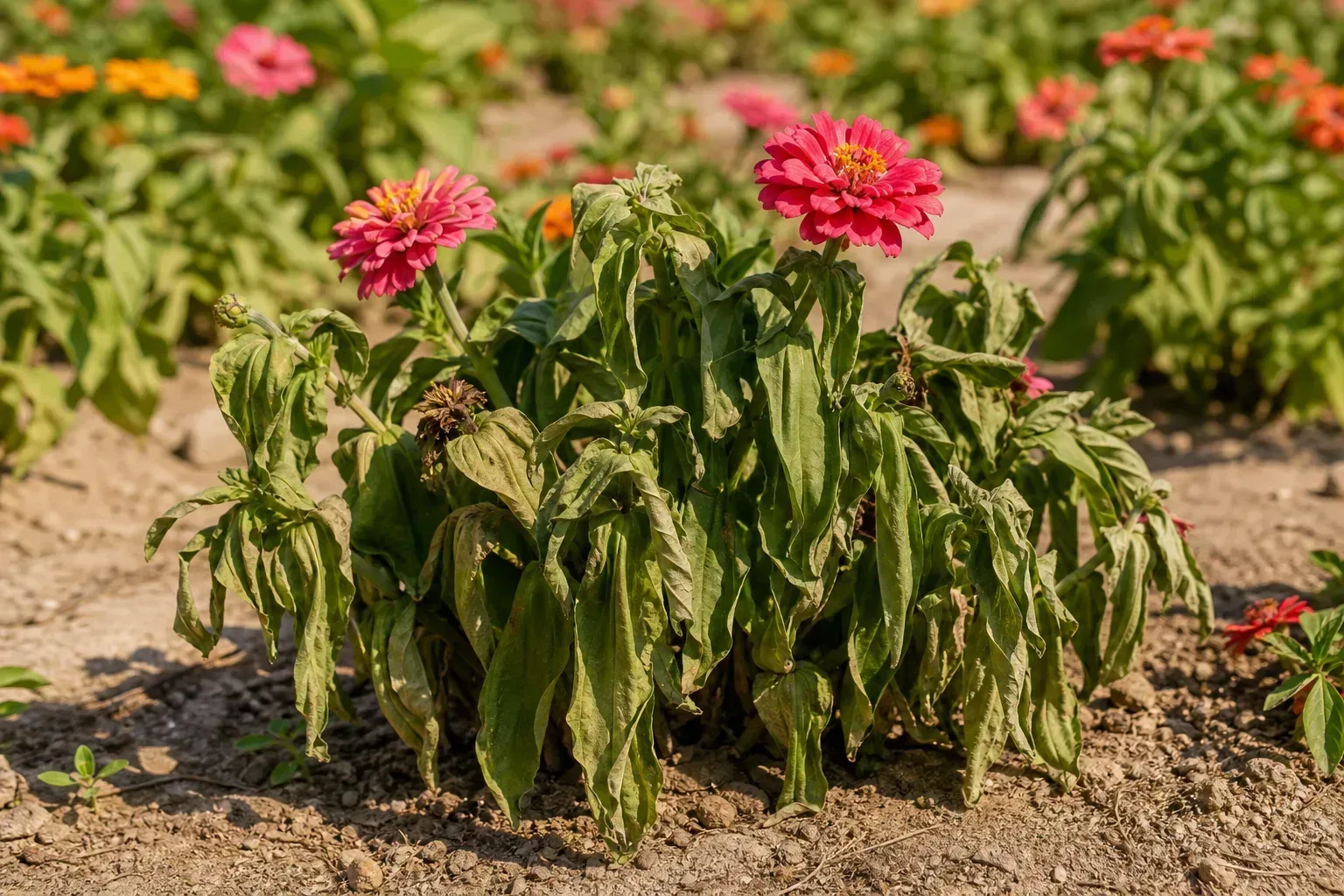
“Full sun” does not mean “as much heat and light as the weather can deliver.” A plant can be correctly labeled for a sunny bed and still struggle when a heat wave, dry wind, reflected heat, shallow soil, or sudden exposure pushes water loss beyond what its roots can replace.
The fastest way to diagnose the problem is to look for a pattern, not one dramatic leaf. Sun and heat injury usually appears on the most exposed surfaces, intensifies after hot or windy weather, and may spare leaves inside the canopy or on the shaded side. Start there, then check the root-zone moisture before you decide to water, move, prune, or fertilize.
Quick diagnosis: when sun is the likely cause
Sun is a strong suspect when several clues arrive together: the damage is on the sunny or upper side of the plant, it started after a hot spell or abrupt change in light, and the affected tissue is tan, pale, brown, or papery rather than covered in spreading spots. A plant that droops at 3 p.m. but stands up again in the evening may be experiencing temporary heat load rather than a permanently dry root system.
Leaf scorch is not an infection. It is a visible result of the plant losing water from its leaves faster than the roots and internal water-conducting tissues can supply it, sometimes combined with direct light and tissue temperatures high enough to damage cells. Missouri Botanical Garden describes scorch as a widespread, noninfectious disorder that can follow bright sunshine or dry, windy weather, especially when soil, pavement, root restriction, or another problem limits water uptake. (Missouri Botanical Garden’s scorch guide)
The distinction matters because pouring more water on a plant whose roots are already wet will not repair bleached tissue and can create a second problem. Treat the next five signs as clues to test against soil moisture, recent weather, the plant’s exposure, and the condition of its roots.
Sign 1: Leaves wilt during the hottest hours
Heat-stressed leaves may become limp, droopy, or floppy during the brightest and hottest part of the day, then recover when the sun is lower. This happens because transpiration—the movement of water through the plant and out of tiny leaf openings—cannot keep pace with the atmosphere’s demand for water. The plant temporarily reduces leaf area and exposure, but the response is not proof that the soil is dry.
Use your finger, a narrow trowel, or a moisture probe to check below the surface in the plant’s active root zone. If the soil is dry several inches down and water soaks in rather than running away, give the plant a slow, thorough drink at the base. If the soil is cool and damp, do not add more water simply because the leaves look sad; give shade and investigate compacted soil, damaged roots, poor drainage, or a stem or pest problem instead.
The timing is the useful clue. A plant that is upright in the morning, droops only during peak heat, and recovers by evening is different from one that stays wilted overnight, declines each day, or wilts in wet soil. The latter pattern needs a broader diagnosis because root injury and waterlogging can prevent a plant from using water that is already present.
Containers deserve special attention. A pot has a much smaller root reservoir than a garden bed, and dark containers on concrete or against a south-facing wall can heat and dry quickly. Check the mix at pot depth, move the container to bright afternoon shade during the heat event, and make sure the drainage hole is open before increasing the watering frequency.
Sign 2: Tan, white, or crispy scorch patches appear

Sunburned foliage often develops bleached, tan, reddish-brown, or dark brown areas that feel dry and brittle. The first damaged tissue is commonly on leaf tips, margins, or broad surfaces directly facing the sun; a severe episode can turn whole leaves papery. On fruit, the exposed side may develop a pale or brown flattened patch rather than a symmetrical disorder across the entire fruit.
Look for a sharp relationship to exposure. If the outer leaves are damaged while inner leaves remain green, or the sunny side of a shrub is scorched while the shaded side looks healthy, the pattern supports sun and heat injury. The Royal Horticultural Society notes that excessive sunshine and high temperatures commonly scorch leaves on the sunny side, while lower and protected leaves may escape the damage. (RHS guidance on weather damage)
Scorch can begin even when a plant has been watered recently. Water is not useful to the leaf merely because it is in the soil; roots need oxygen, functioning tissue, and an unobstructed pathway into the leaves. Sandy or shallow soil, roots constrained by pavement or a pot, newly planted stock, wind, and reflected heat from walls or hardscape can all make a plant behave as if it is thirsty.
Do not assume every brown spot is sunburn. Circular lesions with dark margins, a spreading pattern across leaves, insect stippling, webbing, sticky residue, or damage on both shaded and sunny leaves can point elsewhere. Photograph the pattern, inspect leaf undersides, and compare new damage after the weather stabilizes before applying a fungicide or insecticide.
Sign 3: Leaves turn yellow, pale, or bleached
Intense light can fade foliage from green to yellow, cream, gray-green, or nearly white. A pale patch in the most exposed part of a leaf is more suggestive of light injury than uniform yellowing that begins on older leaves or progresses throughout the entire plant. In the most severe cases, the bleached tissue later turns brown because those cells have died.
The plant’s color is a clue, not a diagnosis. Chlorophyll absorbs light for photosynthesis, but leaves have protective systems that can be overwhelmed when light, heat, and water stress arrive together. Reviews of plant heat-stress physiology describe disruptions to photosynthesis and growth under high temperatures, which helps explain why a plant may look washed out and stop producing normal new tissue even before its leaves become crispy. (Plant Responses to Heat Stress review indexed by PubMed)
Check whether the paling is localized. A bleached strip or patch on the side facing a window, reflective wall, or open sky is a different problem from a whole plant turning yellow. Uniform yellowing is more likely to involve roots, watering, nutrition, or disease; the RHS also advises considering root and water supply when all leaves change color at once. (RHS guidance on weather damage)
Do not “fix” pale leaves with fertilizer during a heat wave. Fertilizer supplies nutrients; it does not lower leaf temperature or replace a damaged root system, and a saltier root zone can make water uptake harder. Stabilize moisture and exposure first, then assess the newest growth once the plant has returned to moderate conditions.
Sign 4: Leaves curl, cup, or fold inward
Leaves may curl along their edges, cup upward or downward, fold their surfaces, or twist so less leaf area faces the sun. This is a protective response that reduces the surface exposed to light and air movement, but it also reduces photosynthesis while the stress lasts. Tender plants with large, thin leaves often show the response dramatically during a hot afternoon.
Curling that disappears in the evening is often temporary heat protection. Curling that remains for days, appears on new growth, or is paired with sticky residue, fine webbing, distorted shoots, or isolated stippling needs a pest check as well. Some herbicides and plant diseases can distort leaves, so the direction and timing of the curl are more informative than the shape alone.
Test the site at the time the leaves curl. Is the bed beside a white wall, metal fence, stone path, or concrete edge? Is a container sitting on a heat-holding surface? Is wind stripping moisture from one side? Reflected radiation and moving air can turn an otherwise acceptable light exposure into a hot, drying pocket.
Temporary shade is appropriate when the plant is healthy in the morning but folds during peak sun. Use a breathable screen, shade cloth, taller neighboring plant, or safely anchored patio umbrella so the hottest hours are moderated without trapping hot air against the foliage. Leave room for airflow and secure the cover so it cannot rub, collapse, or blow into the plant.
Sign 5: Growth stalls, flowers drop, or fruit sunburns
Sun and heat stress can show up as smaller new leaves, a pause in growth, dropped buds, fewer flowers, poor fruit set, or exposed fruit with pale, tan, or brown patches. A plant under stress is allocating resources to temperature and water balance rather than making new leaves, flowers, or fruit. Tomatoes, peppers, squash, and other warm-season crops may tolerate strong light yet still pause during an extreme heat event.
This sign is the least specific by itself. Stalled growth can also result from cool weather, root restriction, transplant shock, pests, disease, nutrient imbalance, or a plant being grown outside its seasonal range. Treat the timing as the tie-breaker: did the slowdown begin after a heat wave, after pruning exposed the interior, after a container was moved to a hotter surface, or after a recently purchased transplant went into open afternoon sun?
Fruit injury deserves a canopy check. If a tomato or apple has a damaged side that faces the sun while the covered side remains sound, the plant may need protection for the fruit zone rather than a permanent move into deep shade. Do not strip healthy leaves to expose more fruit; the canopy is part of the fruit’s sun protection.
Read the pattern before blaming the sun
The best diagnosis combines where, when, and what. Where is the damage relative to the sun, wind, pavement, and canopy? When did it appear relative to watering, transplanting, pruning, and weather? What does the root-zone soil feel like, and does the damaged tissue look dry, spotted, chewed, or slimy?
Sun injury versus drought, root trouble, and disease
| Clue | More consistent with sun or heat injury | What should make you investigate further |
|---|---|---|
| Location | Upper, outer, sunny, or windward leaves are hit first | Damage is uniform on every side or starts only on old lower leaves |
| Timing | Wilting peaks in afternoon; scorch follows hot, bright, or windy weather | Plant stays wilted overnight or declines in cool weather |
| Tissue | Bleached, tan, papery, or crispy patches with a clear exposure pattern | Spreading lesions, soft tissue, holes, webbing, residue, or a foul smell |
| Soil | Root zone is dry or dries unusually fast | Soil is saturated, compacted, cold, or persistently wet |
| New growth | New leaves improve after shade and steady moisture | New leaves remain distorted, pale, or damaged despite a stable site |
This is a decision aid, not a substitute for identifying a plant disease. Missouri Botanical Garden cautions that insects, diseases, root limitations, chemicals, and other exposures can interfere with water uptake and create scorch-like symptoms. (Missouri Botanical Garden’s scorch guide)
Check the root zone, not just the surface
Surface soil can be misleading. A crusted top may hide damp soil below, while a wet-looking mulch layer can sit over a dry root ball, especially in a newly planted shrub or a potting mix that has pulled away from the container wall. Push a finger or trowel down several inches in a small plant’s root zone; for an established tree or shrub, check multiple spots beneath the canopy rather than only at the trunk.
After a thorough watering, the root zone should be moist but not a stagnant puddle. Missouri Botanical Garden gives a useful benchmark for trees and shrubs: soil should be moist roughly 10 to 12 inches deep after a thorough watering, with the reminder that annuals and perennials generally need more frequent attention. (Missouri Botanical Garden’s scorch guide) Use that as a depth check, not a universal calendar or volume for every species and soil.
If water runs off hard soil, apply it slowly in several passes or improve infiltration when conditions are cooler. If water sits for hours, stop treating the plant as drought-stressed; improve drainage and look for root damage. A plant can wilt in wet soil because damaged roots cannot supply the foliage, and additional irrigation only reduces the air available to the remaining roots.
What to do in the next 24 hours
The first goal is to stop new injury, not make old leaves look green again. During the next day, reduce the plant’s heat load, confirm its root-zone moisture, and avoid chores that force it to recover and grow at the same time.
Water only when the root zone is dry
If the root zone is dry, water at the base until moisture reaches the active roots and excess begins to drain or move laterally through the bed. A slow soak is more useful than a quick splash on the surface. Water in the morning when practical so you can see how the plant responds and so wet foliage has time to dry, but do not wait for a perfect hour if a genuinely dry plant is in immediate danger.
If the soil is already damp, do not water again. Provide temporary shade, check that the plant is not root-bound or blocked by compacted soil, and look for stem, root, or pest damage. Repeat the moisture check later instead of following a daily schedule that ignores weather and soil.
Avoid using foliar misting as the main rescue. It may briefly cool a leaf in very dry air, but it does not rehydrate a restricted root system and can leave foliage wet in conditions that favor disease. The RHS notes that water droplets are not a universal explanation for scorch; smooth leaves tend to shed them, while suspended droplets on hairy leaves may focus light more readily. (RHS guidance on weather damage) Root-zone moisture and exposure are the more reliable levers.
Give temporary afternoon shade
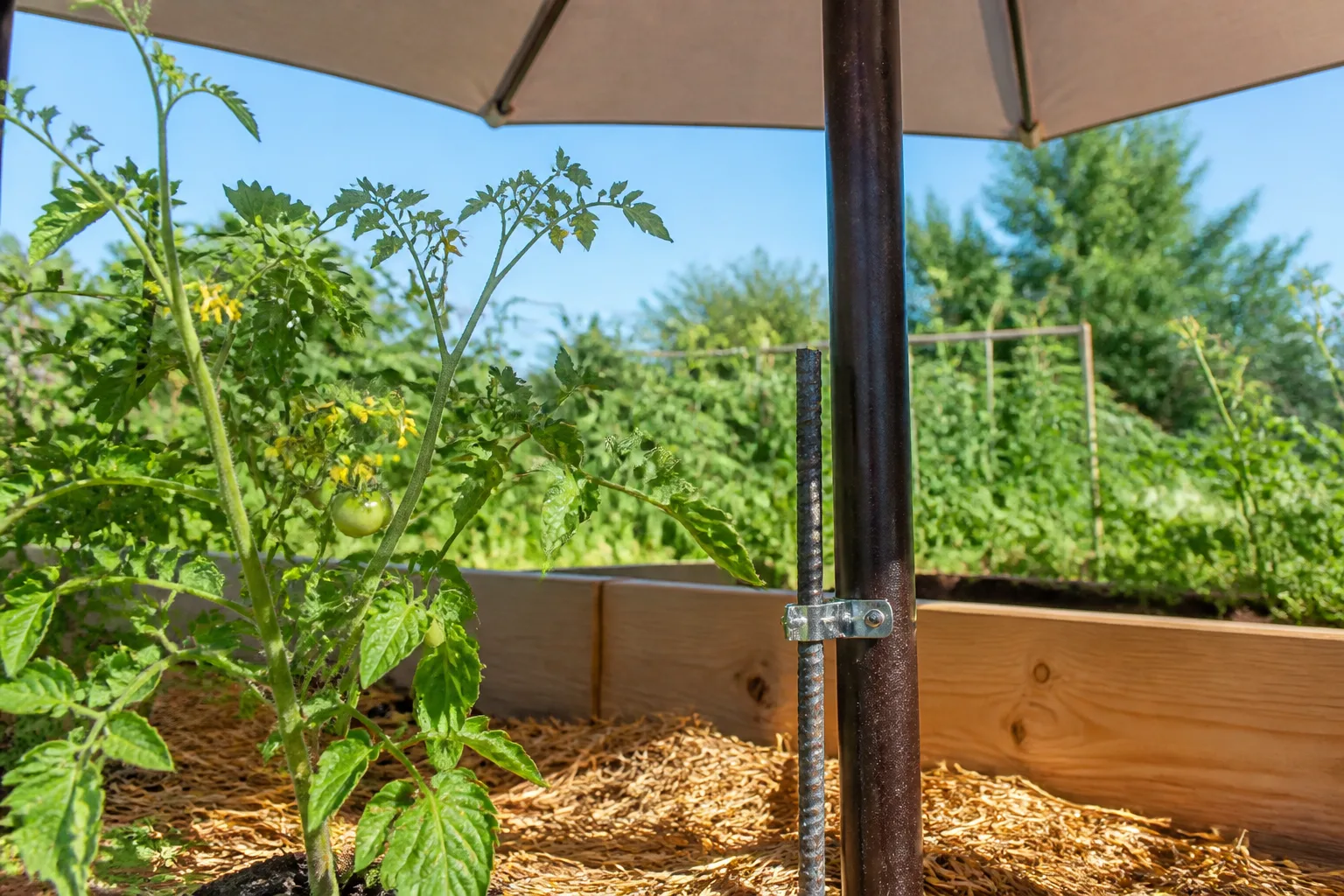
For a container, move the plant to bright shade or filtered light for the hottest part of the day, keeping the new position bright enough for the species. For an in-ground plant, place a breathable shade cloth, screen, row cover, or umbrella on a frame above and to the sunward side. The cover should shade the plant without touching leaves, block some but not all light, and remain open enough for air to move.
Temporary shade is especially useful for new transplants, seedlings, leafy greens, thin-leaved ornamentals, and plants that were recently moved from a protected nursery or porch. It is not automatically the permanent answer for a tomato, lavender, rose, or other plant that needs strong light to flower or fruit. Use the cover during the heat event, then reassess the new growth and the site’s seasonal exposure.
Secure every structure against wind. A loose sheet can rub leaves, collapse onto a plant, or act like a sail; a dense plastic cover can trap heat and humidity. Grow Organic’s sun-injury guidance recommends temporary shade at an appropriate level and emphasizes securing it so it does not rub the plant. (Grow Organic’s guide to sunscald and sunburn)
Mulch to protect the roots
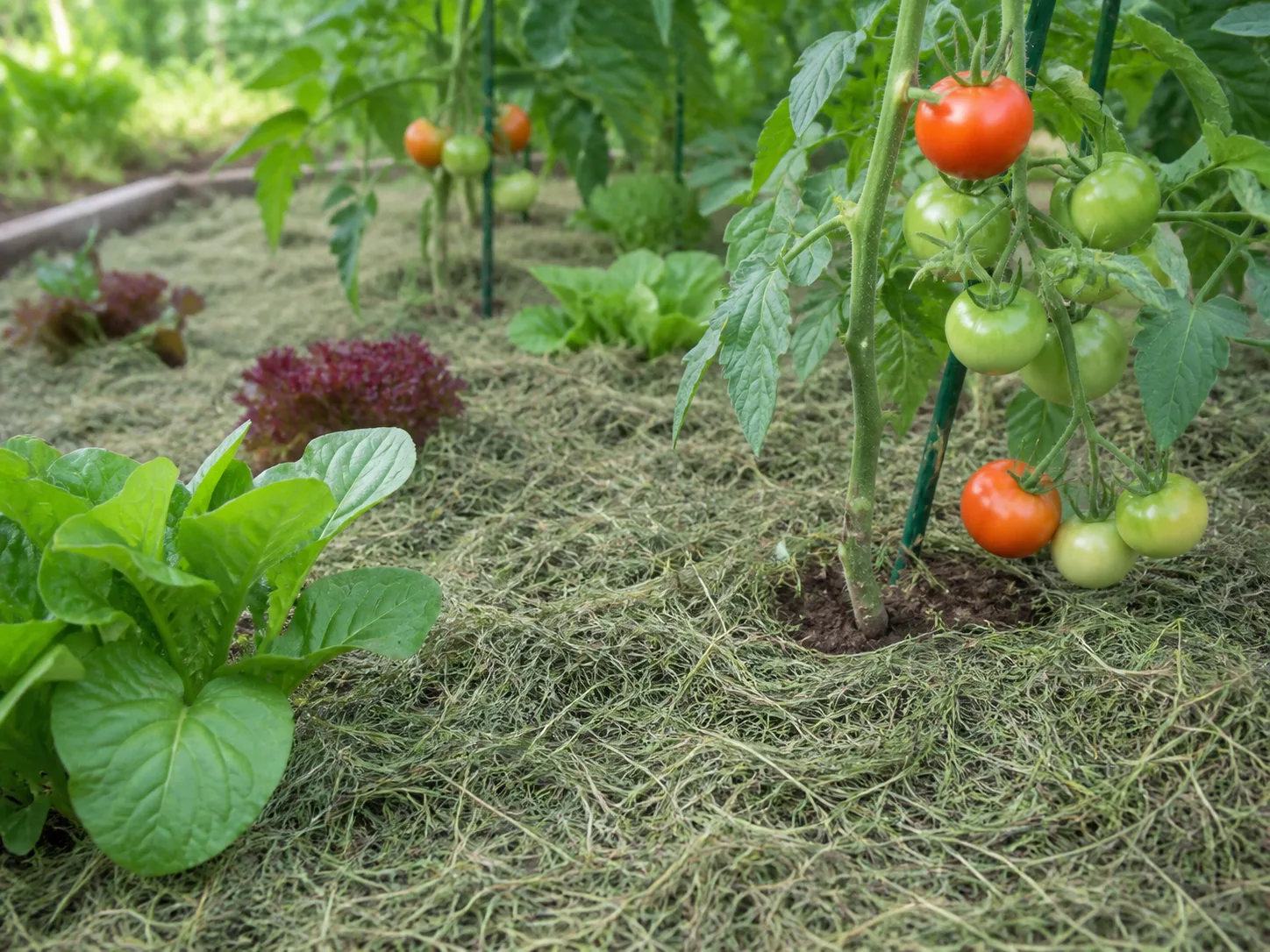
A layer of organic mulch can reduce evaporation and moderate soil temperature, which helps roots keep supplying leaves during hot weather. Spread it over the root zone rather than in a volcano around the stem, leaving a clear ring around crowns and trunks. Mulch is a moisture buffer, not a substitute for watering a dry plant or repairing compacted soil.
Use clean, untreated material suited to the bed: shredded leaves, composted leaves, wood chips, pine bark, or properly dried grass clippings. Fine Gardening describes using about four inches of dry grass and leaves in a vegetable bed and taking care not to let the material touch stems; it also warns that grass should not have been treated with herbicides or pesticides. (Fine Gardening’s hot-weather plant advice)
Do not bury a crown, cover low foliage, or lay thick wet grass in a single mat. Those choices can hold moisture against plant tissue, reduce airflow, invite decay, or create a hydrophobic layer as the material dries. If you already have mulch, pull it back temporarily and check the actual soil before deciding whether the bed needs more.
Make the fix permanent
Once the immediate heat passes, decide whether the plant encountered an exceptional event or is in the wrong place every sunny day. A well-placed plant may need temporary protection during a rare heat wave; a shade-preferring plant beside reflective pavement may need relocation or replacement with a better-matched species.
Acclimate plants and match exposure
Match the plant to the full site, not just the number of sun hours on the label. Note morning versus afternoon sun, reflected heat, wind, soil depth, irrigation reach, and the seasonal movement of shade from buildings and trees. “Six hours of sun” beside a cool lawn is not the same experience as six hours of direct light beside a south-facing wall.
Acclimate seedlings, nursery plants, and indoor-started transplants gradually. Increase direct outdoor light over several days, protect them from the harshest afternoon exposure at first, and keep the root ball evenly supplied with moisture without keeping it waterlogged. Grow Organic also identifies gradual exposure as part of reducing sun injury risk, particularly when a plant moves into stronger light. (Grow Organic’s guide to sunscald and sunburn)
For an established plant, do not dig and transplant in the middle of a heat wave merely because a few leaves scorched. Temporary shade and careful root-zone management are safer until cooler weather. Move it during a suitable planting window, preserve as much of the root system as possible, water it in, and protect it while it re-establishes.
Shade cloth can help a vegetable bed, but the percentage is not a universal prescription. A crop that needs bright light may lose too much productivity under a dense cover, while a tender seedling may need more protection than an established plant. Start with the lightest level that prevents new damage, keep airflow, observe growth, and remove or reduce protection when the heat event ends.
Skip high-stress chores and plan the next season
Avoid pushing a damaged plant into new growth with fertilizer during extreme heat. Do not carry out major pruning, root disturbance, or a full-site transplant when leaves are already losing water faster than the plant can replace it. Wait for moderate conditions and visible recovery unless a broken, diseased, or hazardous branch requires prompt removal.
Be cautious with sudden canopy changes. Removing branches or large leaves can expose previously shaded bark, stems, fruit, or inner leaves to direct light; Grow Organic lists abrupt over-pruning as a risk for sunscald. (Grow Organic’s guide to sunscald and sunburn) Thin a canopy for a clear reason and in the season appropriate for that plant, not as a reflex after seeing one scorched leaf.
Record what happened while you remember it: the date of the heat wave, the time the plant wilted, which side was damaged, how deep the soil was moist, and what shade worked. Next season, place tender plants where they receive morning sun and afternoon protection, group containers so they shade their pots, add mulch before the hottest weeks, and install a support for shade cloth before you need it.
How to know the plant is recovering
Damaged leaf tissue will not turn green again. Recovery means the plant stops producing new damage, holds its stems more firmly during the same weather, and eventually makes new leaves, buds, or shoots with normal color and shape. A few old brown leaves can remain attached for weeks while the root system and growing points recover.
Judge the repair by the newest growth, not by the worst old leaf. If leaves still scorch in the same location after you correct moisture and add afternoon protection, the site may be too hot, the cover may be inadequate, the roots may be restricted, or the plant may have another disorder. If new growth is healthy but older leaves remain marked, leave the plant alone unless the damaged tissue is dead, unsightly, or interfering with airflow.
Remove a leaf when it is mostly dead, torn, diseased, or blocking the plant’s healthy growth. Use clean, sharp pruners and avoid stripping every marked leaf at once; partially green leaves still contribute energy while the plant rebuilds. For shrubs and trees, wait until the living and dead boundary is clear before making larger cuts, because heat-damaged tissue can die back gradually.
Escalate the diagnosis if the plant collapses, has a soft or blackened base, stays wilted in wet soil, develops rapidly spreading lesions, or shows insects and webbing. Sun can be part of the stress without being the whole cause. If a tree has extensive trunk or branch injury, consult a local extension service or qualified arborist before applying a coating or removing bark.
Conclusion
The five most useful signs of too much sun are afternoon wilting, dry scorch patches, bleaching, curled leaves, and stalled growth or sunburned flowers and fruit. None is conclusive alone. The strongest pattern is damage on the exposed side after hot, bright, or windy weather, with protected leaves looking better and the root zone either drying too quickly or failing to supply water despite being damp.
Check the soil before watering, shade the plant during the worst hours, mulch without touching stems, and pause fertilizer, heavy pruning, and transplanting until conditions moderate. Then decide whether the plant needs seasonal afternoon protection or a different site. The old damage may stay visible, but healthy new growth will tell you whether the plant—and your fix—is moving in the right direction.