How to Grow and Care for Philodendron Xanadu
Grow a full, healthy Philodendron Xanadu with practical light and watering rules, an airy soil recipe, propagation steps, and a symptom diagnosis plan.
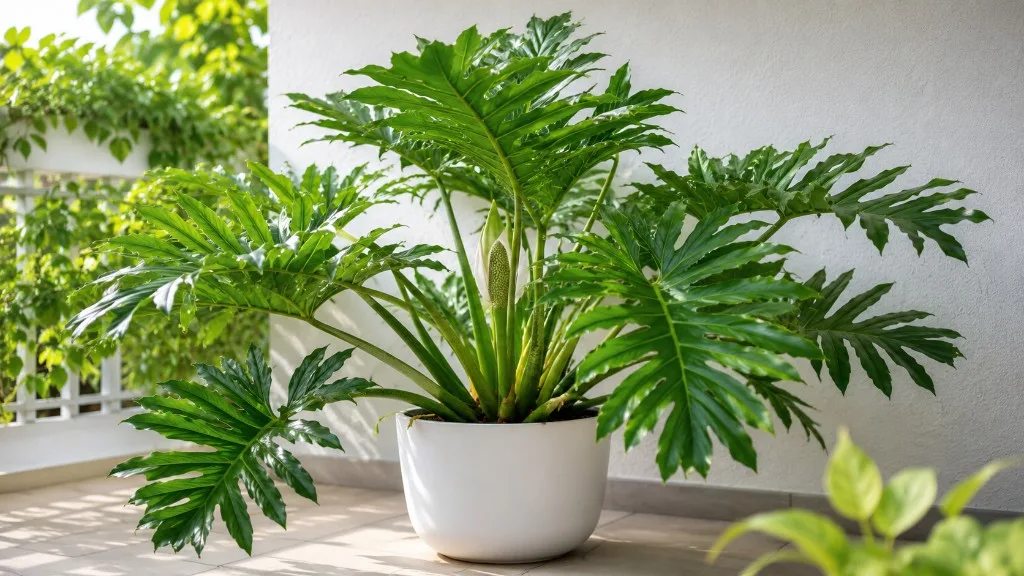
Philodendron Xanadu, now commonly classified as Thaumatophyllum xanadu, is a self-heading tropical plant that earns its floor space with a dense rosette of glossy, deeply divided leaves. It is forgiving about ordinary household conditions, but “low maintenance” does not mean “water it whenever the leaves look thirsty.” The plant stays healthiest when its light, pot size, soil texture, and watering rhythm work together.
The most useful rule is simple: give Xanadu enough filtered light to keep growing compactly, then water the root zone thoroughly only after it has dried partway. The sections below show how to judge that point, how to keep a mature plant from outgrowing its room, and how to tell normal leaf aging from a root problem.
Identify the plant and plan for its mature footprint
Xanadu forms a rounded, spreading clump rather than a vine. Its leaves radiate from short, sturdy stems, and the long petioles can arch outward as the plant fills its pot. NC State Extension describes it as a dense, mounding plant that can reach roughly 3 to 5 feet in height and width in suitable conditions, while other extension descriptions give smaller dimensions for more compact specimens. NC State Extension In practice, reserve a broad footprint even if your new plant is only a foot wide.
The plant may be labeled Philodendron xanadu, Philodendron ‘Xanadu,’ or ‘Winterbourn’ at a nursery. The accepted botanical name is Thaumatophyllum xanadu, and the older names remain useful when you are shopping or searching for care information. NParks records Philodendron xanadu as a synonym and notes the plant’s characteristic divided foliage and compact form. NParks
Xanadu vs. selloum: similar leaves, different scale
Xanadu is often confused with selloum, the former name for Thaumatophyllum bipinnatifidum. Both have deeply cut leaves and a tropical silhouette, but they are not interchangeable in a small room. Xanadu is the compact, clump-forming choice; selloum develops a much larger trunk-like base and can produce dramatically bigger leaves and a wider spread.
The distinction matters when you choose a pot and a window. A plant sold as “split-leaf philodendron” may be either one, and a young specimen can hide the difference. Look for the overall habit: Xanadu’s leaves arise in a low, dense cluster, while a mature selloum tends to become more architectural and trunked. UConn Extension also lists ‘Xanadu’ as a small, self-heading selection suitable for home use. University of Connecticut Extension
Philodendron Xanadu care at a glance
| Care factor | Reliable starting point | What to watch for |
|---|---|---|
| Light | Bright, indirect light or gentle dappled light | Bleached patches mean too much direct sun; sparse growth means too little |
| Water | Soak when the upper mix is dry and the lower root zone is no longer saturated | Persistent wetness, yellowing, or a sour smell points to drainage or root trouble |
| Soil | Airy, organic, moisture-holding mix with plenty of drainage | Dense garden soil or a pot without holes stays wet too long |
| Temperature | Warm, stable indoor conditions; protect from cold windows and drafts | Cold plus wet soil is much riskier than either stress alone |
| Humidity | Average household humidity is usually workable; moderate humidity helps leaf edges | Humidity without airflow can encourage spotting |
| Feeding | Diluted balanced fertilizer during active growth | Low light, dry roots, or heavy doses increase burn and salt buildup |
| Repotting | Inspect when roots circle, emerge, or the mix dries unusually fast | Oversizing the pot creates a large wet reservoir |
| Safety | Keep away from pets and children | Sap and all plant parts can irritate if chewed or handled carelessly |
Treat this table as a starting point, not a schedule. A Xanadu in a bright, warm room in a small porous pot may dry twice as fast as one in a dim room in a large plastic container. Your job is to read the root zone and the newest growth, then adjust one variable at a time.
Choose bright, filtered light
Place Xanadu where it receives strong ambient light without long periods of harsh midday sun through glass. An east-facing window, a bright north-facing window, or a spot a few feet back from a brighter south- or west-facing window can work. A sheer curtain is useful when direct rays land on the leaves for hours, especially in hot climates.
Xanadu tolerates shade, but tolerance is not the same as ideal growth. In too little light, the plant may make smaller leaves, longer petioles, and a looser shape. The soil also dries more slowly, so continuing a bright-room watering routine in a dim corner increases the risk of root damage. UConn Extension notes that full sunlight can yellow leaves or create sunburn, while bright, indirect light supports indoor philodendron growth. University of Connecticut Extension
Find the right indoor window and outdoor transition
Use the plant’s shadow as a quick test. A soft, indistinct shadow suggests filtered light; a sharp, dark shadow for much of the day may be too intense unless the plant is acclimated and protected during the strongest hours. If your Xanadu is far from a window, a full-spectrum grow light can supplement it, but keep the fixture far enough away to avoid heat and leaf scorch.
Warm-climate gardeners can grow Xanadu outdoors in a sheltered bed or container. The safe move is gradual: place it in bright shade for several days, then introduce gentle morning light while keeping it protected from afternoon sun and wind. UF/IFAS describes ‘Xanadu’ as a landscape plant for warm regions, especially USDA Zones 10–11, while NC State lists hardiness around Zones 9b–11b. UF/IFAS These ranges are not a promise that every winter or microclimate is safe; bring container plants indoors before cold nights, and do not plant it outdoors where frost is routine.
Build an airy soil and pot setup
The right Xanadu mix holds some moisture after watering but still leaves air spaces around the roots. A practical home blend is two parts quality indoor potting mix, one part perlite or pumice, and one part fine orchid bark. If your potting mix already contains a lot of bark and perlite, use less amendment rather than following a recipe mechanically.
The target texture is crumbly and springy, not muddy. When you squeeze a handful that is evenly damp, it should hold together briefly and then break apart with a light touch. If water sits on the surface or the mix stays cool and heavy for many days, the container is not giving the roots enough oxygen. UConn Extension recommends loose, well-drained soil high in organic matter, and NParks describes Xanadu as growing best in moist but porous, well-draining media. University of Connecticut Extension NParks
Combine moisture retention with drainage
Always use a pot with an open drainage hole. A decorative cachepot can still work as an outer cover, but lift the grower pot out to water and let it drain completely before returning it. Do not put a layer of gravel in the bottom of a sealed pot as a substitute for a drainage hole; it reduces the volume available for roots without fixing the perched water problem above it.
Choose a container only one size larger when repotting. Xanadu’s broad foliage can make a tiny pot unstable, but a giant pot is not automatically safer. Extra mix that the roots do not yet occupy stays wet longer, especially in winter or low light. A heavy ceramic pot is useful for balance, but make sure you can still lift it to inspect the drainage and root ball.
Water by the root zone, not a calendar
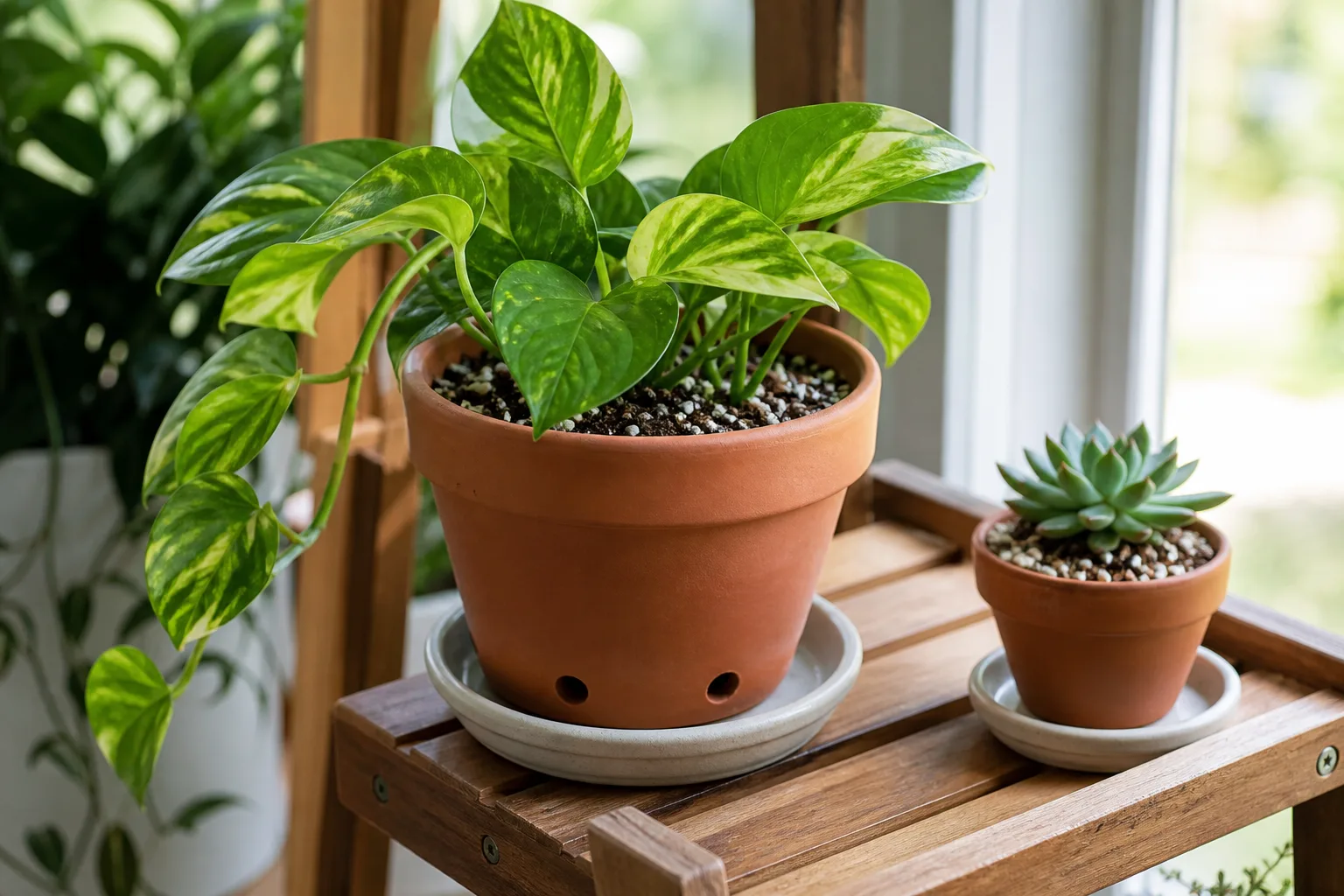
Water when the top 1 to 2 inches of mix feels dry and the lower root zone has begun to lose its saturation. For a large container, do not rely on the surface alone: push a wooden skewer several inches into the mix, lift it, and feel whether it is cool and damp below the dry crust. A moisture meter can help you learn the pot, but use it as a trend tool rather than treating one number as a universal command.
When it is time, pour slowly over the surface until water runs from the drainage hole. Pause and repeat if the mix has pulled away from the sides or initially repels water. Let the pot drain for several minutes, then empty the saucer or cachepot. This wets the full root ball and removes the guesswork of giving a small splash that only moistens the top layer.
Overwatering is usually a frequency and drainage problem, not a single generous drink. The roots need both water and air; keeping the mix wet for weeks can injure roots even if each watering was careful. Epic Gardening’s practical guidance likewise recommends checking root-zone moisture rather than waiting for wilt, and adjusting the rhythm as light, temperature, and season change. Epic Gardening
Expect more frequent checks in bright spring and summer growth and fewer waterings in a cool, dim winter room. Do not make the plant prove it is thirsty by wilting. A dry, wilted Xanadu can recover from one missed watering, but repeated severe dry-outs can cause brown edges and leaf drop, while watering a still-wet pot compounds the damage.
Balance warmth and humidity with airflow
Keep Xanadu in a warm room away from cold glass, exterior doors, heat vents, and the direct blast of air-conditioning. NC State Extension gives an indoor preference around 65 to 75°F, a useful target for steady growth. NC State Extension A brief variation is less concerning than placing a wet-rooted plant against a cold window every night.
Average household humidity is often adequate, but very dry heated air can show up as crisp leaf tips and edges. Grouping plants, using a room humidifier, or choosing a naturally humid room can help. A pebble tray may slightly improve the air immediately around the foliage if the pot sits above the waterline; it is not a cure for a dry room and should never leave the container standing in water.
Skip misting as your main humidity strategy. It raises moisture on the leaf surface only briefly, does not reliably change room humidity, and leaves wet foliage in a poorly ventilated room. If you rinse dust from the leaves, do it early enough that the foliage can dry, and keep leaves from touching one another. Good airflow is the companion to humidity because it helps surfaces dry and makes pest or spotting problems easier to notice.
Feed during active growth
Feed in spring and summer when Xanadu is making new leaves. A balanced liquid houseplant fertilizer diluted to half strength every 4 to 6 weeks is a conservative starting point for a plant in a nutrient-holding potting mix. UConn Extension advises more frequent feeding at reduced strength rather than one strong dose and recommends applying fertilizer to already moist soil. University of Connecticut Extension
Do not fertilize a bone-dry plant, a freshly divided plant, or a plant whose roots are failing. Low light also reduces the amount of fertilizer the plant can use. If white crust accumulates on the soil or pot rim, pause feeding and flush the mix thoroughly with plain water if drainage is good. Persistent salt buildup is a reason to refresh the mix, not a reason to add a stronger fertilizer.
Prune for health and shape
Xanadu usually needs tidying rather than structural pruning. Remove a fully yellow, brown, or diseased leaf by cutting its petiole close to the central stem with clean, sharp shears. If only the edge is brown, leave the green tissue; trimming a leaf into a perfect shape does not make the damaged section healthy again and can create a larger cosmetic wound.
Prune in stages if the plant is crowded or has outgrown its space. Removing too much foliage at once reduces the plant’s ability to use light and recover. If the clump is leaning, improve the light and rotate the pot gradually before reaching for a stake. Xanadu is self-heading and generally does not need a moss pole, although a discreet support can steady heavy petioles or a plant that has been moved.
Wipe broad leaves gently with a damp, clean cloth or rinse them with lukewarm water. Clean foliage is easier to inspect for scale, webbing, and thrips damage. Never use household leaf-shine products; oily coatings can interfere with the leaf surface and collect dust.
Repot when roots or mix say it is time
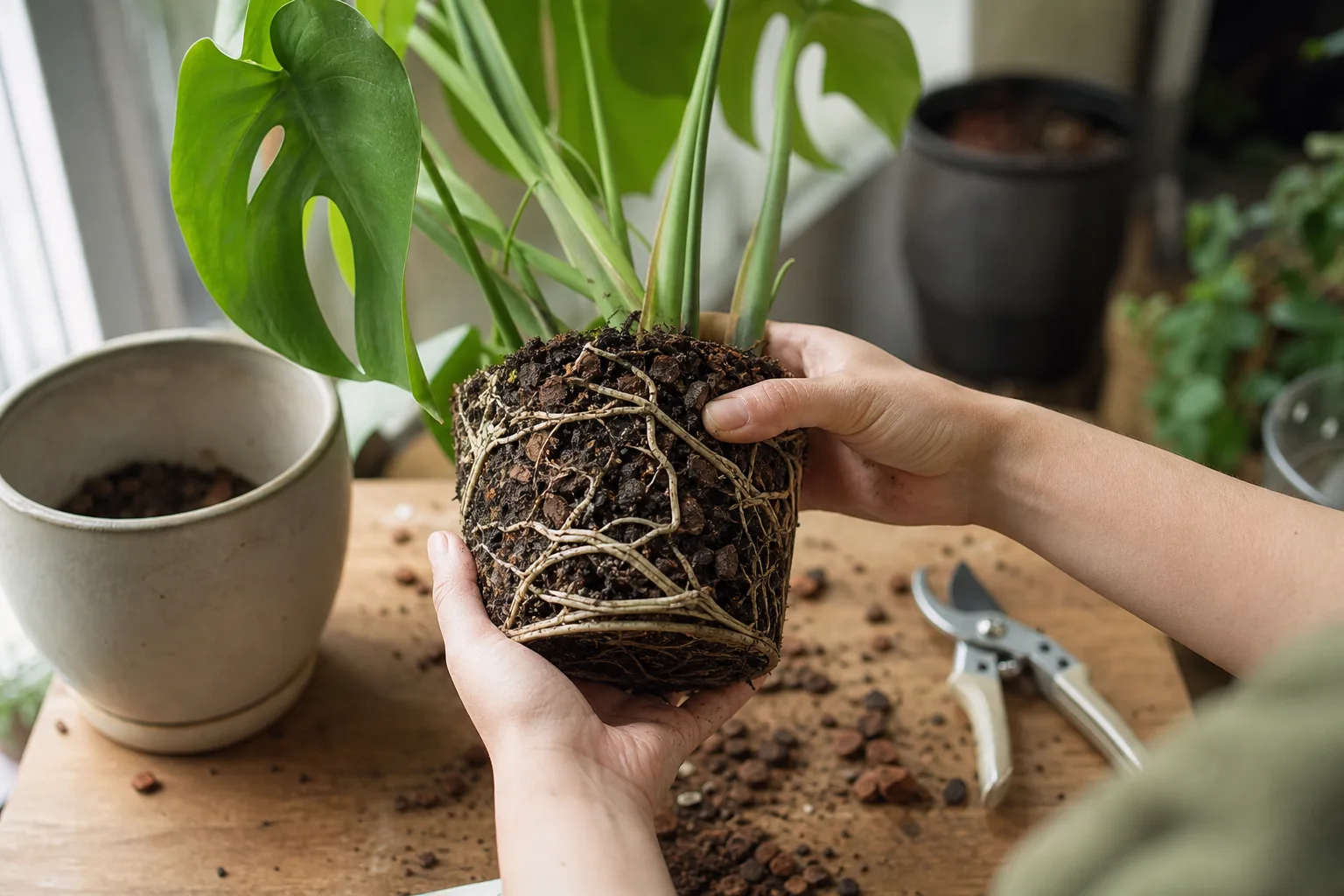
Repot when roots circle densely around the container, emerge from the drainage hole, the plant becomes unstable, or water runs straight through because the old mix has collapsed. A healthy, actively growing Xanadu may need repotting every 1 to 2 years, but the calendar is only a prompt to inspect. NC State Extension gives the same general interval for container plants. NC State Extension
Choose a pot only 1 to 2 inches wider than the current root ball and use fresh, airy mix. Slide the plant out while supporting the base of the clump; do not pull on the leaves. If the roots are firm and pale tan to cream, loosen only the outer circling layer and preserve the root ball. If the mix is sour, compacted, or staying wet, remove enough of it to see what is happening rather than burying the problem under new soil.
Set the plant at the same depth, fill around it without packing the mix hard, and water once until the root ball is evenly moist. Let it drain, return it to bright indirect light, and hold fertilizer until it shows renewed growth or has had a few weeks to settle. A little post-repot droop can be temporary; persistent decline is a reason to inspect the roots again.
Propagate Xanadu from a division or cutting
Because Xanadu is a clumping, self-heading plant, division is usually the most sensible way to make a second plant—if the root ball contains more than one growing point. A single crown cannot be turned into several plants by slicing leaves apart. Stem cuttings can work when the piece includes a true node or aerial-root-bearing section, but a leaf without a node will not produce a new plant.
Choose the method that matches the plant
To divide a crowded clump, water lightly the day before so the root ball is workable but not soggy. Slide it from the pot, brush away enough mix to see where individual crowns connect, and separate a section only when it has its own growing point and a useful group of roots. If a clean knife is necessary, disinfect it first and make the fewest cuts possible.
Pot each division in a small container of the same airy mix, keeping the crown at its original depth. Water enough to settle the mix, let it drain, and keep the division in warm, bright indirect light. For the next couple of weeks, keep the mix lightly and evenly moist—not saturated—while the reduced root system begins working again.
For a stem cutting, choose a healthy section with at least one visible node; an aerial root is helpful but not essential. Remove leaves that would sit below the water or mix, then root the cutting in clean water or a lightly moist perlite-and-potting-mix blend. Keep the node in the rooting medium and the leaf above it, refresh water weekly if using a jar, and wait for a strong cluster of roots before potting.
Keep new cuttings out of direct sun and do not seal them in stagnant plastic. High humidity can reduce drying, but trapped condensation encourages rot. If the parent is stressed, infested, or recovering from root rot, wait until it is actively growing; propagation adds another wound and another demand on limited energy.
Diagnose yellow, brown, and drooping leaves
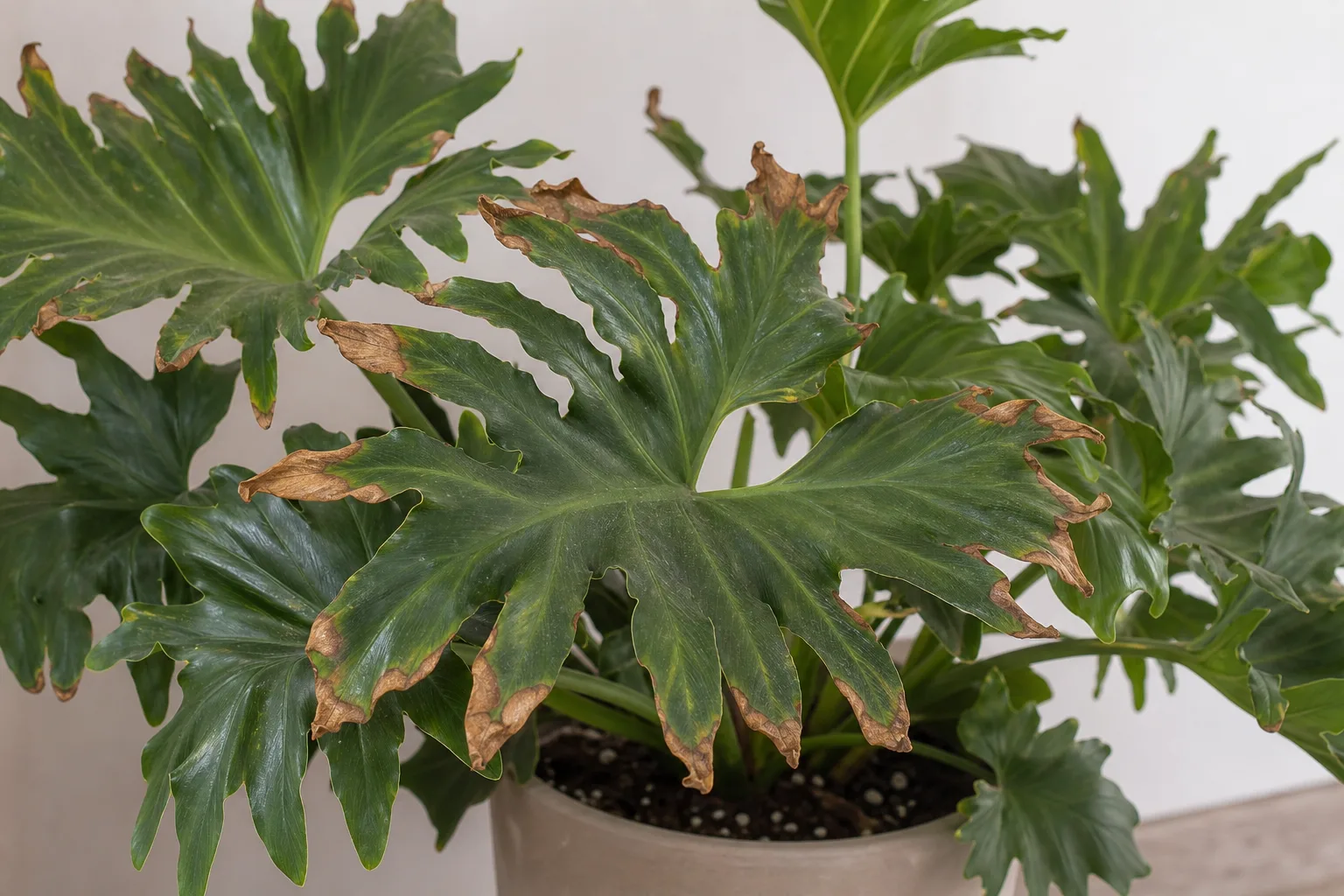
Start with the pattern, then check the soil and the newest growth. One older lower leaf turning yellow slowly can be normal senescence. Several leaves yellowing at once, especially with a wet mix or soft stems, is a stronger warning that the roots are staying too wet or have already been damaged.
Brown, crispy edges usually point to a dry root ball, very dry air, inconsistent watering, or salt buildup. Brown bleached patches on the window-facing side suggest sun scorch. A plant with pale, widely spaced leaves but no crispy tissue is more likely asking for stronger light. These clues overlap, so change the most obvious environmental variable and watch new growth rather than expecting damaged tissue to turn green again.
Drooping needs the same root-zone check. If the mix is dry several inches down, water thoroughly and reassess after a few hours. If the mix is wet, do not add more water just because the leaves are limp; roots damaged by low oxygen cannot reliably take up water. Move the plant away from harsh light while you inspect it, but do not hide a chronic low-light problem behind a darker recovery spot.
Check the roots before treating the leaves
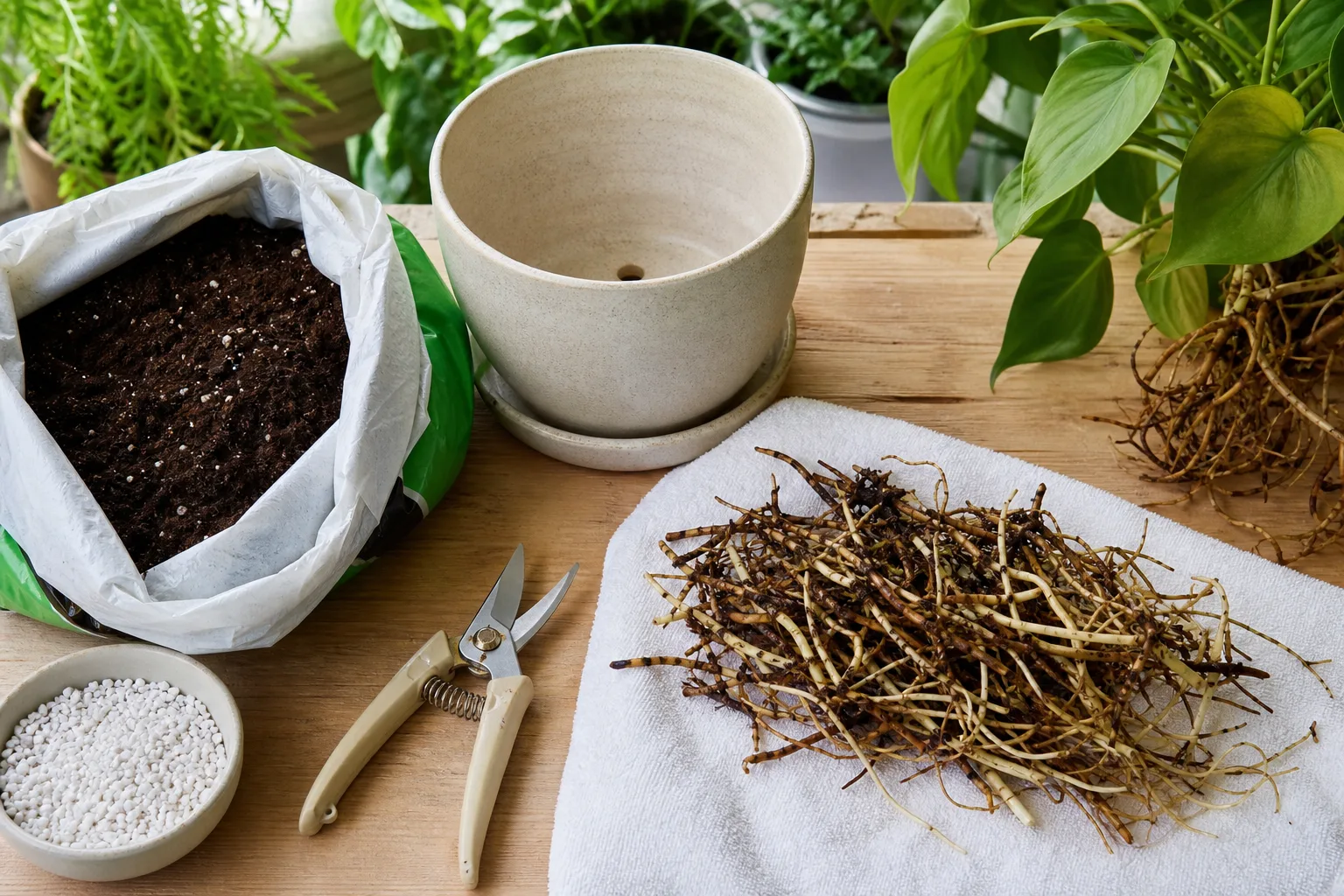
Unpot Xanadu when symptoms persist despite reasonable watering, when the soil smells sour, or when the stem base feels soft. Healthy roots are generally firm and light-colored. Rotten roots are brown to black, mushy, and sometimes foul-smelling. Cut away only tissue that is clearly dead with disinfected shears, then repot into fresh porous mix and a clean pot with drainage.
After root damage, reduce the plant’s workload: remove only dead foliage, provide bright indirect light, and keep the remaining mix from staying saturated. Do not fertilize until new growth resumes. If most roots and the crown are lost, recovery is uncertain; taking a viable node cutting may be the only backup, and even that is not guaranteed.
Manage pests and leaf-spot risk
NC State Extension lists aphids, mealybugs, scale, thrips, and spider mites among the pests that may affect Xanadu and notes vulnerability to fungal leaf spots. NC State Extension Inspect new plants before bringing them into a collection, then check leaf undersides, petiole joints, and the center of the clump every week or two.
Look for fine stippling or webbing with spider mites, cottony clusters with mealybugs, fixed bumps with scale, silvery scarring or distorted new growth with thrips, and small clustered insects with aphids. Isolate the plant first. Physically remove visible pests with a water rinse or cotton swab, prune badly infested leaves, and use only a product whose label names the pest and the plant-use situation. Test a small area, keep treated foliage out of harsh sun, and repeat only as the label directs.
For leaf spots, keep leaves from staying wet overnight, improve spacing and airflow, and avoid splashing soil onto foliage. Remove badly affected leaves with clean shears and disinfect tools between plants. If spots continue to expand, the crown declines, or you cannot distinguish pest damage from disease, contact a local extension plant clinic rather than escalating randomly through household sprays. UConn Extension also recommends reserving chemical control for situations where other methods have not solved the problem. University of Connecticut Extension
Handle plant toxicity safely
Treat every part of Xanadu as unsafe to chew. NParks lists the plant as toxic upon ingestion and identifies calcium oxalate crystals in the sap as a cause of mouth and throat irritation; skin contact can also cause itchiness or irritation. NParks The National Capital Poison Center explains that the crystals form needle-like raphides that can cause immediate pain and swelling when plant tissue is chewed or sap contacts skin or eyes. National Capital Poison Center
Place the pot where children, cats, dogs, and grazing pets cannot reach it. Wear gloves if you are pruning or dividing, wash your hands and tools afterward, and do not prepare food on a surface covered with sap or potting mix. ASPCA’s philodendron entry documents oral irritation, drooling, vomiting, and difficulty swallowing in affected pets, and identifies insoluble calcium oxalates as the toxic principle. ASPCA
If sap gets on skin, wash thoroughly with soap and water. If it reaches the eyes, rinse with clean water and seek medical advice if pain or irritation persists. After a person chews or swallows plant material, remove what is easy to spit out, rinse the mouth, and contact a poison center; severe swelling, excessive drooling, trouble swallowing, or breathing difficulty needs urgent medical care. For a pet, call a veterinarian or an animal poison-control service promptly and keep the plant label or a photo available.
Conclusion: build a stable root zone
Successful Philodendron Xanadu care is mostly the result of stable conditions, not constant intervention. Give it bright filtered light, an airy pot with a real drainage hole, and a thorough drink when the root zone has dried partway. Keep it warm, add humidity only when the room is genuinely dry, and pair moisture with airflow.
When the plant looks unhappy, check the soil and roots before cutting leaves or adding fertilizer. When it outgrows the pot, repot modestly; when it forms multiple rooted crowns, divide it; when it shows pests, isolate and inspect before spraying. Those small decisions preserve the compact, glossy clump that makes Xanadu such a rewarding tropical houseplant.