How to Grow and Care for Philodendron Burle Marx
Grow a lush Philodendron Burle Marx with a wide pot, bright indirect light, careful watering, node cuttings, and clear troubleshooting for common problems.
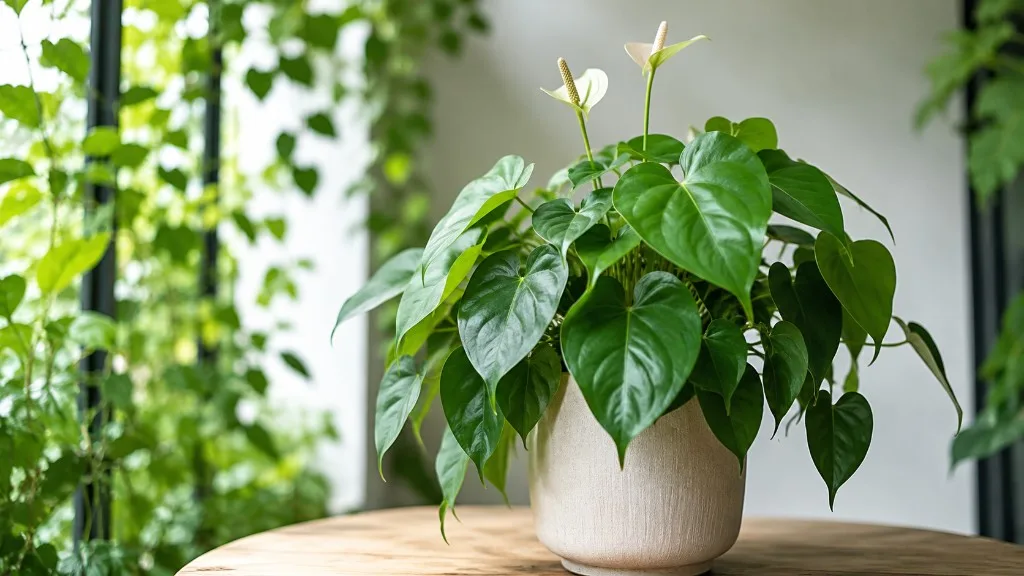
Philodendron Burle Marx is easiest to keep healthy when you treat it as a spreading or trailing aroid, not as a tall, self-heading plant that needs a deep pot. Give it bright filtered light, an airy mix that dries slightly at the top, and enough warmth for the roots to stay active. The plant is forgiving about ordinary household conditions, but it is not forgiving of a dark corner combined with constantly wet soil.
The name also deserves a little care. Kew lists the accepted species Philodendron burle-marxii as native from Colombia to Ecuador and northern Brazil, where it grows as an epiphyte in wet tropical forest Kew Plants of the World Online. Plants sold as Philodendron ‘Burle Marx’ may be selected cultivated material rather than a wild specimen, so size, leaf shape, and growth habit vary. For indoor care, the useful constant is a narrow-leaved philodendron that spreads along a surface, trails from a basket, and roots readily from stem nodes.
Understand the plant’s creeping habit first
Burle Marx can look upright when several young stems are packed into a nursery pot, but its mature presentation is usually horizontal. Stems creep across the soil, spill over a shelf, or hang from a basket. Some stems may climb a short support, especially when they encounter something to hold, but a moss pole is optional rather than a requirement.
That habit changes the way you care for it. A wide, shallow container often gives the plant better usable space than a tall cylinder, because the root zone and stems spread outward together. In a deep pot, the center can stay wet long after the outer mix feels dry; in a hanging basket, the edges may dry faster than the middle. Probe more than one spot before watering.
The plant’s narrow glossy leaves are also a useful diagnostic tool. A healthy plant has firm leaves, active growing tips, and stems that feel solid rather than hollow or soft at the soil line. A single older yellow leaf may be normal aging. Several yellow leaves appearing while the mix stays wet is a different message: inspect the root zone before adding fertilizer.
Quick care profile for Philodendron Burle Marx
Use these as starting targets, then adjust to your room, pot material, season, and actual dry-down speed. Extension and RHS guidance agree that philodendrons prefer indirect light, warm conditions, and moist but well-drained soil, while the exact schedule depends on the container and environment NC State Extension RHS philodendron growing guide.
| Care factor | Practical starting point | What to watch |
|---|---|---|
| Light | Medium to bright indirect light; filtered sun is safest | Long gaps between leaves or bleached patches |
| Water | Water when the top 1–2 inches of mix feel dry; soak and drain | Wet soil plus yellowing is more urgent than one dry leaf |
| Soil | Airy potting mix with about 20–30% perlite, plus bark or coco if needed | Surface pooling, sour smell, or slow dry-down |
| Temperature | About 65–85°F (18–29°C), away from drafts | Chilled wet soil slows roots and increases decline |
| Humidity | Average home humidity is usually workable; moderate humidity helps | Brown edges alongside heat, dry air, or salt buildup |
| Feeding | Balanced liquid fertilizer at half strength about monthly in active growth | Crusty mix or burned edges after frequent feeding |
| Shape | Spreading, creeping, or trailing; support is optional | A tall narrow pot can create uneven moisture |
| Safety | Toxic if chewed; sap can irritate skin and eyes | Keep prunings away from pets and children |
Pick a container and room that fit the plant
Choose a pot with at least one open drainage hole and enough width for the current root ball plus a little room to expand. If the plant is small, a pot only one or two inches wider is usually safer than a dramatic upgrade. Extra soil that has no roots to use it stays wet, and that is how a low-maintenance plant becomes a root-rot project.
A terracotta bowl dries faster and can suit a heavy waterer or a bright, warm room. Plastic retains moisture longer and works well if you check the soil carefully. A decorative cachepot is fine as an outer cover, but lift the inner pot out to water and let it drain completely before returning it.
Place the plant where you can see and reach the soil. A shelf close to a bright window is usually easier to manage than a dark corner across the room. If you have just brought it home, quarantine it from other plants for about two weeks and observe its leaves, stems, and dry-down speed before making several changes at once. Repot on arrival only when the mix is failing, the roots are damaged, or pests need immediate containment.
Give it bright, indirect light
Bright, indirect light produces the most compact, vigorous growth. An east-facing window is a dependable starting point; a south- or west-facing window can work a little farther back or behind a sheer curtain. Direct summer sun through glass can bleach or scorch the leaves, especially when the plant has been moved suddenly from a dim nursery.
Burle Marx will survive in moderate light, but survival is not the same as a full, glossy plant. In low light, stems stretch toward the window, the gaps between leaves lengthen, and new leaves may be smaller. NC State Extension describes philodendrons as preferring bright indirect light and notes that different types vary in light tolerance. Use less water when light is low because the mix will dry more slowly.
Read new leaves for light feedback
Old leaves record old conditions. A leaf that was stretched or scorched will not become compact and green again after you move the plant. Watch the newest leaf and the next growing point for two or three weeks instead.
If new growth is small and the stem keeps reaching, move the pot closer to bright filtered light or add a grow light according to the lamp’s instructions. If the window-facing side develops pale tan patches with crisp margins, diffuse the light or pull the plant back. Do not respond to sun scorch by watering more; the damaged tissue will not reverse.
Build an airy, moisture-holding potting mix
The best Burle Marx soil is not the driest possible mix. Roots need both water and air, so aim for a medium that becomes evenly moist when watered but does not collapse into a dense, airless block. A simple starting recipe is quality indoor potting mix with 20–30% perlite, plus a modest amount of orchid bark or coco coir if the base mix is fine and compacting.
The preferred reaction is slightly acidic to near neutral. A practical indoor target around pH 5.5–6.5 is consistent with the slightly acidic compost recommended for philodendrons by the RHS RHS philodendron growing guide. Do not chase a number with repeated amendments unless a soil test or a persistent nutrient problem gives you a reason; physical drainage and sensible watering matter more in an ordinary houseplant pot.
Test the mix before planting. Pour water slowly over the surface and watch whether it spreads through the pot or sits on top. If water races down the sides while the center stays dry, the mix may be hydrophobic or badly compacted. If water takes a long time to drain and the pot stays heavy for many days, increase air space and check that the drainage hole is not blocked. A layer of gravel at the bottom does not repair a dense mix; it simply reduces the volume available to roots.
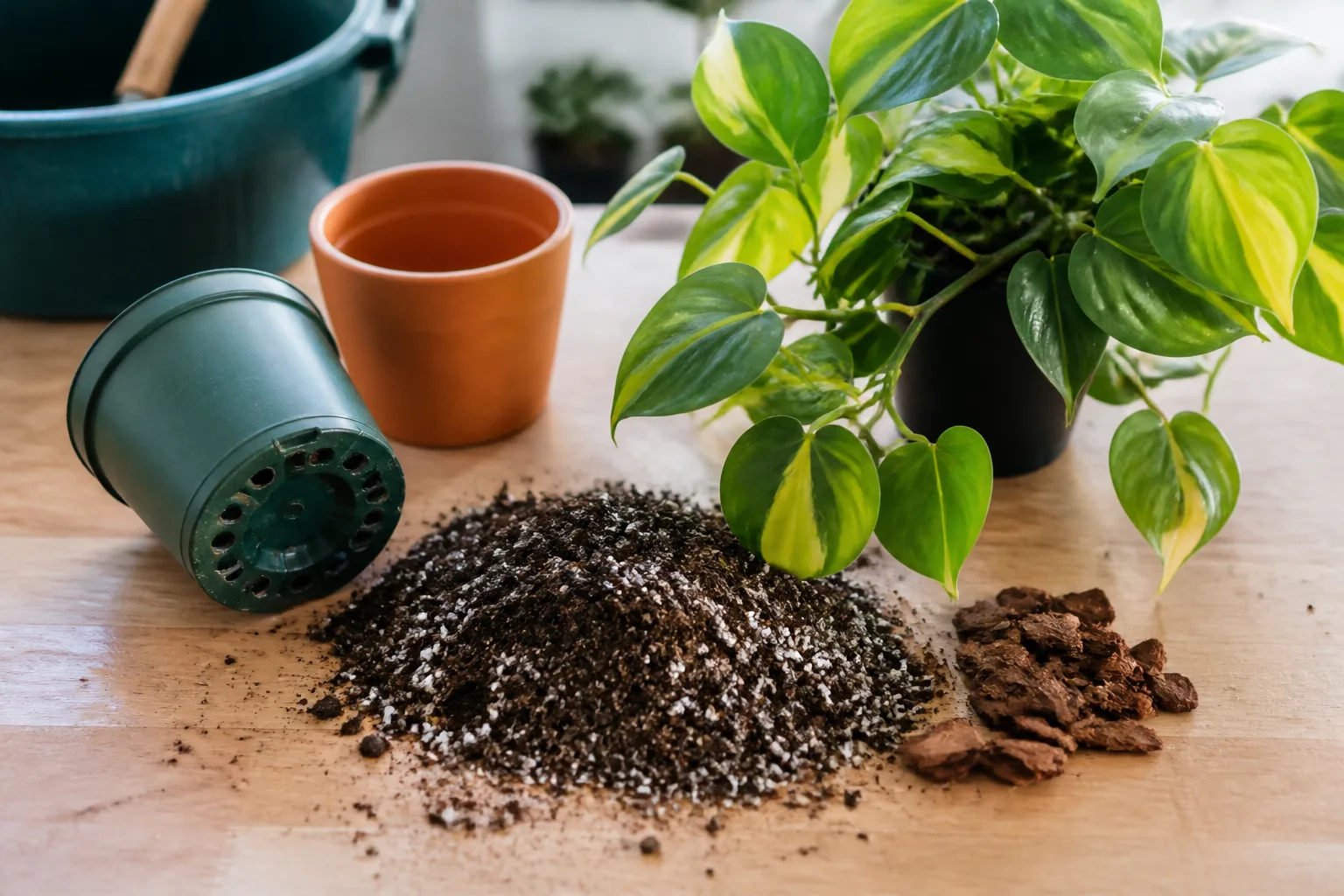
Water after the top layer dries, then drain fully
Water when the top 1–2 inches of potting mix feel dry, not because a certain weekday has arrived. Push a finger into two or three places in a wide pot, or use a dry wooden skewer to check deeper than the surface. Pot weight is another useful signal: after a thorough watering, lift the container so you learn what “heavy” feels like, then wait until it is noticeably lighter and the top layer has dried.
When it is time, water slowly and thoroughly until a steady stream comes from the drainage hole. This wets the whole root ball and helps prevent dry pockets. Let the pot finish draining, then empty the saucer or cachepot. Keeping the roots in runoff defeats the purpose of a well-drained mix.
Adjust watering for season and water quality
In a bright, warm room during active growth, many Burle Marx plants dry enough to need water roughly every seven to ten days. In a cooler or darker winter room, ten to fourteen days—or longer—may be more realistic. Treat those ranges as a planning aid, not a prescription. A broad plastic pot in a humid room can stay wet longer than a small terracotta pot beside a warm window.
If your tap water is very hard, repeated watering may leave mineral deposits on the soil or foliage and gradually push the mix away from the slightly acidic conditions philodendrons prefer. The RHS recommends rainwater or filtered water when possible in hard-water areas and room-temperature water to avoid chilling the roots RHS philodendron growing guide. You do not need to panic over an occasional tap-water drink, but persistent crust, brown margins, or declining new growth is a reason to review water quality and fertilizer salts.
Water droplets at leaf tips after a thorough drink can be guttation, a pressure-release process rather than a request for more water. Occasional droplets are harmless. Repeated heavy droplets combined with a pot that never dries should prompt a moisture and drainage check.
Balance temperature and humidity without chasing numbers
Burle Marx grows best in a warm, stable room. A range around 65–85°F (18–29°C) is a useful comfort zone, while temperatures near or below 60°F (15°C) slow growth and become more risky when the soil is wet. Keep the pot away from cold drafts, air-conditioning blasts, hot radiators, and glass that becomes cold at night. The general philodendron guidance from NC State and the RHS emphasizes warm indoor conditions and protection from cold NC State Extension RHS philodendron genus guide.
Moderate household humidity is usually enough for a healthy plant. Higher humidity can make new leaves expand more smoothly, but it cannot compensate for low light, dry roots, or a pot that stays saturated. If winter air is very dry, group plants together, run a humidifier in the room, or use a correctly assembled pebble tray with the pot resting above the waterline.
Misting is temporary and easy to overestimate. It may wet the leaves for a few minutes without meaningfully changing the room’s average humidity, and leaves that remain wet in stagnant air are more vulnerable to spotting. Improve airflow and light before you turn humidity into a numbers contest.
Feed only during active growth
Fertilizer is useful after the plant has adequate light, functional roots, and a mix that dries normally. Feed in spring and summer, or whenever your plant is visibly producing new leaves under strong supplemental light, with a balanced liquid houseplant fertilizer diluted to about half the label strength. Applying it to already moist soil is gentler on roots than pouring concentrated fertilizer into a dry root ball.
A conservative monthly application is a good starting rhythm for a normal indoor plant. Some growers feed more often in bright greenhouse conditions, but a houseplant in moderate light may accumulate salts faster than it uses nutrients. Pause feeding after repotting, during pest recovery, when the plant is dormant, or when yellowing is occurring in wet soil.
White crust on the mix, brown tips that keep advancing, or a sudden burned margin after feeding suggests salt stress rather than hunger. Flush the pot slowly with plain water and let it drain well, then wait before feeding again. Follow the specific fertilizer label for dilution and frequency; “more” does not make a low-light plant grow faster.
Prune, clean, and train the runners
Pruning is optional, but it helps you control length and turn a sparse pot into a fuller one over time. Use clean, sharp shears and cut just above a node so the remaining stem has a point from which new growth can emerge. Remove fully yellow or crispy leaves at the base of their petiole; trimming only the brown tip improves appearance but does not repair the leaf or its cause.
Burle Marx does not need a moss pole to be healthy. Let it creep across a wide planter, trail from a hanging basket, or use a low trellis if you want to guide the stems. A support can organize the plant, but forcing a spreading cultivar into a tall vertical display may give you awkward stems and a pot whose center stays wet. Choose the shape that fits the room, then give the growing tips enough light.
Wipe dust from broad leaves with a soft damp cloth when needed. Clean foliage is easier to inspect for mites, scale, and mealybugs, but avoid oily leaf-shine products that can interfere with the leaf surface or leave residue.
Propagate from healthy stem nodes
The reliable unit for propagation is a stem section with a node, not a leaf by itself. A node is the joint where a leaf, petiole, aerial root, or dormant bud emerges. Choose a firm, healthy runner with at least one visible node and one healthy leaf above it. A 4–6-inch cutting with two nodes is easy for beginners, but a single-node cutting can work when the plant material is limited.
Use sharp, clean shears and make the lower cut just below the node. Remove leaves that would sit in water or beneath the soil, leaving one to three leaves at the top. Do not propagate from a soft, blackened, pest-covered, or severely wilted stem; stabilize the parent plant first. The RHS describes philodendrons with climbing or trailing stems as readily propagated from cuttings taken in the growing season RHS philodendron growing guide.
Water propagation for easy monitoring
Water rooting lets you see what is happening and is often the easiest first method.
- Fill a clean jar with room-temperature water.
- Place the cutting so at least one node is submerged and every leaf stays above the waterline.
- Put the jar in bright indirect light in a warm room, away from harsh sun.
- Refresh the water about once a week, sooner if it becomes cloudy or develops an odor.
- When the roots are several inches long and beginning to branch, move the cutting to a small pot of airy mix.
- Keep the new pot slightly more evenly moist than an established plant while the water-grown roots adjust, then return to a dry-top-layer rhythm.
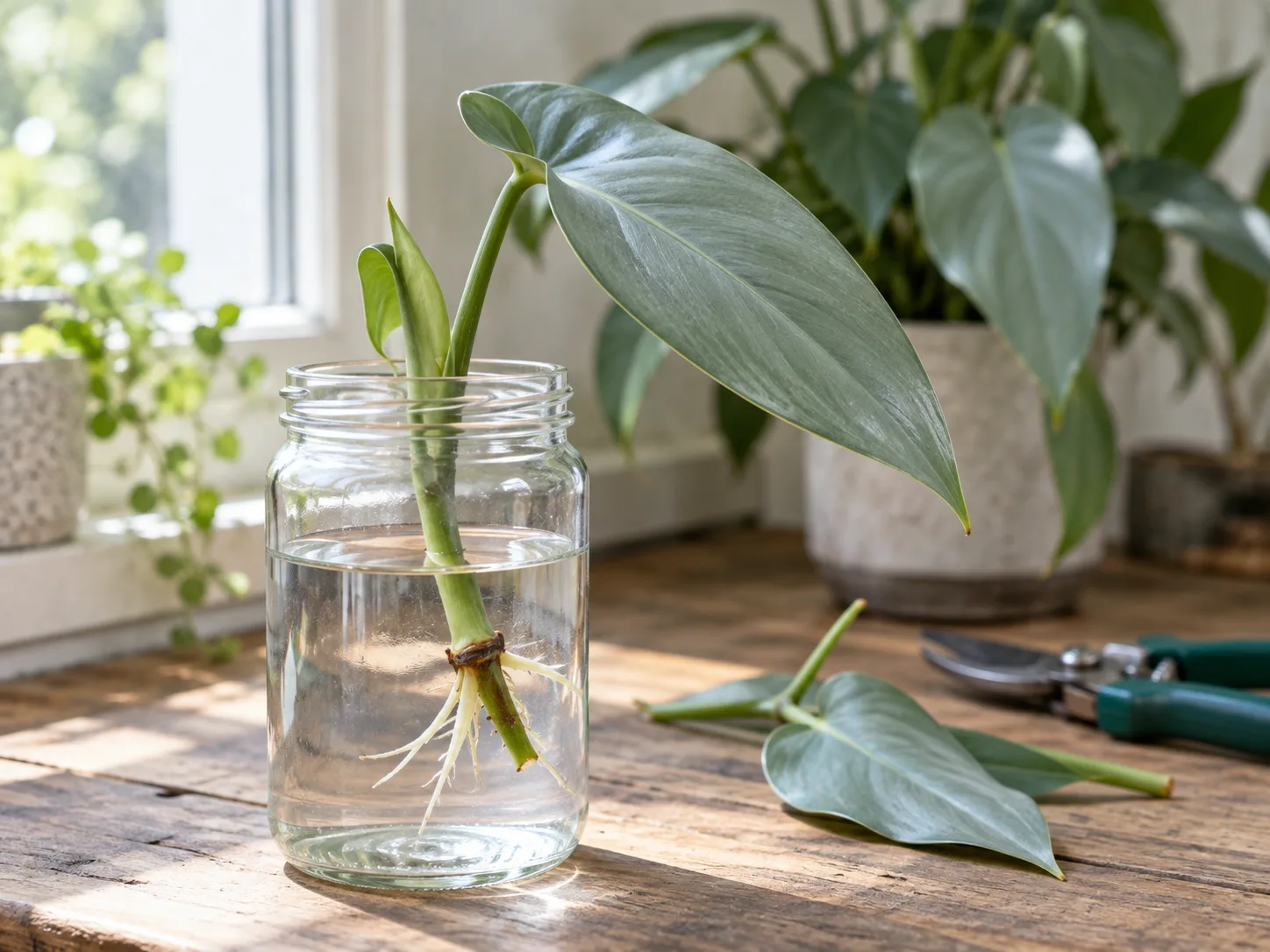
Roots may appear in two to four weeks, but warmth, light, cutting health, and season change that timeline. Do not tug on the cutting every day. If the stem turns soft or the water smells sour, cut back to firm tissue above the damage, clean the jar, and restart only if a healthy node remains.
Soil propagation for a direct transition
Direct soil propagation avoids the later transition from water roots to potting mix. Fill a small pot with a loose, premoistened mix, make a hole with a pencil or dibber, and set the node just below the surface while keeping the leaf and most of the stem above it. Firm the mix gently so the cutting stands upright without compressing the root zone.
Place the pot in bright indirect light and keep the mix lightly moist, never muddy. A clear cover can reduce water loss in a very dry room, but leave ventilation so condensation does not stay trapped against the leaves. A cutting that collapses in wet soil is usually suffering from rot, not a need for still more humidity.
Once the cutting resists a gentle tug and begins producing new growth, remove any cover gradually and let the mix dry a little farther between waterings. Skip fertilizer until it has settled and is growing. The trade-off is simple: water offers visibility, while soil offers a direct root environment; the node and the aftercare matter more than choosing one method as universally best. Practical propagation guidance from Our Wild Garden also emphasizes a healthy nodal stem, bright indirect light, and keeping leaves out of the water Our Wild Garden propagation guide.
Repot when the roots, not the calendar, call for it
Repot in spring or early summer when possible, but let the plant tell you whether the job is necessary. Roots circling densely around the root ball, roots emerging from the drainage hole, compacted mix that no longer wets evenly, or a pot that dries unusually fast are stronger signals than an arbitrary annual date. Healthy philodendrons can stay in a nursery pot longer than a calendar-based routine suggests; the RHS notes that many can remain in their original container for a couple of years or until roots become densely packed RHS philodendron growing guide.
Move only one size wider, preferably into a shallow pot that reflects the spreading habit. Slide out the root ball, inspect it, and disturb healthy roots as little as possible. Remove only dead, mushy, or clearly damaged roots, then backfill with fresh airy mix at the same depth. Water thoroughly once to settle the mix, let the pot drain, and keep it in bright indirect light while it recovers.
Do not combine repotting with hard pruning, a new location, aggressive feeding, and a major light change unless the plant is in immediate danger. Changing several variables at once makes it impossible to tell what helped. After repotting, wait for signs of active recovery before resuming fertilizer.
Diagnose yellow, brown, and drooping leaves
Symptoms overlap, so start with soil moisture and the newest leaves rather than guessing from color alone.
| What you see | Check first | First action |
|---|---|---|
| One older leaf turning yellow | Is the rest of the plant firm and growing? | Remove the finished leaf and monitor; normal aging is possible. |
| Several lower leaves yellowing with wet mix | Pot weight, drainage, smell, and roots | Stop routine watering; improve drainage and inspect for root rot if the mix stays wet. |
| Yellowing with very dry mix | Soil depth and recent heat or sun | Soak thoroughly until it drains, then shorten the dry interval without keeping soil constantly wet. |
| Brown, crispy tips or edges | Humidity, salt crust, heat, and direct sun | Correct the cause, flush accumulated salts if needed, and remove only dead tissue. |
| Soft drooping leaves in dry soil | Dryness, hot air, and pot-bound roots | Water deeply and check whether roots are circling or the mix has become hydrophobic. |
| Drooping leaves while soil is wet | Root function and stem base | Do not add water; unpot and inspect for brown, soft roots or stem rot. |
| Long bare spaces between leaves | Light at the growing tips | Move brighter before feeding or pruning heavily. |
| Round tan or brown spots | Leaf wetness, airflow, pests, and scorch | Isolate if spreading, keep leaves dry, and remove badly affected leaves with clean shears. |
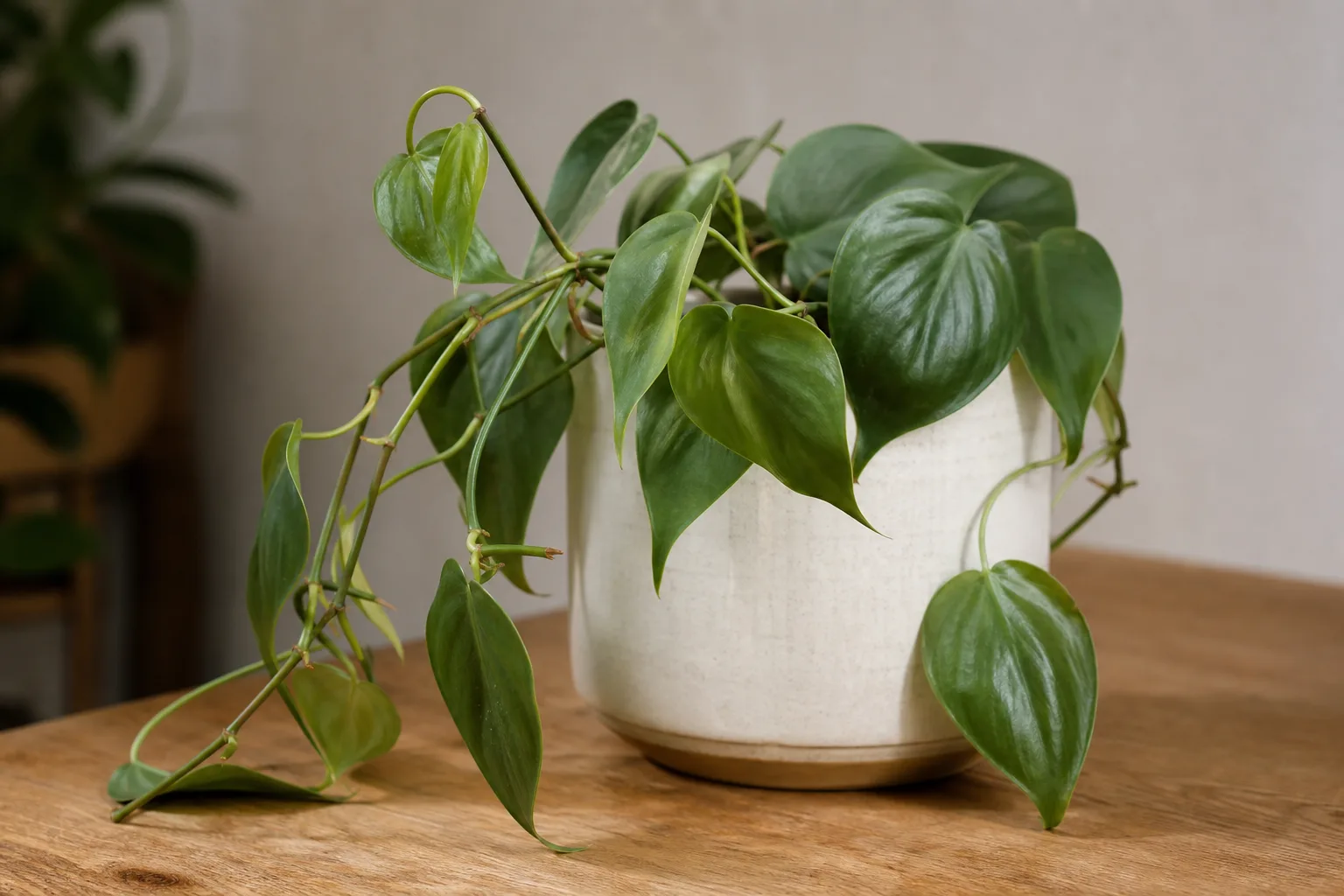
Root rot shows above the soil. If the plant yellows rapidly, droops in wet mix, or develops a soft base, slide it out and rinse away enough soil to inspect the roots. Healthy roots are firm; rotted roots are often brown or black, soft, slimy, and foul-smelling. NC State Extension and the RHS connect overwatering or poorly draining compost with root rot and yellowing RHS philodendron growing guide.
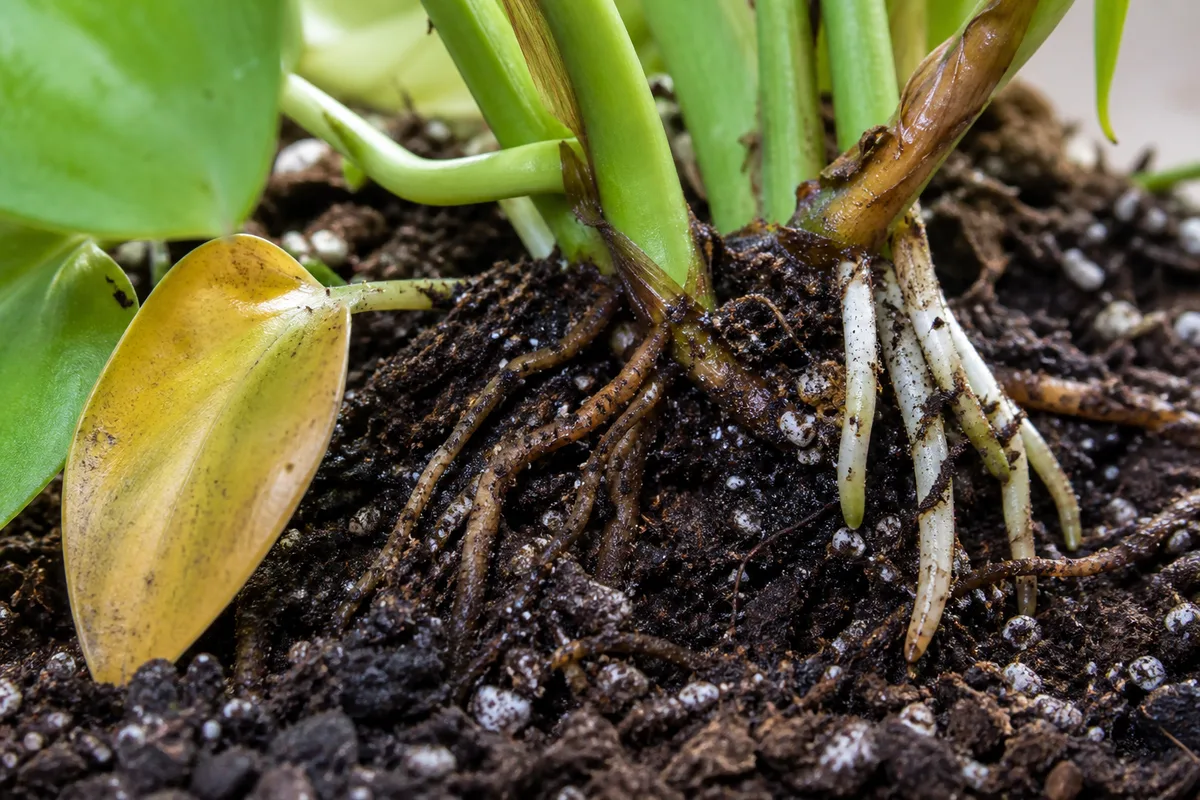
Trim rotted roots to firm tissue with disinfected scissors, discard saturated mix, and repot in a clean container with fresh airy medium. If the stem base is soft or most roots are gone, save firm stem sections with nodes as a propagation backup. Do not leave a failing plant in wet soil; the roots need oxygen before the canopy can recover.
Manage pests and leaf spot before they spread
Burle Marx is not immune to common houseplant pests. Check leaf undersides, petiole joints, and the crowded center of the pot for mealybugs, scale, spider mites, aphids, and thrips. Fungus gnats often signal a mix that stays wet too long.
Quarantine new plants, wipe leaves during routine care, and inspect weekly when bringing containers indoors. For a small outbreak, manual removal, a water rinse, or an appropriately labeled insecticidal soap or horticultural oil may be enough. Test products on a small area and follow the label; more concentrated is not safer. Repeat as directed because one pass rarely reaches every life stage.
Leaf spot needs a different response from a brown tip. Keep foliage dry overnight, improve air movement, avoid crowding, and remove badly affected leaves with clean tools. Do not propagate from a spotted or infested stem. If spots continue to spread, use your local extension service for diagnosis before applying a fungicide; several diseases and non-disease injuries look similar.
Handle toxicity and outdoor moves safely
Philodendron Burle Marx should not be treated as pet-safe. Philodendrons contain insoluble calcium oxalates that can cause painful oral irritation, drooling, vomiting, and difficulty swallowing when chewed. The ASPCA lists heartleaf philodendron as toxic to dogs, cats, and horses ASPCA heartleaf philodendron listing. Severe throat swelling and breathing difficulty are rare but possible Pet Poison Helpline philodendron guidance.
Use a high shelf or a hanging basket out of a browsing pet’s reach, and collect fallen leaves and pruning waste promptly. Sap can irritate human skin and eyes; Poison Control recommends washing exposed skin with soap and water for 15 minutes, rinsing eyes for at least 15 minutes, and getting urgent help for severe mouth swelling or trouble swallowing or breathing Poison Control. If a pet chews the plant, contact your veterinarian or an animal poison-control service.
You can grow Burle Marx outdoors in warm, frost-free climates as a shaded or filtered-light foliage plant. Kew describes its habitat as wet tropical forest Kew Plants of the World Online, while general philodendron guidance warns against cold. If you summer a container outdoors, acclimate it gradually, protect it from harsh afternoon sun, raise it off wet ground, and inspect for pests before bringing it inside. Move it indoors before cold nights or frost; actual winter temperatures matter more than a zone label.
Conclusion
The reliable Philodendron Burle Marx routine is simple: give the plant bright filtered light, a wide pot with an open drain, airy soil, and a deep drink only after the top layer has dried. Let its stems creep or trail rather than assuming it needs a moss pole, and judge the routine by new leaves, pot weight, and root health instead of a rigid calendar.
For the next step, use the Philodendron Burle Marx plant hub for focused pages on light, watering, soil, and propagation. Keep the plant elevated around pets, change one care variable at a time, and take a firm nodal cutting if root trouble ever threatens the parent.