How to Overseed a Lawn in Late Summer
Learn when and how to overseed a lawn in late summer: choose compatible seed, prep the surface, spread evenly, water correctly, and avoid common failures.
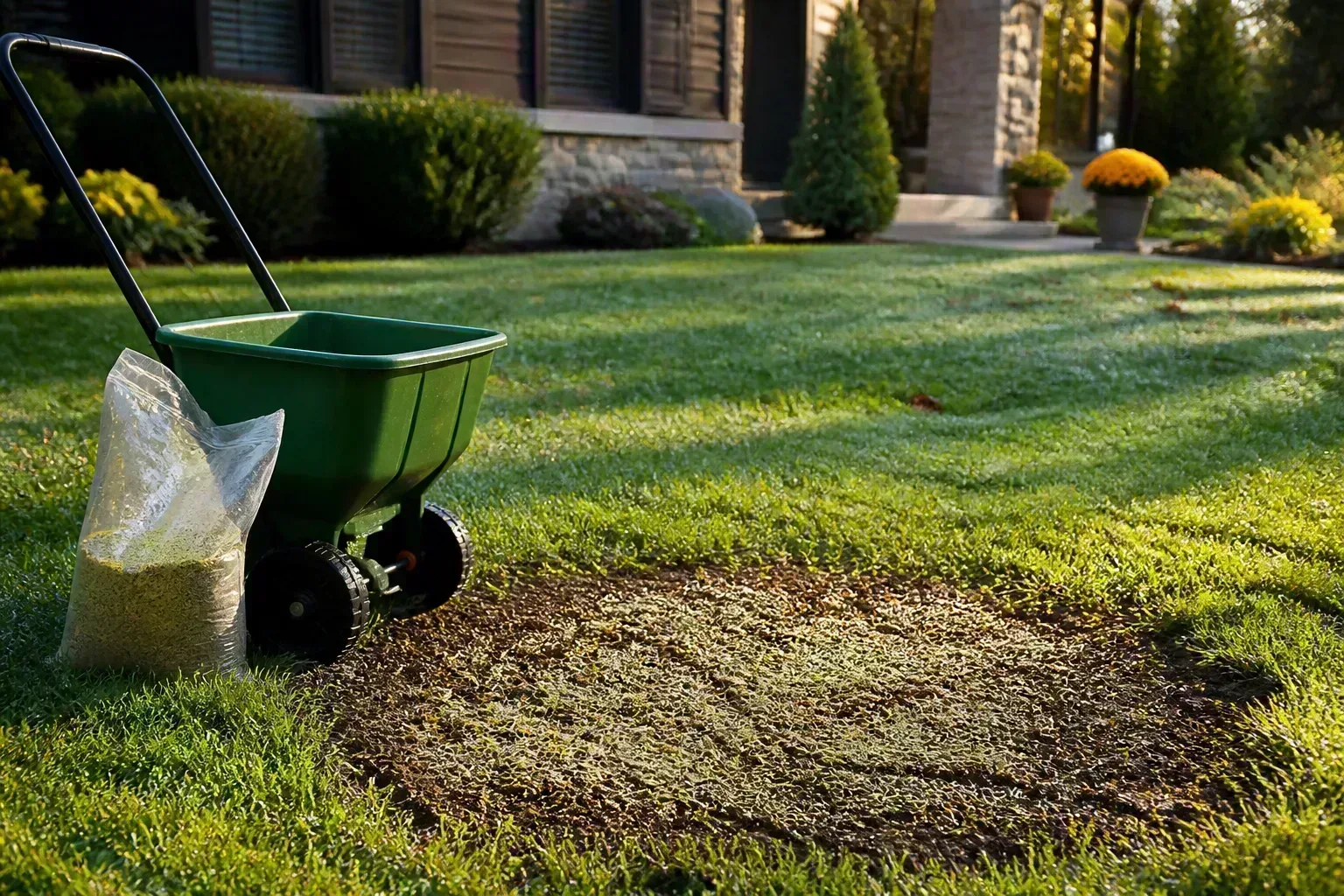
For a cool-season lawn, late summer to early fall is usually the most forgiving time to overseed. The soil is still warm enough for germination, the air is beginning to moderate, and seedlings can use the fall growth period to build roots before winter. The window is not a magic date, though: seed needs moisture, soil contact, and enough time before hard frost to become established.
The practical rule is simple. Overseed when your existing grass is recovering from summer stress and actively growing again, not while the lawn is heat-dormant, bone-dry, waterlogged, or under a disease outbreak. The Penn State Extension lawn calendar also cautions that unusual heat, drought, or cold can make a normal calendar a poor guide.
Is late summer the right window for your lawn?
Start by identifying the turf you already have. Overseeding means sowing grass seed into existing turf to increase density; it is not the same as starting a new lawn from bare soil, and it will not correct every reason grass has disappeared.
Cool-season and warm-season grass need different calendars
This late-summer method is aimed at cool-season grasses such as Kentucky bluegrass, perennial ryegrass, tall fescue, and fine fescues. These grasses grow most strongly in the cooler portions of the year, so late summer and early fall give new seedlings a useful combination of warm soil and cooler air.
Warm-season grasses such as bermudagrass and zoysiagrass follow a different growth rhythm. If your lawn is warm-season turf, late-summer overseeding with a cool-season grass may be a deliberate temporary winter-color project, but it can complicate spring transition and is not the same as repairing the permanent lawn. Use a local extension calendar and a seed mix labeled for your grass and region before treating this guide as a fit.
If you are unsure what grows in the yard, compare the existing blades and growth habit with your local extension service’s turf descriptions, or take a small sample to a county office or garden center that identifies turf. A cheaper bag of seed that does not match the lawn is not a bargain; it can produce a visibly different texture, color, and mowing response.
Use soil moisture and frost runway, not a date alone
The best day is a calm stretch after the worst summer heat, when the soil is workable and you can commit to regular watering. UMN Extension identifies mid-August to mid-September as the preferred renovation window for Minnesota lawns, but that is a regional recommendation, not a universal deadline. Farther south, the workable period may shift later; at high elevation or in colder areas, it may shift earlier.
Use your average first hard frost as a planning check. You want several weeks of active growth after germination, and more time is better for slow-establishing grasses such as Kentucky bluegrass. If the calendar is already close to the first hard frost, focus on small priority patches or postpone the full job rather than scattering seed that cannot root before winter.
Do not seed through a heat wave, drought restriction, or a forecast of washing rain. Wait until the lawn has been watered by rain or irrigation and the grass has resumed growth. Seed on frozen soil, saturated soil, or a crusted surface is much more likely to move, rot, or dry out than to establish evenly.
Why late summer can beat spring
Spring seeding looks appealing because everything is turning green, but young grass then has to face rising heat, dry weather, and a flush of warm-season weeds soon after it germinates. Late summer reverses that sequence: the soil can still provide warmth for germination while the coming cool season gives roots time to develop before the next major heat stress.
That advantage only exists if the seedbed stays moist. Autumn rain can reduce irrigation in some climates, but do not assume a few storms will keep the shallow surface damp enough for germination. Fine Gardening’s seasonal lawn coverage similarly points to warm soil and fall moisture as a reason fall renovation works well; the useful takeaway is not “seed on a calendar day,” but “seed when warmth and dependable moisture overlap.”
Late summer also gives you a chance to repair the conditions that created thin turf. A light opening in the canopy can fill with new grass. A compacted path, deeply shaded strip, failing irrigation zone, or grub-damaged section will simply repeat the same failure with newer seed unless you address the cause first.
Fix the reason your lawn thinned before adding seed
Walk the lawn before buying seed and mark the thin areas. Look for a pattern: bare lines where people walk, thinning beneath trees, moss in damp shade, soil that is hard to penetrate, circular disease patches, or turf that lifts easily because roots have been damaged. That quick diagnosis determines whether you need aeration, pruning, drainage work, pest investigation, or a larger renovation.
Soil testing is worth doing when the lawn has been weak for more than one season or when you are considering lime or fertilizer. Penn State Extension notes that most turfgrasses prefer soil pH around 6.0 to 7.0 and that lime should follow a soil-test recommendation, not a guess based on a bag’s promise. Test results can also prevent you from adding nutrients that are not needed.
When overseeding is not enough
Overseeding is a good fit when the lawn is mostly desirable grass with thinning between healthy plants. It is a poor fit when weeds or unwanted grass dominate, more than roughly half the area is bare, the grade or drainage is wrong, or the root cause is active and widespread. In those cases, a renovation plan that removes or suppresses existing vegetation and rebuilds the seedbed may be more efficient than repeating partial repairs.
Do not aggressively dethatch a drought-stressed lawn in late summer just because the surface looks brown. Penn State Extension recommends removing thatch only when buildup is excessive and conditions are cool and adequately moist; it specifically warns against doing the work during high heat or drought. Likewise, core-aerate compacted soil only when it is moist enough for the tines to penetrate, not when it is dusty or sticky.
If a thin area is under dense shade, seed selection may improve it but cannot create sunlight. Prune or thin competing branches where appropriate, raise expectations for a shade-tolerant mix, or convert the darkest strip to a different groundcover. If grubs, chinch bugs, or a turf disease are suspected, identify the problem before sowing; new seedlings will not outgrow an active root or foliage pest.
Choose seed and calculate the amount
Choose a seed mix by adaptation first, appearance second. A mix of compatible cultivars can spread risk across sun, shade, drought, traffic, and disease pressure, while a single species may be the better choice when you are matching a very uniform existing lawn. Read the analysis tag for species, cultivar names, germination percentage, weed seed, inert matter, and the amount of seed that is actually viable.
The UMN Extension guide to buying turfgrass seed is useful here because it treats the bag label as a decision tool, not decoration. Avoid choosing only by a large “covers” number on the front. The rate depends on whether the product is intended for a new lawn, overseeding, or small patch repair.
Match species to climate, sun, and traffic
Tall fescue is often considered where heat or drought tolerance matters, but it still needs adequate light and good seed-to-soil contact. Kentucky bluegrass can knit together over time, yet it is slower to establish than perennial ryegrass. Fine fescues can be useful in cooler or shadier situations, but a dense, wet, heavily trafficked lawn may require a different balance.
Use the mix that resembles the healthy turf already succeeding in the yard unless you have a reason to change. If one side of the property is sunny and another is shaded, do not force the same ratio everywhere. Buy a compatible shade mix for the shaded section if the product label and local recommendations support it.
Read the label instead of trusting a spreader number
A spreader dial is not a universal seeding rate. The same number can release different amounts through different spreaders, and a bag’s rate changes with seed size and density. Use the package’s overseeding rate when available, then calibrate the spreader over a measured area.
The basic calculation is:
seed needed = lawn area ÷ the label’s area unit × the label’s overseeding rate
For example, if the label says 2 pounds per 1,000 square feet for overseeding and your target area is 1,500 square feet, you need 3 pounds. If the bag lists only a new-lawn rate, do not automatically apply half without checking the manufacturer’s directions or a local extension recommendation; the correct reduction depends on the product and the existing turf density.
To calibrate, place the measured amount in the spreader, cover a known fraction of the lawn, and adjust only after you see whether the hopper empties too quickly or too slowly. Keep the seed moving while you walk, and close the hopper before stopping so a pile does not land in one spot.
How to overseed a lawn step by step
Choose a dry, calm day when rain is not expected to create runoff immediately after sowing. Gather the seed, spreader, mower, rake or core aerator, a hose-end sprinkler or irrigation system, and a light cover material if birds or washout are likely.
Mow to open the canopy
Mow shortly before overseeding, but do not scalp the lawn. The goal is to reduce the canopy enough that seed can reach the soil and sunlight can reach seedlings. A healthy existing lawn should still have enough leaf area to recover from the cut.
Follow the one-third rule: remove no more than one-third of the blade height in a single mowing. Penn State Extension advises keeping most lawns at 2 inches or above while they are growing, but the correct height still depends on grass type, season, shade, and mower condition. If the grass is excessively tall, lower it in stages over several cuts rather than taking off a damaging amount at once.
Collect heavy clumps of clippings and remove leaves before spreading. A light, evenly distributed layer of clippings can be harmless, but mats that cover the soil surface will block seed and hold moisture unevenly.
Create seed-to-soil contact
Seed sitting on a thatch roof or packed into a mat of dead clippings has little chance to root. Rake thin areas firmly enough to scratch the surface and expose small pockets of soil, then remove the loosened debris. For a compacted lawn, core aeration is usually more useful than simply poking thousands of shallow holes with a solid tine.
Penn State Extension describes late-summer-to-early-fall aeration as a good recovery period and notes that six to eight passes with a core aerator can be used for spring or early-fall overseeding. That is a site-specific workload, not a requirement for every lawn: make enough passes to open compacted zones without turning healthy turf into bare mud.
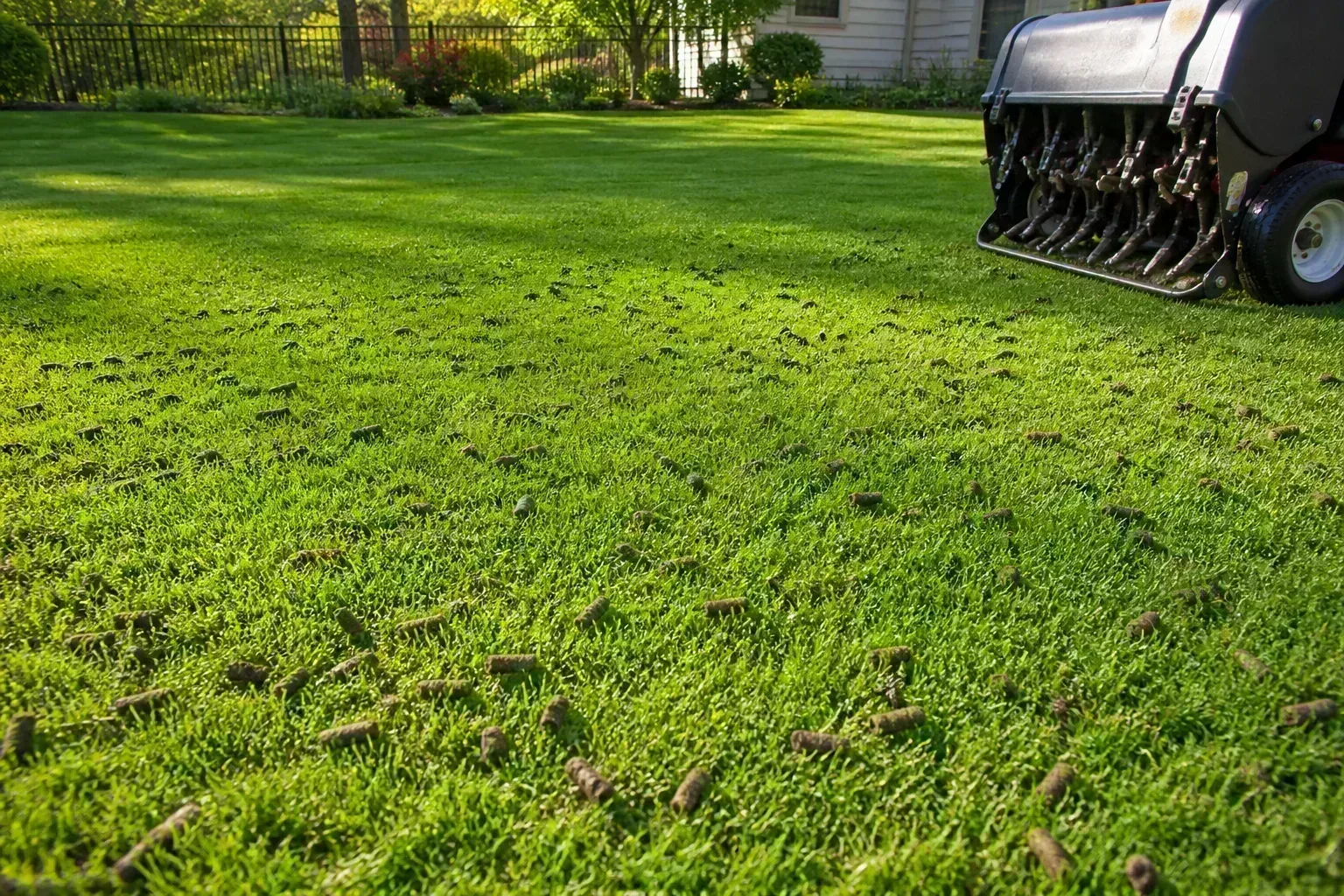
If the soil is already loose and the lawn is only lightly thin, a vigorous raking may be enough. For severe compaction or a large renovation, a slit seeder places seed in shallow grooves and can improve placement, but it is equipment-intensive and still requires watering.
Spread in two directions
Divide the seed into two equal portions. Walk north to south with the first portion, then east to west with the second. Crossing directions helps compensate for the small misses and overlaps that happen when a spreader is pushed across an irregular yard.
Overlap passes slightly according to the spreader’s instructions, but do not compensate for poor calibration by dumping extra seed. Heavy clumps compete for water and nutrients, while the areas that were missed remain thin. A measured rate spread evenly is more useful than a heavy rate spread carelessly.
Start with edges and awkward corners using a hand spreader if needed. Keep seed away from beds, drains, ponds, and hard surfaces where it can wash into places you did not intend to grow grass.
Cover lightly, then start watering
Most lawn seed should be pressed into the surface or covered only lightly. A thin dusting of screened compost or fine soil can help hold moisture and hide seed from birds; a thick blanket can block light and air. Straw is optional and should be clean, seed-free, and sparse enough that you can still see the soil beneath it.
Water with a fine spray immediately after sowing if the surface is dry. The RHS lawn-repair guidance recommends even seed distribution, a light covering for bird protection, and gentle watering that does not dislodge seed. If water forms rivulets or puddles, stop and correct the sprinkler pattern rather than increasing the run time.
Water newly overseeded grass without washing it away
The first watering job is to keep the upper soil surface consistently damp, not to create a deep pond. Use short, gentle cycles that wet the seed zone without producing runoff. Sloping yards, sandy soils, reflected heat beside pavement, and windy sites may need more frequent checks than level, loamy ground.
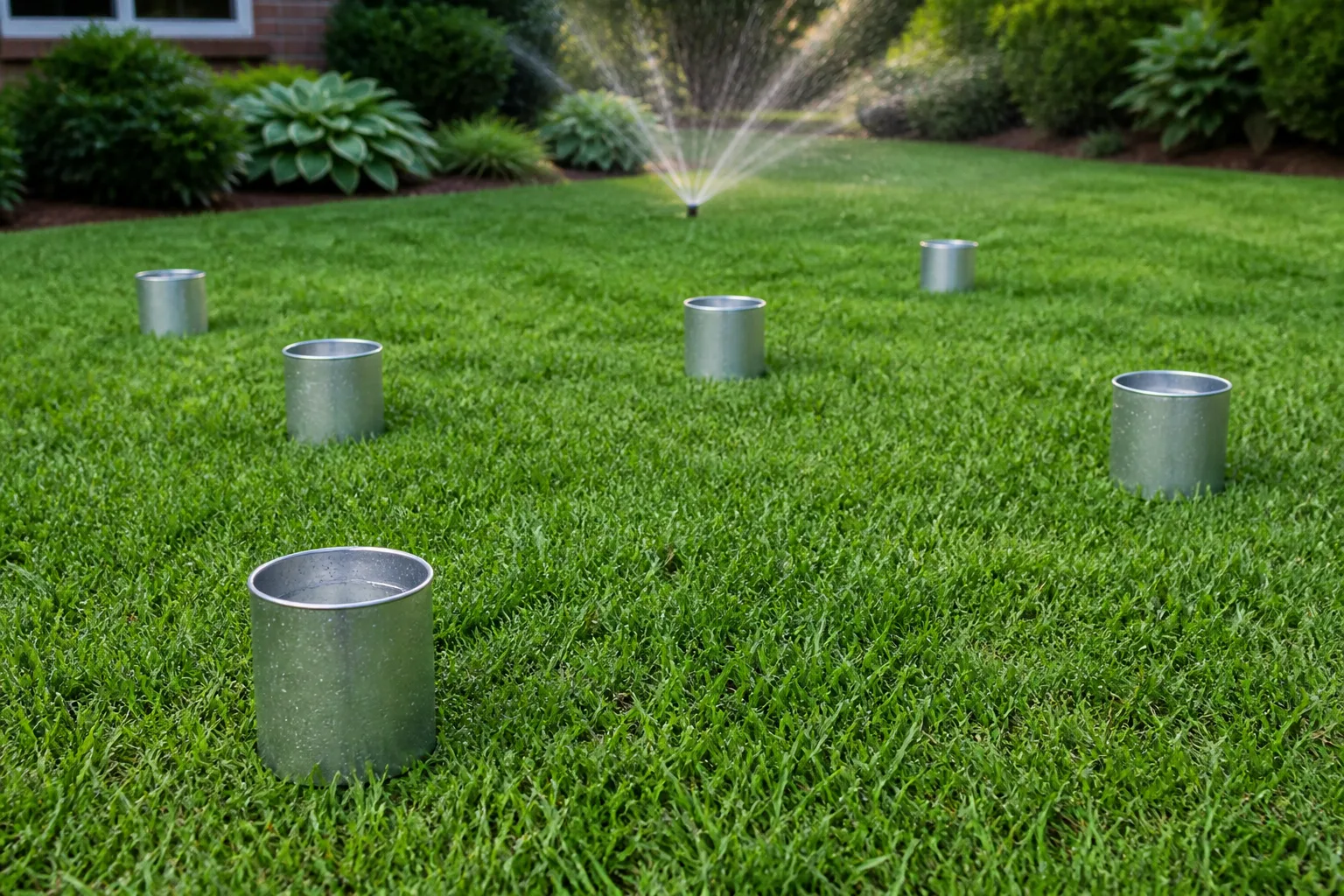
Test the irrigation with catch cups or shallow straight-sided containers placed across the lawn. If one cup is full while another is nearly dry, move or adjust the sprinkler before blaming the seed. A timer can repeat a schedule, but it cannot correct poor coverage.
As seedlings emerge and begin producing new blades, gradually shift from frequent light watering to less frequent, deeper watering. The transition encourages roots to follow moisture downward and reduces the risk of keeping the surface continuously wet. Make the change slowly enough that the young grass does not wilt between cycles, especially during a late heat spike.
Do not water on autopilot during rain. Skip a cycle when the surface is already wet, and pause if the forecast calls for heavy rain that could move seed downhill. Conversely, do not let a sunny afternoon dry the seedbed into a crust. Newly sown grass is especially vulnerable to drying before roots anchor it, a risk also noted in RHS seasonal lawn guidance.
Mow and feed while seedlings establish
Keep foot traffic light while seedlings are fragile. Children, pets, shortcuts, and repeated wheel tracks can pull up new roots even when the lawn looks green from a distance. A gentle tug on a few seedlings should meet resistance; if they lift easily, wait.
Make the first cut when the new grass is tall enough for the mower to remove no more than one-third of its leaf. Use a sharp blade, mow when the surface is dry enough to avoid rutting, and avoid turning sharply on the new stand. The first mowing may make the lawn look temporarily thinner, but it encourages the seedlings to branch and helps them join the existing turf.
Fertilizer is not a substitute for moisture or soil contact. If you applied a starter fertilizer, follow that product’s label and do not stack another nitrogen application on top of it. Otherwise, use a soil test and local extension recommendation to decide whether the lawn needs nutrients; Penn State Extension notes that phosphorus and potassium decisions should be based on soil testing, while nitrogen should be applied at the manufacturer’s labeled rate.
Do not apply a crabgrass preventer or other pre-emergent herbicide immediately after seeding unless the label specifically says the product is compatible with the grass seed and site. Many pre-emergent products work by stopping seeds from establishing, which is the opposite of the goal here. Wait until the new grass is established before considering post-emergent weed control, and follow the product label for timing and turf tolerance.
Diagnose thin or failed spots
Give the seed enough time to germinate according to the species and bag directions before reseeding. If results are uneven, diagnose the pattern rather than adding more seed everywhere.
- No seedlings anywhere: check whether the seed was old, buried too deeply, washed away, or left dry. Recheck the label, surface moisture, and seed-to-soil contact.
- Green in some strips but not others: the spreader likely missed areas, the irrigation pattern is uneven, or the surface varies in compaction or shade. Repair only the weak strips after correcting that variable.
- Seedlings appeared, then vanished: look for a dry-out event, washout, heavy traffic, damping-off in persistently wet soil, or hungry birds. Brown seedlings in a wet, matted patch need less water and better airflow, not another long irrigation cycle.
- Existing grass keeps dying around the new seed: investigate grubs, chinch bugs, disease, pet traffic, mower scalping, and irrigation coverage. New seed cannot outcompete an active cause of turf loss.
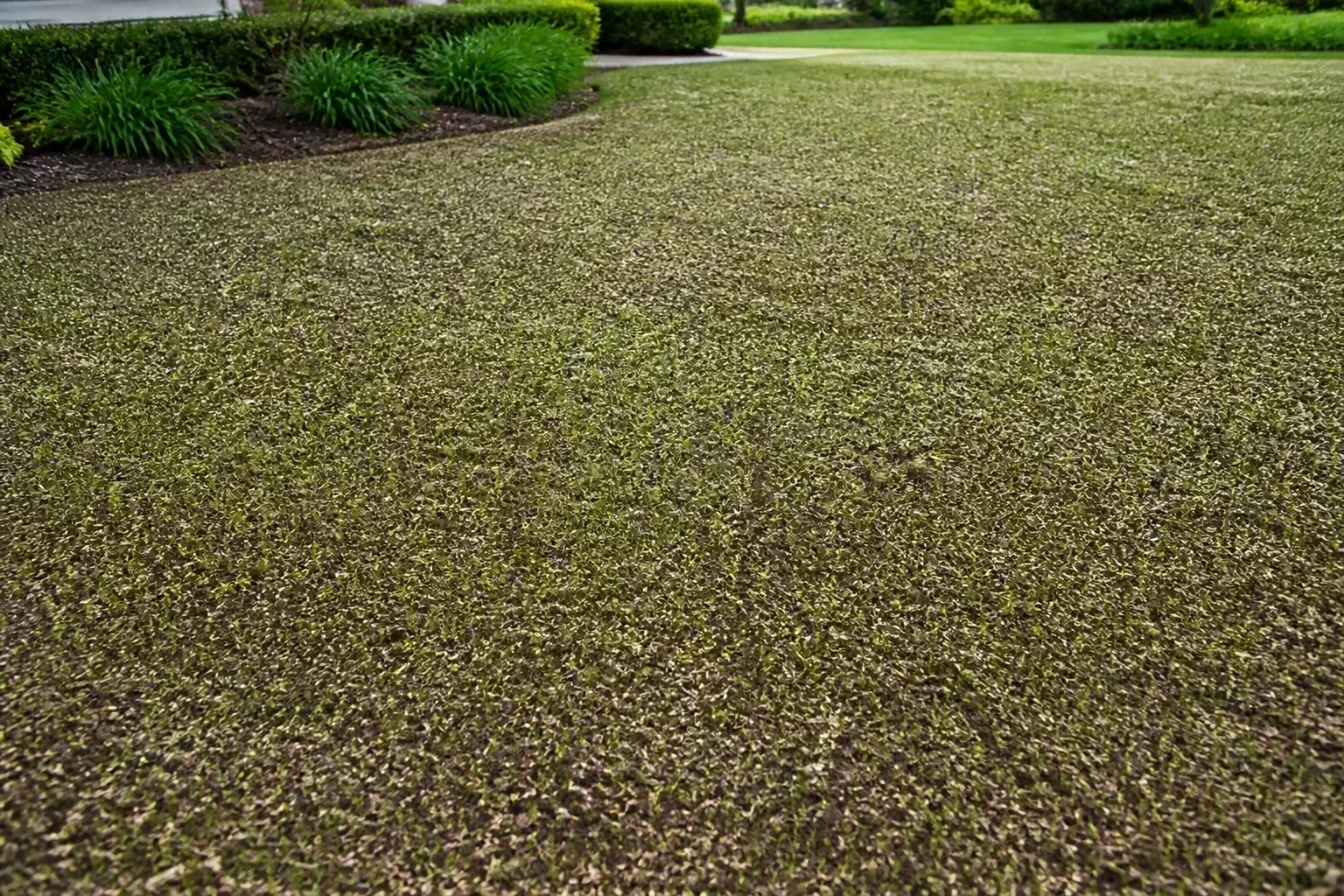
Birds taking a few seeds is normal; a bare patch that has been stripped clean may need a thin cover or a temporary physical barrier. Do not use a dense layer of straw, leaves, or compost to solve a bird problem because that can create a light and airflow problem for the seedlings.
Weeds emerging with the grass do not automatically mean the overseeding failed. Disturbing soil exposes dormant weed seed, and bare spots invite new weeds. Keep mowing and watering correctly, hand-pull isolated weeds when the soil is workable, and use herbicides only when the label permits treatment of the newly established turf.
Prepare the lawn for late fall and winter
As growth slows, continue mowing until the grass stops actively growing, adjusting height gradually rather than leaving an abrupt, scalped finish. Remove thick leaf cover so it does not mat over young turf. BBC Gardening’s autumn lawn-care guidance emphasizes clearing leaves, avoiding traffic on frosted grass, and waiting for decent rain and active growth before carrying out stressful renovation work.
Do not rush to apply a high-nitrogen “winterizer” because a calendar says fall has arrived. A late nitrogen flush can push soft top growth when the lawn should be hardening off, and fertilizer should follow the product label, soil conditions, local rules, and the grass’s growth stage. RHS guidance also warns against using leftover summer feed as an autumn treatment and points to autumn formulations where feeding is actually needed.
Keep the new lawn evenly watered during extended dry weather, but taper irrigation as temperatures fall and rainfall increases. The goal is to send seedlings into winter with anchored roots, not to keep the surface saturated. In cold climates, stay off the lawn when it is frozen or heavily soggy; traffic can crush crowns and compact the very soil you just opened.
Conclusion: give new grass time to root
Overseeding in late summer works because it aligns a cool-season lawn’s needs: warm soil for germination, cooler air for leaf growth, and a long fall runway for root development. It works poorly when treated as a bag-and-sprinkler shortcut.
Choose seed that matches the existing turf, wait out extreme heat, repair compaction or shade, create real seed-to-soil contact, calibrate the spreader, and keep the surface damp without washing it away. Then mow gently, feed only when justified, and watch the pattern of failure. Those decisions matter more than whether you spread seed on one particular August or September weekend.



