7 Nuts You Can Grow at Home (Really)
Learn which nuts grow at home, from hazelnuts and walnuts to peanuts. Compare climate, space, pollination, time to harvest, and practical harvest tips.
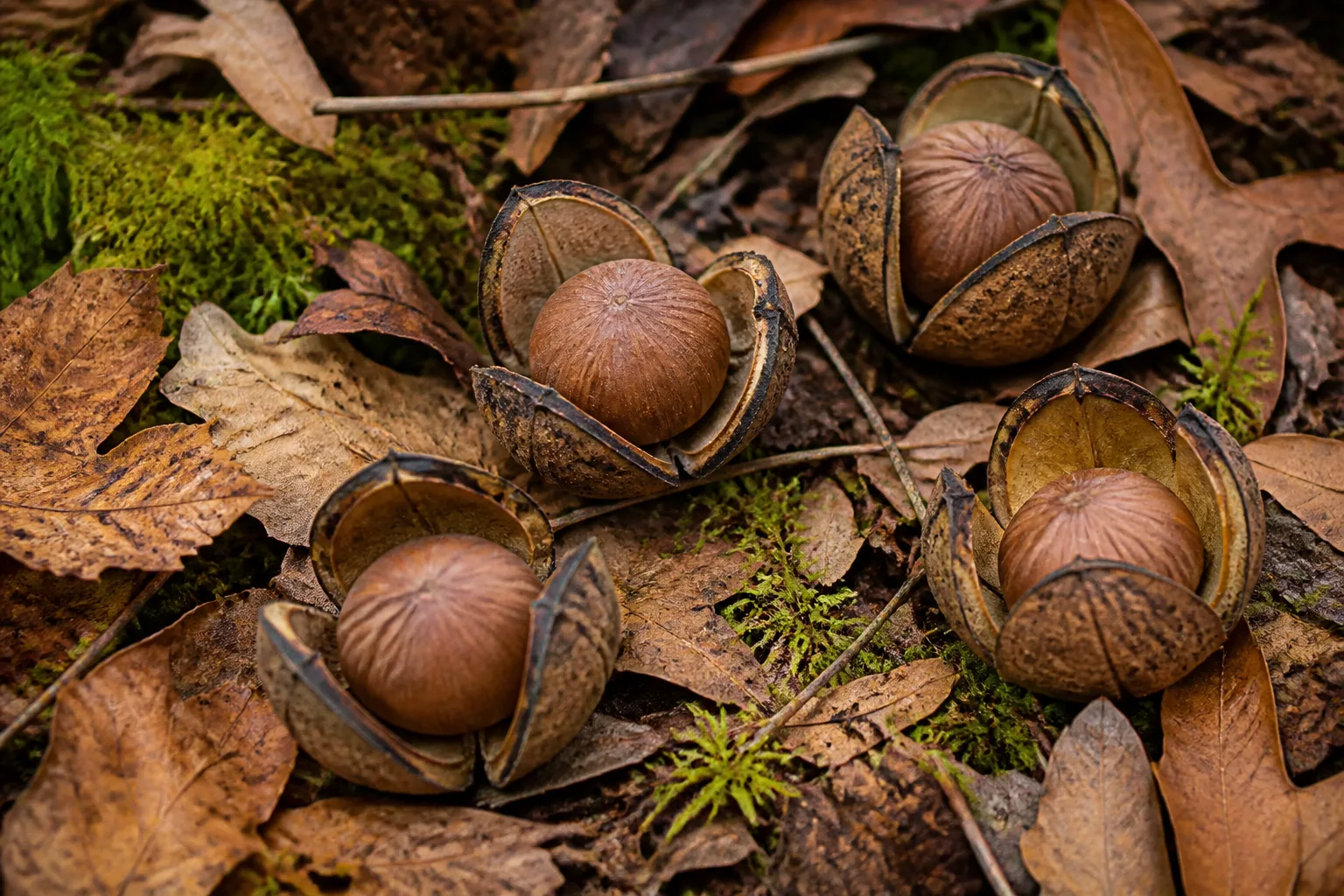
Homegrown nuts are not all orchard-only projects. A pecan or walnut can become a decades-long landscape commitment, while hazelnuts can be managed as shrubs and peanuts can produce in one warm growing season.
The useful question is not only “Can this species grow in my USDA zone?” Ask whether it will get the winter chill, summer length, frost protection, pollination, drainage, and future space it needs—and whether you are willing to wait.
Can You Really Grow Nuts at Home?
Yes, but “nuts” covers three very different gardening projects. Peanuts are annual legumes that flower aboveground and send developing pods underground. Hazelnuts are multi-stem shrubs that can fit a modest yard. Almonds, walnuts, chestnuts, pecans, and macadamias are perennial trees, and several eventually need more room than a typical suburban lot offers.
The quick comparison below is more useful than a hardiness-zone list by itself. Mature size, pollination, and harvest timing are approximate because cultivar and climate change the outcome, so treat them as planning categories rather than guarantees.
| Crop | What it becomes | Best home-garden fit | The catch to solve first |
|---|---|---|---|
| Hazelnut | Large multi-stem shrub | Cool to temperate yard with room for two plants | Compatible pollination and squirrel pressure |
| Peanut | Low annual plant | Warm, sunny bed with a long frost-free season | Loose soil, calcium, and enough time for pods to fill |
| Almond | Medium tree | Hot, relatively dry summer and mild winter | Early bloom, late frost, and usually a second cultivar |
| Walnut | Large deciduous tree | Spacious property away from sensitive crops | Canopy size and juglone, especially with black walnut |
| Chestnut | Tree or multi-stem form | Well-drained temperate site | Blight-resistant genetics and a pollination partner |
| Pecan | Very large tree | Warm region with reliable summer water | Cultivar timing, disease management, and decades of space |
| Macadamia | Evergreen subtropical tree | Frost-free, warm, humid or irrigated garden | Cold damage, wind, and a long wait for full production |
You also need to distinguish an edible almond from an ornamental flowering almond. The former is Prunus dulcis and is grown for its kernel; the latter is usually grown for flowers. Likewise, a tree grown from a nut may not reproduce the parent tree’s nut quality, harvest date, or disease resistance. For a dependable crop, buy named, grafted or otherwise correctly identified nursery stock.
Match the Nut to Your Climate, Space, and Patience
Hardiness zones screen out impossible choices, but they do not describe the whole growing season. Almonds can survive winter and still lose the crop to a late frost; peanuts can grow lush foliage and still fail before pods mature; hazelnuts can tolerate cold yet struggle with poor disease resistance or wet soil.
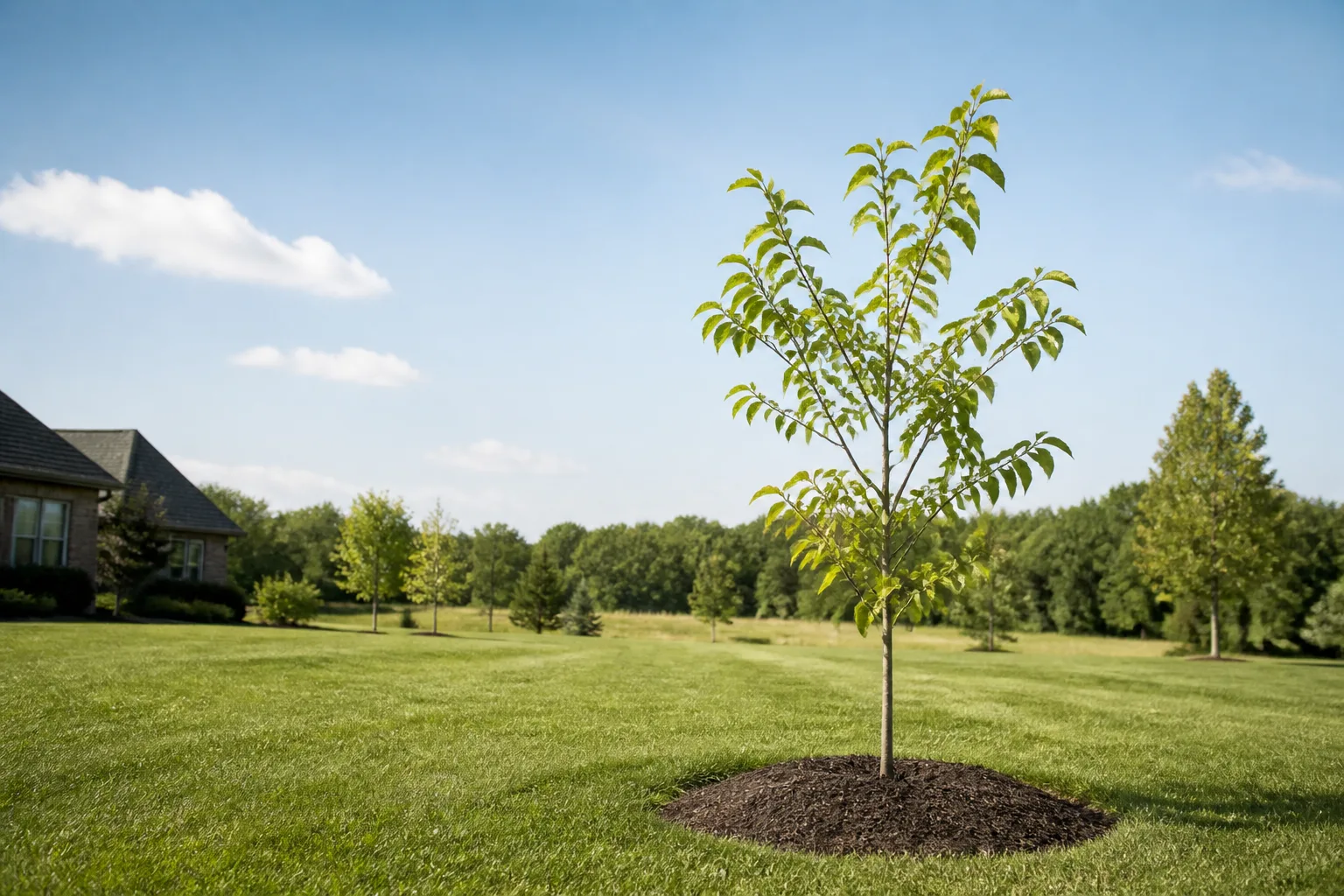
Before planting, write down five facts: your coldest winter temperature, average last spring frost, first fall frost, hours of direct summer sun, and whether water drains from the proposed site within a day or two after heavy rain. Then check the cultivar’s chill and pollination requirements with a local nursery or extension office. A zone number on a plant tag is a starting filter, not a promise of nuts.
The three growing patterns that change the decision
Choose an annual if you want a quick experiment. Peanuts occupy vegetable-garden space for one season and do not commit your yard to a permanent canopy. They still need warm soil, enough time, and careful harvest.
Choose a shrub if you want perennial nuts without an enormous tree. Hazelnuts can be renewed by removing old stems, although two compatible plants and regular sucker control still take space. A shrub is not automatically a patio plant; it is simply more manageable than a full-size nut tree.
Choose a tree only after drawing the mature footprint. Most nut trees in containers are temporary residents. Gardening Know How’s container guidance notes that many reach roughly 25 to 30 feet or more; a pot can protect a young tree, but root restriction usually limits vigor and harvest. Measure away from foundations, wires, septic systems, driveways, vegetable beds, and property lines before digging.
1. Hazelnuts (Filberts): The Best First Nut for Many Yards
Hazelnuts, also called filberts or cobnuts, are often the most practical perennial choice for a home gardener. They grow as multi-stemmed shrubs, produce yellow catkins in late winter, and can be renewed by removing old stems. “Small” still means manageable, not miniature.
The species and cultivar choice matters. European hazelnut, Corylus avellana, is common in commercial production, while American hazelnut and hybrids may offer better adaptation or disease resistance in regions where European plants face Eastern filbert blight. The USDA Climate Hubs hazelnut overview explains that European hazelnut dominates U.S. production but that native American hazelnuts and resistant hybrids are important outside the main growing region. The Oregon State hazelnut breeding program is a useful reminder that “hazelnut” is a genus with multiple species and breeding goals, not one universally interchangeable plant.
Hazels are monoecious, meaning one plant has male and female flowers, but that does not make a single shrub a reliable crop. Cultivars may be self-incompatible or release pollen when their own female flowers are not receptive. Plant two compatible varieties that bloom together and ask the nursery for a pollination chart rather than assuming two random hazels will work.
Give hazelnuts full sun or bright open exposure and soil that drains well. Excessive nitrogen can produce leaves and shoots at the expense of flowers and nuts, so remove suckers, thin crowded stems in winter, and leave productive young wood. The practical GrowVeg hazelnut guide recommends keeping the center airy.
Harvest when husks turn yellow-brown and nuts loosen or fall. Collect promptly, dry with airflow rather than in a damp bucket, then store in the shell or refrigerate shelled kernels.
2. Peanuts: The Quickest Harvest, but Not a Tree
Peanuts make this list because they are genuinely feasible in a home vegetable garden, even though botanically they are legumes. The plant self-pollinates, then produces pegs that bend from the flower bases into the soil; pods develop at the peg tips. That life cycle is why the bed needs loose soil and why late-season hoeing can destroy the crop.
The Clemson Cooperative Extension peanut factsheet gives South Carolina-specific planting guidance: warm soil, light-textured ground, and planting dates that leave enough time for dry peanuts to mature. Germination is best between 68 and 95°F, but use your local soil temperature and frost dates rather than copying a calendar date from another state. Clemson lists about 90 to 110 days for green boiling peanuts and 130 to 150 days for dry roasting peanuts; short-season gardeners should look for early Spanish or Valencia types and consider starting seed indoors only if transplanting will not disturb the roots.
Prepare a deep, loose, well-drained bed in full sun. Clemson recommends a pH around 5.8 to 6.2 and emphasizes calcium because deficiency can lead to unfilled pods and pod rot, particularly in sandy soil. Test before adding lime or gypsum; fertilizer in the seed furrow can burn seedlings.
Water is most important during establishment, while pegs enter the soil, and during pod fill. Keep leaves as dry as practical, avoid disturbing the soil beneath pegging plants, and stop regular irrigation roughly 10 days to two weeks before digging if conditions allow. When foliage yellows, lift a few plants and open pods rather than judging by leaf color alone.
After digging, shake away loose soil and invert the plants so pods can dry. Clemson recommends about a week of initial drying followed by two to three weeks of curing in a cool, dry place, protected from rodents and mold. Do not seal damp peanuts in a bag.
3. Almonds: Beautiful Blossoms, Narrow Climate Window
Edible almonds, Prunus dulcis, are stone fruits: the part you eat is the kernel inside a dry hull and hard shell. They suit hot, dry summers and mild winters, but frequent late spring freezes can erase a heavy bloom.
Utah State University’s home-garden almond guide is regional, but its decision rules are broadly useful. It recommends full sun, well-drained soil, and a site where cold air can drain away; it also describes a mature planting footprint of roughly 20 by 20 feet in the warm Utah areas where almonds are grown successfully. A warmer zone label cannot compensate for a frost pocket or waterlogged root zone.
Most almonds need pollen from a different compatible cultivar, moved by bees or other insects. A peach can sometimes provide pollen if flowering overlaps, but two documented compatible almonds are safer. Cold, rain, and wind can also reduce bee activity at bloom.
Buy a named edible cultivar on suitable rootstock, not an unidentified seed or ornamental flowering almond. USU notes that kernels may be sweet or bitter and that bitter almonds contain amygdalin, which can release hydrogen cyanide when chewed or crushed. Do not eat kernels from an unknown tree.
Train the young tree early, water deeply rather than with shallow lawn sprinkling, and avoid excess nitrogen. In its warm-Utah guidance, USU recommends removing early fruit so the tree can build a strong framework and says a first meaningful harvest may take several years. Harvest when hulls dry and open, then remove hulls and dry the shells before airtight storage.
4. Walnuts: Productive, Powerful, and Space-Hungry
Walnuts reward a spacious property with shade and a long-lived crop, but they are not a good fit for every backyard. English or Persian walnut, Juglans regia, is commonly grown for edible nuts, while black walnut, Juglans nigra, has a very hard shell and a more consequential root zone. Both need sun, room for a mature crown, and free-draining soil.
Black walnut’s special issue is juglone, a compound concentrated in roots, buds, leaves, stems, and nut hulls. The Penn State Extension guide to gardening around walnuts explains that sensitive plants can wilt even when the soil is moist and that juglone breaks down more slowly where soil is wet, compacted, and low in biological activity. The University of Wisconsin–Madison black walnut factsheet also warns that symptoms can look like drought or disease and that toxicity can remain after a tree is removed while roots decay.
Do not plant a black walnut beside a vegetable garden and plan to solve the problem with compost later. Keep tomatoes, peppers, potatoes, and other sensitive crops away from the root zone; never use black-walnut leaves, hulls, bark, or wood chips as mulch. English walnut produces less juglone, but separating it from demanding annual beds is still wise.
Harvest when the green husk splits and nuts fall or release easily. Wear gloves, remove the outer material promptly, rinse away debris, and dry nuts in a single layer with airflow. Store in-shell nuts cool and dry; refrigerate or freeze shelled kernels.
5. Chestnuts: A Useful Crop Only With the Right Genetics
Chestnuts can be beautiful landscape trees with edible, starchy nuts, but “chestnut” hides a major disease decision. American chestnut, Castanea dentata, is highly vulnerable to chestnut blight; Chinese and Japanese chestnuts evolved with the pathogen and are generally more resistant, while European chestnut can also be vulnerable. The NC State Extension chestnut-blight publication describes how Cryphonectria parasitica enters bark injuries and can girdle susceptible trees.
Do not buy an unlabeled “American chestnut” and assume it will mature into a nut-producing tree. Choose a documented blight-resistant species or hybrid suited to your region, and ask about parentage and mature size. Restoration lines and orchard cultivars may serve different goals.
Chestnuts prefer full sun, good drainage, and a temperate climate with a cold winter and a long enough summer to fill nuts. They dislike saturated soil. Slightly acidic to neutral soil and a 2- to 3-inch mulch layer kept away from the trunk are more useful than frequent heavy fertilizer.
Many chestnut types set a better crop with a second compatible tree. Space the pair by mature size and confirm that the cultivars flower together. A grafted or named sapling is more predictable than seed.
Chestnuts ripen inside prickly burrs that split as the crop matures. Wear sturdy gloves and collect frequently. Unlike dry walnuts or hazelnuts, fresh chestnuts are moist and perishable; refrigerate or process them soon, discarding moldy or soft nuts.
6. Pecans: A Long-Term Southern Orchard Project
Pecans, Carya illinoinensis, are best for warm regions with long growing seasons, deep soil, abundant sun, and reliable summer water. They become very large trees, so a pecan belongs in a planned orchard or large open property, away from roofs, wires, septic fields, and small garden beds.
Pecan pollination is unusually easy to underestimate. The tree has male and female flowers, but the two flower stages do not always overlap on the same cultivar. University of Georgia pecan specialist Lenny Wells explains in this UGA pollination guidance that self-pollinated nuts may abort or fill poorly, that pollen release can last only several days, and that a compatible pollinizer should be close enough—UGA cites about 150 feet in orchard research—to overlap the female flowers’ receptive window.
For a home planting, buy at least two compatible cultivars, often from different pollination types, and ask for a current compatibility chart. A nearby pecan is not automatically a pollinizer: it may be too far away or flower at the wrong time. More cultivar diversity spreads risk, but also increases space and cleanup.
Water is not optional if you want filled kernels. In UGA’s discussion of poor pecan crops, drought is tied to small nuts, poor kernel fill, nut drop, and alternate bearing. Irrigate deeply during shoot growth and nut filling, keep turf away from the trunk, and choose disease-suitable cultivars when a full spray program is unrealistic.
Pecans are ready when green shucks split and nuts begin dropping. Gather quickly, remove debris, and dry thoroughly before storage. A healthy tree can still have an off year, so judge the plan over several seasons.
7. Macadamias: A Tropical Tree for Frost-Free Gardens
Macadamias are realistic only where winter freezes are rare or absent. In the continental United States, that generally means suitable pockets of Hawaii, southern Florida, southern California, or comparable climates—not a patio that can be moved indoors after the tree becomes a 30- to 50-foot plant. Strong wind is another serious concern.
The University of Hawaii’s CTAHR macadamia general-information guide describes deep, well-drained soil, a naturally acidic pH range, and substantial moisture as the commercial baseline in Hawaii. It also notes that interplanting two cultivars can improve yield through cross-pollination. Translate that into a home-garden rule: choose a sheltered, frost-free site with irrigation, and ask for cultivars adapted to your elevation and local wind rather than selecting a tree from a generic online list.
Macadamias are a patience crop. CTAHR says grafted trees can begin a small crop around the fifth year, with full production much later, around 12 to 15 years in its Hawaiian context. A “fast-bearing” tree still needs a long-term site and consistent care.
The nuts fall naturally when mature. Pick them up often, especially in wet weather, because unhusked nuts can mold, germinate, or attract rodents. Remove the husk quickly and air-dry on a rack before cracking and roasting.
The Planting Plan That Prevents Disappointment
The highest-value work happens before the shovel touches the ground. Walk the site at different times, sketch the mature canopy, and make sure the crop will still fit when roots extend beyond the original hole.
Buy the Right Tree, Rootstock, and Cultivar
Buy from a nursery that can name the species, cultivar, rootstock, mature size, bloom time, and compatible pollinizers. For almonds, pecans, hazelnuts, chestnuts, and macadamias, ask exactly how the variety is pollinated. “Self-fertile” may be true for one cultivar but misleading for the group.
Grafted trees give you a known top variety on rootstock selected for adaptation, disease tolerance, or vigor. Seedlings are useful for experimentation, but their nut quality and years to bearing are less predictable. Keep the label and mark the pollination partner so pruning does not remove the only compatible tree.
Plant at the same depth as the root ball, with the root flare visible. A graft union belongs above finished grade; USU’s almond guidance specifies about 2 to 3 inches above the soil line. Dig wider rather than deeper, water thoroughly, and replace settled soil without burying the trunk.
Build the Root Zone Before You Feed the Canopy
A soil test can identify pH and nutrient problems before you respond with random fertilizer. Improve drainage, remove perennial weeds, and use a mulch ring to moderate soil temperature and reduce competition. Keep mulch away from the trunk.
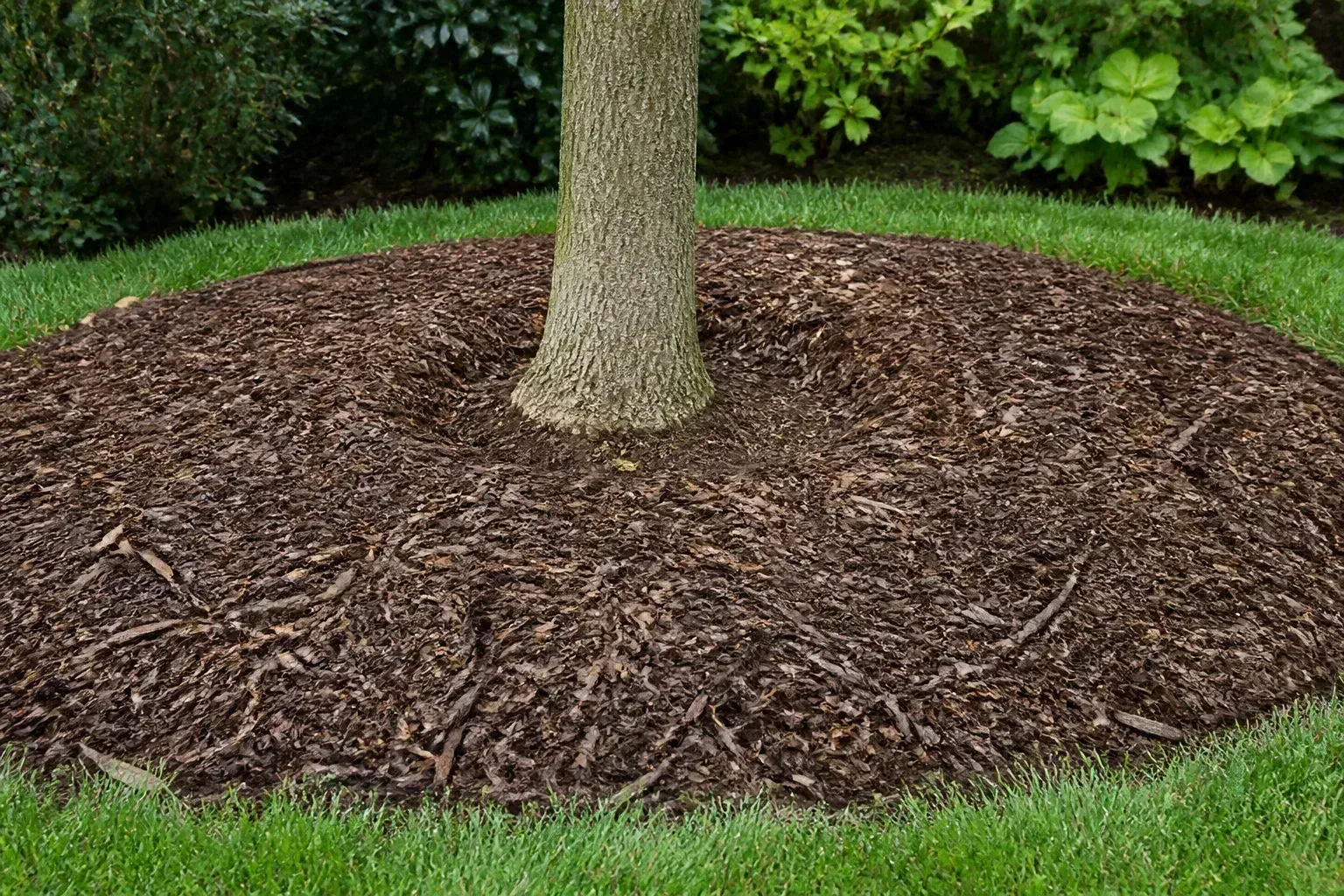
Newly planted trees need regular moisture while roots establish, but “water deeply” does not mean keeping the hole saturated. Wet the root zone, then let excess water drain. Established trees usually benefit more from deep, infrequent watering than turf-like sprinkling; peanuts need a different schedule because their pods form near the surface.
Protect trunks from mowers, string trimmers, rabbits, deer, and herbicide drift. A tree guard and grass-free mulch ring can prevent damage that later girdles young bark. Use pesticides, fungicides, and amendments only when local guidance and the current label support them.
Pollination Is a Design Problem, Not a Footnote
Pollination requirements are easiest to remember as a planning table:
| Crop | Main pollen movement | Home-garden rule |
|---|---|---|
| Hazelnut | Wind | Plant compatible varieties that bloom together |
| Peanut | Self-pollination | One plant can set pods, but needs loose soil below it |
| Almond | Insects | Usually plant two compatible cultivars; protect early bloom |
| Walnut | Wind and cultivar-dependent timing | A second compatible tree often improves consistency |
| Chestnut | Wind; many types cross-pollinate better | Confirm species and a compatible partner |
| Pecan | Wind and dichogamous flowering | Match pollination types and keep the partner nearby |
| Macadamia | Insects and cross-pollination | Two adapted cultivars can improve yield |
Buy the pollination plan at the same time as the plant. A tree can flower and still carry no nuts when bloom does not overlap, pollen is too distant, or weather keeps insects inactive. Check compatibility and timing before adding fertilizer.
Protect Flowers, Nuts, and Young Trunks
The crop is vulnerable long after planting. Site almonds where cold air drains and protect only small trees with temporary covers when practical. For hazelnuts, squirrels can remove a crop before the husks look ripe, so frequent picking may matter more than feeding.
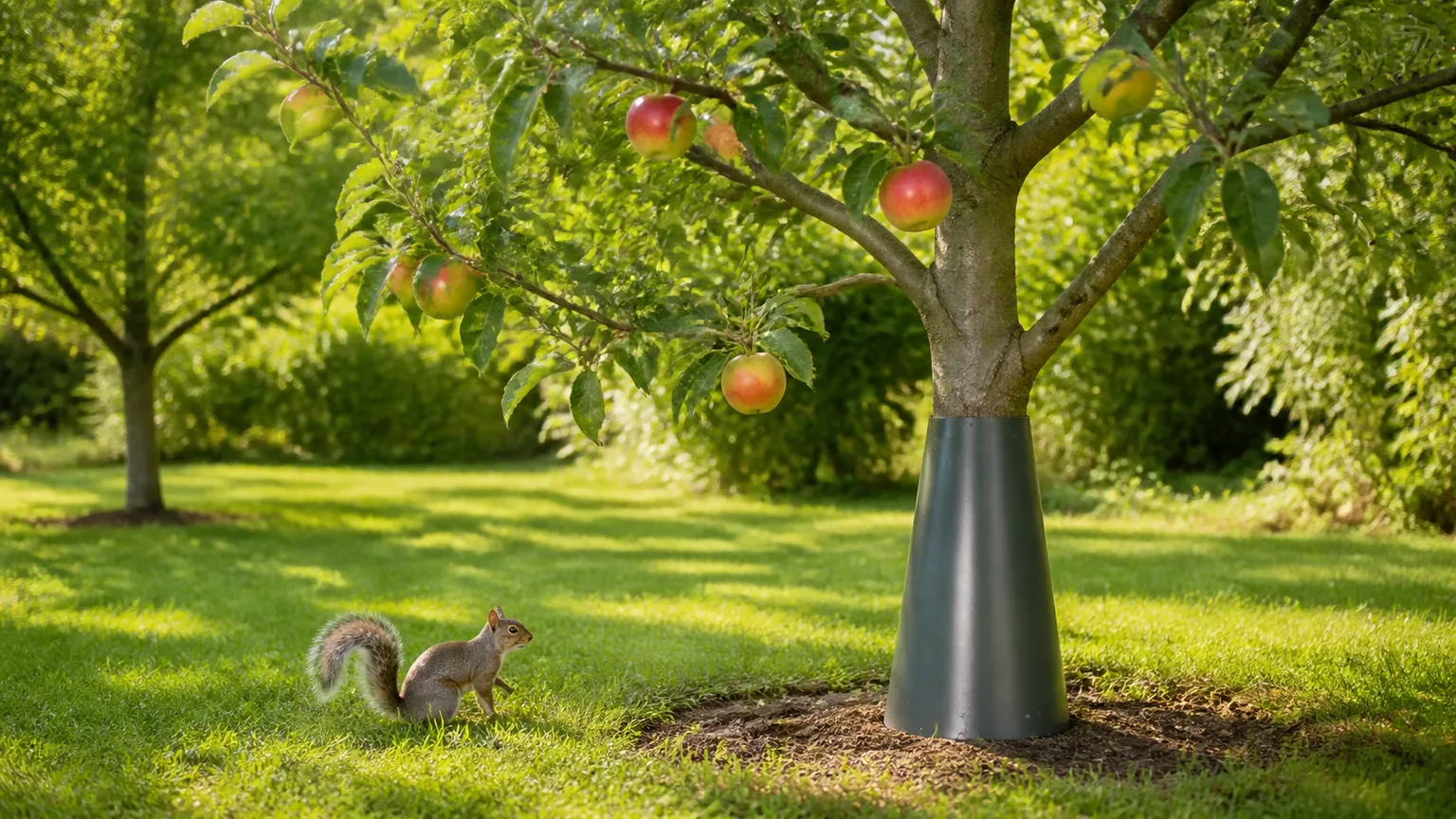
Watch chestnuts for blight cankers and buy resistant material instead of waiting for a spray to rescue a susceptible tree. Watch pecans for scab and insects where a tall canopy is impossible to treat. Keep walnut leaves and husks out of sensitive beds, and shelter macadamias from prevailing wind.
Harvest, Cure, and Store the Crop Correctly
Nuts are not finished simply because they have fallen. The harvest cue tells you when to collect; curing or cooling protects the crop.
| Crop | Harvest cue | First postharvest move |
|---|---|---|
| Hazelnut | Husks yellow and nuts loosen or drop | Pick promptly, then dry with airflow |
| Peanut | Mature pod interiors and yellowing foliage | Lift, invert to dry, then cure fully |
| Almond | Hull dries and opens on the tree | Remove hulls and dry shells before storage |
| Walnut | Green hull splits and nut falls or releases | Remove husks, clean, and dry in a single layer |
| Chestnut | Burrs split and nuts fall | Handle with gloves and refrigerate or process soon |
| Pecan | Green shuck splits and nuts drop | Gather quickly, clean, and dry thoroughly |
| Macadamia | Nuts fall naturally | Husk quickly and air-dry on a rack |
Use airflow, not heat, as the default curing tool. Spread dry-shell nuts in a single layer and turn them occasionally; a warm, humid pile encourages mold. Peanuts and chestnuts contain more moisture and spoil quickly when sealed too soon.
Keep stored nuts cool, dry, and protected from insects and rodents. In-shell storage protects the kernel better, while shelled nuts benefit from refrigeration or freezing. Discard nuts with mold, sour smells, insect tunneling, or soft wet texture; roasting does not make moldy food safe.
Which Nut Should You Grow First?
Choose peanuts if you have a sunny bed, warm soil, and a long enough season for an annual experiment. They suit renters, new gardeners, or anyone who wants to learn harvesting without committing to a tree.
Choose hazelnuts if you want a perennial crop in a cool or temperate climate and can fit two compatible shrubs. They are often the best compromise between a real nut harvest and a manageable footprint, provided you choose disease-suitable cultivars.
Choose almonds only when late frost is uncommon and you can provide a compatible pollinizer, full sun, and deep irrigation. Choose chestnuts with room, a well-drained temperate site, and blight-resistant stock. Choose walnuts only when you can separate the tree from sensitive beds and accommodate a broad canopy.
Choose pecans for a long-term orchard project in a warm region with abundant water and room for multiple cultivars. Choose macadamias only for a genuinely frost-free climate where the evergreen tree and long wait are welcome. Otherwise, grow peanuts or wait for a better site.
Common Mistakes That Cost a Season—or a Tree
Planting from the zone label alone. A zone does not tell you frost timing, drainage, or whether summer is long enough. Check local climate patterns and cultivar notes.
Buying one tree when the crop needs a partner. Hazelnuts, almonds, chestnuts, pecans, and macadamias can all need compatible pollen from another cultivar; nearby trees help only if flowering overlaps and pollen can reach the flowers.
Treating a giant tree like a patio plant. A young pecan or walnut looks harmless in a pot. Draw the mature canopy and assume roots will explore beyond it.
Fertilizing instead of diagnosing. Yellow leaves can come from drought, poor drainage, root injury, pests, or nutrient imbalance. Test soil before adding nitrogen, lime, gypsum, or pesticide.
Ignoring the crop after it drops. Squirrels, rodents, rain, mold, and insects can take a harvest quickly. Gather frequently, remove hulls or husks, and cure in a dry, ventilated place.
Using the wrong plant material. An ornamental flowering almond is not an edible almond, and an unidentified chestnut or bitter almond seed is not a safe shortcut. Buy correctly labeled stock.
Disturbing peanut pegs. Once peanuts send pegs into soil, cultivation can sever pods. Weed early, mulch lightly, and keep soil loose before pegging.
Planting walnuts beside the vegetable garden. Black walnut roots, leaves, and hulls can create a long-running juglone problem. Give the tree its own area or choose another crop for a small lot.
Conclusion
The most growable nut is the one that fits your future garden. Peanuts are fastest, hazelnuts are often the most manageable perennial, almonds demand a narrow frost window, and walnuts, chestnuts, pecans, and macadamias require serious space, climate, and time.
Start by mapping sun, drainage, mature canopy, and nearby plants. Then get a soil test, confirm the cultivar and pollination partner, and buy stock that is suited to your local conditions. If the site fails one of those tests, the honest gardening win is to choose a smaller crop or wait—not to spend years asking the wrong tree to become a nut orchard.