5 Garden Pest Control Tricks That Can Backfire
Learn why bug zappers, eggshells, snake pellets, repellent herbs, and dryer sheets fail—and what to do instead for safer garden pest control.
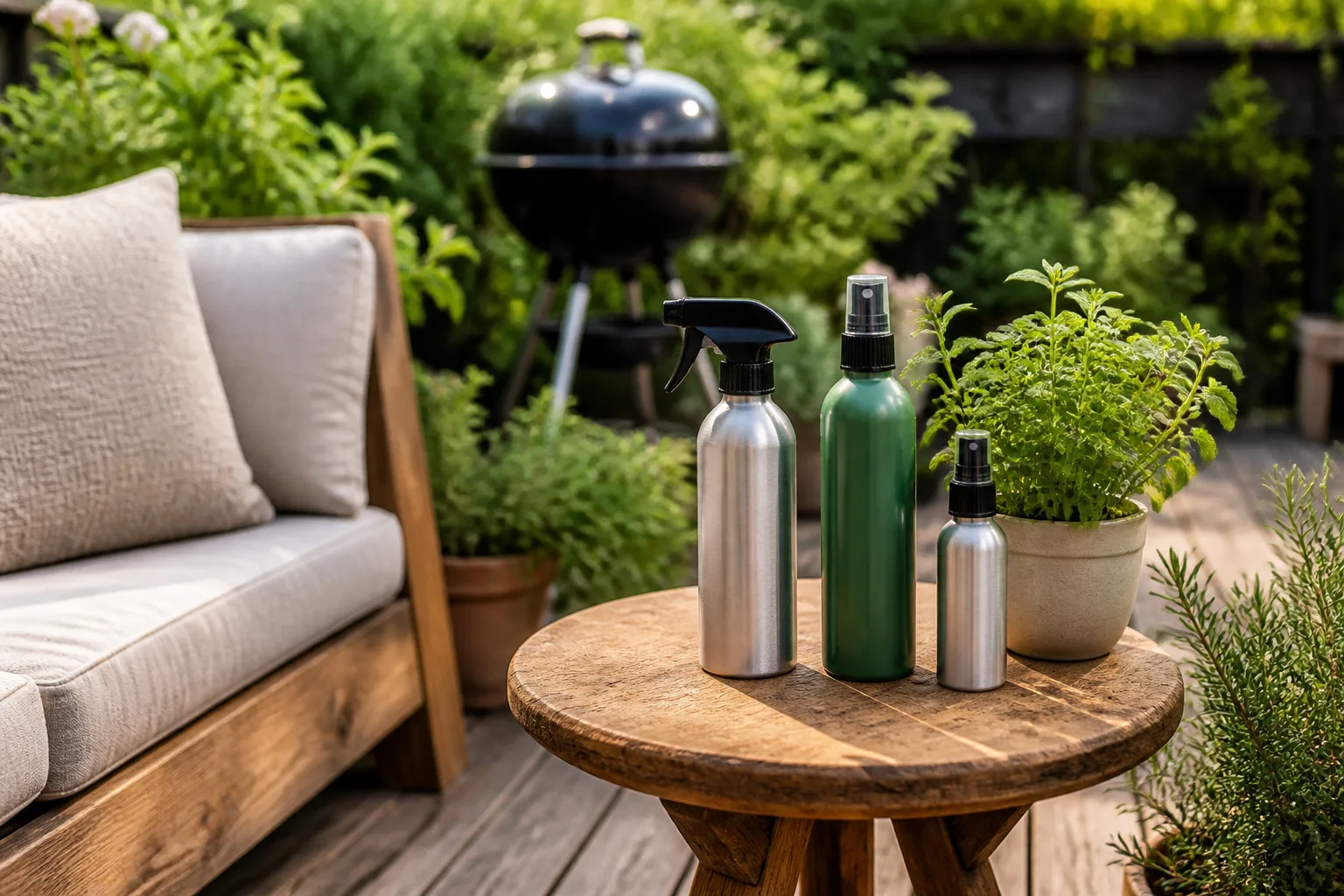
The fastest way to make a garden pest problem harder is to choose a remedy before you identify the pest, what it is eating, and where it is breeding. A few popular tricks do not reduce the target at all; others kill helpful insects, leave a hidden life stage untouched, or create a false sense of security while the real problem grows.
Here is the useful distinction: “backfire” can mean three different things. A method can directly harm non-target wildlife, such as a light trap that kills moths instead of mosquitoes. It can be ineffective, costing you the days when early intervention matters. Or it can alter the garden in a way that makes the pest’s food, moisture, or shelter easier to find.
The five methods below are not equally risky, and none deserves a blanket rule that every natural idea is bad. I will explain the narrow job each trick might appear to do, why it usually falls short, and the safer first move that addresses the pest’s actual behavior.
The quick verdict: “worse” usually means wasted effort or collateral damage
| Popular trick | Why it disappoints or backfires | Better first move |
|---|---|---|
| Electric bug zapper | The light attracts many insects that were not biting you, while mosquitoes may remain active nearby. | Remove standing water, add airflow or screens, and use personal protection as directed. |
| Lavender, basil, mint, or marigolds as a repellent wall | A living plant releases scent at a limited range and may not affect the pest species in your bed. | Identify the pest, use physical exclusion, and grow herbs for their garden value—not as a guarantee. |
| Crushed eggshells | Slugs can cross the pieces, especially when the barrier is thin or wet. | Water in the morning, hand-pick at the right time, and reduce damp hiding places. |
| Snake-away pellets or improvised scent barriers | Repellency is unreliable, and outdoor mothballs are hazardous and not a legal outdoor use. | Remove debris and prey habitat; use safe distance and professional help for riskier encounters. |
| Dryer sheets in plant pots | A scented sheet does not dry the potting mix or reach fungus-gnat larvae. | Let the mix dry as the plant allows, trap adults, and use a labelled larval control if needed. |
The pattern is consistent: the shortcut focuses on a visible nuisance, while effective pest management starts with identification, monitoring, habitat, and timing. That approach is the foundation of integrated pest management (IPM), not a promise that every insect or snake can be removed from a living landscape.
Why a pest-control hack backfires
Pests are not interchangeable. A mosquito is an adult flying insect looking for a host; its immature stage develops in water. A fungus gnat flying around a plant is an adult, but the damaging or reproducing stage is in the potting mix. A slug is active in cool, moist conditions at the soil surface, while a snake may simply be moving through because prey or cover is available.
That biology changes the best first action. A trap can help monitor adults but fail against larvae. A scent can disrupt a route briefly but fail to close the entry point. A barrier can work in a controlled, dry, continuous strip but fail when the pest can go around it or the weather breaks it apart.
The other problem is collateral damage. Penn State Extension’s guide to beneficial insects notes that lady beetles, hoverfly larvae, parasitic wasps, ground beetles, and other predators are already working in many home gardens. Broad insect-killing devices or sprays can remove those unpaid pest managers before you know they were present.
Before applying any remedy, ask four questions: What exactly is the pest? What damage is it causing? Which life stage is present? What resource is keeping it there? If you cannot answer the first two, spend a few minutes taking a clear photo and inspecting the plant, soil, underside of leaves, nearby water, and sheltered edges.
1. Bug zappers for mosquitoes
Electric bug zappers are satisfying because they make a loud, visible event. That sound is not a measurement of mosquito control. A zapper can be functioning perfectly while doing little to reduce the biting insects around a patio or garden path.
What the zapper catches instead
Kansas State University Extension’s bug-zapper guidance explains that the insects attracted to the light are often not mosquitoes. Moths, beetles, flies, and some wasps may be drawn in, including species that pollinate plants, decompose organic matter, or prey on garden pests.
That is the first way the trick can make things worse: it turns a general outdoor light source into a non-selective killing device. The second is psychological. Repeated zaps make the product feel effective, so someone may stop emptying water-holding containers, repairing screens, or using a proven personal repellent while mosquito activity continues.
It is also a poor fit for a garden where nighttime biodiversity matters. You do not need to treat every moth as a beneficial species, but you also cannot identify the insects being electrocuted by the sound of the trap. If your real goal is fewer bites, count bites or observe mosquito activity—not the number of insects under the device.
The better first move for mosquitoes
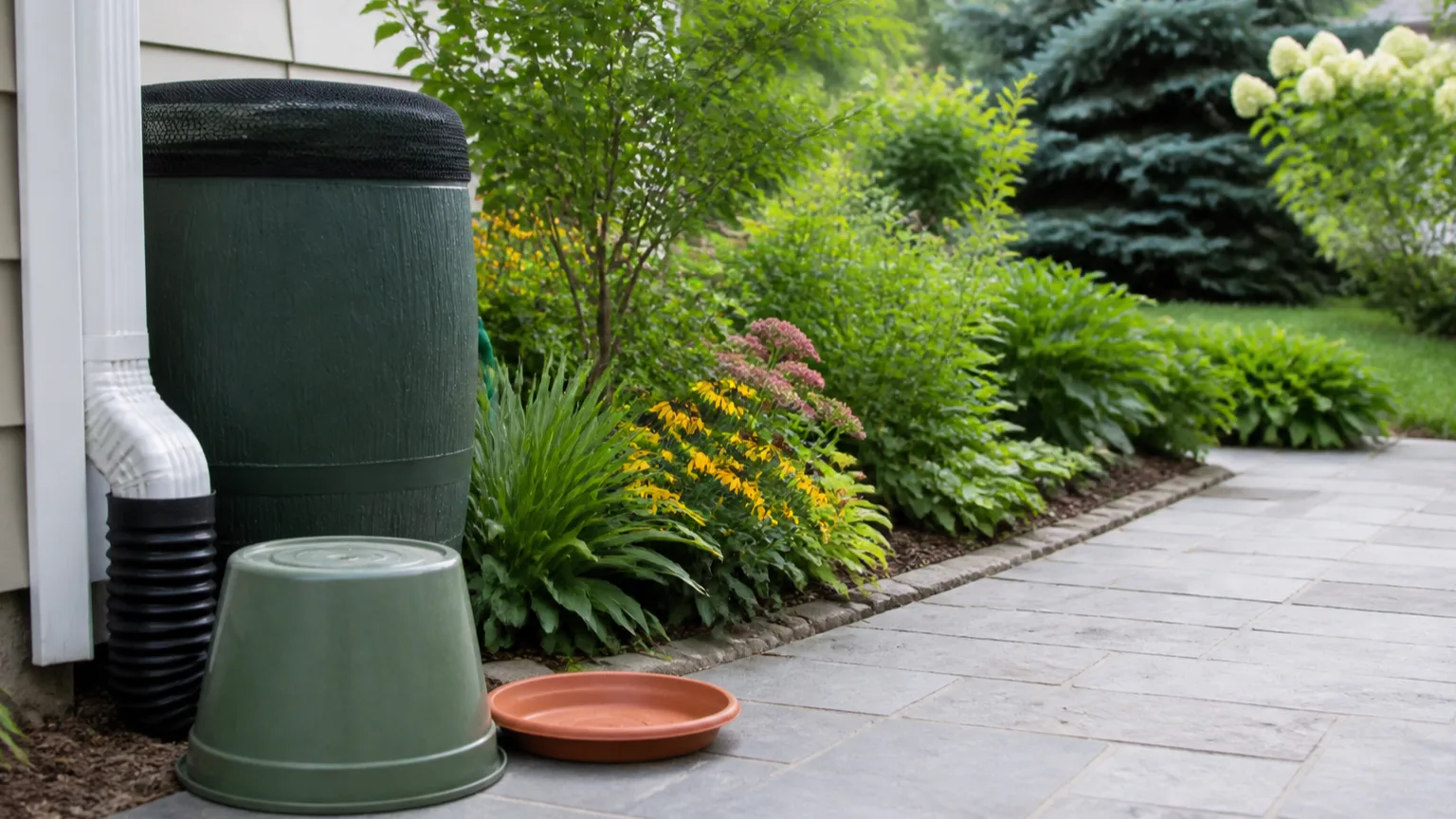
Start with the breeding sites closest to where you sit. Empty water from plant saucers, buckets, children’s toys, clogged gutters, wheelbarrows, and uncovered containers. Scrub or refresh items that cannot be emptied, and keep rain barrels covered so they do not become quiet nurseries.
The standing-water check is especially important after rain because a yard can collect small temporary pools that are easy to overlook. The photo below shows the kind of ordinary container and saucer arrangement worth checking before buying another gadget.
For a patio, a fan can make it harder for weak-flying mosquitoes to land, and intact screens reduce access to indoor spaces. Use an insect repellent on skin or clothing only according to its label, and do not spray a yard or vegetable bed with a household product that is not labelled for that site. If you keep a trap for a specific reason, treat it as a supplement and place it away from flowering plants and food-preparation areas.
2. Pest-repelling herbs as a garden-wide shield
Lavender, basil, marigolds, mint, rosemary, and other strongly scented plants are attractive recommendations because they are useful plants even when their pest-control effect is uncertain. The mistake is expecting a row of them to work like a sealed perimeter around every crop.
What herbs can and cannot do
Plant scent is not the same thing as a concentrated extract. Wind, rain, temperature, leaf area, and the distance between the plant and the target pest all change what an insect encounters. Even a plant with compounds that discourage a specific pest may not repel every insect that visits the bed.
An University of Georgia Extension article on insect-repelling plants makes the useful limitation explicit: it is unclear how many plants are needed or how close they must be, and the plants are not likely to make a garden completely insect-free. That is a more honest way to use herbs: choose them for culinary value, flowers, habitat, or fragrance, then treat any pest effect as a narrow bonus to verify.
There is another trade-off with living plants. Mint can spread aggressively, so grow it in a container if you do not want it taking over a bed. Flowering herbs and companion plants can also bring in pollinators and predatory insects, which is good for garden biodiversity but not the same as repelling every pest. A garden that contains more life may show more insect activity while still having less damaging pest pressure.
Do not respond by spraying a homemade essential-oil mixture over the whole bed. The RHS guidance on managing pests without chemicals warns that untested home brews containing essential oils or washing-up liquid can harm plants and other organisms. “Natural” describes an origin, not a guaranteed dose, target, or safety profile.
Use herbs as part of a layered plan. Put the right plant in the right light and soil, inspect crops weekly, cover vulnerable seedlings with an appropriate physical barrier, and remove or treat the identified pest at the stage when it is easiest to manage. If a herb appears to reduce a particular pest in your own bed, record the conditions and repeat the observation before claiming it is a reliable repellent.
3. Eggshells scattered around plants for slugs
Eggshells are an appealing slug remedy because they are free, visible, and easy to scatter. The theory says sharp fragments will cut or irritate a slug’s soft underside enough to make the animal turn around. In a real garden, a thin ring of shells is rarely a continuous or dependable barrier.
Slugs move through a film of mucus that helps them stay hydrated and glide over uneven surfaces. A small piece may slow one animal briefly, but a hungry slug can cross scattered shells, find a gap, or approach the plant through the soil. RHS entomologist Hayley Jones explains that slugs can change the composition of their slime to protect their underside and that eggshells may even act as an attractant because they are edible to some slugs.
Independent gardening experiments also have limits: slug species and weather vary, and a result from a particular bed is not a universal guarantee. Garden Myths’ review of eggshells and slugs describes tests in which slugs crossed the shells, while acknowledging that only a small number of types were observed. The practical takeaway is not that every slug behaves identically; it is that scattering shells is too unreliable to be your main crop-protection plan.
Eggshells are not useless. Rinsed, dried, and finely ground shells can be composted, and over time they contribute calcium-containing mineral material. Empress of Dirt’s eggshell guidance is a useful reminder that the soil-amendment value and the pest-deterrent claim are separate questions. Compost the shells if you like them; do not leave a lettuce bed unprotected because you expect shells to stop a slug.
A more reliable slug routine
Begin by changing the conditions that make the bed easy to cross. Water in the morning when possible, rather than laying down a wet surface just as slugs become active at night. Pull back rotting leaves and dense debris from vulnerable seedlings, and check under boards, pots, thick groundcover, and other cool hiding places.
On damp evenings or early mornings, hand-pick slugs from the crop and nearby shelters. A board placed as a temporary shelter can help you find them the next morning, but check it frequently and remove the slugs rather than turning it into permanent wet habitat. Protect seedlings with a continuous physical cover when appropriate, and consider whether a less slug-prone plant is a better choice in a persistently wet bed.
The image below shows what an eggshell ring looks like in practice. It is easy to see the gap between an appealing visual barrier and a complete, maintained exclusion system.

Do not aim for total eradication. The RHS notes that many slugs feed on dead material or participate in the food chain, and RHS non-chemical pest guidance recommends monitoring, physical removal, habitat diversity, and biological balance as part of a lower-impact approach. Escalate to a labelled slug control only when damage is meaningful, and read the label carefully around edible crops, pets, children, and wildlife.
4. Snake-away pellets and scent repellents
Snake-away pellets promise a simple boundary: scatter granules around a garden, shed, or patio, and snakes supposedly turn back. That promise is much stronger than the evidence for a reliably snake-free yard. A pellet can make you feel that the area is protected while a snake continues to follow prey, shade, or cover through a different route.
The distinction between commercial snake repellent and mothballs matters. University of Georgia Extension’s guidance on mothballs and snakes says mothballs do not repel snakes and warns that using them outdoors is illegal because they are registered insecticides intended for labelled uses. Their vapors and residues can harm people, pets, wildlife, pollinators, surface water, and food plants.
Never scatter mothballs in a garden, crawl space, compost area, or around a vegetable bed. Do not assume that a product containing a similar active ingredient becomes safe because it is sold as a “natural” or “wildlife” solution. Use the label as the legal and safety boundary, and keep any pesticide away from food crops unless the label specifically allows that site and crop.
Reduce snake encounters by changing the habitat
Snakes usually appear where the landscape offers something useful: rodents, frogs, insects, water, thick vegetation, stacked boards, rock piles, or a quiet gap under a shed. Removing some of those conditions can reduce encounters, but no yard-maintenance routine can guarantee that wildlife will never pass through.
Mow and trim areas near paths so you can see where you are walking. Move woodpiles and scrap materials away from doors, keep compost and animal feed secured, repair gaps around sheds, and remove rodent food sources. Keep shoes on in tall grass or dark areas, and do not put your hands into a pile or hole you cannot see into.
If you see a snake, give it room. A gentle spray from a garden hose can encourage a snake to move without forcing a close encounter, but do not corner, strike, grab, or attempt to identify it at arm’s length. A clear photo from a safe distance or help from a local wildlife agency is more useful than a pellet spread across the yard.
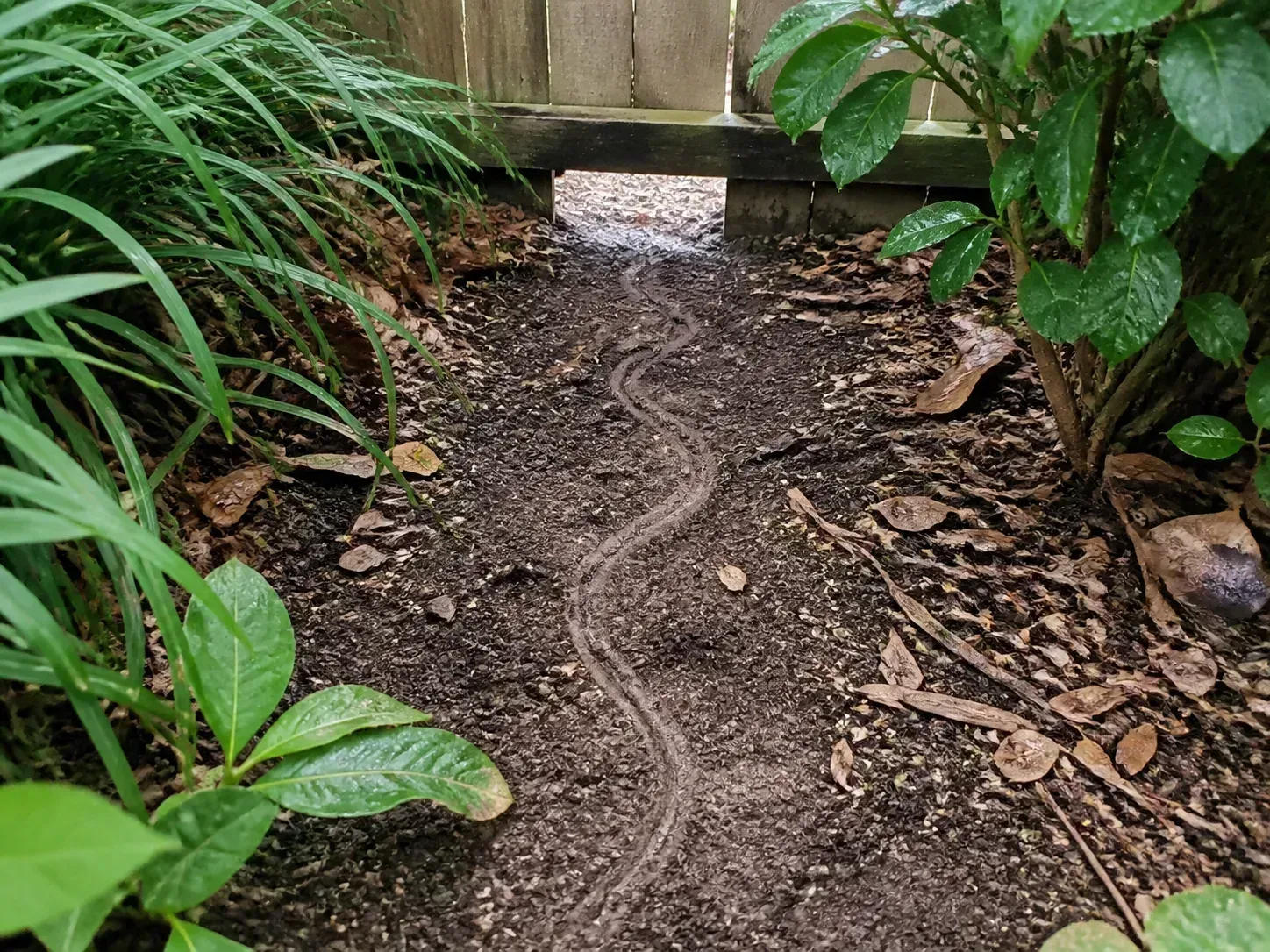
Call a qualified professional or local wildlife service if a snake is inside the house, trapped near a child or pet, or potentially venomous and you cannot maintain a safe distance. If a snake repellent has washed into a vegetable bed or pond, stop using it and contact the relevant local extension or pesticide-safety service for guidance rather than harvesting or rinsing produce on your own.
5. Dryer sheets for fungus gnats
Fungus gnats are tiny, dark flies that hop or drift around indoor plants. Their presence often sends people looking for a scented object to place on the soil, but a dryer sheet does not solve the condition that lets fungus gnats reproduce.
Treat the potting mix, not just the flying adults
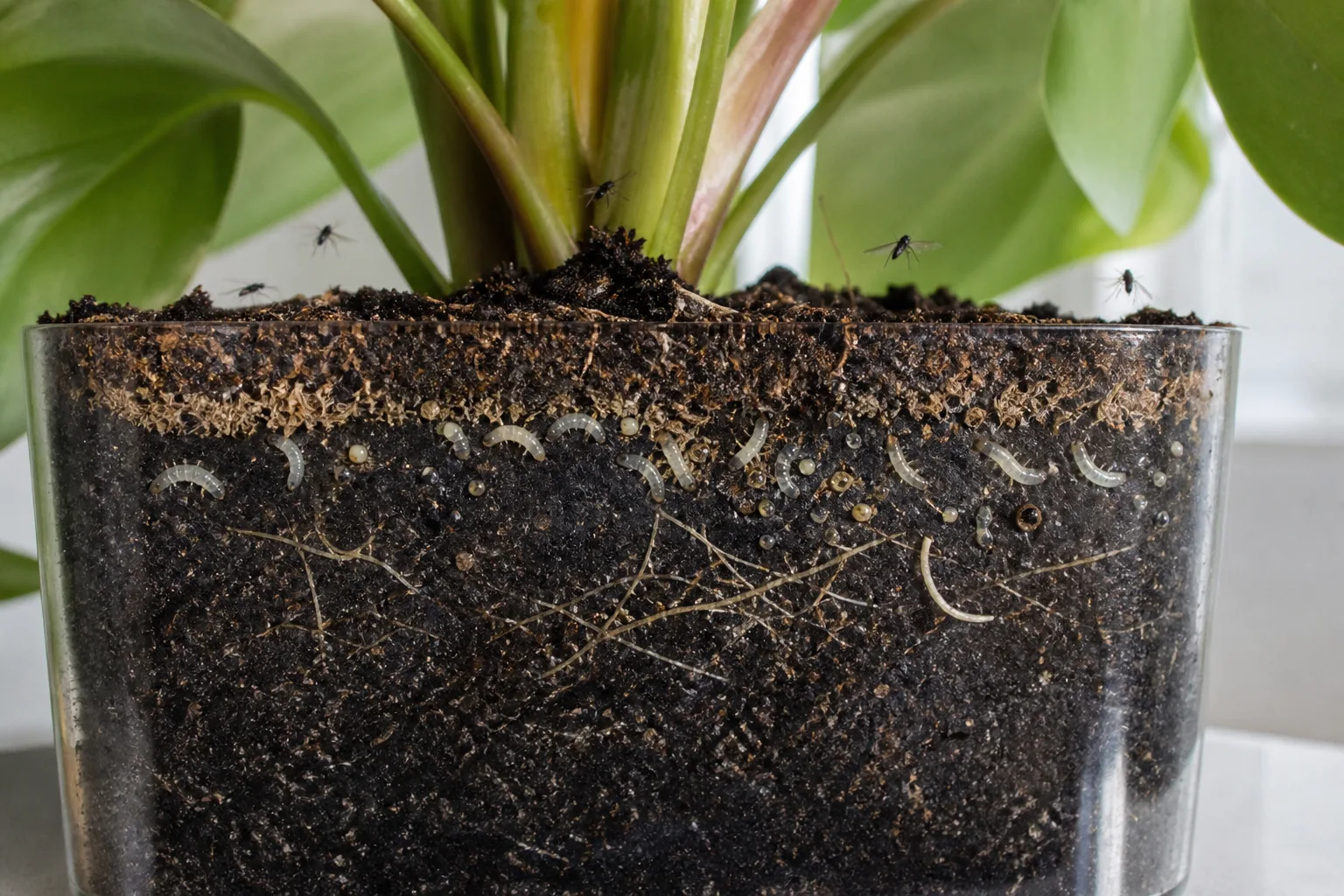
Colorado State University Extension’s guidance on flies in the home explains that fungus gnats breed in potting mix, especially where organic material and moisture support fungi. Overwatering in fall and winter can increase the problem. The adult fly is what you notice, but the potting mix is where the next generation develops.
That is why a dryer sheet is the wrong tool even if its fragrance seems to move a few adults away. It does not dry the soil, remove decaying plant material, trap the population, or reach larvae below the surface. At best, you have relocated the visible nuisance; at worst, the scent gives you a reason to delay the watering and soil changes that actually matter.
First confirm the diagnosis. Fungus gnats are usually associated with plant pots and moist soil; fruit flies gather around fermenting food, while drain flies cluster around plumbing and have a different breeding site. A few flying insects do not automatically mean the plant is in danger, but a steady stream from several pots indicates that you should inspect moisture and organic debris.
Let the potting mix dry as far down as the plant can safely tolerate between waterings. Do not use a rigid “dry the plant out completely” rule for a moisture-loving plant, a seedling, or a plant already wilted from drought. Instead, improve drainage, empty cachepots and saucers, remove dead leaves sitting on the soil, and adjust watering to the plant’s actual light, temperature, pot size, and root condition.
Use yellow sticky cards to catch adults and monitor whether the population is falling. The Empress of Dirt fungus-gnat guide notes that cards reduce egg-laying adults but do not kill larvae already in the soil. For a persistent infestation, some formulations of Bacillus thuringiensis var. israelensis (Bti) are labelled for fungus-gnat larvae; Colorado State Extension lists Bti products as an option, but product directions and local availability control how they may be used.
Do not substitute a random “natural” soil drench or use a product labelled only for mosquitoes on a houseplant without checking the label. The correct active ingredient, application site, dilution, frequency, and plant-safety directions matter. Isolate heavily affected plants while you correct the mix, and keep traps, treatments, and standing water out of reach of children and pets.
A pest-control sequence that works better
The replacement for a collection of hacks is not one magic product. It is a short sequence that keeps you from treating the wrong insect, wrong life stage, or wrong location.
Match the first action to the pest
Use this order for most home-garden problems:
- Identify the pest and damage. Look for the insect, slug, snake sign, or larval stage rather than treating a vague category such as “bugs.”
- Remove the invitation. Take away standing water, ripe fruit, spilled feed, overripe compost, excess moisture, or dense debris when that resource is part of the problem.
- Use the least disruptive physical control. Hand-pick, rinse foliage, screen an opening, cover a seedling, empty a saucer, or seal a gap when that directly blocks the pest.
- Monitor before repeating. Sticky cards, photos, a simple damage count, or a nightly slug check tell you whether the plan is working.
- Treat the vulnerable life stage if damage continues. Choose a product labelled for the pest and the site, and follow the label exactly.
- Escalate when the risk exceeds the task. Structural nests, venomous or stinging pests, contaminated food areas, pet exposure, and large infestations deserve qualified help.
This sequence also makes “natural” choices more honest. Hand-picking and habitat changes are not automatically harmless—moving a snake can be dangerous, and removing every hiding place can reduce wildlife habitat—but they let you choose a smaller, more targeted intervention than broadcasting a control across the whole yard.
Use pesticides as targeted tools
Avoid the false choice between “never use a pesticide” and “spray everything.” A labelled pesticide can be the appropriate tool for a serious, correctly identified outbreak, particularly when the pest is damaging food crops or a plant is at risk of dying. The important controls are identification, label compliance, timing, coverage, protective equipment, re-entry instructions, and protection of people, pets, pollinators, water, and edible produce.
Choose a product for the pest and life stage, not because the package uses a broad phrase such as “garden defender.” Do not increase the concentration because a home remedy failed, do not mix products unless the label allows it, and do not use a household cleaner, essential oil, mothball, or laundry product as an unlabelled pesticide.
Monitor beneficial insects before and after treatment. Penn State Extension recommends choosing insecticides carefully because beneficial insects can be more sensitive than the pests you are trying to control. A narrow, short-residual option used at the correct time can be less damaging than a repeated, broad-spectrum spray that never addresses the source.
When to stop DIY pest control
DIY control is appropriate for many small, well-understood problems. It is not the right boundary when the cost of a mistake is high. Stop experimenting and ask for help if you cannot identify the pest, the damage is spreading quickly, the infestation is inside a wall or roof, or repeated treatments have failed.
Get professional or local-agency guidance for suspected venomous snakes, stinging-insect nests near entrances, rodents supporting a snake problem, pesticide exposure, a product that may have reached a pond or food crop, or a pet or child who may have ingested a treatment. Take the product container or label, a clear photo, and notes about where and when it was applied.
Use extra caution around edible gardens. “Organic,” “botanical,” and “natural” products can still injure plants, harm non-target organisms, leave residues, or require a harvest interval. If the label does not name your crop and site, do not improvise.
Finally, recheck the premise that a pest must be eradicated. A few ants, moths, slugs, or harmless snakes may be part of a functioning garden. Control the damage that matters, protect vulnerable plants and people, and leave room for the predators and decomposers that make a garden more resilient.
Conclusion: replace the hack with a diagnosis
Bug zappers, repellent herbs, eggshells, snake-away pellets, and dryer sheets all appeal to the same wish: solve a messy biological problem with one visible trick. The better question is narrower and more useful: what is the pest doing here, and which first action changes that behavior without creating a larger problem?
Remove standing water before relying on a mosquito gadget. Grow fragrant herbs for their real garden value, not as an insect-proof wall. Compost eggshells instead of trusting them to stop slugs, change damp hiding places instead of scattering snake pellets, and treat fungus-gnat larvae in potting mix instead of hiding a wet pot behind a dryer sheet.
That diagnosis-first habit saves money and protects the useful life already in your garden. When a control is necessary, use the smallest labelled intervention that fits the pest, site, and risk—and escalate when the situation is no longer a safe experiment.



