Philodendron Burle Marx Soil Mix: Drainage, Bark & Repot
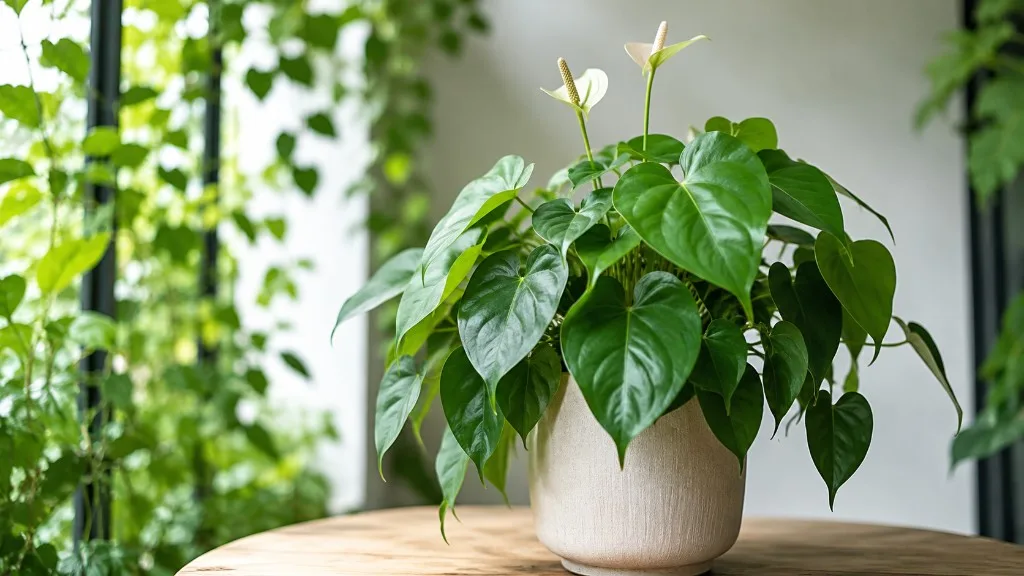
Philodendron Burle Marx Soil Mix: Drainage, Bark & Repot Recipe
Philodendron Burle Marx Soil Mix: Drainage, Bark & Repot Recipe
Philodendron Burle Marx soil succeeds when the mix drains fast enough that you can water thoroughly without leaving the root zone oxygen-starved for days. Philodendron ‘Burle Marx’ is a creeping Brazilian cultivar with narrow glossy leaves on spreading stems — widely used in tropical landscaping and increasingly popular as a forgiving indoor basket or ground-cover pot. Unlike upright variegated climbers that demand ultra-chunky collector blends, Burle Marx usually thrives on a simpler well-draining potting mix with 20–30% perlite — but only if the container shape matches the habit. A wide shallow bowl can hide a soggy center while outer runners look fine until lower leaves yellow and roots fail.
This guide covers what Burle Marx roots actually need, volume ratios you can mix in minutes, drainage tests before you repot, why wide pots beat tall cylinders for creeping stems, pH targets, and the warning signs that mean your mix — not your watering hand — is the problem.
Why Burle Marx Soil Is About Drainage Geometry, Not Brand Names
Bag labels like “indoor plant mix” or “aroid blend” describe ingredients, not whether your specific pot dries predictably. Burle Marx advances along the soil surface; in a wide container the center often holds moisture longest while perimeter stems sit in drier mix. That uneven dry-down is the main indoor failure mode for creeping philodendrons — not a missing exotic amendment.
Clemson HGIC notes that root rot usually results from a soil mix that does not drain quickly or from overly frequent watering. On a spreading plant, you can water “correctly” by calendar and still rot roots if the middle of a wide pot never breathes.
Creeping Habit and the Wet-Center Problem
Picture a shallow bowl 30 cm across with runners circling the rim. Water flows to the lowest point — often the center beneath the original stem — and dense peat without perlite collapses there first. Outer nodes look perky while roots under the crown suffocate. The fix is better structure throughout the mix plus a pot shape that does not exaggerate pooling, not simply watering less until the edges crisp.
Quick Answer: Target Mix and Dry-Down
For most indoor Burle Marx setups, use 70% quality peat- or coco-based potting soil and 30% perlite by volume (roughly 3 parts potting mix to 1 part perlite). The blend should crumble when squeezed, pass a cup drainage test in 2–3 minutes, and let the top 3–5 cm dry within about a week between thorough soaks in a typical home — matching the dry checkpoint from our watering guide. Target pH 5.5–6.5, slightly acidic, which aligns with RHS philodendron guidance for loose, free-draining compost that is slightly acidic (pH 5–6).
Every pot needs drainage holes. Empty saucers within 30 minutes. Never let a creeping philodendron sit in runoff — saturated mix is how root rot starts even when leaf tips still look fine.
What Burle Marx Roots Need From Soil
Soil for Burle Marx has one job: give tropical aroid roots steady moisture without stagnant water. The three properties that matter are drainage speed, aeration structure, and moderate organic retention. Pure peat holds water beautifully but compacts; pure perlite drains fast but dries unevenly on spreading stems that root at multiple nodes.
Semi-Epiphytic Roots in Forest Litter
Philodendrons in the Araceae family are often hemi-epiphytic — germinating on trees or soil, then rooting into loose organic debris. RHS philodendron culture notes describe wild plants climbing into loose forest debris with rain flushing the root zone between events. The closely related species Philodendron burle-marxii — native to Brazil, Colombia, and Ecuador per RHS — is cultivated under glass in an open, ericaceous, well-drained but moisture-retentive mix that can include lava rock or pumice, fine fir bark, and leafmould or chopped sphagnum moss.
Philodendron ‘Burle Marx’ shares that root biology even though it behaves as a low spreading ground cover indoors rather than a vertical climber. Substituting straight bagged potting soil with no coarse amendment collapses air pockets within weeks of watering.
Moisture-Aeration Balance for Spreading Stems
The goal is a blend that holds moisture in the middle and lower root zone while the top 3–5 cm dries within a few days and excess exits the bottom within minutes. NC State Extension summarizes genus needs as moist, well-drained soil that is high in organic matter with bright indirect light and avoidance of direct sun scorch — a combination that only works if the mix breathes.
When you squeeze a proper handful, it should barely clump and fall apart when you open your hand. A tight mud ball means add perlite; crumbly sand means add potting base.
Recommended Burle Marx Soil Mix Ratios
Burle Marx is more forgiving than Pink Princess and most velvet collectors, but it is not a succulent. Start simple; escalate chunkiness only when your room, pot, or habits demand it.
Standard 70/30 Potting and Perlite
Reliable baseline for plastic or glazed pots with drainage holes:
- 70% quality peat-based or coco-based potting soil — structure and nutrient anchor
- 30% perlite — primary aeration and drainage channels
For a 20 cm (8-inch) wide bowl refresh, that is roughly 2½ cups potting base + 1 cup perlite, blended until perlite is evenly distributed. Scale proportionally and label the batch with the date.
This matches LeafyPixels plant data: standard potting mix + 20–30% perlite, well-draining, pH 5.5–6.5. It is simpler than full aroid collector recipes because Burle Marx tolerates moderate indirect light and occasional missed water better than variegated erubescens cultivars — but it still rots if left soggy in a dark corner per our overview.
When to Add Bark or Push Perlite Higher
Increase drainage when:
- The surface stays visibly wet 4+ days after a thorough soak in moderate light
- The plant sits in a humid room, low-light corner, or oversized pot
- Fungus gnats persist despite saucer discipline
- You tend to water on calendar rather than dry-down checks
Adjustments:
- Chunkier variant: 60% potting soil, 30% perlite, 10% orchid bark or pine bark fines
- Heavy-waterer variant: push perlite to 35–40%; expect faster dry-down and more frequent checks
- Propagation transition: rooted cuttings in moss move to the standard 70/30 first; add bark after four to six weeks if the top layer stays wet
Avoid straight cactus or succulent mix. It drains too aggressively for a tropical vine that evolved in moisture-rich debris. Blend cactus mix as an amendment (e.g., 10–15% pumice) rather than as the whole substrate.
Burle Marx vs Pink Princess: Simpler Mix, Same Root Biology
Both are philodendrons with similar pH and drainage needs, but habit and stress tolerance change the recipe.
| Factor | Philodendron Burle Marx | Philodendron Pink Princess |
|---|---|---|
| Growth habit | Creeping / spreading ground cover | Upright vining climber |
| Typical mix | 70/30 potting + perlite; bark optional | 50–55% base + 25% perlite + 10–15% bark |
| Pot shape | Wide shallow bowl or basket | Standard depth; moss pole optional |
| Forgiveness | Survives moderate light + missed water longer | Variegation + rot risk under stress |
| When to chunk up | Humid rooms, oversized pots, chronic wet surface | Default for long-term indoor culture |
Pink Princess demands more air pockets because variegated tissue photosynthesizes less efficiently and soggy mix removes the buffer that keeps color stable. Burle Marx still needs drainage — landscape toughness is not immunity to anaerobic roots — but you can skip the most expensive bark-heavy blends unless diagnostics point to chronic wetness.
DIY Mix Steps, Squeeze Test, and Cup Test
Mixing:
- Measure by volume, not weight — use scoops or cups
- Moisten potting base slightly if it is dusty; dry perlite floats if you flood too early
- Blend 30–60 seconds until perlite is evenly distributed
- Store extras in a sealed tub labeled with ratios and date
Squeeze test: Grab a handful and compress. Proper mix forms a loose clump that breaks apart when you poke it. Mud means more perlite; no clump at all means more potting base.
Cup test: Fill a 10 cm pot with holes with dry mix, tamp lightly, and pour 250 ml water. Well-structured Burle Marx blend should drain freely within 2–3 minutes with no pooling on the surface. If water sits longer, increase perlite before repotting the plant.
Container Shape, Drainage Holes, and Pot Material
Soil performance depends on the pot as much as the mix. RHS repotting guidance for philodendrons warns to choose a container only a few centimetres larger than the rootball — oversized pots stay wet longer and cause roots to rot.
Wide Shallow Pots for Creeping Runners
Give Burle Marx horizontal space: a wide shallow bowl or hanging basket showcases creeping stems better than a tall narrow cylinder. Shallow depth reduces the wet-center volume that deep pots create when only the top inch looks dry. If you must use a deeper pot, raise the root ball on a partial layer of coarse perlite or bark at the bottom so the crown sits higher in the profile — never in a permanent puddle zone.
Terracotta breathes through walls and dries faster — helpful for heavy waterers. Plastic retains moisture longer — fine if you already push dry-down checks. Cachepots without holes are acceptable only with an inner grow pot that drains, with runoff emptied promptly.
pH and Slightly Acidic Compost
Philodendrons prefer slightly acidic substrate. RHS recommends compost around pH 5–6, often achieved with a mix of two parts orchid compost to one part peat-free ericaceous compost. For Burle Marx indoors, pH 5.5–6.5 is a practical target — most quality peat- or coco-based potting soils already land there.
You rarely need to test every repot. Test when new leaves yellow while drainage seems fine, lime-heavy tap water has been used for years without refresh, or you are blending garden materials of unknown pH. RHS growing media guidance notes that coir is nearly neutral and bark lowers pH slightly — useful levers if you are building custom blends.
Wrong-Soil Warning Signs on Creeping Philodendrons
| Symptom | Likely soil-related cause | First action |
|---|---|---|
| Yellow lower leaves, heavy pot days after watering | Mix too dense or pot too large | Check roots; repot into 70/30; downsize or chunk up |
| Sour or musty smell at soil line | Anaerobic breakdown in wet peat | Repot immediately; trim mushy roots |
| Surface wet >7–10 days in moderate light | Insufficient perlite or poor hole drainage | Add perlite; verify holes; review light level |
| Outer runners crisp while center stems soften | Wet-center geometry in wide pot | Repot with better structure; shallow wide container |
| Water runs straight through without absorbing | Peat dried and hydrophobic, or root-bound | Bottom-water once, then repot with fresh mix |
| Chronic fungus gnats | Persistent surface moisture | Increase perlite; let top 3–5 cm dry |
When multiple signs appear, fix the root environment before adjusting fertilizer — see our fertilizer guide after drainage is stable.
When to Refresh, Repot, or Change Mix
Refresh mix when:
- Roots circle the pot or emerge from drainage holes
- Water channels through without wetting the rootball
- Mix smells sour or looks compacted and gray
- Top stays wet a week+ despite careful watering and adequate light
Timing: spring and early summer match active growth — details in our repotting guide. RHS burle-marxii cultivation suggests repotting every 2–3 years under glass; indoor Burle Marx in active growth may need every 1–2 years in fast-drying central heating.
After repotting, skip fertilizer for four to six weeks while roots heal. Propagation cuttings rooted in moss should transition to 70/30 mix once roots reach 5–8 cm with white tips — timing covered in our propagation guide.
How Soil Connects to Watering and Light
Soil, water, and light form one system. Brighter exposure pulls moisture faster through leaves and mix — after you increase light per our light guide, the same soil may dry two to three days sooner. Dim corners slow transpiration; dense mix stays wet longer and raises rot risk even when you reduce watering frequency.
Change one variable at a time. If you repot into chunkier mix, wait two dry-down cycles before moving the plant to a brighter window. If you must keep a dim spot temporarily, increase perlite rather than adding peat for “moisture security.”
Common Burle Marx Soil Mistakes
- Using unamended bagged potting mix because the label says “indoor plants”
- Deep pots for aesthetic height when the plant wants horizontal spread
- Oversized repots “to grow faster” — wet unused mix rots roots
- Straight cactus mix because someone said philodendrons hate water
- Copying Pink Princess bark-heavy recipes when 70/30 would suffice
- Ignoring the wet center in wide bowls because perimeter runners look fine
- Decorative cachepots that hold standing water
- Repotting, moving to bright sun, and fertilizing the same week
Conclusion
Philodendron Burle Marx soil success is well-draining structure in the right pot shape: 70/30 potting mix and perlite as the default, more perlite or bark when humidity, low light, or oversized containers slow dry-down, pH 5.5–6.5, and drainage holes with prompt saucer emptying. Run the squeeze and cup tests before repotting, favor wide shallow containers for creeping stems, and read yellow leaves plus heavy pots as drainage signals — not thirst. When mix is fixed, align watering with the top 3–5 cm dry checkpoint and keep light adequate so the root zone dries predictably between soaks.
When to use this page vs other Philodendron Burle Marx guides
- Philodendron Burle Marx overview — Start here for whole-plant context, toxicity, and creeping-habit basics before tuning mix ratios.
- Philodendron Burle Marx watering — Use when dry-down rhythm and saucer discipline are the issue, not perlite percentages.
- Philodendron Burle Marx light — Escalate here when mix dries too slowly because exposure is dim, not because drainage is absent.
- Philodendron Burle Marx repotting — Reach for step-by-step repot timing, root trimming, and post-repot care after you have chosen a mix.