Underwatering on Philodendron Burle Marx: Causes, Checks &
Quick answer
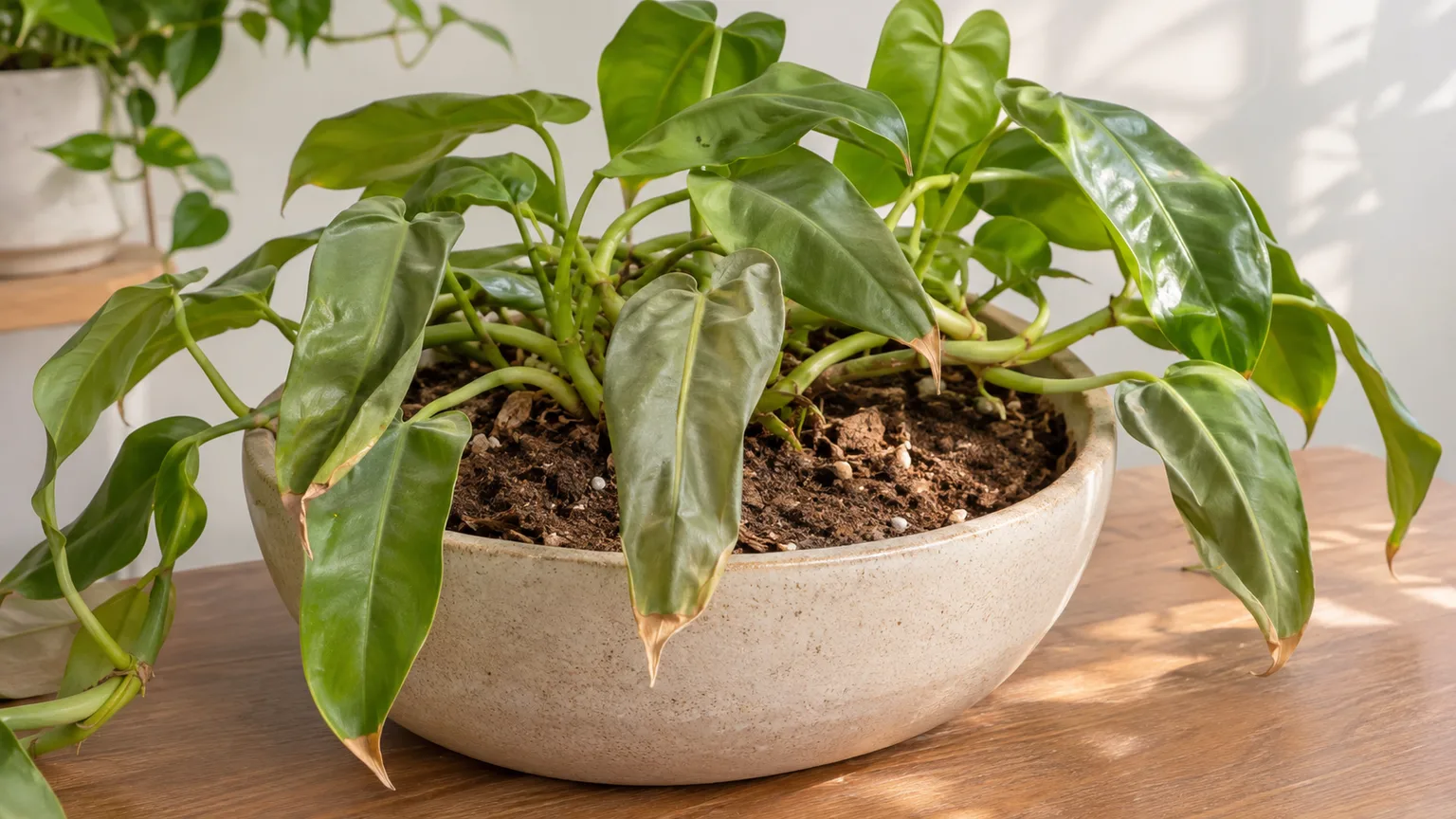
Underwatered Philodendron Burle Marx shows limp, curling narrow leaves with dry, crispy edges while the potting mix feels bone-dry and light. Give the pot one deep soak until water drains freely, then resume watering when the top 3–5 cm dries.
Underwatering on Philodendron Burle Marx: Causes, Checks & Fixes
This guide covers underwatering on Philodendron Burle Marx. See also the general Underwatering guide, watering, and light pages for this plant.
Underwatering on Philodendron Burle Marx: Causes, Checks & Fixes
Quick answer
Underwatered Philodendron Burle Marx goes limp first: the long narrow leaves curl inward, feel soft and papery, and the whole creeping mound seems to deflate. Check the mix — if the top 3–5 cm is powdery dry and the pot feels very light, it needs water now. Give it one deep soak until water runs freely from the drainage holes, drain the saucer, and it should perk up within a day.
For the general mechanics of how dry mix starves roots, see our underwatering guide. On Burle Marx specifically, the pattern shows up first on the outer runners and the leaf edges, because this creeping grower spreads its water demand across a wide, shallow root zone that dries unevenly.
What underwatering looks like on Burle Marx
On this plant, thirst reads differently than on a big upright philodendron. Burle Marx leaves are narrow, glossy, and elongated, so instead of dramatic whole-leaf wilt you see the blades curl lengthwise, lose their shine, and turn dull or slightly gray-green. Edges and tips go first, turning tan and papery while the center of the leaf still looks alive.
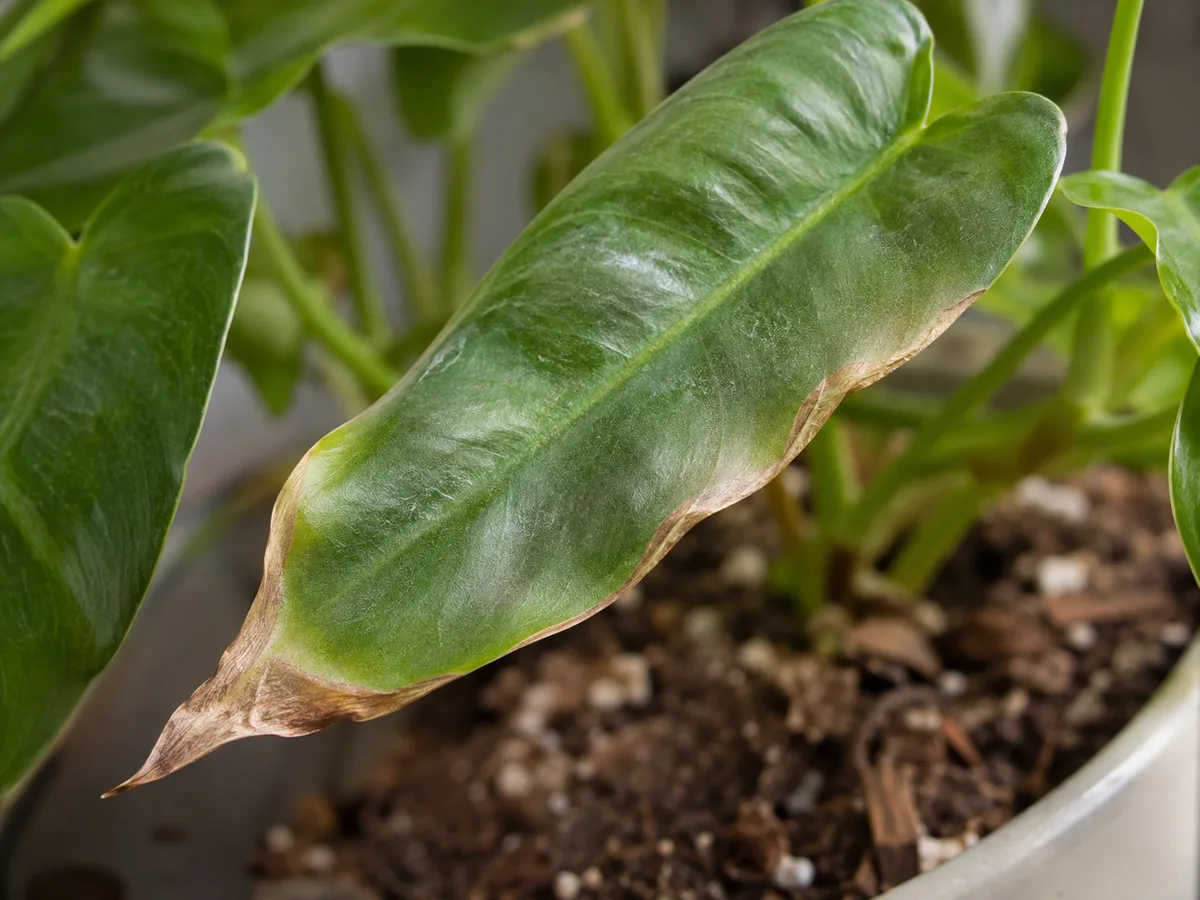
Underwatering first dries the narrow leaf edges and tips while the center remains green.
The growth habit tells the story too. Burle Marx creeps along the soil surface or trails from a basket, rooting shallowly as it goes. When water runs short, the outermost runner tips stall: new leaves emerge smaller than usual or stop unfurling, and older leaves near the pot rim crisp while the center still looks fine. If the pot feels feather-light and the mix has shrunk away from the rim, the diagnosis is nearly certain.
Severe cases add shriveled leaf stalks and stems that wrinkle at the soil line. A few dry lower leaves on a fast-growing runner are normal turnover; half the mound collapsing at once is not.
Why creeping stems dry unevenly in wide pots
Burle Marx is normally grown in wide, shallow bowls that suit its horizontal habit — and those pots are exactly why it dries out faster than owners expect. A broad soil surface evaporates quickly, especially in the bright indirect light philodendrons prefer, and the shallow root zone holds less reserve than a deep pot. The center of the pot, shaded by overlapping foliage, can still feel slightly damp while the outer ring where the runners root is bone-dry.
The recommended airy mix speeds this up. Burle Marx wants a standard potting mix lightened with 20–30% perlite that stays moist but never drenched, as the Plantophiles care guide describes — that drainage is essential, but it means a missed watering in a warm room empties the reservoir fast. Plants kept above 15°C (59°F) in active growth drink steadily, and Philodendron houseplants generally thrive around 65 to 85°F, so summer growth plus warmth is peak thirst season.
Common triggers on this plant: stretching the summer 7–10 day rhythm into three weeks, downsizing attention in winter then forgetting the plant near a heater, or watering with timid sips that wet only the center while runner roots at the rim stay dry.
How to confirm it before you water
Underwatering and overwatering both cause drooping, so confirm with the mix, not the leaves — dry, light soil pulling from the pot sides points to too little water, while wet, heavy, sour mix points to too much, a distinction the Leaf and Thrive diagnosis guide lays out clearly. Work through these checks in order:
- Finger test at runner depth. Push a finger 3–5 cm into the mix near the outer stems, not just the center. Powdery, cool-dry mix means thirst; damp and clinging means hold off.
- Pot weight. Lift the pot. An underwatered Burle Marx in a light perlite mix feels strikingly light compared to its just-watered weight.
- Leaf feel. Soft, limp, papery leaves that curl point to thirst. Mushy, translucent, or rapidly yellowing leaves point the other way — compare with the overwatering guide if the mix is wet.
- Runner tips. Check the newest growth at the ends of the creeping stems. Stalled, undersized new leaves confirm an ongoing deficit rather than a one-off dry day.
- Root peek (only if unsure). Slip the root ball out briefly. White or tan firm roots plus dry mix confirms underwatering; brown, mushy, foul roots mean rot — see the global root rot guide instead.
If the mix is dry and roots look firm, you have your answer. Water it; don’t repot, don’t feed.
The first fix: one deep soak
Do a single thorough watering — nothing else today. Set the nursery pot in a basin of room-temperature water for 20–30 minutes so the whole root ball rehydrates, a bottom-watering revival approach described for thirsty philodendrons by Gardential. Then let it drain completely and empty the saucer or cachepot. Top-water once afterward only if the surface still looks dry, until water flows from the holes.
Why bottom-watering suits Burle Marx: dry peat-based mix can turn hydrophobic, and water poured from above channels down the pot sides while the core stays dry. Soaking from below re-wets the full shallow root zone that the creeping stems depend on. Move the plant out of harsh direct sun for a day or two afterward so it recovers without extra transpiration stress.
Step-by-step recovery
After the soak, leave the plant alone and observe — most Burle Marx perk up within 12–24 hours.
- Check the perk-up. Limp leaves should firm and uncurl by the next day. Leaves that stay flat and papery after 24 hours are spent; trim only those.
- Prune lightly. Snip fully crispy leaf blades at the stalk base with clean scissors, but leave any leaf with green tissue — it still photosynthesizes. Never shear a whole runner unless its stem is shriveled and dead.
- Resume the rhythm. Water again when the top 3–5 cm dries — roughly every 7–10 days in summer, 10–14 in winter — adjusting to your pot and light rather than the calendar. Our watering routine covers the seasonal cadence in detail.
- Hold the extras. No fertilizer, no repotting, no misting campaigns this week. A thirsty plant needs water stability first; feeding a stressed root zone risks burn. The Burle Marx feeding notes apply once fresh growth resumes.
- Even out the pot. If the center stays wet while edges crisp, rotate the pot weekly and water the rim deliberately, or consider a repot into a properly sized wide bowl next spring — see repotting guidance when growth is active.
Runner-tip check: reading the newest growth
Burle Marx tells you it has recovered through its runners, not its old leaves. Within one to two weeks of steady watering, the stem tips should push glossy new leaves at full size, and the creeping stems should feel firm and supple where they touch the mix. That is your success signal — old crispy edges will never green up again, and that is normal.
If instead new leaves keep emerging small, pale, or stalled, the roots may have died back during the drought even though the tops look better. In that case, unpot and trim dead roots, refresh the airy soil mix, and root a healthy stem section with a node in water or moss as insurance — Burle Marx propagates readily from such cuttings.
Lookalikes to rule out
- Overwatering. Same droop, but the mix is heavy and damp, lower leaves yellow and feel soft-mushy rather than papery, and the pot smells sour. Treatment is opposite: dry out, not soak.
- Root rot. Collapse plus brown mushy roots and stems rotting at the soil line. Common when a thirsty-looking plant actually sits in soggy mix in a dark corner.
- Low humidity browning. Crispy brown tips with otherwise firm leaves and adequately moist mix point to dry air rather than dry roots — Burle Marx prefers moderate humidity around 50–60%. Compare with the light and placement notes if edges brown despite good watering.
- Pests or normal aging. A few oldest leaves yellowing one at a time while runners grow strongly is normal turnover, not drought. Sudden multi-leaf collapse is the red flag.
Mistakes to avoid
- Dribbling instead of soaking. Small daily sips keep the surface damp while runner roots stay dry. Water deeply, then wait.
- Flooding to compensate. A second or third soak “to make up for it” waterlogs the shallow root zone and invites rot. One deep drink, then back to the dry-down rhythm.
- Feeding a thirsty plant. Fertilizer on dry roots burns; wait until new growth looks healthy for a couple of weeks.
- Repotting on rescue day. Unpotting adds root damage to drought stress. Repot only if roots are dead or the mix is truly hydrophobic and the soak failed.
- Blaming the whole plant for rim damage. The outer ring dries first by design in wide pots — adjust watering coverage before assuming the plant is failing.
How to prevent it next time
Tie watering to the pot, not the week. Check the top 3–5 cm before every soak, lift the pot to learn its light-when-dry weight, and water 1–2 times per week in active growth only when that top layer is dry — the cadence Gardenine recommends for philodendrons. Wide shallow pots in bright, warm spots may need checking twice a week in summer; the same plant near a cool window in winter may go two weeks.
Practical setup: keep Burle Marx in a pot with drainage holes inside a saucer you always empty, use the perlite-lightened mix so each soak drains fast, and group the watering check with your other aroids so this easygoing plant doesn’t get skipped. A thin top dressing of mix over exposed creeping stems also slows rim drying without suffocating them.
When to use this page vs other Burle Marx guides
Use this page when leaves curl and crisp with dry, light mix — the thirst pattern. If the mix is wet and leaves yellow softly, go to overwatering and root-rot resources instead. For the everyday watering rhythm that prevents both extremes, the watering guide is your home base; for mix and pot choices, see the soil guide.
Related Philodendron Burle Marx guides
- Watering — use for the normal soak-and-dry rhythm once this rescue is over.
- Soil — use when the mix dries too fast, stays soggy, or turns hydrophobic.
- Light — use when browning persists despite correct watering, or growth stalls in a dim corner.
- Repotting — use when roots are dead, the pot is overgrown, or the container no longer suits creeping stems.
- Fertilizer — use only after recovery, when fresh runner growth is ready for feeding.
When to worry
Most underwatered Burle Marx recover fully — it tolerates an occasional missed watering better than chronic sogginess. Escalate if a deep soak brings no improvement in 24 hours, if stems are wrinkled and brown at the soil line across multiple runners, or if the root ball reveals mostly dead, brittle roots. At that point, salvage healthy stem sections with nodes and propagate rather than nursing a rootless mound.
Related tool
Use the Plant Watering Calculator to dial in a soak-and-dry rhythm matched to your pot size and light before changing anything else.