Overwatered Burle Marx? Checks and Safe Fixes
Quick answer
Overwatering on Philodendron Burle Marx usually means the middle of a wide pot is staying wet long after the edges look dry. First, skip the next watering, empty any saucer or cachepot, and probe the pot center at 3–5 cm before deciding anything else.
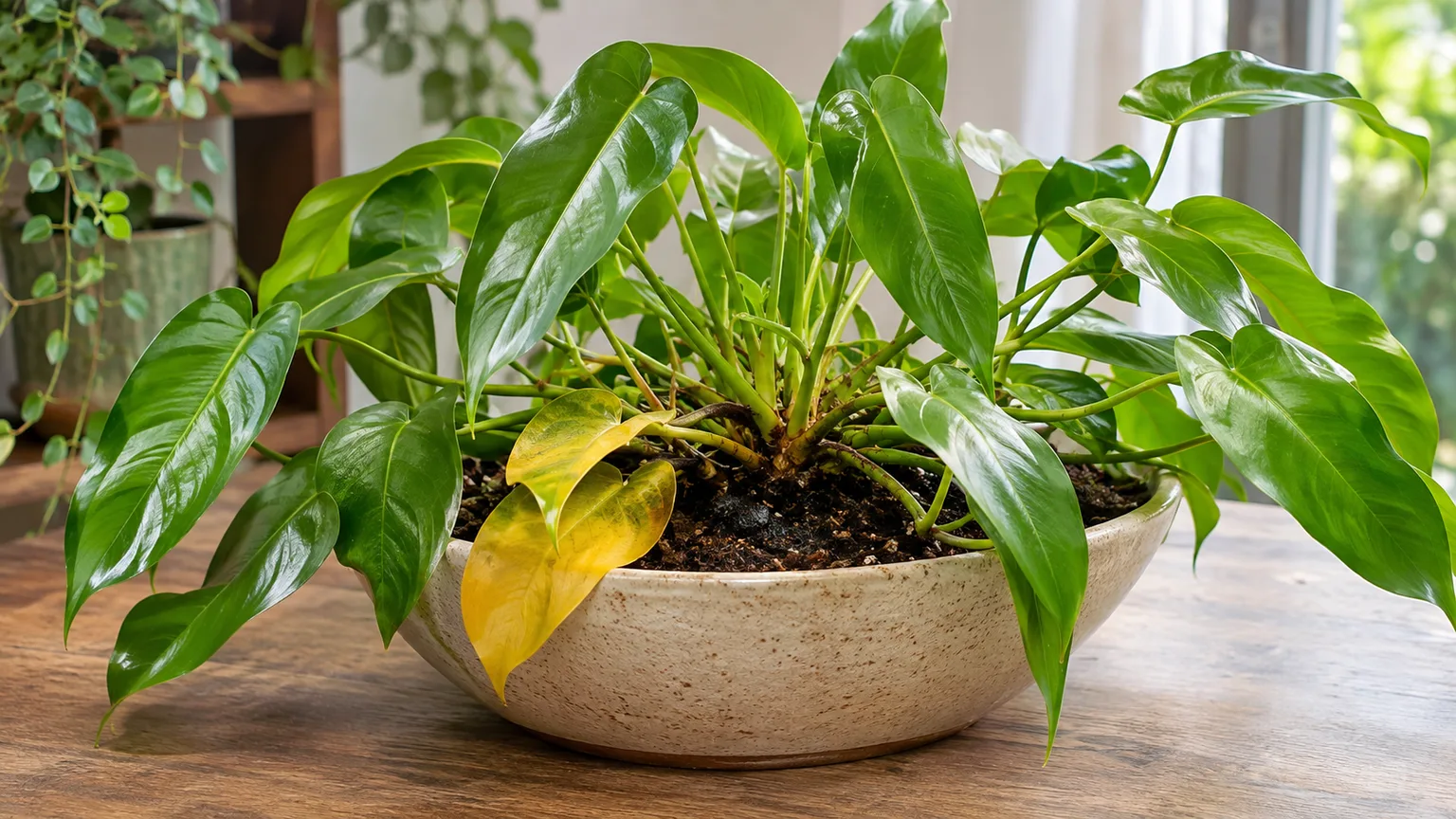
Overwatering on Philodendron Burle Marx: Wet-Center Checks and Safe Fixes
This guide covers overwatering on Philodendron Burle Marx. See also the general Overwatering guide, watering, and light pages for this plant.
Overwatering on Philodendron Burle Marx: Wet-Center Checks and Safe Fixes
Quick answer
Overwatering on Philodendron Burle Marx rarely looks like a single heavy watering. It looks like a pot whose middle never gets a chance to breathe: lower leaves yellow one by one, new runners stall, and the plant may even wilt while the mix is still damp. First, skip the next scheduled watering, tip out any standing water in the saucer or outer pot, and probe the pot center at 3–5 cm depth. If that center is still cool and damp and the pot feels heavy, wait and recheck in a few days rather than pouring again.
For how chronic wet mix harms roots in general, see our overwatering guide. On Burle Marx, the pattern usually shows up as a soggy pot core hidden beneath healthy-looking outer runners, so the rest of this page is about finding that wet center and correcting it without tearing apart a plant that might only need drier feet.
What overwatering looks like on Burle Marx
Early signs are easy to excuse on a plant that otherwise looks green. The lowest leaves turn soft yellow while the creeping outer stems still look perky. Growth slows even though light seems adequate, and new leaves may emerge smaller than the last set. Clemson HGIC notes that yellowing lower leaves on philodendrons can result from too little light or overwatering, which is why the pot check matters more than the leaf color alone. Epic Gardening’s philodendron care guide gives the same practical warning: too much water leads to rotten roots and yellow leaves.
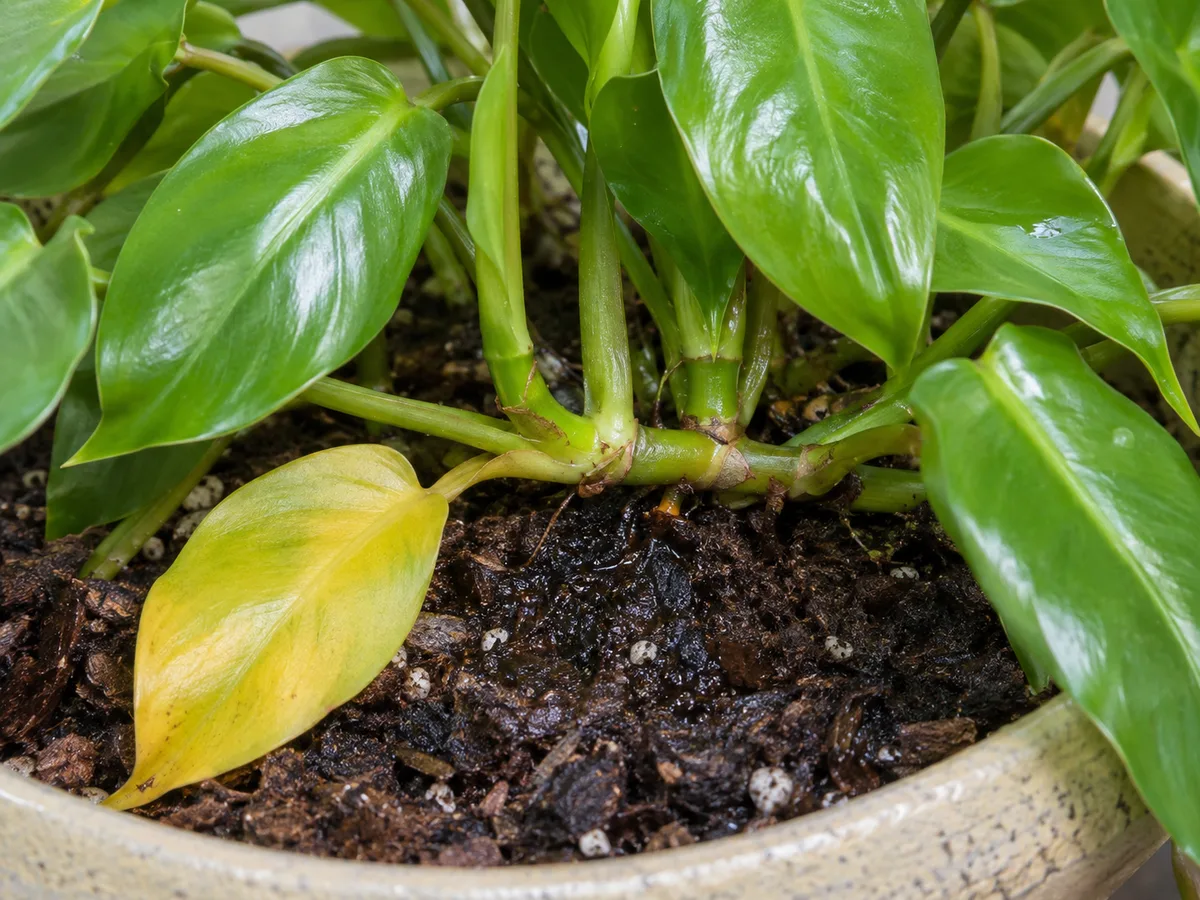
Soft yellowing on lower leaves alongside a damp pot center is a common overwatering pattern on Burle Marx.
Advanced signs are harder to misread. Stems soften or darken right where they meet the mix, petioles feel limp in a heavy pot, and the soil gives off a sour, stagnant smell. Wilting in wet soil is the paradox that traps most growers: damaged roots cannot move water upward even though the pot holds plenty. Tiny flies hovering over the surface often mean the top layer never dries, since fungus gnats breed in constantly moist organic mix. When several of these appear together, treat the root zone as the prime suspect.
Why Burle Marx hides overwatering in the pot center
Burle Marx does not climb a moss pole or form an upright trunk. It creeps along the soil surface and roots from nodes as it spreads, which is why it suits wide shallow bowls and hanging baskets. That geometry creates a moisture trap generic advice misses: the rim where runners sit dries fastest through evaporation, while the middle of the bowl, packed under the original crown, can stay saturated for days longer. A grower who checks only the edge concludes the plant is thirsty and waters again, stacking wet on wet in the core.
Dense peat-heavy mix makes the trap worse by collapsing air pockets in exactly that central zone. Clemson’s philodendron guidance keeps the standard simple: keep soil evenly moist, but not soggy, and never let plants stand in water. Burle Marx follows that standard, but its spreading habit means “soggy” often lives in one hidden part of the pot while the rest reads dry. Pair the plant with standard potting mix plus 20–30 percent perlite as described in our soil guide, and favor wide shallow containers so the soil column cannot stack a deep wet reservoir beneath a dry-looking surface.
Low light completes the setup for trouble. A Burle Marx moved into a dim corner transpires less, so the same watering volume sits longer around semi-idle roots. Our light guide covers placement that keeps leaves glossy and water use predictable.
Confirm with a center check, not the rim
Start with watering history. Note the date of the last soak, whether water ran freely from the drainage holes, whether runoff was emptied, and how many days the pot has felt heavy since. A pot that is still heavy a week after watering in average indoor conditions is telling you more than any leaf symptom.
Then test the middle of the pot directly. Push a clean finger into the mix toward the center, about 3–5 cm deep — the same upper-zone check our watering guide uses for this plant. RHS philodendron guidance recommends watering once the top of the compost has dried, and Clemson’s indoor watering advice calls touching the soil the most accurate gauge of when to water. If your finger comes up cool with mix clinging to it, the center is still wet regardless of what the rim looks like. A wooden skewer left in the core for thirty seconds gives a second reading: dark and damp means wait.
Lift the pot as the tiebreaker. Memorize its heft right after a thorough drained watering, then compare on later days. Lightness plus a dry center means the plant is ready; heaviness plus dampness means it is not. If the nursery pot sits inside a decorative cachepot, lift it out before judging, since trapped runoff can fake a heavier reading and keep roots wet from below.
First fix: skip the next watering and drain the saucer
If the center is damp and the pot is heavy, do exactly one thing: withhold the next watering and remove all standing water. Tip out the saucer, lift the nursery pot from any outer cover so air reaches the drainage holes, and return the plant to steady medium to bright indirect light. Do not move it into harsh direct sun or aim a heater at it to force fast drying; that trades one stress for another.
Leave fertilizer, pruning, and repotting out of this step. A wet root zone cannot use feed, cutting leaves removes tissue the plant still needs, and unpotting disturbs roots that may recover untouched. Recheck the same center depth and pot weight every few days. If readings trend drier and no new leaves yellow, the pause was the whole cure — resume watering only when the center actually reads dry.
When the mix will not dry: inspect roots in stages
Escalate when the pot stays wet far past its normal rhythm and decline continues: spreading yellowing, softening stems at the soil line, a sour smell, or roots that look dark and stringy through a drainage hole. Slide the plant out gently rather than yanking stems, supporting the root ball from below.
Healthy Burle Marx roots are firm and white to tan, and firmness matters more than exact color — the same firm-versus-mushy check The Spruce recommends when inspecting a suspect root ball. Rotting roots are brown to black, soft or hollow, and may smell bad — the classic cluster the Wisconsin root-rot clinic describes as wilting in wet soil with soft brown roots. With clean sharp scissors, cut only tissue that is clearly mushy, wiping blades between cuts, and discard the old saturated mix instead of packing it back around the survivors. Size the clean pot with open drainage to the roots that remain, not the pot the plant came from, and settle fresh perlite-amended mix around them with one light watering that drains fully.
Skip home fungicide pours. The Wisconsin clinic does not recommend chemical fungicides for home houseplant root rot, and Clemson HGIC traces most potted-plant deaths to roots surrounded by water being unable to take up oxygen — a drainage problem, not a spray deficiency. If decay has consumed nearly all roots and the stem base is mush, the realistic rescue is a firm healthy runner section with a node rooted in water or moss, covered in our propagation guide.
Tell overwatering apart from thirst, dim light, and old leaves
| What you see | More likely overwatering | More likely something else |
|---|---|---|
| Pot weight days after watering | Heavy, slow to lighten | Light and easy to lift points to underwatering — see the underwatering guide |
| Center mix at 3–5 cm | Cool, damp, clings to finger | Dry and crumbly with leaves that perk after a soak means thirst |
| Leaf pattern | Several lower leaves yellowing quickly, limp in wet soil | One oldest leaf fading while the rest is firm is often normal aging |
| Stems at the soil line | Soft or darkening in a wet core | Firm stems with pale stretched growth suggest dim light, not excess water |
| Smell and surface life | Sour mix, hovering gnats | Neutral smell with crisp edges leans toward dryness or low humidity |
Established root decay deserves its own label rather than being lumped with a heavy watering. If roots are soft, dark, and foul with a failing stem, read the root-rot guide for the disease picture, then return here for the Burle Marx–specific pot and mix corrections.
Recovery: watch new runners, not old yellow leaves
Yellowed leaves will not turn green again, so they are a poor progress meter. Judge recovery by what is new and stable: the stem bases stay firm, no additional leaves yellow over the next two to three weeks, the pot moves from heavy to light on a predictable rhythm, and fresh runner tips or leaves emerge clean. Mild cases with firm roots often stabilize within one or two normal dry-down cycles once saucers stay empty and center checks rule each watering.
After root pruning, expect a slower rebuild. Keep light, watering checks, and pot position steady, and resist a second repot because old leaves still look marked. Hold all fertilizer until new growth shows roots are working again. If fresh yellowing spreads or stems soften despite a genuinely drying pot, inspect once more for hidden decay rather than watering “just in case.”
Prevent the next soggy cycle
Prevention for this plant is mostly pot physics plus seasonal honesty. Water thoroughly only when the center reads dry at 3–5 cm, let excess leave through open drainage holes every time, and empty saucers within half an hour. NC State Extension identifies overwatering as a primary cause of root rot on related philodendrons and prescribes moist, well-drained soil — which on Burle Marx means the 70/30 perlite-amended blend and the wide shallow shape from our soil guide.
Adjust for the calendar. Active spring and summer growth in decent light may dry a typical pot in 7–10 days, while the same pot in a cool dim winter can need 10–14 days or longer. RHS guidance advises watering less frequently when growth slows, and continuing summer frequency into winter is the most common way healthy Burle Marx plants rot. When repotting into a larger bowl, expect slower drying for several weeks until roots colonize the new volume — details in our repotting guide.
When to use this page vs other Philodendron Burle Marx guides
- Philodendron Burle Marx overview — Start here for whole-plant context, creeping habit, and placement before diagnosing any single symptom.
- Philodendron Burle Marx watering — Use when you want the full routine: schedules, moisture checks, and seasonal rhythm rather than an overwatering rescue.
- Philodendron Burle Marx soil — Escalate here when mix stays wet despite careful intervals and you suspect perlite ratios or pot shape.
- Philodendron Burle Marx light — Check here when watering discipline looks right but growth stalls or stems stretch in a dim spot.
Related Philodendron Burle Marx guides
- Philodendron Burle Marx overview
- Philodendron Burle Marx watering
- Philodendron Burle Marx soil
- Philodendron Burle Marx light
- Philodendron Burle Marx repotting
- Philodendron Burle Marx propagation
- Philodendron Burle Marx fertilizer
Conclusion
Burle Marx forgives a missed drink far more readily than a permanently damp core, so let the pot center make the watering decision. Probe the middle at 3–5 cm, lift for weight, drain every saucer, and give the plant perlite-amended mix in a wide shallow container with real drainage holes. Pause at the first sign of a wet heavy pot, inspect roots only when decline plus persistent wetness earns it, and measure recovery by firm stems and fresh runners rather than old yellow leaves. Kept on that rhythm — thorough soak, genuine dry-down, lighter winter schedule — this creeping philodendron stays glossy and keeps spreading instead of rotting from the middle out.
Related tool
Use the Root Rot Risk Checker to score drainage, watering rhythm, and root clues for philodendron-burle-marx before changing more than one variable at a time.