Philodendron Burle Marx Repotting: When, How & Pot Size
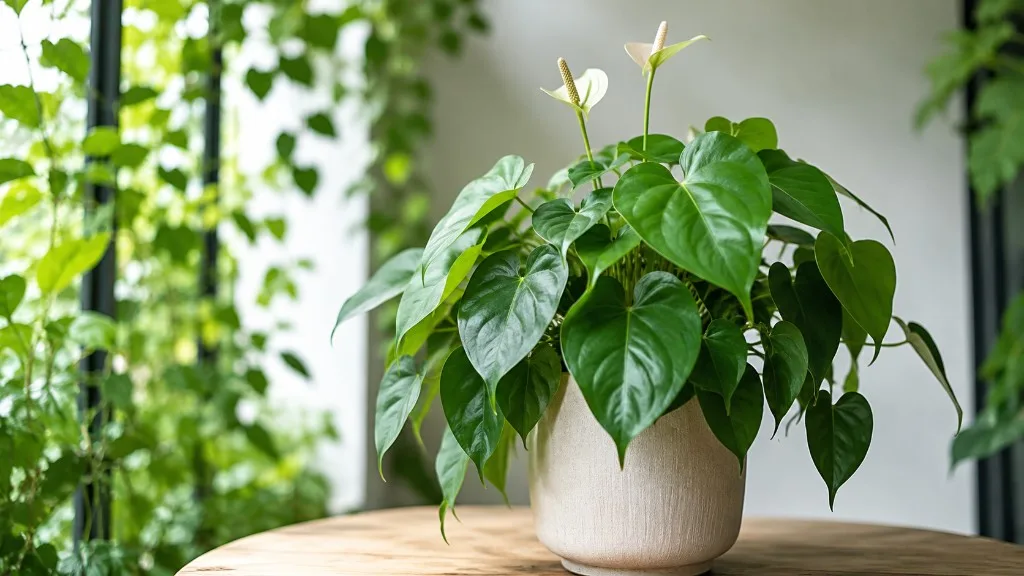
Philodendron Burle Marx Repotting: When, How & Pot Size
Philodendron Burle Marx Repotting: When, How & Pot Size
Philodendron Burle Marx (Philodendron ‘Burle Marx’) spreads along the soil surface with narrow glossy leaves on creeping stems — a ground-cover philodendron widely used in tropical landscaping and forgiving indoor baskets. Repotting this plant is less about climbing support and more about pot geometry: a wide shallow container keeps the center from staying wet while outer runners dry, which is the most common creeping-philodendron failure mode indoors. Done on time with a modest size increase and airy mix, repotting refreshes drainage and gives rhizomatous roots room to advance. Done into an oversized deep pot in a dim winter room, you get sour mix, soft stems at the soil line, and weeks of stalled growth that looks like a watering problem but starts in the root zone.
Quick Answer — When to Repot Burle Marx
Repot Philodendron Burle Marx every one to two years, or sooner when roots emerge from drainage holes, water runs through without soaking the center, or growth stalls despite good light and balanced feeding. Spring through early summer is the safest window because active growth helps roots colonize fresh mix faster. Choose a pot only 2–5 cm (1–2 inches) wider than the current one — and favor width over depth for creeping stems. Refresh with the Burle Marx soil blend (standard potting mix plus 20–30% perlite), skip fertilizer for four to six weeks, and water cautiously until the top 3–5 cm dries at the new rhythm. Mild droop for one to two weeks is normal; firm new leaves along advancing runners are your best recovery signal.
Why Burle Marx Repotting Differs From Vining Philodendrons
Collector repot guides written for Pink Princess or Brasil assume a vining climber that wants a moss pole and fills a pot from a central stem. Burle Marx is a creeping spreader — optional as a low ground-cover habit or in hanging baskets — and its stems advance horizontally with nodes that sit close to damp mix. That architecture changes which mistakes matter at repot time.
Creeping stems and the wide-shallow pot rule
In a tall narrow cylinder, the root mass and wet mix concentrate under a small crown while creeping stems trail over dry-looking edges — or the opposite, where the rim looks dry but the deep core stays saturated. The RHS philodendron growing guide warns that compost staying wet too long causes fleshy roots to rot; on a spreader, an oversized or overly deep pot extends that wet period across unused soil volume. A wide shallow bowl or low planter gives roots lateral room without stacking inches of unused mix beneath stems that rarely occupy the lower third of a deep pot.
No moss pole — what changes at repot time
Burle Marx does not need a moss pole, trellis, or totem at repot. Climbing philodendrons root into support when kept moist, but this cultivar’s value is horizontal coverage and basket spill. Skip pole hardware entirely and instead plan for runner placement: let advancing stems rest on the mix surface or cascade over a wide rim without burying nodes deeper than they were before. Burying creeping stems to “anchor” them invites stem rot at the soil line — the same failure noted on stressed Burle Marx in chronically wet nursery pots.
Routine Repot vs Rescue Repot
Not every unpotting is the same job. Matching your session type prevents treating a rotting plant like a simple size upgrade — or delaying a rescue because the calendar says wait until spring.
| Signal | Routine upgrade repot | Rescue repot |
|---|---|---|
| Root color | Mostly white or tan, firm | Brown, mushy, or foul-smelling |
| Growth | Stalled but leaves still firm | Widespread wilt, collapse, or spreading yellow |
| Timing | Spring–early summer preferred | Any season if rot is active |
| Pot direction | One size up (2–5 cm), wide preferred | Often same size or smaller after trimming |
| Root handling | Tease circling tips; keep ball intact | Trim rot; may need propagation backup |
| Fertilizer | Wait 4–6 weeks | Wait until firm new growth |
Clemson HGIC recommends repotting during spring and summer while plants are actively growing — ideal for routine upgrades. When mushy roots or sour mix are present, treat it as rescue work even in winter, using a modest pot, temperatures above 18°C (65°F), and cautious watering until spring.
When to Repot Philodendron Burle Marx
Calendar reminders help, but root condition should drive the decision. NC State Extension notes that philodendrons prefer moist, well-drained soil rich in organic matter and should be repotted when root-bound — guidance that applies across modern hybrid cultivars grown as houseplants. Plan a full repot every one to two years for an actively growing indoor Burle Marx in a 12–20 cm grow pot. Fast spreaders in bright rooms may hit the one-year mark; slower specimens in cooler winter homes may sit comfortably for two. The related species Philodendron burle-marxii is listed by RHS with a repot every two to three years under glass — a useful upper bound when growth is moderate.
Do not repot just because one lower leaf yellowed. Yellow leaves often trace to overwatering, cold drafts, or natural aging on a long runner. Repotting an already stressed plant stacks variables and makes diagnosis harder. Confirm the root zone is the bottleneck — circling roots, fast dry-down, or salt-crusted mix — before you commit.
Do not repot a brand-new nursery plant on day one unless the mix is clearly failing or pests are visible. Quarantine, learn the pot’s dry-down rhythm for two to three weeks, then repot in the next active growth window if roots are already tight. The overview guide covers first-month stability in more detail.
Calendar timing vs root signals
Use the calendar as a reminder to inspect, not as an automatic repot trigger. If roots are healthy and water still absorbs evenly after two years, a top-dress may suffice. If roots circle after fourteen months in a bright room, repot early — waiting for an arbitrary anniversary keeps the plant in hydrophobic, depleted mix.
Spring and early summer as the safest window
Spring is the best time for repotting houseplants so roots establish during the growing season. For Burle Marx, that aligns with faster runner production and quicker recovery from transplant adjustment. Winter repotting is acceptable only when necessary — active root rot, severe binding, or a broken pot — and should use a modest size increase with bright indirect light and reduced watering frequency.
Signs Your Burle Marx Is Root-Bound
The clearest visual signal is roots emerging from drainage holes or wrapping the surface when you lift the plant partway out of the pot. Less obvious but equally reliable: water that runs straight through without the mix absorbing, wilting or drooping hours after a thorough watering, and growth that stalls even though light and feeding have not changed. Penn State Extension lists fast dry-down, roots through holes, and stalled growth despite regular feeding as classic pot-bound patterns.
When two or more of these show up during spring or early summer, schedule a repot. Burle Marx in a dense root mat often dries unevenly — the top looks ready while the core stays wet, or the center has gone hydrophobic and water bypasses roots entirely. That pattern mimics underwatering and overwatering at the same time, which confuses growers who only touch the surface. Sliding the plant out gently confirms the story: a pot-shaped root ball with little visible mix on the sides is classic root-bound architecture on spreading aroids.
Root-ball inspection workflow
Work in this order before you choose a new pot:
- Water lightly one day ahead so the ball holds together but is not soggy.
- Lift and tilt the pot; look for roots at drainage holes.
- Slide the plant out halfway; check for circling white tips vs. brown mush.
- Smell the mix at the bottom — sour means anaerobic conditions, not just old peat.
- Measure pot diameter at the inner rim; record it before shopping.
- Note runner placement — decide which stems stay on the surface vs. trail over the rim.
Healthy roots are white to tan and firm. Trim brown, mushy tissue with clean scissors before replanting. Keep as much of the original root ball intact as possible on healthy Burle Marx unless rot forces aggressive cleaning.
Choosing the Right Pot Shape and Size
Penn State Extension advises choosing a container slightly larger than the current one, because an oversized pot looks out of balance and holds excess wet mix. For Burle Marx, translate “slightly larger” as 2–5 cm (1–2 inches) wider in diameter — not a jump from a 15 cm bowl to a 25 cm deep cylinder. Clemson HGIC specifies 1 or 2 inches larger in diameter and warns against adding a gravel drainage layer, which actually slows water movement through the profile.
Wide bowls vs deep cylinders
Prioritize horizontal space over vertical depth. A wide shallow planter — sometimes called a bulb pan or azalea bowl — matches how Burle Marx occupies soil: runners advance outward, not downward. In hanging baskets, ensure the rim width can support spreading stems without crowding the drainage hole cluster at the center.
Material: plastic, terracotta, and hanging baskets
Plastic and glazed ceramic retain moisture longer; unglazed terracotta dries faster on the edges — useful if you tend to overwater. Match material to your watering habits: fast dry-down households often succeed with plastic wide bowls; chronic overwaterers benefit from terracotta’s edge drying. Every pot needs drainage holes; never rely on cachepots without drainage.
Soil Mix for Repotting Burle Marx
Use the same blend you would for routine culture: standard peat- or coir-based potting mix with 20–30% perlite for drainage, targeting slightly acidic conditions around pH 5.5–6.5 as noted in our soil guide. Clemson HGIC recommends a general-purpose potting soil for repotting overcrowded philodendrons, with the critical caveat that plants must never stand in water — root rot results from mix that does not drain quickly or from overly frequent watering.
Replace compacted or sour old mix entirely on a full repot; do not reuse degraded peat from a root-bound ball. Moisten new mix slightly before backfilling so dry peat does not wick water away from roots on the first soak. A handful of fine orchid bark is optional in humid rooms or oversized wide pots where you want extra air channels — not required in a modest 15 cm bowl with 25% perlite.
Step-by-Step Repotting Procedure
Before you unpot
Gather a wide replacement pot, fresh mix, clean scissors, gloves, and a tarp or tray. Water lightly one day before so the rootball releases without shattering fine roots. Hold the plant between your fingers over the soil and knock the rim against a table edge rather than pulling by stems — creeping philodendron petioles snap easily.
During the repot session
Place enough dry mix in the bottom so the top of the rootball sits about 2.5 cm (1 inch) below the rim — Clemson HGIC’s recommended depth. If roots circle tightly, gently tease outer tips or score the ball lightly; cut away only mushy tissue. Position runners at the same soil line as before — do not bury stems deeper to stabilize the plant. Fill around the sides, firm gently with fingers, and do not pack wet media after watering. Water thoroughly until excess drains, empty the saucer, and repeat if peat floats and settles.
Aftercare for the first four weeks
Keep Burle Marx in bright indirect light without direct hot sun on wilted leaves. Water when the top 3–5 cm dries — the interval may lengthen slightly while roots explore fresh mix. Skip fertilizer for four to six weeks; feeding stressed or newly repotted plants invites salt burn on recovering roots. Mild drooping leaves for a week is normal; widespread collapse with sour mix is not — reassess for rot.
Top-Dress vs Full Repot for Spreaders
Not every soil refresh requires lifting the entire plant. Top-dressing — removing the top 3–5 cm of depleted mix and replacing it with fresh perlite-enhanced blend — works when roots are healthy, drainage is acceptable, and the pot width still fits the spread. Clemson HGIC recommends this top 2–3 inch refresh every other year for large containers that are impractical to lift.
Choose full repot when two or more root-bound signals appear together, the mix smells sour, runners have rooted into a dense mat at the perimeter, or you are downgrading after rot surgery. Spreading plants often need full repot sooner than upright specimens because roots colonize the outer rim first, leaving a dead zone in the center.
Common Repotting Mistakes on Burle Marx
The most damaging error is repotting into a much larger deep pot “for future growth.” Unused wet mix breeds anaerobic conditions — exactly the chronic wetness that causes root rot on Burle Marx in low light. Second: repotting on day one from the nursery while the plant is acclimating. Third: fertilizing immediately to “help recovery.” Fourth: bare-rooting healthy plants — stripping all mix stresses fine roots and extends droop on a plant that recovers faster with a intact ball. Fifth: installing a moss pole because other philodendron repot guides say to — unnecessary here and can damage runners when wedged in after the fact.
Handling Sap and Pet Safety at Repot Time
Philodendron Burle Marx contains insoluble calcium oxalate crystals like all philodendrons. The ASPCA lists philodendron as toxic to cats and dogs, causing oral irritation and drooling if chewed. RHS notes skin and eye irritant potential on related burle-marxii. Wear gloves when trimming roots or handling cut stems, wash tools after, and keep pets away from discarded mix and cuttings on repot day. This is a handling precaution for repot work — not a reason to avoid repotting when roots need attention.
When to use this page vs other Philodendron Burle Marx guides
Use this repotting guide when the root zone or pot size is the bottleneck — circling roots, hydrophobic mix, or a container that no longer fits the spread. For day-to-day moisture rhythm, see the watering guide. For mix ratios and pH context without a full repot, see soil. If leaves are yellow but roots are white and the pot dries normally, start with watering and light guides before unpotting. If you need to trim runners or reshape spread, see pruning. For backup plants from trimmed stems during a rescue repot, see propagation.
Related Philodendron Burle Marx guides
- Philodendron Burle Marx overview — whole-plant context and buying checkpoints
- Watering — post-repot dry-down rhythm at 3–5 cm depth
- Soil — perlite ratios and container drainage
- Light — recovery placement after repot
- Fertilizer — when to resume feeding after root disturbance
- Root rot on Burle Marx — rescue protocol if mushy roots appear at unpotting
Conclusion
Philodendron Burle Marx repotting rewards a creeping-plant mindset: wide shallow pots, modest size increases, spring timing when possible, and mix that drains faster than you think you need. Inspect roots when growth stalls or water misbehaves, not when a calendar alarm fires. Skip moss poles, bury no deeper than before, and let firm new leaves on advancing runners confirm the root zone is working again. When those signals line up, return to the cluster guides for watering and light — repotting solves the container, not every yellow leaf.