8 Plants for East-Facing Windows (and Where to Place Them)
Find eight houseplants that suit east-facing windows, plus a simple way to judge morning sun, distance, seasonal shifts, and the right spot for each plant.
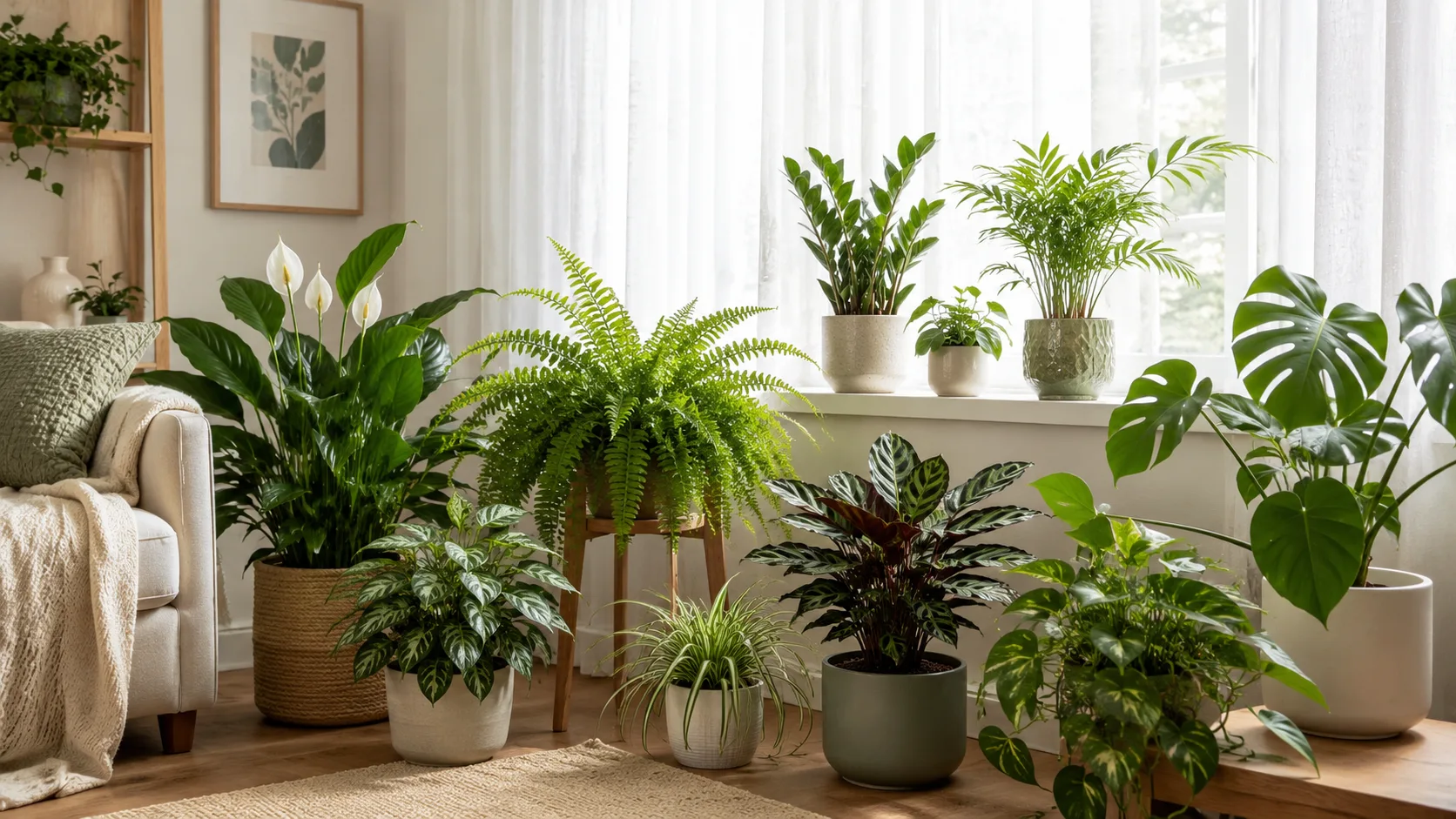
An east-facing window often gives houseplants a useful combination: direct sun for part of the morning, followed by brighter shade. That can suit plants that want good light but struggle with hours of stronger afternoon sun. It is not a guarantee, though. A tree, balcony, neighboring building, tinted glass, or deep window recess can turn an east exposure into a much dimmer spot.
The plants below cover a range of needs, from forgiving vines to a light-hungry succulent. Start by checking what reaches the leaves in your room, then choose the plant that fits. “East-facing” is a clue; the light at the pot is what matters.
What an east-facing window does—and does not—tell you
In the Northern and Southern Hemispheres, an east-facing window generally receives sunlight as the sun rises and travels across the morning sky. The direct beam usually moves away as the sun gets higher, leaving indirect daylight. How long that beam reaches indoors depends on the season, latitude, window size, trees and buildings outside, screens, curtains, and how far the plant sits from the glass.
A compass direction cannot tell you whether a particular sill is bright enough for a jade plant or too sunny for a delicate African violet. A wide, unobstructed pane can deliver a strong patch of sun; a small window shaded by another building may provide only dim ambient light. Even plants on one sill can receive different amounts if one is tucked behind another or placed several feet back.
Treat “bright indirect light” as a description of the light reaching the leaves, not a synonym for “near a window.” Direct light means the sun’s rays visibly fall on the plant. Indirect light is bright ambient light without the sun’s beam striking the leaves. The same window can provide both at different times of day.
Penn State Extension’s houseplant guidance describes how plants respond to changes in exposure: a plant adapted to bright conditions may struggle after a move to lower light, while another can adjust with slower growth or changed leaf color. Its practical reminder is to match the plant to the actual location and observe it over time. Penn State Extension’s overview of low-light houseplants is a useful reference for how plants respond when their environment changes.
How to assess light at the plant’s actual spot
Check the light where the leaves will sit, not just at the window. A plant on the sill may get a direct beam while one on a table a few feet away gets only indirect light. House Plant Journal’s light guide separates two useful observations: how long direct sun touches the plant and how bright the indirect light remains through the rest of the day. Its measurements are practical reference points, not universal pass-or-fail thresholds for every cultivar. House Plant Journal’s guide to indoor light also explains why our eyes are poor at comparing brightness between different spots.
Try this two-day routine:
- Stand at the plant’s intended position in the morning and note whether a direct sun patch reaches the leaves. Repeat every hour or two until the patch has moved away.
- Repeat on another day, since clouds can make a single observation misleading. Note the hours when the plant receives direct sun and when it sits in bright but filtered light.
- Look outside. A tree canopy, porch roof, insect screen, or close building can reduce the light substantially, even when the sky looks bright.
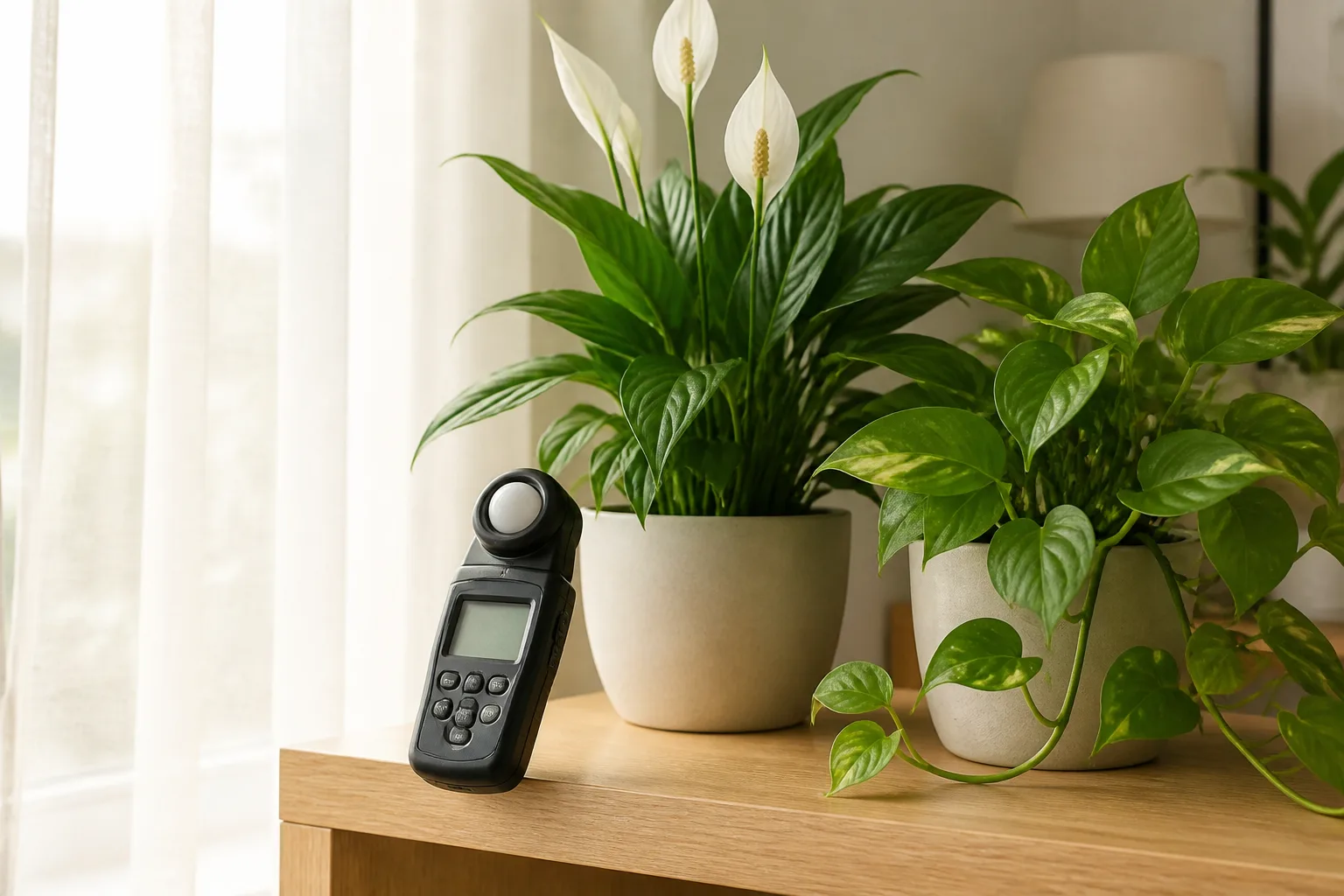
- Compare the leaf-level view at the window with a spot farther into the room. If you use a light meter, take several readings at the foliage rather than relying on one reading at the glass. A phone app can provide a rough comparison between locations, but treat its number as an estimate.
- Recheck after seasonal changes or if new growth becomes smaller, paler, or stretched. The sun’s path and the length of the day change over the year.
You do not need to chase a perfect lux or foot-candle number to choose a plant. The goal is to tell whether the site offers bright morning sun, bright indirect light, or simply a little ambient light—and to keep observing once the plant settles in.
A simple two-day observation routine
Use the plant’s leaves as the reference point. If direct sunshine reaches them for an hour each morning, record that even if the room feels cool. If sun never hits them, note whether you can see a broad, bright view of the sky from that spot or only a narrow slice between buildings.
The distance between a window and a plant matters because the portion of sky visible to its leaves gets smaller as you move deeper into the room. There is no reliable universal rule such as “two feet from the glass is bright indirect light.” A large unobstructed window may stay bright several feet back; a small shaded window may not. House Plant Journal recommends assessing each position separately and using a light meter as a practical aid when a plant’s performance does not match expectations.
8 east-facing-window plants, matched to real conditions
These eight plants are not interchangeable. Some benefit from being close to the glass; others are safer a little farther back or behind a sheer curtain. The notes below help you choose by available light, care style, and space instead of placing every pot on the sill.
African violet: flowers in bright, filtered light
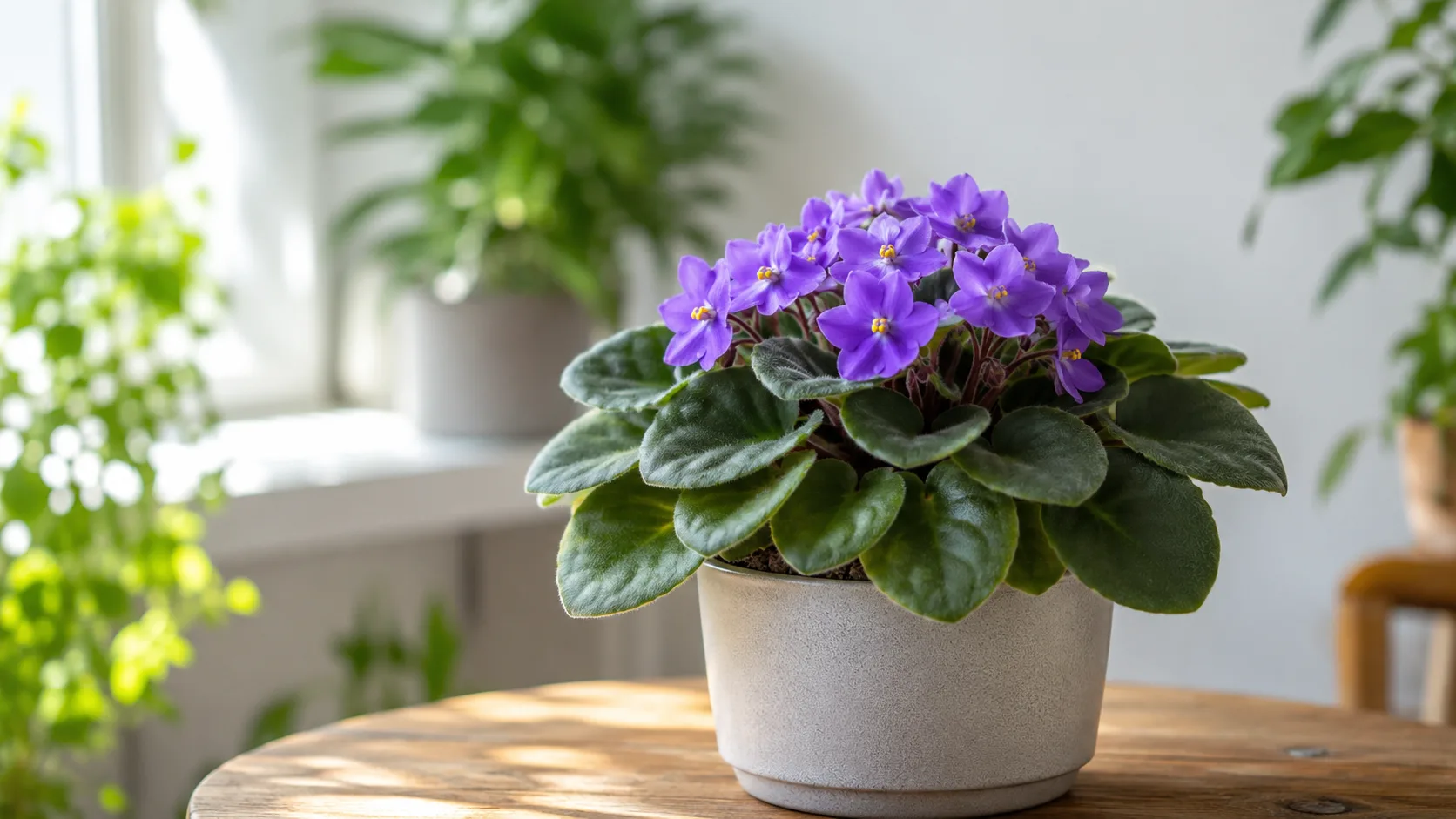
African violets suit an east-facing window when it gives bright light without baking the leaves for hours. Place the pot where it receives gentle morning sun or just outside the direct beam. A sheer curtain can soften a particularly sunny sill, especially in summer or in a warm climate. If the window is deeply shaded, the plant may survive but flower less reliably.
The compact rosette fits a sill better than a tall floor plant, and its flowers add color when many foliage plants are green. Keep leaves from pressing against cold glass, and avoid moving the plant abruptly from a dim shelf into full morning sun. If you see bleached or crisp patches on the window side, pull it back or filter the beam; if it grows leggy and stops flowering, try a brighter position before increasing fertilizer.
Water when the potting mix is approaching dry rather than leaving the root ball constantly wet. African violets can be sensitive to cold water or moisture sitting on foliage, so water the soil gently and let excess drain. The window helps with light; it does not remove the need for a pot with drainage and a light, airy mix.
Chinese money plant: a compact choice for bright indirect light
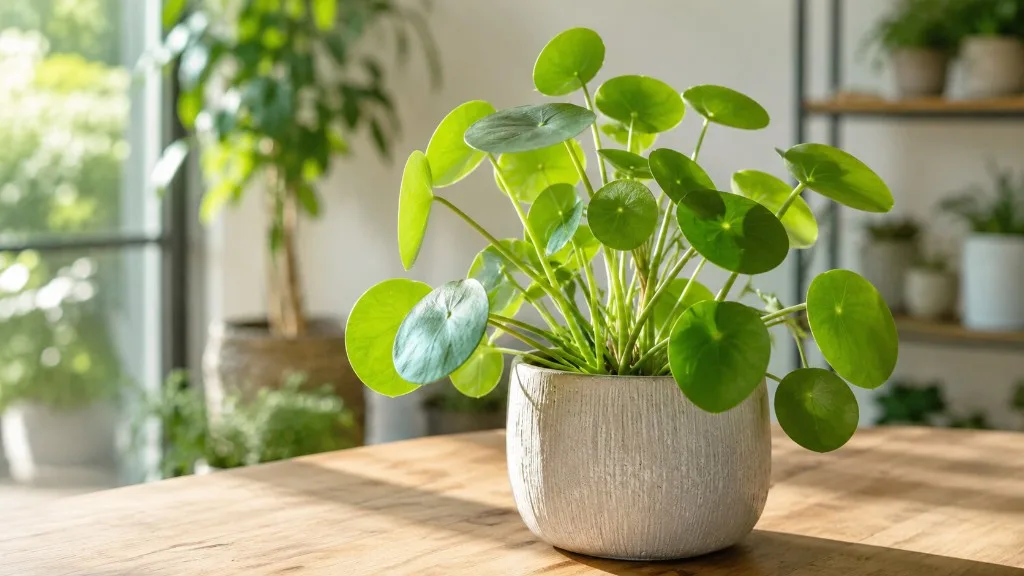
Pilea peperomioides, often called Chinese money plant, is a good fit for the bright indirect light near many east-facing windows. It can handle some mild morning sun, but protect it if an exposed sill receives a hot, prolonged beam. Place it a little back from the glass if leaf edges begin to scorch or curl. It is compact enough for a bright shelf beside the window if the sill itself is too intense.
Its round leaves turn toward light, so rotate the pot a quarter-turn every week or two if one side is leaning toward the pane. Avoid rotating it every day; the plant needs time to respond, and frequent movement makes it harder to judge whether a placement works. If the newer leaves become small and stems stretch, it may need a brighter spot.
Let the upper layer of mix dry before watering, then drain the pot fully. A pilea in lower light uses water more slowly than one in a bright window, so a fixed weekly schedule can leave the soil soggy. If growth pauses in winter, check for colder temperatures and shorter days before adding fertilizer.
Pothos: an adaptable vine for the sill or nearby shelf
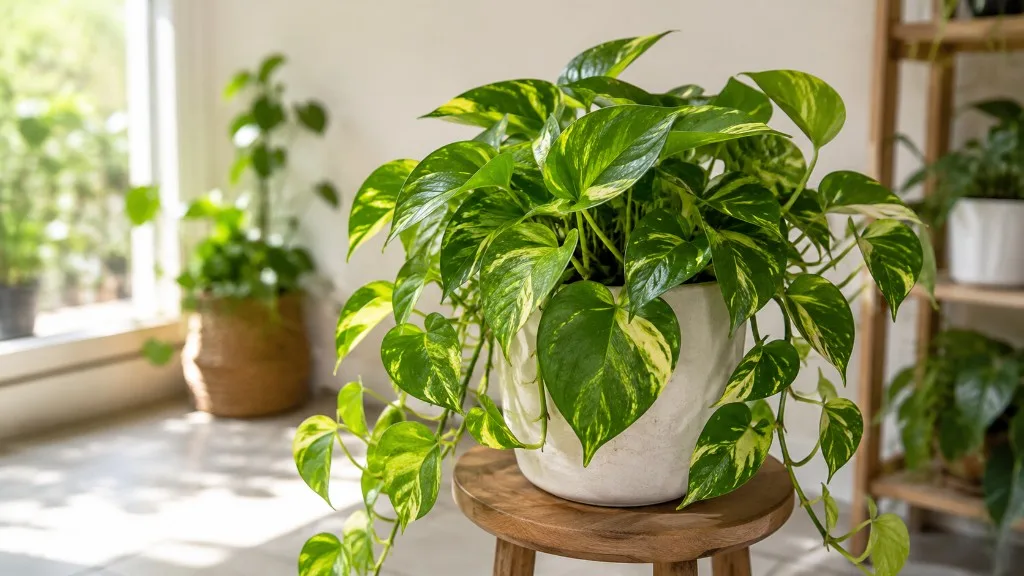
Pothos is one of the most flexible choices here. NC State Extension’s Plant Toolbox says golden pothos prefers bright, indirect light and can persist in lower light; it also notes that low light can reduce variegation. That makes a bright east window useful if you want fuller growth and clearer patterning, while a position set back from the pane can work for a darker-leaved cultivar. NC State Extension’s Pothos profile gives the species’ cultivation and growth notes.
Let the vine trail from a shelf or hanging pot rather than crowding a narrow sill. When the stems become long with wide gaps between leaves, move the plant closer to the window or add suitable supplemental light. If the leaves bleach or develop dry, tan patches on the sunny side, soften direct sun with a curtain or pull the pot back a little.
Pothos is forgiving of an occasional missed watering, but that does not mean it wants to stay bone-dry. Feel the potting mix and water when the upper portion has dried, then let excess drain away. In lower light, expect the mix to stay moist longer. Keep the plant away from pets or children who may chew it; NC State flags it as having poisonous characteristics.
Spider plant: forgiving foliage with room to arch
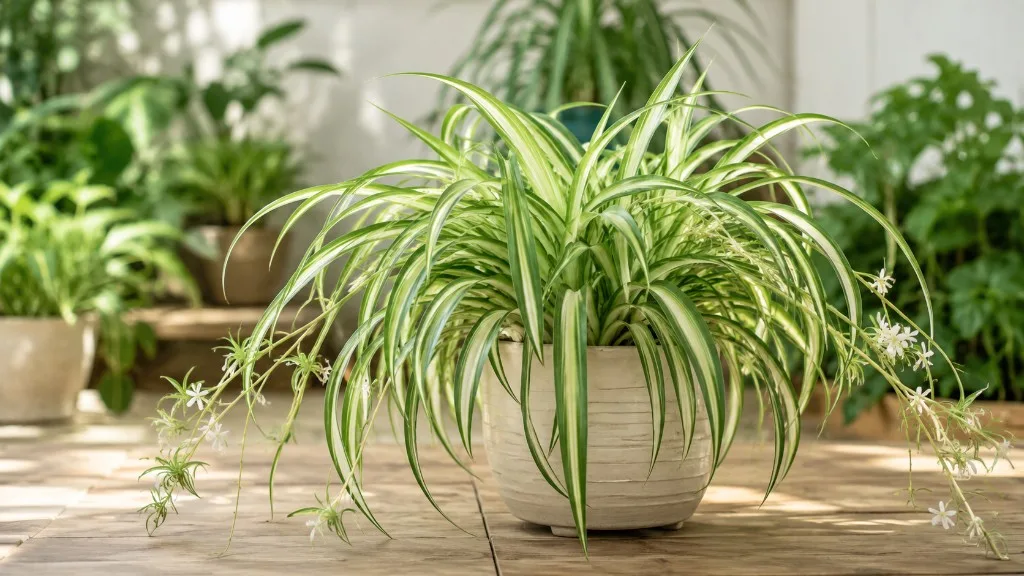
Spider plants handle a range of indoor light, and an east window gives them a chance to grow steadily without the strongest late-day exposure. They can sit close to the glass if the morning sun is brief or filtered. If the beam lasts for several hours and leaves feel hot, move the basket a short distance back or add a sheer curtain.
The long, arching leaves and hanging plantlets need more space than a compact windowsill succulent. A shelf, plant stand, or hanging basket near the window is often a better home than the sill itself. Variegated forms may lose some contrast in a dim room, while too much harsh direct sun can fade or scorch foliage. Pale brown tips are not a reliable diagnosis of light stress on their own; water quality, dry air, and inconsistent moisture can also play a part.
Water when the top layer of mix dries and empty the saucer after watering. If the plant produces few plantlets or new growth slows, first check light and root crowding rather than automatically feeding it more. Spider plants tolerate modest changes, but a gradual move still makes it easier to see how they respond.
Peace lily: a foliage plant that may bloom in brighter light
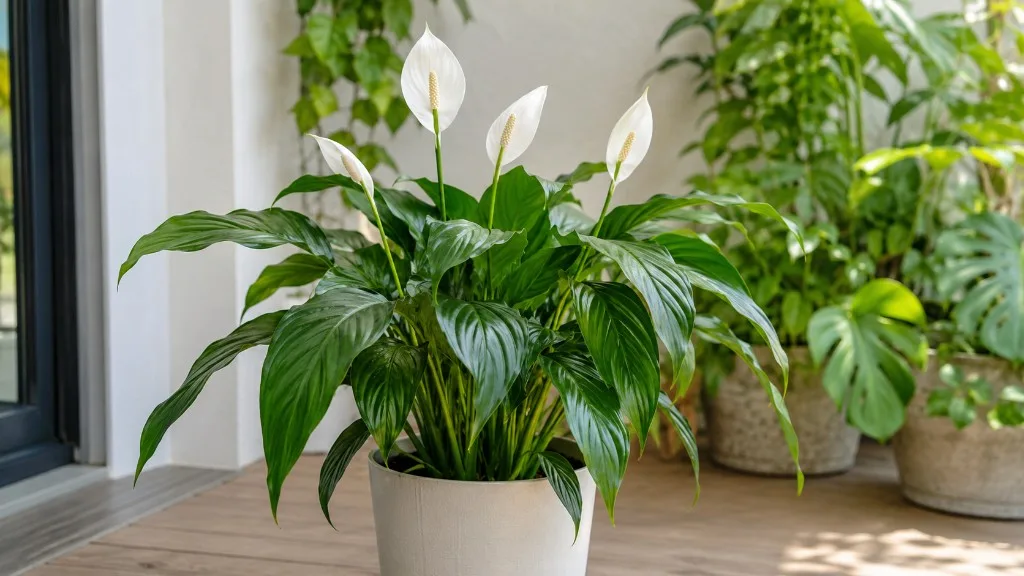
A peace lily can do well in bright indirect light with a little morning sun, particularly if the window is not exposed to strong heat. It is a better choice for someone who wants a leafy plant and can keep watering consistent than for someone who wants a dry-care succulent. Keep it close enough to receive good ambient light, but pull it back if leaves develop sun-bleached patches.
Peace lilies often survive in lower light, yet very dim conditions can limit growth and flowering. If yours grows leaves but produces no flowers, first improve the available light by moving it nearer the window or using a sheer curtain only during the strongest beam. Fertilizer cannot make up for inadequate light, and excess fertilizer can create additional stress.
Keep the mix evenly but not constantly wet. Check it with a finger before watering; the surface may dry while the root area remains moist. A cold sill or draft from a frequently opened window can stress a tropical plant, so leave a little space between its foliage and winter glass. Like many houseplants, it is not a plant to let pets or children chew; verify its safety before bringing one home.
Boston fern: choose it when humidity is manageable
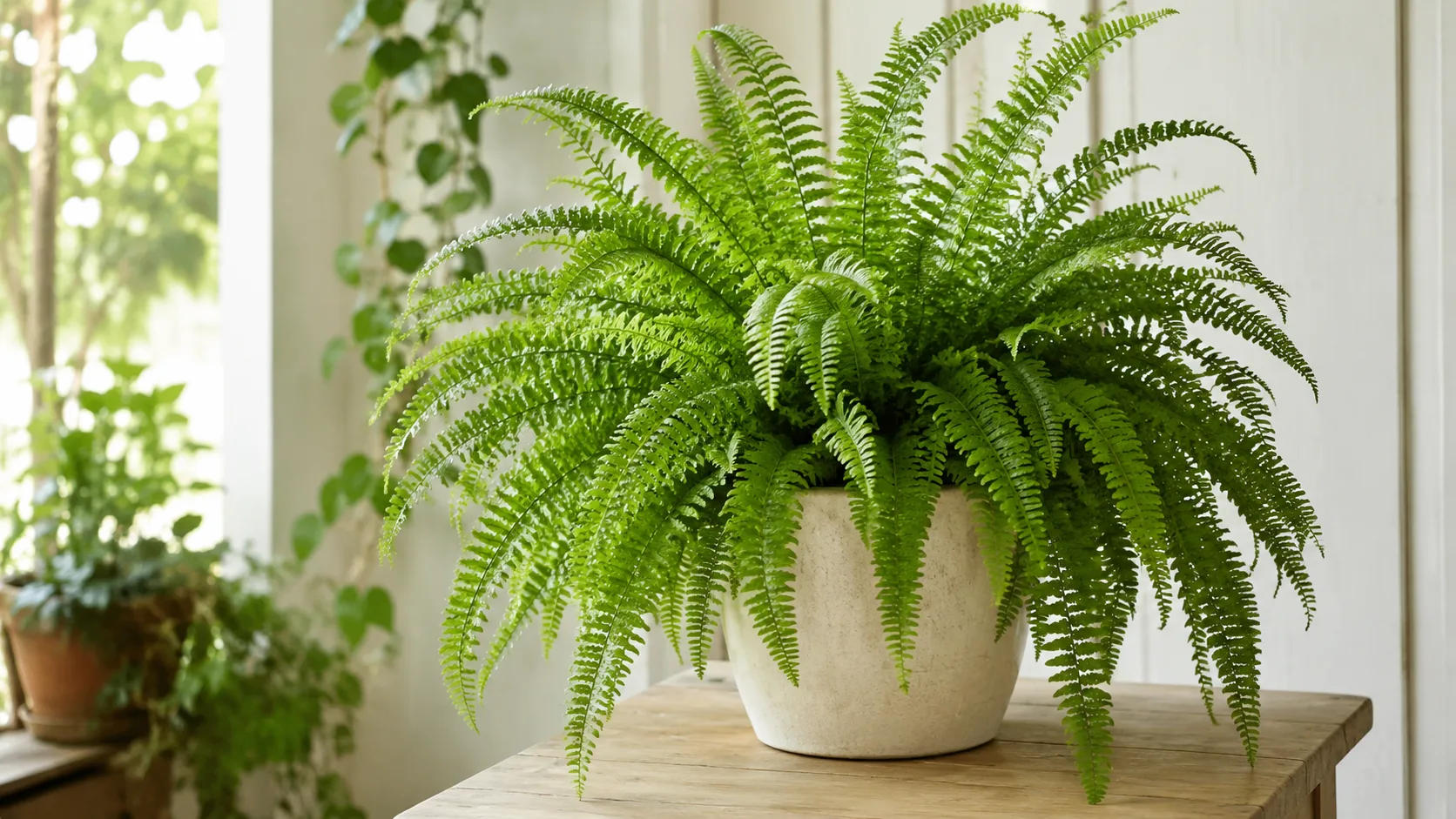
Boston fern is an option for an east-facing window that receives bright, indirect light or filtered morning sun. It is less suitable for a hot, dry sill where the fronds bake or the pot dries out quickly. Set it near the window rather than pressed against the pane, and use a position with steady household humidity if possible. A bathroom with a bright east window may work, while a spot beside a heating vent often will not.
The finely divided fronds create a softer shape than broad-leafed vines, but they need more consistent moisture than pothos or jade. Do not interpret that as a reason to keep the roots waterlogged: use a draining pot and check the mix before watering. Drying fronds can result from low humidity, a missed watering, heat, or sudden environmental change, so investigate the conditions before trimming the whole plant.
If the room is very dry, choose a different plant or use a room humidifier. Misting gives only a brief change in humidity and is not a substitute for stable conditions. Rotate the fern occasionally so its full canopy receives light, and remove only fully brown fronds.
Jade plant: reserve it for the brightest east exposure
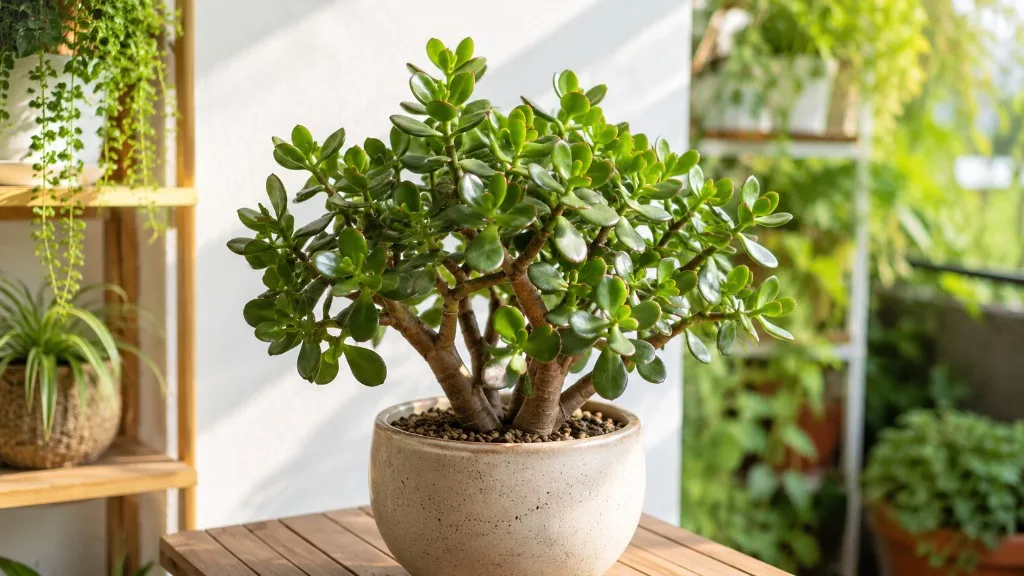
Jade is the high-light member of this group. It can grow in an east-facing window that receives clear morning sun, but a shaded east window may not provide enough light for compact, sturdy growth. Choose the brightest unobstructed east location, and give the plant time to adjust if it came from a greenhouse or a darker shop. A jade on a bright shelf beside the window may do better than one in a deep sill recess.
Joy Us Garden’s indoor succulent guide describes succulents as performing best in moderate to high natural light and cautions that fleshy leaves can sunburn against hot glass or after an abrupt change in exposure. It also notes that an east exposure can work in a particularly sunny climate. Read Joy Us Garden’s indoor succulent light and care guide. For a jade, use that as a reminder to assess both the room and the individual window rather than assuming that all east windows are bright enough.
Let the mix dry substantially between waterings, and use a fast-draining succulent mix in a pot with a drainage hole. In weak light, the plant may stretch, lean, or produce longer gaps between leaves. More watering will not fix that; move it to brighter light gradually. If you cannot provide enough natural light, a properly positioned grow light may be more reliable than an increasingly strict watering routine.
Fiddle-leaf fig: keep it near the window, not on a cramped sill
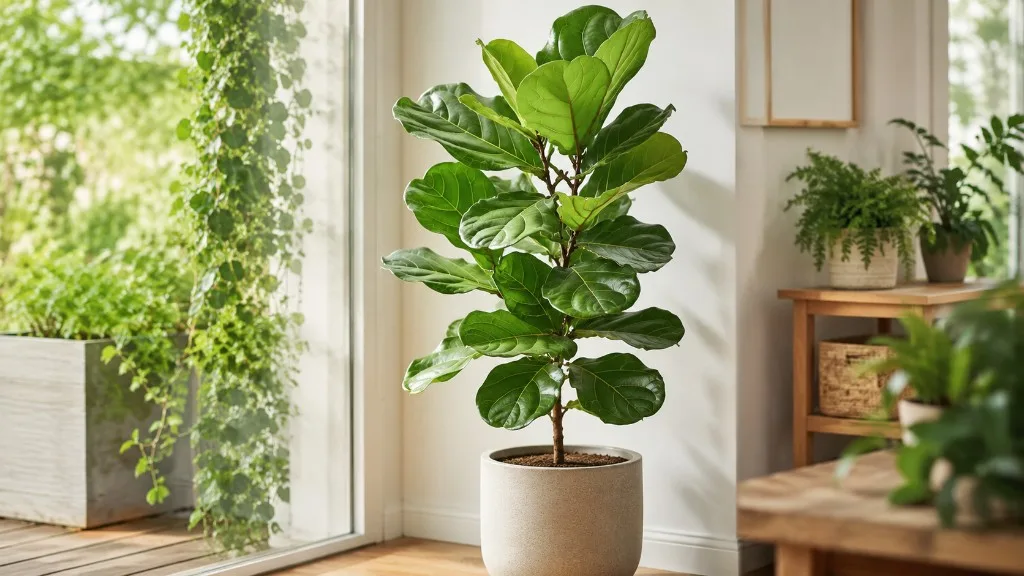
A fiddle-leaf fig is a sizable plant, so it usually belongs beside an east-facing window rather than on the sill. Give it a clear view of the sky and a bright spot where the morning sun reaches its leaves for a limited period or is softened by a sheer curtain. A small, shaded east window may be too weak for steady growth, especially if the plant sits several feet back.
Fiddle-leaf figs can sulk after major changes in light or location. Choose the spot before bringing it home if possible, then avoid repeatedly moving it from one window to another. Rotate the pot gradually if growth leans toward the light, but do not turn it drastically every few days. Watch for new growth and leaf spacing over several weeks, not just the condition of one older leaf.
Water only when the upper portion of the mix has dried; a large pot can stay wet much longer in a cool, dim room. Keep the foliage from touching cold glass and avoid placing the plant beside a drafty exterior door or heating vent. If it drops leaves after a move, review the sequence of changes—light, watering, temperature, and transport—rather than blaming the window direction alone.
Match the plant to your window
For a shaded east window, start with adaptable foliage plants such as pothos or spider plant, then place them where they can still see the brightest part of the sky. For a bright, unobstructed east window, consider a jade or African violet, but monitor the direct beam and soften it if the leaves show stress. A pilea and peace lily suit the middle ground, while a Boston fern is a better match when you can keep moisture and humidity steady.
If the window has strong direct morning sun, do not assume that all eight plants want to sit on the sill. Use the direct beam for plants that can tolerate it, and place sensitive foliage just outside the sun patch. A sheer curtain can diffuse sunlight without making the whole room dark. If the window is shaded by trees or a nearby structure, move plants closer to the glass or choose more shade-tolerant options; a plant several feet away may receive much less light than the sill.
Think about the plant’s mature size and your household, too. A fiddle-leaf fig needs floor space, while pilea and African violet fit a small sill. Hanging pothos and spider plants need room to trail or arch. If pets or young children might chew leaves, check species-specific safety information before buying and keep potentially harmful plants out of reach.
Care changes after you move a plant
A new window changes more than light. It can change the rate at which the pot dries, leaf temperature, and exposure to cold drafts. Give a plant several weeks to show how it responds, and change one condition at a time where possible. That makes the cause of improvement or decline easier to identify.
Water by drying speed, not a fixed calendar
A plant in a brighter, warmer sill may use water faster than the same plant in a cool corner, but pot size and soil mix matter too. Check moisture before each watering. For most foliage plants, water thoroughly until excess drains, then empty the saucer. For jade, wait until the mix is dry; for Boston fern, avoid letting the root ball dry out completely.
When a plant is placed in lower light, its growth and water use often slow. Joy Us Garden’s low-light plant guide notes that plants in lower light tend to grow more slowly and that care, including watering, may need adjustment in darker winter months. Joy Us Garden’s low-light houseplant guide supports a useful rule: water according to how quickly the mix dries, not according to a weekly reminder. If a pot stays wet for many days, check drainage, root health, and temperature instead of adding more water.
Do not use brown leaf tips as proof that a plant needs more sun. Dry air, salt buildup, hard water, irregular watering, or root damage can produce similar symptoms. Light is one part of the diagnosis, so compare new growth and the overall pattern before making a large move.
Acclimate gradually and revisit placement with the seasons
A plant moved from a dim store shelf to direct morning sun can develop scorch even if the window is normally suitable. Begin slightly farther from the glass or behind a sheer curtain, then move it closer over one to two weeks while checking leaves. This is especially helpful for foliage that was grown under greenhouse shade or low store lighting.
Recheck the window in winter and summer. A winter sun angle can send beams deeper into a room, while shorter days may reduce total light. Summer sun may be warmer and last longer at the pane. If you heat the room differently or open the window for ventilation, watch for cold drafts and hot air that were not present when you first placed the plant.
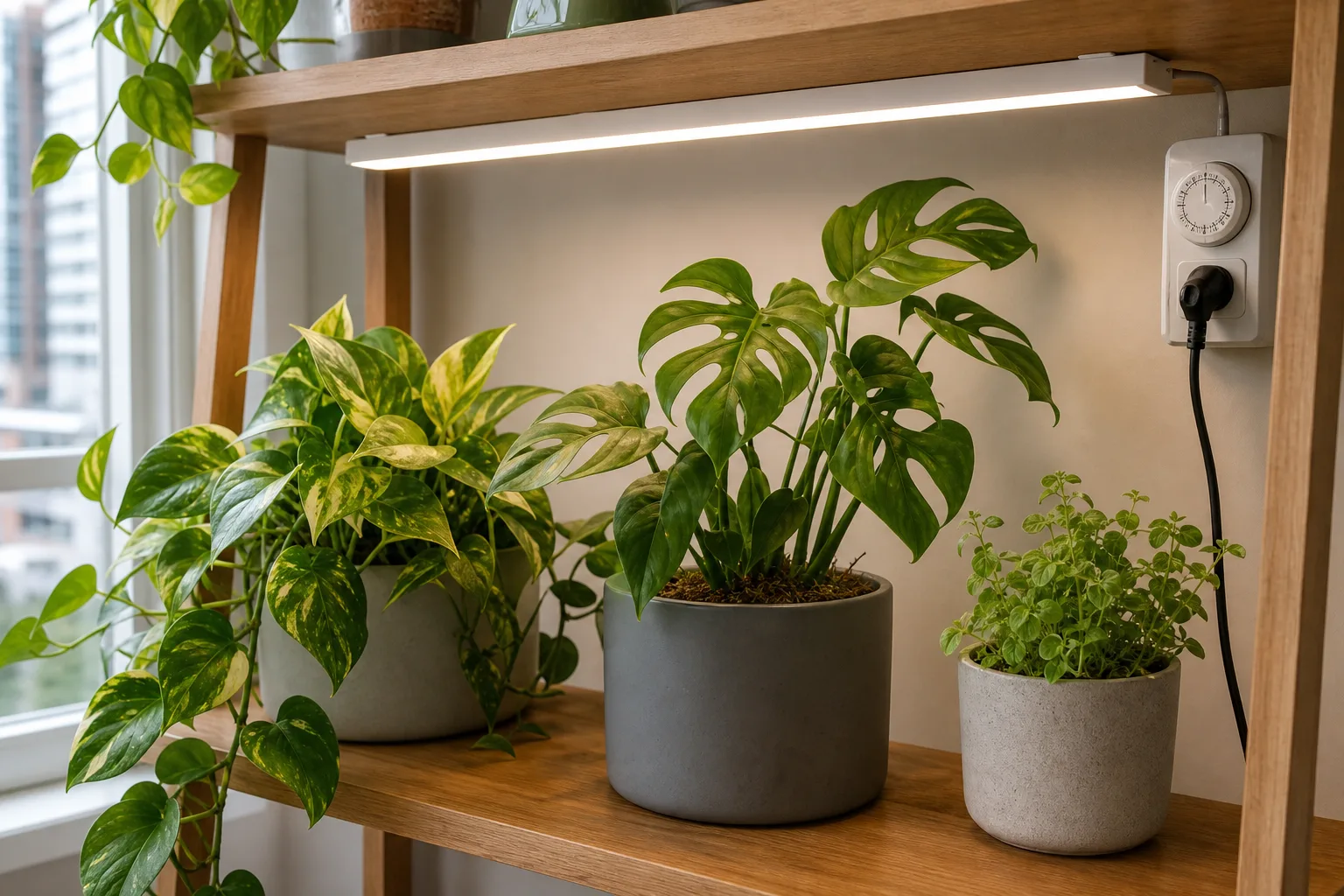
If the location is too dim for a plant you want to keep, consider a full-spectrum grow light above it. Position and timing depend on the fixture and plant, so follow the light’s instructions and observe the plant rather than assuming a desk lamp is sufficient. Penn State’s guide notes that some plants change growth or foliage when light conditions change; allow time for new growth to show whether the adjustment worked.
Signs the placement needs adjustment
Watch the newest leaves and the plant’s shape. Long, weak stems, wide gaps between leaves, smaller new foliage, or a strong lean toward the window can point to insufficient light. Variegated pothos may show less pattern in low light. These signs develop over time, so do not move a plant repeatedly because of one older leaf.
Bleached patches, dry tan areas on the window-facing side, or leaves that become unusually hot in the sun patch suggest that light may be too strong or the plant has not acclimated. Pull the pot back or filter the beam, then allow new growth to reveal whether the change helped. If leaves droop, yellow, or fall, also check watering and temperature; those symptoms have multiple possible causes.
The best spot is not always the sill. If the morning beam is too intense, shift the plant to a nearby bright shelf. If the window is dim, bring a suitable plant close to the pane or supplement the light. Match the actual position to the plant’s needs, and let the next few weeks of growth guide your final adjustment.
Conclusion
East-facing windows can suit many houseplants, but the compass direction alone cannot tell you which ones will thrive. Check how long direct morning sun reaches the leaves, how bright the rest of the day remains, and whether trees, screens, glass, or distance reduce the light.
Choose African violet, pilea, pothos, spider plant, peace lily, or Boston fern for bright filtered to indirect conditions, adjusting position to the plant’s response. Reserve the brightest east exposure for jade, and give a fiddle-leaf fig a roomy spot close to the window. Acclimate slowly, change watering based on how quickly the mix dries, and move the plant if new growth shows a persistent mismatch.