Cucumber Flowers but No Fruit? Find the Cause
Cucumber plants have flowers but no fruit? Learn to tell male from female flowers, fix pollination and stress problems, and hand-pollinate correctly.
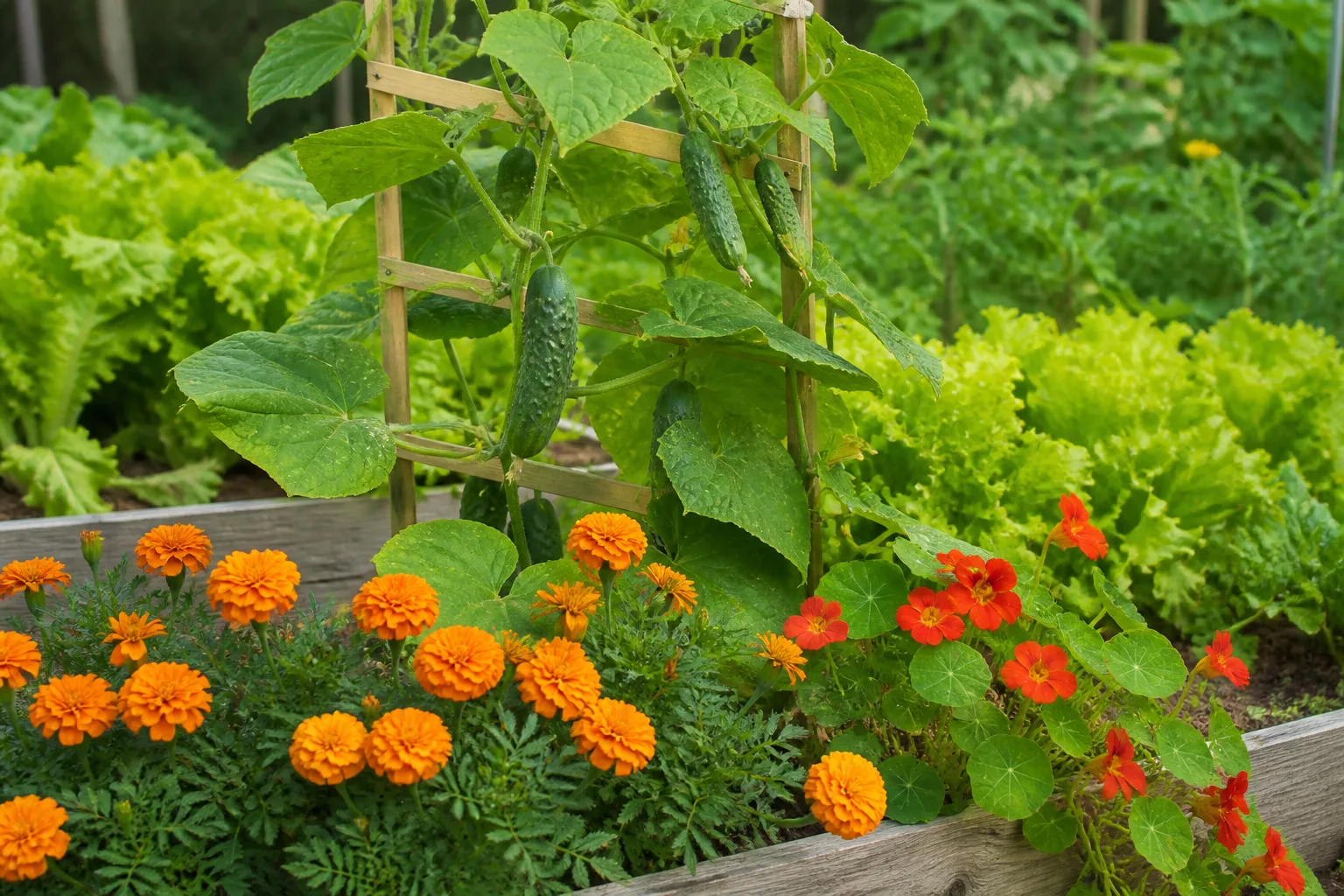
A cucumber vine can be covered in yellow blooms and still produce no cucumbers. The fastest way to find the cause is to inspect the flower and the short stem behind it before adding fertilizer, pruning, or changing your watering schedule.
If every bloom is male, the plant may simply be young or responding to weather. If female flowers are present but the tiny ovaries turn yellow and fall, look at pollination, temperature, root-zone moisture, nutrition, and plant health. Those symptoms overlap, but the flower gives you a useful starting point.
Read the Flower Before Changing Care
Do not judge the whole vine from one blossom. Inspect five or six flowers at different points along the main stem and side shoots, preferably early in the day when newly opened flowers are easy to identify.
The first question is not “What fertilizer should I use?” It is “Is there a potential fruit behind this flower?” That one check separates a normal male-heavy beginning from a female-flower problem.
Male vs. Female: The Two-Minute Inspection
Male and female flowers usually grow on the same ordinary outdoor cucumber plant. The male flower has a thin stem and no cucumber-shaped swelling between the stem and the yellow petals. Inside, its anther produces pollen.
The female flower has a small, ridged swelling behind the petals. That is the ovary, and it is the part that can enlarge into a cucumber after pollen reaches the stigma. A female flower may sit closer to the vine and often appears alone rather than in a cluster, but stem length and flower arrangement vary by cultivar, so the swelling is the most dependable clue.
| What you see | What it means | First move |
|---|---|---|
| Yellow bloom with no swelling behind it | Male flower; it cannot become a cucumber by itself | Keep it if you are growing an outdoor, pollination-dependent variety |
| Yellow bloom with a tiny cucumber-shaped swelling | Female flower; it has fruit potential | Watch for bee visits or hand-pollinate that morning if appropriate |
| Swelling turns yellow, stops growing, and drops | Pollination may have failed, or the plant is under weather or root stress | Check the variety, recent weather, and soil moisture together |
| Many female flowers on a greenhouse vine | Could be an all-female or parthenocarpic type | Read the seed packet before adding pollen |
The tiny ovary is not proof that pollination succeeded. It tells you only that the plant made a female flower. The next few days—when the swelling stays green and begins to enlarge—are what reveal successful fruit set.
Why a Cucumber Vine Can Bloom Without Making Fruit
Cucumber flower production is more flexible than the simple “male plus female” explanation suggests. The flower bud begins with the potential to develop both reproductive structures; genetics and growing conditions influence which structure continues developing. A peer-reviewed review in Frontiers in Plant Science describes cucumber sex expression as a combination of genetic controls, plant hormones, and environmental conditions—not a fixed schedule that every vine follows.
The Normal Early Male-Flower Phase
Most standard outdoor cucumbers are monoecious, meaning one plant makes separate male and female flowers. Early in the season, the vine commonly produces a flush of male flowers first. That gives the plant pollen-producing blooms before it invests heavily in young fruit, and it can make the vine look unproductive for several days.
Penn State PlantVillage notes that female flowers may appear within roughly a week to 10 days after the first male flowers, while practical guidance from Gardening Know How describes a longer wait on some young vines. Treat those numbers as a useful range, not a deadline: variety, temperature, light, and transplant stress can change the sequence (Penn State PlantVillage’s cucumber flower discussion; Gardening Know How’s hand-pollination guide).
Waiting is reasonable when the vine is growing steadily, the leaves are healthy, the soil is not swinging between dust-dry and saturated, and female flowers have not yet appeared. It is not reasonable to keep waiting indefinitely on a mature vine that makes female flowers which repeatedly yellow and drop.
Cultivar Type Changes the Diagnosis
Check the seed packet, plant tag, or cultivar description. Gynoecious cucumbers produce mostly female flowers, so the grower may need a compatible monoecious pollinator plant to supply pollen. Parthenocarpic cucumbers can set fruit without pollination and are often selected for greenhouse or protected growing.
These terms are easy to confuse. A gynoecious plant can have many female flowers and still need pollen; a parthenocarpic plant is bred to develop fruit without pollen. Oklahoma State University Extension lists both mostly-female and parthenocarpic types and explains why their pollination requirements differ (Oklahoma State University Extension’s cucumber production guide).
This is also why “hand-pollinate every female flower” is not universal advice. Some greenhouse cucumbers are all-female and should not be pollinated because pollinated fruit can become bitter. If the packet says parthenocarpic, greenhouse, or all-female, follow that instruction before borrowing pollen from another cucumber.
Five Reasons Female Flowers Fail to Become Cucumbers
Once female flowers are present, use the pattern of failure to narrow the problem. A female flower that never swells points you toward pollen transfer or an immediate flower injury. A tiny cucumber that swells briefly and then yellows points toward incomplete pollination, heat, moisture swings, or root damage.
Pollination Was Missed
Outdoor, non-parthenocarpic cucumbers need pollen moved from a male flower to the stigma of a female flower. Bees and other insects usually do this, but a balcony, screened enclosure, rainy week, windy site, or insecticide-treated garden may have too few visits during the flower’s short opening period.
The Journal of Pollination Ecology’s review of cucurbit crops describes insect pollination as important for fruit set and notes that wild bees can be effective pollinators, although pollinator behavior and results vary by crop and location (the Journal of Pollination Ecology review of cucurbit pollination). In a home garden, you do not need to count bee visits; simply watch a few female flowers during a dry morning. If they open without any insect activity, hand-pollinating the next flowers is a sensible test.
Poor pollination can also produce a cucumber that grows slowly, remains narrow or misshapen, and then stops. That does not prove pollen failure by itself, but the combination of a female flower, quiet morning, and yellowing young ovary is strong enough to test with hand pollination.
Timing helps you weigh the clues. A male flower that opens, fades, and drops without any swelling is doing exactly what a male flower does. A female flower that opens with a green ovary and then drops before the ovary enlarges deserves a pollination and weather check. A young cucumber that grows for several days before turning yellow may reflect incomplete pollination, but compare that symptom with the root-zone moisture and the plant’s condition instead of treating the color as a diagnosis on its own.
The most useful observation is a paired one: record the flower type in the morning, then check the same node two or three mornings later. A green, enlarging ovary tells you more than the total number of yellow flowers on the vine. If several hand-pollinated ovaries fail in the same way, stop repeating the brush step and investigate heat, water, roots, variety instructions, or disease.
Weather Interrupted Flowering
Cucumbers are warm-season plants, but extreme heat, cold nights, heavy rain, and prolonged cloud can all disrupt fruit set. Cold or wet weather reduces insect activity. Hot weather increases water loss and can push a stressed plant toward flower or young-fruit drop. A sharp weather change can also alter the balance between male and female flower production.
Do not treat a single hot afternoon as proof that the plant is finished. Look for a pattern: female flowers open during a run of rain, tiny ovaries yellow during a heat wave, or new flowers become male-heavy after a cold spell. The cucumber sex-expression literature documents environmental effects on the balance of flower types, while Oklahoma State identifies cucumbers as warm-season plants that are vulnerable to cold and frost.
Improve the conditions you can control. Use mulch to slow soil moisture loss, keep a container out of reflected heat, provide the brightest safe position, and avoid moving or heavily pruning a vine while it is already stressed. If you grow in a greenhouse, ventilate and shade during damaging heat rather than trying to fix every failed flower with a brush.
Water or Root Stress Aborted the Ovary
Cucumbers need an even supply of moisture while flowering and filling fruit, but their roots still need oxygen. A dry root zone can cause flowers and tiny fruits to abort; a saturated bed can damage roots and create a similar above-ground result.
Check the soil several inches below the surface before watering. If it is dry, water slowly at the base until the full root zone is moist. If it is wet and heavy, pause irrigation and improve drainage rather than adding more water to a wilting plant.
RHS guidance recommends keeping greenhouse and container cucumbers evenly moist, taking extra care during hot weather and fruit formation, and watering at the base rather than wetting the foliage. Oklahoma State also emphasizes moisture management and irrigation as part of successful cucumber production (the RHS cucumber growing guide).
Containers dry faster than in-ground beds, especially when wind or a dark pot heats the root ball. Check containers daily during hot weather, but water only when the mix needs it. Raised beds may drain quickly, while heavy soil may stay wet after rain; the same calendar schedule cannot work for both.
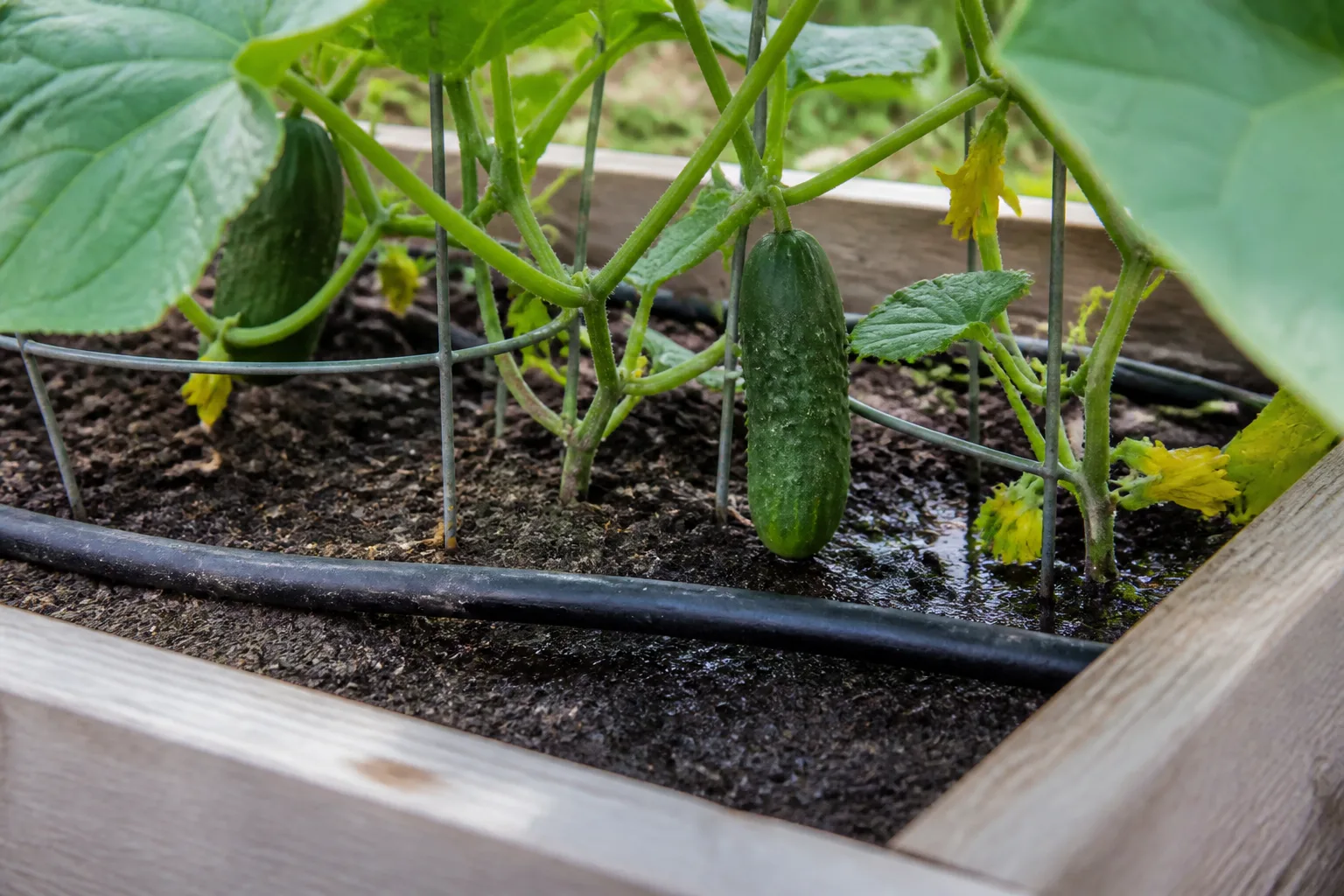
Root-zone irrigation helps keep moisture steadier without washing pollen from open flowers or keeping the leaves wet.
Excess Nitrogen Made a Leafy Vine
A very large, dark-green vine with few female flowers may be receiving more nitrogen than it can use for balanced fruit production. Excess nitrogen favors leaves and stems and can delay flowering and fruit set. More fertilizer is especially unlikely to help when the vine is already vigorous.
Review recent applications of lawn fertilizer, manure, blood meal, poultry litter, compost, and liquid plant food. Oklahoma State warns that high soil nitrogen can cause excessive growth and delayed flowering and fruit set, and recommends basing fertility on soil-test results rather than guessing at a rate (Oklahoma State’s fertilizer guidance for cucumbers).
Pause repeated nitrogen applications while you diagnose the plant. Do not replace them with a heavy “bloom booster” or a large dose of phosphorus; neither product supplies missing pollen, corrects waterlogged roots, or repairs heat injury. If leaves are genuinely pale and growth is weak, use a soil test and follow a vegetable-fertilizer label or local extension recommendation.
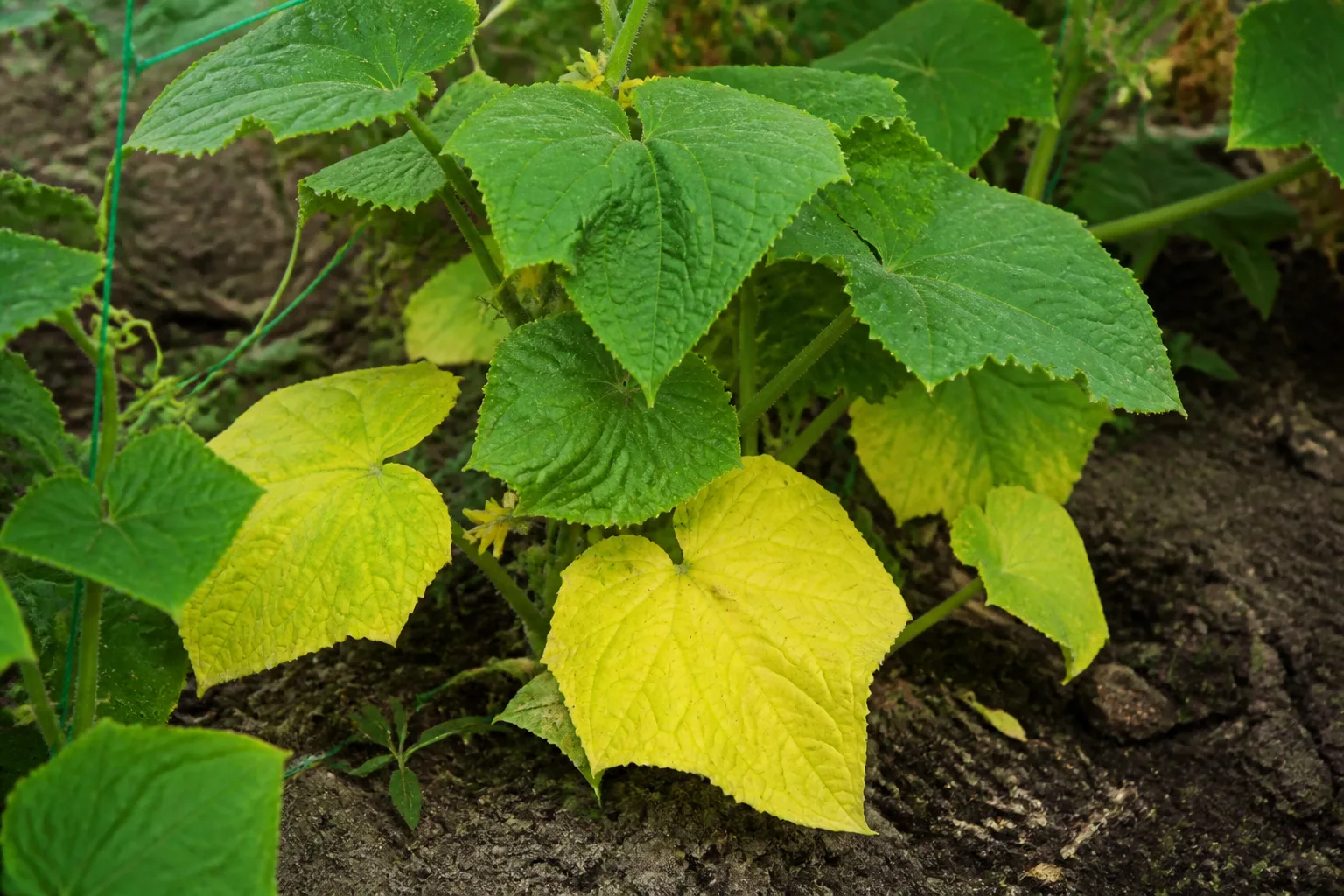
Leaf color can support a fertility diagnosis, but soil testing is safer than treating every yellow leaf with more fertilizer.
Damage, Pests, or Disease Stopped the Flower
Not every dropped flower is a pollination problem. Check for chewed petals, damaged stems, webbing, sticky residue, spreading leaf spots, powdery growth, mosaic-like mottling, or a vine that wilts even when the soil is moist. A flower or ovary that is physically damaged may abort before it has a chance to set fruit.
Keep the response proportional. Remove badly diseased material if appropriate for the problem, improve airflow, and identify the pest before spraying. Broad-spectrum insecticides can reduce the pollinators you need, and a blanket spray can make fruit set worse while leaving the original diagnosis unresolved.
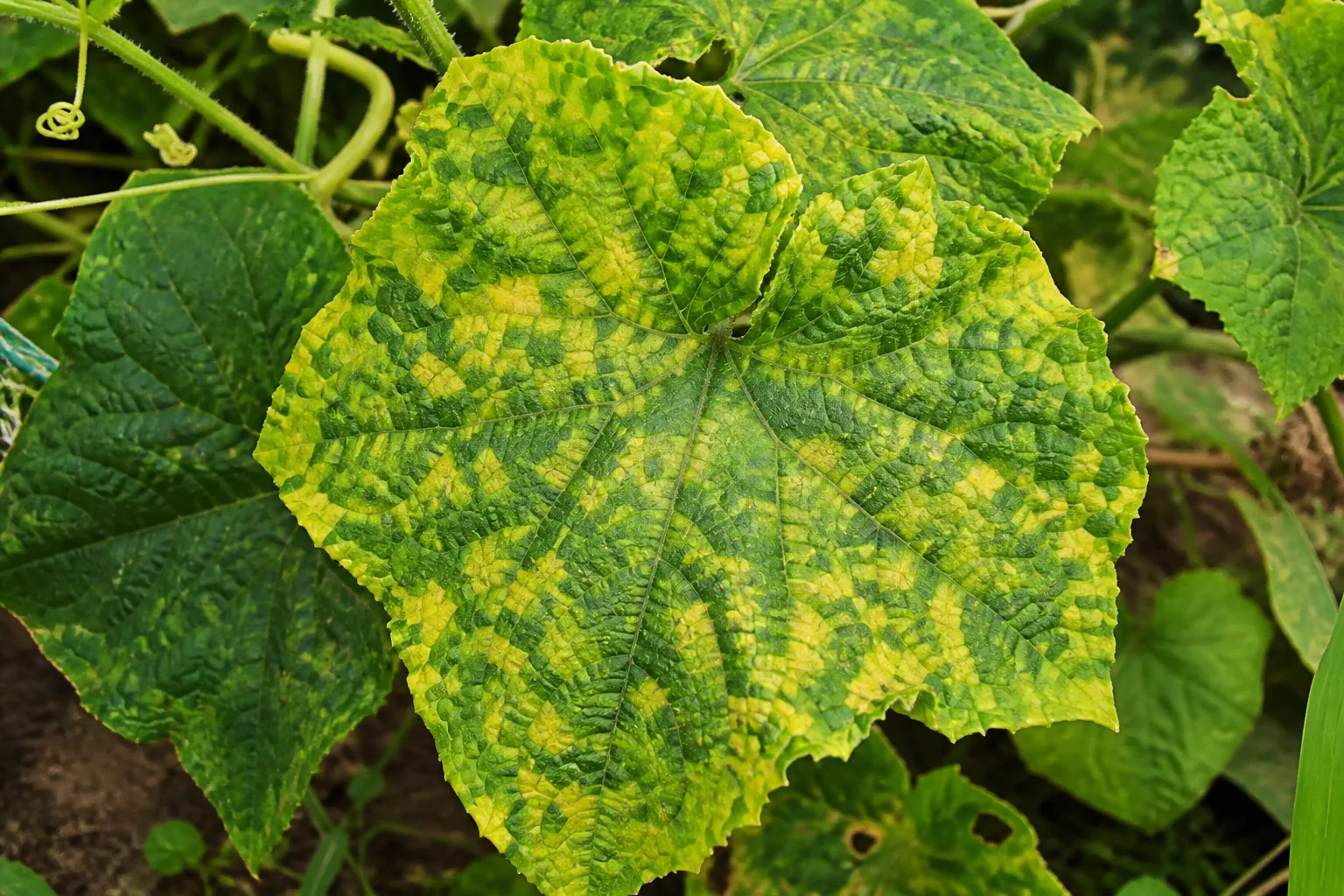
Mottled leaves, sudden wilting, or spreading damage call for pest or disease triage rather than more hand-pollination.
How to Hand-Pollinate Cucumber Flowers
Hand pollination is a useful, low-risk test for an outdoor variety when female flowers are present but bees are not visiting. It is not necessary for every cucumber, and it can be the wrong move for parthenocarpic or all-female greenhouse types.
Prepare During the Morning Flower Window
Work with flowers that opened that morning. Fresh male pollen is easier to transfer, and the female stigma is receptive while the flower is open. Gardening Know How recommends using a small clean brush or the male flower itself and notes that pollen is viable for a limited period, so an afternoon rescue of a closed, fading bloom is less reliable.
First confirm the flower types. Choose a male flower with no swollen ovary and a female flower with a small cucumber-shaped ovary. If your plant is gynoecious and has no male blooms, you need a compatible monoecious pollinator plant; do not assume a second gynoecious plant will provide pollen.
Transfer Fresh Pollen Without Damaging the Stigma
- Use a small, dry paintbrush or cotton swab to collect pollen from the anther inside a fresh male flower.
- Touch the brush gently to the stigma in the center of the female flower. Aim for direct coverage rather than brushing the outside of the petals.
- Repeat with fresh pollen on each newly opened female flower. If pollen is scarce, carefully remove the petals from a male flower and touch its pollen-bearing center to the female stigma.
- Leave the flower and vine alone after pollinating. Photograph the ovary or mark the node with a loose, removable tie so you can see whether it stays green and enlarges over the next few days.
Do not scrub the stigma, wet the flower, or use a brush that is damp with fertilizer or pesticide residue. The goal is gentle pollen transfer, not force. If hand-pollinating several cucumber varieties, clean or dedicate the brush when you want to keep pollen sources separate for seed-saving purposes.
You do not need to pollinate every flower to test the idea. Hand-pollinate two or three fresh female flowers and leave a few comparable flowers untreated. If the treated ovaries stay green and the untreated ones repeatedly yellow, you have useful evidence that pollen transfer is limiting fruit set. If both groups fail, pollination was probably not the only problem, and the next checks should focus on weather, moisture, roots, and cultivar type.
Use a Seven-Day Fruit-Set Reset
Change one variable at a time so the plant can show you what helped. On the first morning, inspect several flowers, photograph the vine, read the seed packet, and note whether the soil is dry, evenly moist, or saturated.
For the next week, keep the root zone steadily moist without leaving it waterlogged. Check flowers in the morning, hand-pollinate only when the variety needs pollen, and avoid overhead watering while the flowers are open. Keep healthy leaves in place so the vine can power new flowers and expanding fruit.
At the same time, pause unnecessary nitrogen and avoid heavy pruning. Improve light or ventilation if the site is clearly too shaded or hot, but do not relocate a large, stressed vine unless it is in a container and the move is gentle. Record whether each hand-pollinated ovary remains green and grows.
Use the week as a small experiment rather than a frantic list of fixes:
- Morning one: identify male and female flowers, photograph the plant, and read the cultivar instructions.
- Mornings two through four: hand-pollinate only appropriate outdoor female flowers and note whether the ovaries enlarge.
- Every day: check moisture below the surface, look for new damage, and note unusual heat, rain, or wind.
- By the end of the week: compare treated and untreated flowers before deciding whether to alter fertilizer, drainage, shade, or the plant itself.
This sequence protects you from a common gardening error: applying fertilizer, watering more, pruning, and spraying on the same day, then having no way to tell which change helped or harmed the vine.
If one or more ovaries enlarge, your first problem was likely missed pollination or a short weather interruption. If they still yellow and drop, compare the pattern with soil moisture, root health, heat, and the variety’s pollination instructions. If the vine is mottled, wilting, or rapidly declining, shift from fruit-set troubleshooting to a pest or disease diagnosis.
Outdoor and Greenhouse Cucumbers Need Different Rules
An outdoor slicing cucumber generally benefits from male flowers and insect visits. Leave male blooms in place, provide a sunny site, avoid unnecessary insecticide exposure, and hand-pollinate when female flowers open without pollinators.
Greenhouse cucumbers are more complicated. Many are all-female or parthenocarpic, and some are intended to produce seedless fruit without pollen. RHS guidance specifically warns that pollinating certain greenhouse flowers can make the resulting cucumbers bitter, while outdoor types need pollination to set fruit (RHS guidance on removing male flowers).
That means a greenhouse vine with female flowers but no bees is not automatically failing. Check the cultivar first, then stabilize heat, ventilation, light, water, and feeding. Use a brush only when the plant’s instructions call for pollination.
When to Stop Troubleshooting and Replant
Give a young outdoor vine time to move from its male-heavy phase to female flowering, especially after transplanting or a cold spell. Replanting because the first flush contains only male flowers wastes a plant that may be behaving normally.
Escalate the diagnosis when a mature vine produces female flowers for several flowering cycles but no ovary enlarges after careful, variety-appropriate pollination and stable moisture. Also stop treating it as a simple pollination issue when the vine has persistent wilt, severe leaf mottling, widespread mildew, damaged roots, or a collapsing crown.
If the seed packet reveals a mismatch—such as an all-female type without a pollinator or a greenhouse parthenocarpic type being grown outdoors—your best fix may be a compatible plant or a different variety next season. Keep the current vine if it is healthy and still has time to recover, but do not keep adding products to force a genetic or pollination requirement it cannot meet.
Conclusion
When cucumber plants have flowers but no fruit, start with the flower. Male-only blooms may be a normal early phase; female flowers that yellow and drop point toward missed pollination, weather, uneven moisture, excess nitrogen, or a separate plant-health problem.
Read the cultivar instructions before hand-pollinating, keep outdoor roots evenly moist, protect pollinators, and observe the same flowers for a week. That sequence tells you whether the vine needs patience, fresh pollen, steadier conditions, or a deeper pest, disease, or site correction.



