How to Grow and Care for Hydrangeas in Pots
Grow hydrangeas in pots with the right compact variety, container, soil, light and watering routine. Learn how to prune and protect them in winter.
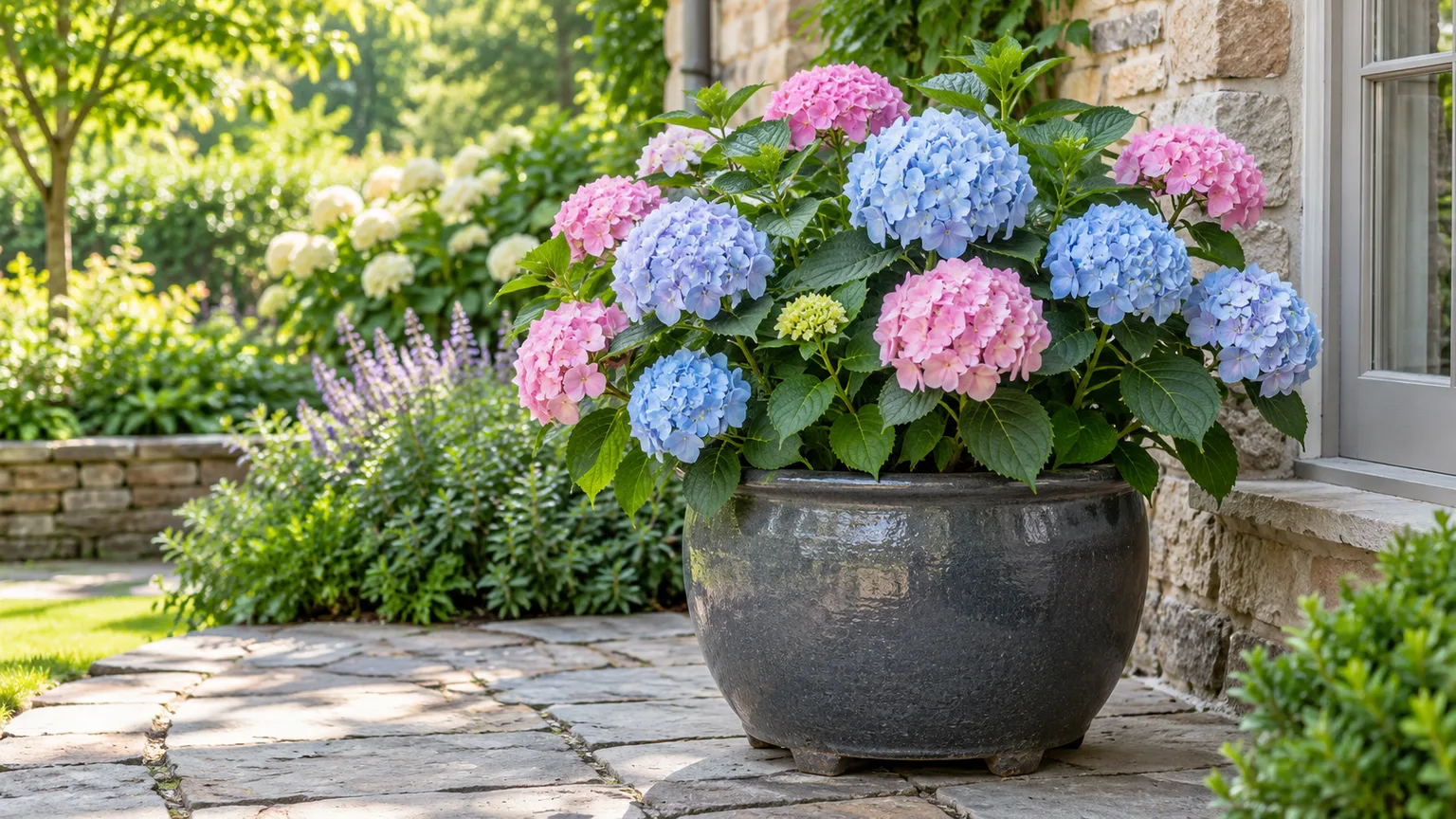
A hydrangea can thrive in a container for years, but success depends on treating it like a small shrub rather than a seasonal bouquet. Choose a cultivar that will fit its mature size, give its roots room and drainage, then place the pot where the plant gets enough light without baking through the hottest part of the day.
The main adjustment from garden-bed care is the root zone. A pot holds less soil, heats up faster, and loses water more quickly than the ground; in winter, it also exposes roots to colder air. Those limits call for a larger, well-drained container and moisture checks based on conditions—not a watering calendar that assumes every patio, plant and week behaves the same.
Are Hydrangeas Suitable for Pots?
Yes. Many hydrangeas can grow successfully in containers when the cultivar stays proportionate to the available pot, the mix drains well, and the plant receives steady attention to watering. Containers also make it easier to move a shrub into afternoon shade or a sheltered winter position, although a large filled planter can become too heavy to shift without a wheeled stand.
A compact selection is usually a better long-term choice than a full-size shrub kept small by repeated cutting. Hydrangeas differ in mature width, cold tolerance and where they set flower buds, so the name on the nursery label matters. The broad genus includes species suited to different conditions; NC State Extension’s hydrangea profile describes that variation and points out that containers can also make soil conditions easier to manage.
A flowering florist hydrangea is a different proposition from a shrub sold for landscape planting. These plants are often forced into bloom under greenhouse conditions and may be less cold-hardy than a landscape cultivar; that does not mean they cannot live on, but their return to a normal outdoor bloom cycle is uncertain. Treat it as an experiment: after flowering, keep it evenly moist, wait until frost danger has passed, and gradually acclimate it to outdoor light rather than moving it straight from a warm room into full sun.
Choose the Right Hydrangea for a Container
Start with the cultivar’s mature width as well as its height. A shrub that grows only a few feet tall can still spread too wide for a narrow balcony, and close confinement does not reliably keep a vigorous variety compact; it more often produces a thirsty plant with less room for healthy roots.
Match the hydrangea’s cold hardiness to both your local winter and the fact that its roots are above ground. Container-grown roots receive less insulation than roots in a garden bed, so a plant rated for your zone may still need protection in a pot. If the container will remain outdoors, favor a compact cultivar with a hardiness rating comfortably suited to your winters, and plan where it will be sheltered before planting.
Bloom style and pruning needs are part of the choice. Bigleaf hydrangeas offer familiar mophead or lacecap flowers and some cultivars can rebloom, but many set buds on old stems that can be damaged by cold or removed by untimely pruning. Panicle and smooth hydrangeas generally flower on the current season’s growth, which makes their pruning window different; however, a vigorous cultivar may outgrow a patio pot even if it is easy to prune.
Compact types to compare
Compact bigleaf selections such as ‘Wee Bit Grumpy’ and ‘Cityline’ cultivars suit growers who want a shrub that stays relatively small and may offer blue, purple or pink flowers depending on the cultivar and growing conditions. Mountain hydrangeas, including compact ‘Tuff Stuff’ selections, also have a naturally restrained habit; read the label carefully because the exact size and flower color vary by cultivar.
For a panicle type, dwarf selections such as ‘Bobo’ and ‘Little Lime’ provide a more compact shape than full-size panicle shrubs, but they still need a substantial container as they mature. Smooth hydrangea cultivars such as ‘Invincibelle Wee White’ can also work where a smaller footprint is needed. Proven Winners’ container guide lists compact examples and emphasizes comparing the mature plant with the space, light and hardiness of the site. Use current plant tags for the final measurements rather than assuming every cultivar in a series grows identically.
Choose a Pot That Will Not Restrict Roots
Choose a stable planter with open drainage holes and enough volume for the root ball to expand. For many compact shrubs, a pot roughly 16 to 24 inches wide and deep is a practical starting range, not a universal minimum; a larger cultivar needs a larger home. The best fit is usually one or two sizes wider than the nursery container, with enough depth to hold moisture without burying the plant’s crown.
Drainage is nonnegotiable. A decorative pot with no outlet can leave roots sitting in stagnant water, even if the surface looks dry. If you want to use a cachepot, keep the hydrangea in a draining inner pot and empty any collected water after irrigation; elevate the container slightly on feet so the holes do not seal against a flat patio.
Material affects weight, moisture and winter survival. Unglazed clay loses water through its sides and can crack during freeze-thaw cycles, while plastic and resin are lighter and generally retain moisture longer. A large ceramic or concrete pot can be stable in wind but difficult to move. Decide whether the plant must be shifted for shade or winter shelter before filling the container; Walter Reeves’ advice on a container-grown ‘Limelight’ illustrates how an undersized pot can leave a large shrub under root and moisture stress.
Use a Moisture-Retentive, Free-Draining Potting Mix
Use a quality outdoor potting mix designed for containers, not soil dug from the garden. Garden soil compacts in a pot, restricts air around the roots and may drain unevenly; seed-starting mix is too fine and light for a shrub that will stay in place for years. A good container blend should hold enough water for the roots to use while allowing excess to drain after each thorough watering.
You can improve a basic potting mix with a modest amount of mature compost if the base mix is not already heavily amended. Avoid turning the container into dense, rich soil: too much fine organic material can stay wet, settle, and make it harder to judge moisture. Do not add a gravel layer at the bottom as a substitute for drainage holes; use an open mix and a pot with real outlets instead.
Hydrangea flower color is not a simple measure of whether the plant is healthy. In some bigleaf and mountain cultivars, flower color can shift with soil acidity and the availability of aluminum, but white and many other hydrangeas do not change color the same way. The NC State Extension profile for bigleaf hydrangea explains this species-specific relationship; before adding an acidifier or color product, identify the cultivar and test the mix rather than dosing blindly. Frequent container watering can also wash amendments through the drainage holes, so color treatments may need careful monitoring and may not hold evenly.
Plant at the Right Depth
Plant in spring after the most severe frost risk has passed, or in early fall when the plant can establish roots before hot weather or a hard freeze. In a very hot climate, avoid potting during a heat wave; newly disturbed roots have a harder time keeping foliage hydrated when the container is heating and drying quickly.
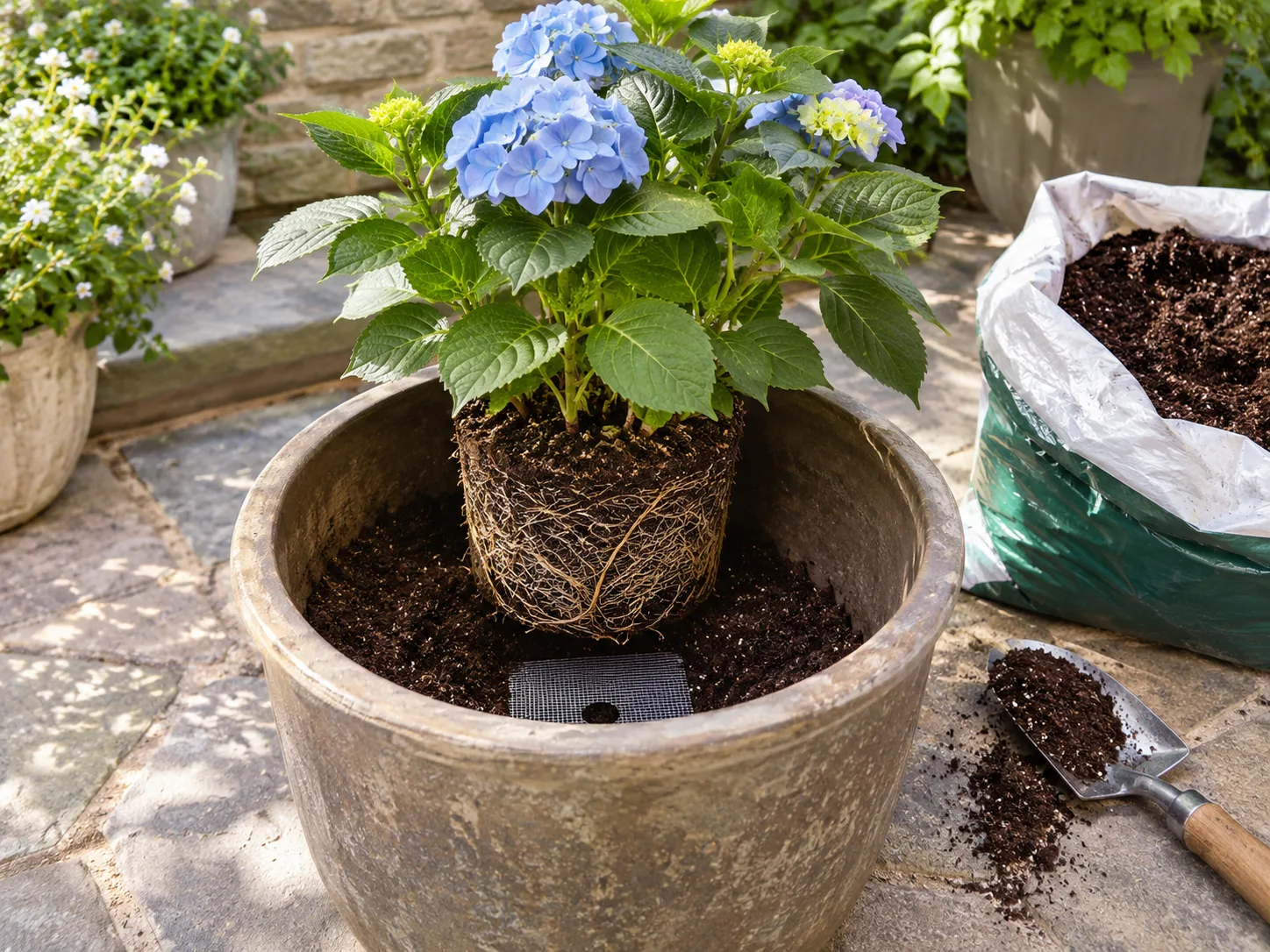
Cover the drainage holes with a piece of mesh if the mix tends to escape, but do not block the outlets. Add mix so the top of the root ball will sit just below the rim, remove the hydrangea from its nursery pot, and loosen only tightly circling outer roots. Set the plant at the same depth it grew in the nursery container, then fill around the root ball and press gently to remove large air pockets without compacting the mix.
Water slowly over the full surface until water drains from the bottom. The first watering settles the mix and shows whether water can move through the pot; if the root ball is exposed after settling, add a little more mix around it. Finish with a thin mulch layer to slow evaporation, leaving a small gap around the stems so the crown stays exposed and airy.
Set the Pot Where Morning Light Reaches It
Most hydrangeas flower best with several hours of light, but the right amount depends on species, cultivar and climate. Morning sun with afternoon shade is a useful starting point in warm regions: it supports flowering while limiting the heat load on leaves and roots. Panicle types generally tolerate more direct sun than bigleaf hydrangeas, but full afternoon exposure can still make a pot dry rapidly in a hot, windy site.
A balcony or south-facing patio can be brighter and warmer than the nearby garden. Check how long direct sun actually falls on the container and whether the pot itself heats against a wall or paving; shift it to dappled shade if leaves repeatedly wilt during the hottest hours while the mix remains moist. The goal is not deep shade, which can reduce flowering, but a balance of light and root-zone comfort.
Air movement matters too. A sheltered site protects large leaves and flower heads from drying wind, but a tight corner crowded with other plants can trap damp air around foliage. Leave enough room for air to circulate, and water the soil rather than routinely wetting leaves late in the day. If the plant is leaning toward the light, turn the container a little at a time instead of repeatedly moving it between very different conditions.
Water According to Root-Zone Moisture
Check the soil rather than relying on a fixed number of watering days. Push a finger an inch or two into the mix; if that zone is beginning to dry, water the entire root ball thoroughly until excess runs from the drainage holes. Container hydrangeas use water faster than in-ground shrubs because their roots have less soil to draw from, but the rate changes with pot size, wind, temperature, sunlight, plant maturity and rainfall.
In mild weather, a large pot may remain evenly moist for several days. During a heat wave, a small or root-filled container may need checking every day and may need water more than once on the hottest days. That is a reason to check more often, not to water automatically twice daily: if the mix is still wet below the surface, adding more can deprive roots of air and encourage decline.
Water slowly enough for the mix to absorb it. If water rushes down the sides and out immediately, the mix may have dried and pulled away from the pot; apply a little water, pause, then repeat until the root ball is wetted. A saucer can catch runoff, but do not leave the pot sitting in standing water. During a long absence, test any drip or self-watering system before relying on it, and make sure it wets the root zone without keeping it saturated.
Mulch helps limit evaporation, but it cannot compensate for a pot that is too small, blocked drainage or afternoon heat. If the top dries every few hours, check the container’s size and root density, and consider moving it out of reflected heat. Consistent moisture means an evenly damp mix with oxygen—not permanently soggy soil.
Feed Lightly While Growth Is Active
Hydrangeas in containers eventually use the nutrients available in their potting mix, and repeated watering can carry some nutrients out through the drain holes. For an established plant, apply a balanced fertilizer formulated for flowering shrubs at the label rate when new growth begins in spring. Follow the product directions rather than combining several fertilizers or adding extra “bloom booster” to compensate for poor light or pruning at the wrong time.
Fresh potting mix may already contain starter fertilizer, so check its label before feeding a newly planted shrub. Too much nitrogen can produce lush leaves at the expense of flowers, and late-season feeding can encourage tender growth before dormancy. Stop feeding by midsummer or by the product’s recommended cutoff for your climate; do not keep fertilizing a hydrangea that is stressed from heat or waterlogged roots.
Acid-loving plant fertilizer is not automatically the right choice for every hydrangea. If your goal is a particular flower color, first confirm that you have a color-responsive bigleaf or mountain cultivar and understand the mix’s pH. Fertilizer will not force a white-flowering cultivar to turn blue, and more product is not a reliable solution to a plant that is failing to bloom.
Prune Only After Identifying Bloom Wood
Before cutting, find out whether your hydrangea flowers on old wood, new wood, or both. “Old wood” means stems formed in the previous growing season; buds for the coming flowers may already sit on those stems through winter. A plant label or cultivar profile is safer than guessing from flower shape alone.
Many bigleaf and mountain hydrangeas bloom on old wood, so do routine shaping just after flowering, if it is needed at all. Cutting them hard in fall, winter or early spring can remove the buds that would have opened that year. Reblooming cultivars may flower on both old and new growth, but that does not make severe pruning harmless; preserve healthy stems and remove only dead, damaged or crossing branches.
Smooth hydrangeas and panicle hydrangeas flower on new wood and can usually be pruned in late winter or early spring before active growth. Their stems still support leaves and blooms, so avoid shearing them into a tight ball or cutting them back simply because the plant appears too large for its pot. Choosing a more compact cultivar is a better way to manage the mature footprint. As NC State Extension’s genus guidance notes, pruning time differs among hydrangeas; a one-size-fits-all schedule can cost a season of flowers.
Protect the Root Ball During Winter
A hydrangea’s hardiness rating usually describes a plant in the ground, where surrounding soil buffers temperature swings. In a pot, cold reaches the root ball from the sides and bottom, so winter survival depends on the cultivar, local minimum temperatures, pot material, wind and exposure. When choosing a plant for a permanent container in a cold region, use a cultivar rated hardier than your local zone and plan to insulate the pot; Proven Winners recommends choosing a plant roughly two zones hardier for permanent container plantings exposed to freezing winters.
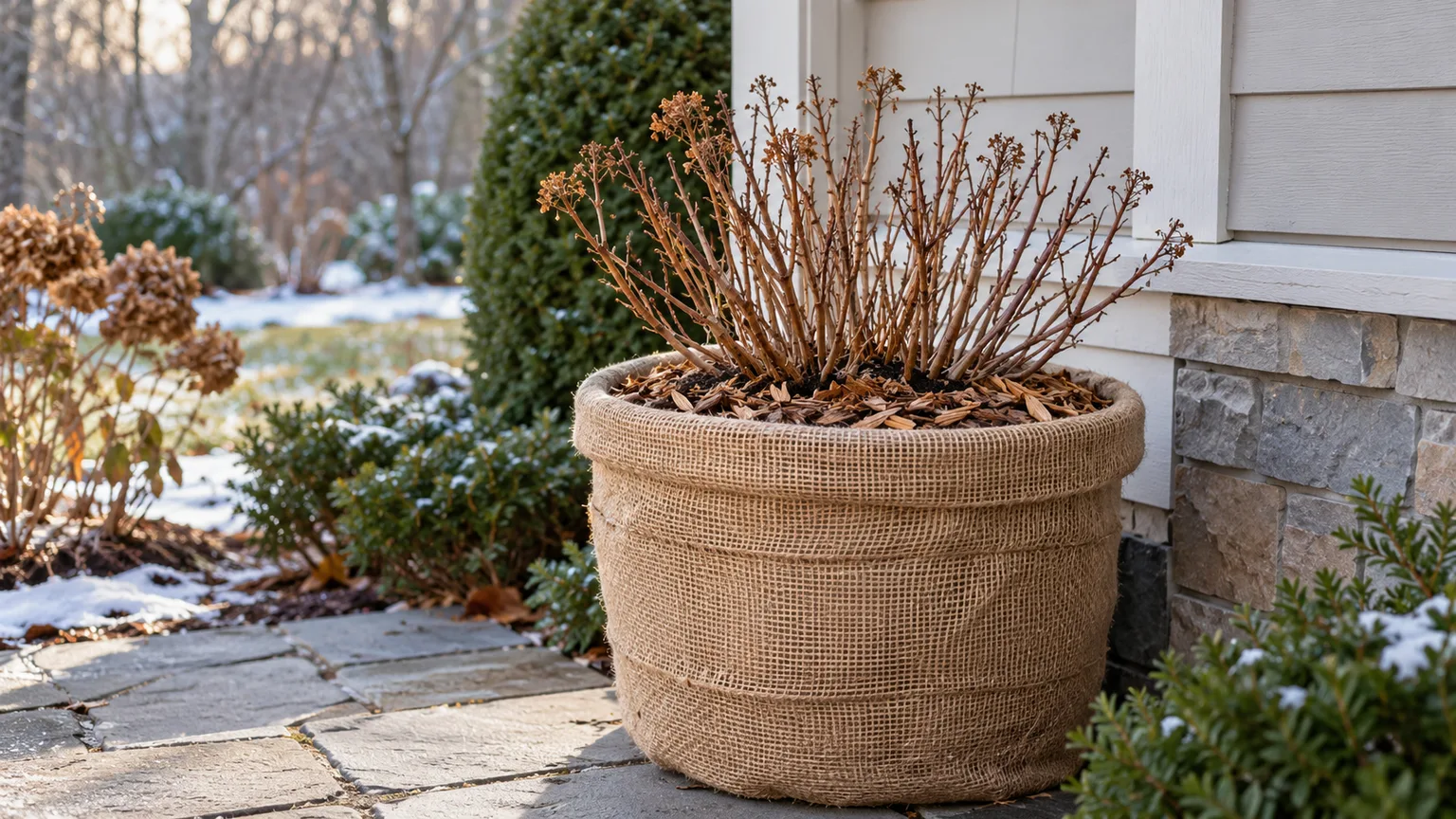
Keep the plant outdoors if its variety is hardy there, but move the container to a sheltered position after it has entered dormancy. A spot beside a protected wall can reduce wind exposure; wrap the pot with burlap or another insulating material, group containers together, and add mulch over the soil surface. Protect the container and roots rather than enclosing the shrub in a warm indoor room, because hydrangeas need their natural seasonal rest.
If your winters are too severe for an exposed pot, use an unheated garage or shed where the plant can remain cool and dormant. Check the mix periodically and water lightly if it has become dry; a dormant plant still needs some moisture, but it should not sit in wet soil. Avoid storing it in a heated living space, where warmth and weak indoor light can interrupt dormancy and produce soft, poorly timed growth.
Pot material can fail before the hydrangea does. Terra-cotta and some ceramic pots may crack when wet soil freezes and expands, while frost-resistant resin, fiberglass or suitable outdoor containers are less vulnerable. Before winter, confirm that the drainage holes are open, the pot is not resting in a full saucer, and the container can withstand the temperatures it will face.
Troubleshoot Common Potted Hydrangea Problems
Container problems are easier to solve when you check the root zone before changing fertilizer, pruning or soil pH. Note when the symptom appears, how long the pot receives sun, whether the mix is wet below the surface, and whether the issue followed a hot spell, heavy rain or a cold snap. One observation can rule out several wrong fixes.
Leaves that yellow, develop spots or fall may reflect several different stresses, including wet roots, drought, sun scorch, seasonal dormancy or disease. Inspect both sides of leaves and the base of stems, clear fallen material from the pot, and make sure the shrub has air around it. If spots spread after the foliage stays wet, water at the soil line and improve airflow before reaching for a spray; use a labeled treatment only when you have identified the problem.
Why are the leaves drooping?
First check moisture below the surface. If the mix is dry, water thoroughly and check again after it drains; a root ball can dry out even when a nearby saucer or top mulch looks damp. If the mix is wet, do not add more water—confirm that the holes are open and that the pot has not been left standing in runoff.
Timing is another clue. A hydrangea that sags in hot afternoon sun but firms up in the evening may be responding to heat stress rather than a lack of water. Move it into afternoon shade and recheck the root zone; repeated emergency watering into wet soil can turn temporary heat stress into a root problem. If the plant stays wilted when the mix is moist, inspect for poor drainage, a root-bound pot, damaged roots or a recent transplant shock.
Why is the plant not flowering?
Check pruning first, especially for bigleaf and mountain hydrangeas. Cutting old stems before they bloom, or winter cold injuring those stems, can remove the flower buds; a new-wood bloomer has a different pruning window. Then assess whether the plant gets enough light, whether the cultivar is mature enough to flower, and whether late or heavy nitrogen feeding has favored leaves over blooms.
A shade-heavy corner can keep foliage healthy but reduce the energy available for flowers. Increase light gradually if the site is too dark, while protecting the pot from the hot afternoon sun that can dry roots quickly. If a hydrangea was bought in full florist bloom, allow time for it to establish and reset its seasonal cycle rather than expecting the next bloom to arrive on the same schedule as a mature outdoor shrub.
Repot When Roots Have Outgrown the Container
Look for several signs together: roots circling densely at the surface or emerging from drainage holes, water running through unusually fast, and growth or flowering slowing despite appropriate light and watering. A single root at a drain hole is not enough to diagnose a crowded pot, but a root mass that occupies most of the container leaves little mix to hold water between checks.
Repot when the shrub is dormant or just before active spring growth, or after flowering if that timing better suits the species and your climate. Move it into a stable container only modestly larger than the old one, refresh the mix, and keep the crown at its previous soil level. A jump to an enormous pot can leave a large volume of wet mix around a small root system, so size up in stages rather than choosing the biggest container available.
A hydrangea may need repotting every few years, but growth rate and cultivar are better guides than a fixed schedule. Water well after the move, keep the plant out of harsh afternoon sun while roots recover, and resume the normal moisture checks. If the shrub has outgrown a pot you can safely lift or protect in winter, planting it in the ground may be the more sustainable choice.
Keep Hydrangeas Away From Pets That May Chew Them
Do not assume a flowering shrub is safe to nibble. The ASPCA lists Hydrangea arborescens as toxic to dogs, cats and horses, identifying cyanogenic glycosides and gastrointestinal signs such as vomiting and diarrhea; its guidance says severe cyanide effects are rare. Keep fallen leaves, flowers and pruning waste away from animals, and put the pot where a curious pet cannot chew it.
If you suspect a pet has eaten hydrangea, contact a veterinarian or animal poison-control service for advice rather than waiting for symptoms or trying a home remedy. The exact risk depends on what and how much was eaten, and an online plant profile cannot diagnose an individual animal.
Conclusion
Hydrangeas are rewarding container shrubs when the plant, pot and climate fit one another. Choose a compact cultivar by its mature size and bloom habits, use a generous container with drainage, and place it where it gets useful light without relentless afternoon heat.
After planting, let the mix—not the calendar—tell you when to water. Feed during active growth, prune only after identifying whether flowers form on old or new stems, and protect container roots through winter while keeping the plant dormant. When growth stalls, flowers disappear or leaves wilt, check the root zone, cultivar and recent conditions in that order; the right diagnosis usually matters more than another amendment or a more aggressive cut.



