How to Grow and Care for Smooth Hydrangea in Your Garden
Grow smooth hydrangea in the right light and soil, water it well, prune on new wood, and choose a cultivar that suits your space and flower style at home.
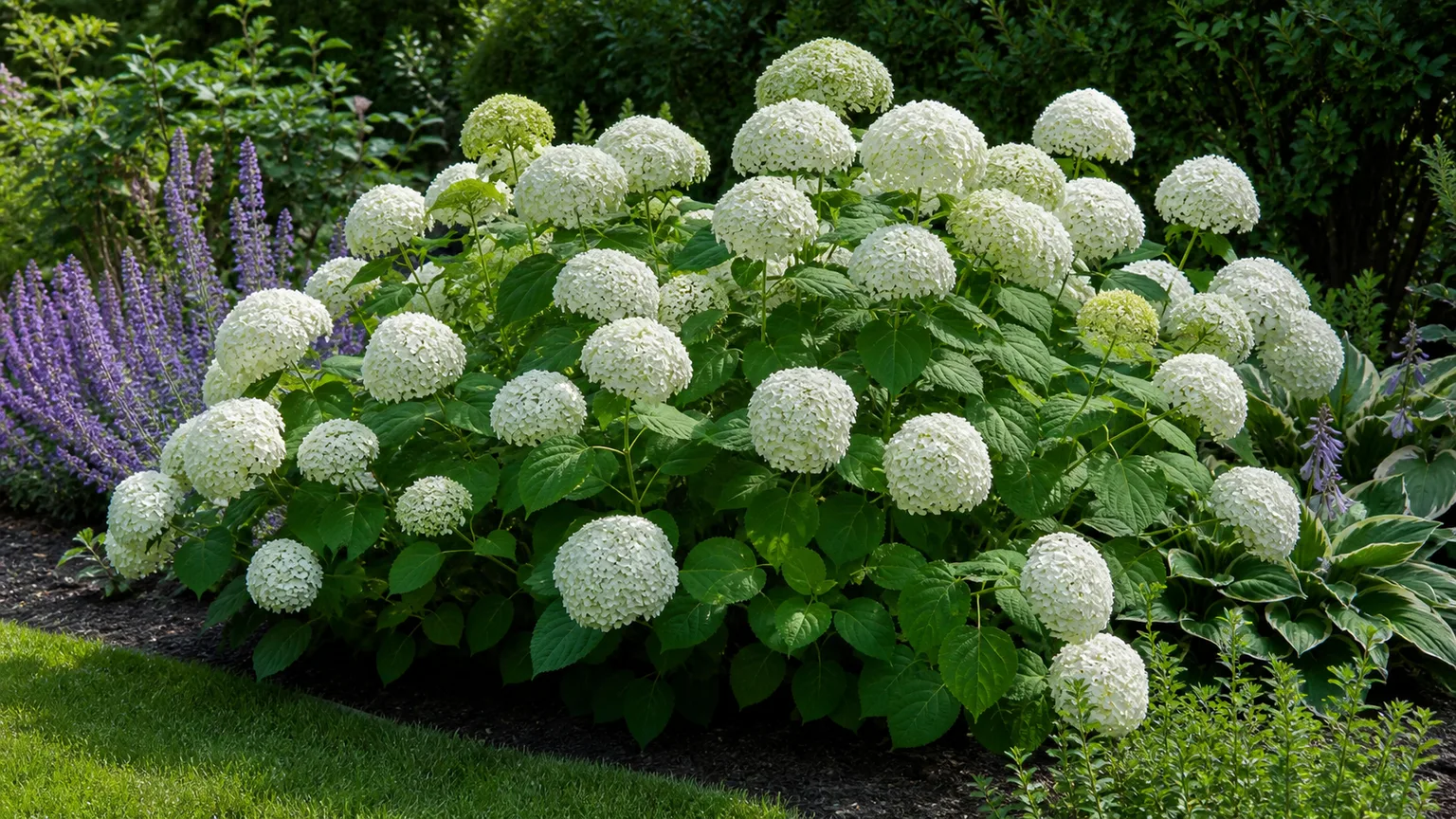
Smooth hydrangea is a hardy, deciduous shrub native to the eastern United States, valued for summer flowers and its ability to grow in partial shade. The basic formula is simple: give it evenly moist, well-drained soil, protect it from punishing afternoon heat where summers are hot, and prune before spring growth because it flowers on new stems. The details that matter most are cultivar choice and how much you cut back: a huge, rounded flower head can be beautiful, but it can also bend a weak stem after heavy rain.
Smooth Hydrangea at a Glance
Hydrangea arborescens is a multi-stemmed shrub, commonly about 3 to 5 feet tall and wide, though named cultivars may be smaller, larger, or more spreading. It is generally listed for USDA Zones 3 to 9; check the tag for the exact cultivar and local recommendations, since winter exposure and summer heat both affect performance. North Carolina State Extension describes the species as native to moist or rocky woodland slopes, ravines, streambanks, and bluff bases in the eastern United States. Its species profile is a useful reference for mature habit, site, and common problems.
Unlike bigleaf hydrangea, smooth hydrangea’s flower color is not changed by soil pH. Its flowers form on growth produced in the current season, which is why spring pruning does not remove the coming summer’s flower buds. A site that has consistent moisture and enough light for bloom matters more than chasing an exact soil acidity or feeding schedule.
Choose the Right Light for Your Climate
Smooth hydrangea is flexible about light, but the right position depends on the relationship between sun and water. In a warm or hot-summer garden, start with morning sun and afternoon shade, or bright dappled light. This gives the shrub useful energy for flowering while reducing leaf scorch, heat stress, and midday wilting.
Morning Sun and Afternoon Shade
In a cooler climate with reliably moist soil, a plant may flower well in more sun. North Carolina State Extension notes that the cultivar ‘Haas’ Halo’ can flower best in full sun when it receives enough water, while its species guidance emphasizes partial shade and consistent moisture for full-sun sites. That distinction is a helpful reminder: cultivar, heat, and soil moisture change the answer. Garden Design’s growing guide similarly recommends partial shade or dappled light, with more protection in hotter conditions.
Before planting, watch the spot on a clear day rather than estimating from a map or a single glance. A location that gets gentle morning light and shade after lunch is a safer starting point in the South or in a reflected-heat courtyard. If it will receive full sun, be prepared to monitor soil moisture closely during establishment and summer dry spells; if it sits in deep shade, expect fewer flowers and looser growth.
Soil and Drainage: Moist Is Not Waterlogged
Aim for soil that holds enough moisture to keep the root zone from drying quickly but still drains after rain. Smooth hydrangea tolerates a range of garden soils, including some clay or rocky conditions, but a persistently saturated planting hole deprives roots of air and encourages decline. A simple site check is to observe the area after a soaking rain: if puddles linger for a long time or the ground stays soupy, choose a better-drained position or plant on a broad, low mound.
Work compost into a broad planting area if the soil is very lean or compacted; do not create a small pocket of rich potting mix surrounded by dense soil, because water can collect in that “bathtub.” Keep the root flare level with the surrounding grade, and mulch after planting to slow evaporation. A slightly acidic to neutral soil is suitable, but do not apply aluminum sulfate or lime to force a blue or pink color change: smooth hydrangea does not respond to pH in the way many bigleaf hydrangeas do.
Planting a Smooth Hydrangea Step by Step
Plant in spring or fall when temperatures are mild and the soil is workable. Fall planting gives roots time to settle before summer heat in many regions; spring can be easier where winters are severe or where a young plant would face harsh exposure. In either season, water the root ball before it goes into the ground, especially if it has dried in its nursery pot.
- Set the shrub where its mature width will fit, away from hot pavement and under roof overhangs that block rain.
- Dig a hole about as deep as the root ball and two to three times as wide; loosen circling roots on a pot-bound plant.
- Place the top of the root ball level with the soil surface, backfill with the native soil, and water slowly to settle it.
- Spread a 2- to 3-inch layer of organic mulch over the root zone, leaving a clear gap around stems.
Space plants according to the mature width on their tags, not the size of the young container plant. For a loose hedge or mass planting, allow room for air to move between shrubs and for the species’ suckering habit; crowding can trap humidity and turn routine pruning into repeated size control. If pets or small children chew garden plants, place the shrub where they cannot snack on the leaves or flowers. The ASPCA lists Hydrangea arborescens as toxic to dogs, cats, and horses; it advises contacting a veterinarian or poison control promptly after suspected ingestion. Do not eat any part of the plant.
Water Through Establishment and Summer Dry Spells
Newly planted shrubs need the most attention. For the first growing season, check the soil at root-ball depth every few days during warm weather; water thoroughly when the upper few inches begin to dry rather than sprinkling a little every evening. The aim is to wet the developing root zone, then let excess water drain. Frequency varies with rainfall, soil, temperature, exposure, and pot size, so a fixed “once a week” rule can overwater clay and underwater a sunny sandy bed.
After establishment, smooth hydrangea is not a drought-tolerant shrub. During prolonged dry weather, water slowly at the base so moisture reaches the wider root zone, and check beneath the mulch before adding more. Leaves that droop briefly in hot afternoon sun may recover by evening; if they stay limp in the morning, inspect soil moisture. Dry soil calls for a deep watering, while wet soil calls for better drainage and a pause in irrigation. Container-grown plants dry faster, so check them more frequently and make sure the pot has unobstructed drainage holes.
A consistent mulch layer reduces temperature swings and evaporation. Keep mulch a few inches away from the crowns so stems do not sit in damp material. Deep, occasional watering is usually more useful than frequent shallow splashes that wet the surface but leave much of the root zone dry.
Fertilize Only When the Plant Needs It
A smooth hydrangea growing in reasonably fertile soil may need no routine feeding. If growth is weak and a soil test does not point to a pH or nutrient problem, apply a modest amount of balanced, slow-release fertilizer in spring according to its label. Compost used as a surface dressing can also improve soil structure over time without pushing a flush of soft growth.
Avoid high-nitrogen lawn fertilizer drifting into the shrub’s root zone and resist the urge to feed repeatedly for bigger flowers. Too much nitrogen can favor leaves and long, weak stems over balanced flowering; excess salts can burn roots or foliage. If leaves yellow, do not immediately add iron or acidifier: check watering, drainage, recent fertilizer use, and the pattern of yellowing first. A soil test is a better basis for amendments than guessing from one symptom.
Choose a Cultivar for Flower Form and Stem Strength
Cultivar is not just a color choice. It determines whether the flower head is a large ball or an open lacecap, how broad the mature plant gets, whether stems are more likely to bend, and whether the flowers are white, green, or pink. Read the plant label for mature size and pruning guidance; “smooth hydrangea” on the front does not tell you everything about how that selection will behave.
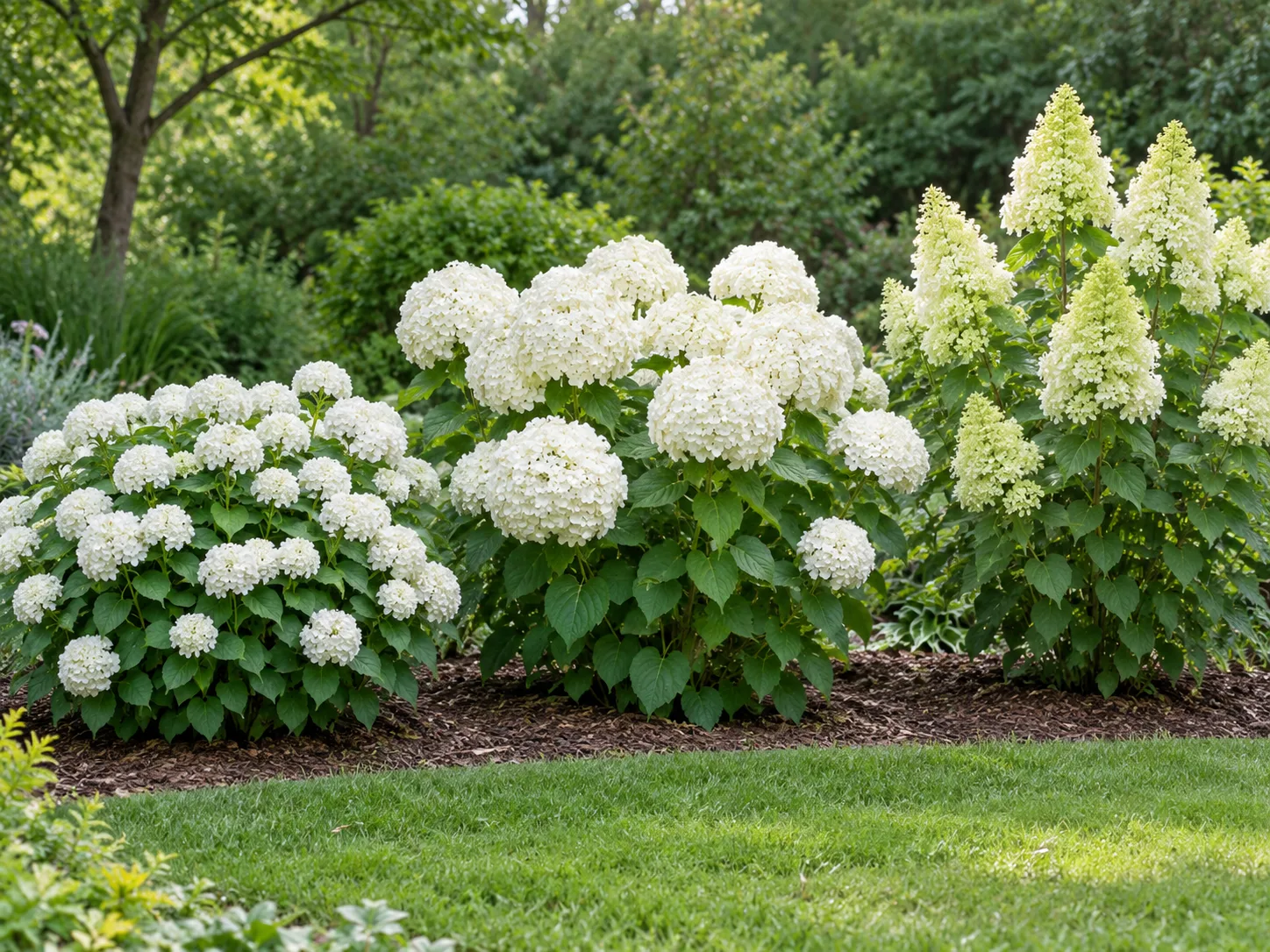
‘Annabelle’ is the familiar white mophead with large rounded flower clusters. It can produce impressive heads but may need thoughtful placement and pruning to reduce flopping. ‘Incrediball’ is a selection bred for stronger stems and large white flowers, although weather, shade, and maintenance still influence how upright it stays. Pink-flowering options include members of the Invincibelle series; colors can shift as flowers age, but not because you changed soil pH.
For a more natural, pollinator-friendly look, consider a lacecap such as ‘Haas’ Halo’. Its flatter flower form includes fertile central florets, unlike the mostly showy sterile florets in many mophead selections. NC State’s ‘Haas’ Halo’ profile notes its lacecap blooms, heat tolerance when adequately watered, and sturdy stems. ‘Hayes Starburst’ is another distinctive selection, with double-looking florets. Proven Winners’ smooth-hydrangea guide also distinguishes the species’ new-wood bloom habit and pH-independent flower color from bigleaf hydrangea. Verify local availability and cultivar spelling because nursery labels and trade names can differ.
Prevent Heavy Flower Heads From Flopping
A drooping cluster after a downpour does not always mean the plant is dying. Large flower heads hold water, and a fast-growing shrub may put on long, soft stems that bend under the added weight. ‘Annabelle’ is especially known for this garden nuisance; choosing a stronger-stemmed selection such as ‘Incrediball’ can lower the risk, but no cultivar is completely immune to storms or growing conditions.
Start prevention before pruning: give the plant enough light, avoid excess nitrogen, and do not force lush growth with repeated feeding. A spot with good airflow helps leaves dry, but wind exposure can also stress stems, so choose a sheltered position. In a large border, discreet support rings can help if needed; install them early in spring while growth is low rather than trying to lift a tangled, flowering shrub after it has fallen.
Pruning very hard every year can produce vigorous new stems that carry large heads but are not always strong enough to hold them. Retaining a framework of thicker stems and pruning selectively often gives a sturdier outline. In an established shrub that flops badly, thin out a portion of the oldest stems at the base over time instead of cutting every stem to the ground in one season.
Prune Without Losing the Shrub’s Natural Shape
Smooth hydrangea blooms on new wood, meaning the flower clusters grow on stems formed during the current growing season. Prune in late winter or early spring before new shoots expand, not in fall when the plant is entering dormancy. The shrub may die back in a cold winter and regrow from the base; remove dead or broken wood once you can tell what is alive.
Use a Light Spring Prune for Structure
For most gardens, a light annual cleanup is enough: remove dead, crossing, weak, or damaged stems, then shorten overly long branches by up to about one-third to balance the outline. Make cuts just above healthy buds or a branching point, and step back as you work so the shrub keeps its rounded shape. This approach preserves more woody structure, which can help support the new flower display.
Use clean, sharp bypass pruners for smaller stems and loppers for thicker ones. Disinfect tools between diseased plants, and avoid leaving ragged stubs. If you like the winter seed-head effect or want flowers to remain for wildlife interest, leave the old heads through winter and remove them during the spring cleanup.
Reserve Hard Renewal Pruning for Specific Reasons
A smooth hydrangea can tolerate being cut very low because it flowers on new growth, but “can” does not mean “must.” Cutting every stem to a few inches may be useful to renovate an overgrown shrub, remove extensive winter damage, or reset a plant that has outgrown its allotted space. It will not reliably make weak-stemmed cultivars sturdier, and very hard annual cutting may encourage tall, floppy regrowth.
If the shrub is oversized, renew it gradually by taking out some of the oldest stems near ground level each spring over several years. If you need to reduce its size sharply, do so before new growth starts, then water during dry weather while it recovers. Avoid pruning late after spring growth has begun unless you are only removing damage; you may remove developing flower-bearing shoots and delay the display.
Propagate Smooth Hydrangea From Cuttings or Layers
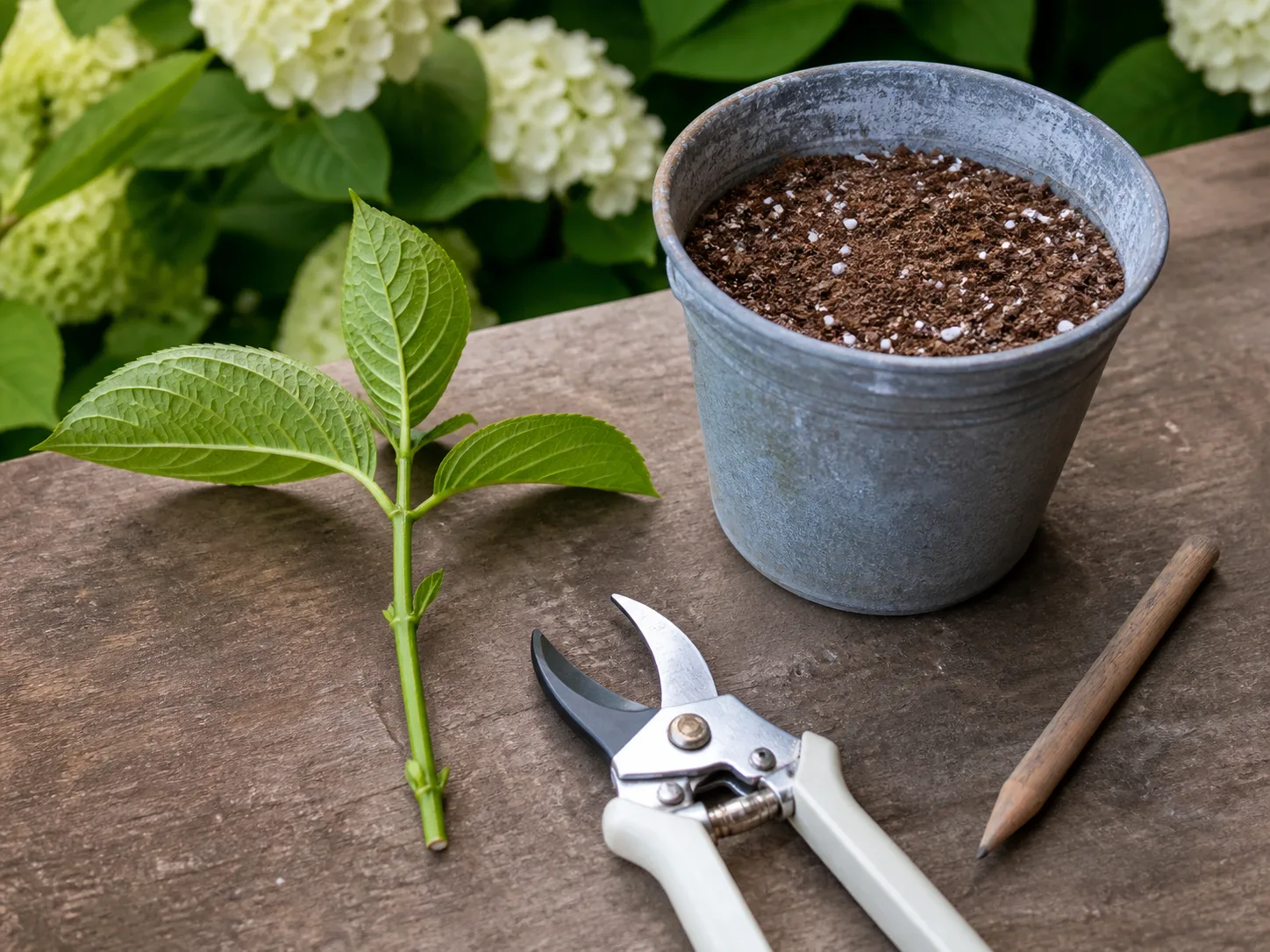
Softwood cuttings are a straightforward way to make another plant, especially in late spring or early summer when new stems are flexible but not limp. Gardeners’ Path’s species guide likewise covers fresh growth and cuttings as practical propagation options. Choose a healthy shoot without a flower bud and take a 4- to 6-inch section with several leaf nodes. Remove the leaves on the lower half, trim just below a node, and insert that end into a clean, damp, free-draining propagation mix.
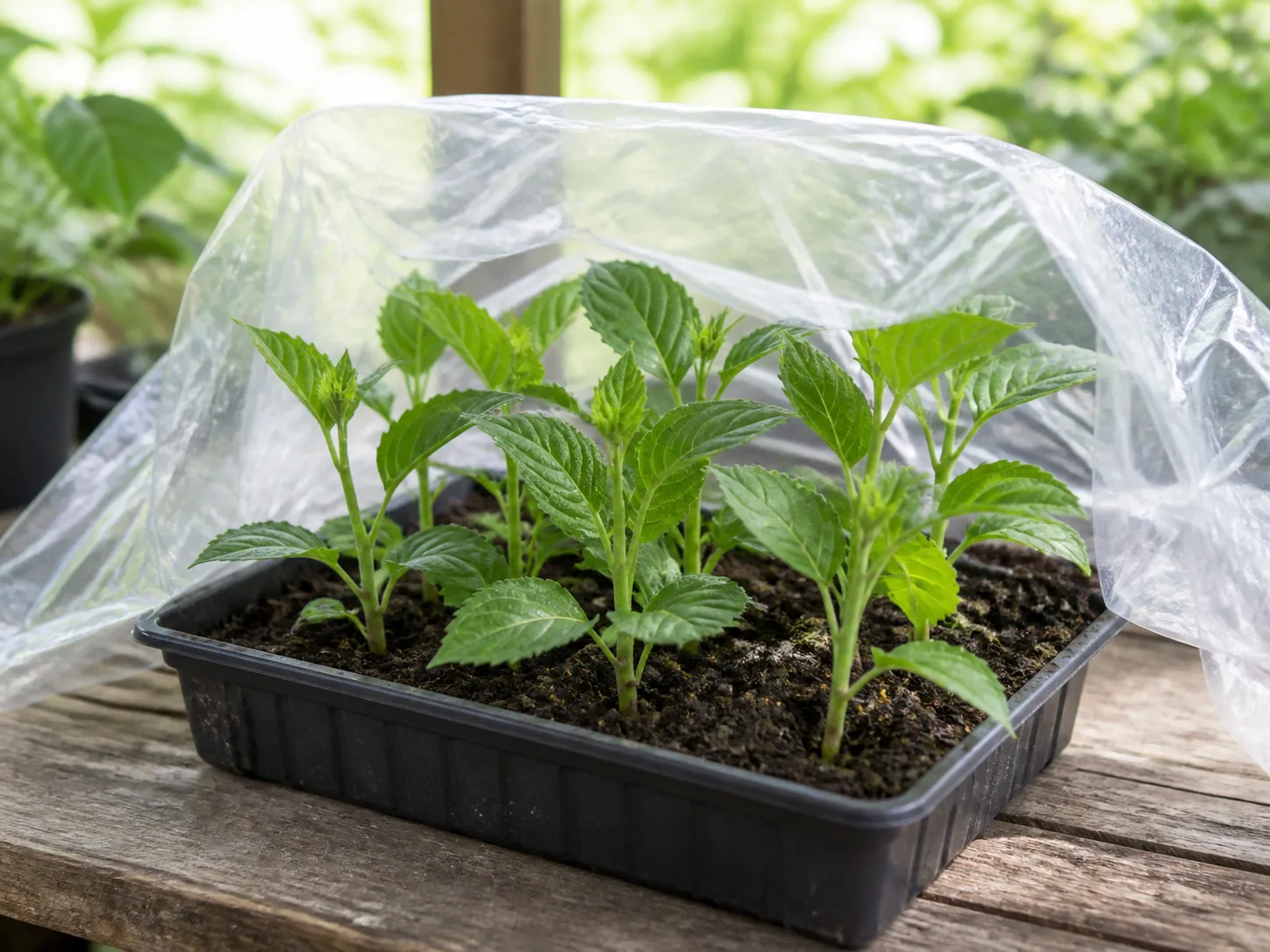
Cover the pot loosely with a clear bag or propagator to hold humidity without pressing plastic against the leaves. Keep it in bright shade, not direct sun, and ventilate if condensation stays heavy. Maintain an evenly damp mix rather than soaking it. Gentle resistance when you tug the cutting can indicate roots, but give it time to develop before potting it on; rooting speed varies with temperature and the maturity of the stem.
Layering is another low-equipment option: bend a flexible low branch to the soil, lightly cover a section with soil while leaving the tip exposed, and secure it until it roots. Sever it from the parent only after it has established roots. Check cultivar labels for propagation restrictions before multiplying patented plants, especially if plants will be sold or distributed.
Bloom Season, Flower Color, and Pollinators
Smooth hydrangea usually flowers in summer, with exact timing and duration varying by region, cultivar, spring temperatures, and water stress. A flower cluster often opens pale green, turns white or pink depending on the variety, and may age back toward green or tan. The spent heads can remain attractive into fall, so deadheading is mainly an appearance choice rather than a requirement for the following year’s bloom.
The species cannot be turned blue or pink with soil amendments. A white cultivar generally stays in the white-to-green range as its heads age; pink cultivars carry their own inherited flower color. This is a useful way to distinguish it from some bigleaf hydrangeas, whose color can respond to soil chemistry and aluminum availability.
Flower form affects wildlife value. Mophead cultivars with many showy sterile florets are bred for a dense ornamental ball, while lacecap forms expose more small fertile flowers around the center. Smooth hydrangea can attract bees, butterflies, and other insects; NC State also identifies it as a host plant for the hydrangea sphinx moth. If supporting pollinators is a priority, choose a fertile-flowered lacecap and leave some spent flower heads rather than deadheading every cluster immediately.
Diagnose Common Smooth Hydrangea Problems
Start with the pattern and timing of the symptom instead of reaching for fertilizer or pesticide. Compare more than one leaf, check the soil several inches down, and look at whether the newest growth, older leaves, or just flower stems are affected. Recent heat, a transplant, excess rain, or a hard prune can explain a sudden change without indicating an infectious disease.
Few or No Flowers
Check the plant’s age and light first. A recently planted shrub may need a season to establish; a plant in deep shade may grow leaves but flower sparsely. Because smooth hydrangea blooms on new wood, routine winter pruning is less likely to remove all its flower buds than it would on an old-wood hydrangea, but late spring trimming can still remove fresh flowering shoots.
Next, consider fertilizer and water. Lawn feed or repeated nitrogen applications can promote foliage instead of flowers, while drought can stall growth before buds develop. Do not try to force a bloom with a high-phosphorus product unless a soil test identifies a deficiency. Correct the limiting condition—light, water, or excess fertilizer—and assess the next full growing season.
Yellow Leaves, Wilting, and Mildew
Uniform yellowing can follow waterlogged roots, drought, nutrient imbalance, or transplant stress. Yellow tissue between green leaf veins can have several causes; it is not proof of iron deficiency or high soil pH. Check that the root zone drains, review fertilizer applications, and use a soil test before applying iron or changing pH.
If the whole plant wilts in afternoon heat but perks up by morning, watch the soil before watering; this can be a temporary heat response. Morning wilt with dry soil calls for a slow, deep drink, while morning wilt in soggy soil points toward poor drainage. Powdery mildew appears as a pale, powder-like coating; leaf spots or rust may appear after prolonged leaf wetness or humid weather. Give shrubs breathing room, water at soil level, remove badly affected fallen leaves, and use a pesticide only if the specific problem warrants it and the label permits that use. NC State Extension lists leaf spots, rust, powdery mildew, aphids, mites, and scale among possible smooth hydrangea problems.
Prepare Smooth Hydrangea for Winter
In cold regions, stems may die back substantially and the shrub can resprout from its roots in spring. That is not automatically a sign that it needs wrapping. A healthy in-ground plant in a suitable hardiness zone usually benefits more from an appropriate site and a mulch layer over the root zone than from tightly covering the entire shrub.
After the ground cools, renew mulch to protect roots from temperature swings, but keep it clear of stems. Leave healthy branches until late winter or early spring so they provide some structure and hold the flower heads through winter. In exposed locations, a temporary breathable wind barrier can protect a young plant from desiccating winds; remove it when severe weather passes. Container shrubs have less insulation around their roots, so group pots in a sheltered spot and keep the mix from becoming bone dry while dormant.
Conclusion
Smooth hydrangea rewards a well-chosen site more than a complicated maintenance routine. Start with partial shade in hot-summer gardens, moist but draining soil, and slow watering while roots establish; choose a cultivar whose flower form, mature size, and stem strength fit your space. Then prune selectively in early spring, cutting hard only when you have a clear reason. If the shrub looks stressed or refuses to bloom, check light, water, drainage, and fertilizer history in that order before making a drastic change.