Overwatering on Lavender: Causes, Checks & Fixes
Quick answer
Overwatered lavender sits in wet gritty mix too long, causing grey wilting, crown rot, and root decline. Stop watering until soil is dry 7 cm deep, empty saucers, improve drainage, and never water during monsoon or heavy rain.
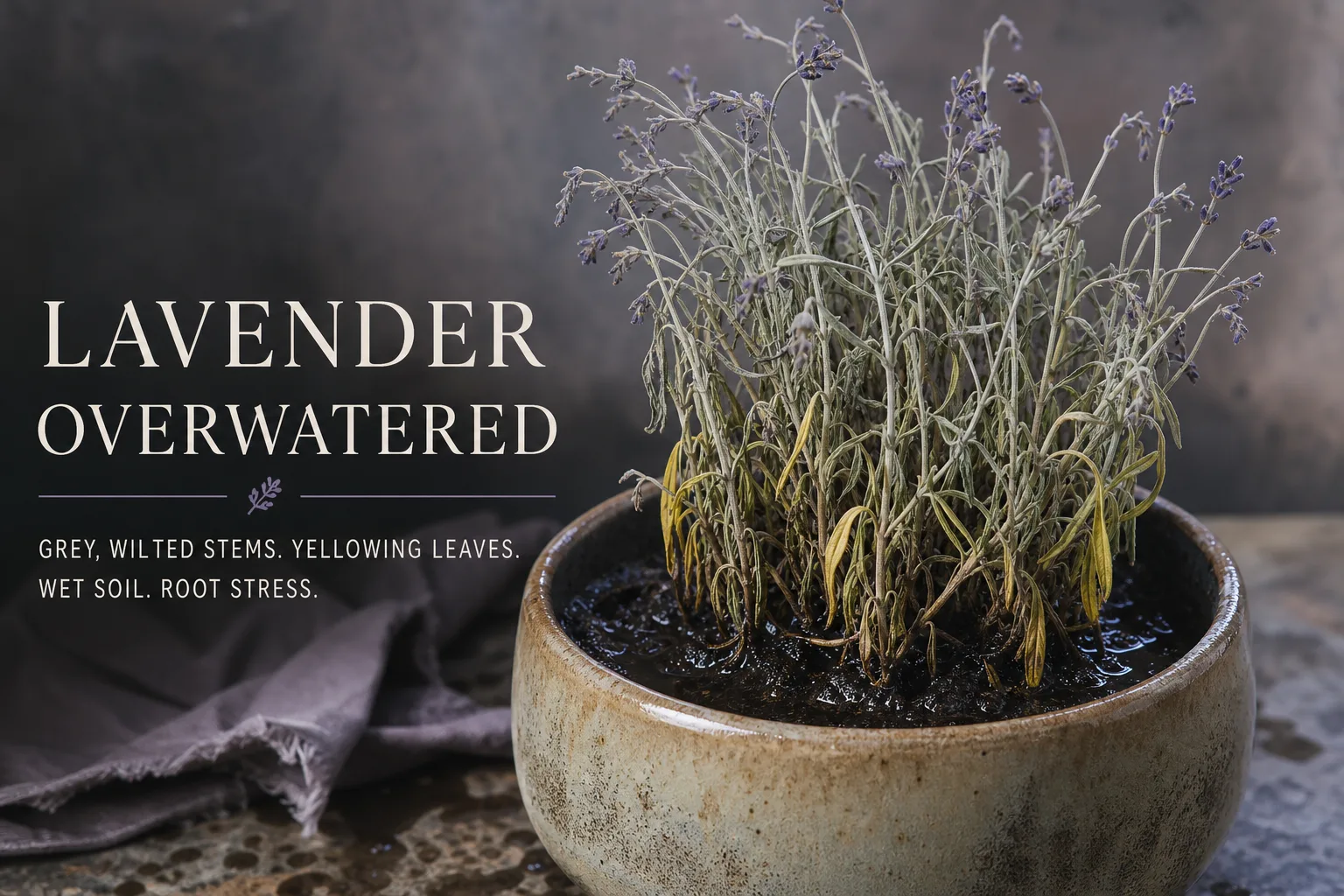
Overwatering on Lavender: Causes, Checks & Fixes
This guide covers overwatering on Lavender. See also the general Overwatering guide, watering, and light pages for this plant.
Overwatering on Lavender: Causes, Checks & Fixes
Quick answer
Overwatering on English lavender (Lavandula angustifolia) means the root zone stays wet too long-not one generous drink on a hot day. Chronic wet gritty mix causes grey wilting stems, crown rot, yellow lower leaves, and root decay, especially in humid or monsoon climates where evaporation cannot keep pace with rain and houseplant watering habits.
First step: stop all supplemental water until soil is completely dry 7 cm deep, empty saucers, and lift the pot before you consider watering again. If stems wilt grey-brown on heavy wet mix, you are past thirst-inspect roots the same day.
This page is the primary overwatering triage hub for container English lavender-chronic wet-soil decline before full rot collapse. For uptake-failure wilt patterns, see wilting. For confirmed mushy roots, see root rot. For soft crown tissue at the soil line, see crown rot.
Why lavender gets overwatering
Dryland herb biology and houseplant-watering habit mismatch
English lavender evolved on dry, rocky Mediterranean hillsides with lean alkaline soil, blazing sun, and long dry stretches between rain. As a Lamiaceae herb alongside rosemary and sage, it stores moisture in woody stems and silvery foliage and tolerates brief drought far better than chronic wet feet. Lavender suffers when it receives too much water-extension researchers recommend raised beds, containers, or protected sites with sharp drainage and a culture that keeps plants on the dry side.
Gardeners often apply houseplant habits: small frequent drinks, saucers left full, or daily watering in cool shade. Lavender in weak light uses little water while mix stays saturated-dampness more than cold is responsible for killing lavender plants. The cruel trap is that overwatered lavender wilts while soil is still damp, which sends owners back to the watering can and accelerates decline. That wet-soil wilt paradox is the signature failure mode-see wilting when symptoms overlap.
Lavender’s narrow grey-green lanceolate leaves do not flop dramatically like tropical houseplant foliage. Lower leaves may yellow and dull while the pot stays heavy for days before stems grey-masking the problem until roots are already damaged.
Monsoon, humid climates, and winter indoor traps
Monsoon and rainy-season irrigation is the most dangerous pattern for Indian and tropical coastal growers. Lavender should barely be watered when outdoor rain keeps pots damp at 7 cm for days. Terracotta pot weight beats surface dryness in humid climates: a heavy pot you have not hand-watered in days almost always means waterlogged mix, not health.
Winter indoor overwatering catches balcony growers who move plants inside. Dim cool rooms slow evaporation; the summer rhythm that dried a sunny terracotta pot in seven days may keep roots wet for two to three weeks indoors. Illinois Extension notes wet, poorly drained soil and high humidity lead to plant decline even when cold is not the primary stressor.
Cultivar caveat: English lavender (L. angustifolia) is difficult to grow in high summer humidity without sharp drainage. French lavender (Lavandula dentata) and Spanish types are less hardy than English types in containers-wet soil kills them faster than drought in monsoon climates.
Pathogens that follow chronic wetness
When soil stays saturated, oxygen leaves root pores and soil-borne pathogens move in. Root rot commonly attacks lavender in poorly drained soils, with extension clinics finding Phytophthora, Fusarium, Pythium, and Rhizoctonia associated with rotting lavender roots in wet conditions. Overwatering encourages these diseases because the pathogens require moist, poorly aerated soil. Phytophthora can climb from roots into stems-crown rot-while Pythium rot often stays lower in the root mass.
Heavy peat mixes without enough perlite, blocked drainage holes, organic mulch against the crown, and Lavender repotting guide into larger moisture-retentive mix to “help drying” all extend wet periods. Fungus gnats hovering over constantly damp surface soil are a secondary signal that the mix never dries-see fungus gnats if adults persist after you fix drainage.
Containers vs in-ground plantings
Container lavender fails from overwatering more often than in-ground plants because the root zone is small and cannot drain sideways. A 10 cm starter pot in full summer sun may need checking every five days; the same plant in a 25 cm terracotta pot may go ten to fourteen days-but only when dry at 7 cm per the lavender watering guide.
In-ground lavender in free-draining soil rarely needs supplemental water except during hot dry spells lasting two or more weeks. Overwatering in beds usually means heavy clay, low spots that pool after rain, or rich compost worked too close to the crown-not calendar hose habits. If water stands around the plant after a storm, fix site drainage before adjusting frequency.
What overwatering looks like on lavender
Watch for these patterns together-not in isolation:
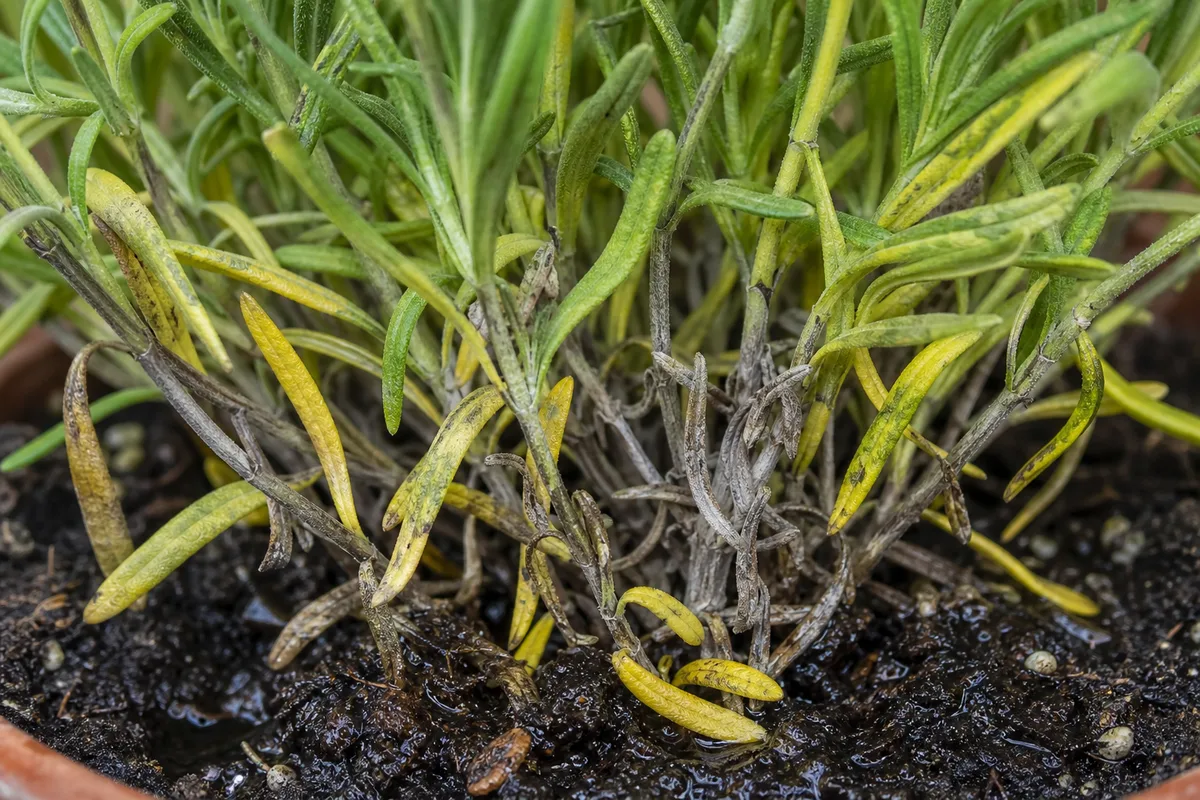
Overwatering symptoms on Lavender - compare with healthy tissue on the same plant.
- Mix wet at 7 cm depth for days after watering or rain
- Grey or brown wilting stems despite moist soil-the wilt paradox on overwatered plants
- Yellow lower leaves and dull grey-green foliage; narrow leaves may not flop dramatically
- Sour or musty smell from the drain hole; algae on the surface
- Soft crown at the stem base in moderate-to-advanced cases
- Sudden collapse after a wet week or consistent calendar watering
A firm plant in a light dry pot wilting at midday is not overwatering-that is heat or drought stress. See underwatering when the pot is feather-light and leaves curl inward.
How to confirm the cause
Work through these checks in order before you act.
- Finger or skewer test at 7–8 cm - Consistently wet, cool, and clinging while foliage declines: overwatering likely.
- Pot weight - Heavy compared with a properly dry lavender pot of the same size; calibrate by lifting after a known dry-down.
- Drainage check - Water should run through gritty mix in seconds; blocked holes or peat-heavy cores hold water like a sponge.
- Weather log - Did you water during rain, monsoon, or a week when the pot never dried?
- Crown firmness - Pinch woody stems at the soil line. Mushy or hollow tissue escalates toward crown rot.
- Root inspection - Tip the plant out gently. Healthy roots are pale, firm, and woody-fragrant; overwatered roots are dark, mushy, and slimy.
Root inspection walkthrough
- Water the plant lightly or wait until mix is just moist-not rock hard-so the root ball slides out without tearing.
- Tip the pot on its side and slide the plant out with one hand supporting the crown.
- Brush away mix from the bottom third and smell the root mass. Sour odor confirms decay.
- Press roots gently with a finger. Trim all brown, mushy, or foul-smelling tissue with clean scissors-leave firm white or tan roots.
- If more than half the root system is mushy or the crown is soft, take semi-ripe cuttings from firm upper stems before repotting-see lavender propagation.
Confirmation decision table
| Pattern | Soil at 7 cm | Crown | Smell | Severity | First action |
|---|---|---|---|---|---|
| Grey wilt, heavy pot | Wet days | Firm | Earthy | Mild | Withhold water; improve airflow |
| Yellow lower leaves, damp mix | Wet | Firm | Slight sour | Moderate | Dry-down; unpot if no improvement in 5–7 days |
| Grey stems, soft base | Saturated | Soft | Strong rot | Urgent-same day | Unpot, trim, repot gritty; see crown rot |
| Midday wilt, light pot | Dry | Firm | None | Not overwatering | Deep soak-see underwatering |
| Afternoon slump, moist soil | Moist | Firm | None | Heat stress | Verify evening recovery; see heat stress |
Full dry-down rhythm lives on the lavender watering guide.
First fix for lavender
Stop all supplemental water until soil is completely dry 7 cm deep-that single action prevents the most costly mistake: pouring water onto roots that already cannot drink.
| Severity | What you see | First action |
|---|---|---|
| Mild | Heavy pot, early yellow lower leaves, firm crown | Withhold water; empty saucer; shelter from driving rain |
| Moderate | Grey stems on wet mix, sour smell, firm crown still | Unpot same day; trim mushy roots; air-dry 12–24 hours; repot gritty |
| Advanced | Soft crown, mushy roots over half the ball | Trim, repot gritty, take cuttings from firm stems; escalate to root rot protocol |
If soil has been soggy for a week, mild dry-down alone is rarely enough-unpot, trim decay, and repot into fresh one-part compost to three-parts horticultural grit, perlite, or coarse sand in terracotta with open holes. Water should run through in seconds.
Clear drainage paths and empty saucers completely before the next deep watering at the pot edge-not a flood at the crown.
Step-by-step recovery
- Stop all supplemental water; shelter from driving rain if possible during monsoon weeks.
- Remove wet organic mulch from the stem base; keep gravel top-dress away from the crown.
- Tip pot to drain trapped water; loosen crusty surface if it seals moisture in.
- Unpot if wilting persists on wet mix-rinse roots, trim decay, let the ball air-dry in Lavender light guide 12–24 hours.
- Repot into dry gritty mix; hold water several days, then resume only when new mix is dry 7 cm deep.
- Place in full sun with airflow-grow in full sun with well-drained soil so the plant uses water predictably.
- Resume watering only on dryness checks-skip entire monsoon weeks if mix stays damp naturally.
Do not stack repotting, fertilizer, relocation, and heavy pruning on the same day. Fix the water pathway first, then reassess after 48–72 hours.
Recovery timeline
Minor overwatering with firm crown and mostly healthy roots may correct within days of dry-down if you catch yellowing early. Yellow-grey leaves rarely re-green; judge success by stopped dieback and new silver shoot tips.
Moderate root damage takes one to three weeks to show firm new growth after trim-and-repot. Badly greyed stems rarely return to full silver.
Advanced crown rot with soft base tissue is often fatal despite rescue-propagate from healthy stems if any firm growth remains. Full protocols: root rot and crown rot.
What not to do
- Water wilting lavender automatically when soil is wet at 7 cm-the fastest route to crown rot.
- Repot into rich moisture-retentive mix or a larger peat-heavy pot to “help drying.”
- Leave saucers full or grow in cachepots without draining runoff.
- Fertilize stressed wet roots-fix drainage before feeding.
- Overhead water in humid evenings-wet foliage and crowns invite fungal decline.
- Add wet mulch against the crown-use fine gravel top-dress with clear space at the stem base.
Causes to rule out
| Pattern | Pot signal | Crown | Likely cause | First step | Read next |
|---|---|---|---|---|---|
| Wet soil, grey wilt | Heavy | Firm or soft | Overwatering / early rot | Dry-down; inspect roots | This page |
| Wet soil, soft crown, sour smell | Heavy | Soft | Crown rot | Same-day unpot and trim | Crown rot |
| Dry soil, wilt midday | Light | Firm | Underwatering / heat | Deep soak when dry | Underwatering |
| Moist soil, midday slump only | Moist | Firm | Heat stress | Evening verification | Heat stress |
| Wet corner, one dead plant | Heavy one side | Varies | Blocked drainage | Clear holes; tilt pot | This page |
| Damp surface, flying adults | Wet surface | Firm | Fungus gnats signal | Dry surface; fix rhythm | Fungus gnats |
How to prevent overwatering next time
Grow in well-drained alkaline soil in full sun. Push finger 7–8 cm deep before every drink-treat calendar watering as the enemy. Use terracotta with open drainage, gritty mix, and gravel top-dress-not wet organic mulch at the crown.
Established English lavender rarely needs supplemental water except during extended drought in the ground; containers never reach that independence and need shorter dry-down cycles. Skip supplemental watering during monsoon when rain keeps mix damp. Cross-check culture on the lavender overview and full interval table on the watering guide.
Lavender care cross-check
Overwatering appears when lavender is treated like a tropical foliage plant. Match infrequent deep watering to full sun and extremely well-drained soil-not humidity trays and frequent sips. If chronic wet decline repeats without full collapse, you may be on the wrong slug-compare wilting for uptake-failure triage first.
When to worry - soft crown and wet-week collapse
Treat overwatering as urgent if:
- Stems wilt while soil remains saturated at 7 cm
- The crown feels soft or hollow at the soil line
- Sour rot smell persists after drainage correction
- Collapse follows a wet week or monsoon period without hand-watering
- More than half the roots are mushy on inspection
Mild cases with firm crowns and earthy-smelling roots often recover after dry-down alone. Moderate cases need same-day unpot and gritty repot. Advanced soft-crown cases may be irreversible-take cuttings before total collapse and contact your local extension office for humid-climate rot guidance.
Related lavender problems
- Wilting - Wet-vs-dry wilt paradox and uptake-failure triage
- Underwatering - Light dry pot and curl recovery
- Root rot - Mushy roots and trim-and-repot protocol
- Crown rot - Soft base tissue and same-day escalation
- Heat stress - Midday slump on moist soil that recovers overnight
- Fungus gnats - Flying adults over constantly damp mix
- Drooping leaves - Softer foliage hang without full stem collapse
- Lavender overview - Species, cultivars, sun, soil, and Mediterranean culture hub
- Lavender watering - Dry-down rule, seasonal intervals, and moisture checks
FAQs
Why does my lavender wilt when the soil is wet?
Wilting on damp soil means roots have failed-not that the plant needs more water. Saturated mix displaces oxygen, feeder roots suffocate, and pathogens including Phytophthora and Fusarium move in. Stems wilt grey-brown while the pot stays heavy. Stop watering, probe the crown, and inspect roots before you pour again.
What grit mix ratio should I use after overwatering lavender?
Repot into roughly one part potting compost to three parts coarse grit, perlite, or sharp sand in terracotta with open drainage holes. Water should run through in seconds. Do not add extra peat or moisture-retentive mulch to help drying-that extends wet periods and worsens rot.
Can I save lavender with a soft crown?
A slightly soft crown with firm white roots may recover after unpotting, trimming mushy tissue, air-drying, and repotting gritty. Once more than half the root system is mushy or the crown feels hollow, survival odds drop sharply-take semi-ripe cuttings from firm upper stems immediately. Full crown collapse is often fatal; see the crown rot guide for same-day escalation.
How can I tell overwatering from underwatering on lavender?
Overwatering shows a heavy wet pot, soil damp 7 cm deep for days, grey-brown wilting stems, and sometimes sour smell. Underwatering shows a light dry pot, inward-curling dull leaves, and dramatic perk-up within hours after one deep soak. Never water wilting lavender without lifting the pot first.
Should I water lavender during monsoon or winter indoors?
No supplemental water during monsoon or extended heavy rain when mix stays damp at 7 cm-move containers under cover if possible. Indoor winter lavender in dim cool rooms dries slowly; the summer rhythm that worked on a sunny balcony will rot roots in weeks. Check every two to three weeks and water only when deep soil is genuinely dry.
Conclusion
Overwatered lavender is a drainage and discipline problem in humid container culture-not bad luck. Mild cases with firm crowns recover after dry-down and saucer discipline. Moderate cases need unpot, root trim, and gritty repot the same week grey stems appear on wet mix. Advanced soft-crown collapse often means cuttings, not parent-plant rescue-open crown rot protocols when the base softens. Confirm wet soil at 7 cm with declining foliage, match action to the severity table, and resume watering only on dryness checks-especially through monsoon and rainy seasons per the watering guide.
When to use this page vs other Lavender guides
- Lavender watering guide - Use for routine moisture checks before assuming overwatering is the main issue.
- Lavender problems hub - Browse all 51 common issues on this species.
- Root Rot on Lavender - Different entry point when symptoms overlap with overwatering.
- Yellow Leaves on Lavender - Different entry point when symptoms overlap with overwatering.
- Fungus Gnats on Lavender - Different entry point when symptoms overlap with overwatering.