How to Protect Your Lawn From Snow Damage
Learn how to protect your lawn from snow with fall mowing, leaf cleanup, smart snow piling, and spring recovery steps that prevent repeat damage.
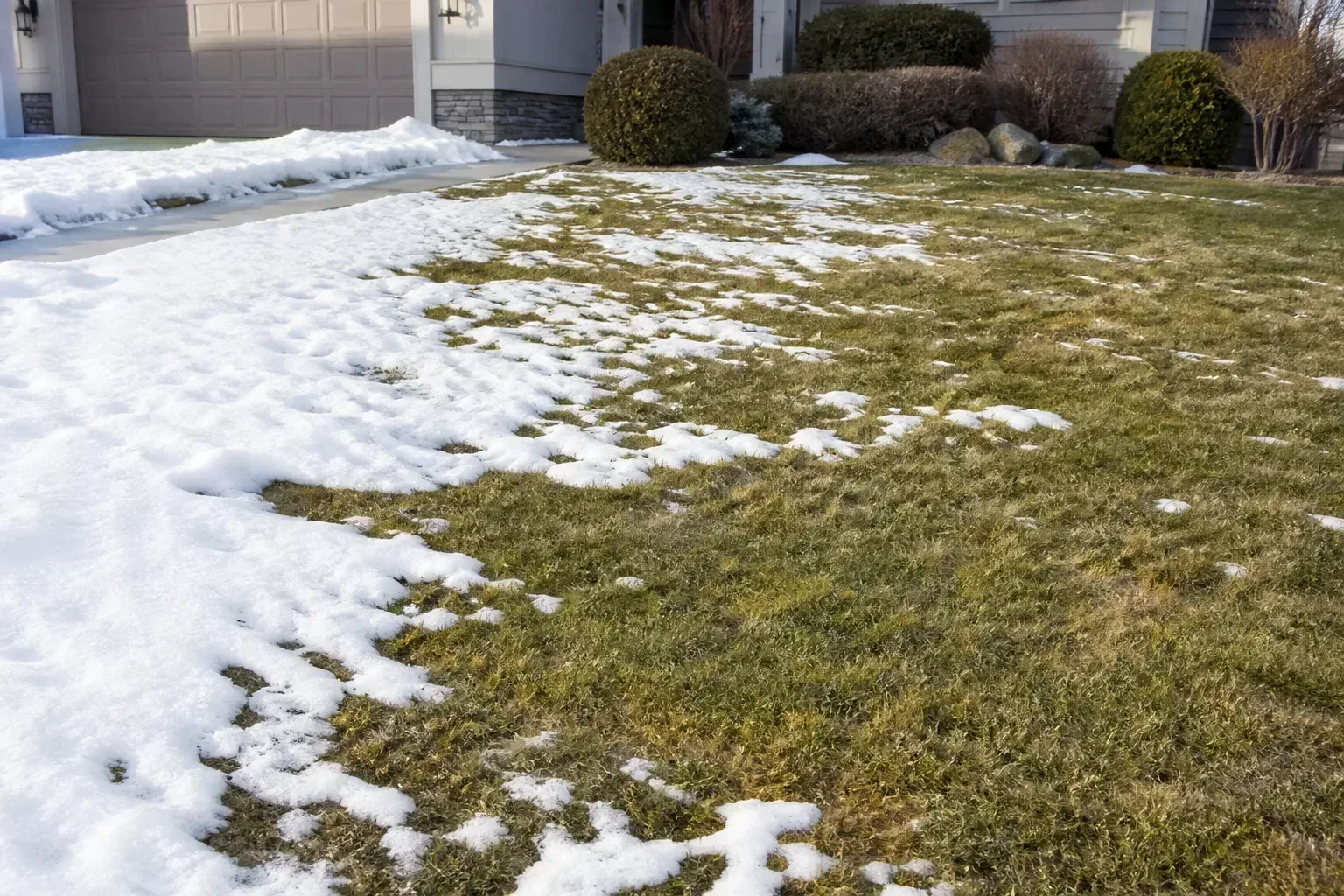
Snow is not automatically bad for grass. An even blanket can insulate dormant turf from sharp temperature swings and reduce winter drying. The trouble starts when snow stays deep and wet in one place, arrives over long grass or leaf litter, gets packed by traffic, or melts into a lawn that already drains poorly.
That distinction changes the job. You do not need to shovel every flake off a healthy lawn, and you cannot spray away damage that happened under a snowbank weeks ago. The reliable strategy is to enter winter with a clean, appropriately mowed, well-drained lawn, then manage the places where people and snow-removal equipment concentrate stress.
The Quick Answer: Snow Usually Is Not the Whole Problem
To protect a lawn from snow, keep mowing until cool-season grass stops growing, remove or finely mulch heavy leaves before snowfall, avoid excess late nitrogen, correct drainage and compaction when the grass is actively growing, and keep driveway snow from forming a deep, long-lived bank on the same strip of turf. During winter, leave an ordinary even snow cover alone, but keep people, pets, cars, plows, and salty meltwater off the grass.
The “snow killed my lawn” diagnosis is often shorthand for a chain of conditions. Deep cover holds moisture and darkness at the turf surface; matted blades and leaves reduce air movement; a pile from the driveway may remain weeks longer than the rest of the yard; and repeated footsteps on frozen grass can crush brittle leaves and crowns. Snow can be the trigger without being the only cause.
Penn State Extension reports that gray snow mold is most common under prolonged snow cover, especially where snow accumulates beside driveways and sidewalks. It also notes that mature turf often recovers because the disease primarily injures leaf blades rather than the crowns and roots. That is reassuring, but it is not a reason to ignore the conditions that bring the problem back every year. (Penn State Extension)
Diagnose the Winter Damage Before You Treat It
Start with a map, not a rake. In spring, mark where symptoms occur and compare those patches with snowbanks, driveway edges, low spots, shaded areas, dog routes, and places where people cut across the yard. A repeatable shape is evidence: a strip along the plow route points to snow placement or salt, while a circular patch under a long-lasting drift points more toward snow mold.
Grass type matters, too. Kentucky bluegrass and fine fescues commonly recover well from gray snow mold, while some perennial ryegrass, tall fescue, annual bluegrass, and creeping bentgrass stands can show more obvious injury. A newly seeded area is more vulnerable than a mature lawn because seedlings have less established crown and root structure. If you are unsure what is planted, photograph the grass in summer or save a small sample for your county extension office instead of choosing a treatment from a brown color alone.
Snow Mold Clues: Circular, Matted, Webby Patches
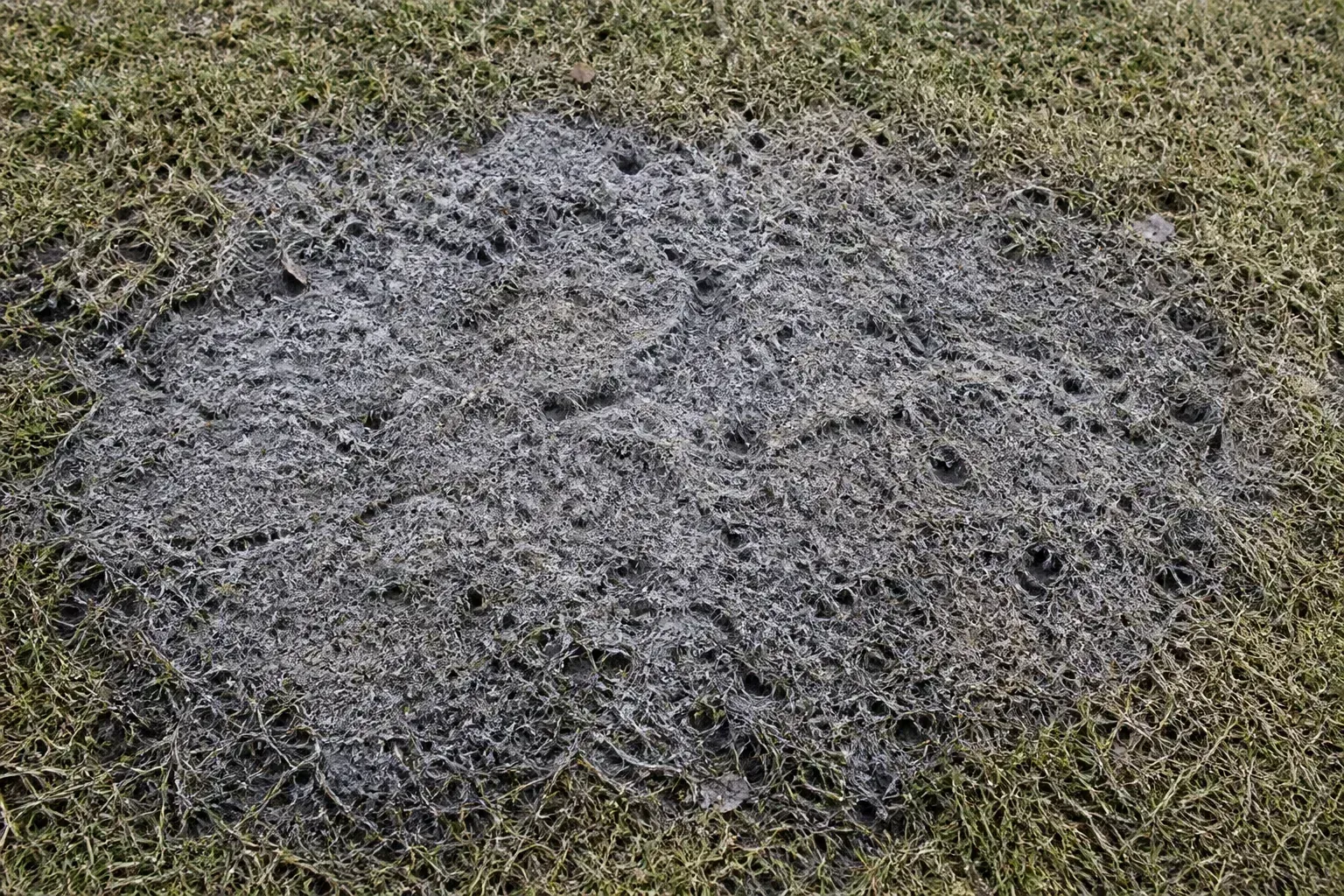
Snow mold appears as circular or overlapping areas of straw-colored, tan, gray, or sometimes pinkish matted grass as the snow recedes. In damp conditions, you may see a white-to-gray web or cottony growth holding the blades together. Gray snow mold, also called Typhula blight, can produce tiny dark or reddish-brown structures in the matted tissue; you do not need to identify those structures at home to begin sensible recovery.
The key clue is timing and texture. The patch appears where snow sat longest, the blades are glued or crusted together, and the fungal growth slows once the area dries and sees daylight. Washington State University describes gray snow mold as a disease that develops under snow on unfrozen soil, with excessive thatch, high late-fall fertility, and poor drainage contributing to its development. (Washington State University Extension)
Pink snow mold, often discussed as Microdochium patch, deserves a little more caution because it can remain active in cool, wet weather even without a continuous snow cover. If pink-edged patches keep expanding after the lawn has dried, or if the damage is severe and recurring, take clear photographs and get a local extension or turf professional’s diagnosis. “Mold” is not a sufficient diagnosis for choosing a fungicide.
Other Clues: Ice, Traffic, Salt, and Winter Pests
Not every winter-brown area is a fungus. A smooth, flattened strip where a plow or snow shovel repeatedly pushed a bank may simply be physically smothered or slow to dry. Grass under a solid ice layer can suffer from low oxygen and prolonged wetness, while repeated freeze-thaw cycles can lift soil and roots. Colorado State University Extension notes that north-facing lawns, shade, depressions, and places with especially deep drifted or plowed snow are common snow-mold locations. (Colorado State University PlantTalk)
Traffic leaves a different pattern: footprints, tire tracks, or a path across the lawn that turns brown after thaw. Frozen or frosted blades are brittle, and weight can damage the crown at the base of the plant as well as compact wet soil. Salt injury often follows the pavement, with browning that is worst where deicer-laden meltwater flows or where shoveled snow was piled. A small area under a snow-covered dog route can also contain concentrated urine salts and extra moisture.
The first action should match the clue. Do not rake a suspected disease patch aggressively while the turf is wet, do not fertilize a salt-burned strip as if it were hungry grass, and do not aerate a saturated low spot just because water is standing there. Correct the condition that explains the pattern, then reassess after the lawn is growing.
Mow to a Winter-Safe Height, Not a Scalped One
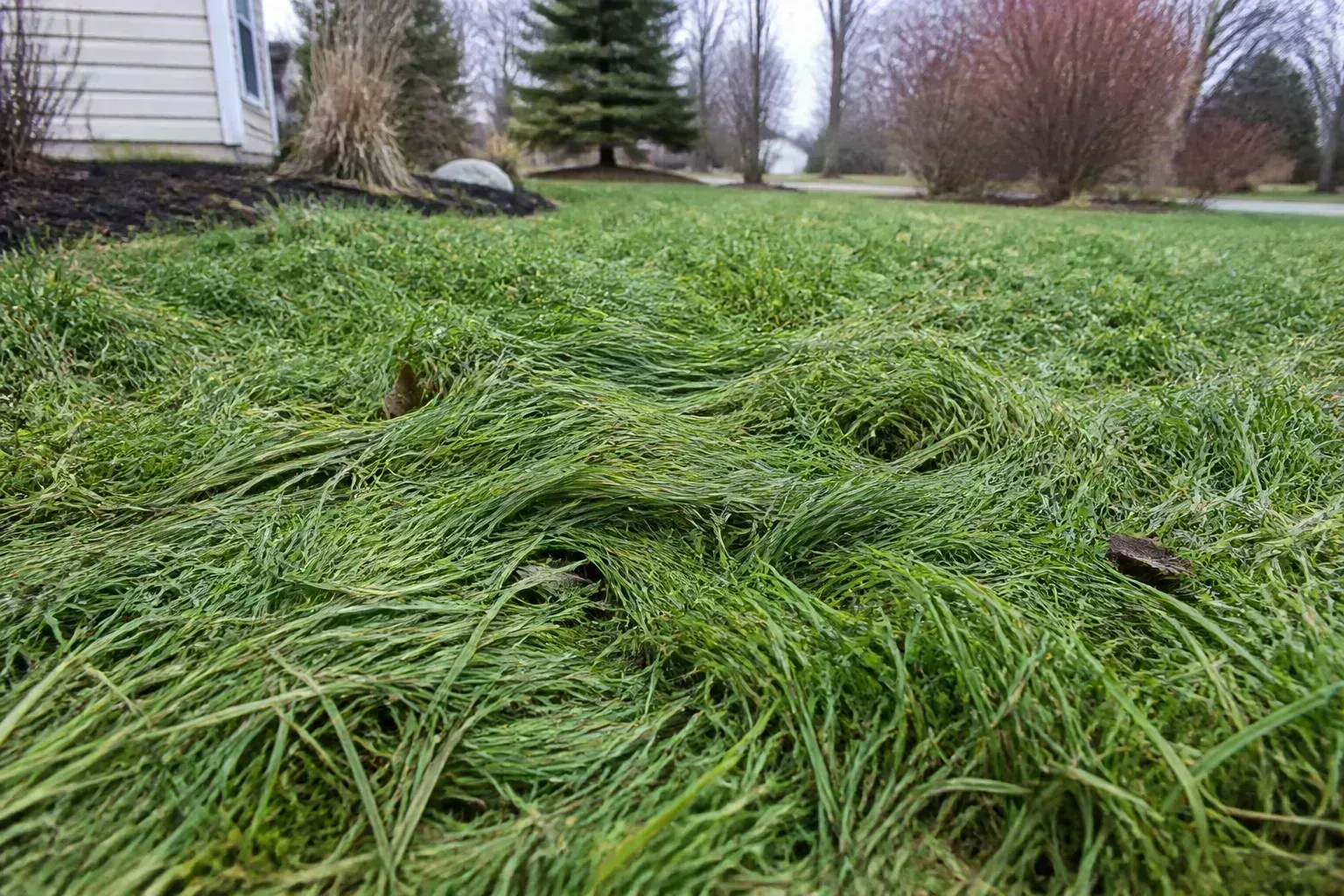
Long, floppy grass folds under snow and stays wet at the crown. Very short grass is not a safer opposite: scalping removes leaf area, exposes the crown to temperature swings and drying, and leaves the lawn with little tissue to make energy before dormancy. The aim is a dense, upright canopy at the normal recommended height for your grass type—not a dramatic “last cut” that leaves stubble. Lawn Love’s winter-damage guidance makes the same practical distinction: keep cool-season turf around its normal height rather than cutting it short simply because snow is coming. (Lawn Love)
For many cool-season home lawns, that means finishing near the roughly 2.5- to 3.5-inch range used by local extension recommendations, but the correct target depends on species, cultivar, shade, mower habits, and climate. Purdue University’s guidance is especially useful on the timing principle: keep mowing at the recommended height until the turf enters dormancy, while avoiding mowing or leaf removal on frost-covered or frozen turf. (Purdue University College of Agriculture)
If the lawn is already too tall, lower the height over successive cuts and remove no more than one-third of the blade at a time. Make the final cut when the grass is dry and still actively growing, then stop when growth has genuinely slowed. Warm-season grasses such as bermudagrass, zoysiagrass, St. Augustinegrass, and centipedegrass follow a different seasonal cycle; do not force a cool-season winter routine onto a lawn that is entering its normal dormant period.
Clear Leaves Without Leaving a Wet Blanket
A light layer of shredded leaves is not the same as a thick, intact mat. Dry leaves can often be mulched with a rotary mower in several passes until the pieces settle between the grass blades. Purdue describes this as a useful alternative to raking or bagging when the leaf volume is light enough for the mower to handle. If the mower leaves visible clumps or the canopy disappears beneath debris, stop mulching and remove the excess.
Heavy leaves block light before full dormancy and create a damp, poorly ventilated layer once snow presses them down. They also make it harder to see whether a patch is a disease, a pile zone, or a drainage problem. Rake, blow, or mow them away while the lawn is dry and unfrozen, and move them to a compost pile or leaf-mulching area rather than leaving windrows on the turf.
Do not treat leaf cleanup as permission to scrape the ground bare. A stiff, forceful rake can pull at crowns and expose soil unnecessarily, especially on thin grass. The practical goal is simple: when the first lasting snow arrives, you should still be able to see the grass canopy between scattered mulch particles, with no thick blanket hiding the surface.
Fix Drainage and Compaction Before the Ground Freezes
Snow mold and winter injury become easier to repeat when water has nowhere to go. Walk the yard after a fall rain and note puddles that remain after the surrounding soil has drained. Check whether a downspout, sump discharge, or driveway edge sends water onto the lawn. A low spot that freezes, thaws, and refreezes beneath a snowbank is a more urgent winter problem than an evenly snow-covered slope.
Core aeration can help a compacted, established lawn, but it is not a universal pre-snow ritual. Use a screwdriver or soil probe to compare firm traffic lanes with healthy turf, and dig a small plug if you need to see whether roots are entering soil or stopping in a dense layer. Aerate during the active-growth window for the grass type, when the soil is moist enough for cores to form but not so wet that equipment smears the surface.
Do not aerate a lawn that is already saturated, dormant, newly seeded, or severely diseased. Where the real problem is grading, aeration alone will not stop water from collecting. Redirect downspouts, fill shallow depressions with appropriate soil over time, or get professional help for a persistently wet area that threatens foundations or stays ponded after snowmelt.
Use Fall Fertilizer and Water With Restraint
Fall feeding is not a magic “winterizer” step for every lawn. Cool-season grass can continue root activity after top growth slows, and a correctly timed, moderate application may support density and spring recovery when soil fertility calls for it. But excessive or poorly timed nitrogen can produce lush, soft top growth that mats under snow, especially when leaf litter and poor drainage are already present.
Test the soil or follow a regionally appropriate extension schedule rather than applying a high-nitrogen product by habit. Colorado State University notes that late-season fertilization does not automatically cause snow mold and can help a lawn recover; Penn State likewise emphasizes moderate nitrogen as part of cultural control. The useful synthesis is not “never fertilize” or “always winterize,” but “avoid excess, match the rate and timing to the grass and soil, and do not feed a stressed lawn without a reason.”
Water according to weather and soil moisture, not a calendar. A cool-season lawn in a snowy climate usually does not need routine winter irrigation while the soil is frozen or covered. A newly seeded lawn, a snow-free dry region, or a mild winter may need supplemental water, but only when the ground is workable and the water can soak in without freezing on the surface. Stop before a forecast freeze if the site is already wet, and never use irrigation to compensate for a drainage defect.
Put Driveway Snow Somewhere It Can Melt and Drain
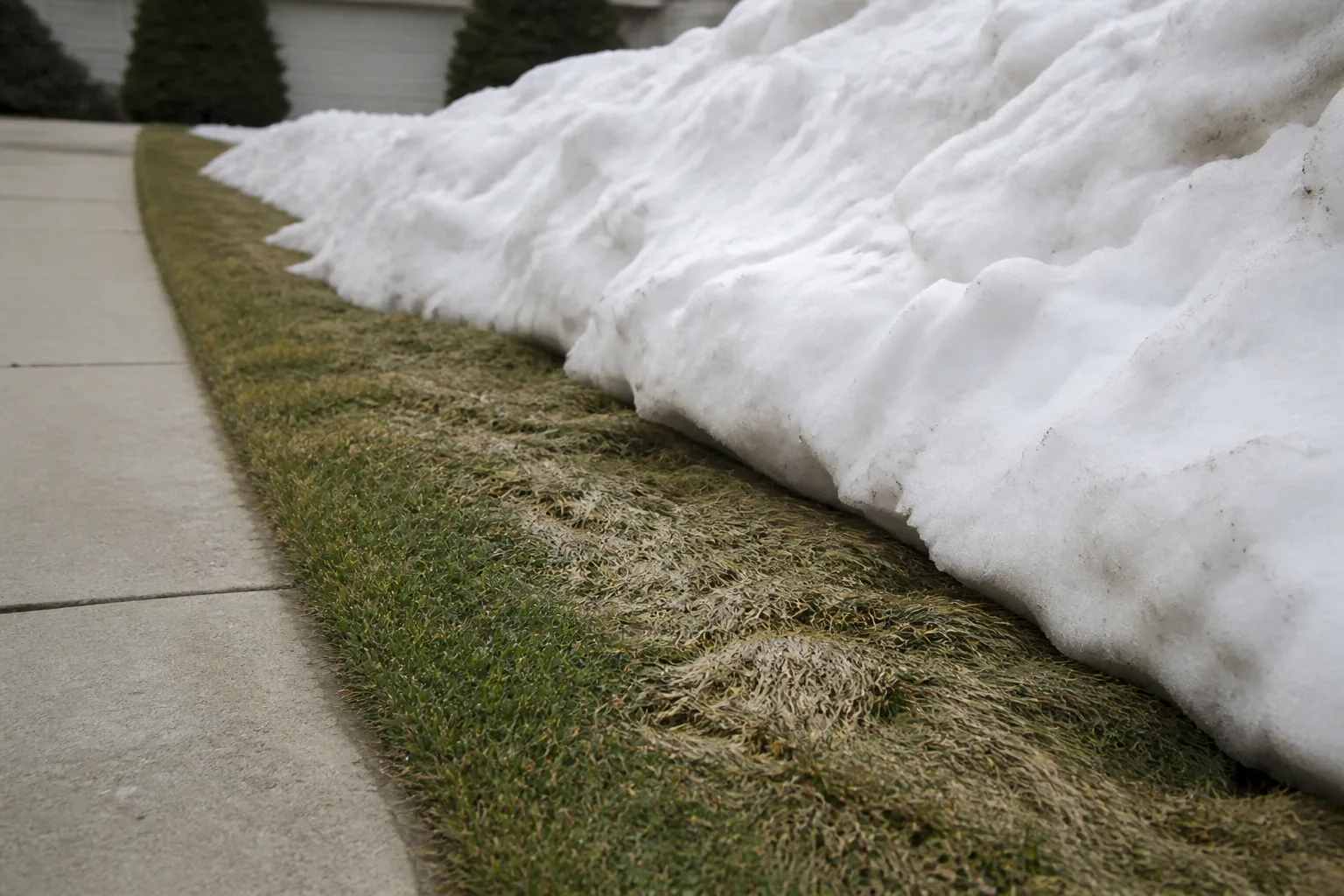
The most preventable snow damage often comes from the snow-removal plan. A six-inch snowfall spread across a broad lawn may be harmless, while repeated loads from a driveway create a dense bank that remains cold, wet, and dark long after the rest of the yard is exposed. Penn State identifies driveways, sidewalks, and drift zones as common sites of gray snow mold because they collect the deepest and longest-lasting cover.
Before the season, choose a snow destination that is low-impact, drains away from buildings and walkways, and does not funnel deicer runoff into the lawn. Spread loads across a broad area instead of building one tall wall on the same strip. Keep snow away from low spots, septic areas, vegetable beds, streams, and plants that are sensitive to salt. If the only practical location is turf, use the area that receives better winter sun and can drain, and vary the deposit zone when possible.
Mark lawn edges, irrigation heads, curbs, and buried obstacles with tall snow stakes before the first storm. This small bit of planning protects grass from a plow blade that cuts into the soil and keeps a snow blower from repeatedly throwing a salty windrow onto the same edge. A snow fence or temporary barrier can also redirect drifting snow away from a narrow, disease-prone strip. Snow-stake placement and a deliberate snow-accumulation zone are also practical recommendations in Lawn Love’s winter-lawn guide.
Remove Snow Without Damaging Lawn Edges
Normal snowfall does not need to be removed from the lawn. If you are moving snow because it blocks a door, covers a drain, or creates a large bank beside a paved surface, work from the hardscape outward and keep the blade, skid shoes, or wheels on the pavement. Do not use the lawn as a convenient landing zone just because it is open.
When snow is wet and heavy, several smaller moves are safer than one giant push. Keep the pile loose enough to melt and drain instead of compacting it into an ice-like mass. If an existing bank has become a recurring problem, move portions after a thaw when the turf surface is not saturated, rather than driving equipment through frozen grass during every storm.
Snow Blower or Shovel: Match the Tool to the Surface
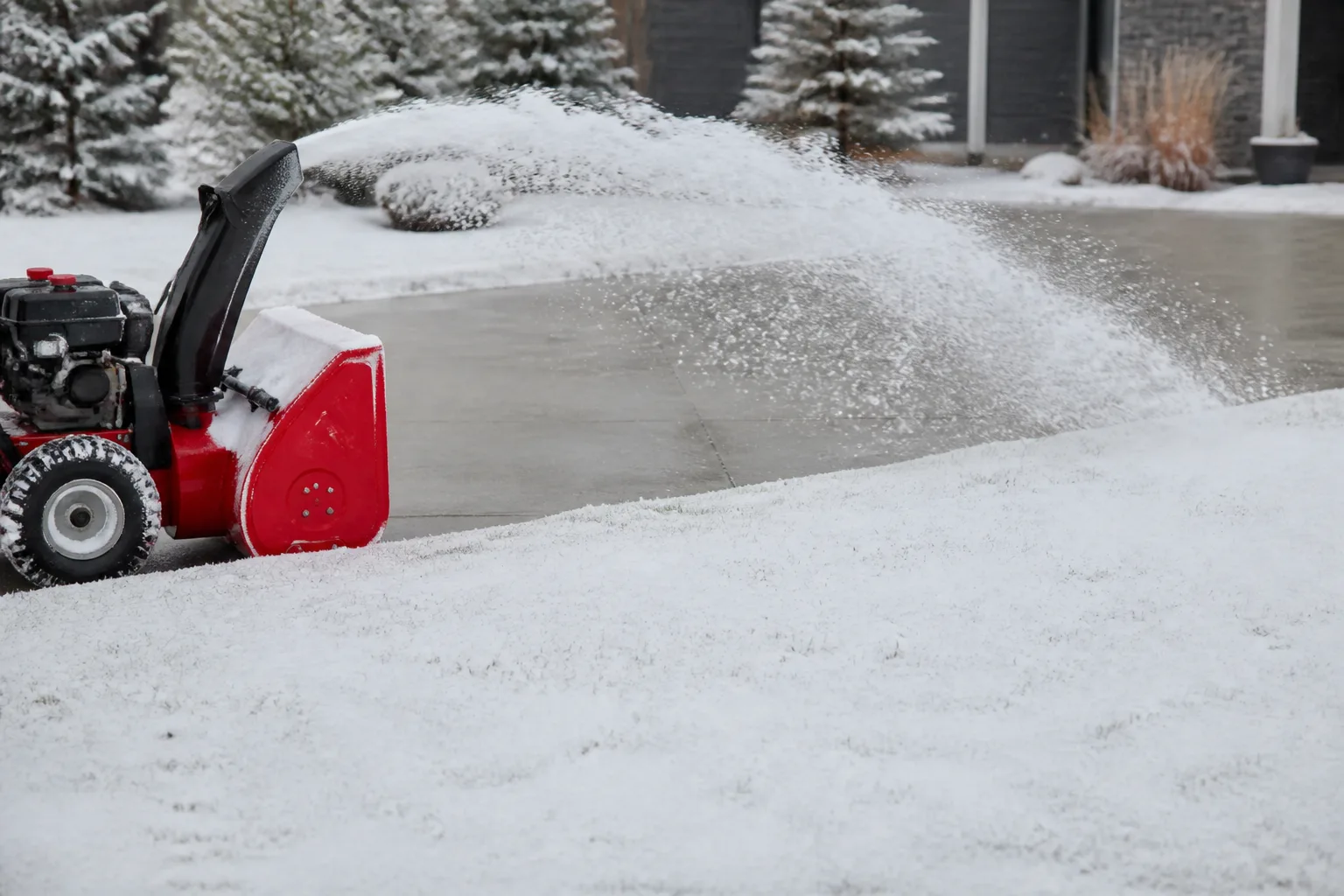
For a driveway or sidewalk, either a snow blower or a shovel can work safely if you control the direction of travel and discharge. A blower saves effort on deep accumulations, but its chute should throw snow toward the planned melting area—not across lawn edges, garden beds, roads, or neighbors’ property. A shovel gives more placement control near borders, but dragging or scraping it through turf can tear blades and soil.
The decision is about the surface, not a universal winner. Use the snow blower where the paved area is wide enough to keep wheels and intake housing on the pavement. Switch to a plastic-edged shovel or scoop for the last strip beside grass, lift rather than grind the blade, and leave a thin protective layer on the hardscape if bare scraping would gouge a surface or catch the lawn edge.
Deicers deserve the same boundary discipline. Salt-heavy meltwater can dehydrate grass and damage soil, and a shovel-load of treated snow placed on turf concentrates that exposure. Apply the least amount needed on pavement, keep it away from the lawn, and sweep stray granules from the edge before they dissolve. For traction, a non-salt material may reduce chemical runoff, though it still needs cleanup so it does not become winter debris or clog drainage.
Keep Feet, Pets, and Vehicles Off Frozen Turf
Avoid walking on grass when it is frosted, frozen, or covered by a thin crust of snow. A single crossing is unlikely to destroy a lawn, but a shortcut used every day can flatten the same blades and compact the same soil. The crown—the short growing point at the base of each grass plant—is harder to replace than a bent leaf, and traffic damage becomes obvious when the lawn thaws and fails to stand back up.
Give delivery workers, children, and pets a route on pavement or a temporary path. Do not park on grass to make room for snow, and do not store trailers, bins, firewood, or plowed snow on a lawn that is wet underneath. If a dog repeatedly uses one snowy patch, rinse and dilute salt buildup after thaw when the soil can absorb water, then reassess the area for drainage and compaction before reseeding.
This is also a reason to avoid winter lawn projects that feel productive but are poorly timed. Mowing, raking, core aerating, and driving equipment on frozen turf can cause more damage than the snow itself. Wait for a dry, workable surface and active growth unless an immediate safety problem requires a different response.
What to Do When the Snow Finally Melts
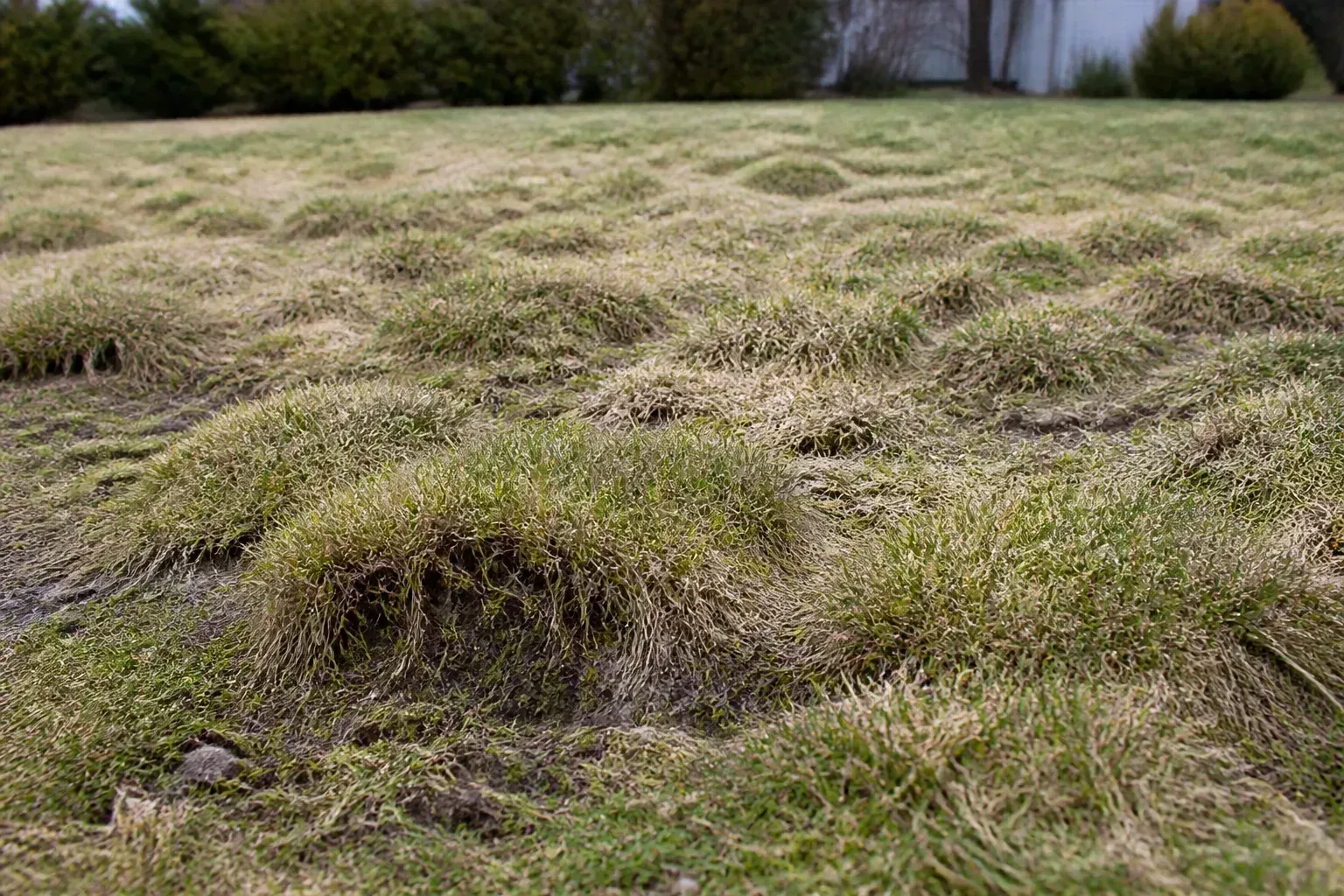
Do not judge the whole lawn on the first day of thaw. The grass may be tan because it is still dormant, and a gray-white film can look dramatic while sitting on living crowns. Take photographs, note where the snow lasted, and give the surface time to dry before you decide whether you have a cosmetic setback or a true bare area.
Rake Only When the Lawn Is Thawed and Dry Enough
Once the snow is gone and the turf is no longer frozen, wait until your shoes do not leave deep footprints. Then use a leaf rake with light strokes to lift matted blades, break a crust, and expose the soil surface to air and sunlight. The goal is ventilation and drying, not aggressive scraping or removal of every brown blade.
If a patch is still slimy, saturated, or bonded to ice, wait. Raking wet turf smears soil, pulls at weak crowns, and spreads debris across healthy grass. Clean mud and diseased material from tools before moving to another area, especially if you are dealing with a recurring problem or a lawn managed as high-value turf.
Decide Whether to Wait, Feed, Aerate, or Overseed
Most mature gray snow-mold patches can be watched after light raking and drying. New leaf growth may cover the damage as temperatures rise. Colorado State University specifically says spring fungicide does not control snow mold or speed recovery, and recommends light raking to improve air movement; light spring nitrogen may help when the lawn needs it. (Colorado State University PlantTalk)
Feed only when the grass is actively growing and the soil or local schedule supports it. If the affected area is slow because of compacted soil, core aeration may be appropriate during the correct growth window—but not while the ground is saturated. If you can see living crowns and the patch is filling in, wait before overseeding. If the soil is truly bare after it warms, loosen only the thin surface, choose seed suited to the existing turf, and keep the seedbed evenly moist without creating runoff.
Escalate the diagnosis when patches continue expanding after drying, recur in a pattern that does not match snow accumulation, show a persistent pink margin, or fail to green up while surrounding grass grows. A practical spring check from LawnSavers’ snow-mold field guide is to wait until the lawn is dry enough to walk on without deep footprints before lightly raking; that timing matters more than the urge to tidy the first day the snow disappears. A soil test, grass identification, and a local extension diagnosis can prevent years of treating the wrong problem.
When Fungicide Helps—and When It Cannot
For an ordinary residential lawn, cultural prevention is usually the first choice. Mowing, debris removal, drainage, moderate fertility, and snowbank management address the environment that lets snow mold develop. A spring spray after symptoms are visible is not a reset button; Penn State says fungicides applied after gray snow mold appears in spring have no value for that outbreak.
Preventive fungicide is a specialized decision for high-value turf, sports fields, recently seeded lawns, or a documented history of severe disease. If a professional or local extension service confirms that step is justified, the product must be labeled for the grass, disease, site, and jurisdiction, and it should be applied before permanent snow cover at the label timing. Do not borrow a golf-course program for a home lawn, mix products casually, or repeat the same mode of action without a resistance-management plan.
Build a Repeat-Proof Winter Lawn Checklist
Use the calendar as a prompt, but let turf and weather set the exact day:
- Early fall: Identify the grass type, inspect low spots, redirect downspouts, and schedule aeration only if compaction is confirmed.
- While leaves are falling: Mulch dry leaves when the volume is light; remove heavy layers before they mat into the canopy.
- Before the ground freezes: Continue mowing at the recommended height until growth stops. Do not scalp the lawn for winter.
- Before the first lasting snow: Stop late, high-nitrogen applications unless a soil test and local guidance support them. Choose snow destinations and install edge stakes.
- During storms: Keep vehicles and repeated foot traffic on pavement. Keep plow discharge and deicer away from grass, and spread or relocate deep banks when practical.
- At thaw: Wait for a dry, workable surface. Lightly rake matted areas, then monitor for green-up before feeding, aerating, or reseeding.
- After recovery: Map any repeat problem. If the same strip fails every year, solve the snowbank, drainage, traffic, or salt source instead of relying on a rescue treatment.
The most useful record is a quick photo from the same spots each spring and fall. Over two or three seasons, it can show whether the problem follows deep snow, shade, wet soil, a plow route, or an unhealthy patch of turf. That evidence makes the next decision much more precise than a blanket rule about snow.
Conclusion
Snow usually does not ruin a healthy lawn simply by covering it. The repeat damage comes from concentrated snowbanks, wet leaf mats, grass left too tall, compacted or poorly drained soil, frozen-turf traffic, ice, and deicer runoff. Prepare the lawn while it is actively growing, keep snow-removal stress on the pavement, and leave ordinary snow cover alone.
When the thaw arrives, let the lawn dry before you rake. Most mature cool-season turf needs air, time, and new growth more than it needs a spring fungicide. If a patch keeps returning, follow its shape and location back to the winter decision that created it—and fix that source before the next snowfall.