When to Plant Azaleas: Spring, Fall, and What to Skip
Is it a bad idea to plant azaleas right now? Use this zone-by-zone calendar, soil checklist, and planting method to get shrubs established before heat or frost.
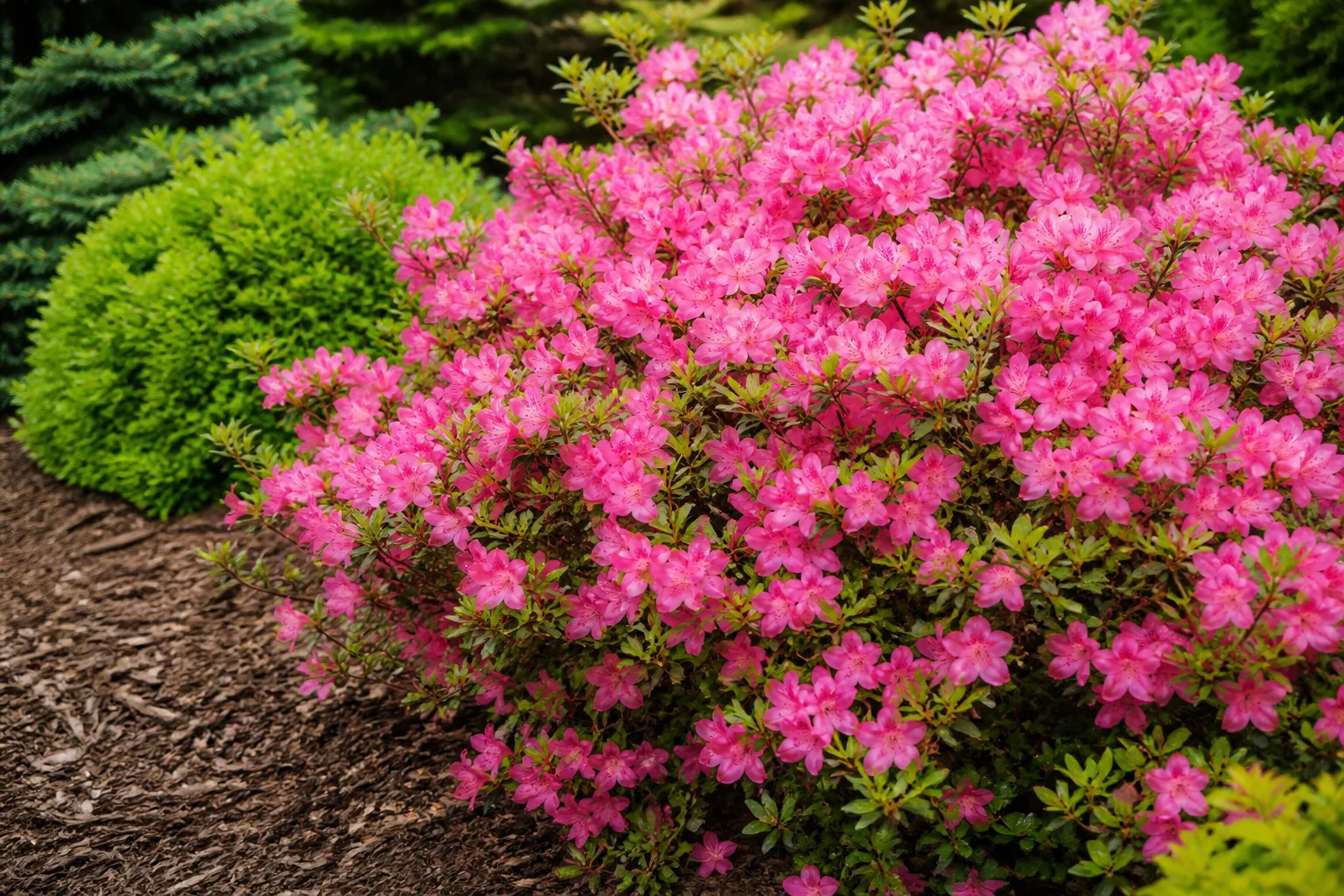
You are standing in the garden center aisle, cart full of pink and white blooms, wondering whether tonight is the night these azaleas finally go in the ground—or whether you will regret rushing. That is the right question. Azaleas are forgiving shrubs once established, but the first six to twelve months punish bad timing harder than most flowering shrubs do. Plant in a cool, workable window with acidic, moist-but-drained soil and you get decades of spring color. Plant in blazing summer heat or into frozen mud and you are fighting transplant shock from day one.
The honest answer is not “never” or “always.” It is: plant when soil is workable, air temperatures are mild, and you can keep roots evenly moist until the shrub roots out—usually early spring or early fall. Outside those windows, planting can still work, but the margin for error shrinks fast.
The Short Answer: When Planting Azaleas Works—and When It Doesn’t
Best times: early spring after the ground thaws and before summer heat settles in, or early fall while soil is still warm but air has cooled—typically six to eight weeks before your average first hard frost in cold climates, or before sustained 90°F days in hot climates.
Usually fine with extra care: late spring if you can irrigate through summer; late summer if your fall stays mild and you water until freeze-up.
High-risk windows: midsummer (heat + drought stress on shallow roots) and winter when soil is frozen or repeatedly freezes and thaws around a new root ball.
Right now test (use this before you dig):
- Can you crumble soil in your hand without it squishing or clinging like wet clay?
- Are daytime highs mostly between 50°F and 75°F for the next few weeks?
- Can you water deeply once or twice a week if rain does not cooperate?
- Is soil pH roughly 4.5–6.0, or are you prepared to amend or use a raised bed?
Three or four yes answers mean planting today is reasonable. Two or fewer means hold the shrubs in partial shade and revisit the calendar below.
Why Planting Time Matters More for Azaleas Than Most Shrubs
Azaleas belong to Rhododendron, a genus built for woodland edges: filtered light, organic topsoil, steady moisture, and excellent drainage. NC State Extension notes that azaleas and rhododendrons prefer moist, well-drained, acidic soils in dappled shade with protection from scorching afternoon sun. They do not tolerate dense clay or waterlogged roots, and they recover slowly from root damage.
Shallow Roots and a Narrow Establishment Window
Unlike tap-rooted trees, azaleas spread fibrous shallow roots just below the mulch line. That architecture makes them quick to dry out in summer and quick to heave in winter if planted late without mulch and water. During establishment, the plant has no deep reservoir—it depends entirely on you and the top few inches of soil.
Mild spring and fall weather lets roots grow into native soil without simultaneous heat load or freeze-thaw cycling. Heat forces the plant to transpire through leaves it cannot yet support with new roots. Frozen soil stops root growth entirely while desiccating winds pull moisture from bare branches. Timing is not superstition; it is root physics.
For year-round care after planting, see our azalea care guide.
Best Seasons to Plant Azaleas
Early Spring Planting
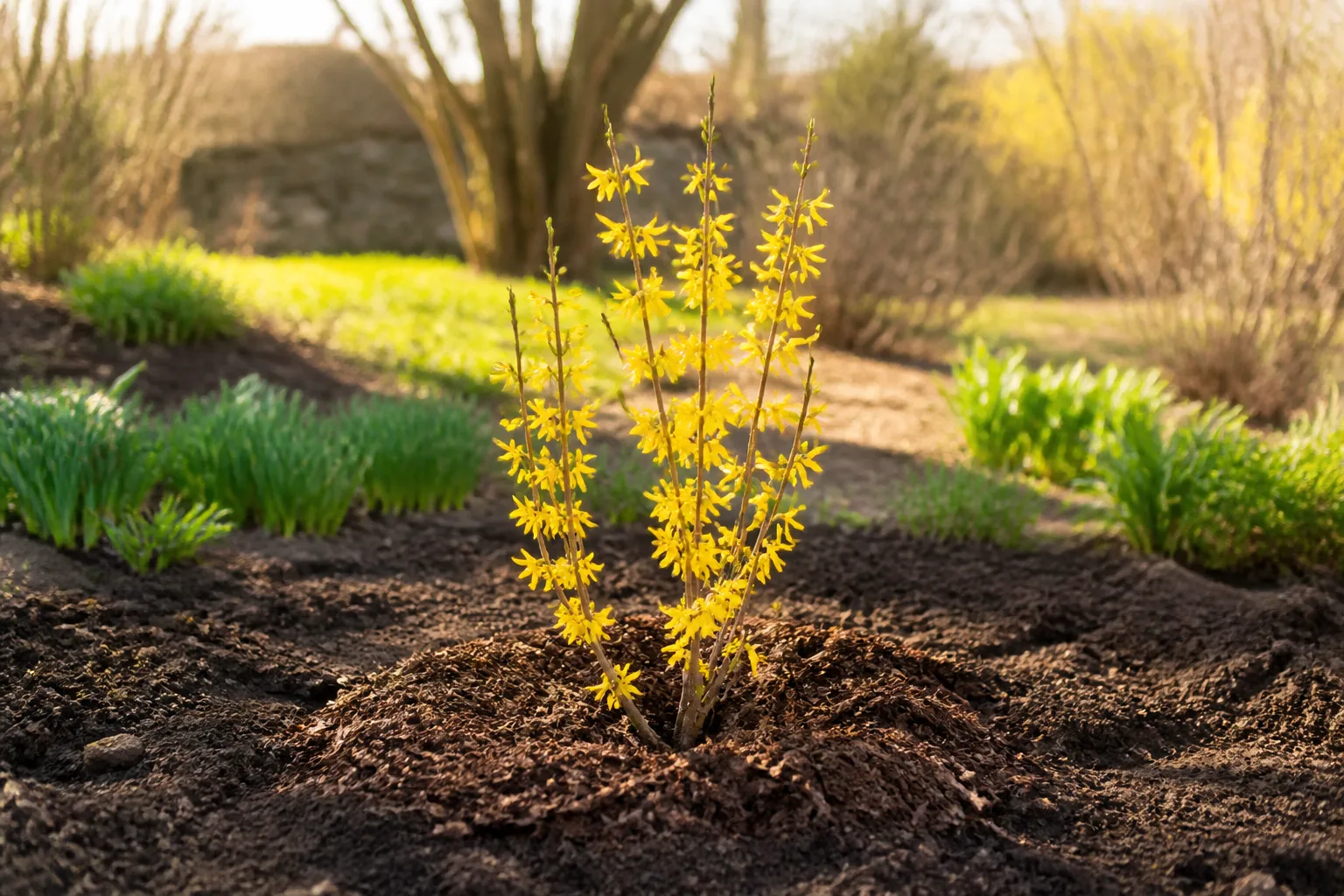
Target: as soon as soil is workable in your area—often late March through early May in temperate zones, earlier in the Deep South, later in zone 5 and north.
Why it works: cool air reduces water loss, spring rains help, and the shrub has the entire growing season to root before winter. Gardening expert Jill Drago notes on Epic Gardening that spring planting rewards gardeners who can monitor new shrubs regularly as the garden wakes up.
Watch for: planting too early into saturated clay that smears in the hole, or so late that summer heat arrives before roots expand. If azaleas are already in full bloom at the nursery, you may plant them—but avoid heavy pruning that removes this year’s show and next year’s buds.
Early Fall Planting
Target: mid-September through mid-October in many zones; earlier in the North, later in zone 8–9.
Why it works: warm soil speeds root growth while cooler air lowers stress. In the South, Southern Living calls fall the best azalea-planting season because shrubs establish before the next summer’s heat. Fall planting also skips the worst of summer drought—if you keep watering until the ground cools.
Watch for: planting so late that roots lack time to anchor before freeze-thaw cycles. In zone 5 and colder, aim for at least six weeks of mild weather after planting. Do not fertilize or hard-prune fall plantings; mulch and water instead.
Why Summer and Deep Winter Are Risk Seasons
Summer combines high evaporation, sporadic rainfall, and nursery plants often sold root-bound after sitting on hot pavement. You can plant in summer during a cool, rainy spell if you provide afternoon shade, drip irrigation, and pine-bark mulch—but expect more wilt, leaf scorch, and dieback than in spring or fall.
Winter planting into frozen or sodden soil compacts the planting hole, excludes oxygen, and prevents root growth until spring—by which time the plant may have dried out above ground. Container azaleas are better overwintered in an unheated garage or buried pot than planted into frozen earth.
Spring vs. Fall: Which Window Wins in Your Yard?
Neither season wins everywhere; your climate and soil matter more than a national headline.
| Factor | Spring advantage | Fall advantage |
|---|---|---|
| Root growth before summer heat | Full season ahead | Roots start in warm soil; tops go dormant |
| Watering demand | Rises quickly into summer | Usually lower air temps |
| Nursery selection | Widest color choice in bloom | More sales stock; blooms may be finished |
| Weed and lawn competition | Active garden season | Less mowing disturbance |
| Best in hot climates (7–10) | Works if early | Often stronger |
| Best in short seasons (3–5) | Safer if fall frost comes early | Risky after mid-September |
Simple rule: if your summers are long and hot, prioritize fall. If your winters arrive abruptly or you garden in zone 4–5, prioritize early spring. If both windows are open today, choose the one that gives you more weeks of mild weather before the next extreme.
Zone-by-Zone Planting Calendar
Use your USDA hardiness zone as a starting point, then adjust for local frost dates and rainfall.
Southern and Coastal Gardens (Zones 7–10)
- Prime fall window: September–October (August in upper zone 7 if summers moderate early).
- Prime spring window: February–April along the Gulf and Southeast coast; March–April in upper South.
- Summer planting: only with irrigation and afternoon shade; avoid July–August drought unless you can check soil moisture daily.
- Soil note: heavy clay is common—plant high and amend a wide area, not a small bathtub hole.
Mid-Atlantic and Midwest (Zones 5–7)
- Prime spring window: April–early May after last frost.
- Prime fall window: mid-September–early October.
- Avoid: planting after Halloween in zone 5; roots may not anchor before ground freezes.
- Reblooming types: Encore and similar cultivars may want four to six hours of sun for best bloom—still with afternoon protection in zone 7.
Northern Gardens and Cold-Hardy Choices (Zones 3–5)
- Prime spring window: late April–May when soil reaches workable consistency.
- Fall: early September only; later plantings belong in containers until spring.
- Cultivar choice matters as much as timing: University of Minnesota’s Northern Lights deciduous azalea hybrids were bred for upper Midwest winters, with selections tolerating temperatures near -30°F to -35°F depending on cultivar. Planting a borderline-hardy evergreen in zone 4 without wind protection wastes a good spring window.
Soil and Site Checks Before You Dig
Timing fails if the site is wrong. Run these checks once; they take less time than replacing a dead shrub.
pH and acidity. Azaleas want pH 4.5–6.0 and organic, well-drained soil, according to the Azalea Society of America. Submit a sample through your county extension office if you are unsure. Alkaline soil above 6.5 causes iron chlorosis—yellow leaves with green veins—not fixed by planting season alone. Our acid-loving plants guide walks through testing and sulfur rates.
Drainage test. Dig a hole, fill with water, and time how fast it drains. If water sits more than a few hours, do not plant flush in that spot. Build a raised bed, berm, or wide amended planting area so roots never sit in a sump. The Azalea Society warns that small holes filled with good soil inside heavy clay become water traps.
Light. Morning sun with afternoon shade is the default. In cool coastal climates, many azaleas tolerate more sun; in hot interiors, dappled shade prevents leaf scorch. Match the cultivar to the exposure—rebloomers often need more light than old woodland types.
Wildlife. If deer browse your yard, know that azaleas are on the menu. Plan protection or see are azaleas deer resistant before you invest in a long hedge.
How to Plant Azaleas Step by Step
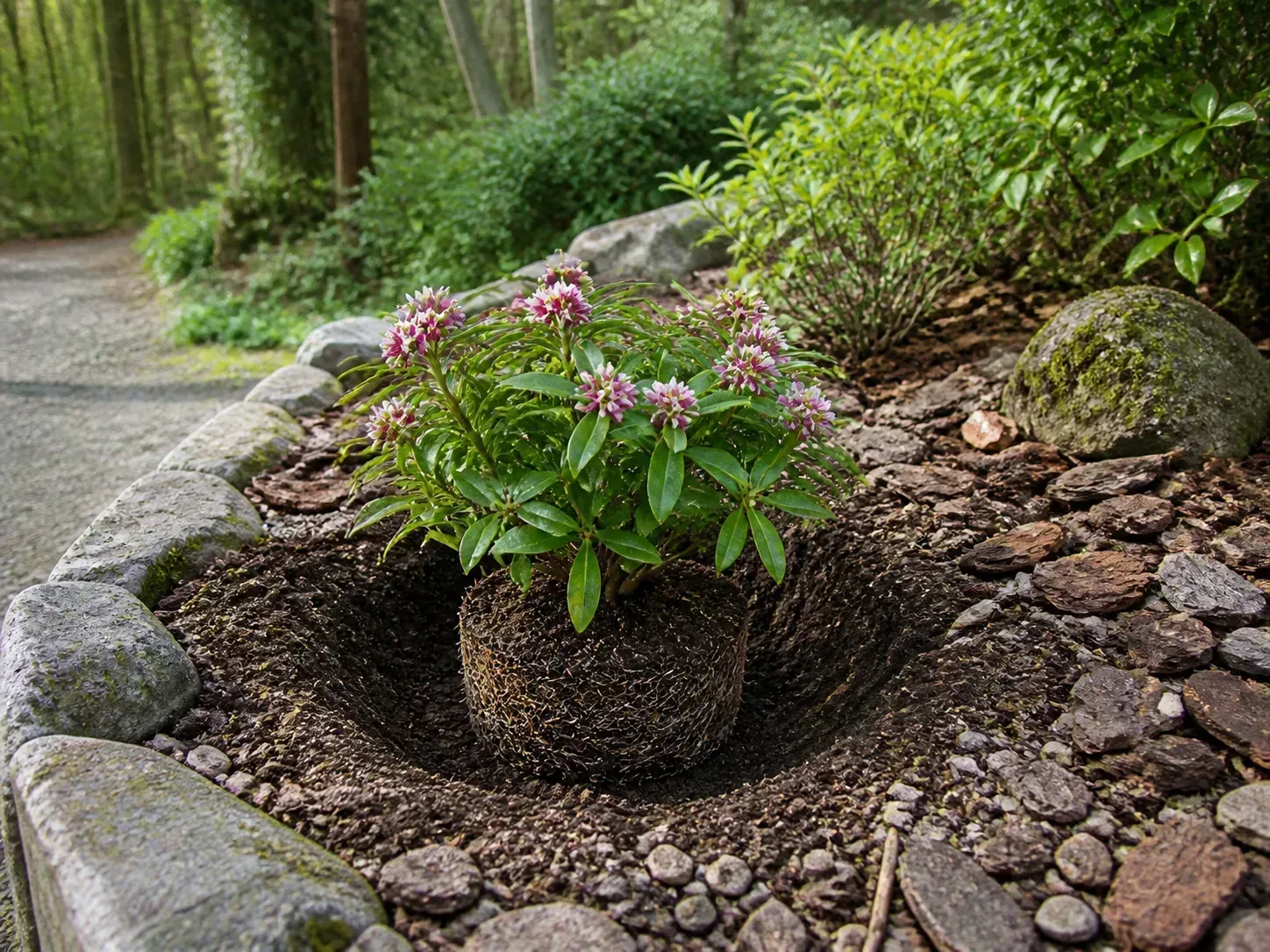
Once timing and site pass, planting is straightforward if you respect root depth and width.
1. Hydrate the plant. If the nursery pot is dry, soak the root ball in a tub until bubbles stop, or water slowly with a hose. Stressed roots cannot explore new soil.
2. Prepare the root ball. Slide the plant out of the container—do not yank by the stems. Cut any circling roots with a knife in several vertical slits about half an inch deep every two to three inches around the ball, and trim matted bottom roots. Root-bound pots are common late in the season; skipping this step strangles growth.
3. Dig wide, not deep. Make the hole two to three times wider than the root ball and only as deep as the ball itself. Epic Gardening recommends setting the top of the root ball about two inches above the surrounding grade in average soil; in heavy clay, plant even higher and mound soil up to the ball. NC State Extension advises planting high in poorly drained soil to protect shallow roots from rot.
4. Backfill with native soil amended up to 50% organic matter—fine pine bark, composted pine needles, or leaf mold—not fresh manure or alkaline “mushroom compost.” Firm gently to remove air pockets without compacting.
5. Water slowly. Let water settle the soil; repeat the next day, then weekly or more if weather is dry.
Mulch and First-Year Watering
Spread two to three inches of pine straw, pine bark, or leaf mulch over the root zone, keeping an inch clear around stems. Mulch cools soil, holds moisture, and feeds the mycorrhizal fungi azaleas rely on for nutrient uptake, as the Azalea Society explains.
First-year watering matters more than fertilizer. Check moisture with your finger at the root ball edge. New shrubs in their first summer may need water two to three times a week in sandy or hot sites, according to Southern Living’s planting guidance—less in cool, rainy stretches. Water deeply and slowly; shallow sprinkles grow surface roots that fry in August.
Do not fertilize at planting. Hold feed until the plant shows new growth the following spring unless a soil test documents a specific deficiency. Late-season nitrogen pushes tender growth into frost.
Cold-Hardy Azalea Cultivars Worth Planting
Timing helps only if the cultivar survives your winter. In zones 3–5, choose proven cold-hardy deciduous hybrids rather than tender evergreen florist types.
The University of Minnesota’s Northern Lights series includes:
- ‘Northern Lights’ — pink flowers, up to about 8 feet.
- ‘Rosy Lights’ — deeper pink, compact to about 5 feet.
- ‘Golden Lights’ — orange-yellow blooms, strong mildew resistance.
- ‘Orchid Lights’ — pale pink-purple, among the hardiest in the series.
- ‘Lemon Lights’ — buttery yellow, to about 6 feet.
- ‘White Lights’ — white with pink highlights.
These were selected at the University of Minnesota Landscape Arboretum for bud hardiness in upper Midwest winters. Match mature size to the bed before you plant ten shrubs that outgrow a foundation border in eight years.
In milder zones, evergreen Kurume and Southern Indica types dominate landscapes—but still check the label’s hardiness rating against your microclimate (wind, late frosts, reflected heat).
Bought Azaleas at the Wrong Time? Your Options
Too hot to plant (midsummer): keep pots in bright shade, water when the top inch dries, and slip pots into larger containers if roots circle. Plant at the first cool fall stretch or next early spring.
Too cold to plant (late fall/winter): group pots against a north wall or unheated porch, water when soil is not frozen, and plant in spring. In zone 5 and north, heeled-in plants (tilted into a shallow trench and mulched) survive better than pots cycling freeze-thaw on a patio.
Blooming in the box at the wrong season: you may still plant if soil and weather pass the “right now” test. Enjoy the flowers; just do not shear the shrub afterward if you want maximum bloom next year.
Florist or gift azaleas (Rhododendron simsii types): treat as tender houseplants or seasonal patio color in frost-prone areas. The RHS notes indoor azaleas are not frost hardy for permanent outdoor planting in cold regions.
After-Planting Troubleshooting
Wilting with dry soil: increase deep watering; check that mulch is not hydrophobic. Wilting with wet soil: stop watering, improve drainage, confirm the plant is not sunk in a bowl. Yellow leaves, green veins: test pH; alkaline soil needs long-term correction, not quick fertilizer. Brown leaf edges: often sun or wind burn—add shade cloth or windbreak next season. No new growth by midsummer: gently scratch a stem; if brittle and brown, roots failed—review drainage and timing before replanting.
Most failures trace back to timing plus drainage, not mysterious azalea temperament. Fix those two and azaleas become the low-maintenance shrubs everyone promised.
Conclusion
Planting azaleas is a bad idea only when soil, weather, or your schedule cannot support establishment. For most gardeners, that means yes in early spring or early fall, maybe with irrigation in a cool summer spell, and no in frozen ground or peak August heat. Run the four-question “right now” test, match the window to your zone, fix acidity and drainage before you dig, and choose cultivars that actually survive your winters.
Get those decisions right and the planting steps—wide hole, high root ball, pine mulch, patient watering—become routine. Get them wrong and no amount of fertilizer will rescue a shrub baking on shallow roots. When the calendar and the thermometer align, put the azaleas in the ground. When they do not, shade the pots and wait; spring and fall will still come.