How to Protect Your Lawn From Winter Freeze Damage
Protect your lawn from winter freeze with a practical fall checklist: watering, mowing, fertilizer, aeration, snow, salt, and spring repair.
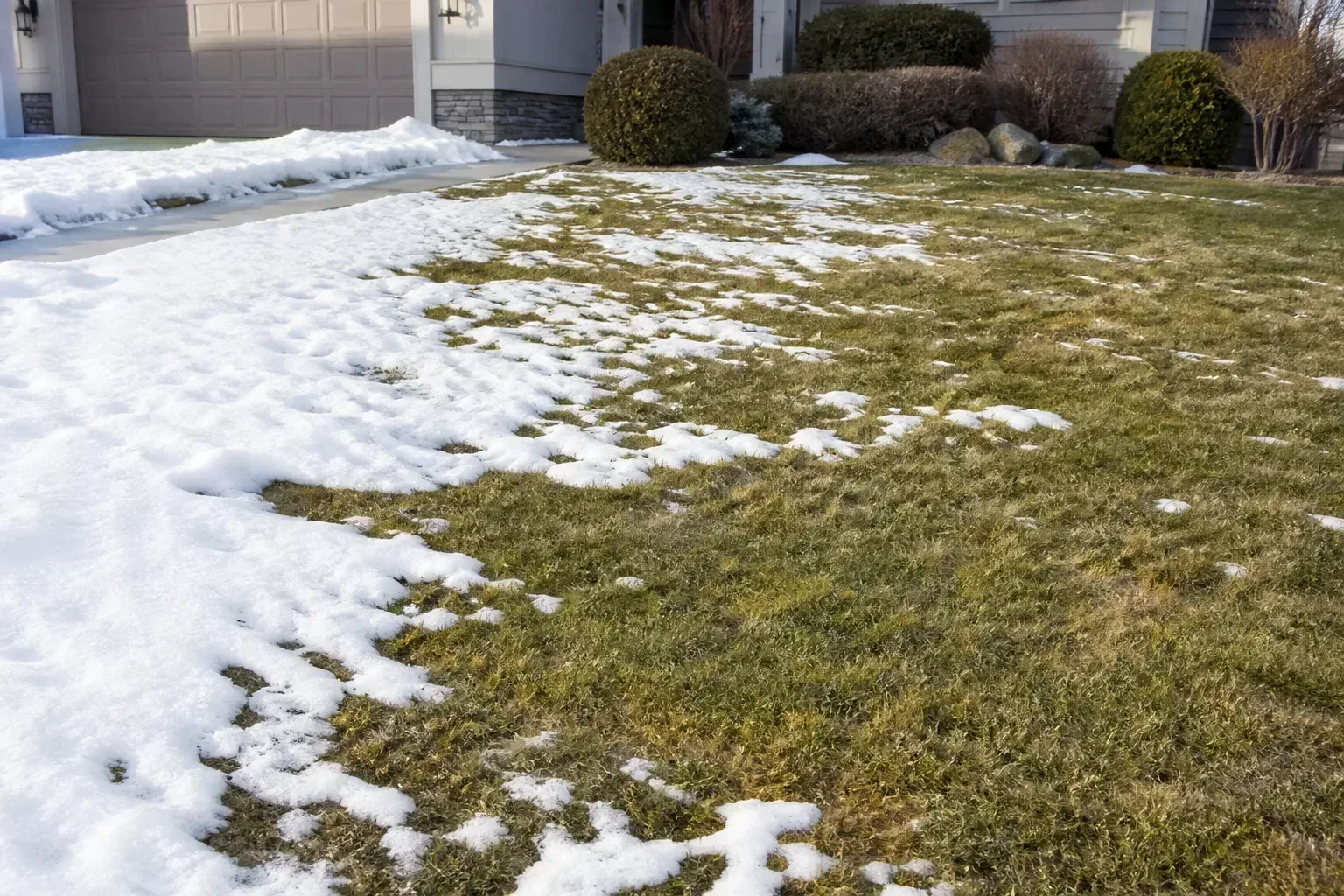
A single frost usually does not kill an established lawn. The bigger risk is a lawn that enters winter already dry, compacted, smothered by wet leaves, cut too aggressively, or exposed to repeated traffic while the blades are brittle.
The most useful protection happens before the ground freezes. Identify whether you have cool-season or warm-season turf, keep the root zone supplied with moisture while it can absorb it, finish fall feeding at the right time, and remove conditions that trap wetness. Once frost arrives, your main job changes: stay off the lawn, manage snow and salt at the edges, and wait for a thaw before you try to “fix” anything.
What a Winter Freeze Actually Does to a Lawn
Cold air is not automatically fatal to turfgrass. Grass species survive winter by slowing growth, moving energy into crowns and roots, and adjusting to shorter days and colder soil. In a well-established cool-season lawn, dormancy can look dramatic while the plants remain alive.
Winter injury usually comes from a combination of stressors. Frozen soil limits the water roots can take up, while sunny, windy weather continues pulling moisture from exposed blades. That mismatch can cause winter desiccation, especially on slopes, shallow soil, south- or west-facing exposures, and places with little snow cover. Colorado State University Extension describes winter watering as an occasional need during extended dry periods from late fall through spring, but only when the soil is thawed and accepts water. Its lawn-care guidance also emphasizes that irrigation should follow soil, grass, and weather conditions rather than a fixed number of days.
Freeze-thaw cycles create a different kind of trouble. Water expands as it freezes, then drains or refreezes as temperatures change. Repeated movement can loosen crowns, leave uneven areas, or create wet pockets that drain poorly. If foot, pet, or vehicle traffic is added while the grass and soil are frozen or saturated, the blades can snap and the soil can compact before the lawn is able to repair itself.
Snow is not simply good or bad. A stable blanket can insulate the crown from extreme temperature swings, but a deep pile beside a driveway, an ice sheet that cannot drain, wet leaves trapped under snow, or salt-laden meltwater can kill patches for reasons that have little to do with cold alone. The goal is not to keep the lawn green all winter; it is to send it into dormancy with healthy roots and let it rest without mechanical damage.
Identify Your Grass and the Risk It Faces
Before applying fertilizer or changing the mowing height, determine which broad turf group you have. A cool-season lawn often contains Kentucky bluegrass, perennial ryegrass, tall fescue, or fine fescue and does most of its growing in the cooler parts of the year. A warm-season lawn may contain bermudagrass, zoysiagrass, or St. Augustinegrass and usually slows or browns as autumn temperatures fall.
Use the label on the seed or sod if you have it, ask a local extension office, or compare the lawn’s growth pattern with a nearby healthy lawn. Do not choose a “winterizer” based only on a bag’s marketing language. Colorado State University Extension notes that turf species have different fertilizer needs and timing, and that late-season nitrogen recommendations are meant for grass that is still green and able to use the nutrient.
| Lawn situation | What winter color means | Main preparation priority |
|---|---|---|
| Established cool-season turf | Green growth may slow, then color may fade with cold or lack of light | Build root and carbohydrate reserves before dormancy; avoid winter stress from dryness, compaction, and leaves. |
| Established warm-season turf | Brown or straw color is often normal dormancy | Protect the crown and drainage; do not force green growth with late nitrogen. |
| Newly seeded or recently sodded lawn | Seed may wait, while young shoots are more exposed | Protect the seedbed from erosion and traffic, and follow the grass’s correct establishment window. |
| Thin, thatchy, compacted, or poorly drained lawn | Winter can expose weaknesses already present | Correct the limiting condition instead of adding fertilizer alone. |
The more useful question is not “What temperature kills grass?” It is “What is the grass doing, and what stress is the forecast about to add?” A dry, exposed cool-season lawn needs a different response from a saturated warm-season lawn that has already entered dormancy.
Cool-Season Turf: Build Reserves Before Dormancy
Cool-season grass is generally the best match for regions with cold winters, but hardiness is not the same as immunity. Kentucky bluegrass, fescues, and ryegrass can tolerate cold when established and properly conditioned, yet shallow roots, drought stress, heavy thatch, and compacted soil reduce that margin.
Keep the lawn growing steadily while weather allows rather than trying to force a last-minute surge. Fall is a good time to address compaction, repair thin spots when the local seeding window is open, and make a measured final fertilizer application. If the soil dries during a long, snowless cold period, water on a thawed day when the water can infiltrate instead of freezing on the surface.
Warm-Season Turf: Protect the Crown, Not Winter Color
Warm-season grass often turns brown before a cool-season lawn does. That color change is a dormancy signal, not proof that the lawn is dead, so do not respond with repeated nitrogen applications or excessive irrigation. In transition zones, a sudden cold snap before the lawn has fully shut down can be more stressful than a stable cold spell after dormancy is established.
For warm-season turf, focus on a healthy root zone, correct mowing, drainage, and minimal traffic. The exact risk depends on the species, cultivar, local climate, exposure, and whether the lawn was already stressed by drought or disease. If you are unsure whether a brown area is dormant or injured, mark the area and reassess after consistent spring growth begins.
Use a Pre-Freeze Checklist That Follows the Weather
The best pre-freeze routine is a short inspection followed by only the tasks your lawn actually needs. Walk the property before the first hard freeze, check the soil in a few representative areas, note low spots and pavement edges, and look for leaves that will become a wet mat. Then schedule work around active growth and soil conditions, not a date on the calendar.
Water Deeply While the Soil Is Thawed
Watering before a freeze is useful only when the root zone is dry enough to need it and the soil is still thawed and absorbent. A damp root zone gives grass more available moisture going into a dry, windy period; it does not create a protective force field against frost. If the soil is already wet, compacted, or covered by standing water, another application can reduce oxygen and increase runoff.
Check moisture below the surface with a soil probe, screwdriver, or narrow trowel. If the upper soil is dry but the lawn is rooted deeper, apply water slowly enough to soak in. Colorado State University Extension recommends watering deeply enough to moisten the root zone and using shorter soak cycles when thatch, slopes, clay, or compaction cause runoff. Its turf-management guidance also recommends occasional winter watering during extended dry periods only when the ground is thawed and able to accept it.
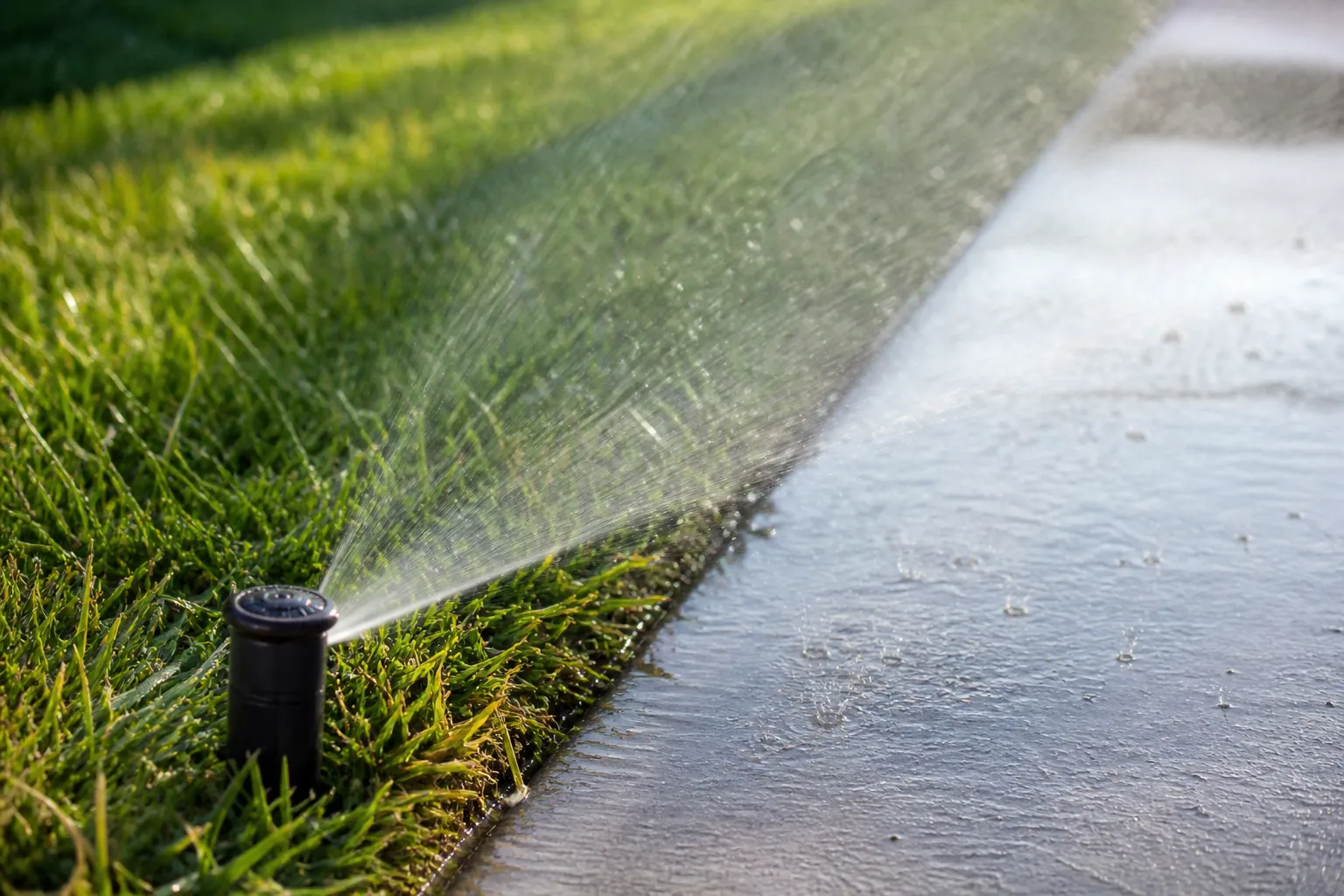
Turn off automatic scheduling as the season changes. A controller that runs on a summer calendar can water frozen ground, create runoff, or keep a dormant lawn unnecessarily wet. Follow local watering restrictions, and stop when the ground is frozen or the forecast makes infiltration unlikely. Never try to melt frost with hot water; the benefit is unproven at home and the sudden temperature change can damage turf and waste water.
Fertilize Only While Grass Can Use It
Fall feeding can help cool-season grass store energy and develop a stronger root system, but more fertilizer is not more protection. The safe window is tied to active growth, grass type, soil, and local recommendations. Colorado State University Extension places the final fall nitrogen application while grass is still green and at least two to three weeks before the ground is expected to freeze in its regional schedule. It also cautions against late fertilizer on very sandy soils because nutrients can leach during winter.
Use a soil test if the lawn is weak, has a history of poor color, or does not respond to ordinary feeding. Do not assume a high-potassium product is a universal freeze treatment, and do not add phosphorus unless the soil test or local guidance calls for it. Sweep granules off sidewalks and driveways so they do not enter stormwater, and follow the product label for rate, timing, and watering-in requirements.
Warm-season grass usually does not benefit from a late nitrogen push as it enters dormancy. If your lawn is brown because it is naturally dormant, a late application will not make the roots safer and may encourage weak, poorly timed growth during a brief warm spell.
Mow for a Resilient Canopy
Avoid both extremes: a lawn left tall enough to stay wet and mat under snow, and a lawn scalped so low that it has little leaf area or root protection. The final cut should be modestly adjusted, if at all, for the species and local conditions. Colorado State University Extension generally recommends maintaining a consistent mowing height and removing no more than one-third of the blade at a time; its guidance places many common cool-season lawns around 2 to 3 inches.
If the lawn has grown too tall, lower the height over more than one cut rather than taking off half the blade at once. If a wet fall delays mowing, wait for a dry, workable surface and raise the deck temporarily if needed. Never mow over frost: frozen blades are brittle, and mower tires can compress soft soil beneath a thin crust.
Keep clippings on the lawn when they are short enough to filter between the blades. Clippings are not the same as thatch, and removing them by default can throw away recycled nutrients. Use a sharp blade so the final cuts are clean rather than shredded, especially where frayed tissue will remain wet for long periods.
Clear Leaves and Manage Thatch
Light, finely shredded leaves can break down in a healthy, actively growing lawn. A thick layer of whole, wet leaves is different: it blocks air and light, traps moisture at the crown, and can become a disease-friendly mat beneath snow. Rake, mulch, or remove heavy buildup before a prolonged snow cover, taking care not to scrape the crowns or loosen turf on wet soil.
Thatch is a dense layer of living and dead roots and stems above the soil. Colorado State University Extension identifies roughly one-half inch as a point where thatch should be slowed and monitored; excessive thatch can become the main rooting medium, which makes turf more vulnerable to drought stress, winterkill, insects, and disease. Cut a small plug from an inconspicuous area to measure rather than guessing from surface color.
Do not power-rake a lawn merely because winter is coming. Deep dethatching can remove living turf and leave the crown more exposed. If thatch is excessive, plan correction while the grass is actively growing and recovery is likely, and address compaction or overfertilization that helped create it.
Aerate Only if Compaction Is the Actual Problem
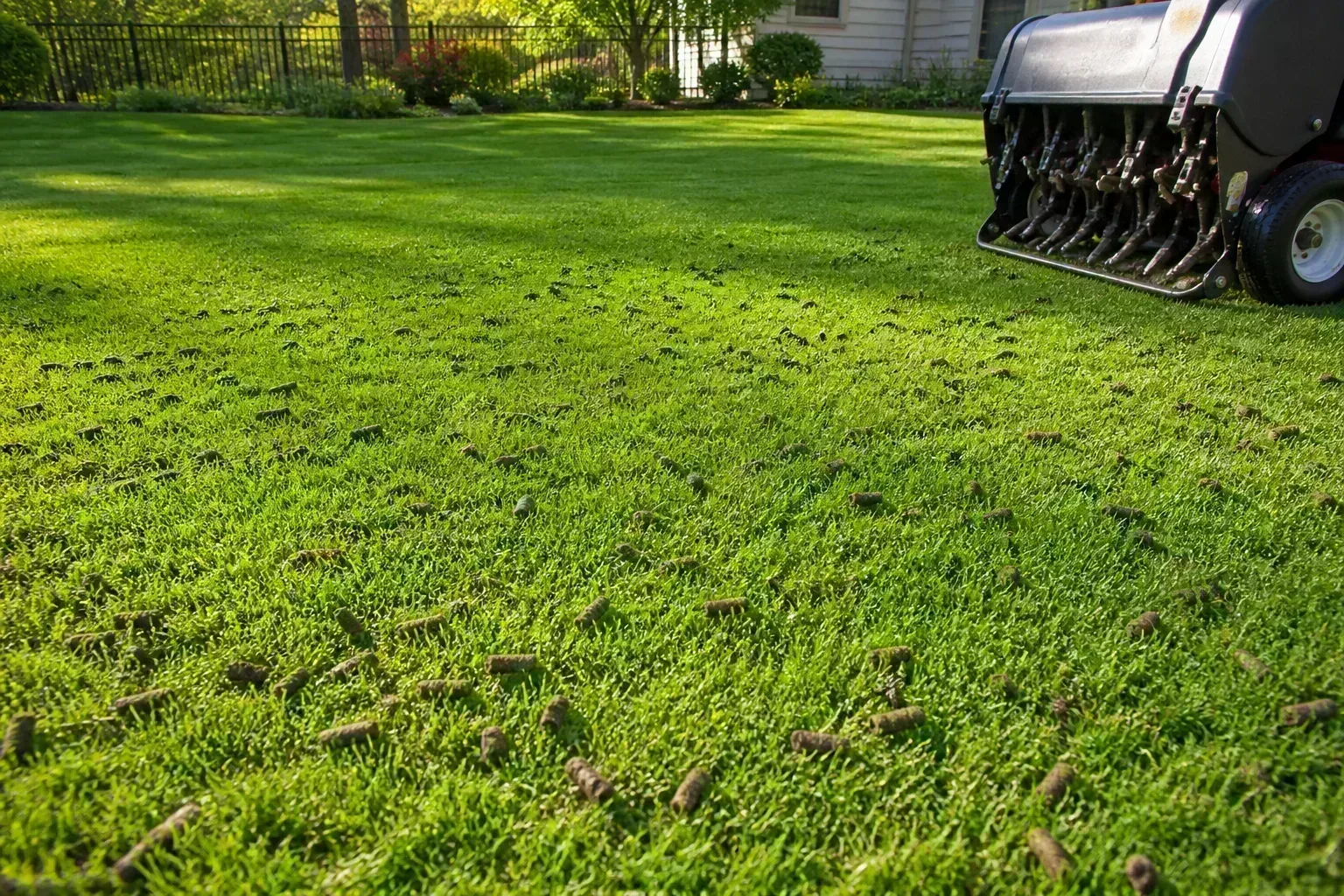
Core aeration can improve a lawn’s odds before winter, but it is not a mandatory fall ritual. Aerate when you see persistent puddling, shallow roots, hard soil, thinning in traffic lanes, or a screwdriver that barely enters moist soil. If the lawn drains well and the soil is open, punching holes can create unnecessary disturbance without solving a problem.
Use a hollow-tine core aerator, not a spike tool that simply presses soil sideways. Work when the grass is still actively growing and the soil is moist enough for clean plugs but not muddy. Colorado State University Extension describes cores about 2 to 3 inches long and recommends enough passes to create a useful pattern of openings; local extension timing should determine the season because the best window differs by grass type and climate.
After aerating, leave the cores on the lawn to break down unless there is a specific reason to remove them. Water gently if needed to help soil fall back into the holes, and pair the work with overseeding only when the seed can germinate before the next major stress. Do not aerate frozen ground, saturated soil, or a lawn that is too close to dormancy to recover.
Protect Frosted Turf From People, Pets, and Equipment
The simplest freeze protection is a temporary traffic ban. When frost is on the blades, the tissue is less flexible; walking, running pets, dragging a hose, pushing a mower, or driving across the lawn can crush and shear the frozen leaves. YardThyme’s practical frost guidance makes the same distinction: frost alone is often survivable, but traffic while grass is brittle can leave footprints and flattened paths that do not recover until spring. Its frost-care overview is useful for this everyday timing rule.
Keep a path on pavement, postpone nonessential chores, and wait until frost has melted and the grass surface is dry. A thaw does not automatically make the lawn safe: if the soil is soft and saturated, tires and repeated footsteps can still create ruts and compaction. For necessary access, use a temporary walkway that spans the area, then remove it as soon as the job is done so it does not trap moisture or block light.
Newly germinated grass deserves extra caution because its roots and crowns have not filled the soil. Protect the seedbed from traffic and erosion, but do not assume a blanket will rescue a lawn seeded outside its climate’s establishment window.
Manage Snow, Ice, and Deicing Salt at the Lawn Edge
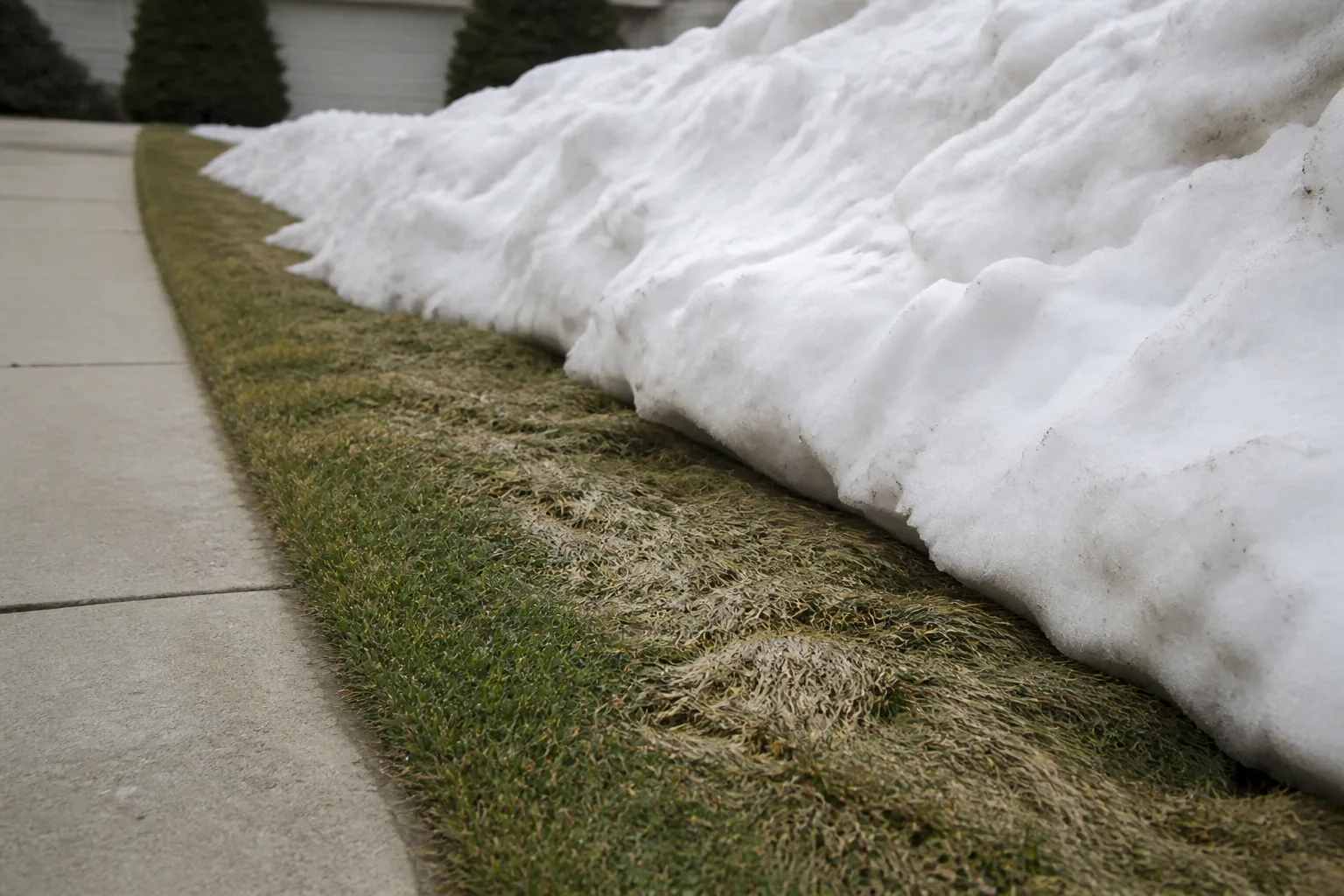
Do not strip a normal layer of snow from the entire lawn. Snow can insulate turf, and moving it unnecessarily can expose blades to wind and create piles in places where they will later smother grass. Instead, manage where snow lands: spread shoveled snow rather than building one tall, compacted mound on the same strip of turf, keep drainage outlets open, and do not push snow mixed with road grit onto a planting bed or lawn edge.
Ice cover is a separate risk. If meltwater cannot drain beside a curb or driveway, or if the same area repeatedly freezes and thaws, the grass may die in a long, irregular patch. The University of Minnesota Extension turf diagnosis guide identifies ice-cover damage by its location, shape, and timing after snowmelt, which is more useful than assuming every tan patch is frost injury.
Salt injury also has a recognizable geography. Long tan or brown strips with a sharp boundary beside a sidewalk, driveway, or street point toward deicing salt rather than a lawn-wide freeze problem. Salt can dehydrate roots and raise the salt concentration in the soil, so keep piles of treated snow away from turf, use traction products thoughtfully, and sweep loose granules from pavement before the next melt. Avoid applying a deicer directly to grass, and never rinse salty meltwater toward a storm drain, pond, or stream.
Should You Cover a Lawn Before a Freeze?
Most established lawns do not need a cover before an ordinary frost. Large tarps can crush the canopy, hold wetness against the crown, blow loose in wind, and create more work than protection. The cover question is mainly relevant to newly seeded patches, small repaired areas, or warm-season turf in a marginal climate when a short, unusual freeze is forecast.
For a small high-risk patch, use a breathable floating row cover or frost fabric that is supported or loosely laid so it does not press heavily on the grass. Anchor the edges, keep the material off standing water, and remove it after the event so light and air return. Do not cover frozen turf after the fact and assume the injury will reverse; covers are preventive, not a cure.
The better long-term protection is still correct species selection, healthy roots, appropriate fall care, and a lawn that is not compacted or drought-stressed. If a lawn needs a blanket every winter to survive, investigate whether the grass is suited to the site or whether drainage, exposure, and soil preparation are the real constraints.
Diagnose Winter Injury After the Thaw
Wait for a genuine thaw before judging the lawn. Dormant turf can look brown or gray for weeks, and weather injury may appear after the event rather than on the morning of the freeze. Photograph the pattern, note its position relative to pavement and snow piles, and compare it with areas that had the same grass but different exposure.
Brown Stripes Beside Pavement
A narrow, tan-to-brown strip beside a drive, sidewalk, curb, or road is more consistent with deicing salt or salty snowmelt than with uniform cold damage. A distinct boundary between healthy and injured grass is another clue. The University of Minnesota Extension lists these long strips and irregular edge patches as characteristic of deicing salt injury and recommends using the location and timing to distinguish it from other causes.
If the soil is workable and drainage is good in spring, repeated applications of clean water can help move soluble salts below the root zone, but do not flood a poorly drained yard or send runoff into surface water. Remove dead material only after the cause is addressed, and test the soil before adding gypsum or other amendments. Gypsum is not a universal antidote for every brown lawn.
Circular Pink or Gray Patches
Snow mold typically appears as circular or irregular matted patches that become visible as snow recedes. The University of Minnesota Extension’s turf diagnosis pages describe pink snow mold as tan-to-gray patches with a pink cast in wet, near-freezing conditions, and gray snow mold as silvery-gray or brittle mats that can range from small spots to broad areas.
The spring response is usually cultural first: let the surface dry, gently rake matted grass to improve air movement, remove leaf debris, and correct the conditions that kept the canopy wet. Do not apply a fungicide solely because a patch is brown; identify the disease, follow local extension advice, and use only a product labeled for the site and problem if treatment is warranted.
General Browning, Desiccation, and Crown Injury
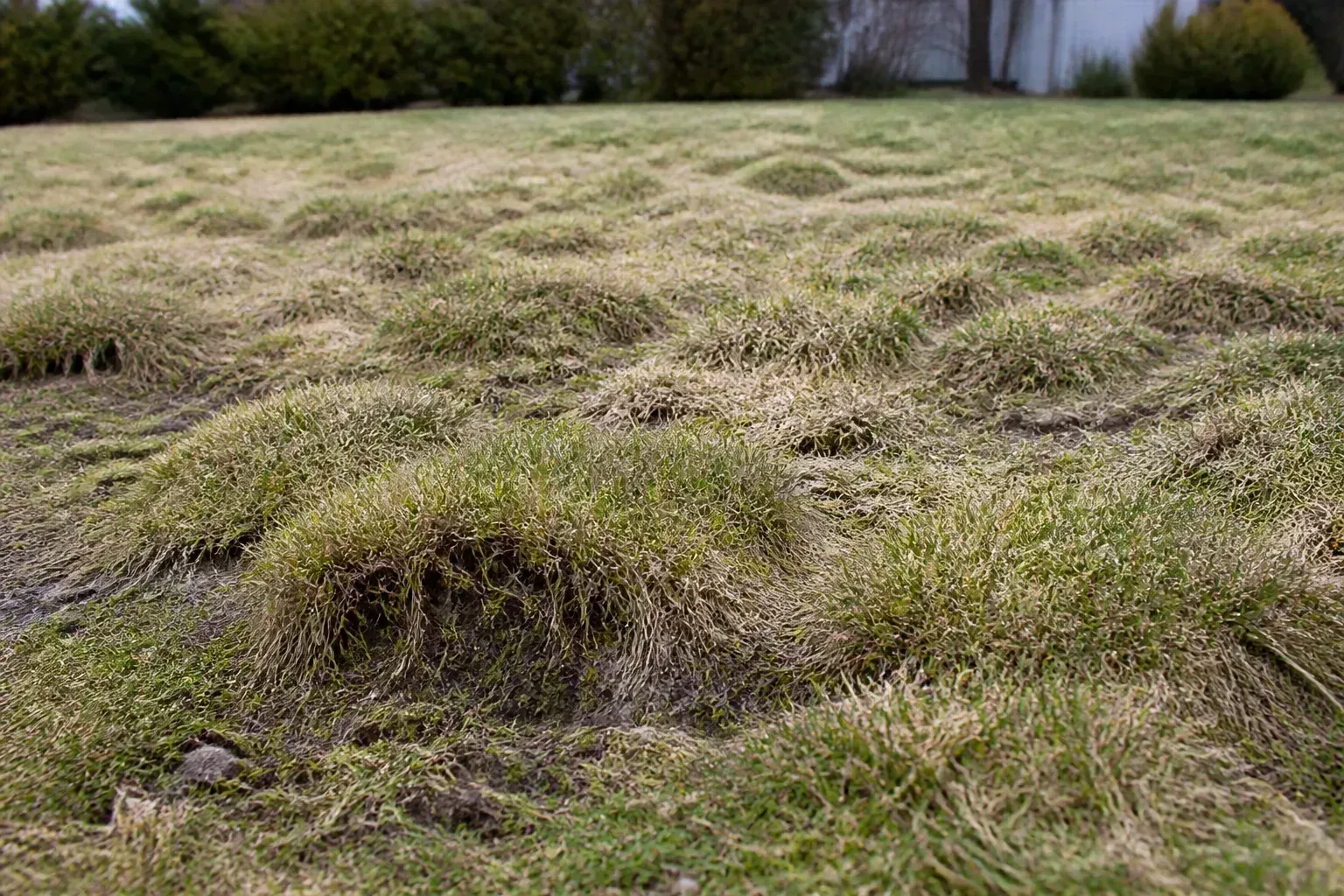
Uniform color across a warm-season lawn may be normal dormancy. Browning concentrated on a sunny, windy exposure with little snow cover suggests desiccation, while flattened footprints or tire tracks point to mechanical damage. Lumpy soil, lifted crowns, and uneven turf suggest freeze-thaw movement or frost heaving.
A brown blade does not tell you whether the crown is alive. Check several areas, including the border between brown and green, and wait for consistent growing conditions before reseeding. If the crown survives, the lawn may fill in as growth resumes; if entire plants pull away easily or remain dead after the species’ normal green-up period, repair will be necessary. If the pattern does not fit salt, snow mold, traffic, drought, or dormancy, seek a local diagnosis rather than applying fertilizer or fungicide at random.
Repair the Lawn in the Right Spring Sequence
The order of spring work matters. Starting with seed or fertilizer before the ground is workable can bury seed in mud, compact the soil, and hide the original cause. Use this sequence instead:
- Wait for the site to thaw and drain. Keep traffic and heavy equipment off soft soil, and allow dormant grass time to show which crowns are recovering.
- Map the pattern. Mark salt edges, snow piles, low spots, footprints, circular mold patches, and areas that were already thin. The pattern often tells you whether the repair is cultural, drainage-related, or a true reseeding job.
- Remove the immediate stress. Rake away heavy leaf mats and dead debris once the lawn is dry enough to handle lightly. Open blocked drainage paths, move future snow piles, and stop salt from reaching the same edge.
- Correct compaction only when conditions are right. Core-aerate if soil is genuinely compacted and the grass can recover. Level minor frost heaving only after the soil firms; rolling saturated turf can make the problem worse.
- Choose the repair window for the grass type. Cool-season grass generally establishes best in its appropriate cool-season seeding window, while warm-season grass needs warm soil and active growth. Match the seed to the existing lawn and do not use a pre-emergent product where you need seed to germinate.
- Keep seed evenly moist, not soaked. Use gentle irrigation until seedlings establish, then transition toward deeper, less frequent watering as roots develop. Avoid fertilizer until the new grass and soil conditions justify it.
For a salt-damaged strip, soil testing is worthwhile before replacing turf. For a snow-mold patch that is alive beneath the mat, reseeding may be unnecessary. For a lawn that repeatedly fails in the same wet hollow, drainage or grading is the repair—not another bag of winter fertilizer. Gardening Know How’s practical winter-lawn guidance also recommends clearing heavy debris, addressing compacted areas when a thaw allows, and repairing thin spots rather than waiting for every problem to compound into spring. Its winter task overview is a useful companion to the extension-based diagnosis above.
Conclusion
To protect your lawn from winter freeze, prepare the conditions around the grass rather than trying to defeat cold with one product. Identify the turf type, water only when the soil is dry and thawed, finish cool-season fertilizer while roots can use it, maintain a moderate mowing height, clear heavy leaves, and aerate only where compaction is real.
Once frost arrives, keep people, pets, vehicles, and mowers off brittle or saturated turf. Manage snow piles, ice drainage, and deicing salt at the lawn’s edges, and cover only small vulnerable patches when a breathable preventive cover truly fits the situation. After the thaw, diagnose by pattern and timing, then repair in sequence. A brown lawn is a clue, not a verdict; healthy crowns often need patience, while repeated edge or low-spot damage needs a site change that lasts beyond one winter.