5 Ways to Fix a Muddy Lawn in Winter Like a Pro
Learn how to fix a muddy lawn in winter: protect turf, redirect runoff, diagnose drainage, and time aeration and repairs so you do not make the damage worse.
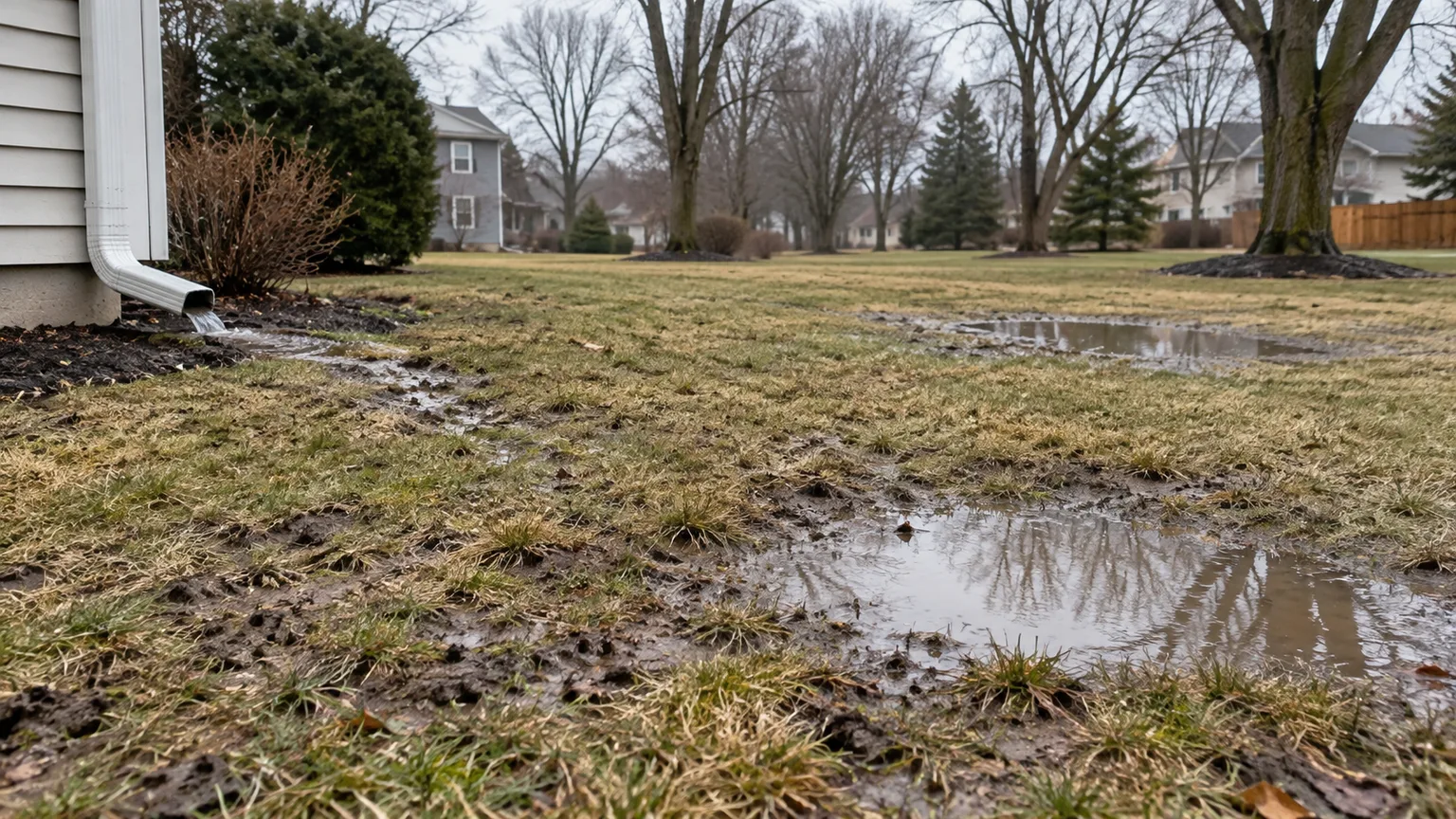
A muddy winter lawn is usually a water-management problem first and a grass problem second. For now, keep traffic off saturated turf, stop obvious roof runoff from pouring onto it, and watch where water enters and collects; save aeration, leveling, and reseeding for a time when the soil is workable and the grass can recover.
That order matters. Walking or digging on saturated ground can press it tighter, while a French drain or a layer of compost will not help if the real problem is a downspout, a low spot, or water flowing downhill from somewhere else. These five fixes start with the least disruptive winter steps and move toward permanent repairs.
The fastest winter answer
If the lawn is squelchy today, do three things before reaching for a fork or a bag of soil. Stop repeated foot, pet, and wheel traffic across the softest area; note whether water is arriving from a roof, slope, or nearby hard surface; and redirect any downspout that empties directly onto the lawn, provided you can send the water to a safe place that can accept it.
Do not try to “dry out” the whole lawn by digging channels at random. A shallow puddle after heavy rain may drain as the weather clears, but the same puddle returning in the same location points to a recurring issue such as a compacted layer, a depression, or an inadequate outlet. Winter is a good time to observe that pattern and protect the turf; it is often a poor time to reshape or aggressively cultivate waterlogged soil.
Why lawns turn muddy in winter
Rain and snowmelt arrive when evaporation and grass growth are slow. If water enters the soil more slowly than it arrives, the surface stays wet; when soil pores remain full of water, less air reaches the roots. Repeated or prolonged waterlogging can thin turf and encourage moss or algae, according to the Royal Horticultural Society. In a UGA Extension example, saturated soil is also described as limiting oxygen around roots and contributing to turf decline [2].
Several different site problems can create that result. Heavy clay soil commonly drains slowly, but compaction from footfall, pets, vehicles, or construction can make many soil types behave poorly. A lawn at the bottom of a slope, a sunken patch, a roof downspout, or runoff from a path can funnel more water into one place than the soil can absorb. A thick thatch layer may slow water entry at the surface, though thatch is only one possible cause.
These causes often overlap. For example, a narrow dog route may compact a clay strip that already sits below a patio, while a downspout keeps feeding the same patch during every storm. Treating only one factor can make the lawn look slightly better without fixing the source that keeps it muddy.
Diagnose before you dig
Start with a simple map rather than a repair. After rain or a thaw, look at where water first appears, the direction it moves, and where it remains after the rest of the lawn begins to drain. The pattern is often more revealing than a handful of soil taken from the center of the puddle.
| What you notice | More likely explanation | First response |
|---|---|---|
| A stream or fan of water begins below a downspout, path, or driveway | Concentrated runoff | Redirect the source to a safe receiving area |
| Water repeatedly gathers in one shallow dip | Low spot or grading issue | Confirm the depression after the soil firms; plan a gradual level correction |
| Much of the lawn stays wet and soil feels dense | Heavy soil, compaction, high water table, or several causes together | Compare a wet area with a better-drained part of the yard; seek local advice if widespread |
| A narrow route becomes bare, shiny, or deeply marked | Repeated traffic and turf wear | Reroute feet or paws before repairing the grass |
| Water seems to sit above a thick, spongy layer | Possible thatch buildup | Measure a small turf plug after conditions dry; do not dethatch by guesswork |
Follow the water after rain
Look uphill as well as at the puddle. Check roof edges and downspouts, the slope above the lawn, paved areas that shed water, and any spot where a retaining wall or edging changes the flow. A muddy patch just below a roof outlet is a different problem from a broad lawn that stays wet even when gutters and surface runoff are not contributing.
Notice whether the wet area appears only during heavy storms or also after ordinary rain. A temporary puddle after exceptional weather does not automatically justify a buried drain. Repeated pooling in the same low point, water arriving from a neighboring surface, or runoff pushing soil toward a building deserves a more deliberate plan. The Homes & Gardens guide to muddy lawns likewise identifies compacted soil, low areas, and downspouts as distinct contributors rather than one single lawn-care problem.
Check compaction and thatch after the surface drains
Wait until standing water has gone and the ground is damp but no longer slippery or saturated. Press a narrow screwdriver or soil probe into both the muddy area and a healthier part of the lawn. If it enters the healthy patch but stops abruptly in the problem patch, compaction or a dense layer may be contributing; this is a comparison, not a laboratory diagnosis.
To check thatch, cut a small wedge of turf with a hand trowel and look for the brown, spongy mat between the green blades and the soil. Do not confuse thatch with ordinary clippings lying on top. Colorado State University Extension explains that thatch varies by grass type and that core cultivation can help address both compaction and thatch [3]. If you cannot see a distinct layer or the muddy pattern points clearly to runoff, dethatching may be unnecessary.
Way 1: Keep feet, paws, and wheels off saturated turf
The quickest way to limit further damage is to stop using the muddiest strip as a path. Wet soil yields under pressure; repeated steps can compress it, break the turf surface, and turn a temporary wet patch into a bare, compacted track. The RHS specifically warns that walking on waterlogged lawn can worsen a sticky surface layer [1], and USDA guidance on water-saturated ground also emphasizes minimizing disturbance and traffic [4].
Route people and pets over pavement, a deck, or a firm path until the lawn dries. If there is no alternate route, use a short temporary walkway or stable stepping surface across the traffic line rather than laying boards into standing water where they may sink or slide. Move a temporary surface when conditions allow, and avoid dragging a loaded wheelbarrow, mower, or garden cart across soft turf.
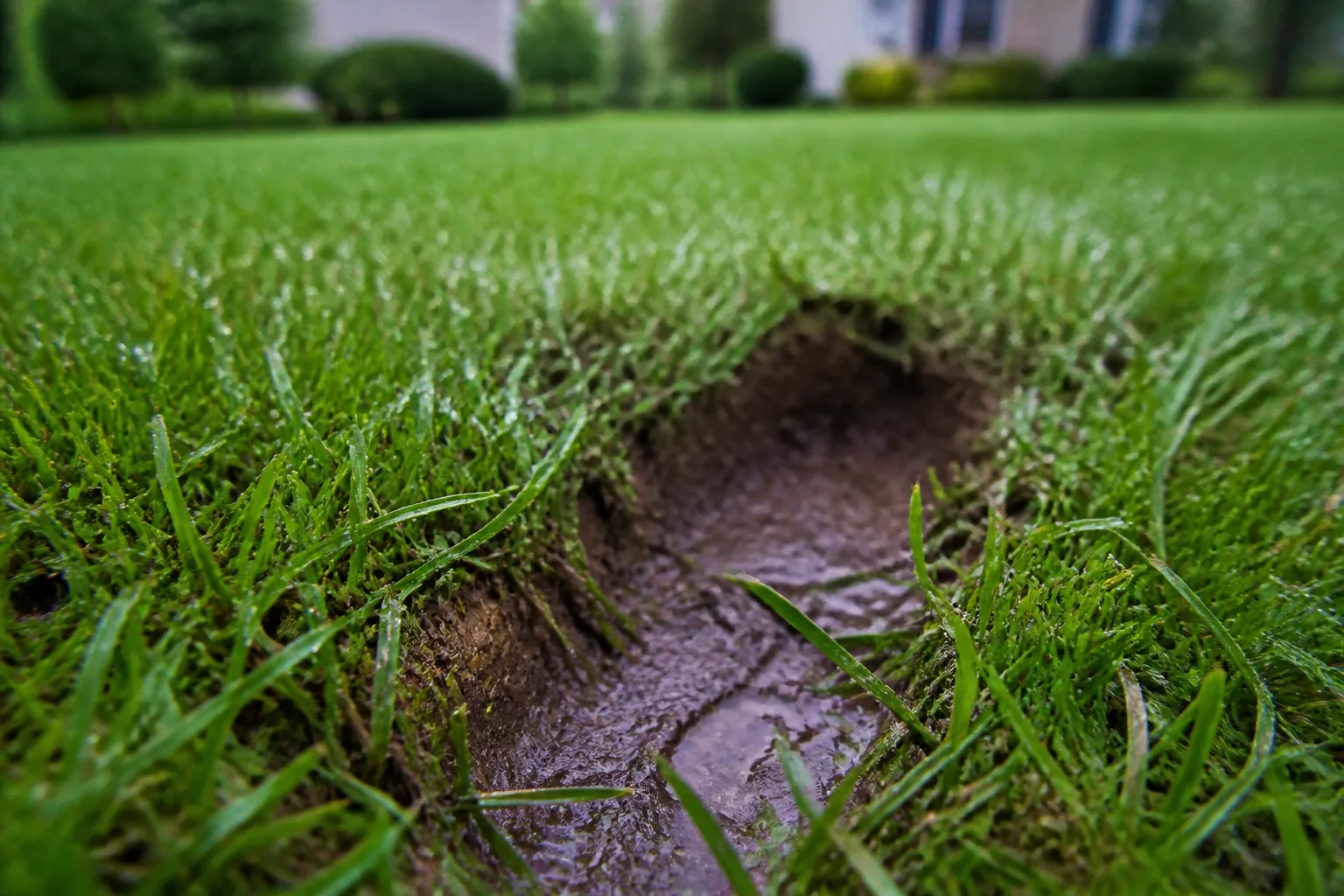
Repeated footprints in wet grass expose the route that needs temporary protection or a more durable path.
For a dog that uses the same part of the yard, change the route first, then decide whether grass is the right surface for that job. A designated run with a well-installed permeable surface can be easier to maintain than reseeding the same high-traffic strip every spring. Do not simply pile loose straw, shavings, or bark over live grass: a thick, wet layer can hide the turf, become a cleanup problem, and leave the underlying drainage issue untouched.
Way 2: Stop roof runoff from dumping onto grass
If a downspout discharges onto the lawn, start by moving the outlet. A downspout extension or splash channel can carry water toward a garden bed, a rain garden, or another approved receiving area that has room to accept it. Keep the water away from foundations, neighboring property, and places where it will wash soil across a path or into a street.
Watch the outlet during the next rain. The water should spread or soak into a stable area instead of creating a new puddle at the end of the extension. If the ground is frozen, clay-heavy, or already saturated, simply moving the discharge a few feet may relocate the mud rather than solve it. In that case, a properly sized rain garden, swale, or drainage connection may be more appropriate, depending on the site and local rules.
Keep gutters clear and check that the downspout is connected and flowing where you expect. If roof water is entering a buried pipe, confirm that the line is not blocked or broken before changing the lawn grade. Do not disconnect or redirect a system in a way that sends concentrated runoff across a sidewalk, toward a neighbor, or back to the house.
Way 3: Route hillside runoff and fix low spots
When water flows from higher ground into the lawn, treat the route, not just the puddle at the bottom. A shallow swale can guide runoff around a lawn toward a suitable receiving area; a rain garden can collect some water where the soil, slope, and plant choices suit that purpose. A dry creek can slow and direct surface water while making the route visible. None of these features makes water disappear, so the receiving end has to be able to handle the flow.
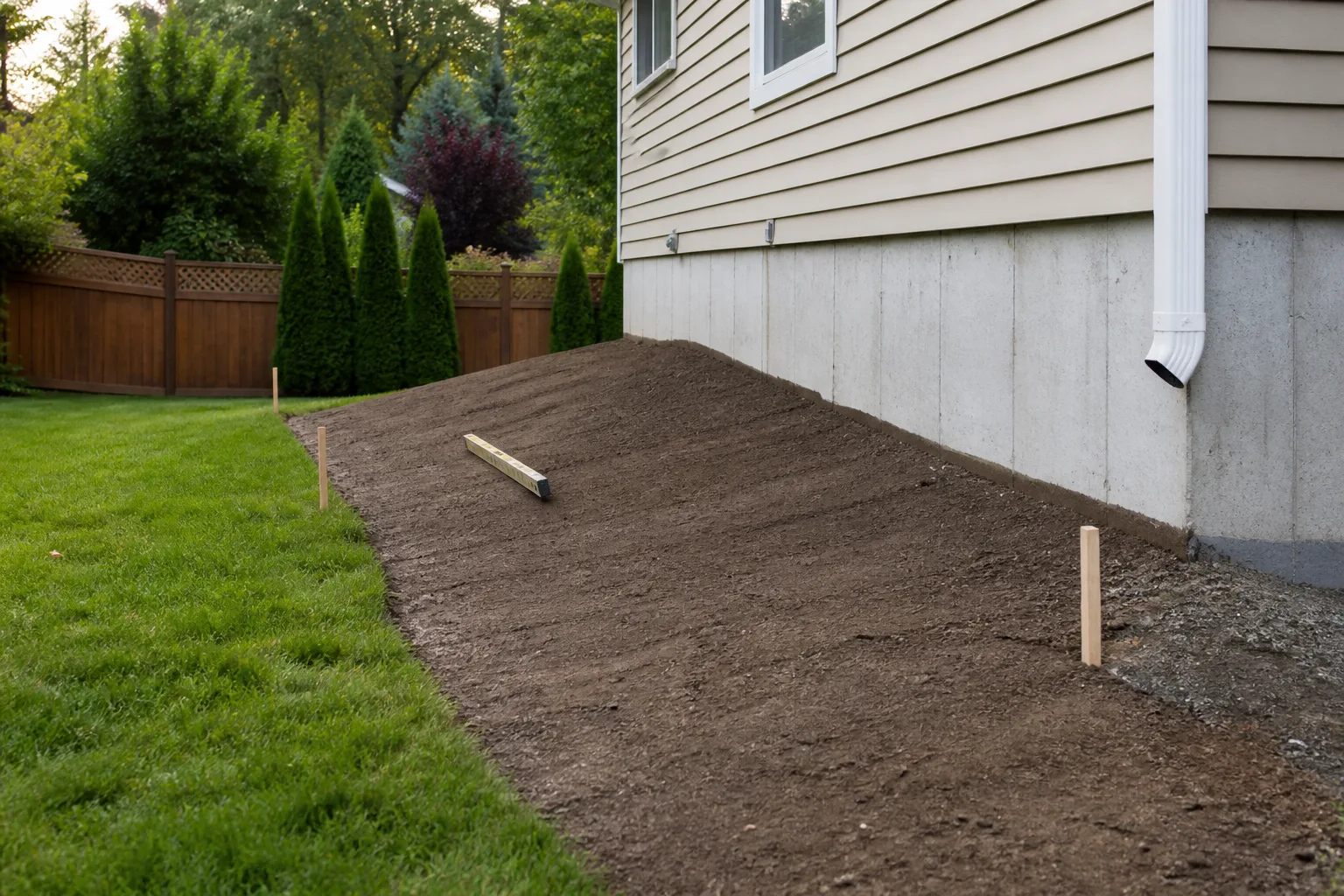
The grade around a house should move runoff toward a planned outlet rather than leaving water trapped in a lawn depression.
If the problem is a small, shallow depression, wait until the lawn is firm and correct it gradually. Add a thin layer of compatible topdressing, allow the grass to grow through, and repeat only if the dip remains. A deep hollow needs a different repair: lifting turf, adding suitable soil, correcting the grade, and resetting or replacing the grass may be necessary. Dumping a deep mound over living grass can bury the crowns and create an uneven surface rather than a healthy repair.
Choose an outlet before building a drain
A French drain is a gravel-filled trench with a perforated pipe that collects and conveys water; it is useful only when the water has somewhere appropriate to go. A soakaway or infiltration basin depends on soil that can accept water. If the subsoil is already saturated or the water table is high, an infiltration feature may simply fill up. The RHS advises considering a drainage system for heavy, wet soil only when a suitable outfall such as a ditch, drain, or soakaway exists [1].
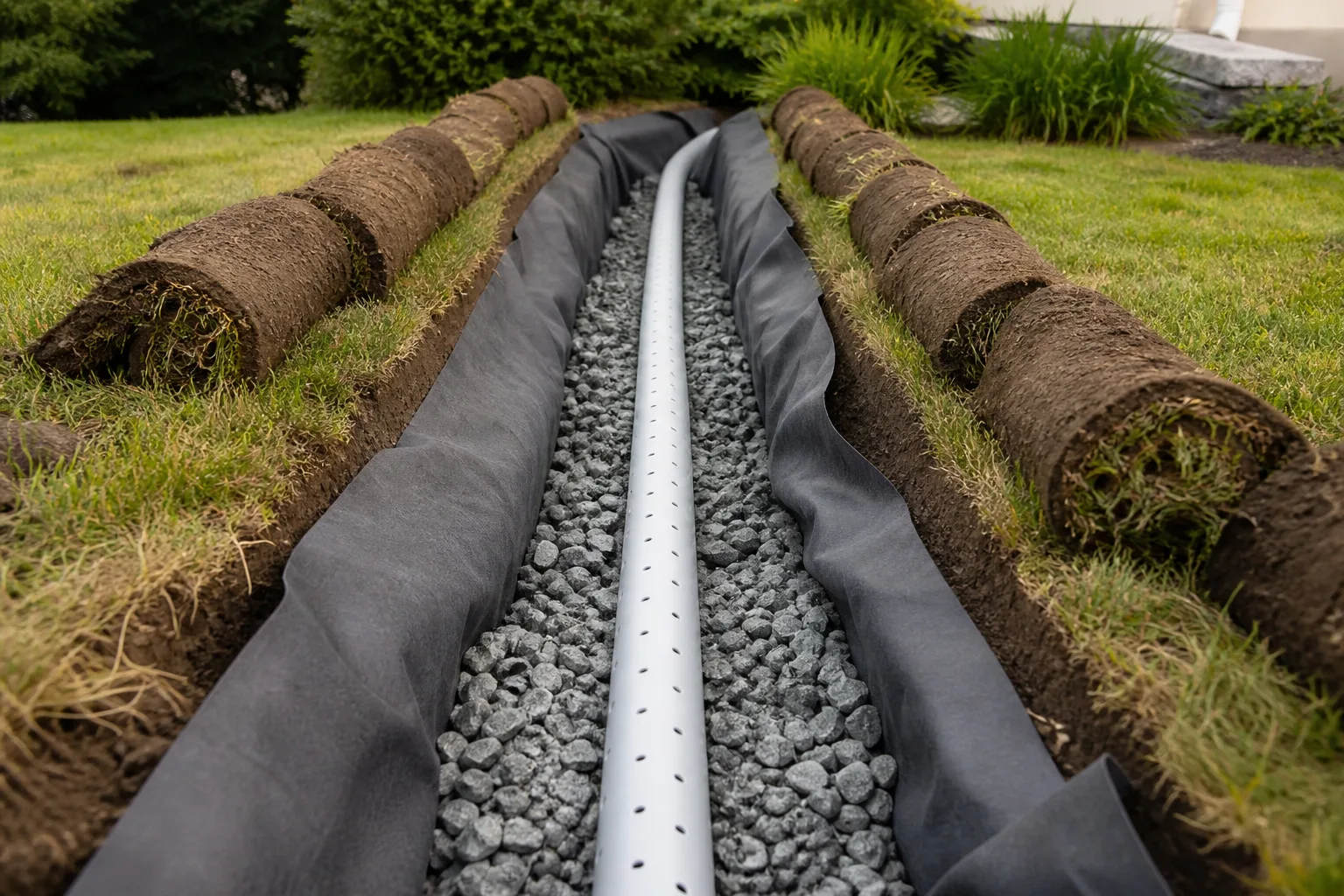
A French drain collects water along a trench and needs a planned, functioning outlet.
Before digging, ask a drainage or landscape professional to assess the grade, soil, utilities, and discharge rules. A drain that sends water toward a foundation, septic field, public path, or neighboring lot can create a more serious problem. If the wetness covers a broad area and has no clear surface source, investigate whether a high water table, seep, or damaged buried line is involved instead of installing a short trench by guesswork.
Way 4: Relieve compaction and correct thatch in the right season
Core aeration can help when compaction is actually limiting infiltration. A hollow-tine aerator removes small soil plugs and leaves channels for air and water; solid spikes make holes but do not remove the compacted soil. The Colorado State Extension lawn guide describes core cultivation as especially useful on thatchy or high-traffic lawns [3], while UGA Extension connects foot traffic and heavy loads with compacted soil and poor turf growth [2].
Aerate only when soil can crumble, not smear
Do not aerate through standing water, frozen soil, or a surface that sticks to your shoes and smears when disturbed. Wait until the lawn drains and the soil is moist enough to penetrate but firm enough to hold its structure. In many North American climates, that means planning the main aeration for the active-growth window recommended for the local grass type, not treating a dormant winter lawn as if it were ready for renovation. In mild climates where turf continues to grow, local guidance may allow a different schedule.
For a small area, a garden fork can relieve a limited patch once conditions are right; for widespread compaction, a core aerator is more consistent. Avoid spike shoes as a substitute for proper core aeration on a badly compacted lawn. Do not run a heavy machine on soft soil: the tire and foot traffic from the repair can undo the benefit of the holes.
After aeration, a light topdressing of mature, screened compost can support soil structure over time. Work with small amounts and let grass remain visible; a heavy blanket can smother turf, and compost cannot fix a buried hardpan, steep runoff route, or high water table by itself. Organic matter can improve soil structure and infiltration, but it is a gradual soil-building measure, not an emergency drain [4].
Dethatch only if the turf plug shows a substantial thatch layer and the grass type is prone to buildup. Use a rake or machine suited to the lawn and time the work for recovery, because aggressive dethatching can tear up weak grass. Do not automatically dethatch every muddy lawn: runoff, poor grade, clay, or compaction may be the real cause. The RHS waterlogging advice also separates compacted-soil aeration from drainage changes for heavy soil.
Way 5: Rebuild bare spots or replace the traffic strip
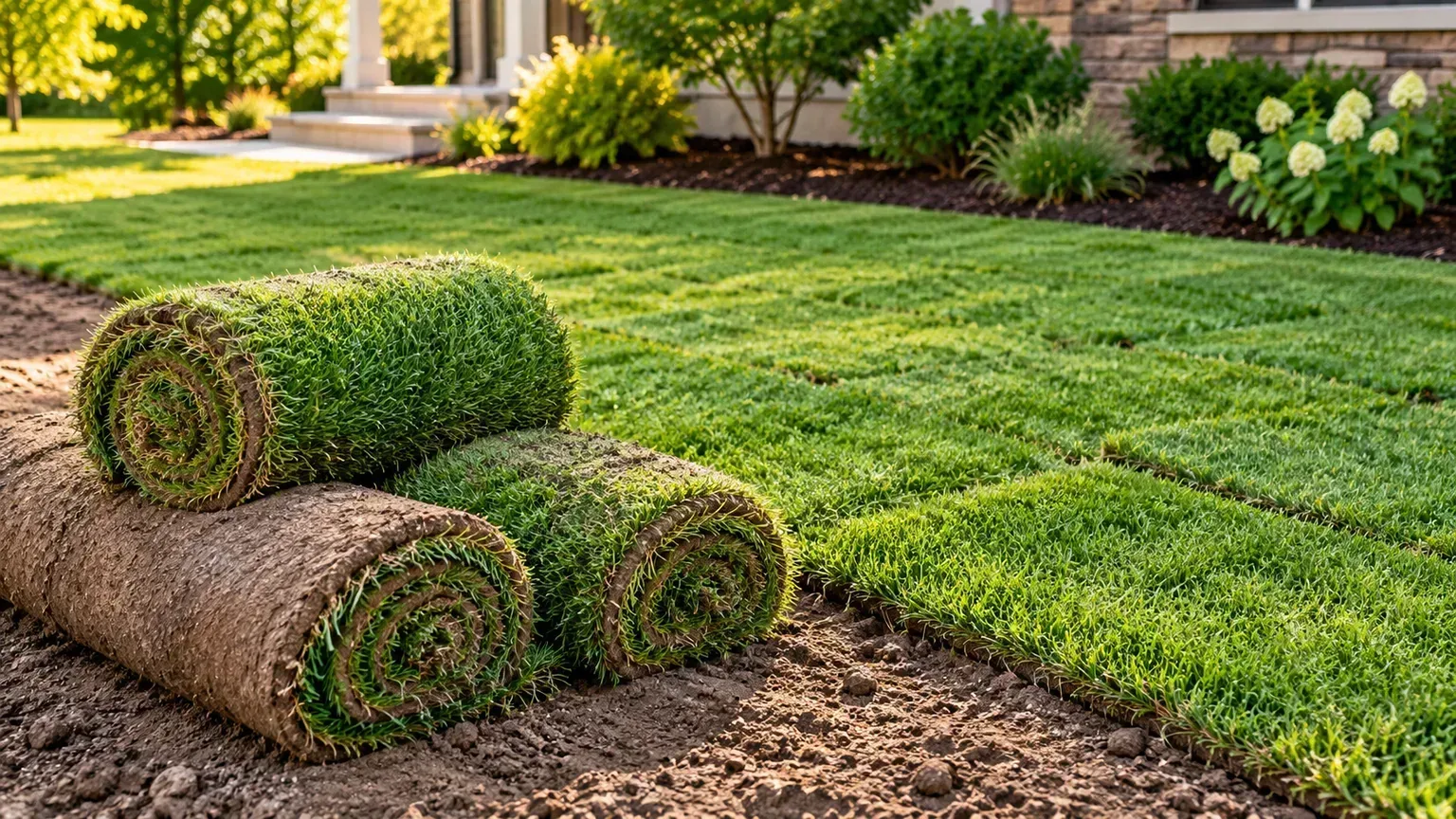
Once the water source is controlled and the ground has drained, assess what turf is still alive. Mud can cover grass that will recover, but repeated saturation and traffic can also leave bare or thin areas. Rake away loose debris when the soil is firm, correct the cause of the bare spot, and choose seed or turf that matches the existing lawn and local climate.
Use the establishment window recommended by your local extension service for the grass species rather than choosing a date from a generic calendar. Cool-season and warm-season grasses recover at different times; UGA Extension, for example, notes that tall fescue seed needs suitable temperatures and gives a fall window for its Georgia conditions [2]. Keep new seed evenly moist while it establishes, but do not seed into standing water or a surface that routinely washes seed downhill.
If the same narrow strip fails every winter because it is the only route to a gate, shed, or dog area, redesign that strip instead of repeating the same repair. Stepping stones, a permeable path, or a contained dog-run surface can take traffic while allowing surrounding turf to grow. Build the path so it does not block the drainage route or push water toward a structure. For a broad lawn, use a grass type suited to the site’s shade, soil, and moisture rather than expecting a thin, shade-starved turf to withstand constant wetness.
What not to do to a muddy winter lawn
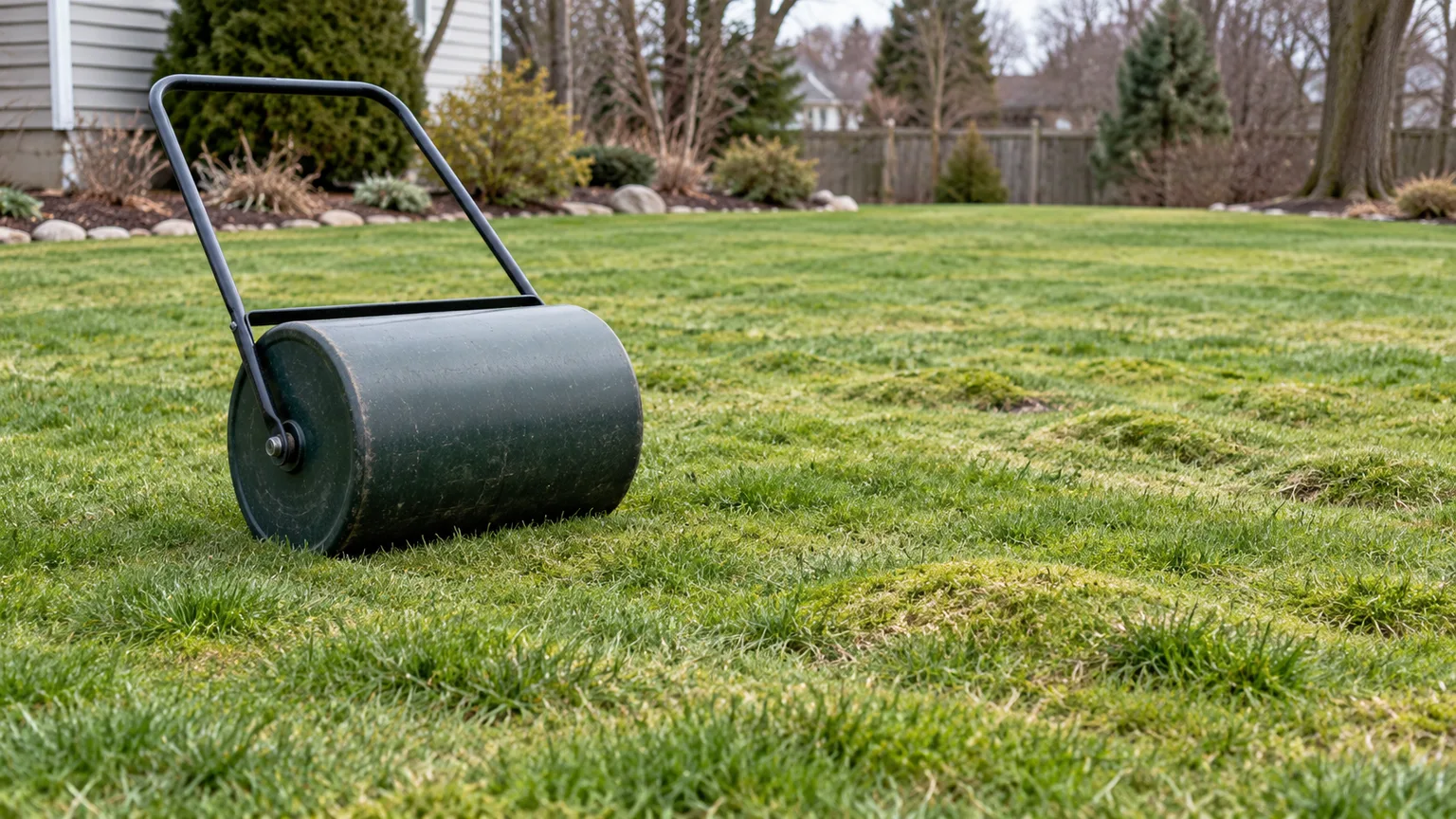
Do not mow, aerate, dethatch, roll, or dig across saturated ground just because the lawn looks messy. Those actions add pressure or disturbance when the soil is least able to recover. If you need to remove a hazard or unblock a surface drain, work from a firm edge and keep equipment off the wet area.
Do not cover an entire lawn with sand, topsoil, straw, pine shavings, or bark as a substitute for finding the water source. A light, compatible topdressing can be part of a planned lawn renovation; a deep or mismatched layer can bury grass and make the surface harder to assess. The Homebuilding & Renovating guide advises waiting until pools have drained before aeration, and the RHS similarly recommends allowing standing water to clear first [1].
Do not dig a French drain without a discharge plan, or direct runoff to a neighbor, public pavement, or a foundation. Do not assume every puddle means the lawn needs a drain, or that a wet winter proves the soil is permanently defective. Observe what happens after several ordinary rain events, then match the repair to the pattern.
A season-by-season repair plan
During wet or frozen winter weather: keep traffic off soft areas, route people and pets around the mud, clear leaves from surface drains, and correct an obvious downspout discharge if you can safely send it to a suitable place. Photograph or mark the wet spots after rain so you can distinguish a recurring low area from a one-time storm puddle. Avoid working soil that smears or stays frozen.
When the lawn drains and the soil becomes workable: compare the wet patch with a healthy part of the lawn, check a small turf plug for compaction or thatch, and decide whether the problem is soil, grade, runoff, or repeated traffic. If the issue is widespread, ask a local extension service or drainage professional before committing to a large excavation.
In the local active-growth or renovation window: core-aerate compacted turf, dethatch only if the layer warrants it, topdress lightly, and repair bare patches after drainage is corrected. If water still ponds after those changes, investigate the grade, an underground obstruction, or high groundwater rather than applying more seed or compost. This sequence keeps winter triage separate from work that depends on living grass and workable soil.
When to call a drainage or lawn professional
Get help when water regularly enters from beyond your property, flows toward a building, or remains across a broad section after the rest of the yard has drained. The same applies when you suspect a high water table, a spring or seep, a broken buried pipe, a retaining-wall issue, or a drainage route that would need to cross property lines. These are site-design questions, not just lawn-care tasks.
A lawn-care professional can identify the grass type, measure thatch, and determine whether core aeration or renovation fits the turf. A drainage contractor or qualified landscape professional can assess grade, subsurface conditions, and a legal, safe outlet before a trench or soakaway is built. Ask what source of water the design addresses, where that water will go, how the feature will behave during heavy rain, and what maintenance it requires.
If you rent, live in a shared development, or have a homeowners’ association, check who maintains gutters, grading, and common drainage before making a permanent change. Take photos after rain and note when the water appears; those details help a professional distinguish runoff from a soil-infiltration problem.
Conclusion: fix the water path before the grass
The best winter fix for a muddy lawn is usually to protect the soil from more traffic and trace the water before doing disruptive work. Redirect roof runoff, guide hillside flow toward a suitable outlet, and keep the lawn’s everyday path from becoming a mud track.
Once the ground has drained and the grass can recover, correct compaction or thatch only where the evidence points, then repair bare turf in the right local season. If the lawn stays waterlogged despite those changes, investigate the grade and drainage route before spending time on seed, fertilizer, or a quick layer of cover.