5 Trendy Houseplants for 2025: Which One Fits You?
These five houseplants pair memorable looks with very different care needs. See which suits your light, watering habits, room size, and household best.
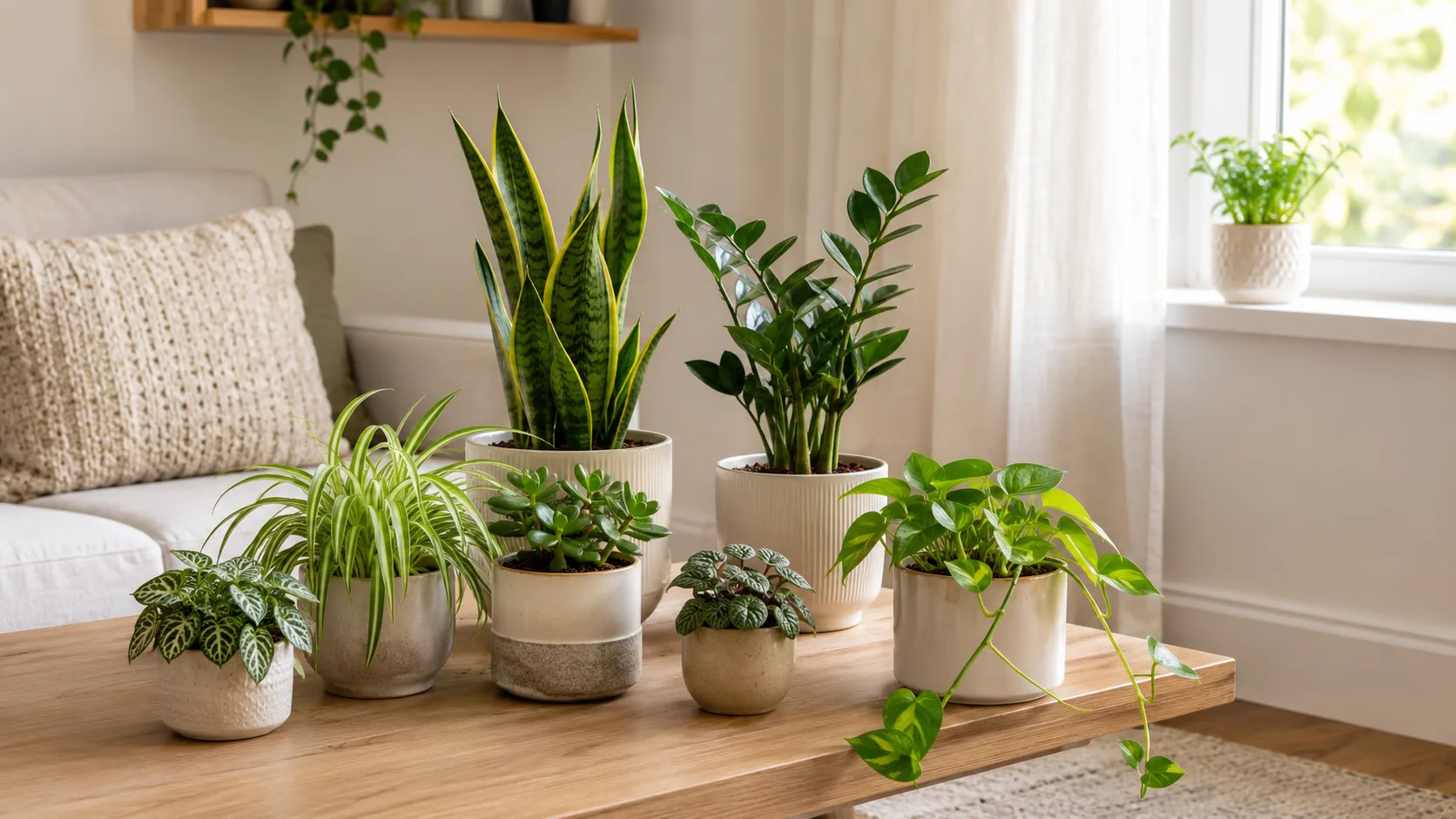
“Trendy” can mean a plant appears in interiors, fills nursery benches, or simply gets recommended by people who grow plants for a living. Those are not the same thing. This five-plant shortlist is best read as a 2025 snapshot of the qualities people wanted indoors: strong leaf shapes, a little color, manageable routines, and a plant that gives a room a focal point. It is not a measured sales ranking, and “everywhere” is more mood than market data.
There is one clear institutional signal in the mix: the National Garden Bureau named Monstera its 2025 Houseplant of the Year, as reported by Penn State Extension. The other choices make sense for different reasons. Snake plants and ZZ plants bring upright structure and tolerate missed watering; pothos softens a shelf with trailing stems; Fittonia offers intricate color in a small footprint; and Monstera supplies the oversized, architectural leaf. The useful question is not which one is most fashionable. It is which one fits your light, routine, room, and household.
What actually makes these five houseplants feel current?
The list combines two kinds of appeal that are often bundled together but should be evaluated separately. A plant can be visually striking without being demanding, as with the sculptural silhouette of a snake plant. It can also be compact and colorful but ask for closer attention, as Fittonia does. “Low maintenance” describes a care pattern; it does not tell you whether the plant suits the place you have in mind.
Think of the five as five different design jobs. Snake plant and ZZ plant add vertical punctuation without a trailing vine. Fittonia brings detail to a tabletop or terrarium. Pothos fills a high shelf or hangs down from a bracket. Monstera is a floor plant that takes up visual and physical space. That variety is why the group feels useful as a trend snapshot: you can get a different look from each one, but the care demands are not interchangeable.
The easiest way to avoid a disappointing purchase is to check the plant’s requirements before you choose a pot or a room. “Tolerates low light” means a plant may persist with less sun than another plant; it does not mean it can grow in a windowless room. Likewise, a drought-tolerant plant may survive a missed watering, while a moisture-loving plant can wilt even when it is perfectly healthy. Match the plant to your actual conditions instead of trying to make one plant fit every room.
Quick comparison: match the plant to your home
| Plant | Best visual job | Good starting location | Watering temperament | Main trade-off |
|---|---|---|---|---|
| Snake plant | Upright, architectural leaves | Bright indirect light or a lower-light room | Let the mix dry fully | Slow growth; pets may chew toxic leaves |
| Fittonia | Colorful detail at tabletop scale | Bright indirect light in a warm, humid spot | Keep lightly and evenly moist | Wilts quickly when dry; dislikes soggy soil |
| ZZ plant | Glossy stems and a tidy upright shape | Bright indirect light; lower light is tolerated | Let the mix dry between waterings | Slow in dim conditions; rhizomes can rot in wet soil |
| Pothos | Trailing greenery or a climbing vine | Bright indirect light; tolerates lower light | Let the mix partly dry | Variegation can fade in dim light; toxic to pets |
| Monstera deliciosa | Large, statement-making foliage | Bright indirect light with room to climb | Water after the upper mix begins to dry | Needs floor space, support, and patience to mature |
Treat the table as a starting point rather than a watering calendar. The time between waterings changes with pot size, soil, light, temperature, season, and airflow. Before you buy, ask yourself two practical questions: “Can I put it somewhere bright enough?” and “Will I notice when it needs care?” If the answer to either is no, pick a different plant or change the setup first.
1. Snake plant: sculptural leaves, forgiving schedule
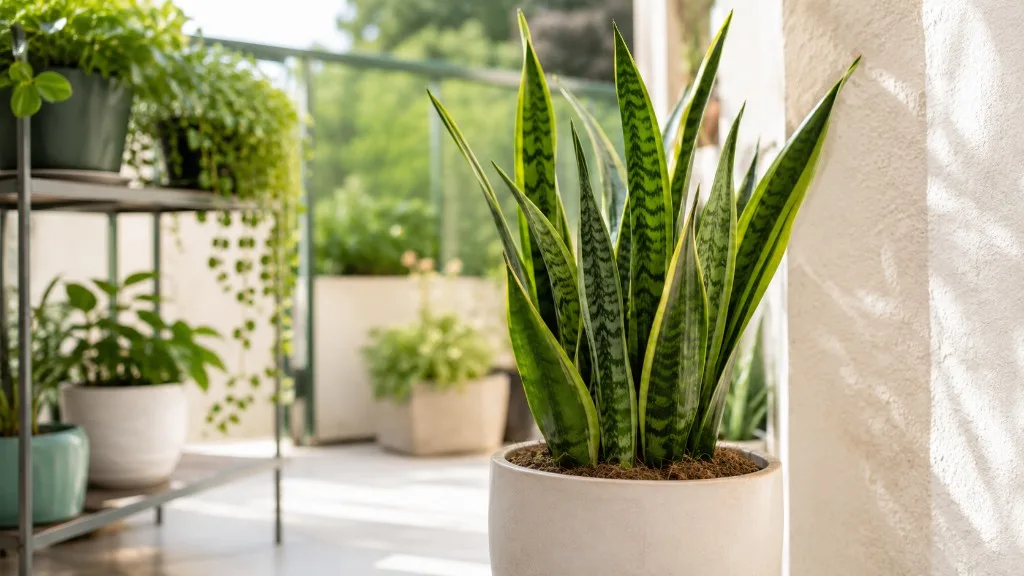
The snake plant is the clean-lined choice: rigid, sword-shaped leaves stand upright from the pot, so the plant looks composed even when it is growing slowly. Its shape suits a narrow corner, a home office, or the end of a console where a trailing vine would get in the way. Several cultivars add yellow edges, silvery bands, or shorter rosettes, but the classic dark-green-and-yellow form is the easiest to recognize.
Who should choose it
Choose a snake plant if you want a plant with a strong silhouette and tend to forget watering. The thick leaves and below-ground rhizomes let it store water, so it handles a dry interval better than Fittonia or a thin-leaved tropical. That makes it forgiving, not invincible: a pot left wet for long stretches is a more common problem than a brief dry spell. A smaller cultivar also works well when you want the upright look but have only a narrow shelf or desk.
This is also the most straightforward option for someone who wants greenery in a room that is not flooded with sun. A plant can survive in a lower-light spot, but it will grow more slowly there and may not hold the same vigor or coloring as one with brighter indirect light. If the room has no daylight, provide a grow light rather than expecting the plant to thrive in darkness. Snake plant is a good “less attention” choice, not a “no light, no drainage, no attention” choice.
What care really asks for
Give it a pot with a drainage hole and a mix that does not stay wet. Wait until the soil has dried through before watering again; then water thoroughly and empty the saucer. Savvy Gardening’s snake plant watering guide points out why a fixed interval is unreliable: light, warmth, pot material, and soil all change how quickly a pot dries. If you keep the plant in a cool, dim room, the mix may stay damp much longer than it would beside a bright window.
Avoid misting or watering by a weekly reminder. Check the mix first, and do not leave the pot standing in drained water. If the base turns soft or leaves yellow and collapse, pause watering and inspect the roots and rhizome rather than adding more water to “help.” The ASPCA lists snake plant as toxic to cats and dogs, so put it beyond a chewing pet’s reach or choose another plant if you cannot keep it separate.
2. Fittonia: color in a compact package
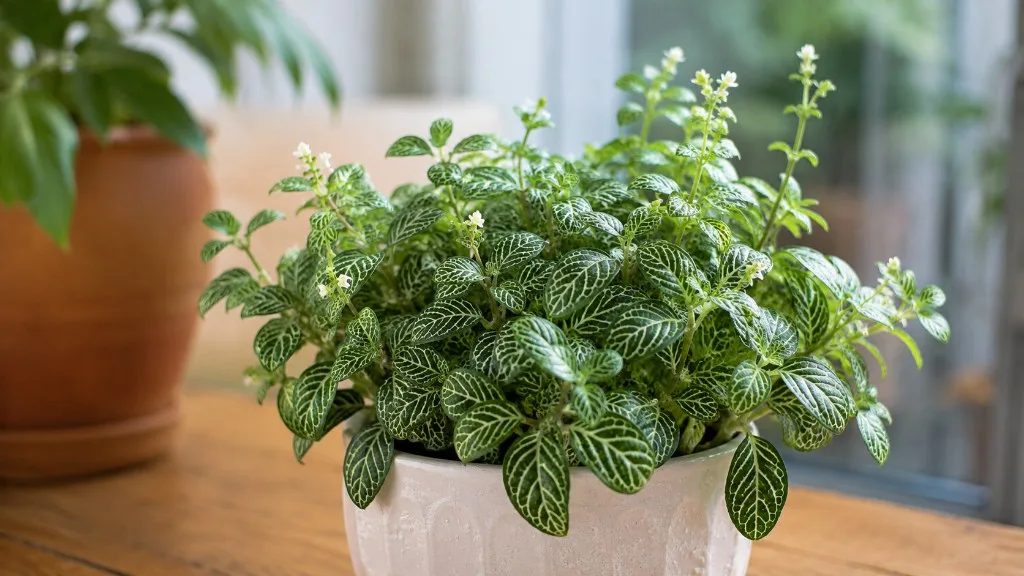
Fittonia, often called nerve plant, brings the strongest leaf pattern of the five. It stays low and spreads across the surface of its pot rather than building a tall trunk or long vine. Depending on the cultivar, the fine leaf veins may be white, pink, or red. That color reads well close up, which makes Fittonia a natural choice for a desk, a plant shelf at eye level, or a terrarium.
Who should choose it
Choose Fittonia if the detail is the point and you enjoy checking plants regularly. It is the most compact option here, so it can add color where a large Monstera or even a tall ZZ would overwhelm the surface. It also gives you more leaf color without relying on flowers. For a small apartment, a warm bathroom with a bright window can be a better location than a large, dry living room.
Fittonia is a poor match for someone who travels often, forgets to check small pots, or keeps the home very dry. Its dramatic droop when thirsty has made it popular in beginner advice, but a plant that collapses is signaling stress, not giving a convenient reminder. It may recover after thorough watering if the dry spell was brief; repeated wilting is not a good care strategy. The RHS growing guide describes the combination it needs: warmth, high humidity, bright light out of direct sun, and compost kept moist without becoming waterlogged.
What care really asks for
Use a moisture-retentive but airy potting mix, keep the root ball from drying completely, and empty the saucer so the roots are not left sitting in water. A terrarium can slow moisture loss, but a sealed container also traps heat and can stay too wet; leave enough ventilation and check the mix rather than adding water whenever the glass looks dry. In an open room, group Fittonia with other plants or use a humidifier if the air is consistently dry. Misting gives only a short-lived change and does not replace steady room conditions.
Place it in bright indirect light, not a harsh afternoon beam. Direct sun can scorch or bleach the foliage, while very dim conditions weaken the pattern and slow growth. Savvy Gardening’s Fittonia guide adds a helpful practical distinction: the plant prefers reliable moisture but not saturated soil, so drainage matters as much as watering frequency. If its leaves wilt, feel the mix; water if it is dry, but investigate drainage and root health if it is still wet.
3. ZZ plant: glossy foliage for patient growers
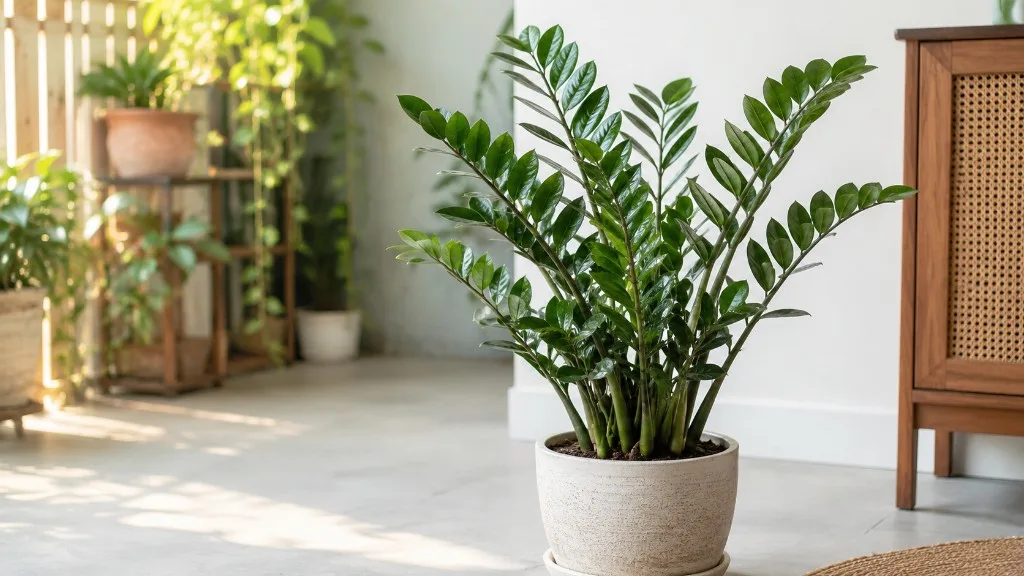
The ZZ plant makes a room feel finished with a polished, upright shape and thick stems lined with glossy leaflets. It does not trail or climb, and its growth is usually measured rather than dramatic. That means it can hold its form for a long time with little pruning, though it is not the best choice if you want a fast-growing plant to fill an empty wall this season.
Who should choose it
Choose a ZZ if you want a tidy, low-fuss plant for a room with indirect light and you are comfortable waiting for it to grow. It is forgiving when you miss a watering because its fleshy rhizomes store water. The New York Botanical Garden’s ZZ plant care notes explain both sides of that storage: the plant can ride out dry conditions, but soil that stays wet can rot the rhizome and kill the plant.
“Low light” is where the plant’s reputation needs a qualifier. A ZZ can persist in a dimmer room, but low light slows growth; it is not a substitute for a window or artificial light. Bright indirect light is a sound default, while strong direct sun can scorch the leaves. If the goal is to fill an office corner, a ZZ may stay alive there for a while, but plan for slower growth than the same plant would make closer to a bright window. Epic Gardening’s ZZ plant guide also treats resilience as a matter of adapting the care routine to the plant, not proof that conditions do not matter.
What care really asks for
Let the potting mix dry between waterings, and use a container that drains freely. When you do water, soak the mix and discard the runoff instead of adding small splashes every few days. In a cool or dim home, check less often because the soil dries slowly. In a bright, warm room during active growth, it will use water faster. The plant’s leaves will not tell you to water on a predictable schedule, so a quick soil check is more useful than waiting for a visible symptom.
Do not move a ZZ straight from a dim corner into several hours of direct sun; acclimate it gradually if you want to increase the light. Also avoid an oversized pot filled with dense, slow-drying mix. The plant may look durable above the soil while its storage organs are deteriorating below it. A drainage hole, a well-aerated mix, and the patience to wait until it is dry are the care essentials that keep its glossy foliage looking effortless.
4. Pothos: trailing greenery with easy styling
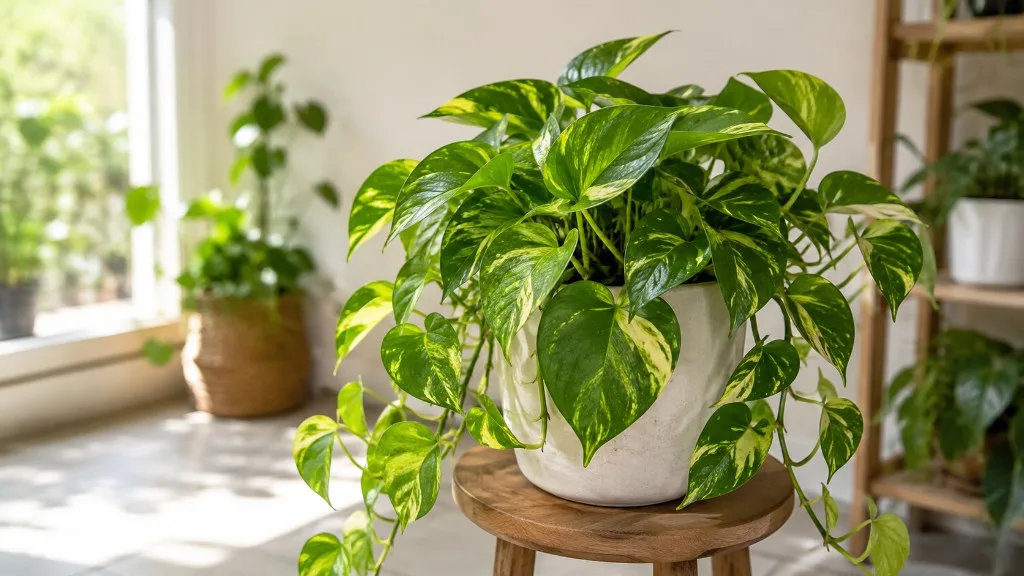
Pothos is the flexible styling plant in this group. Its heart-shaped leaves grow along long, trailing stems that can soften a bookcase, hang from a high shelf, or be trained up a support. NC State Extension describes pothos as a low-maintenance vine with glossy green or variegated leaves; in a home, its adult leaves usually remain smaller than they would on a mature climbing plant outdoors. That helps explain why the same plant can read as a simple desk pot or a cascading green feature.
Who should choose it
Choose pothos if you want a fast visual payoff, a trailing outline, or a plant you can prune to control its length. It is more adaptable than Fittonia and less space-hungry than Monstera. Green-leaved cultivars usually cope better with lower light than strongly variegated ones. If the leaves are losing their yellow or cream pattern, the issue may be insufficient light rather than a need for extra fertilizer; move it toward brighter indirect light and give it time to produce new growth.
The trailing habit is also a placement constraint. A vine can reach shelves, furniture, and pets that a compact upright plant cannot. Do not assume that hanging it high makes it safe if the stems can grow down within reach. The ASPCA lists golden pothos as toxic to cats and dogs. If pets chew plants, secure the whole vine out of reach or choose a species verified as appropriate for your animals.
What care really asks for
Give pothos bright indirect light for steady growth and good variegation, though it can tolerate lower light. Water when the mix has partly dried, then let excess drain away. NC State Extension’s plant profile notes that poorly drained soil and overwatering can lead to root problems, while low light can reduce variegation. Those two problems can look like “the plant is unhappy,” but they call for different adjustments: improve drainage and wait longer between waterings if the mix remains wet; increase light if the plant is healthy but growth and pattern are weak.
Pruning is optional, not a weekly chore. Trim a long vine just above a leaf node when it reaches a doorway, blocks another plant, or looks sparse at the pot. If you want a fuller top, take a few cuttings and root them back into the same container once they have roots; simply shortening a vine does not instantly fill the empty stem behind the cut. Use gloves if you have sensitive skin, wash tools after cutting, and keep pruning pieces away from pets.
5. Monstera: a statement plant with real scale
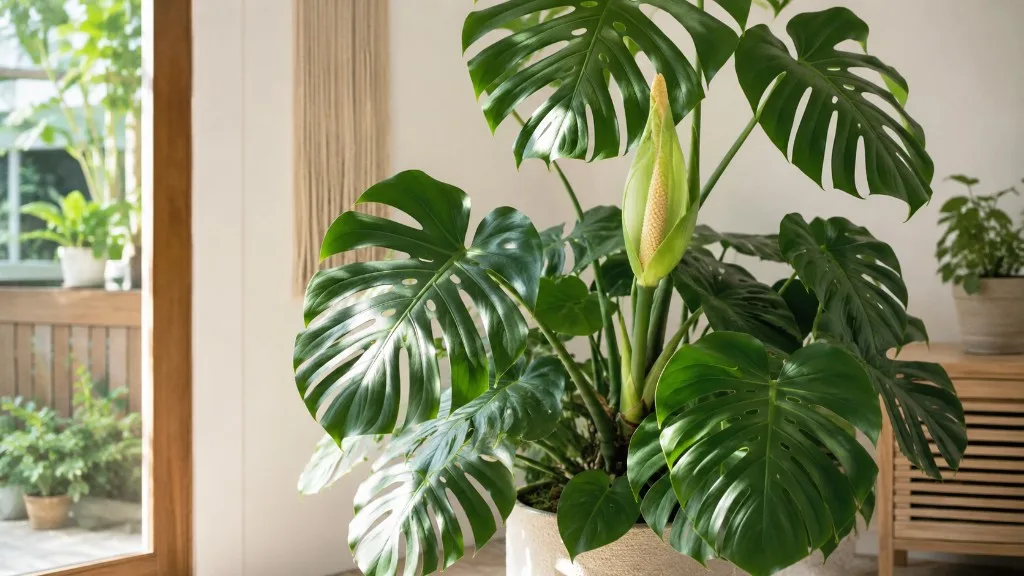
Monstera deliciosa is the boldest, largest-leaved choice on the list. Its mature foliage develops the familiar splits and holes, called fenestrations, but a young plant may have mostly solid leaves. Penn State Extension notes that the National Garden Bureau selected Monstera as its 2025 Houseplant of the Year, and that an indoor plant can eventually reach roughly 6 to 8 feet with support. This is a genuine statement plant, but it needs more than a decorative pot: it needs somewhere to grow.
Who should choose it
Choose Monstera if you have a bright room, floor space, and interest in a plant that changes shape as it matures. It suits an open corner better than a narrow desk or crowded shelf. A support pole or sturdy trellis gives the climbing stems direction and helps the plant grow vertically instead of sprawled across furniture. If you want a compact trailing plant, look at pothos—or at Monstera adansonii, a different species with smaller leaves and a vining habit—rather than buying a juvenile Monstera deliciosa and hoping it stays small.
The famous split leaves are not a promise delivered by age alone. Young plants naturally have uncut leaves, and insufficient light can make growth leggy. Good light, support, room for roots, and time all contribute to a more mature form. If your main goal is one perfect fenestrated leaf by a fixed date, this is a poor purchase. If you enjoy watching a plant build height and character over several seasons, that slow change is part of its appeal.
What care really asks for
Place it in bright indirect light, protect it from long periods of intense direct sun, and water after the upper layer of mix begins to dry. Penn State Extension’s Monstera guidance recommends bright light without direct sun, support for climbing growth, and letting the top inch or two of soil dry between waterings. A well-draining mix and a pot with drainage help prevent the root problems that follow frequent watering in a dim room.
Set aside room for both the plant and its support before buying. Rotate the pot occasionally so growth does not all lean toward one window, and attach stems loosely so they can thicken. The leaves can become large enough to crowd a walkway, and the plant may need repotting as its roots fill the container. Monstera is also listed by ASPCA as toxic to cats and dogs; its common names on safety lists may not match the name on a nursery label, so check the botanical name. If an animal chews it, contact a veterinarian or animal poison-control service.
Make the decision by your room, not the trend
Start with light, because light is the part of a room you cannot fix with a more careful watering schedule. Notice where the brightest natural light falls and for how long. Window direction can help, but it is only a clue: nearby buildings, trees, curtains, glass, latitude, and season all change the result. A north-facing window in one home may be brighter than a shaded south-facing window in another. Judge the actual spot where the pot will sit, not the window label alone.
Next consider how you behave around plants. If you leave for weekends, travel often, or routinely forget small tasks, favor the snake plant or ZZ plant and make sure the container drains. If you enjoy checking moisture and can keep a warm, humid spot, Fittonia offers the most color in the least space. If you want long growth you can trim and style, pothos is the easier design tool. If you want a large focal point and do not mind adding support, Monstera is worth the extra footprint.
Then measure the plant’s future space, not the nursery pot. Pothos needs room for its vines; Monstera needs a climbing route and floor area; snake plant and ZZ plant need enough vertical clearance for their leaves; Fittonia can fit a shallow shelf but should not be squeezed beside a heater or a cold draft. In a small home, one correctly placed plant often looks better than a collection of five competing for the same window.
Finally check household safety before checkout. ASPCA entries identify snake plant, golden pothos, and Monstera deliciosa as toxic to cats and dogs. Its plant database also explains that its list is not exhaustive and that any plant material can upset an animal’s stomach; a plant missing from a search result should not be treated as certified safe. Use the botanical name on the pot tag when checking a database, and ask your veterinarian if you are uncertain. A hanging basket is not a safety solution if the vine can grow down to a curious pet.
If you want a quick shortlist: pick snake plant for upright form and infrequent watering, Fittonia for compact color when humidity and regular moisture are manageable, ZZ for glossy structure and slow growth, pothos for flexible trailing stems, or Monstera for a large climbing focal point. If none matches the conditions you can provide, wait or change the location first. A plant that fits your home will look better than one bought because it appeared in a trend list.
Conclusion: buy the plant you can support
The five houseplants associated with 2025 trends each solve a different visual problem. Snake plant and ZZ plant are composed and patient; Fittonia is colorful but asks for consistent moisture and humidity; pothos gives you an adaptable trailing line; Monstera turns a bright corner into a focal point and grows large enough to need support. Their shared appeal is not that they all require the same easy routine. It is that each offers a recognizable look with clear care needs once you know what to expect.
Before choosing, check the light at the exact placement, decide how often you can inspect the soil, estimate the plant’s mature size, and confirm pet safety for the exact species. Those four checks turn a trend into a good long-term purchase—and spare you from asking a forgiving plant to tolerate conditions it was never built for.