5 Trees to Avoid Planting Near Your Home
Planting a tree near your home? Learn why willows, Bradford pears, maples, ash, and black walnuts can be poor fits—and how to choose a safer, better-sized tree.
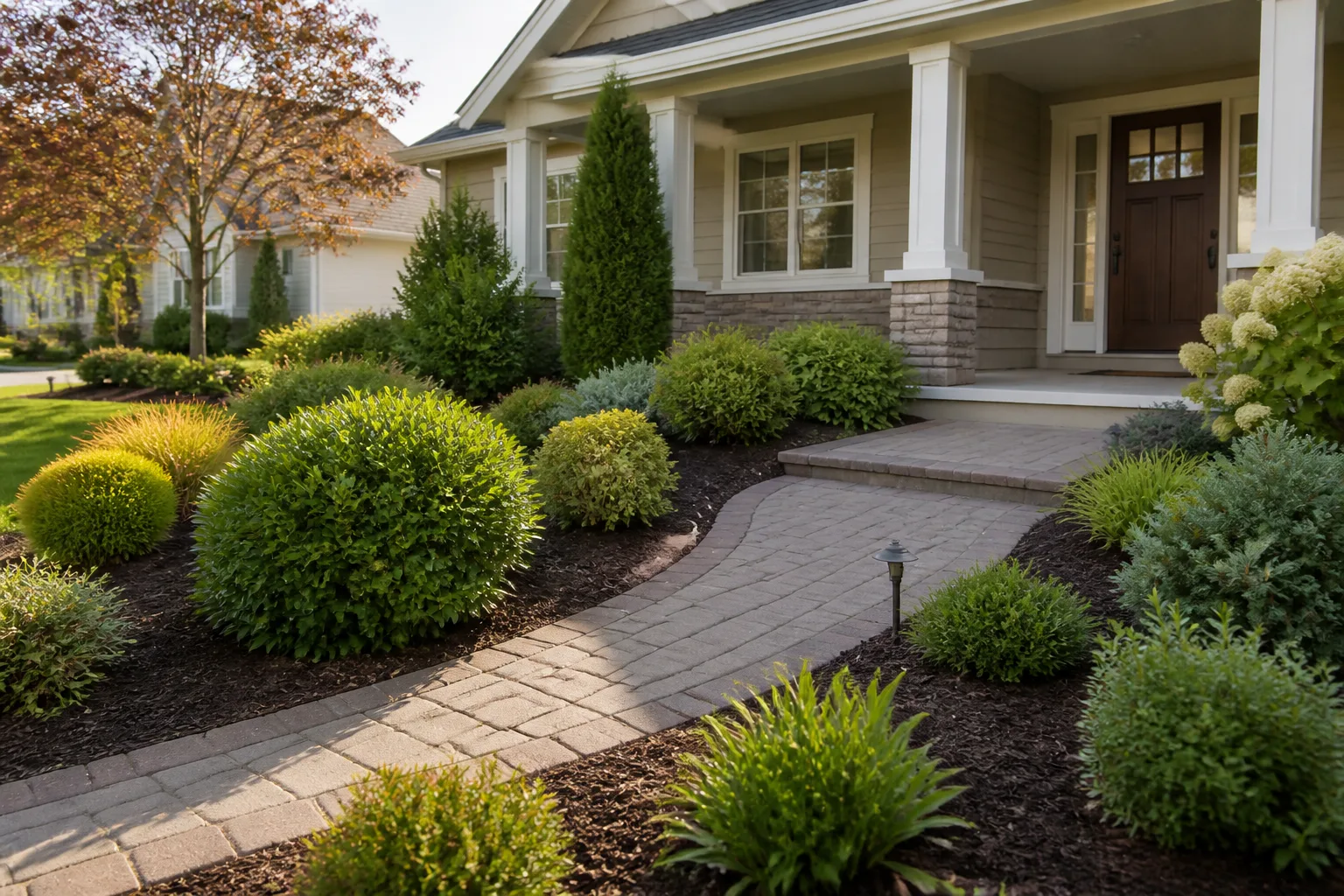
A tree can look perfectly manageable in a nursery pot and become the dominant structure in a yard 15 years later. The problem is rarely that a species is universally “bad”; it is that a fast-growing, wide-crowned, weak-wooded, invasive, or pest-vulnerable tree is planted where a roof, foundation, drain line, driveway, or future homeowner has no room for it.
Five familiar choices deserve extra scrutiny near houses: willows, Bradford pears, silver and Norway maples, ash, and black walnut. Their risks are different, so a useful decision starts with mature size and the actual site—not a blanket claim that roots always destroy foundations or that every tree in the list must be removed.
What “near the house” really means
“Near” is not a universal number of feet. A small ornamental tree with a compact crown can fit in a space where a 50-foot willow cannot, while a tree set well away from the wall can still conflict with a septic drain field, sewer lateral, overhead wire, sidewalk, or neighboring property. Think in three dimensions: mature canopy above ground, likely root zone below ground, and the people or structures that would be affected if a large branch failed.
Start with the tree’s mature height and spread, not the size of the container or the young plant’s label photo. Allow room for the whole crown to develop without repeated hard pruning, and check the site for paving, compacted soil, standing water, utility corridors, and existing cracks or leaks that could complicate root growth. A small yard may have no realistic place for a large shade tree, even if the species is attractive and locally hardy.
For a weeping willow, UF/IFAS describes a typical height and spread of 30 to 50 feet and warns that its surface roots can lift sidewalks; its species profile also cautions against placing it by sewer lines and septic drain fields. That is a species-specific example, not a rule that every willow behaves identically. Smaller shrub willows and other species have different dimensions, so identify the plant before applying advice about a weeping willow to the whole genus.
A quick tree-siting check before you buy
Before choosing a tree, write down the mature dimensions from a regional botanical garden, extension service, or reliable nursery source. Then map what lies within that space: roof, chimney, windows, gutters, paving, retaining walls, overhead wires, water and sewer lines, septic fields, and the boundaries of the property. If you cannot find reliable mature-size information for the exact species or cultivar, do not assume it will stay small because it is sold as a young plant.
Use the following questions to turn a vague warning into a practical decision:
| Check | Why it matters |
|---|---|
| How tall and wide will the tree become? | A broad crown needs space above roofs, wires, and nearby trees. |
| Is the wood or branching habit prone to failure? | Branch damage is more consequential over a house, path, parking area, or play space. |
| Does the species have shallow, spreading roots? | Surface roots may conflict with paving, mowing, or underground services. |
| Is the tree invasive or restricted locally? | A good-looking landscape tree can spread into natural areas or violate local rules. |
| Is a major pest established nearby? | The long-term cost may include monitoring, treatment, removal, and replacement. |
Also be honest about maintenance. If the tree needs frequent structural pruning to fit, it is probably the wrong tree for that location. Pruning can manage sound young structure; it cannot permanently shrink a naturally large crown or make a brittle, poorly sited tree a low-maintenance choice.
1. Willows: large crowns, surface roots, and brittle wood
Weeping willow is the clearest example of a tree that belongs in a large landscape, not squeezed beside a foundation. UF/IFAS lists a fast-growing tree that commonly reaches 30 to 50 feet tall with a similar spread; roots can extend well beyond the visible crown, and surface roots may lift paving. The profile also describes weak wood and branch attachments that can break, and says the tree is best placed where it has room near water rather than on a small residential lot. UF/IFAS’s weeping willow profile is specific to this species and region, so use local advice for other willows.
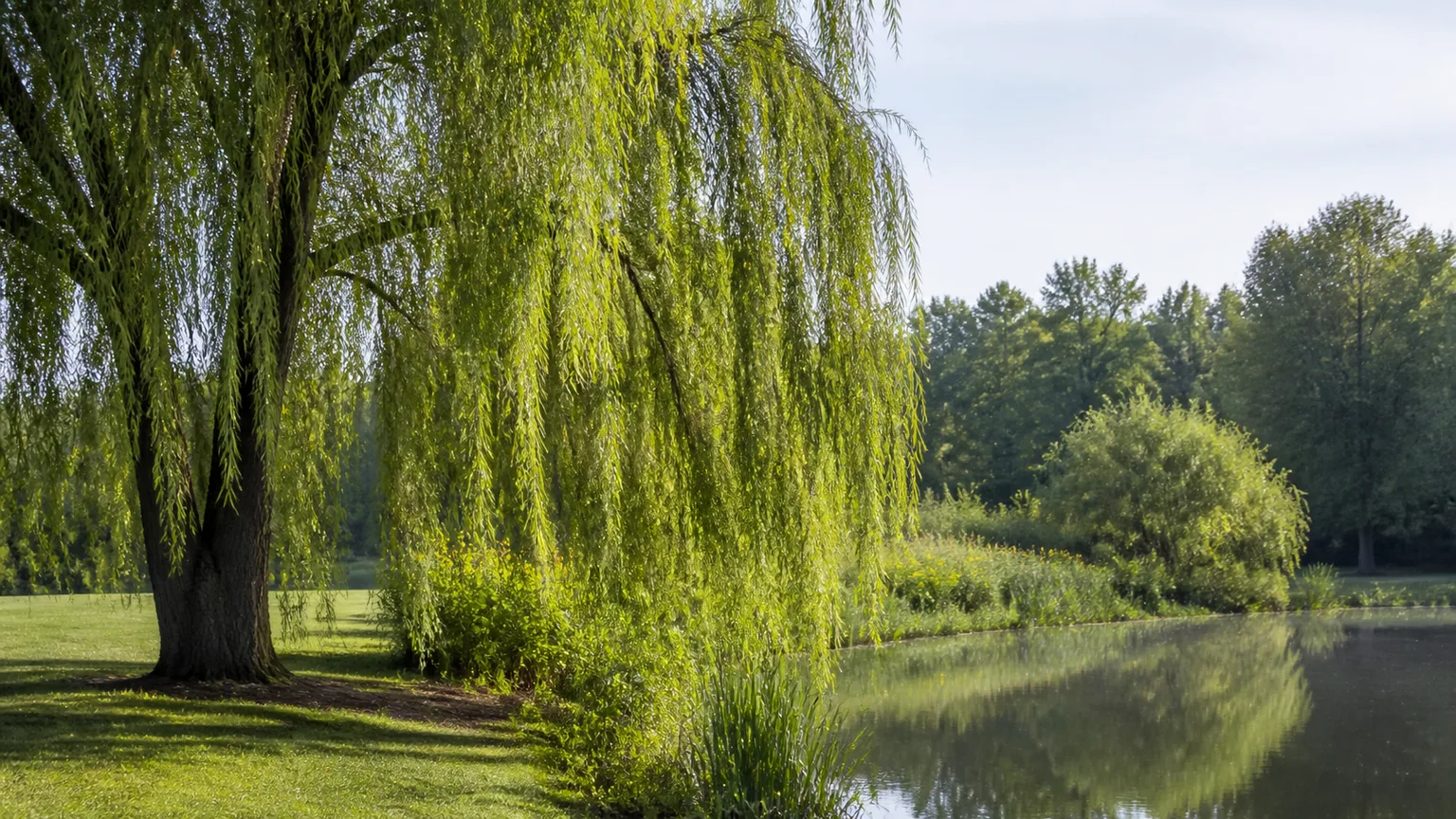
The appeal is obvious: a willow provides a broad, graceful canopy and thrives in moist settings. Those same traits create conflicts when a large specimen is planted near a leaking water line, sewer, septic field, paved walk, or roof. Garden Design likewise treats weeping willow as a tree for a spacious landscape and notes its scale and storm-damage considerations in its willow planting guide.
Do not treat “willow” as one fixed-size plant. A shrub willow used in a rain garden is not equivalent to a mature weeping willow, and its risk depends on species, cultivar, and maintenance. If the site is small or close to utilities, choose a smaller locally appropriate shrub or tree rather than trying to hold a large willow in bounds with repeated pruning.
2. Bradford pears: weak branch unions and invasive seedlings
Bradford pear is one cultivar of Callery pear, a non-native ornamental tree once planted widely for its spring flowers. Its branching habit is the main property concern: multiple upright stems often meet at narrow, V-shaped unions that can split as the crown grows heavier or faces wind, ice, or snow. A young tree can look tidy while quietly building a crowded structure that becomes more vulnerable with age.
The ecological concern is separate from the structural one. Ohio State University Extension describes Callery pears as aggressive invaders that spread when birds carry fruit and seedlings establish beyond planted sites; the same source notes weak branch unions. Ohio State Extension’s Callery pear guidance is grounded in Ohio, where the species is regulated, but restrictions differ by state and locality. Check your own invasive-plant list and nursery rules instead of assuming one state’s law applies nationwide.
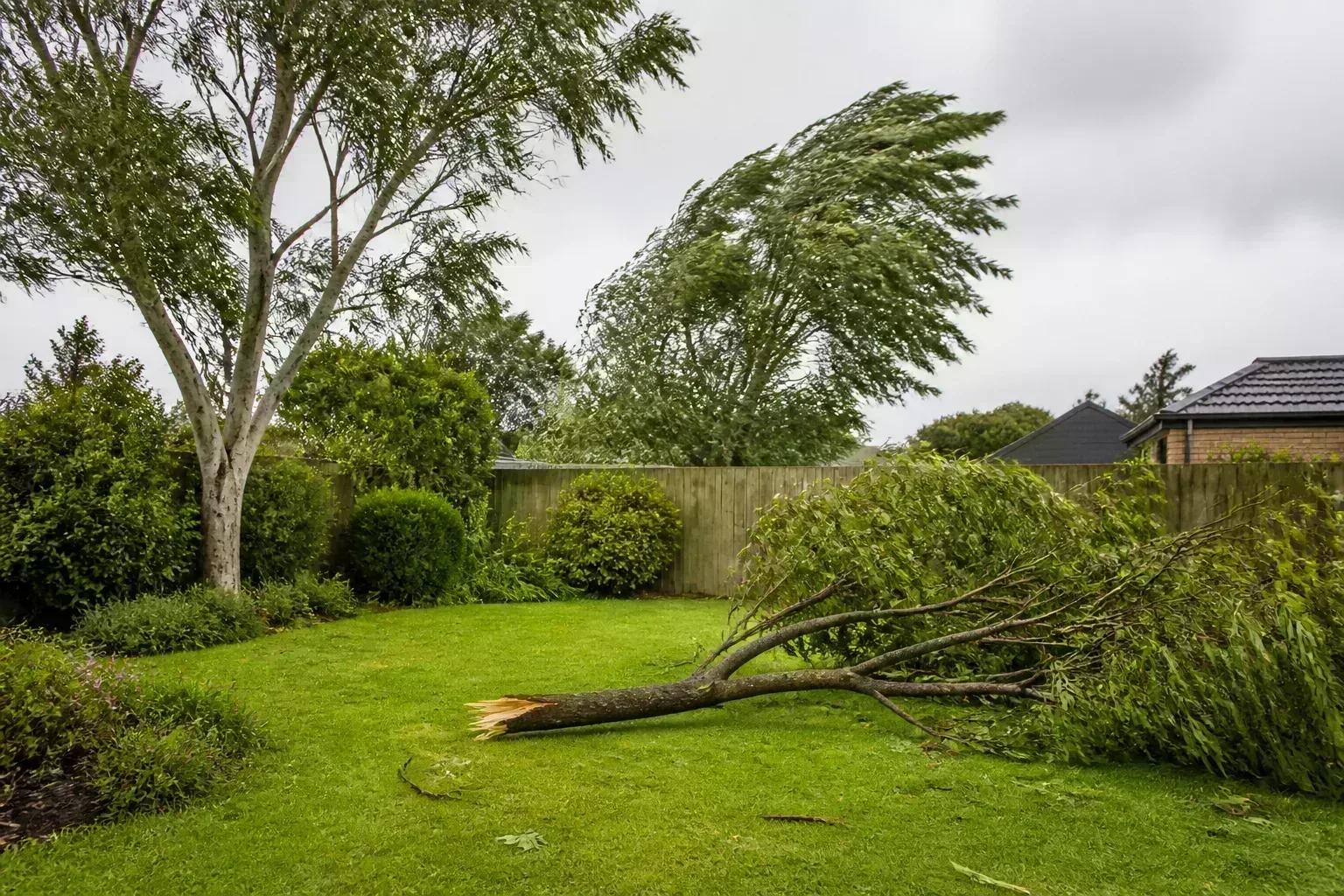
If you already have a Bradford pear, do not climb up and remove large limbs yourself. Have a qualified arborist assess the unions, lean, deadwood, and targets beneath the crown, then decide whether structural pruning or removal is appropriate. If replacing it, select a regionally native flowering tree for your actual space; serviceberry and eastern redbud may work in some eastern and central U.S. yards, but neither is a universal substitute for every climate or soil.
3. Silver and Norway maples: two different cautions
These maples are often grouped together in home-garden warnings, but their strongest concerns are not the same. Silver maple is a large, fast-growing tree whose spreading roots and canopy can crowd paving and nearby structures; Norway maple is notable for shallow, vigorous roots and invasive spread in many regions. The useful takeaway is to identify which maple you have instead of treating “maple roots” as one predictable problem.
Silver maple: rapid growth and surface-root conflicts
Silver maple can become a substantial shade tree, and quick growth is not a free shortcut to instant shade: it also means the tree reaches its mature footprint sooner and may need more space than a narrow side yard offers. Its roots can compete strongly for surface moisture and create conflicts with turf, paths, or paving. Epic Gardening’s tree-siting overview includes silver maple among the large trees that need thoughtful distance from buildings; use a local species profile for mature dimensions in your climate.
Near a house, consider the whole crown as well as roots. Branches that overhang gutters, shade a roof, or restrict access can become an ongoing pruning burden, and repeated severe cuts are not a sound way to keep a large tree small. Silver maple may still suit a roomy property where its mature size and maintenance are acceptable, but it is a poor impulse purchase for a narrow foundation bed.
Norway maple: invasive in many regions
Norway maple is not simply a second kind of silver maple. UConn Extension’s 2026 fact sheet describes it as a broad-canopied tree commonly 40 to 90 feet tall, with shallow, vigorous, wide-spreading roots that can damage sidewalks. The publication also documents its invasive spread and recommends native red and sugar maples as regional alternatives in Connecticut and similar areas. UConn Extension’s Norway maple fact sheet provides identification details and explains why its environmental risk extends beyond a single property.
The status of Norway maple depends on region, but it has invaded forests and woodlands across parts of the Northeast and Midwest and has established in other areas too. If you are considering one, check your state or provincial invasive-species list first; a nursery label calling a tree ornamental does not establish that it is ecologically appropriate. Where it is invasive, choose a native tree suited to the lot rather than replacing it with another large maple that has the same space mismatch.
4. Ash: a pest risk that depends on where you live
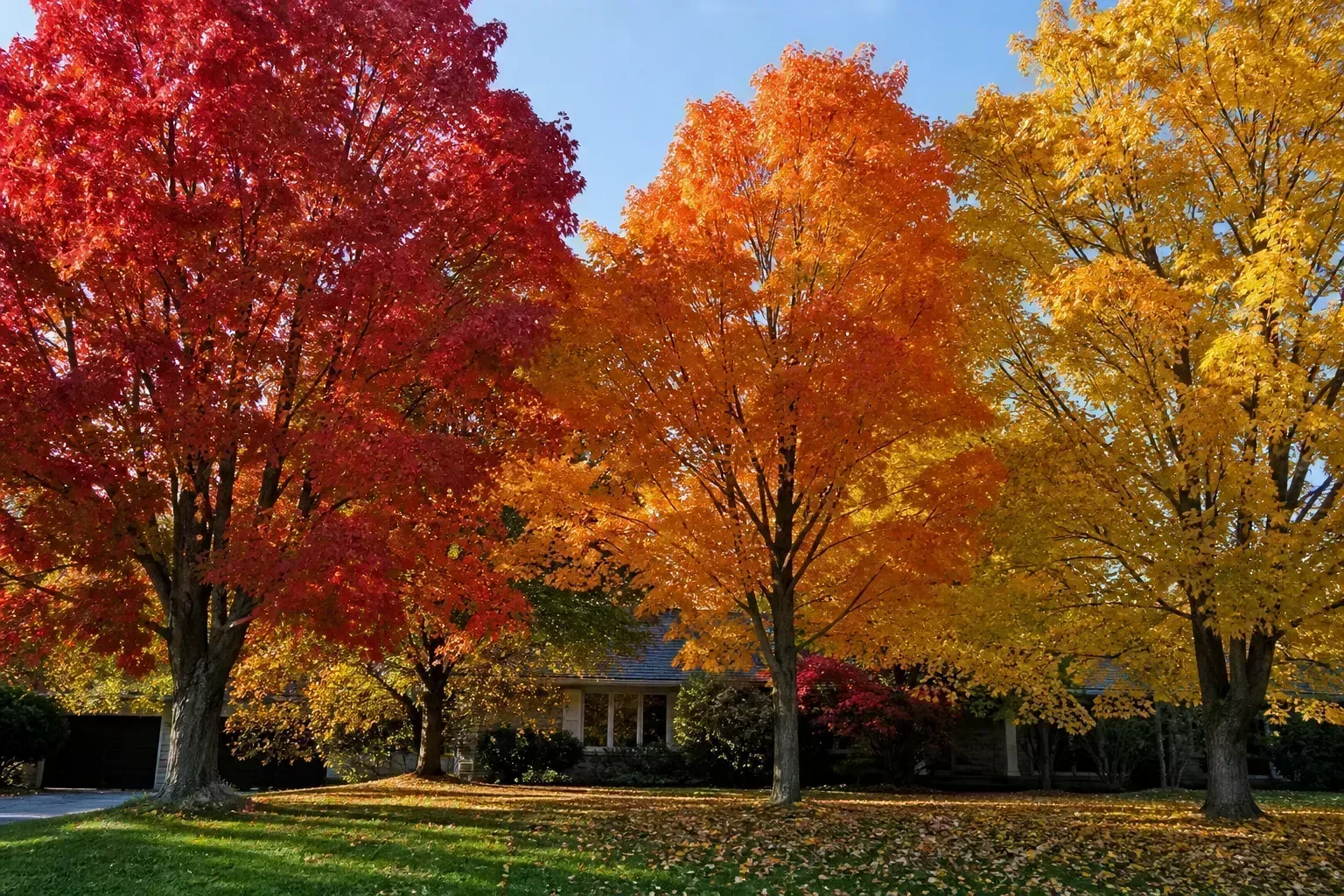
Ash trees can be valuable native shade trees, but planting a new one may be a poor long-term bet where emerald ash borer (EAB) is established or spreading. EAB attacks true ash trees and can lead to canopy decline and mortality; a dead or declining mature tree near a home can become expensive to assess and remove. Colorado State Forest Service guidance stresses that treatment decisions depend on pest presence, tree health and value, and the costs of protecting an individual tree—not on a blanket treatment rule. Colorado State Forest Service’s EAB guidance also describes removal and replacement as options, particularly for small or unhealthy trees.
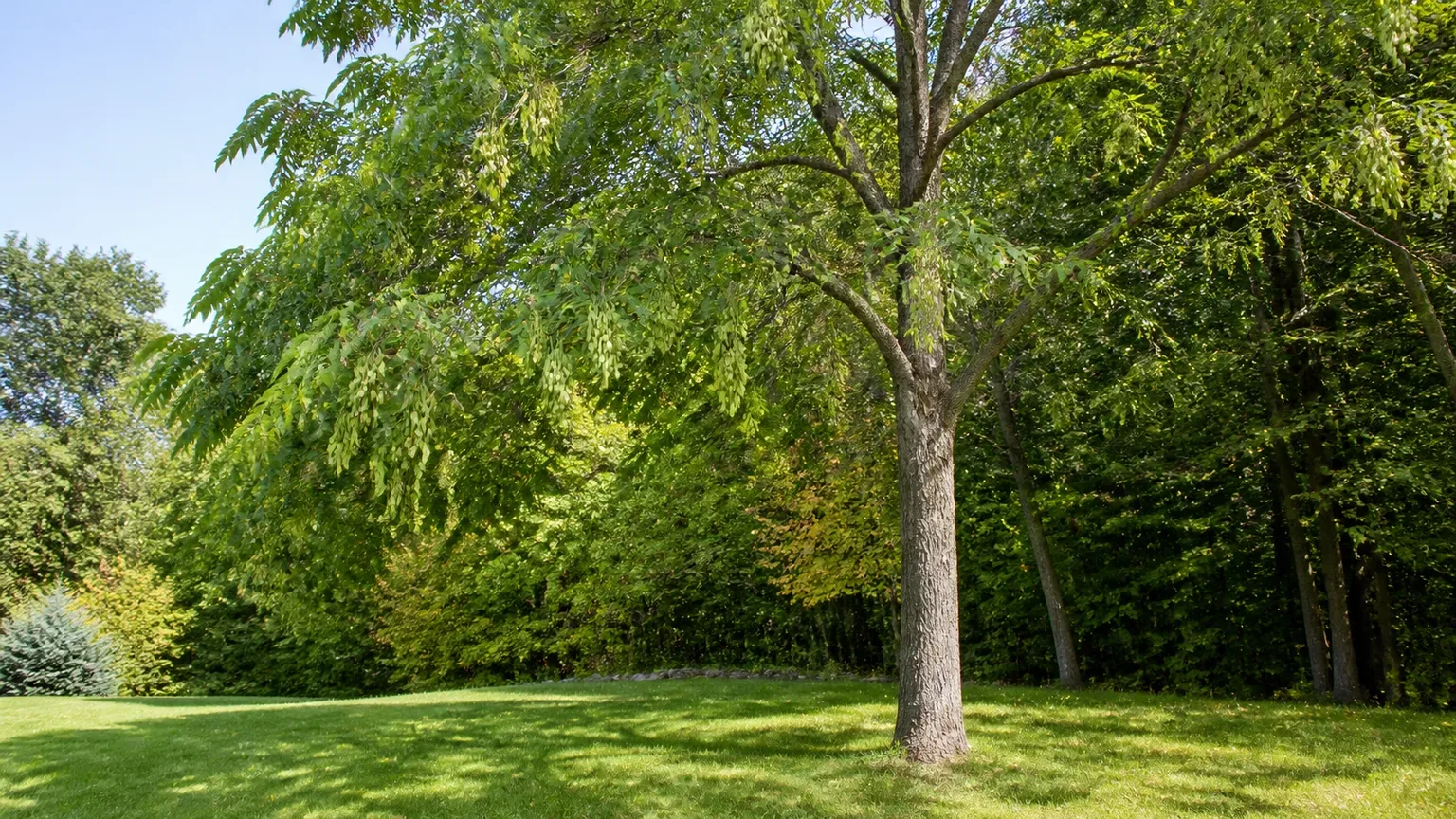
This is a regional risk, not proof that every ash in every yard is about to die. Before planting, check current local extension or forestry guidance for EAB status and ask whether ash is recommended in your area. A replacement plan should diversify species rather than fill a row with one tree type; that reduces the chance that one pest or disease will remove an entire planting at once.
If an ash already grows near your home, do not remove it solely because it is an ash. Identify it, check local pest updates, and have a certified arborist inspect canopy dieback, dead limbs, trunk defects, and nearby targets. Insecticide use, when appropriate, is a specialized, recurring decision; it is not a substitute for confirming that the tree is healthy, valuable, and suitable to retain.
5. Black walnut: room for the tree and its root zone
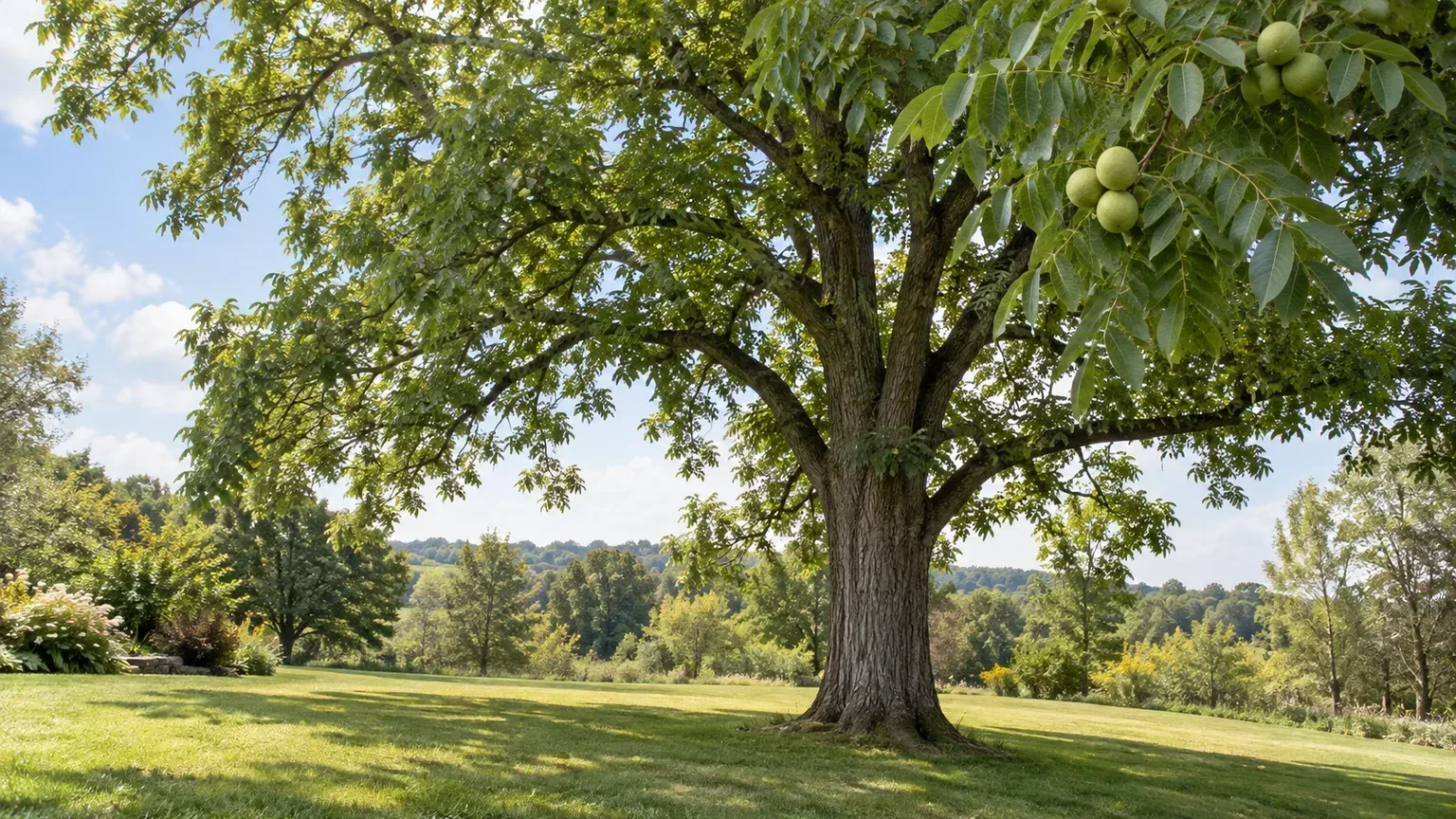
Black walnut can be an excellent tree on a large property, but its size and root zone complicate small foundation beds and nearby gardens. The tree produces juglone, a chemical that can inhibit some plants. Penn State Extension’s updated 2026 guidance explains that the strongest exposure is typically near roots, leaves, stems, buds, and nut hulls; sensitive plants under the canopy are more vulnerable, especially where soil is poorly aerated or stays wet. Penn State Extension’s walnut planting guide notes that juglone does not travel far through soil and lists tolerant plants such as serviceberry, redbud, river birch, and many oaks.
That does not mean a walnut “poisons the whole yard.” Wisconsin Horticulture makes the practical limit clear: many plants tolerate juglone, symptom lists are based partly on observations rather than complete experimental testing, and well-drained soil usually presents fewer problems than poorly drained soil. Wisconsin Extension’s black walnut guidance explains why the main concern is sensitive plants in the root zone, not every lawn or garden bed on the property.
Walnut also drops large nuts and leaf litter and needs room to mature. If your goal is a vegetable bed or ornamental planting, place it outside the tree’s root zone where possible, avoid walnut leaves and hulls as mulch, and verify plant tolerance with regional guidance. Removing a mature walnut is not a quick fix for juglone-sensitive plants because roots left in the soil can continue releasing compounds as they decay.
What roots can—and cannot—do to a house
Tree roots do not bore through solid foundations like drills. Purdue University’s forestry extension explains that roots generally redirect around impervious surfaces, but can exploit an existing crack or breach while following moisture; Purdue Extension’s foundation guidance makes clear why a leak or preexisting defect changes the risk. Roots can also lift paving or interfere with mowing, as UF/IFAS notes for weeping willow. That distinction matters because a damaged sidewalk, a leaking sewer line, and a sound foundation are three different problems with different remedies.
An oversized tree can still be badly sited even when it is not directly cracking a wall. The canopy may shade damp areas, scrape roofing, block gutters, or leave large limbs over a roof or driveway; roots may conflict with paving, drainage, or utilities. A tree’s water use can also interact with shrink-swell soils, but a homeowner cannot diagnose foundation movement by seeing roots at the surface.
If you see new wall cracks, uneven floors, doors sticking, or a persistent leak, do not assume the tree is the sole cause or start cutting major roots. Get a structural professional to assess the building and a qualified arborist to evaluate the tree and root zone. Cutting large roots can destabilize or seriously injure a tree; a quick DIY trench may create a more immediate hazard than the roots themselves.
Choose a replacement for the site, not just the look
The best alternative depends on what you wanted from the original tree: spring flowers, shade, privacy, wet-soil tolerance, wildlife value, or autumn color. Match that job to mature dimensions, native range, soil, climate, and available setbacks. A tree is not safer merely because a list calls it “native” or “small”; some native trees grow large, and some cultivars have different shapes from the species.
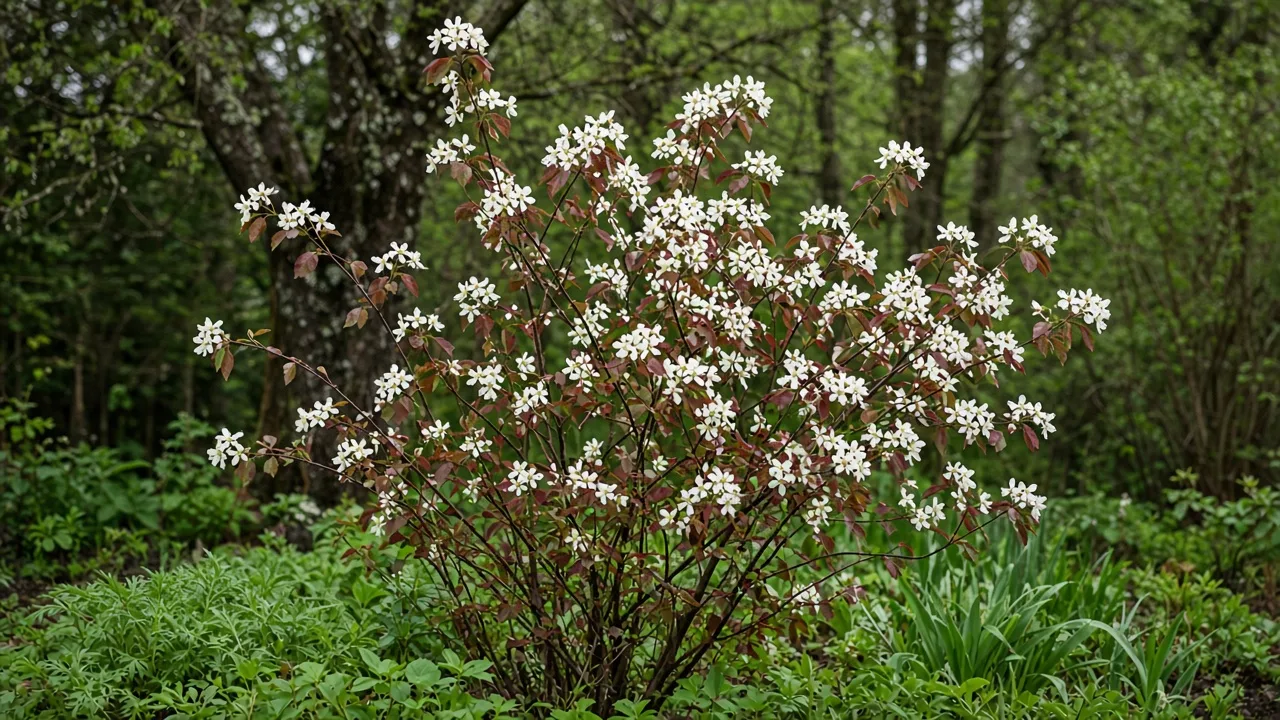
For a smaller flowering accent in many eastern U.S. yards, serviceberry or eastern redbud may be worth considering. Penn State Extension lists both among trees tolerant of juglone, and they can provide spring bloom without the mature scale of a weeping willow. Their exact mature size and local suitability vary by species and cultivar, so check the tag and a local extension profile before buying.
Small flowering trees for tighter yards
Look for a tree whose mature height and spread comfortably fit the intended space, including room for pruning access and a clear path around the house. Serviceberries, some redbuds, and regionally appropriate small native flowering trees can offer spring interest, but avoid planting even a modest tree directly against siding or over a utility corridor. A multi-stem form may fit a wider bed but can block a narrow walk; the shape matters as much as the height.
Check for local invasive warnings before you choose an ornamental cultivar. If replacing a Callery pear, for instance, do not simply buy a different cultivar of the same species and assume the ecological issue disappears. A native hawthorn, crabapple, serviceberry, or redbud may fit, depending on climate and available space; Ohio State Extension suggests native alternatives for its region, while your local extension office can narrow the list for yours.
Shade trees and wet sites need more room
If your goal is a large shade canopy, put it in the part of the property where the full tree can mature, not in the narrow strip between the wall and sidewalk. Native oaks, sugar maple, and red maple can be excellent landscape trees in suitable regions, but they are not all small or appropriate near foundations. Treat a “better alternative” as a species to evaluate—not an automatic permission to plant close to a house.
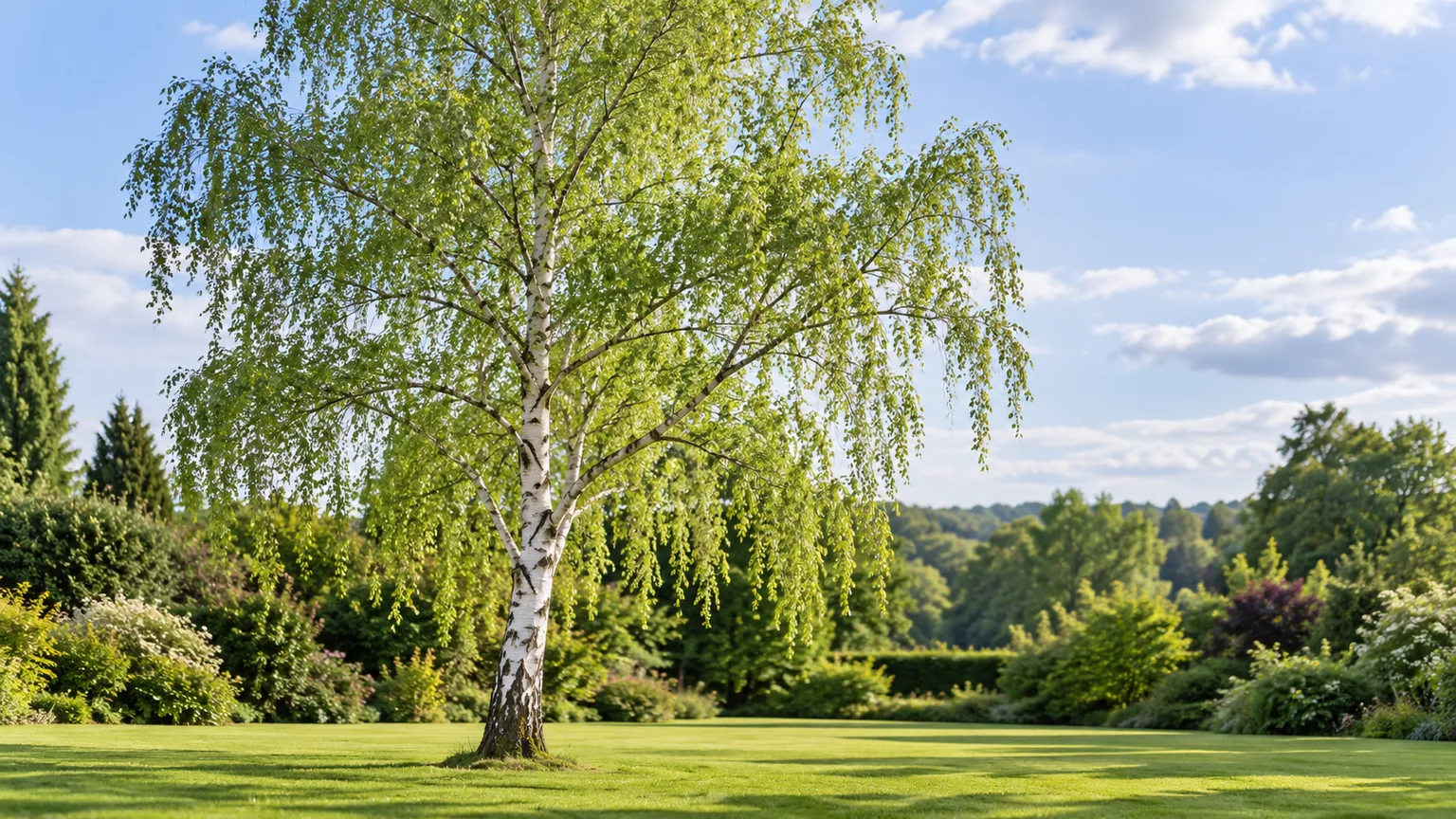
For a persistently wet site, do not use a giant willow as a shortcut to drainage or plant a river birch in a space too small for its mature crown. First determine whether the wetness comes from a downspout, compacted soil, a high water table, or a drainage problem that needs grading work. Choose a smaller, locally appropriate wet-site plant if the available space cannot accommodate a large moisture-loving tree.
Plan distance using mature size and underground constraints
There is no reliable universal rule such as “always plant 10 feet from the house.” A sound setback depends on species, mature crown width, branch habit, soil, foundation design, paving, water and sewer lines, and what lies beneath the site. Use a local tree-selection guide for the exact species, then leave enough room for its mature canopy and for maintenance; if the source gives only a height, ask a nursery or extension educator about spread and root behavior too.
Before digging, have underground utilities marked through the local one-call service and locate private lines such as irrigation, septic components, and property drainage that the public locator may not identify. Do not position a tree over a septic drain field or directly beside water and sewer connections because you have a short-term planting gap. If you cannot confidently map the important constraints, pause and ask a local arborist, utility provider, or septic professional before planting.
Planting correctly also matters. Keep the trunk flare visible at the soil line rather than burying the trunk, and do not mound soil or mulch against the bark. University of Maryland Extension explains how buried root flares and girdling roots can undermine tree health; a good planting technique helps the tree establish but cannot compensate for choosing a species too large for the site.
What to do if a risky tree is already growing there
Start with identification, not a chainsaw. Many homeowners call any tree with compound leaves an ash, or any upright white-flowering tree a Bradford pear, but a correct species ID changes the pest, invasiveness, and management advice. Photograph leaves, buds, bark, flowers, fruit, and the whole growth habit; a county extension office or certified arborist can confirm an uncertain tree.
Next, note the tree’s distance from the house and targets, canopy condition, visible root conflicts, dead limbs, cracks at branch unions, lean, recent soil disturbance, and signs of pests. An arborist can distinguish routine maintenance from a structural risk and recommend selective pruning, monitoring, or removal. Do not top the tree, cut large roots, or remove major limbs from a ladder; these actions can cause lasting defects or serious injury.
If a tree is mature and healthy, its presence alone is not a reason for emergency removal. Consider the cost and benefits of shade, wildlife, storm exposure, species risk, and the feasibility of replacing it; where failure could injure someone or damage a building, get an on-site professional assessment. For invasive Callery pear or an ash in an EAB area, follow your state and local guidance before disposal or treatment.
Conclusion
Willows, Bradford pears, silver and Norway maples, ash, and black walnut can all be poor choices close to a home—but not for one identical reason. Some outgrow tight spaces, some have weak branch structure or spreading surface roots, Norway maple and Callery pear can be invasive in many places, ash carries a regional pest risk, and walnut complicates planting for sensitive plants in its root zone.
Choose by mature size, local ecology, branch structure, utilities, and the actual yard—not by a dramatic warning or a pretty nursery pot. When a tree is already large, have it identified and assessed before pruning roots or scheduling removal.