What to Compost vs. What Not to Compost at Home
Use this what-to-compost guide to sort food scraps, leaves, paper, weeds, manure, and tricky items by backyard bin, worm bin, or local collection rules.
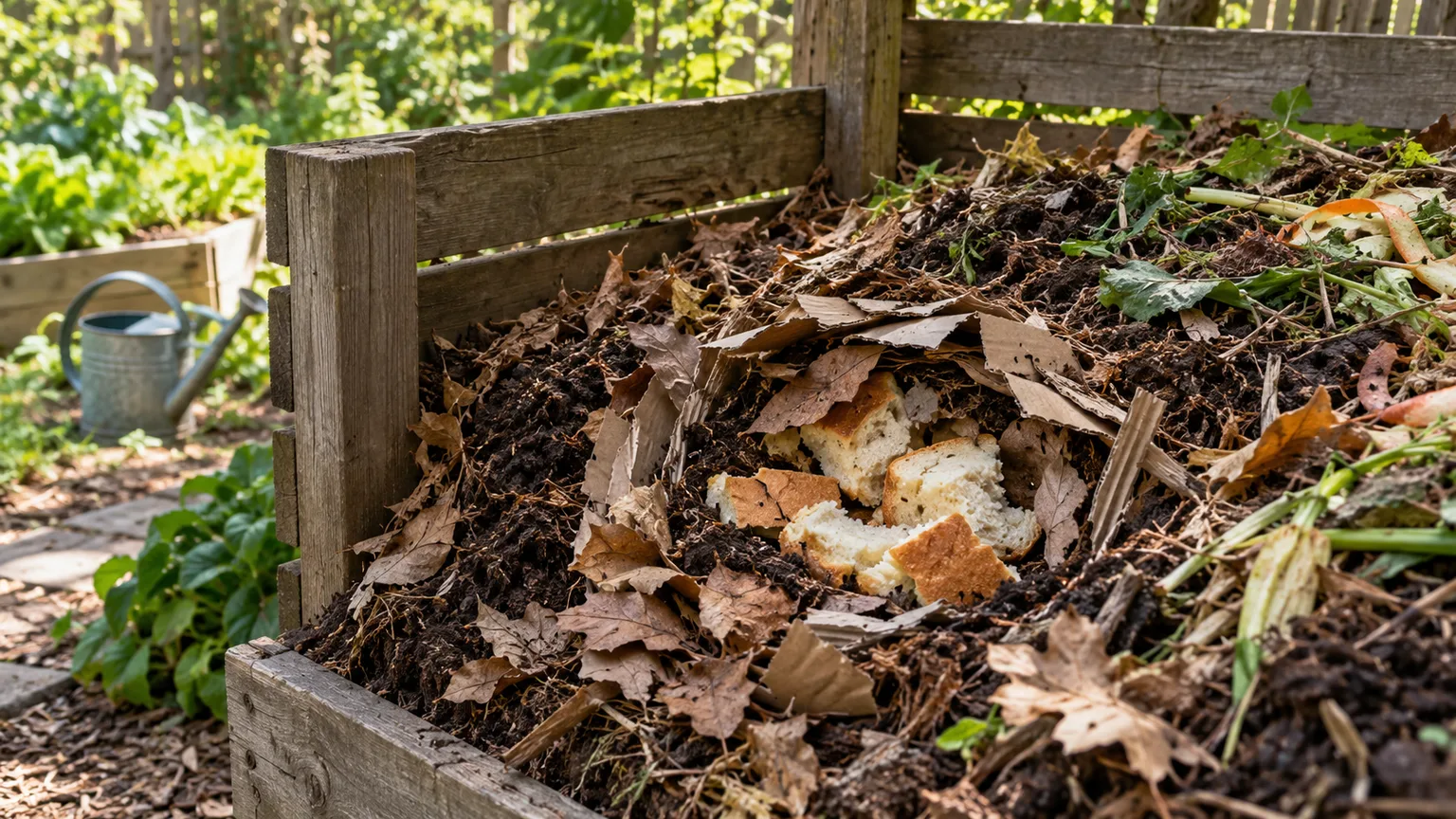
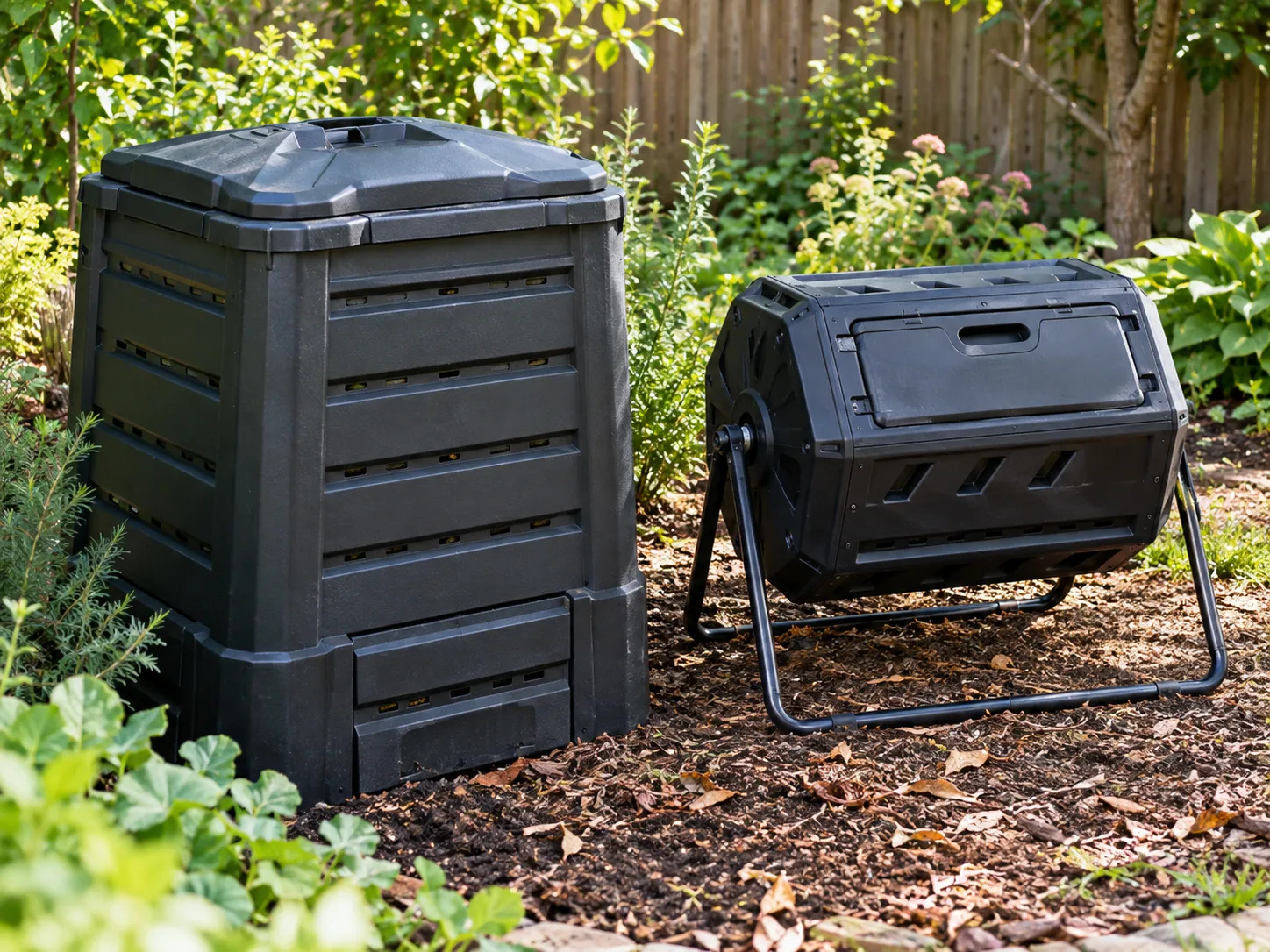
A material can be biodegradable and still be a poor choice for your backyard compost bin. The right answer depends on the system: a cool open pile, a rodent-resistant bin, a worm farm, a Bokashi bucket, and a municipal organics facility do not all accept or process the same things.
For an ordinary home pile, start with fruit and vegetable scraps, coffee grounds, crushed eggshells, dry leaves, untreated plant trimmings, and plain paper or cardboard. Keep meat, fish, dairy, grease, pet waste, diseased plants, persistent weed roots, treated wood, and unknown pesticide-treated material out. Put borderline items in a “check the method” category instead of assuming that every item labeled compostable belongs in your pile.
If you are just setting up a system, our beginner’s guide to composting at home explains bin choices, moisture, and basic maintenance. This page focuses on the harder decision: where each kind of scrap belongs.
A quick sort for backyard compost
Use three categories. Add means the material usually works in a basic outdoor pile when it is mixed with other ingredients. Conditional means its safety or usefulness depends on the quantity, the bin, the source, or local program rules. Keep out means the material can create pest, disease, weed, chemical, or contamination problems in ordinary home compost.
| Add to most backyard piles | Conditional: check the method | Keep out of a basic home pile |
|---|---|---|
| Fruit and vegetable scraps; coffee grounds and paper filters; crushed eggshells | Bread, cooked rice or pasta, citrus, onions, and other odorous foods | Meat, fish, bones, dairy, fats, oils, and greasy leftovers |
| Dry leaves, untreated grass in thin layers, healthy plant trimmings, small twigs | Small amounts of known-source herbivore manure; weeds without mature seed or persistent roots | Dog or cat feces and litter; human waste; diseased plants; invasive roots and mature weed seed heads |
| Shredded uncoated cardboard and plain paper; straw; small amounts of untreated wood chips | Tea bags, paper towels, clean fireplace ash, black walnut leaves, “compostable” packaging | Pressure-treated wood; coal or charcoal-briquette ash; plastics, glass, metal, glossy or laminated packaging |
This is a home-pile guide, not a universal list for every collection program. The U.S. Environmental Protection Agency describes backyard composting and community collection as separate options, and university guidance notes that commercial facilities may process some food scraps that homeowners are advised to leave out. Check your municipality’s accepted-items list before putting meat, dairy, food-soiled paper, or certified compostable packaging in a curbside cart (EPA guidance on composting at home; University of Maryland Extension’s comparison of homeowner and commercial composting).
What belongs in a backyard compost pile
A backyard pile needs a mix of moist, nitrogen-rich “greens” and drier, carbon-rich “browns,” plus air and moisture. The words do not describe color: coffee grounds count as a green, while dead leaves are a brown. A pile of only kitchen scraps tends to become wet and compacted; a pile of only dry leaves decomposes slowly. Alternating or mixing unlike materials solves both problems better than trying to memorize an exact ratio.
Kitchen scraps and plain paper
Fruit and vegetable peels, cores, wilted produce, and trimmings are dependable starter materials. Chop large pieces such as melon rinds, corn cobs, and thick stalks if you want them to break down sooner; whole pieces are not unsafe, but they can remain recognizable long after smaller scraps have disappeared. Coffee grounds and paper filters, loose tea leaves, and crushed eggshells also fit most home piles.
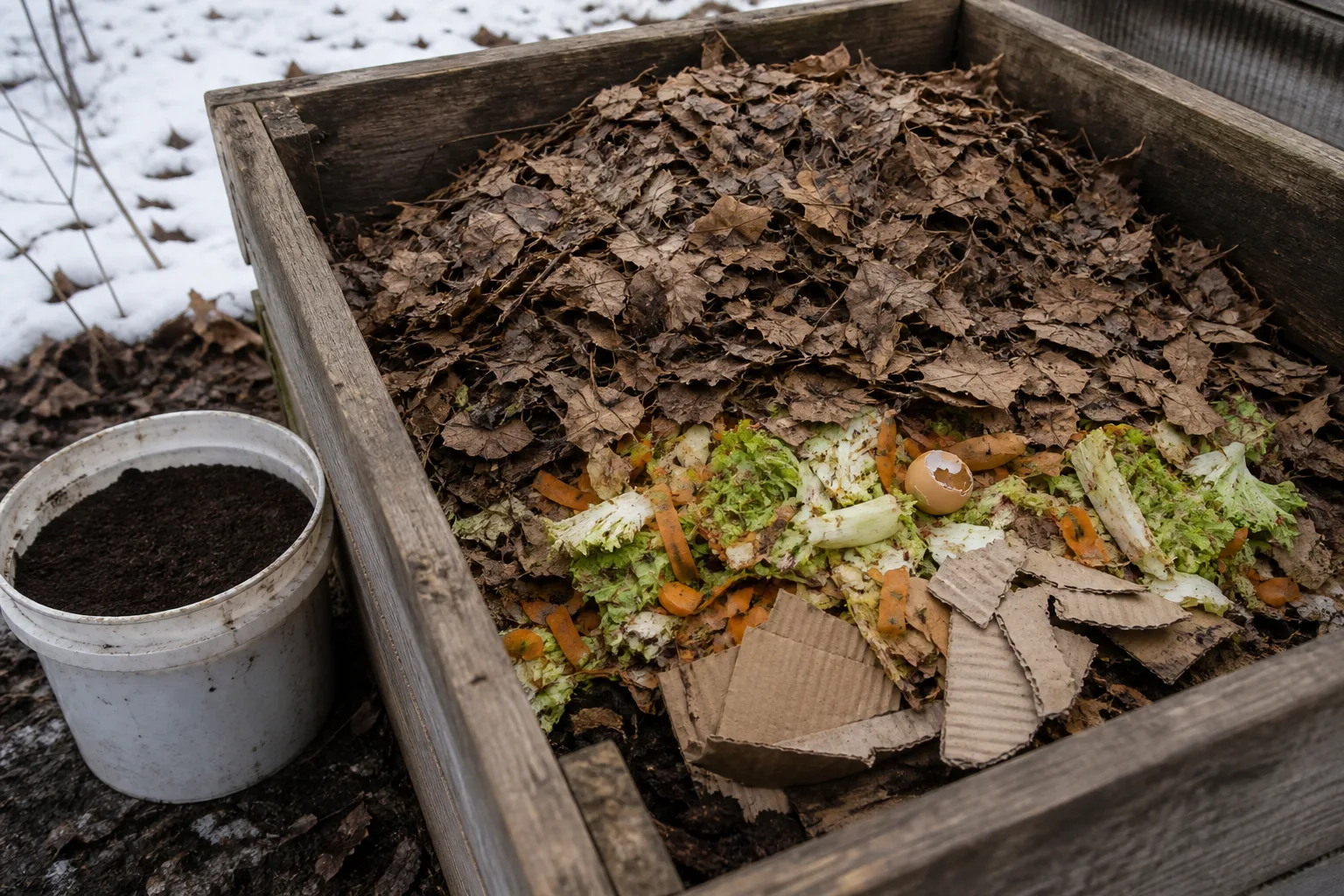
Use plain, uncoated paper and cardboard as browns: torn corrugated cardboard, paper egg cartons, paper bags, and shredded non-glossy paper. Remove plastic windows, packing tape, stickers, metal fasteners, and laminated sections first. Cardboard takes up space and breaks down slowly when added in sheets, so tear or shred it and mix it through the wet scraps rather than laying down a dense mat. NC State Extension includes paper and yard materials among compost ingredients but notes that paper decomposes slowly and should not dominate the pile (NC State Extension’s backyard composting guide). The practical sequence is similar to the advice from BBC Gardeners’ World: mix soft scraps and clippings with chopped woody material and shredded paper so the pile retains air as well as moisture.
A clean paper towel or napkin may break down, but its use matters. One with only water or plant food residue is different from one used to wipe up bleach, solvent, motor oil, or heavy grease. Do not use a compost pile as a disposal route for household chemicals or contaminated cleanup materials; follow the product label and local waste instructions instead.
Leaves, grass, and garden trimmings
Dry leaves are one of the easiest browns to store and use throughout the year. Shredding them helps prevent a compacted, soggy layer, though a few whole leaves are fine. Small twigs, straw, dead annual plants that were healthy, and untreated prunings can also go in; woody stems should be cut or chipped because they may take much longer than soft leaves to rot.
Grass clippings are compostable, but thick clumps can seal together, heat unevenly, and turn slimy. Mix small amounts through dry leaves or shredded cardboard, and do not collect clippings from a lawn treated with an herbicide unless the label and local guidance confirm that the material can be used. If the grass is healthy and untreated, leaving clippings on the lawn is also a reasonable choice; composting is optional, not a requirement.
Healthy houseplant leaves and stems can join the pile after you remove plastic pots, ties, labels, and soil clumps. Do not add a plant simply because it is dead: a plant with a serious fungal, bacterial, or viral disease is a different risk from an old, healthy annual. That distinction matters more than whether the material came from indoors or outside.
Manure and slower carbon materials
Manure from plant-eating livestock—such as horses, cows, sheep, goats, or rabbits—can be composted, but treat it as a conditional ingredient rather than an automatic green. Use a known source, keep it mixed with dry carbon-rich materials, and allow the pile to finish and cure before using it around crops. Fresh manure can carry pathogens, and manure from animals fed treated hay can carry persistent herbicide residues that ordinary composting may not destroy.
Small quantities of untreated sawdust, wood chips, bark, or straw can add structure and carbon. Use only material whose source you know: lumber scraps, plywood, painted wood, and pressure-treated boards are not compost feedstock. Large amounts of fine sawdust can mat together and temporarily tie up nitrogen as microbes decompose the high-carbon material, so mix it with greens and avoid making it the main ingredient.
What to keep out of an ordinary home pile
“Keep out” does not always mean the material can never be composted anywhere. It means the normal backyard system is not a reliable place to manage it safely or without nuisance. A municipal or commercial program may have equipment, temperature monitoring, and operating rules that a small garden pile does not.
Meat, dairy, grease, pet waste, and human waste
Do not add meat, fish, bones, cheese, milk, yogurt, butter, cooking oil, grease, or heavily sauced leftovers to an ordinary backyard bin. These materials can smell as they decay and attract flies, raccoons, rodents, or neighborhood pets; bones and dense animal scraps also break down slowly. A secure container reduces access but does not make the contents appropriate for every garden pile.
Pet feces and litter should stay out of compost intended for garden soil, especially beds where food crops grow. Cat and dog waste can carry organisms that cause disease, and a typical home pile may not heat every portion of the material enough to control them. Human waste requires a purpose-built sanitation system and careful management; it is not an ingredient for a standard compost bin. NC State Extension advises keeping pet waste and animal products out of backyard piles for health and nuisance reasons (NC State Extension).
Some commercial organics programs accept meat, dairy, oils, and cooked foods because they manage the process at a different scale. That does not mean all municipal carts accept them: look for the current list from your service provider and follow it exactly. If your city collects these scraps, use its approved liner or container rather than burying them in a home pile as a substitute.
Diseased plants, seeded weeds, and invasive roots
A basic cool pile is not a dependable treatment for diseased foliage, insect-infested plants, weed seeds, or persistent underground stems. These materials can survive and return when you spread unfinished compost. University of Maryland Extension distinguishes homeowner piles from commercial operations that can reach and manage higher temperatures, while Illinois Extension says weeds are less concerning in piles that heat properly; the challenge is proving that the entire batch received adequate treatment (University of Maryland Extension; Illinois Extension’s composting questions).
For a low-maintenance pile, remove diseased plants and weeds that have mature seed heads or persistent roots, such as bindweed, bermudagrass, or invasive rhizomes. Do not assume that the top of a pile represents its hottest point or that one warm reading means every scrap has been sanitized. A managed hot-compost batch can handle more, but only if the gardener controls the mix, monitors heat, turns material so outer portions move into the hot zone, and follows a reliable local extension protocol.
If a plant has a known serious disease, use the disposal method recommended by your local extension or waste authority. Do not burn it unless local rules and fire safety guidance permit that practice. Keep suspect weeds in a separate container while they dry or arrange disposal; tossing them beside the bin can let seeds scatter before they are removed.
Treated materials, persistent chemicals, and ash
Keep pesticide-treated plants, herbicide-treated grass, and unknown roadside or field cuttings out unless the label or a knowledgeable local authority says they are safe to compost. The word “treated” covers many products with different persistence, so there is no universal waiting period that makes every clipping safe. Follow the pesticide label; it controls disposal and reuse of treated plant material.
Persistent herbicides deserve particular care. University of Minnesota Extension explains that clopyralid, picloram, and aminopyralid can remain active in forage, manure, or compost and may injure sensitive broadleaf crops; ordinary composting is not a reliable fix for contaminated inputs. If you buy manure, hay, straw, or bulk compost and the source is uncertain, ask what herbicides were used and on what feedstock before spreading it in a vegetable garden (University of Minnesota Extension on persistent herbicides in forage and compost).
Do not compost coal ash, charcoal-briquette ash, pressure-treated wood, plywood, painted or stained wood, or sawdust from treated lumber. Coal and briquette ash can contain unwanted substances, while treated wood may add chemicals to material you plan to put in soil. Clean ash from untreated firewood is a separate case: it can raise soil pH and add salts, so a conservative home gardener can leave it out unless a soil test and extension advice show a reason to use a very small amount. NC State Extension specifically distinguishes small amounts of clean wood ash from coal or charcoal ash and warns against excess wood ash (NC State Extension).
What depends on your composting method
The most confusing items are often not “good” or “bad” in the abstract. They are manageable in one setup and troublesome in another. The deciding factors are usually how hot the process gets, whether animals can reach the scraps, whether the material is mixed with browns, and whether the local facility accepts it.
Bread, cooked grains, citrus, onions, and eggshells
Bread, plain cooked rice, pasta, and other grains are organic and will decompose, but they are attractive, moist food scraps. In an open pile where rodents or raccoons can reach the surface, skip them; in a secure, well-managed bin, add a small amount, bury it in the center, and cover it with dry leaves or shredded cardboard. Keep oily pizza crusts, heavily buttered pastries, cheese-covered food, and meat-filled leftovers out of a basic pile because the fat and animal products change the decision. Our guide to composting bread explains those conditions in more detail.
Citrus peels, onion skins, and garlic scraps are not plastic or poison, but large additions can create a concentrated, slow-to-break-down pocket. In a regular outdoor pile, modest amounts mixed through other scraps are usually more useful than treating them as a separate batch; worm bins and local collection programs may have narrower rules. The Old Farmer’s Almanac’s composting guide also treats citrus as a moderation item and emphasizes that a material’s suitability depends on the system and quantity. Eggshells are different from whole eggs: crushed shells are fine for a backyard pile, while a cracked raw egg adds animal protein and odor risk.
Walnut foliage is also conditional. Black walnut leaves and twigs contain compounds that can inhibit some plants, so a cautious gardener can compost them separately and wait until they are thoroughly decomposed before using the finished material. Illinois Extension recommends full composting and aging before walnut leaves are applied, while some home-compost lists advise leaving them out of a regular pile; keeping them out of a vegetable-bed batch is the simplest choice if you cannot separate or finish the material (Illinois Extension).
Tea bags, paper towels, and compostable packaging
Tea leaves are compostable; the bag may not be. Some tea bags include plastic mesh, heat-sealed plastic, string, staples, or a non-compostable tag. If the packaging does not clearly confirm that every part is suitable for your specific system, cut open the bag and add the leaves, then discard or recycle the wrapper according to its material.
Plain paper towels, tissues, and paper napkins may break down, but only add them when they are free of cleaning products, solvents, greasy food, and other contaminants. Recycle clean paper and cardboard where that is practical, and do not use glossy magazines, laminated cards, metallic wrapping paper, or plastic-coated cups as compost browns. A piece that looks like paper can still have a moisture-resistant film or synthetic fibers.
“Compostable” packaging is not automatically home-compostable. Many certified bioplastics need the controlled heat and processing time of an industrial facility; University of Maryland Extension does not recommend them for typical homeowner piles but notes that commercial operations may accept specific products. Check for a home-compost certification and still verify your local program’s rules before adding any bag, cup, fork, or packaging (University of Maryland Extension).
Worm bins, Bokashi, and municipal collection
A worm bin is a living system with a narrower comfort zone than an outdoor pile. Most vermicomposting setups work best with modest amounts of fruit and vegetable scraps, coffee grounds, paper filters, and crushed eggshells; meat, dairy, oil, pet waste, and large quantities of citrus or pungent scraps can attract pests or upset the bin. Follow the guide for your particular worm system rather than copying a backyard list.
Bokashi uses fermentation in a sealed bucket to pre-process a broader mix of kitchen scraps, sometimes including animal products. The fermented material is not finished compost by itself; it usually needs burial in soil or a second decomposition stage, so it should not be spread directly around plants unless the process is complete and the maker’s instructions say it is ready.
Municipal food-scrap carts and commercial facilities can accept a broader menu than a backyard pile, but the accepted list is local. Some take meat, dairy, greasy food, food-soiled paper, or certified compostable bags, while others reject one or more of those items. The EPA’s guide to home composting recommends checking community compost options if a household lacks space; use the local provider’s current list as the final authority.
A practical reference table for common scraps
Use this table for quick decisions, then check the previous sections when the material is treated, contaminated, or part of a specialty system. “Yes” means it is generally suitable for an ordinary backyard pile when mixed with other materials; it does not promise rapid decomposition or safe handling of every source.
| Material | Backyard pile? | Practical handling |
|---|---|---|
| Fruit and vegetable scraps | Yes | Chop large pieces; cover fresh additions with browns. |
| Coffee grounds and paper filters | Yes | Mix with dry material so wet grounds do not clump. |
| Loose tea leaves | Yes | Remove tags and staples; verify or open tea bags. |
| Eggshells | Yes | Crush to help them break down sooner. |
| Dry leaves and healthy plant trimmings | Yes | Shred bulky leaves and stems; keep diseased plants out. |
| Untreated grass clippings | Yes, in small layers | Mix with leaves; avoid herbicide-treated or unknown clippings. |
| Plain uncoated cardboard or paper | Yes | Tear or shred; remove tape, plastic windows, and glossy sections. |
| Bread and plain cooked grains | Conditional | Use only in an enclosed, animal-resistant pile; bury and cover. |
| Meat, fish, dairy, grease, or bones | No for a basic pile | Use a local facility only if its accepted-items list allows them. |
| Herbivore manure | Conditional | Confirm source and herbicide history; use a managed, fully cured batch. |
| Pet waste or litter | No for garden compost | Keep separate from compost used on edible or ornamental beds. |
| Weeds and diseased plants | Usually no for a cool pile | Only use a controlled hot process that follows extension guidance. |
| “Compostable” plastic packaging | Usually no at home | Add only if both the product and your facility accept it. |
| Black walnut leaves | Conditional | Compost separately and age fully before using around sensitive plants. |
| Coal or charcoal-briquette ash | No | Dispose of it according to local guidance. |
| Clean firewood ash | Usually skip | Only consider small amounts when soil testing supports the use. |
Add acceptable materials without creating odor or pests
The safest item can still make a troublesome pile if it is added in the wrong condition. Put wet food scraps into the center, mix them with dry browns, and cover the surface; this reduces odors and makes the fresh food less visible to animals. Keep a lidded container of leaves, shredded cardboard, or straw beside the bin so the material needed to cover scraps is always close at hand.
Break up dense or oversized pieces, but do not grind every scrap into paste. Smaller pieces decompose faster, while some coarse twigs leave air channels that help the pile breathe. If the contents smell sour or feel slimy, add dry browns and loosen the compacted material; if they are dry and unchanged, add moisture and some nitrogen-rich greens.
Aim for a damp, airy mix rather than an exact recipe. The University of Maryland’s home-composting guidance describes how hot piles require an appropriate mix of carbon, nitrogen, water, and air, while cooler piles take longer and offer less predictable heat treatment (University of Maryland Extension’s home composting guide). This is why the short answer to “can I compost it?” often begins with “what kind of pile are you using?”
A useful habit is to keep separate containers for routine scraps and questionable materials. The everyday container gets fruit and vegetables, coffee, and eggshells; a second labeled container holds material that needs a local-program check, such as packaging, greasy paper, or unknown yard clippings. If the source is not clear, holding an item out until you can verify it is easier than trying to remove it from a mature pile.
What to do if the wrong material went in
First identify what the material was and how much went in. A small piece of plain bread or a few citrus peels is a very different problem from a bag of pet waste, a load of diseased tomatoes, or manure from a field treated with a persistent herbicide. Do not panic over one ordinary food scrap, but do not assume that every mistake can be fixed with more time.
If you added a small amount of animal-attracting food, remove any visible pieces, bury the rest in the center, cover it with dry browns, and secure the lid. If you added a lot of meat, dairy, or oil, take out as much as you can and check whether your municipality has a collection program that accepts it; the remaining pile may need more browns and monitoring for odor or animals.
If pet waste, human waste, diseased material, or pesticide-treated plants entered the batch, stop adding new scraps and keep the contents separate from finished compost. Do not spread it on a vegetable bed simply because it looks dark or smells earthy. Contact your local extension office or waste program for advice on disposal and whether any non-food use is appropriate; persistent herbicides may remain active even after composting.
For suspect herbicide residues, do not dilute the batch into a larger volume of garden soil or give it away. Identify the product or source if possible, follow label directions, and ask an extension service about testing or a small bioassay before growing sensitive plants. A small test can reveal plant injury, but it does not replace a product label or expert advice when the contaminant is known and persistent.
Conclusion
For a typical backyard pile, make fruit and vegetable scraps, coffee grounds, crushed eggshells, leaves, healthy plant trimmings, and plain paper or cardboard your dependable core. Keep animal products, pet waste, diseased plants, mature weed seeds, persistent roots, treated wood, contaminated clippings, and uncertain chemicals out unless a specialized facility explicitly accepts them.
When an item is borderline, ask three questions: Can my system break it down? Could it attract pests or carry a risk into the garden? Does my local facility accept it? That quick check is more reliable than a universal yes/no list—and it keeps the compost you make useful for the soil where you plan to use it.