5 Types of Deer Fencing and How to Choose One
Find the right deer fence for a garden bed, orchard, or yard. Learn which barriers work, where shorter designs fail, and what to check before digging.
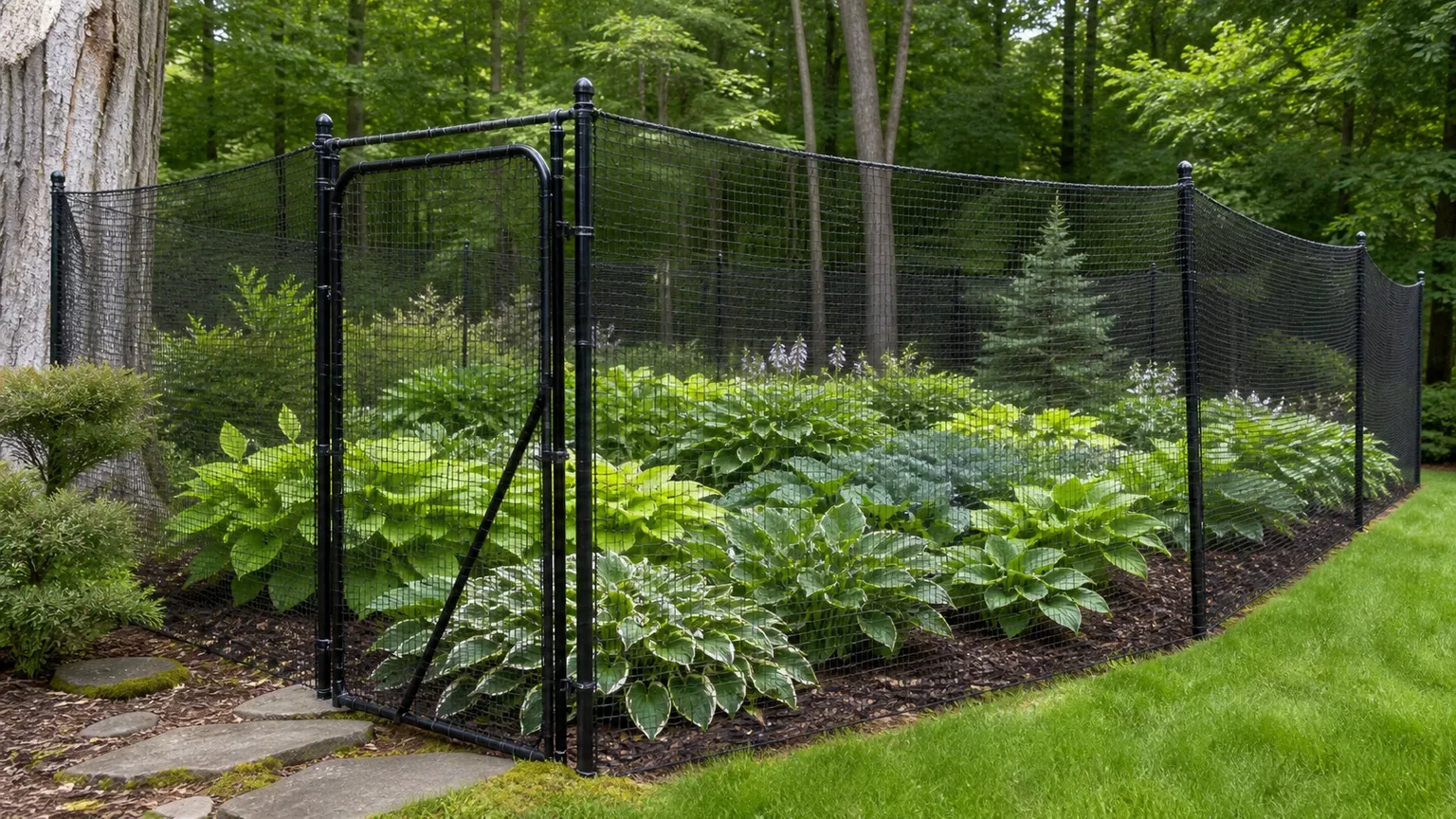
The best deer fence is the one that solves your specific problem without creating a new one. A small vegetable bed may need a simple, short-term enclosure; a high-pressure orchard may call for a tall, continuous barrier; and an electric line may be a poor fit anywhere children or pets play.
Start by deciding whether you need to physically exclude deer or simply discourage them from approaching. Then compare the five main choices—wire, heavy-duty polypropylene mesh, electric fencing, chain-link, and solid privacy fencing—against your deer pressure, site, budget, and willingness to maintain the system. The Ohio State University wildlife guidance emphasizes that even deer-resistant plants are not deer-proof under every condition, and that barriers work best when selected for the local situation rather than treated as a universal fix. Ohio State University wildlife specialist guidance
Start with the job: exclude deer or protect a single plant?
A perimeter fence protects a whole bed, orchard, or yard. It costs more upfront than a plant cage, but it reduces the need to wrap individual shrubs, reapply repellents, or replace damaged seedlings. A smaller barrier can also be easier to make continuous: fewer corners, less total mesh, and one gate that you can close reliably.
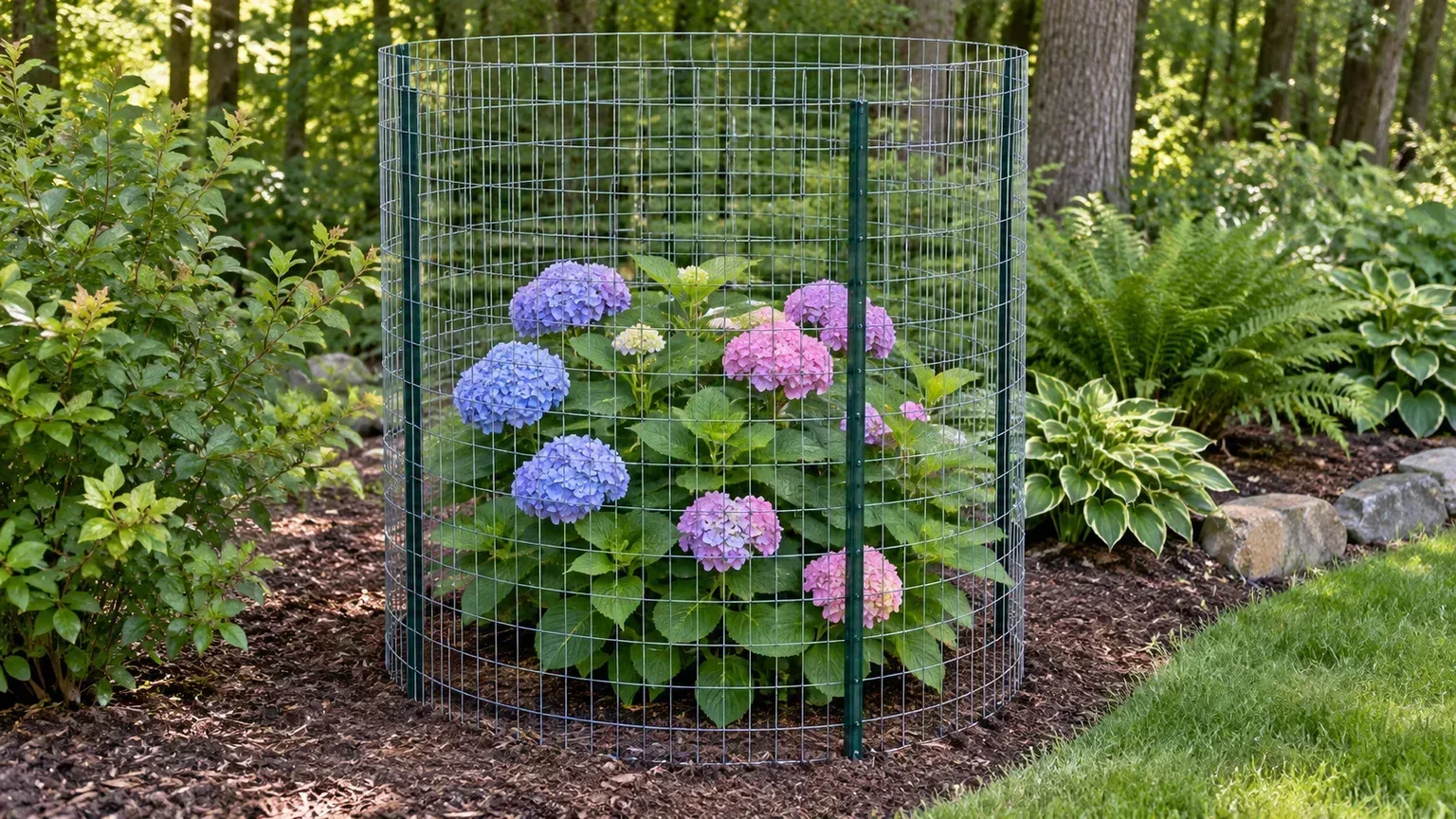
If deer damage is limited to one young tree or a favorite shrub, protect that plant first with a rigid wire cage or secure individual netting. Fine Gardening describes using deer netting over vulnerable shrubs as a focused way to reduce browsing, while Purdue Extension documents exclusion fencing used to protect tree regeneration until plants grow beyond the browse zone. These targeted options make sense when a full boundary fence would be excessive; they are less practical when deer are feeding across an entire garden every night. Fine Gardening’s practical deer-management techniques and Purdue Extension on exclusion fencing for tree regeneration
Five deer fence types at a glance
| Fence type | Best fit | Main advantage | Main limitation |
|---|---|---|---|
| Welded or woven wire | Long-term gardens, orchards, high deer pressure | Strong physical exclusion when tall and well anchored | Heavy, visible, and more demanding to install |
| Heavy-duty polypropylene mesh | Large areas where lower visual impact and lighter material matter | Lower weight and flexible layout | Can sag, abrade, or tear without proper support and inspection |
| Electric fence | Low-to-moderate pressure where a physical wall is impractical | Less visual obstruction and fewer heavy materials | Changes behavior; it does not physically block deer |
| Chain-link | Durable perimeter where conventional fencing is already desired | Strong, familiar, and long-lived | Expensive, visually prominent, and often too short unless designed for deer |
| Solid privacy fence | Smaller yards where privacy and a barrier are both goals | Blocks the view and may reduce a deer’s willingness to jump into a confined space | High cost, visual enclosure, and wood maintenance where applicable |
Think of the table as a starting point, not a performance guarantee. A fence can fail because of an open gate, a sagging lower edge, or a low spot on a slope even when the selected material is strong enough.
1. Welded or woven wire: strong, durable, adaptable
Metal fencing is the straightforward choice when you want an actual barrier that can stay up year-round. Welded wire uses intersecting wires joined at their crossings; woven wire uses horizontal and vertical strands joined in a flexible pattern. Either can be supported by durable posts, with a galvanized or coated finish helping slow corrosion in exposed conditions.

Choose this option for an orchard, vegetable garden, or planting that is worth protecting for many seasons. It resists the kind of stretching and tearing that can defeat lightweight netting, and you can make the lower edge difficult to push through by securing it to the ground or by using a properly designed bottom detail. Purdue Extension’s plastic-mesh publication is a useful reminder that deer exclusion is a system of material, posts, bracing, and ground contact—not just a roll of fence. Purdue Extension’s deer-exclusion fence resources
The trade-offs are weight and installation effort. A long run needs posts that can hold tension, corners that do not pull over, and gates with hardware matched to their size. Metal also remains visible unless you choose a dark coating or soften it with planting; do not hide a weak or sagging fence behind shrubs and assume it still works.
2. Heavy-duty polypropylene mesh: lightweight and lower-cost
Deer mesh can protect a surprisingly large area without the weight or visual mass of heavy wire. The useful product is purpose-made, UV-stabilized exclusion mesh, not flimsy bird netting or a temporary trellis net that can stretch, snag, or tear. Compare the manufacturer’s strength rating, mesh opening, UV warranty, post recommendations, and installation instructions rather than relying on the word “deer” on the package.
Mesh needs structure. Stretch it between well-set posts, brace corners, and use tensioning wire or another manufacturer-approved support where the product calls for it. A practitioner account in A Way to Garden describes how a tall polypropylene fence gave years of useful control but needed horizontal wire reinforcement and a pinned ground edge; that illustrates the central trade-off: flexible mesh is easier to handle, but it does not hold its shape by itself. A Way to Garden’s deer-fencing experience
Use mesh when visibility, material weight, and budget matter more than a finished architectural look. Avoid it where falling limbs, frequent machinery traffic, or rough handling are likely to damage it unless you can inspect and repair the run. Flagging can make a nearly invisible fence easier for deer and people to see, but choose a safe, durable marker and do not leave loose strips that can entangle wildlife.
3. Electric fencing: a behavioral deterrent, not an exclusion wall
An electric fence delivers a brief pulse when an animal touches an energized wire. It is intended to teach deer to avoid the boundary; it does not create a physical wall that will stop a deer from entering when the system is off, poorly grounded, or shorted by vegetation. Ohio State’s wildlife guidance likewise distinguishes electric fencing, which can modify behavior, from a tall physical barrier that excludes deer.
An electric system can make sense around a working garden, nursery, or crop where a less visible fence is valuable and someone can keep it operational. The trade is ongoing attention: maintain the energizer and grounding setup, keep grass and branches from contacting conductors, and test the line as directed by the manufacturer. If you cannot check it routinely, assume that an electric fence may silently stop working at the exact time you need it.
Safety and local permission come first. Use equipment designed specifically to energize a fence and follow its installation and warning instructions; never improvise a connection to household wiring. Check local code and property rules before installation, and avoid an exposed energized line where children, visitors, pets, or workers can encounter it. If those conditions are hard to control, choose a non-electric physical barrier or protect a smaller area instead.
4. Chain-link: long-lasting but hard to disguise
Chain-link is familiar, durable, and useful when you need a conventional boundary as well as deer protection. The metal mesh is difficult for a deer to push through, but a typical yard fence may be too short to prevent jumping. If deer exclusion is the goal, specify the intended height and complete gate system before comparing chain-link bids; do not assume that any ordinary residential installation will keep deer out.
This fence works best where you value a long service life and accept the industrial look, or where the property already has suitable posts and a fence contractor can design a taller section. Its transparency can make the garden visible from outside, which may draw a deer toward plants it wants. Climbing plants or screening can soften the look, but make sure growth does not hide damage or complicate inspection.
Chain-link usually requires more permanent foundations and skilled installation than mesh. It can be a sensible long-term investment when the enclosure also handles pets, access control, or property division, but it is often excessive for one raised bed or a few vulnerable shrubs.
5. Solid privacy fence: height plus blocked sight lines
A solid fence combines a physical barrier with an important visual effect: deer cannot see the landing area or the food on the other side. That can make a deer less willing to jump into a small enclosed space. Ohio State’s wildlife specialist notes that a lower stockade or mesh fence may work around a small, confined garden under some conditions, but also describes an eight-foot-or-higher physical fence as the stronger choice where deer pressure is high. A shorter privacy fence should therefore be a site-specific design choice, not a guaranteed deer-proof shortcut.
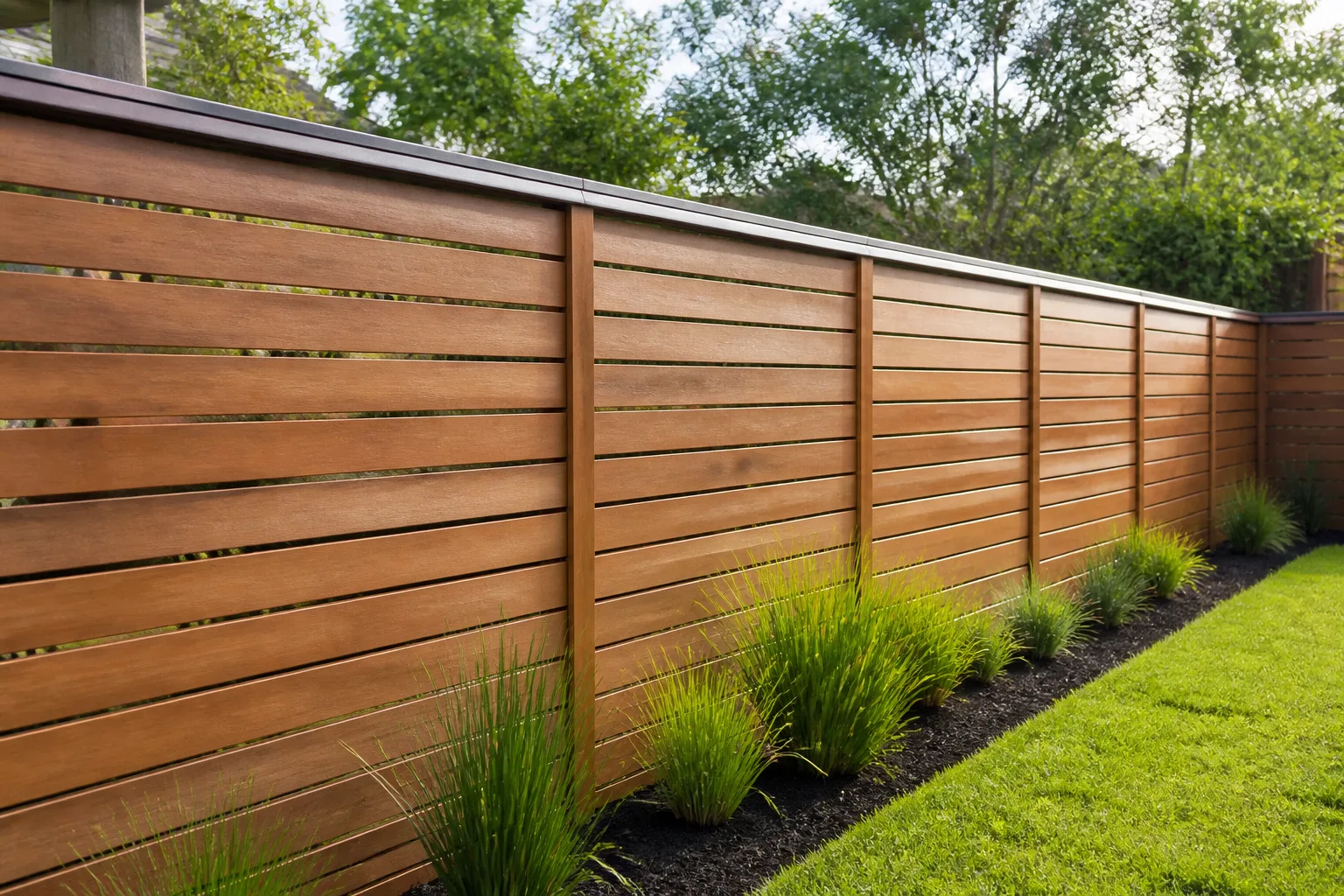
Privacy fencing fits a small yard where blocking views is desirable anyway. It is typically the most visually solid and expensive option, and wood needs periodic inspection for rot, loose boards, and post movement. A high, opaque wall can also change how a yard feels, shade nearby plants, affect views at driveways, or raise neighbor concerns.
Before choosing it, look at the whole route: a deer may enter through a side gate, a lower section on a grade, or an opening between the fence and a wall. A solid panel does not compensate for a weak gate or a line that ends before the garden does.
How tall should a deer fence be?
For a conventional vertical barrier, eight feet is a common starting point for serious deer exclusion. Ohio State’s guidance describes an eight-foot-or-higher woven-wire fence or reinforced heavy-duty polypropylene mesh for areas of high pressure. That is not a universal biological maximum or a guarantee: the deer species, site, terrain, incentive to reach the plants, fence visibility, and maintenance all matter.
Measure the barrier from the deer’s approach side, not only from the garden side. A fence that looks eight feet tall from inside can be effectively shorter where the ground rises, a retaining wall or snowbank provides a launch point, or a tree limb offers access from above. On uneven ground, step or contour the fence according to the product and installer’s guidance so the lower edge does not float above the soil.
Height is only one part of the design. A deer is less likely to clear a barrier it cannot see through or one that appears to enclose a small landing area, but those behavioral effects vary; do not use them to justify a short fence around a large, highly attractive garden with heavy deer pressure.
When a shorter design can work
For a compact bed near the house, two parallel low fences can create a wide gap that deer are reluctant to cross. A Way to Garden describes one layout with two four-foot fences spaced about five feet apart. Treat that as a reported design to evaluate—not a standard tested for every site. It needs space, parallel alignment, a way to get equipment between the rows, and a plan for what happens at gates and ends.
A short barrier around a small, confined garden can also deter deer that hesitate to jump where they cannot see a safe landing. If deer are already jumping into the enclosure, or they browse plants along the outside edge, upgrade to a taller continuous physical barrier rather than adding more tricks to an undersized one. A Way to Garden’s examples of layered fencing
The details that decide whether a fence works
Deer tend to test the easiest route. Walk the entire perimeter as if you were looking for a way in: note low spots, paths, gates, corners that are under tension, spaces below a panel, and places where brush or snow changes the effective height. Make sure the enclosure surrounds the plants you intend to protect; fencing only three sides leaves the remaining approach open.
Plan the fence layout before you buy materials. Mark each turn, gate, post, and uneven section; calculate the total run and height from the approach side; then compare the complete system cost, including braces, fasteners, hinges, latches, and repair materials. A cheaper roll is not a bargain if it needs more support than your plan includes.
Close the lower edge without creating hazards
A gap at ground level can defeat an otherwise tall fence, especially when the soil dips, animals push beneath a loose panel, or a gate does not meet the ground. Keep mesh at the intended tension, secure its lower edge as the manufacturer specifies, and recheck it after frost heave, heavy rain, mowing, or soil work. If you use stakes, choose a method that will remain stable without creating sharp protrusions in paths or work areas.
Do not lay loose, nearly invisible netting where wildlife can run into it or where people may trip. Keep the barrier visible to deer and garden workers, inspect it frequently, and repair snags promptly. Fencing should reduce plant damage without turning the garden edge into an entanglement or trip hazard.
Treat every gate, corner, and slope as a weak point
The gate is part of the fence, not an afterthought. Match its height and stiffness to the adjoining panels, use a latch that closes positively, and check whether the bottom edge leaves a gap when the ground slopes. If people carry tools or wheelbarrows through often, choose an opening that is easy to use so it is less likely to be left ajar.
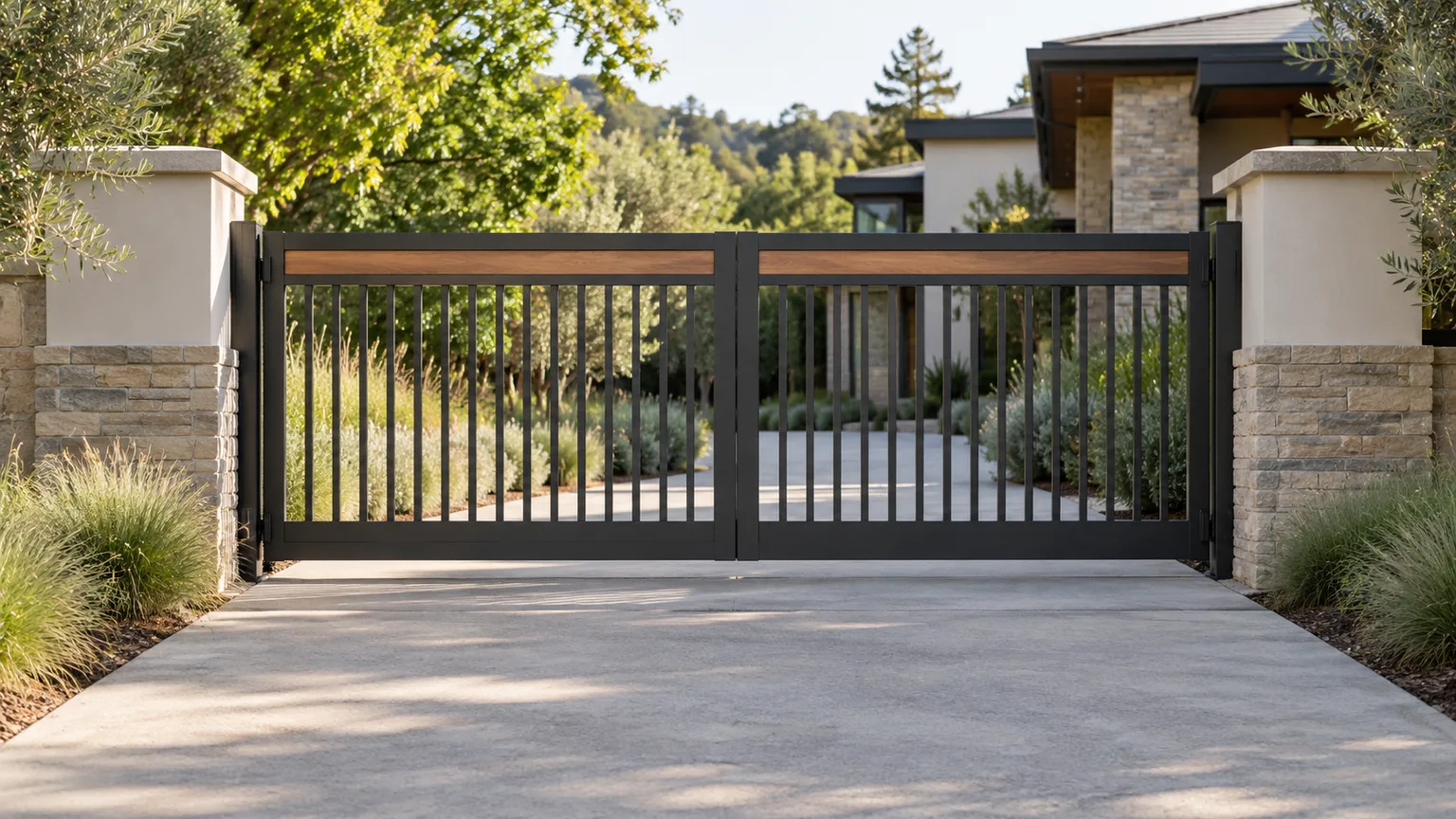
Corners and long runs need bracing appropriate to the material because tension pulls posts inward. At slopes, walk the line from both sides and look for a low section or a triangular opening under a stepped panel. Gates, corners, and grade changes deserve the same attention as the middle of a fence run because that is where a continuous barrier is easiest to break.
Safe installation and local rules
Before digging, confirm the property line and identify easements, drainage routes, underground utilities, and access that must remain open. Fence height limits, setback rules, permit requirements, historic-district restrictions, and homeowners’ association rules vary by location; check with the authority that applies to your property before ordering material. If the fence borders a road, shared path, waterway, or public land, ask how visibility, access, and wildlife movement should be handled.
Use protective gear and stable ladders when handling tall panels, posts, tension wire, and heavy gates; ask for help with long or unwieldy rolls rather than trying to control them in wind. For an electric system, follow the energizer manufacturer’s installation details and local rules, post warning signs where required, and keep the wires away from routine child and pet paths. If the site is near a public route or you are unsure about code, have a qualified fence installer or local inspector review the plan before energizing it.
Wildlife access is another design choice. A fence intended to exclude deer may also block other animals or separate young wildlife from adults, depending on mesh size and layout. Ask a local wildlife agency or Cooperative Extension office about fencing that fits your region and property; do not add small-mesh openings or bottom gaps without understanding which species they will admit or exclude.
Choose by site, budget, and maintenance
For a small bed with high-value vegetables, begin with a compact, continuous wire or heavy-duty mesh enclosure and a gate you will actually close. If the goal is to spare one shrub, a rigid cage or plant net may be simpler. For a large garden with regular pressure, compare permanent woven wire with supported polypropylene mesh; if appearance and privacy matter too, get a quote for a deer-height solid fence and include the effect on shade and views.
For a low-to-moderate pressure site where a visible barrier would spoil the space, electric fencing may be worth considering only if local rules allow it and a responsible adult can maintain and test it. In a public-facing yard or play area, the safety and access concerns may outweigh the visual advantage. Choose chain-link if you also need a conventional, durable property boundary and can build it at a height appropriate for deer.
Compare installed and maintained cost, not just the price per foot of material. Include posts, corner braces, gates, terrain preparation, installation labor, energizer and testing needs, repairs, and how long you expect the barrier to stay in place. A temporary garden enclosure can be the lower-cost choice even if its material is less durable; a permanent orchard fence may justify a larger first investment because it protects years of plant growth.
Inspect the barrier and diagnose failures
Walk the perimeter at the start of the growing season, after storms, after snow or frost, and whenever you see new browse damage. Look for a dropped top line, torn mesh, rusted or loose fasteners, leaning posts, a gate left unlatched, and gaps where soil or vegetation changed. Keep vines and branches from loading the fence or hiding damage.
If deer get inside, record where you first found tracks, droppings, or browse and check that section from both sides. A hoof-sized gap suggests a ground-edge or gate problem; bent posts or stretched material point to a strength or bracing issue; intact fence with entry near a grade change may mean the effective height is lower than you thought. If the fence is physically intact and tall, look for a gate left open, a climbable edge, or a second access route before buying more material.
Electric systems need their own routine: verify energizer operation and grounding as the instructions specify, and clear vegetation that can reduce performance. Do not assume a fence is still working because a light is on or because it worked last week; check the actual system using the manufacturer’s recommended test method.
When fencing is not the right first step
Fencing may be the wrong choice when the property is rented, the boundary is long and expensive, local rules prohibit the needed height, or wildlife movement across the site is a priority. In those situations, protect the plants most at risk with individual cages, plant netting that is visible and frequently inspected, or temporary barriers around a seasonal bed. Combine targeted protection with locally appropriate repellents or less-preferred plants only as supporting tactics; none is a substitute for exclusion under every level of deer pressure.
The useful question is not whether one product is “deer-proof.” It is how much damage you can tolerate, which plants you need to protect, and what maintenance you will keep up with. A smaller, well-maintained enclosure is often more helpful than a property-wide fence that exceeds the budget or leaves a gate open every day.
Conclusion
Choose welded or woven wire when you need a sturdy physical barrier, supported polypropylene mesh when lower weight and visibility matter, and electric fencing only when behavior modification and regular upkeep fit the site. Chain-link can be durable when it also serves as a property fence, while a solid privacy fence adds visual screening but costs more and changes the character of the yard.
For conventional deer exclusion, use eight feet as a planning baseline in high-pressure areas, then adapt it to local deer, terrain, layout, and rules. Close the ground edge, build gates and corners into the plan, and inspect the entire run after installation. Those details—not the label on the roll—determine whether your garden is protected.



