Can You Compost Bread? How to Add It Safely
Yes, you can compost bread. Learn how to prep plain or moldy loaves, cover scraps with browns, choose a bin, and avoid odors, rodents, and soggy clumps.
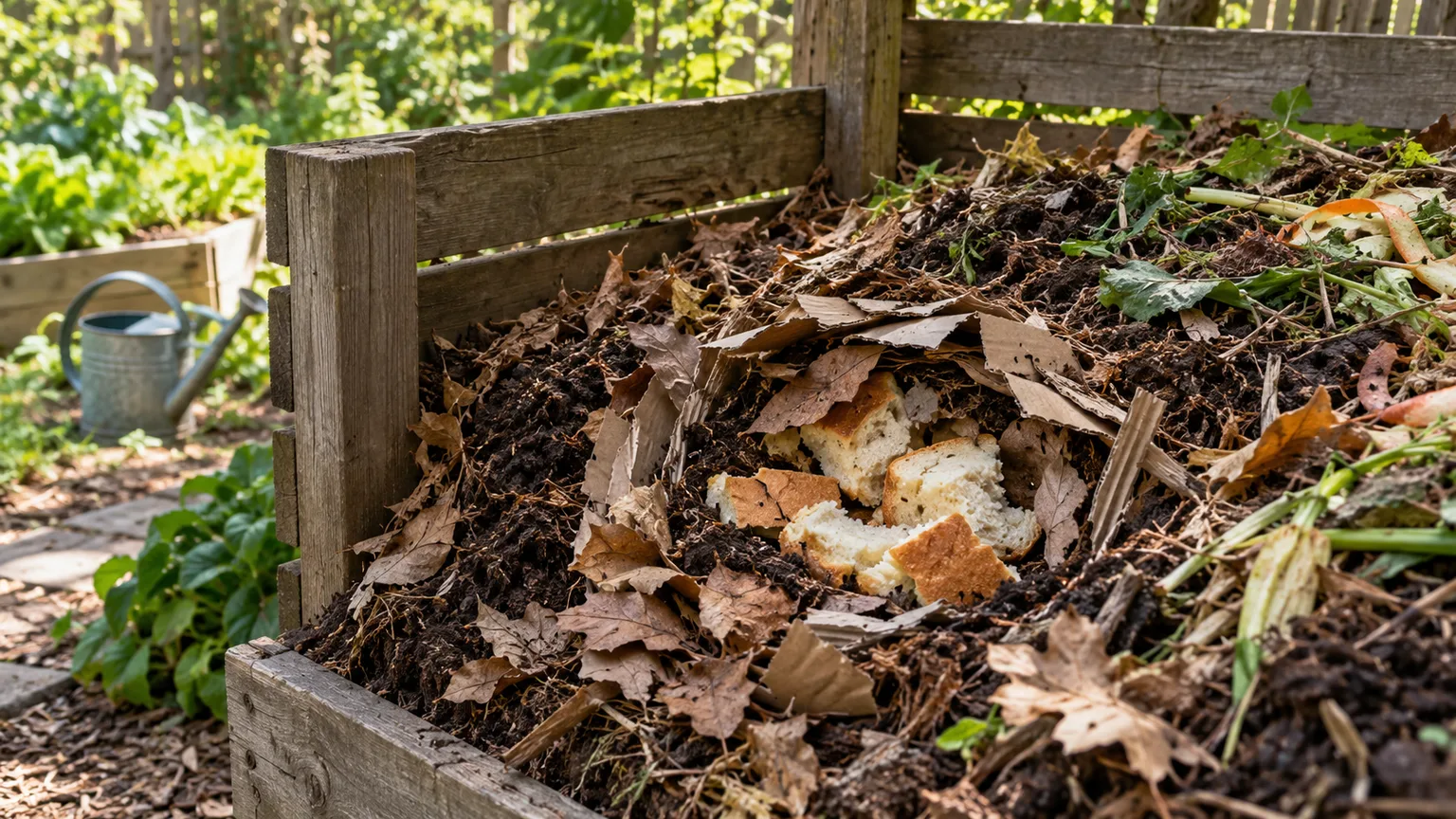
Yes, you can compost plain bread, stale bread, and ordinary moldy bread. Tear or cut it into smaller pieces, put it inside an active compost pile or bin, and cover it completely with leaves, shredded cardboard, or finished compost. The main concern is access: bread is edible, so an exposed piece can attract rodents, birds, insects, or neighborhood pets before it breaks down.
The right choice depends on the system you use. A secure lidded bin, a well-managed pile, a worm bin, and a city food-scrap program each handle bread differently. Tennessee’s residential composting guidance explicitly lists stale bread among acceptable home-compost ingredients and advises covering food waste with leaves, weeds, or paper; your municipality may have a different collection list, so check it before putting bread in a curbside cart. (Tennessee Department of Environment and Conservation)
The short answer: yes, with a few practical conditions
Bread is made from plant ingredients and will decompose in a compost system. It does not need to be fresh, toasted, or moldy first. Stale crusts, sandwich bread, rolls, crumbs, and plain baked goods can all be treated as food scraps when the recipe is mostly grains and the pieces are mixed into a functioning compost environment.
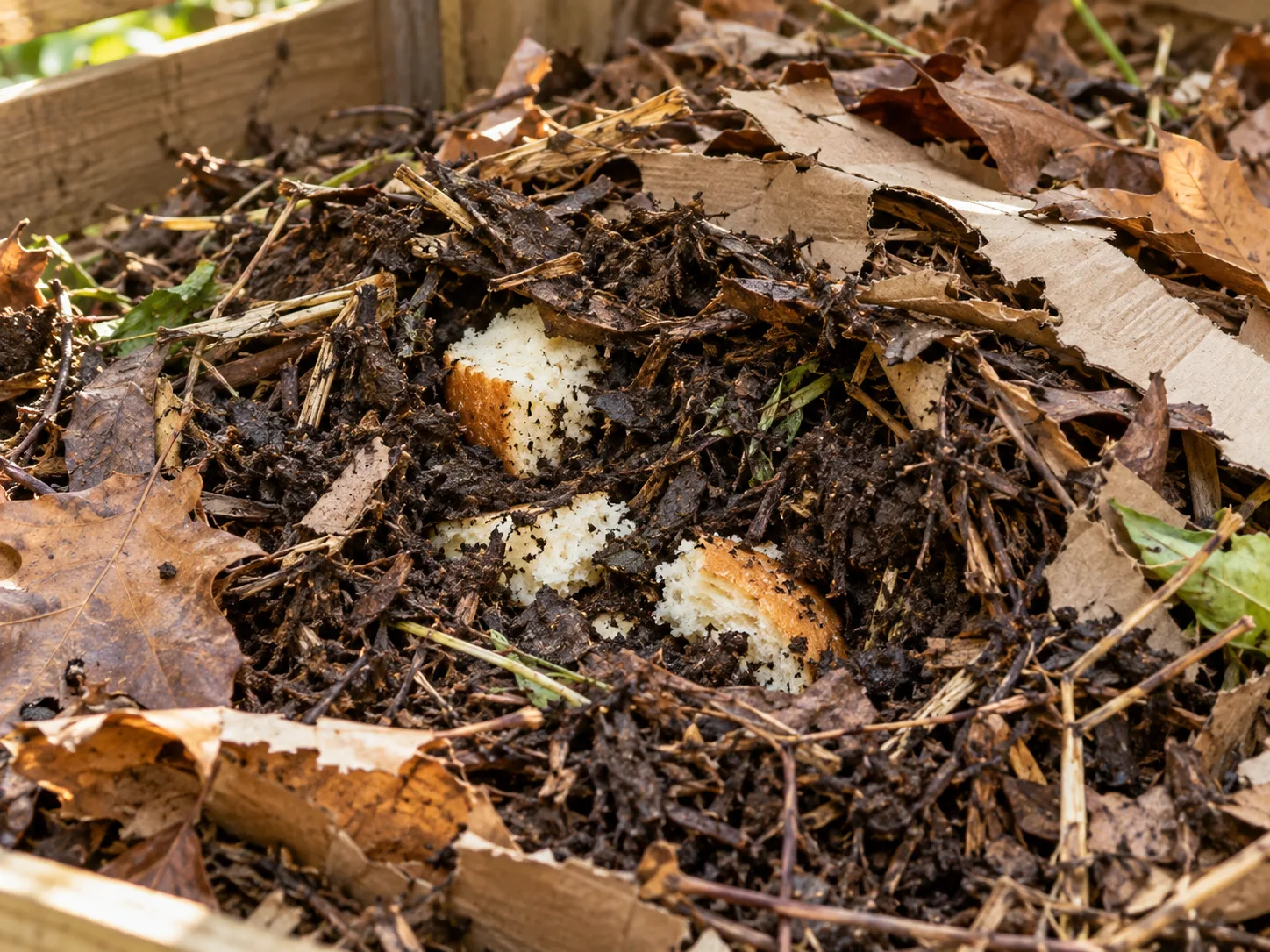
The qualification is that “compostable” does not mean “safe to scatter on top of a pile.” Bread can form a damp, dense layer when it gets wet, and visible food is easy for animals to find. Keep the serving modest, break up thick pieces, bury them in the active material, and cover the spot so there is no bread left on the surface.
If your compost is open to wildlife or you already have rats visiting, the safest answer may be to wait until you can secure the bin or use an accepted municipal food-scrap service. Composting can divert food from the trash, but it is not worth creating a repeat feeding site beside a house. Choose a method that fits your property and local rules.
Why your composting method matters
Composting is the managed decomposition of organic material by microorganisms and other decomposers. A successful pile needs a workable mix of food and yard materials, moisture, and air. Bread itself is not a special hazard to microbes; the challenge is managing an edible scrap in a way that does not leave concentrated, wet food exposed or let a compacted layer turn sour.
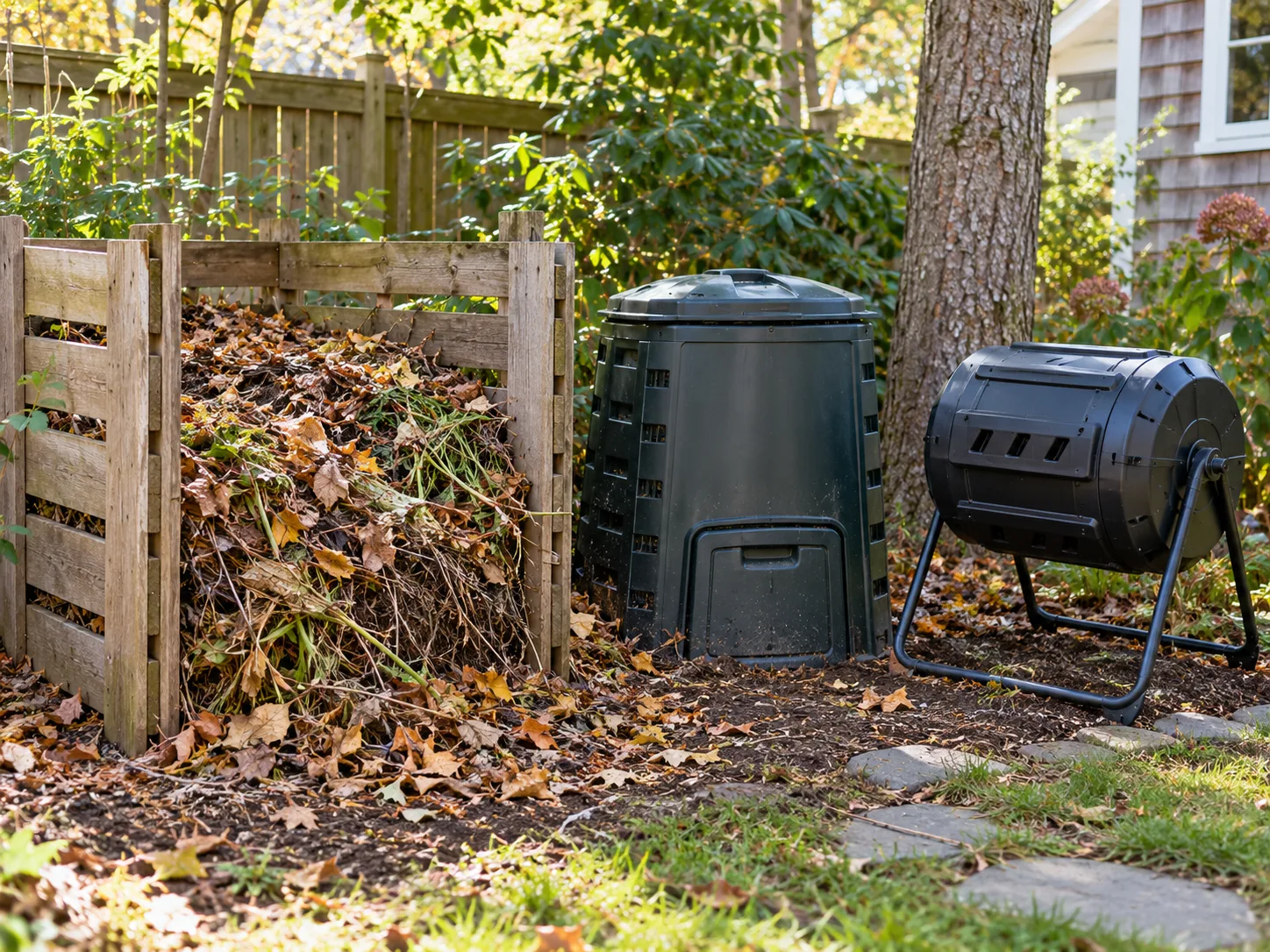
An open pile gives you room to mix bread into a large mass of leaves and other materials, but it also leaves a route for animals to dig. A closed, well-fitted bin reduces access, while a tumbler keeps scraps contained and makes mixing convenient.
A worm bin can process small food portions indoors, but its limited volume makes overfeeding easier. “Compost bread” is therefore a yes; “put a whole loaf anywhere” is not a useful rule.
Home piles and curbside programs follow different rules
A home composter can decide how to balance and cover its own pile. A municipal organics program has to follow its collection and processing setup, which may accept a broad range of food scraps or restrict items that complicate processing. Even if a city program takes bread, it may ask you to remove plastic packaging or use a specific liner; even if a backyard gardener can compost it, a local cart may exclude it.
Check the current accepted-items list for your town or hauler, especially for bread with cheese, meat, frosting, or oil. If its instructions say “all food scraps,” that may include these items, but don’t infer that from the word “compostable” on a wrapper. A private label or compostable package is not automatically accepted in home compost or at every commercial facility.
Is bread a green or a brown?
“Greens” and “browns” are practical composting terms, not a color test. They describe materials with different nitrogen and carbon levels and often different moisture and texture.
Extension guides commonly call moist kitchen scraps greens and dry leaves or twigs browns, but bread is a processed grain food with a recipe and moisture content that vary; gardeners also disagree about how to classify it. A useful article from Gardening Know How notes that the classification is debated while bread is often placed among greens because of its nitrogen content. (Gardening Know How)
For a household pile, this label is less useful than looking at the mix you already have. If the pile is soggy, compacted, or smells sour, add dry, bulky browns and mix in air.
If it is dry and barely decomposing, moisten the pile and combine bread with other kitchen scraps rather than burying it in a thick layer of leaves. Tennessee’s state guide describes greens, browns, water, and air as the basic ingredients, and recommends accumulating a substantial supply of brown leaves or other high-carbon material before adding kitchen waste. (Tennessee Department of Environment and Conservation)
Balance the whole pile instead of chasing a bread ratio
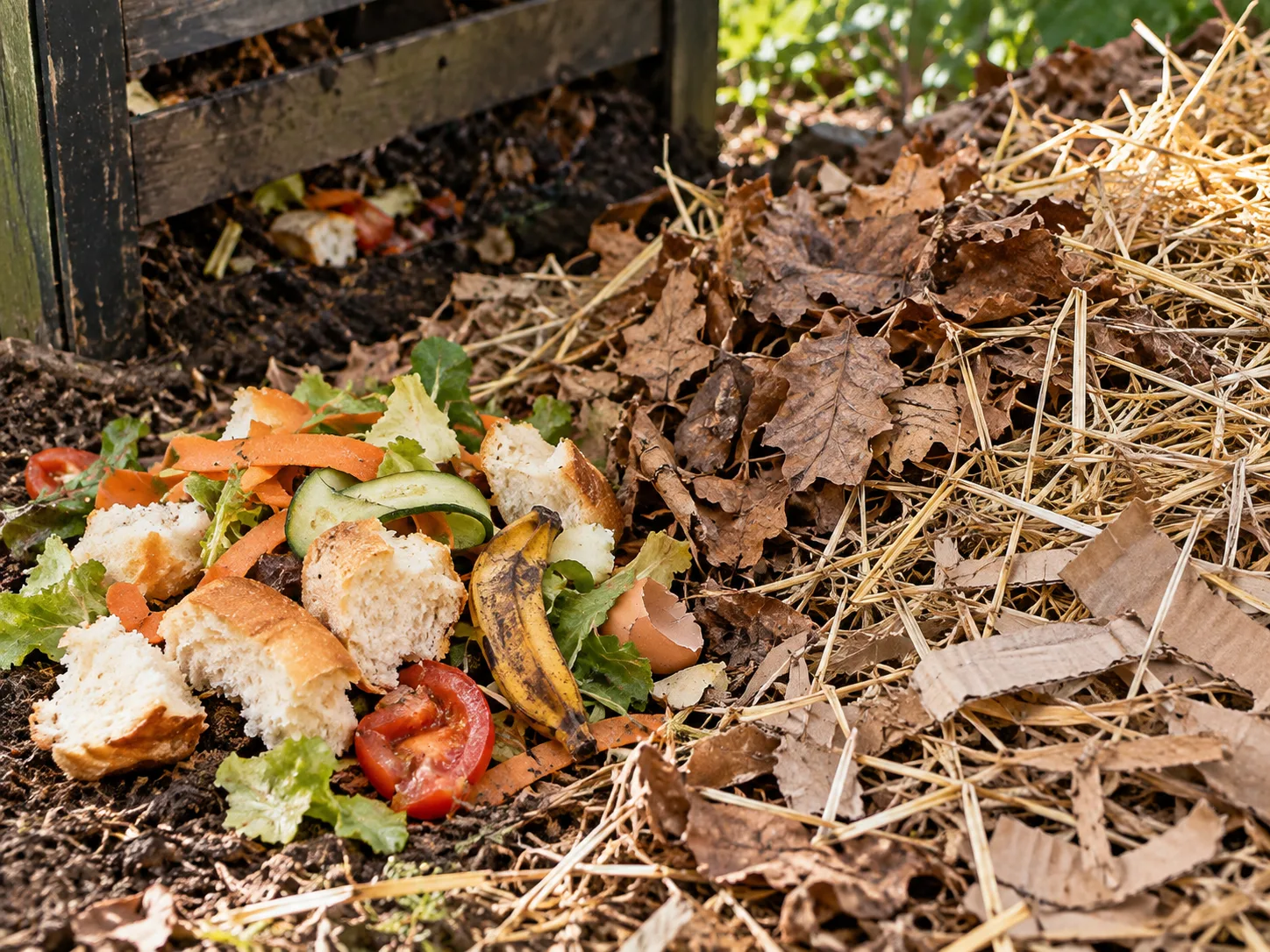
You do not need to measure a fixed amount of dry leaves for every slice of bread. The familiar “three parts browns to one part greens” is a starting point for a whole compost mix, not a precise formula for each food scrap. A handful of breadcrumbs in a leaf-rich pile barely changes its balance; several loaves added at once may create a dense, food-heavy pocket that needs more dry structure around it.
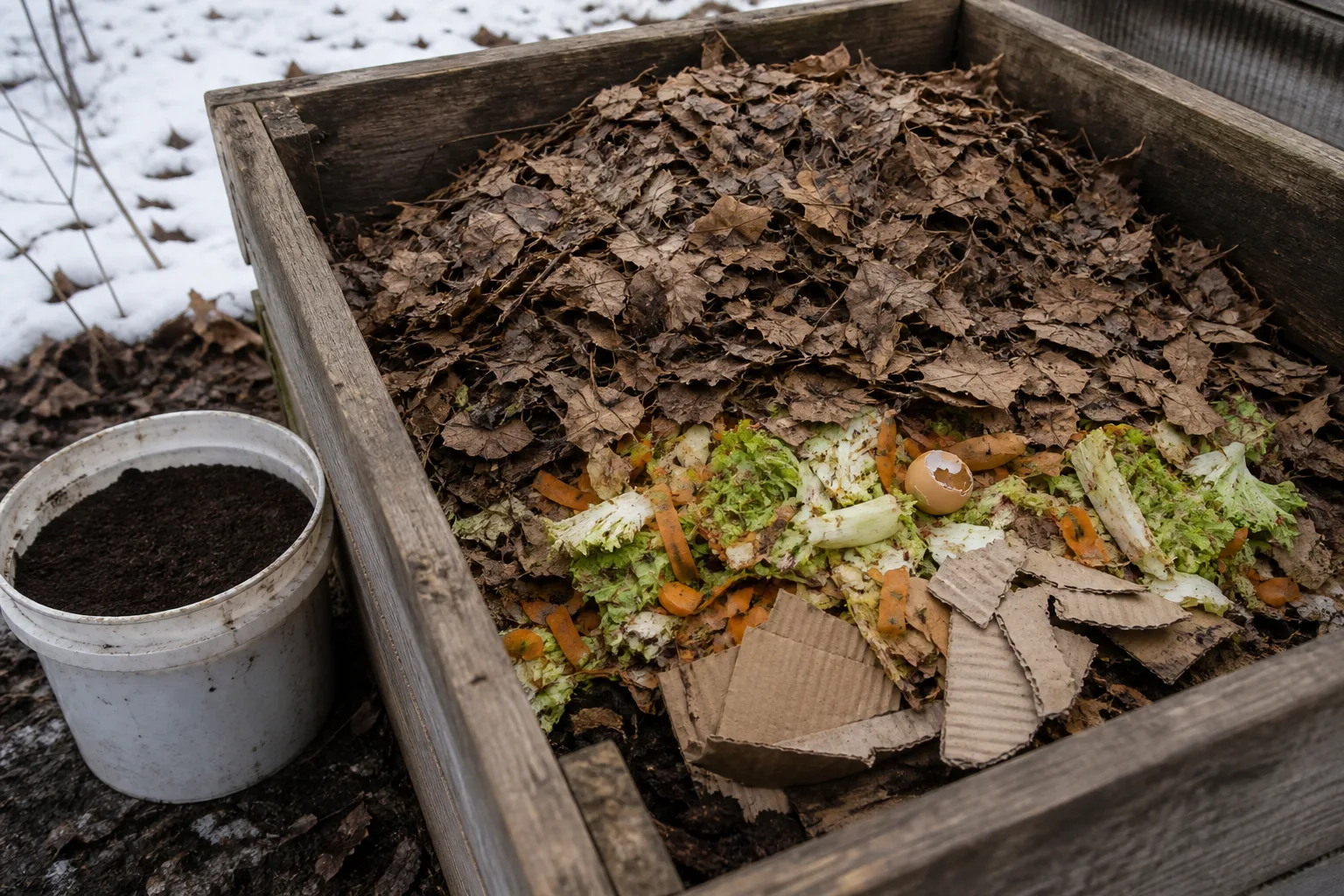
Use leaves, shredded plain cardboard, straw, or another dry carbon-rich material to separate pieces and absorb excess moisture. Add enough to hide the bread, then use the pile’s condition as feedback.
If the mixture mats together or smells unpleasant, add more coarse browns and turn it; if it remains fluffy but dry, add a little water. Bread’s color alone cannot tell you what the pile needs.
Which bread can go in the compost?
Plain white, wheat, rye, sourdough, seeded bread, bagels, rolls, and stale crusts can be composted in most home systems. Moldy bread can also go in an outdoor pile; mold is part of ordinary decomposition, not a reason to throw the food into the trash by default.
There is no gardening advantage to waiting for mold, though. If bread is still fresh and safe to eat, freezing or using it first may be a better way to avoid waste.
Remove the bag, plastic clips, foil, stickers, twist ties, and any non-compostable wrapping. Don’t grind wrappers into the pile, since they can persist as contamination and may be difficult to screen out of finished compost. If you are unsure whether paper packaging has a plastic coating, keep it out of the home bin and follow your local program’s packaging rules.
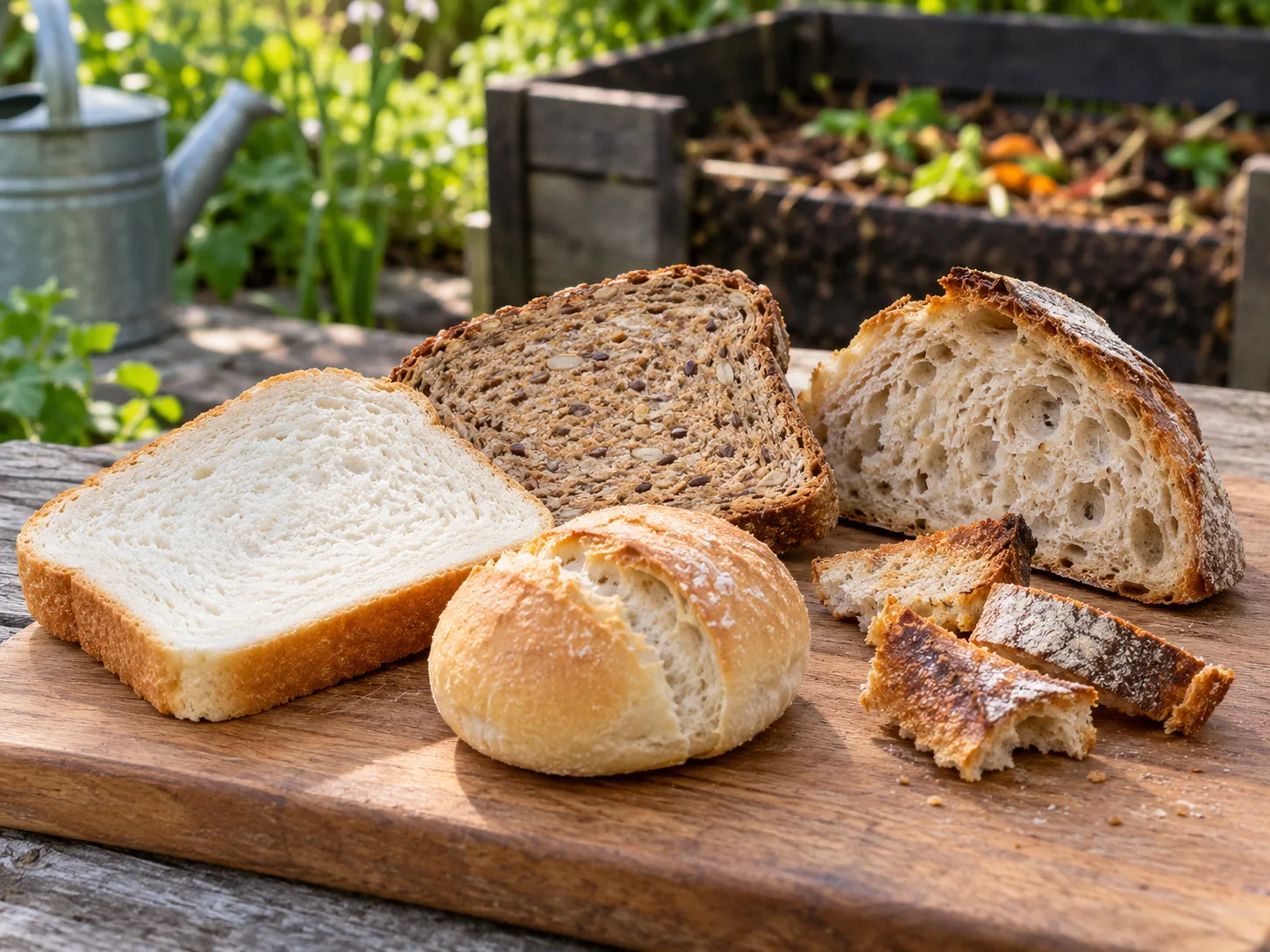
Plain loaves, mold, seeds, and toppings
Seeds and grains in a loaf are not a reason to exclude it. A few seeds might remain intact or sprout under some conditions, but the bread can still decompose; if a sprout appears in the finished pile, pull it out or let it decompose in the next cycle. This is an occasional nuisance, not a reason to treat every seeded loaf as unsuitable.
Treat heavily topped or filled bread differently from a plain slice. Bread with cheese, meat, butter, oily pesto, thick frosting, or creamy filling can smell stronger and draw animals, while fats and dairy may break down more slowly in a cool backyard pile.
Scrape off a substantial topping when practical, then compost the plain bread portion; put the topping in the trash unless your local food-scrap program specifically accepts it. A trace of ordinary seasoning is not the same as a thick layer of grease or cheese.
If the loaf has extensive mold, handle it without shaking or sniffing it, particularly if someone in the household has mold sensitivity. Place it gently into the composting spot and cover it; there is no need to crumble visibly moldy slices indoors. Routine cleanup after handling food scraps is sensible, and compost tools should not be stored where children or pets can reach them.
How to add bread to a backyard pile
A few simple steps make bread easier to manage. The goal is not to force the pile to heat up on demand; it is to distribute the food, maintain structure and moisture, and make the bread hard to find. Compost Magazine’s practical bread guide recommends chopping, burying, covering with dry material, and keeping the pile aerated, while also noting that a cool pile can compost bread when it is managed carefully. (Compost Magazine)
A simple feeding routine that keeps scraps covered
- Remove packaging and rich toppings. Take out plastic, foil, labels, meat, and substantial dairy or oily coatings. Keep only the bread or crumbs you intend to compost.
- Break large pieces into bite-size chunks. Roughly one-inch pieces are easy to scatter through a compost pocket. Crumbs can go in as they are, but avoid dumping them in a single thick layer.
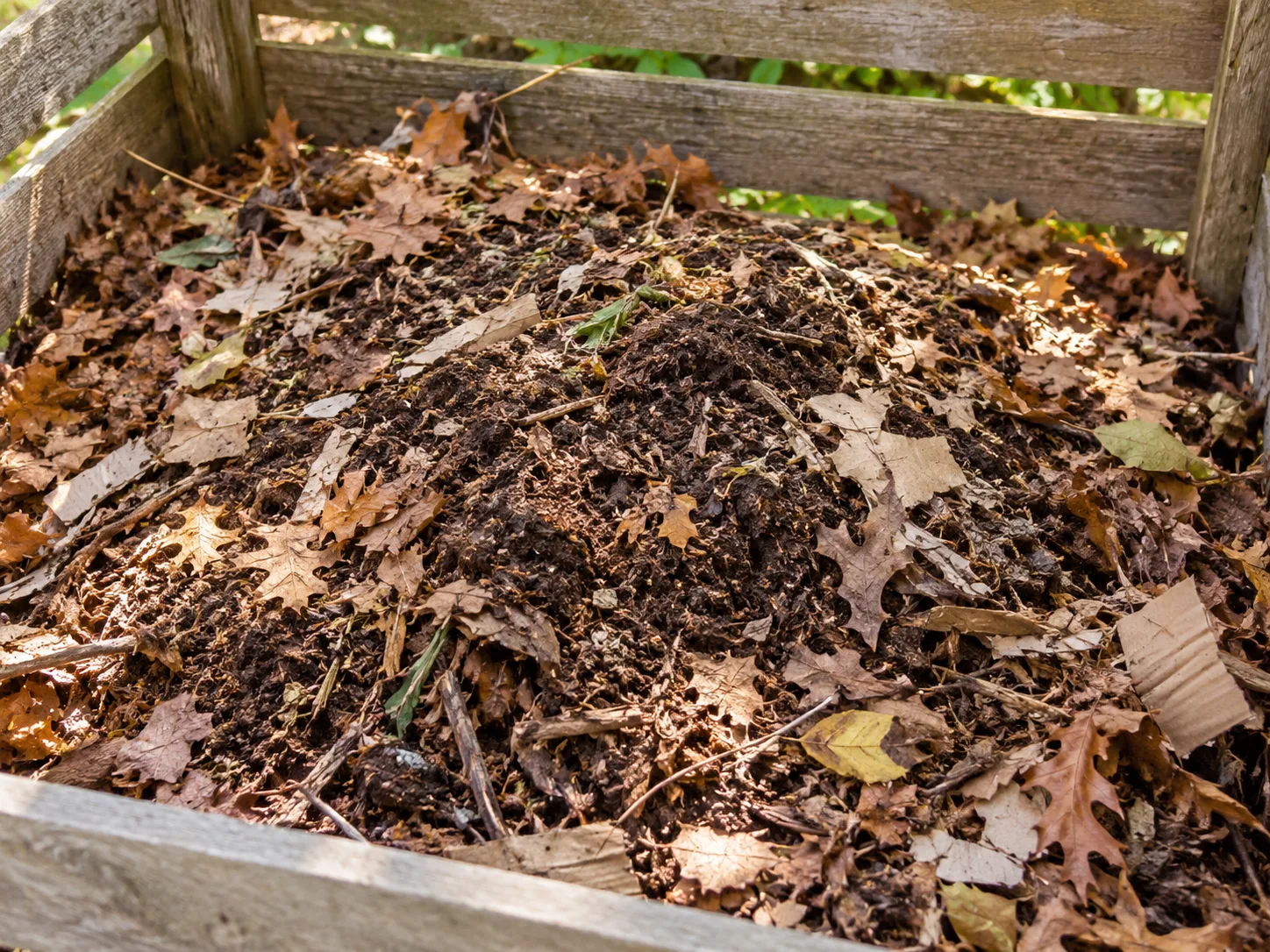
- Open a pocket in the active pile. Pull back the top layer of material and place the bread near the middle of the compost mass, where it is less visible and surrounded by decomposing material. If the pile is small or cold, the middle is not necessarily hot; the reason to bury it is to cover and mix it, not to promise a particular temperature.
- Mix in dry browns. Add a handful or two of shredded leaves, straw, or plain cardboard around and over the bread. The exact amount depends on how wet and compact the pile is.
- Close the pocket and check the surface. Return the surrounding compost and cover the opening with several inches of finished compost, soil, or dry leaves. Nothing edible should remain visible or easy to pull out.
If you add kitchen scraps regularly, feed bread with other food waste rather than making a separate bread layer. Keep a reserve of dry leaves or shredded cardboard beside the bin so you can cover each feeding promptly. A lidded kitchen caddy is convenient, but empty it before scraps become wet and odorous; freezing scraps in a sealed container is another option when trips to the pile are infrequent.
Using a lidded bin or tumbler
A secure container is helpful when wildlife can access an open heap. Choose a bin with a close-fitting lid and intact sides; for persistent rodents, check seams, base openings, and vents, not just the lid.
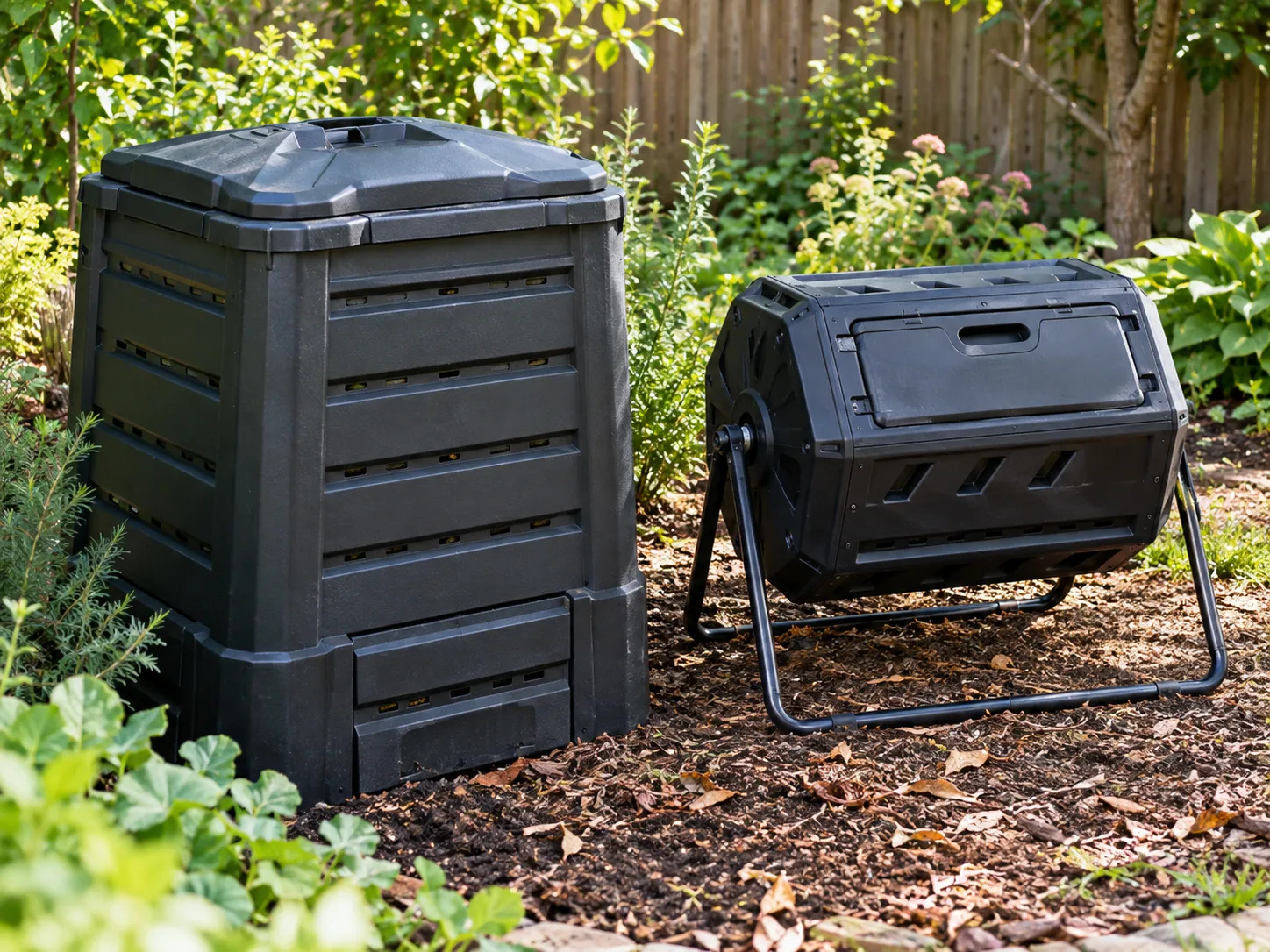
If you use mesh for ventilation or a base barrier, use sturdy, small-opening hardware cloth and attach it firmly so animals cannot push it aside. A container is only as secure as its openings.
A tumbler can mix food scraps with dry material without asking you to turn a large pile by hand. Add bread with other scraps and dry browns, close the door, and rotate according to the tumbler’s instructions.
Small household tumblers do not automatically become hot composters: temperature depends on the amount and mix of material, moisture, aeration, and weather. Don’t assume a closed drum will sanitize the contents or speed every loaf to finished compost on a fixed schedule.
Avoid filling a tumbler with a large amount of bread at once. A sticky mass can clump against the drum and reduce air movement, especially if the rest of the mix is wet. If it begins to smell or turn into a paste, add dry leaves or shredded cardboard and mix until the material loosens; leave enough space for the contents to tumble.
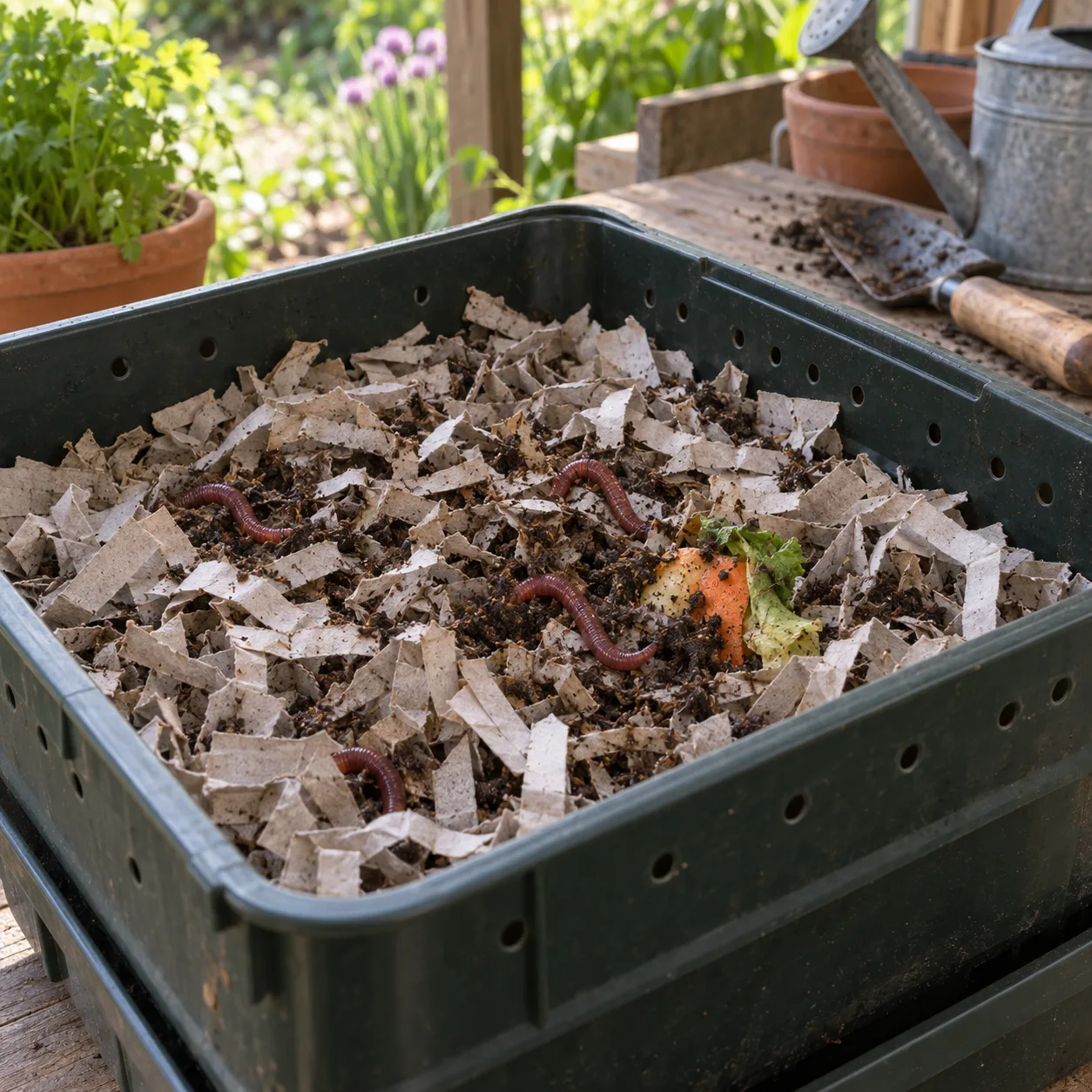
Feeding bread to compost worms
Compost worms can eat small amounts of bread. Virginia Cooperative Extension’s Roanoke County guidance lists bread among suitable worm-bin foods and advises feeding chopped scraps into a hole in the bedding, then covering them completely to reduce fruit flies. It also says to avoid citrus, meat, fats and oils, dairy, and pet waste in a worm bin. (Virginia Cooperative Extension, Roanoke County)
For a new or small worm bin, start with a small piece of bread mixed with other foods, not a whole loaf. Dig a pocket, bury the food under moist bedding, and cover the surface again.
Wait until the prior feeding is mostly gone before adding more in that spot. If scraps remain uneaten, smell fermented, or draw flies, pause feeding and add dry shredded cardboard; the worms need time and a balanced, aerated bedding environment.
Bread is not a complete diet for worms. A worm bin also needs damp bedding and a range of suitable scraps, and it can be overloaded by foods that disappear quickly in a larger pile. Use bread as one occasional feed, keep the bin’s lid and ventilation in good condition, and follow the bedding and moisture needs of the worm system you own.
When trench composting makes sense
If you have no compost bin but have an appropriate garden space, burying a small amount of bread can be an option. Put it in a planting area that is not being used immediately, cover it fully with soil, and wait for the material to break down before disturbing that spot. Keep the bread well below the surface and avoid leaving crumbs or a loose soil mound that can be pawed open.
Trenching is not a guaranteed rat-proof solution. Rodents can dig, and fresh food buried shallowly may still be found.
Do not bury scraps near foundations, utility lines, tree roots, or a site where standing water is common; check local rules and utility-marking requirements before digging. If animals already visit the garden, use a secure compost container or an approved collection program instead of relying on a hole in the ground.
Fixing odors, pests, and slow breakdown
Bread problems usually point to a handling or pile-balance issue. A healthy compost pile smells earthy; a strong sour, rancid, or rotten odor suggests the food pocket may be too wet, compacted, or short on air. A visible chunk of bread is a sign it needs more cover or more time, not proof that bread cannot compost.
Match the fix to what you see
If you see rodents digging, remove any exposed food and secure the container. Add a fitted lid, repair gaps at the base, and avoid feeding bread until the pile is inaccessible. Covering helps hide and mix scraps, but it cannot promise that an open pile will never attract a hungry animal.
If the spot smells sour, pull apart the clump and mix in dry, coarse browns such as dry leaves or shredded cardboard. Turn the surrounding pile to restore airflow, but don’t keep adding water if the contents are already soggy. If the pile smells like ammonia, it may contain too much nitrogen-rich food relative to carbon material; add browns and mix through the whole batch instead of trying to correct only one slice.
If the bread remains recognizable, tear it smaller and move it into the active center of the pile during the next turn. In cold weather, dry material may sit for a long time because biological activity slows; keep it covered and let it continue rather than digging it up repeatedly. In a worm bin, uneaten bread calls for smaller feedings and more bedding, not a bigger serving to “help” the worms.
How to tell when bread has become finished compost
A crust softening or disappearing is only one stage of decomposition. Do not scoop a half-rotted piece out and put it around a plant as if it were finished compost; unprocessed scraps can continue to attract animals and break down unevenly. Let the pile mature until it is dark, crumbly, and earthy-smelling, with no recognizable bread or most of the original ingredients visible.
Composting time varies with pile size, temperature, moisture, aeration, and how finely the food was broken up. A warm, active pile can process small pieces faster than a neglected or winter-cold bin, but an exact number of days or weeks is not dependable for every home system. If you can still identify food scraps, keep composting and mixing them before using the material.
Finished compost improves soil structure and contributes nutrients, but it is not a concentrated, predictable fertilizer. Mix mature compost into garden soil or use it as a top dressing according to the needs of the bed; do not plant directly in a pocket of fresh bread. Keep the distinction clear: bread is an ingredient, decomposed compost is a soil amendment, and neither replaces a soil test or a crop-specific fertilizer plan when one is needed.
What about pasta, crackers, cereal, and pastries?
Plain cooked pasta, cereal, crackers, rice, and other grain-based scraps can generally be composted much like bread, provided your system accepts them. Break up large or sticky portions, mix them with other food scraps, and cover them with dry materials. The same limits apply: a large dose can clump, exposed scraps can draw animals, and local collection instructions may differ from backyard practice.
Pastries and desserts need a closer look at ingredients. A small dry cookie may decompose, but cakes, doughnuts, frosted bread, and filled pastries often contain more sugar, butter, dairy, or oil and are more attractive to pests.
Keep them out of a cool, open pile; if a local commercial food-scrap program accepts all food, follow that program’s directions instead. For home piles, prioritize plain grain scraps and leave the rich leftovers for the trash unless you have a secure system designed for them.
Bread ties, plastic bags, foil liners, labels, and waxed or plastic-coated wrappers do not belong in a backyard pile. A paper bag is only suitable if it is uncoated and your composting program accepts it. When the package is ambiguous, separate the bread and discard the packaging through the right waste stream.
Conclusion
Bread can go in compost, and you do not need to wait for it to become moldy. The safest routine is simple: sort out packaging and rich toppings, break the bread into small pieces, tuck it into an active pile or bin, mix in dry material, and cover it completely.
Your method and pest conditions should decide the rest. Use a closed bin or worm system for small, regular amounts, follow local rules for curbside collection, and skip an open pile if it already attracts rodents. Keep the pile airy and balanced, wait until all food is unrecognizable, and use only mature compost around plants.



