How to Grow and Care for Calathea Musaica: Indoor Guide
Learn how to care for Calathea musaica indoors with practical light, watering, humidity, soil, repotting, propagation, and leaf-troubleshooting guidance.
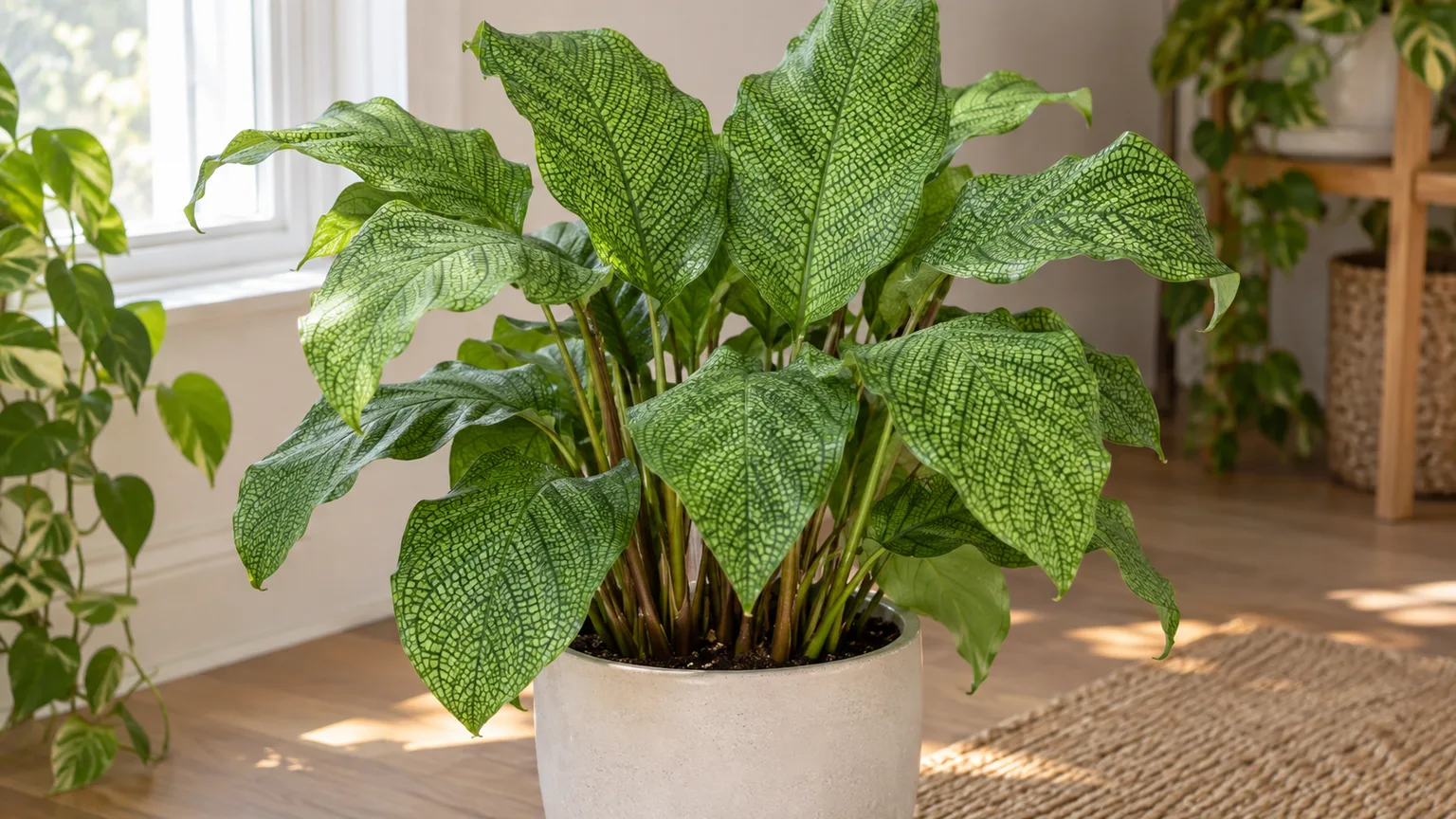
If a pale green leaf patterned like fine netting is losing its crisp edges, start by checking the plant’s growing conditions before changing several things at once. This tropical clumper can handle ordinary indoor life when its roots get air, its soil does not dry completely, and the leaves sit in filtered light rather than harsh sun.
Plant labels can add confusion: the name most people recognize, Calathea musaica, is treated as a synonym of the accepted botanical name Goeppertia kegeljanii by Kew’s Plants of the World Online. Care instructions below use “Calathea musaica” because it remains common in shops and searches, while explaining what the plant actually needs in a home.
Know the plant behind “Calathea musaica”
Goeppertia kegeljanii is an evergreen, rhizomatous perennial native to Brazil, where it grows in a wet tropical biome. Its upright stems carry light green leaves with a fine dark network; in a pot, a mature clump commonly reaches about 1 to 2 feet tall and wide. Those traits help distinguish it from other plants sold as “Calathea,” whose leaves may have stripes, pink markings, or large oval blotches. Kew’s Plants of the World Online lists Calathea musaica among the synonyms, while NC State Extension describes the same network prayer plant and its clumping habit.
“Calathea Network,” “mosaic calathea,” and “Network prayer plant” also appear on plant tags. The Royal Horticultural Society records a Network selection sold under the cultivar name ‘Pp0005’; labels can be inconsistent, so compare the characteristic fine mesh pattern rather than assuming every trade label names a distinct species. The foliage is the main attraction: flowers are small and are seldom produced indoors. The RHS species profile describes the glossy, heart-shaped leaves and Brazilian range, and the RHS Network selection record identifies the cultivar label.
As a houseplant, it is tropical rather than a cold-hardy indoor-outdoor perennial. Treat USDA zone information as a clue about outdoor survival in warm climates, not a reason to leave a potted plant in cold autumn weather; a bright room with stable conditions is the safer default in most homes.
Choose bright, filtered light
Aim for bright, indirect light: the plant should receive plenty of daylight, but the sun’s strongest rays should not strike the leaves for hours. An east-facing window often works; a brighter south- or west-facing window can work with a sheer curtain or a little distance from the glass. Near a north-facing window, move the pot closer to the light and watch whether growth stays compact and patterned. NC State Extension and the RHS both describe partial shade or bright filtered light for this plant.
Light changes with season and window exposure. A location that gives soft morning light in winter can become hot and intense as the sun’s path shifts, so check leaves after moving the plant or changing curtains. Turn the pot a quarter-turn every week or two if growth leans toward the window; this keeps the clump more even without repeatedly relocating it.
Direct sun can bleach or scorch patches, especially after the plant has spent weeks indoors in lower light. At the other extreme, a very dim corner may preserve existing leaves while producing weak, slow growth and less distinct patterning. If stems stretch or new leaves become smaller, move it gradually closer to a bright window rather than trying to solve the problem with extra fertilizer.
Water when the mix is partly dry
A fixed “once a week” rule is unreliable because a small nursery pot near a bright window dries faster than a large pot in a cool room. Check the soil every few days while learning the plant’s rhythm, then water when the top inch or so has begun to dry but the root ball still feels slightly cool and moist below. Use your finger or a wooden skewer in more than one spot; if it comes out wet and soil clings to it, wait and check again. This follows the soil-check approach in Smart Garden Guide’s Calathea musaica care advice, while adjusting the interval to your pot and room.
When it is time, water the surface evenly until excess flows from the drainage holes. Let the pot drain fully, then empty the saucer or decorative cachepot so the roots are not standing in water. A shallow sip only dampens the upper layer and can leave dry pockets lower in the pot, while keeping the mix saturated for days deprives fine roots of air.
After watering, notice how long the mix takes to dry. If it remains heavy and wet for many days, check for a blocked drainage hole, compacted soil, an oversized pot, or a cool location before watering again. If the root ball dries within a day or two, confirm that the pot is not root-bound and that water is soaking in rather than running down a gap along the pot wall.
Drooping is not a reliable watering timer by itself. Both a thirsty plant and damaged, oxygen-starved roots can wilt, so check the soil and pot weight before adding water. This one habit prevents a common cycle: a drooping plant gets more water, its wet roots decline, and the leaves droop further.
Choose water quality thoughtfully
The water that works best depends partly on your local supply. NC State Extension notes that fluoride in tap water can contribute to brown leaf edges; if new tips keep browning despite stable light, moisture, humidity, and drainage, try rainwater or distilled water for several weeks and compare the next leaves. A household filter is not automatically a fluoride filter, so check its specifications before relying on it for that purpose.
Do not switch water sources and alter fertilizer, humidity, and watering on the same day. Older brown tissue will not turn green again, so judge the experiment by whether fresh leaves emerge without the same damage. If the plant improves, continue with the source that is practical and safe to store; if it does not, return to the other likely causes instead of assuming tap water is the only issue.
Rainwater should be collected in a clean container and used promptly rather than left in a warm, dirty bucket. Distilled water is consistent but can add cost; a suitable filtered supply can be convenient when its treatment method matches the concern. The plant does not benefit from routinely being kept in a jar of water or from having its leaves misted as a substitute for correcting dry room air.
Build an airy mix that still holds moisture
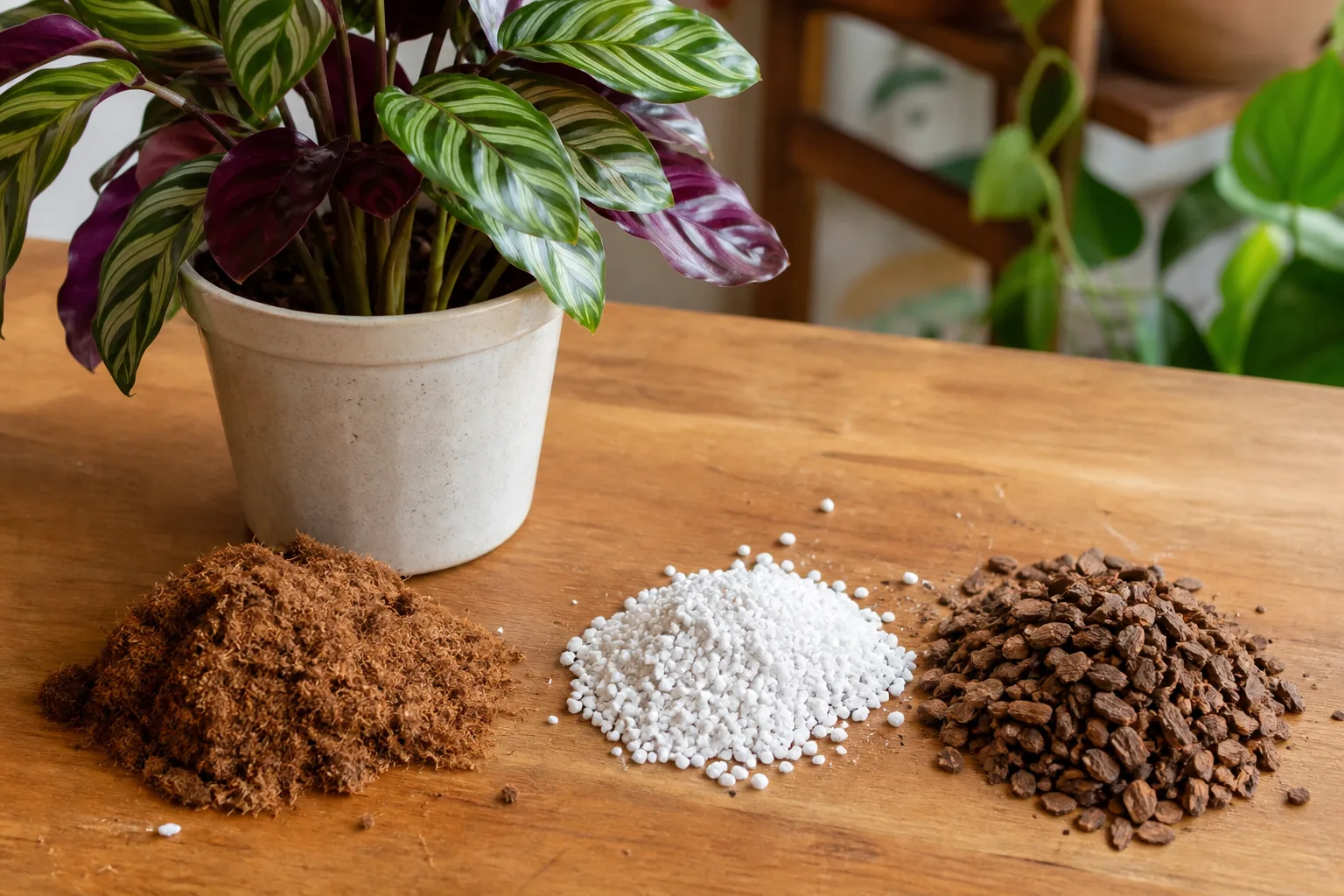
The roots need a mix that holds enough water for steady growth but drains and re-aerates between waterings. A standard indoor potting mix amended with perlite is a practical starting point; a peat-free mix based on coco coir can be used if it stays evenly moist without compacting. NC State Extension recommends drainage amendments such as perlite or vermiculite, and the RHS cultivation notes call for a moist but well-drained growing medium.
One easy blend is two parts quality houseplant mix to one part perlite. If your home is very dry and the blend dries too quickly, use a little less perlite or add a small amount of fine orchid bark; if it stays soggy, increase the coarse component and inspect the pot’s drainage. Avoid heavy garden soil, which can compact indoors, and avoid making a highly chunky mix that dries around the fine roots before you notice.
Choose a pot with drainage holes, sized only a little wider than the existing root ball. A much larger container holds a large volume of unused wet mix around a small root system and makes it harder to judge when to water. A decorative cachepot is fine if you keep the plant in a draining nursery pot inside it and pour away runoff after each watering.
Keep warmth, humidity, and airflow steady
A stable room matters more than chasing a single perfect temperature. NC State Extension gives a broad 60–80°F range and warns against sudden temperature changes and drafts; RHS cultivation guidance specifies a minimum temperature of 16°C (about 61°F) for its Network selection. Ordinary warm indoor conditions suit active growth, but keep the pot away from exterior doors, cold window panes, heating vents, radiators, and air-conditioning blasts.
Humidity is most useful when measured instead of guessed. NC State Extension recommends at least 60 percent for this plant, while Smart Garden Guide gives a broader range and explains that persistently high humidity without circulation can encourage foliage problems. Set a small hygrometer near the leaves, not across the room; if the reading is routinely low and new leaves develop crisp edges, a room humidifier offers more predictable control than occasional misting.
Grouping plants can modestly soften the air around them, but avoid crowding leaves so tightly that they stay damp and stagnant. A pebble tray may help at very close range, yet it cannot reliably raise an entire dry room to a target humidity. Keep normal room airflow, clean humidifiers according to their instructions, and do not leave water pooled in leaf joints or on the soil surface.

Feed lightly and keep leaves clean
During active growth in spring and summer, a balanced liquid houseplant fertilizer can support new foliage. NC State and the RHS give monthly feeding as a general cultivation approach; for a plant kept in a potting mix with fertilizer already included, start more lightly and follow the fertilizer label rather than layering feeds. Specialist guidance from Smart Garden Guide suggests reducing the label strength for this sensitive-rooted plant and pausing in the darker, slower winter period.
Fertilizer cannot correct dim light, cold roots, or a pot that stays waterlogged. If growth has stopped, first check season, lighting, moisture, and the roots; feeding a stressed plant can increase salt buildup without solving the cause. A pale crust on the soil or repeated brown tips after fertilizing is a reason to pause, water thoroughly with an appropriate source while allowing complete drainage, and resume only when growth is active.
Dust blocks light from reaching the leaf surface, so wipe leaves gently with a damp, soft cloth when they look dirty. Support each leaf from underneath while cleaning; folding or rubbing the blade hard can damage it. Pruning is otherwise minimal: use clean scissors to remove fully dead leaves at the base, and leave partly green leaves in place until they are mostly spent.
Repot when the roots or soil call for it
The plant does not need a bigger pot simply because a year has passed. Repot when roots densely circle the root ball, the mix has broken down or become difficult to wet evenly, or the plant dries unusually fast despite consistent conditions. RHS guidance suggests repotting every two to three years, but treat that as a check-in interval rather than a strict appointment.
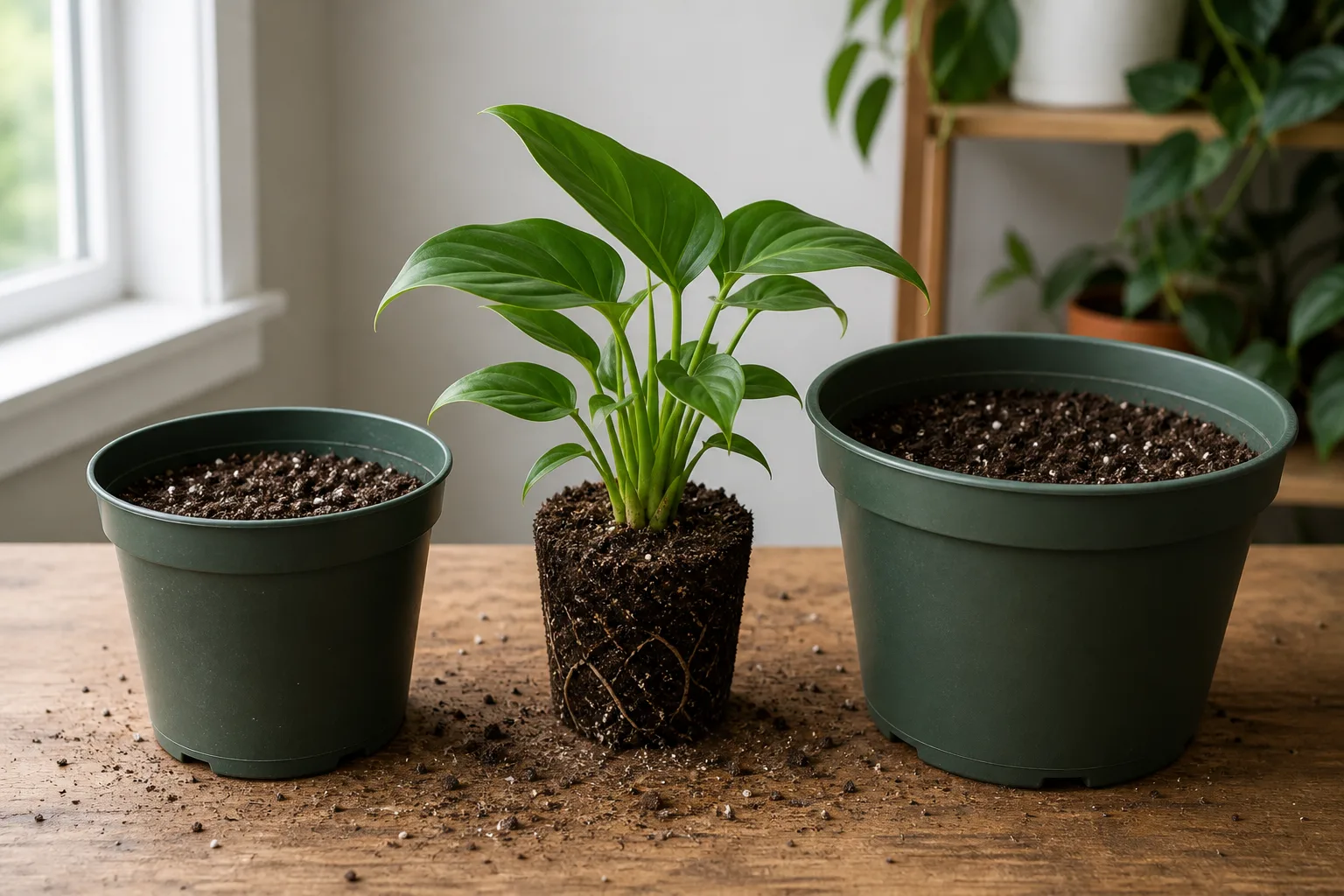
Spring or early summer gives the plant more time to resume growth after disturbance. Slide the root ball out carefully, keep healthy roots and rhizomes intact, and move it into a pot about 1–2 inches wider with fresh airy mix. Set the clump at the same depth as before; burying the leaf bases or tearing apart healthy roots adds stress without benefit.
After repotting, water enough to settle the mix and let all excess drain. Keep the plant in bright indirect light and avoid fertilizing until it shows renewed growth. A short pause in growth is normal; repeated wilting, sour-smelling wet soil, or blackened soft roots call for a drainage and root-health check.
Propagate by dividing a rooted clump
Division is the dependable home method because each new section needs an established growth point and roots. Wait until the plant has several strong shoots and the clump can be separated without reducing the parent to a handful of leaves. Late spring or early summer, when the plant is growing, is a better time than winter; the RHS recommends division in late spring.
Water the parent lightly the day before if its mix is very dry, then ease it from the pot and look for natural separations between rooted fans. Tease apart a section with fingers when possible; if a clean cut is necessary, use a sanitized blade and make sure each division has roots plus at least one healthy shoot or growing point. Do not cut off a single leaf and expect it to root like a pothos cutting. The RHS species profile recommends division in late spring.
Pot each division into a small draining container with fresh, lightly moist mix and keep it warm in bright indirect light. Higher ambient humidity can reduce stress while roots re-establish, but an airtight cover that traps condensation invites rot; if you use a loose clear cover, vent it daily and remove it when new growth resumes. A division may pause before producing a new leaf, so resist tugging on it or repeatedly unpotting it to check for roots.
Adjust care through the seasons
In brighter, warmer months, the plant may use water and fertilizer faster because it is producing leaves. Keep checking the mix rather than switching automatically to a summer schedule; an air-conditioned room can stay cool and dry even when outdoor weather is hot. If you move the plant outside for a warm season, use a sheltered, shaded location and acclimate it gradually over several days.
Bring it back indoors before nights approach the low 60s°F, and inspect leaf undersides and stems for pests before placing it near other plants. Direct outdoor sun, wind, and heavy rain can cause damage or keep the mix too wet. Outdoor placement is optional; a stable indoor setup is often easier to maintain.
In winter, lower light and slower growth usually mean longer intervals between watering and little or no fertilizer. Do not let the root ball become bone dry, but do not keep adding water because the top surface looks pale. Move the pot away from cold glass and heat vents, and use a humidifier if indoor heating leaves the air consistently dry.
Diagnose symptoms in the right order
A single symptom rarely identifies one cause. First check the soil moisture and drainage, then look at the light exposure, nearby drafts, humidity, water source, and recent changes such as repotting or moving. Change one likely factor at a time and watch the next growth; damaged tissue usually stays damaged even after you fix the conditions.
| What you see | Check first | Useful next step |
|---|---|---|
| Crispy brown edges | Humidity, water source, accumulated fertilizer, direct sun | Correct one factor and judge new leaves |
| Yellowing with wet mix | Drainage, pot size, root condition | Let the mix dry appropriately; inspect roots if decline continues |
| Curling while the mix is dry | Root-ball moisture and dry air | Water fully, drain, then measure room humidity |
| Fine stippling or webbing | Leaf undersides and petioles | Isolate and inspect for spider mites |
| Slow growth with pale pattern | Light and season | Increase filtered daylight gradually |
Brown tips and leaf margins
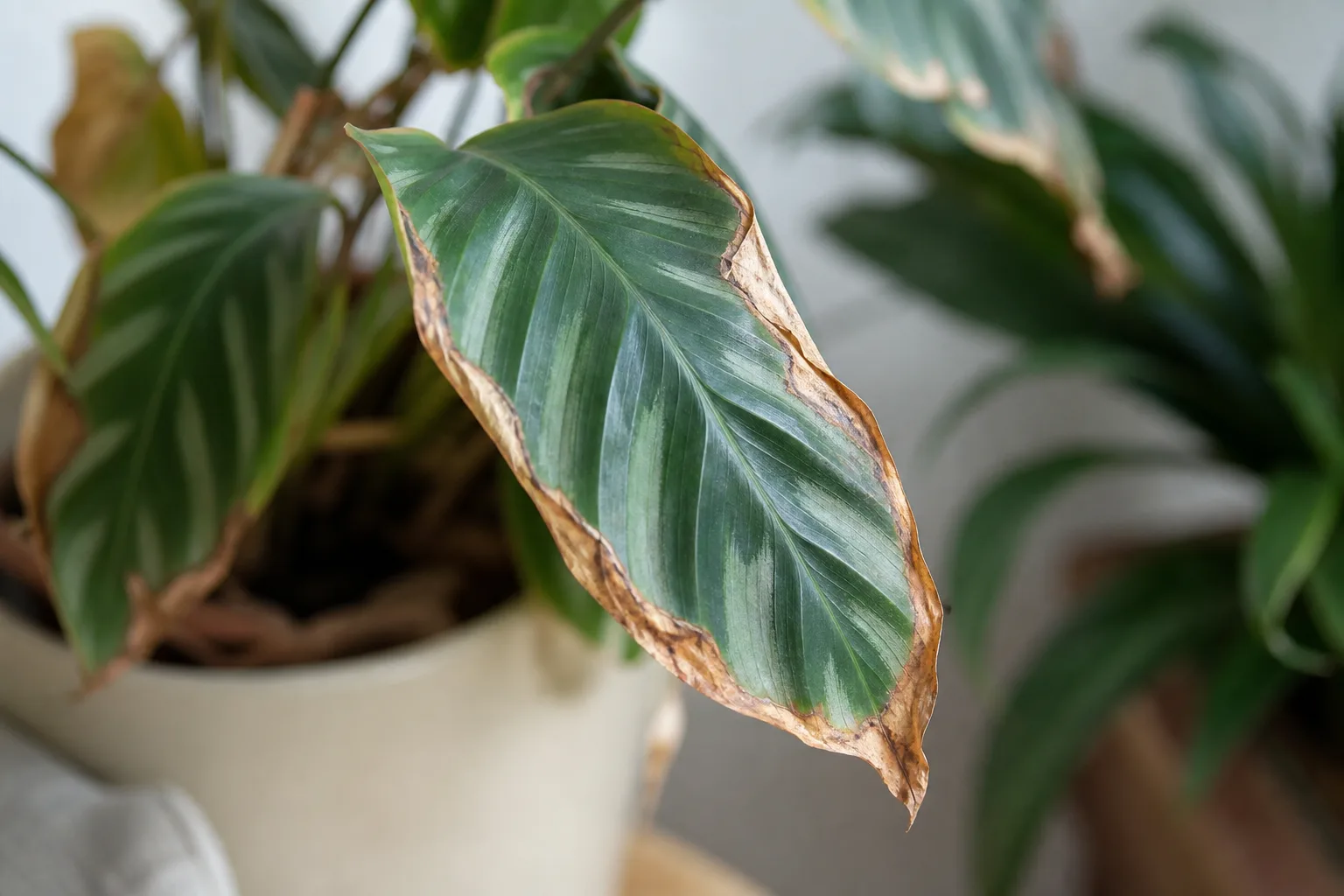
Crisp brown tips can follow dry air, fluoride-sensitive water, fertilizer salts, or a root ball that repeatedly swings between very dry and very wet. Because these causes overlap, start with a short history: did the damage begin after a move near a window, a heating season, a fertilizer change, or a new water source? NC State Extension specifically flags fluoride and underwatering as possible causes of brown edges, while Smart Garden Guide and Gardenia’s Calathea musaica profile also describe dry air or water quality as possible contributors.
If the room is dry, measure humidity near the plant and improve it steadily; if the mix is dry below the surface, correct watering and drainage before increasing humidity. If the plant is in strong direct sun, move it back from the glass or filter the light. If several new leaves brown after a fertilizer application, pause feeding and check for salt crusts rather than immediately repotting a plant whose roots otherwise look healthy.
You can trim the dead brown margin with clean scissors if its appearance bothers you, following the natural leaf shape and leaving a narrow brown edge rather than cutting into green tissue. The cut edge will not regrow, and trimming cannot repair the underlying cause. Track whether the next leaf emerges healthier before deciding whether another adjustment is needed.
Curling, drooping, or yellow leaves
Prayer-plant relatives can change leaf position over the day. NC State describes leaves folding at night and reopening after sunrise; a leaf that rises or folds with the light cycle but looks firm is not necessarily distressed. Persistent curling during the day is different: inspect the root ball for dryness, then consider low humidity, heat, or a recent abrupt move.
Drooping needs the same soil check. A pot that feels light with dry mix points toward thirst; a heavy pot that stays wet, especially with yellowing or a sour smell, suggests poor root aeration and possible rot. Water only when the mix is ready, and do not respond to a wet, drooping plant by adding more.
One older leaf yellowing while the rest of the clump keeps growing can be ordinary turnover. Several leaves yellowing together, especially while the soil remains wet or temperatures are low, deserves a drainage and placement review. Correct the environment first; fertilizer is not a reliable treatment for yellow leaves unless a real nutrient shortage has been identified.
Fading, leaf spots, pests, and root trouble
When new leaves look smaller or the mesh pattern seems less distinct, check whether the room is too dim before feeding. Move the plant closer to bright filtered light in stages, and assess the next leaves after the plant adjusts. Pale patches that develop on the window-facing side can instead indicate too much direct sun.
Spots that expand, look water-soaked, or appear after repeated leaf wetting need a different response from crisp dry margins. Keep the leaves dry during watering, improve gentle air movement, and remove a badly damaged leaf with clean scissors; do not spray a fungicide unless you have identified a disease and the product label permits its use on indoor ornamentals. A single spot is not proof of a fungal infection.
Inspect leaf undersides, stem joints, and new growth for spider mites, mealybugs, scale, or aphids; also check the soil surface for fungus gnats if it remains wet. Isolate an infested plant, rinse pests off where practical, and repeat inspections because eggs or hidden insects may survive the first cleaning. If you need a control product, follow its label exactly and test it on a small area first; delicate foliage can react to sprays even when the pest is correctly identified.
Soft dark roots, a persistently sour pot, and a mix that stays saturated point toward root trouble rather than a need for more humidity. Remove standing water, confirm the drainage hole is open, and inspect the root ball if decline continues. Trim only roots that are clearly mushy and dead, then repot into fresh airy mix; if the rhizome itself is soft or the whole clump is collapsing, recovery is less certain.
Pet safety and careful handling
The ASPCA lists Calathea species as non-toxic to dogs, cats, and horses, and NC State Extension identifies Goeppertia kegeljanii as non-toxic to pets and people. These listings are useful for choosing a plant in a pet household, but they do not make repeated chewing desirable; a pet can still damage the foliage or have stomach upset from eating plant material. Keep fertilizers, soil amendments, and standing water out of reach.
NC State also notes that sap may irritate sensitive skin. Wear gloves if your skin reacts to plant sap, wash your hands after pruning, and keep the plant away from curious pets if they repeatedly chew leaves. For a pet that has eaten a large amount or shows symptoms, contact a veterinarian rather than relying on a general plant-safety list. The ASPCA Calathea listing describes its genus-level toxicity classification.
Conclusion
Calathea musaica is easier to keep when you build a repeatable routine around the root zone: give it bright filtered light, let the surface of an airy mix begin to dry, water through, and drain the pot completely. Keep it warm, avoid drafts, and measure humidity before deciding it needs a humidifier or a tray.
When leaves change, treat them as clues instead of instructions to water, fertilize, or repot immediately. Check soil and roots first, then review light, water chemistry, room air, and recent changes; adjust one factor and judge the next growth. That approach protects the intricate foliage while avoiding the overcorrections that often cause more damage than the original symptom.