How to Buy Garden Soil, Compost, or Mulch in Bulk
Buy garden soil, compost, or mulch in bulk with a clear volume formula, supplier questions, product checks, and delivery tips that prevent costly surprises.
Bulk material can save time and reduce packaging when a project needs more than a few bags, but the order is hard to undo once a truck tips it onto your driveway. Start with the job you need the material to do, then verify what the supplier is actually selling, measure the area, and confirm the delivery details before paying.
That order matters because topsoil, garden soil, compost, and mulch are not interchangeable. A cubic yard is a reliable unit of volume; “premium garden blend” is not a reliable description unless the supplier can explain what is in it.
Start With the Job, Not the Product Name
Write down the project in one sentence before you call a landscape supply yard: “I need to raise this bed by four inches,” “I need compost to improve an existing vegetable bed,” or “I want a two-inch weed-suppressing cover.” It is easier for a supplier to recommend a product when you name the purpose, area, and target depth instead of asking for “good dirt.”
Also note whether the area is a new planting bed, an open-bottom raised bed, a container, lawn, or a path. The best material and acceptable texture differ by use. A pile that is fine for filling a low spot under sod may be lumpy or too low in organic matter for a seed bed; a rich compost that works as a modest amendment can slump if used as the entire deep fill.
Topsoil, Garden Soil, Compost, and Mulch Do Different Work
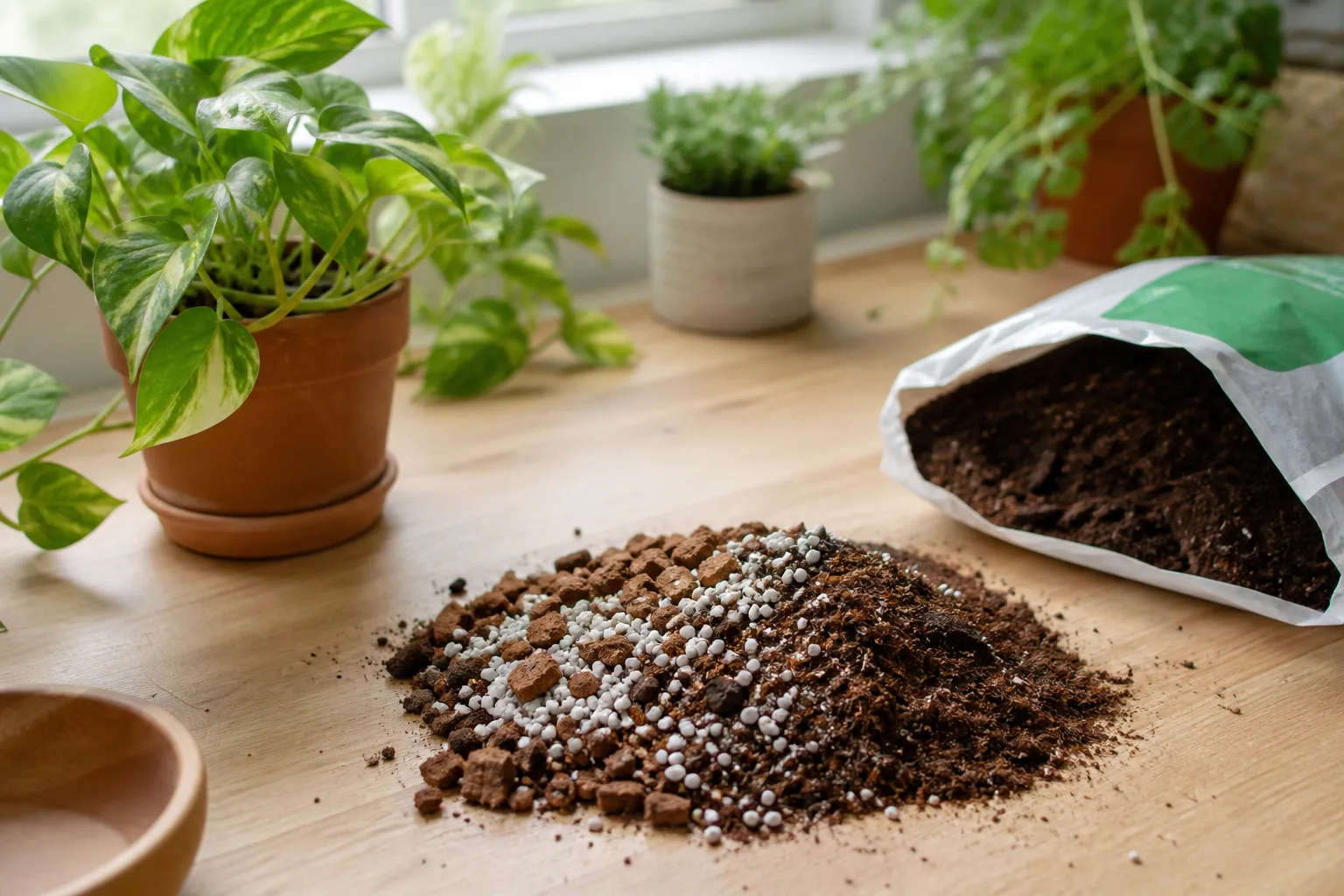
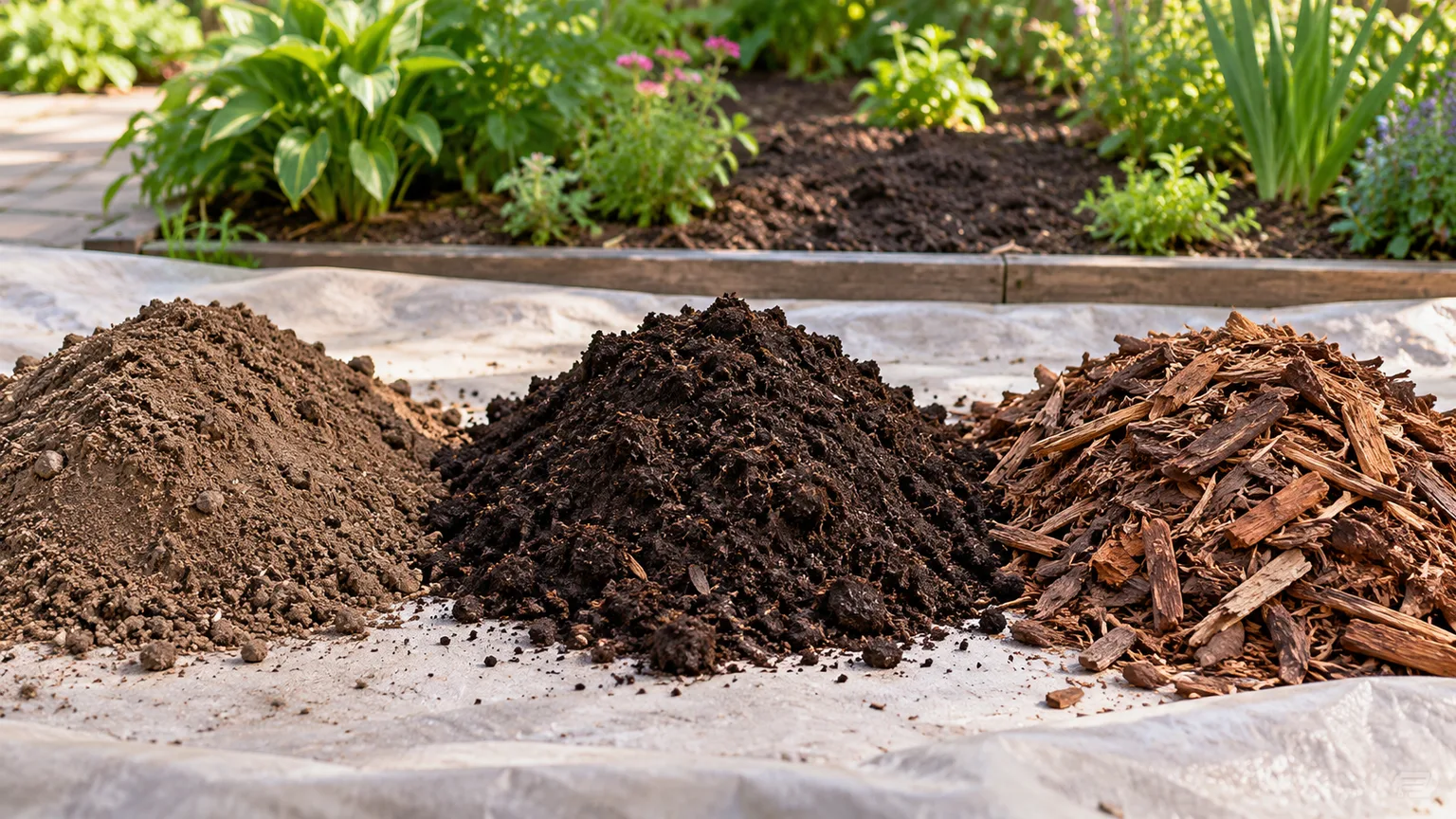
Topsoil is mineral soil from the surface layer, though sellers may use the word for screened or blended products. Garden soil is an even less precise label: it may be a mineral soil mixed with compost, or largely organic growing media. Compost is decomposed organic material used to add organic matter and nutrients; it is an amendment, not automatically a complete replacement for mineral soil. Mulch is a cover placed on top of soil to protect the surface, moderate moisture loss, and suppress some weeds. Potting mix is a separate product for containers, where drainage and pore space matter in a confined volume.
Utah State University Extension notes that materials sold as topsoil can include subsoil, and that quality depends on traits such as texture, organic matter, pH, soluble salts, and coarse fragments—not color alone. Rutgers Cooperative Extension likewise explains that imported products sold as soil may vary in their mineral and organic ingredients. Ask for the blend, not only the name on the price board. (Utah State University Extension; Rutgers Cooperative Extension)
Test What You Already Have Before Buying
Before ordering amendments, find out what is wrong with the soil you already have. A basic soil test through a local extension service or soil-testing laboratory can identify pH and nutrient issues that a truckload of compost will not necessarily fix. If the problem is compaction, poor drainage, a hardpan layer, or a low spot that collects water, adding a richer surface layer may hide the symptom without correcting the cause.
If you are bringing in soil for a new bed, ask the supplier for a recent product analysis and compare it with the site’s soil test when that comparison is useful. Tests should be interpreted for the intended plants and region: one pH or nutrient target is not right for every crop or landscape. Extension guidance from Utah State stresses that visual checks cannot reliably reveal salts or pH; a soil report is more informative than a dark color or a “garden ready” label. (Utah State University Extension)
Testing is especially worthwhile before a large order, when you are growing food, or when an area has a construction history. If an imported product’s source or ingredients are unclear, pause and ask. Rutgers advises buyers to seek clean, defined materials and warns that some products labeled “soil” may be mostly organic growing media rather than mineral soil. For edible beds, ask directly whether the blend contains biosolids or materials with a long-lasting herbicide history, and follow local extension advice if the answer is uncertain. (Rutgers Cooperative Extension)
Match the Material to the Project
For filling a planting space, compare mineral topsoil, screened loam, and a blended bed mix. For improving soil already in place, look at compost as an amendment and use a rate appropriate to the test and crop. For surface coverage, choose a mulch by the result you want—weed suppression, moisture moderation, a finished appearance, or gradual organic-matter addition. No single “best garden soil” handles all four jobs.
Filling a Bed or Raising Grade
If you need to add substantial depth, a mineral-based topsoil or a disclosed topsoil-and-compost blend usually provides more stable structure than pure compost. In an open-bottom raised bed, existing native soil can often contribute to the root zone if it is suitable; you may not need to purchase the full height of the frame as imported material. For larger beds, Rutgers recommends considering native mineral soil with clean, well-rotted compost and says suppliers should be able to provide soil-test reports for imported topsoil. It also notes that manufactured topsoil blends do not have a universal legal specification, so the ingredients and test report matter. (Rutgers Cooperative Extension)
Ask for the blend proportions by volume if you are comparing options or planning to mix materials yourself. A “raised-bed mix” may be a useful convenience, but its name does not tell you whether it is mineral soil, compost, bark, peat, or another organic medium. For a container, buy a purpose-made potting mix instead; heavy landscape soil can settle and drain poorly in a pot.
Improving Existing Soil or Covering Its Surface
Compost is useful when the goal is to add organic matter to depleted soil, but more is not automatically better. Rutgers gives a general starting point of a one- to two-inch compost layer mixed into roughly six inches of soil for soils low in organic matter; local recommendations and soil-test results should take priority, especially when the compost is nutrient-rich or the crop is sensitive. Compost feedstock, maturity, and soluble salts can vary, so request a product analysis when available rather than applying an arbitrary thick layer. (Rutgers Cooperative Extension)
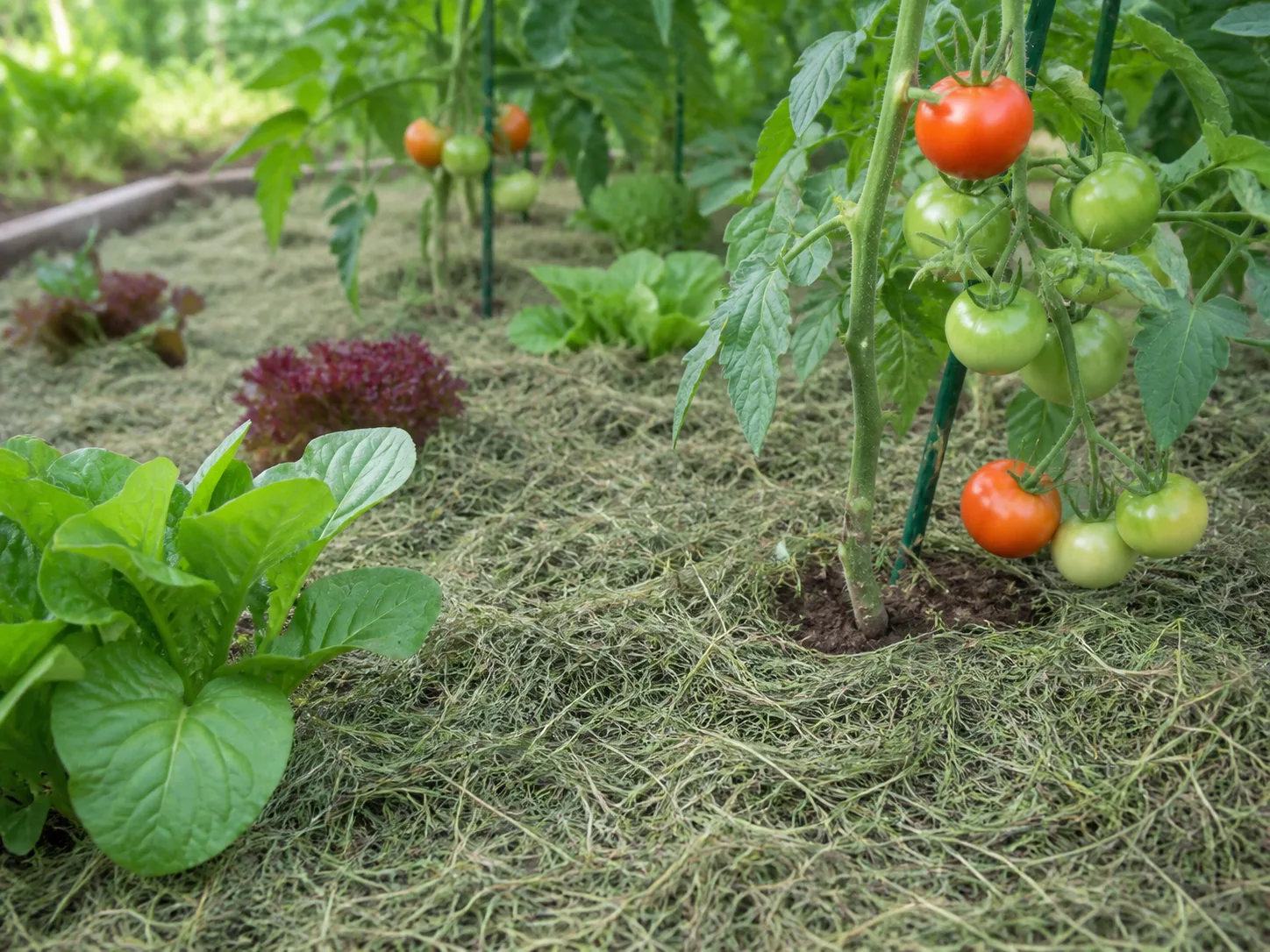
If your goal is to reduce evaporation or make a bed look finished, mulch is a surface layer, not bulk fill. Organic mulch breaks down and must be replenished over time; BBC Gardeners’ World Magazine recommends choosing it for the job and keeping the layer moderate around plants. Some materials—such as bark, leaves, compost, or grass clippings—behave differently, so do not treat their volume and replacement schedule as identical. (BBC Gardeners’ World Magazine)
Vet the Supplier’s Product, Not Just Its Price
Supplier names such as “black dirt,” “garden blend,” or “premium topsoil” are not product specifications. Call two or three yards with the same project description and ask each one for the exact product name, what the product is made from, whether it is screened, and how it is sold. If a price sounds unusually low, check whether the load is fill, unprocessed subsoil, or a product with more debris—not a comparable planting mix.
Ask for a Blend Description and Test Report
Use a short checklist on the phone or by email:
- What are the ingredients, and what percentage or ratio of mineral soil, compost, bark, sand, or other material is in the blend?
- Can you share a current soil or compost analysis for pH, soluble salts or electrical conductivity, organic matter, nutrients, and texture where applicable?
- What is the screen size, and what rocks, sticks, roots, or other coarse material should I expect?
- Where was the material sourced? Has it been treated with a persistent herbicide, and is it free of construction waste and noxious weeds?
- For compost, what was the feedstock, and is the material finished and mature? For a vegetable garden, are all ingredients disclosed?
- Is the delivered product from the same batch or stockpile described by the report?
A supplier may not test every property or have a lab report for every load. That is a reason to compare transparency, not to pretend every product is equally documented. Utah State’s topsoil guidance recommends testing where possible, and specifically flags salts, pH, texture, organic matter, coarse fragments, weeds, and residual herbicides as relevant checks. The values in that guide are Utah-specific; use your local extension service to interpret thresholds for your region and plants. (Utah State University Extension)
Then compare the delivered total for the same usable volume, not just the price per cubic yard. Include delivery, minimum-load rules, fuel or distance charges, taxes, spreading fees, and any return or cancellation conditions. Bulk can be cheaper than retail bags for a large project, but a small job may cost less in bags once a minimum delivery charge is included. Request a written quote that names the product and quantity so you can compare like with like.
Calculate the Volume in Cubic Yards
One cubic yard is 27 cubic feet. For a rectangular bed or area, multiply length in feet by width in feet to get square feet, then multiply by the planned depth in feet to get cubic feet. Divide that result by 27 to get cubic yards. A faster shortcut for a flat area is:
Cubic yards = square feet × depth in inches ÷ 324
The shortcut comes from 27 cubic feet spread one inch deep covering 324 square feet. Use the table to check a quote or plan a mulch or compost layer; actual coverage varies slightly with how level the surface is and how the loose material settles.
| Planned depth | Approximate coverage per cubic yard |
|---|---|
| 1 inch | 324 sq. ft. |
| 2 inches | 162 sq. ft. |
| 3 inches | 108 sq. ft. |
| 4 inches | 81 sq. ft. |
| 6 inches | 54 sq. ft. |
| 8 inches | 40.5 sq. ft. |
Example: A 500-square-foot bed needs a three-inch layer of mulch. Calculate 500 × 3 ÷ 324 = 4.63 cubic yards. If the supplier sells in quarter-yard or half-yard increments, ask for a quote at the nearest practical quantity and make sure the area measurement is accurate before rounding up. The same math works for soil or compost, but choose the depth for the job rather than copying a depth from a mulch project.
Measure Irregular Beds and Work Out the Average Depth
Break an L-shaped space into two rectangles, calculate each, and add the results. For a triangle, multiply its base by its height and divide by two; for a round bed, use 3.14 × radius × radius. If the bed has curves, split it into a few simple shapes rather than measuring only the widest points and treating the whole area as a rectangle.
For a slope or a low spot, estimate the average layer depth across the area, not the deepest corner. A 6-inch layer across an entire bed uses twice the material of a 3-inch layer, so a small measuring error can change the quote substantially. Measure inside a raised bed, subtract material already in place if it will remain, and calculate only the depth you are actually adding. Keep the dimensions and arithmetic when requesting quotes; a supplier can sanity-check the number without guessing what your project looks like.
Choose a Sensible Order Amount
Do not add a blanket “extra yard” just because loose material settles. First measure carefully, calculate the theoretical volume, and find out how the yard sells partial quantities. Then ask whether the delivered amount is loose volume, a loader bucket estimate, or a measured quantity. Those details affect how much ends up in the bed.
Add a modest allowance only when there is a reason: an uneven surface, spillage during wheelbarrow trips, a shape you had to estimate, or expected settling in a deep fill. A neat rectangular bed with a known depth needs less guesswork than a berm with changing slopes. If you will use only one or two cubic feet, bags may be easier and reduce leftover material. If the project needs several yards, compare a truck delivery with multiple bag purchases and include delivery fees in the calculation.
Leftovers are useful only if you have a place to store them. Before rounding up, consider whether the pile will block access, damage a lawn, or sit unused through a rainy season. A slightly short load is inconvenient; several yards of unsuitable or unnecessary material can become an expensive disposal problem.
Decide Between Bulk Delivery and Pickup
Bulk delivery is often the practical choice when the project needs multiple cubic yards or the material is too heavy to move safely by hand. Pickup can make sense for a small amount if you have a suitable trailer or truck and know the material’s approximate weight. Do not assume one cubic yard fits safely in a pickup: volume does not tell you payload. Soil weight changes with texture and moisture, and wet soil can be much heavier than a dry sample.
Before pickup, check the vehicle’s payload rating on the door-jamb label and in the owner’s manual. Count passengers, tools, accessories, and trailer tongue weight as part of the load, and ask the supplier for an estimate for that specific product and moisture condition. If the numbers are close or unclear, arrange delivery or make more than one smaller trip. The truck’s bed dimensions are not proof that its suspension, tires, or brakes can handle the load.
Protect the Driveway and Plan the Drop Point
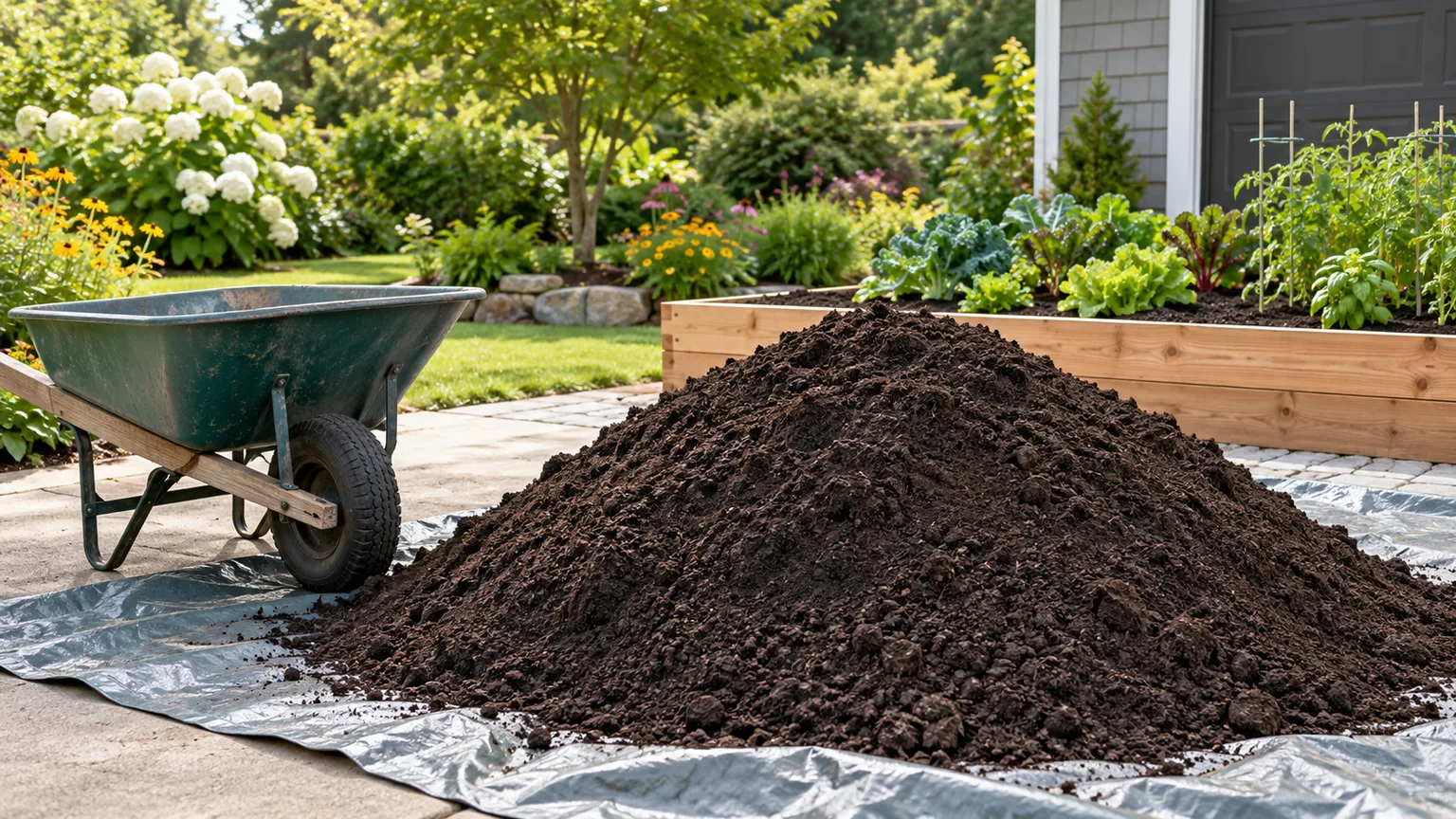
Tell the supplier where the pile should land and ask whether the truck can reach that spot. Confirm the truck’s size, turning room, overhead clearance, ground slope, and any driveway restrictions; a loaded vehicle can rut soft soil or mark paving. Put a tarp on the drop area if you want to protect concrete and make cleanup easier, and avoid blocking drains, gates, sidewalks, or access to a garage.
If a driver cannot place the load exactly where you want it, plan the wheelbarrow route before ordering. A short, firm path can save hours of hauling. Keep the pile away from low branches and overhead wires, and do not direct a truck onto a septic area, buried utility line, or lawn that cannot support its weight. If delivery includes spreading, confirm how far the crew will spread it and whether grading or moving material by hand costs extra.
Inspect the Material Before You Spread It
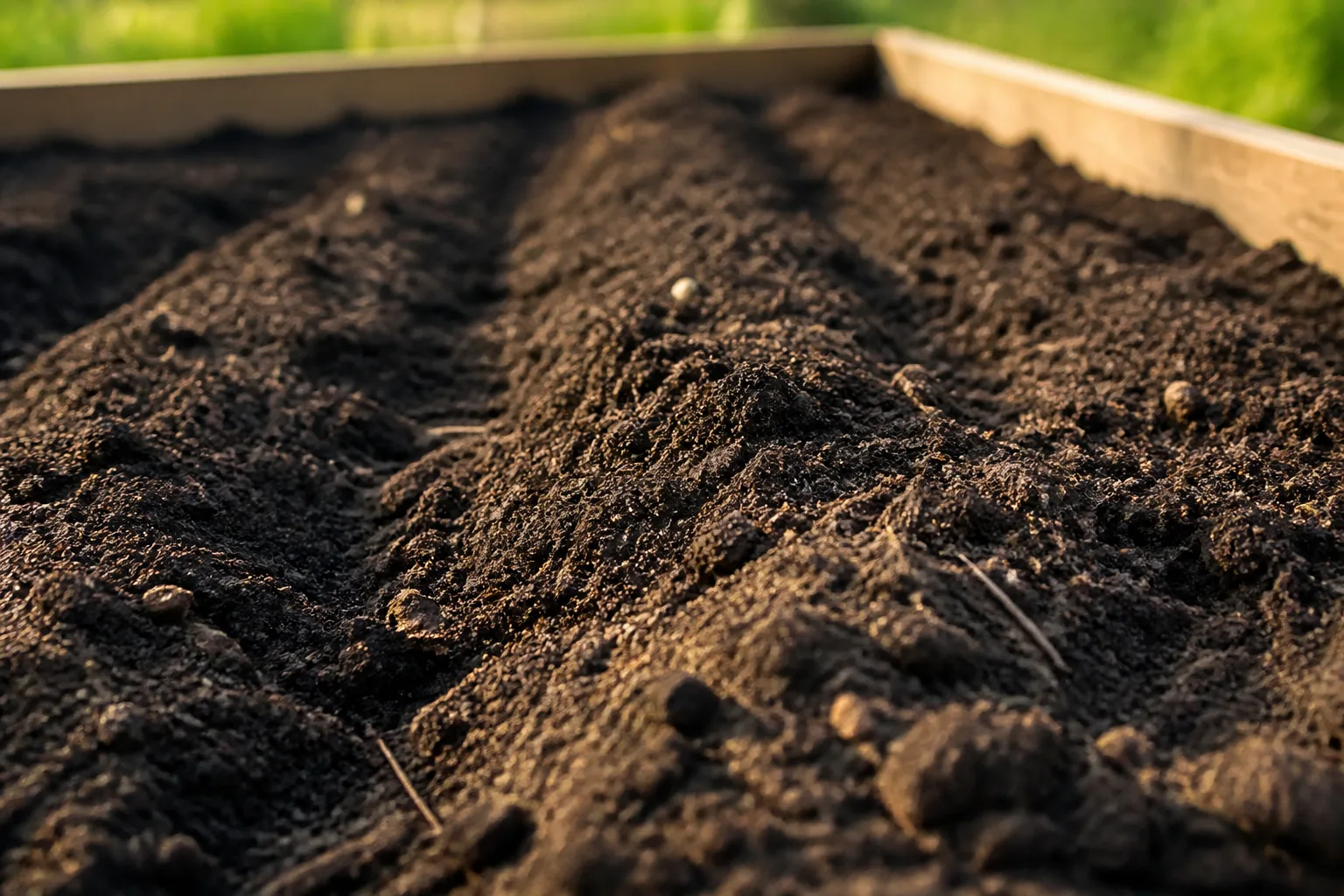
If possible, visit the supplier’s yard or ask for a sample from the same stockpile you will receive. Look beyond color. Utah State Extension recommends checking the soil’s feel and structure while noting that visual inspection cannot reveal every chemical problem. A handful that is extremely sticky, hard, sandy, or full of coarse fragments may not suit the project; light-colored crusting can be a warning sign of salt deposits. A lab report is the better way to evaluate pH and soluble salts. (Utah State University Extension)
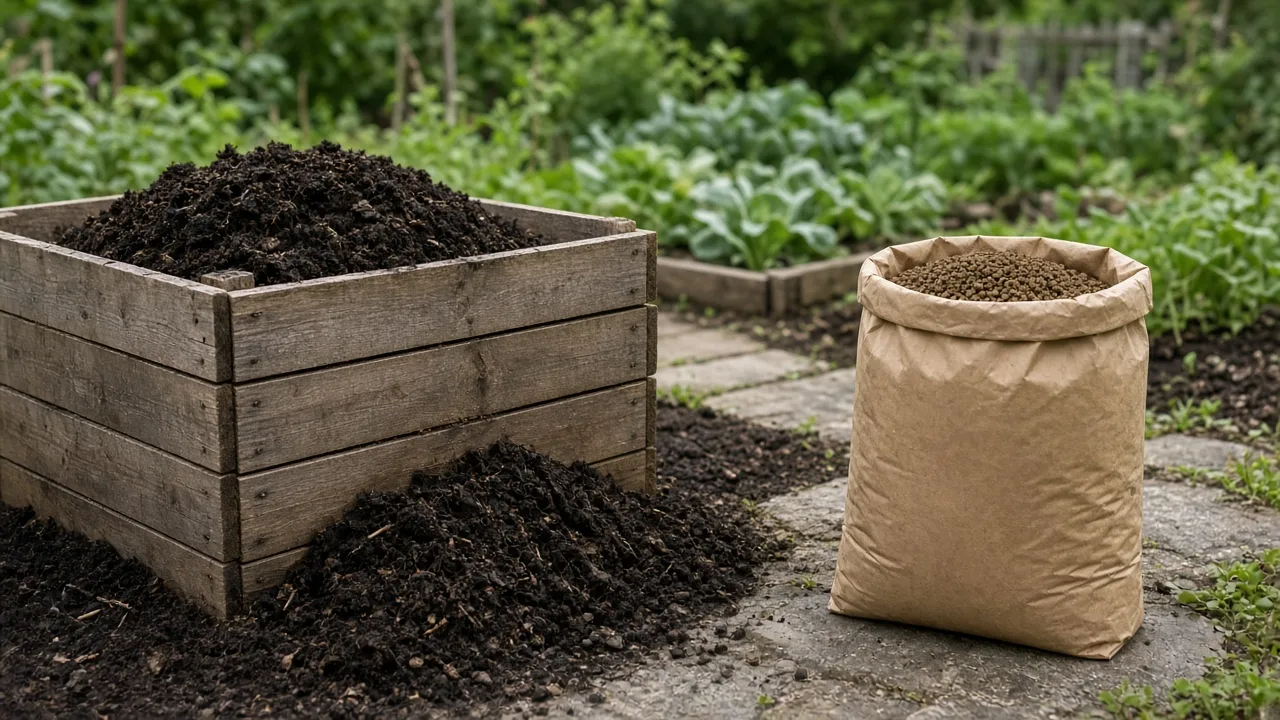
For compost, a rotten, sour, or sharp ammonia smell is a reason to ask more questions about maturity and handling. Better Homes & Gardens describes finished home compost as dry, brown, and crumbly, which is a useful practical cue, but a bulk purchase still needs a source description and test information when available. Smell and appearance are screening clues, not a guarantee of low salts, appropriate pH, or safe ingredients. (Better Homes & Gardens)
At delivery, compare the pile with the order and look for obvious trash, concrete, large roots, persistent weed growth, or an unexpected amount of rock. Photograph the load and contact the supplier before spreading it if it does not match the agreed product. Once you mix a questionable load into a bed, separating it back out is far harder than refusing it at the curb.
Store a Load You Cannot Use Right Away
Use the material soon when you can, especially if it is finished compost or a blended soil intended for planting. For a short delay, keep the pile on a stable, drained surface and cover it enough to limit runoff, erosion, and contamination from nearby soil or weeds. A tarp can help, but avoid trapping a wet pile in a sealed, airless cover for a long period; follow the supplier’s advice for the specific product.
Keep mulch, compost, and soil in separate piles if you ordered more than one. Label or mark them so the material meant for surface cover does not get mixed into the root zone by accident. Do not store any material where stormwater can carry it into a drain, pond, or neighboring property. If the pile will sit for weeks, ask the supplier how to protect it and whether exposure to rain could change its moisture, weight, or handling.
Apply Soil, Compost, and Mulch Correctly
Spread imported topsoil in a way that connects it to the existing root zone instead of leaving a sharp boundary between unrelated layers. Rutgers recommends blending shallow layers of native and imported soil, or creating a transition layer, before placing the remaining topsoil in a larger bed. That approach can help the materials work together; it is not a substitute for correcting drainage, compaction, or an unsuitable site. (Rutgers Cooperative Extension)
Use compost as a measured amendment or top dressing, not as a universal fertilizer. The nutrients and salts depend on feedstock and processing, and a product analysis or soil test can help prevent adding more than plants need. Better Homes & Gardens describes compost as a way to improve soil structure and water-holding capacity, while Rutgers cautions that growing media made mostly from organic materials can change volume and fertility as they decompose. (Better Homes & Gardens; Rutgers Cooperative Extension)
Keep Mulch on the Surface
Mulch belongs on top of the soil, where it can shade the surface and reduce moisture loss; it is not a substitute for soil in a planting hole or raised-bed fill. BBC Gardeners’ World Magazine advises applying mulch over prepared, moist ground and keeping it from smothering plants. Around stems, crowns, and trunks, leave a clear gap so the material does not press against living tissue. (BBC Gardeners’ World Magazine)
For a general bed, choose a moderate depth appropriate to the mulch and plants rather than spreading the deepest layer your order can cover. A coarse wood mulch and fine compost do not behave the same way; young seedlings and bulbs may have trouble pushing through an overly thick blanket. Recheck the bed after the material settles, then top it up only when the existing cover has thinned. Organic mulches break down and need replenishing, while stone or gravel will not improve soil as it decomposes. (BBC Gardeners’ World Magazine)
Conclusion
Buy bulk garden material in this order: define the job, check the soil you already have, ask what the supplier’s blend contains, calculate cubic yards, and confirm the full delivered price and drop point. That sequence helps you avoid buying compost when you need stable fill, paying for topsoil when an amendment is enough, or ordering more mulch than the bed can use.
Use a test report and a sample to judge quality; color and a “premium” label are not enough. Measure the area and target depth, treat vehicle payload separately from volume, and inspect the load before you spread it. If a supplier cannot explain the product or delivery terms clearly, compare another yard before committing.