Coco Coir vs Peat Moss for Houseplants
Decide coco coir vs peat moss with tables, rinse and bag-label tips, mix ratios, and plant-type picks for indoor pots.
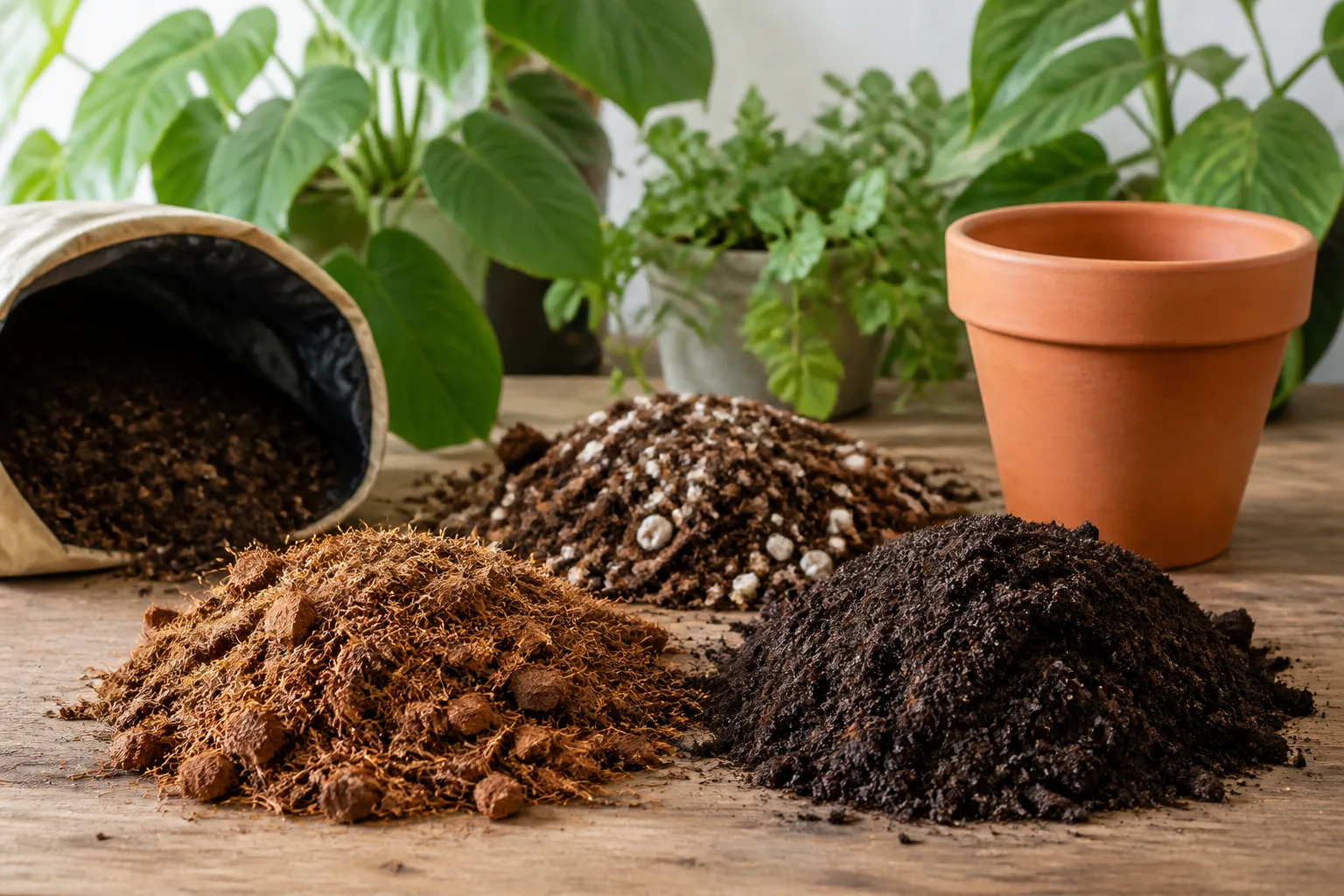
Coco coir and peat moss are the two organic bases most houseplant mixes rely on for moisture and structure. They are not twins. Peat holds large amounts of water and tends to run acidic; dry peat can refuse to rewet. Coir is a coconut-husk byproduct with a near-neutral pH and strong water uptake — but raw or poorly washed bricks can carry processing salts that need a thorough rinse. Pick based on rewetting behavior, salt risk, bag grade, pH target, plant type, and how you feel about peat harvesting — not on which bag looks “more natural.”
On our own shelves, the practical fork is simple: peat-heavy bags stay wet longer after a deep water and can shed water down the pot wall when bone-dry; rinsed coir blends rewet cleanly and often need a slightly tighter fertilizer plan once the starter charge fades. Texture differences are obvious in the hand — fine coco peat feels pithy and even, peat feels spongy and brown-fibrous, and coir chips look like small woody nuggets — so the decision is tactile, not just ideological.
Quick Decision: Coir or Peat?
Choose coco coir when you want a peat alternative that rewets easily, sits near neutral pH, and comes from a renewable coconut byproduct — and you are willing to rinse compressed bricks (or buy clearly washed / low-EC product) before mixing. Choose peat moss when you need proven water-holding capacity for moisture-loving foliage, you already trust a peat-lite recipe, or you are building classic seed-starting media and will keep the mix from drying into a hydrophobic brick.
Neither material is a complete potting mix. Both need aeration partners (perlite or pumice, bark, coarse sand) so roots get oxygen as well as moisture. For full recipes and bagged-mix strategy, start with best soil for indoor plants and best potting mix for indoor plants, then use this page to decide which organic base fills the moisture slot.
If your plant is already sitting in dense, soggy mix, fix poor drainage and a wrong soil mix first — swapping peat for coir alone will not rescue a sealed pot or a compacted root ball.
Side-by-Side Decision Table
| Factor | Coco coir | Peat moss |
|---|---|---|
| Origin | Coconut husk byproduct | Decomposed bog moss (often sphagnum), mined |
| Typical pH | Near neutral | Acidic; mixes usually limed |
| Water uptake when dry | Rewets readily | Can become hydrophobic when bone-dry |
| Water holding | High; sponge-like | High; holds large amounts of water |
| Salt / EC risk | Possible from processing; rinse before use | Generally low unless compost/fertilizer charged |
| Nutrients | Low fertility; often high K / low Ca patterns | Low fertility; limed peat-lite recipes common |
| Sustainability | Renewable byproduct; shipping/processing footprint | Finite peatland harvest; climate and habitat concerns |
| Cost / form | Bricks expand when wet; sometimes pricier | Widely available bags; often cheaper |
| Best houseplant fit | General foliage, aroids, peat-free DIY mixes | Moisture lovers, classic peat-lite, many bagged soils |
| Main downside | Must rinse/check salts; needs regular fertilizer | Hard to rewet when dry; stays wet; peatland impact |
Use the table as your first filter, then refine with plant type:
| Plant type | Prefer | Why |
|---|---|---|
| Aroids (Monstera, Philodendron, Pothos) | Either; chunky blend | Need air + moisture — pair base with bark and perlite/pumice; see Monstera soil mix |
| Peace lily, ferns, prayer plants | Peat or coir with careful watering | Like even moisture; peat stays wet longer — watch for sogginess |
| African violets / fine-rooted moisture lovers | Peat-lite or fine coir peat | Fine texture + steady moisture; avoid coarse salty chips |
| Succulents and cacti | Minimal either; mineral-forward | Base should be minority; prioritize drainage amendments |
| Seed starting | Either if clean/low-salt | Peat classic; rinsed fine coco peat works; high salts kill germination |
| Peat-free / sustainability priority | Coir (rinsed / low-EC) | Renewable husk fiber vs mined peat |
| Chronic overwatering habits | Coir + more aerators | Still holds water — raise bark/perlite if pots stay heavy |
What Coco Coir and Peat Moss Actually Are
Both materials are organic fibers used as the “body” of soilless potting media. Understanding how each is produced explains water behavior, pH, and why coir sometimes leaves salty runoff.
How Peat Moss Forms and Why It Holds Water
Peat moss is an organic product mined from decomposing plants — most often mosses — in boggy areas. UConn describes peat this way and notes that peat-lite soilless mixes use peat as a primary component with perlite, vermiculite, sphagnum, or bark. UF/IFAS calls peat the most common soilless-mix ingredient because it is widely available, inexpensive, decomposes slowly, and holds large amounts of water, with high acidity that is usually balanced with lime.
That sponge structure is why peat-based houseplant soils feel heavy for days after watering. It is also why a bone-dry peat ball can shed water instead of absorbing it. Penn State notes that most seedling potting mixes are soilless blends of peat with vermiculite or perlite (plus compost or fertilizers in organic recipes) to balance water-holding capacity with aeration.
How Coco Coir Is Made
Coco coir (also sold as coco peat or coconut coir) is ground coconut husk — a byproduct of the coconut food industry. The Royal Horticultural Society describes coir as husk that has been washed and milled, notes it has an almost neutral pH, and frames it as a common peat substitute. Coir absorbs what it can hold and lets excess drain through. UF/IFAS adds that coir is typically sold as a compressed brick that expands when wetted, looks fibrous rather than twiggy, and is often more expensive than peat.
Clemson HGIC lists coconut coir as a popular, lower-cost, and more sustainable alternative to peat in indoor soil mixes — with one non-negotiable home-use rule: rinse it thoroughly with water before use to avoid salinity issues.
Water Behavior, Rewetting, and Dry-Down
Roots need a wet-dry rhythm, not a permanent swamp. Both coir and peat can hold plenty of water. The difference shows up when the mix dries out, when you water from the top, and when salt residue is present.
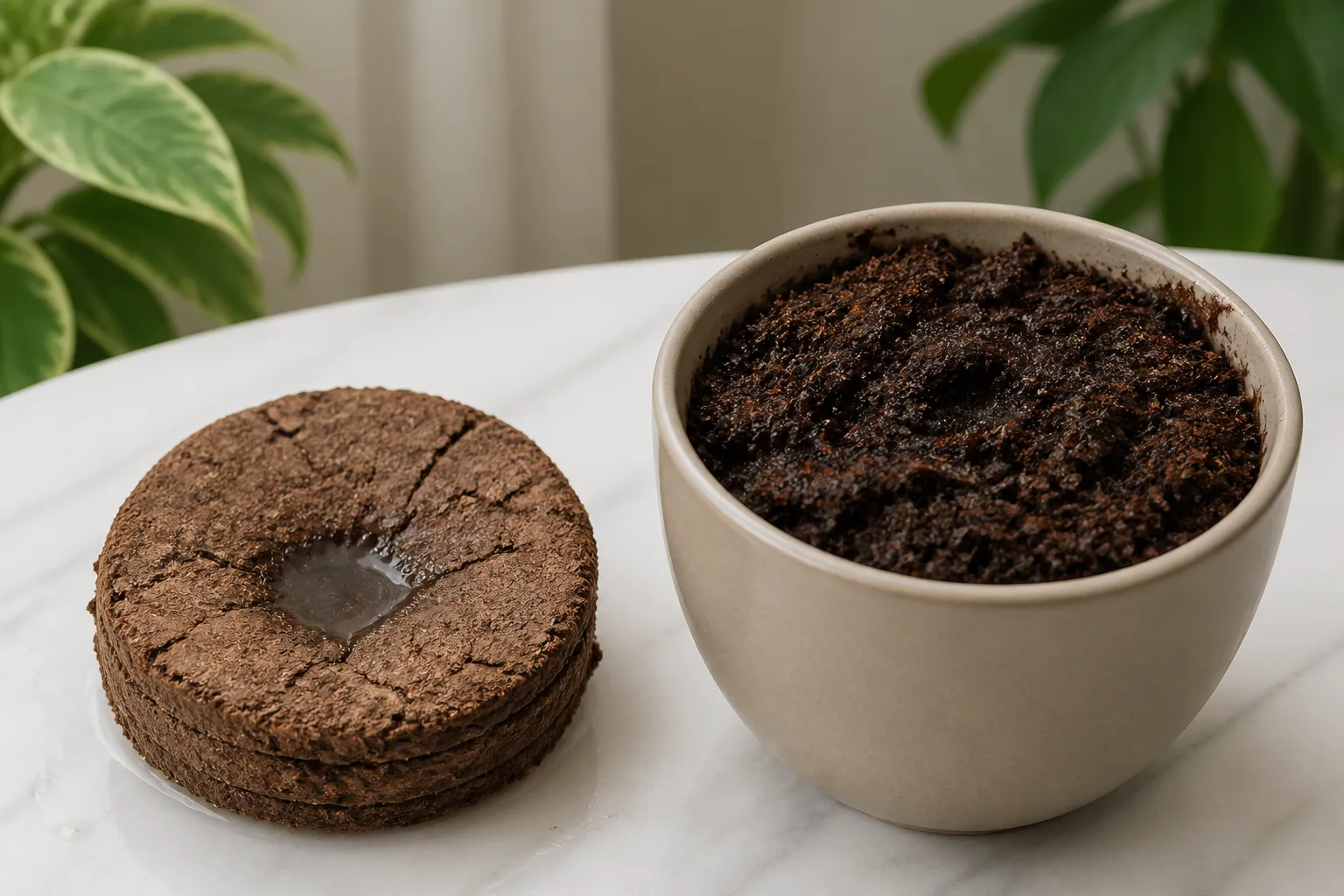
In practice, peat-forward pots often stay heavy longer after a thorough soak. Coir-forward pots still hold moisture but usually rewet more evenly from the top if the brick was hydrated and rinsed properly. Your pot material, drainage holes, and aerator percentage still matter more than the brand name on the brick.
Why Dry Peat Resists Water
UConn’s practical rule for any organic potting medium is to moisten it with warm water before use, because organic materials become hydrophobic or water-repellent when dry. Plants potted in dry medium and then watered get inconsistent moisture in the root zone and establish more slowly. Colorado State Extension Pueblo County notes the same contrast in gardener language: dry peat is hydrophobic and hard to rewet, while coir has excellent moisture-absorption and retention.
If a peat-based pot has dried into a hard puck, bottom-watering, multiple short soaks, or a gentle break-up of the root ball at repot time beats pouring a single hard stream that runs down the inside wall and out the holes.
The same coir-or-peat ratio behaves differently in terracotta versus plastic. Terracotta wicks moisture through the walls, so both bases dry faster and the coir-versus-peat gap shrinks. Plastic holds humidity in the root ball longer, which exaggerates peat’s slow dry-down and can make an unaerated peat mix stay swampy. When you run a side-by-side test, match pot material, size, light shelf, and aerator percentage — otherwise you are comparing pots, not organic bases.
Coir Salts, Rinsing, and Buffering
Salt is the coir trap that peat usually does not share. UF/IFAS warns that salt water used in processing can cause salt damage, and that washing coir before use minimizes problems. Clemson’s indoor soil-mix guidance is blunt: rinse coir thoroughly with water before use to avoid soil salinity issues.
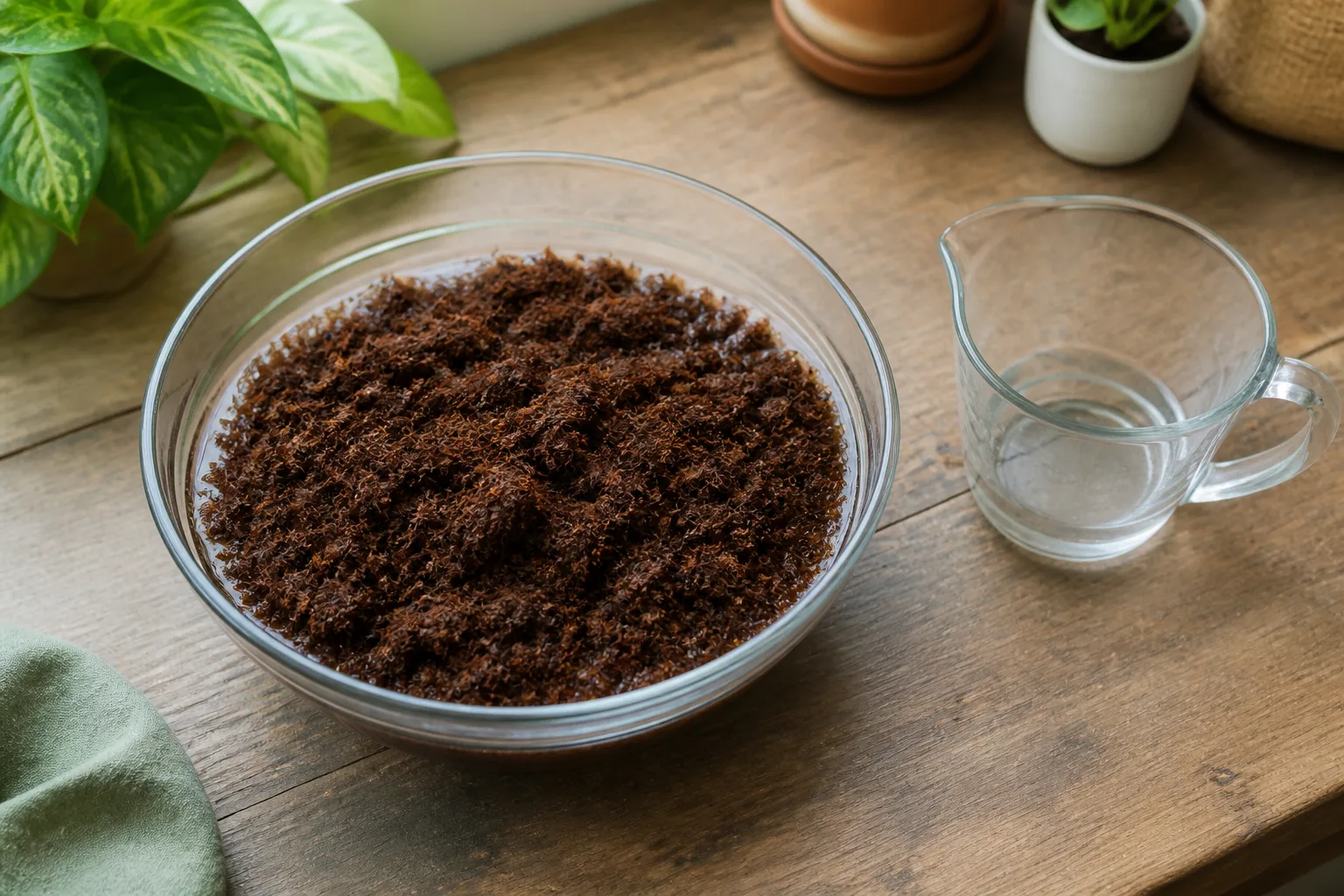
Utah State University research summaries on coir versus sphagnum peat also flag that commercial coir can show extremely high K contents and low Calcium, that salinity problems are real, and that some fresh coir issues go beyond salts (including phenolic compounds in some lots). Handreck and Black–style guidance cited in that USU work recommends amending coir-based media with gypsum for calcium and sulfur rather than liming when pH is already near 6.
RHS guidance on coir production draws a useful line between washed and buffered product. Washing removes excess salts so electrical conductivity (EC) drops into a horticultural range — washed coir specifications commonly target under about 500 microsiemens, often lower in practice. Buffering goes further by adjusting salt concentrations (often with calcium nitrate) for growers who need tight nutrient control on salt-sensitive crops. Most diluted houseplant blends do not require factory buffering if the coir is washed and you rinse at home; buffering matters most for high-coir hydro-style mixes and very salt-sensitive starts.
Home protocol that works for bricks and bags:
- Expand the brick in a tub of clean water until fully hydrated and fluffy.
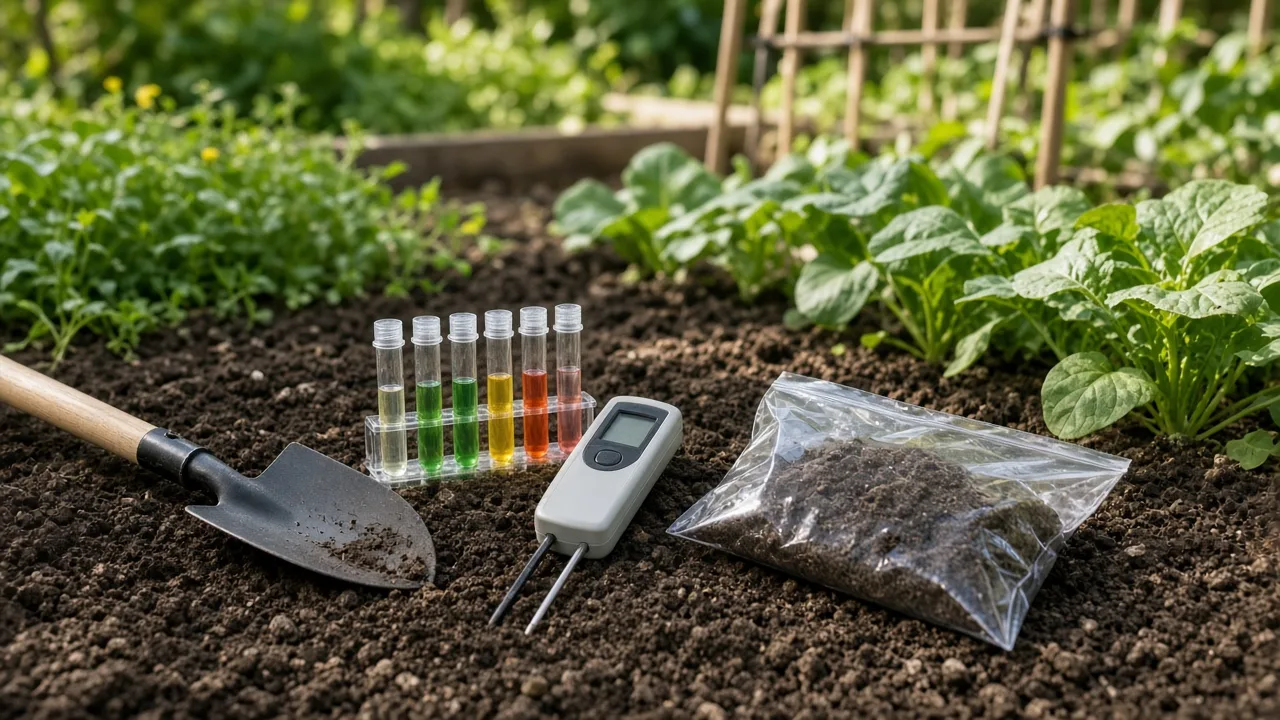
- Drain, then rinse again until runoff looks clear. Prefer a handheld EC meter on the runoff over tasting brine — Penn State notes that affordable EC meters are now common for media salt checks. Aim for a clear drop from the first cloudy rinse toward a much lower reading (washed horticultural targets are often well under ~0.5 mS/cm / 500 µS).
- Squeeze out excess water; mix while damp, not dripping and not dusty-dry.
- Prefer products labeled washed, low-EC, or buffered when buying for seedlings.
- For diluted houseplant blends with bark and perlite, a thorough rinse plus normal fertilizing is often enough — still skip untested salty bricks for seed trays.
Keep dry dusty coir or peat away from kids and pets during expand-and-mix day; work outdoors or over a tray, and wash hands after handling dry media.
How to Read Coir Bag Labels
Bag text is where many coir disappointments start. Treat the label as a quality filter before you commit a seedling tray.
- Washed / rinsed / triple-washed: Processing water was used to pull salts down. Still expand and give a home rinse if the brick is unlabeled or you are sowing seeds.
- Low EC / low salt: The maker is advertising controlled soluble salts. This is the phrase to hunt for seed starting and fine-rooted plants.
- Buffered / pre-buffered: Usually means a calcium (and sometimes magnesium) adjustment after washing so the coir is less likely to lock those nutrients when you fertilize. Helpful for high-coir recipes; optional for 30–40% coir aroid blends if you rinse and feed sensibly.
- pH balanced: Marketing shorthand — still verify with your plant’s preference and your fertilizer plan rather than assuming “set and forget.”
- No wash/EC claims: Assume rinse duty. Fine for chunky outdoor patio experiments after rinsing; risky for germination trays.
Coco Peat vs Chips vs Fiber
“Coir” is a family, not one texture. Coco peat (coir pith) is the fine, peat-like fraction — best for seed trays, African violet–style mixes, and the moisture body of a general houseplant blend. Coir chips are chunkier pieces that add air space; they belong in aroid mixes the way orchid bark does, not as a 100% seed medium. Coir fiber (longer strands) shows up in hanging-basket liners and some chunky blends for structure. For Monstera and other thick-rooted climbers, a rinsed coco-peat base plus bark and chips beats a brick of fine pith alone. For seed starting, stay with fine coco peat that is washed/low-EC — chips create air gaps seeds hate.
pH, Nutrients, and Fertilizer Adjustments
Peat runs acidic. UF/IFAS states peat has high acidity and that lime is usually added to balance pH. UConn keeps soilless media generally around pH 5.5–6.0. Coir sits near neutral, which is why Pueblo County Extension notes coir is pH-neutral versus acidic peat — useful context if you are later transplanting into alkaline outdoor soil, and relevant indoors when a plant prefers slightly acidic conditions.
Neither base is fertilizer. Clemson notes that quality soilless mixes may include a short starter charge but are often low in trace elements. Pueblo gardeners running majority-coir containers needed regular half-strength soluble fertilizer because coir is not “dirt.” UF/IFAS adds that coir may require less potassium and increased nitrogen supplementation than you would expect from a peat recipe — matching the high-K / nutrient-imbalance pattern discussed in coir substrate research.
Practical fertilizer rules:
- After the bag’s starter charge fades, feed on a schedule matched to growth season — see fertilizing indoor plants.
- In high-coir mixes, watch for tip burn that looks like salt stress; flush and confirm you rinsed the base.
- In peat mixes limed for foliage plants, do not stack extra acidifiers unless the plant needs it.
- Gypsum can help calcium/sulfur balance in coir-heavy media without pushing pH the way lime does.
Sustainability and Sourcing Trade-Offs
Clemson frames coir as a more sustainable peat alternative for indoor mixes. Pueblo County Extension contrasts upcycled coconut husk with peat as a finite resource whose collection damages peatland environments, and points readers to Oregon State University reporting that harvesting peat moss contributes to climate change. The Royal Horticultural Society’s peat-free work emphasizes that peatlands store carbon and support wildlife, which is why UK horticulture has been pushed hard toward peat alternatives such as coir, bark, and wood fiber — even as legislation timelines shift.
Coir is not impact-free. It is shipped long distances, processing uses water (and sometimes salt water historically), quality control varies by brand, and ethical sourcing questions exist in producing regions. RHS material on coir sustainability notes that properly washed horticultural coir targets low EC, that buffering is a minority specialty treatment, and that shipping compressed brick is more efficient than many people assume — while still urging responsible sourcing rather than blind “peat bad / coir good” slogans.
An honest houseplant decision is: prefer rinsed, washed, or low-EC coir when you want a peat-free base and accept rinse/fertilizer discipline; keep peat when a trusted peat-lite blend already performs and you manage wetness carefully — or blend both while you transition. Buying labeled washed/low-EC coir and pairing it with locally available bark and perlite or pumice is usually a better sustainability move than chasing marketing claims on an unlabelled brick.
Which Plants Prefer Which Base
Moisture-loving foliage (peace lily, many ferns, some calatheas) often thrives in peat-lite style mixes because peat’s water hold buffers skip-a-day watering — until poor drainage turns that buffer into root rot. If you overwater, a coir base with more bark and coarse aerators can dry a bit more evenly, but only if you still check the pot weight.
Aroids such as Monstera, Philodendron, and Pothos care more about chunkiness than about peat-versus-coir branding. Use either base at roughly 30–50% of a DIY aroid blend, then fill the rest with bark and mineral aerators — and prefer fine rinsed coco peat plus chips/bark rather than a salty unlabeled brick. A wrong soil mix for these plants is usually dense garden soil or unaerated peat brick — not “chose coir instead of peat.”
Succulents and cacti should not live in a majority peat or coir sponge. Keep the organic fraction low and push mineral content high so the mix cannot stay wet for a week.
Seedlings need low salts and fine texture. Classic peat–vermiculite mixes remain standard in extension recipes. Rinsed fine coco peat works when EC is under control; salty coir is a germination killer.
African violets and similar fine-rooted plants usually prefer fine, moisture-retentive peat-lite media. If you switch to coir, use fine coco peat, rinse well, and keep aeration gentle rather than chunky orchid bark.
Mix Ratios and Substitution Tips
You can often substitute coir for peat by volume in DIY recipes after rinsing, then adjust watering for a week. Clemson’s foliage plant mix recipes (for example, two parts peat / one part perlite / one part coarse sand, or one part peat / one part pine bark / one part perlite) are a solid template — swap rinsed coir for the peat fraction and watch dry-down. UF/IFAS publishes similar foliage, seedling, and specialty recipes built around peat; treat coir as a one-for-one volume stand-in only after washing.
You can also blend peat and coir in the same pot. A 50/50 organic base (still only ~30–40% of a chunky aroid mix) softens peat’s hydrophobicity while keeping familiar water hold — useful during a peat-free transition. Keep total aerators high enough that the blend cannot stay saturated.
Starting points:
- General houseplants: ~40–50% peat or rinsed coir + 25–30% aerator + 20–30% bark or coarse sand.
- Chunky aroids: ~30–40% peat/coir base + 30–40% orchid bark + 20–30% perlite or pumice (see Monstera soil mix).
- Seed starting: fine peat or rinsed fine coco peat with vermiculite/perlite; avoid untested high-EC coir.
- Succulents: organic base as a minority; prioritize mineral drainage.
Always mix damp media. Dry peat or dry coir plus dry perlite is dusty, uneven, and hard to hydrate in the pot. When refreshing an old plant, repot into the new blend rather than sprinkling dry coir on top of a hydrophobic peat puck.
First-Hand Notes From Switching Bases
These are single-setup LeafyPixels editorial notes from apartment mixes (plastic nursery pots unless noted). They are not lab thresholds — use them as texture, then watch your own wet-to-dry cycle.
Compressed coir brick rinse (measured). Expanding a generic unlabeled brick in a tub produced visibly cloudy first runoff. A cheap handheld EC meter read about 2.4 mS/cm on that first drain. After two full drain-and-refill rinses, runoff cleared and the meter dropped to about 0.45 mS/cm — inside the ballpark of washed horticultural targets discussed for coir. A peace-lily test pot in 50% rinsed coir / 25% bark / 25% coarse perlite showed no tip burn over three weeks of normal watering. The same brick used unrinsed in a small seedling tray gave patchy germination — we discarded that tray rather than “wait and see.”
Peat puck rewet. A snake plant neglected in a peat-heavy bagged mix shed water down the pot wall until we bottom-soaked it twice. After a full repot into a rinsed-coir aroid-style blend with more bark, top-watering wet the surface evenly on the first try.
Dry-down (pot weight). In a matched pair of 6-inch plastic pothos pots on the same bright-east shelf (same perlite percentage, no saucer water left overnight), we weighed pots after a full soak and drain. At 48 hours, the peat-lite pot was still about 55 g heavier than the rinsed-coir twin and felt cooler/wetter at finger depth. By day four both were light enough to water; watering habit still dominated — both pots declined when left in saucer water overnight in a separate mistake test. In terracotta of the same diameter, the gap shrank to roughly a half-day because the clay walls pull moisture either way (see terracotta vs plastic).
Fertilizer. Majority-coir patio-style blends needed more consistent dilute feeding than peat bags with a starter charge — matching extension notes that coir is not a nutrient source and may need nitrogen attention.
Common Mistakes With Coir and Peat
Skipping the coir rinse is the fastest way to get crispy tips and stalled seedlings. Using bone-dry peat straight from the bag creates dry pockets next to soggy channels. Treating either base as a complete soil without aerators builds poor drainage. Swapping vermiculite for perlite when you wanted faster drying keeps the mix wetter than you planned.
Other frequent errors: buying the cheapest coir brick with no wash/EC claims for seed starting; liming coir the same way you lime peat without checking pH; assuming “peat-free” automatically means better for every plant; using coarse coir chips as a seed medium; tasting runoff as your only salt test when a meter is available; and delaying a needed repot while waiting for a specialty coir brand when a rinsed generic brick plus bark would already fix a compacted root ball.
How This Fits With Drainage and Soil Choices
Coir and peat are the moisture base. Drainage still comes from particle size, aerators, pot holes, and watering habits. If leaves yellow and the pot stays heavy, diagnose wrong soil mix and poor drainage before blaming the peat-versus-coir label. Pair this decision with best soil for indoor plants, perlite vs pumice for the mineral slot, terracotta vs plastic pots when dry-down speed matters, and species hubs when watering cadence matters more than the organic fiber brand.
Related Guides
- Best soil for indoor plants — DIY recipes and bag picks; use this page to choose peat or coir as the moisture base.
- Best potting mix for indoor plants — what works in bagged mixes and how to amend them.
- Wrong soil mix — diagnose dense, soggy, or mismatched substrates.
- Poor drainage — when wet pots and yellow leaves point past the peat-vs-coir debate.
- Perlite vs pumice — pick the mineral aerator that pairs with either organic base.
- Terracotta vs plastic pots — pot walls change dry-down as much as the organic base.
- Monstera soil mix — chunky aroid ratios using peat or coir with bark.
- Repotting houseplants — refresh substrate so a new base actually reaches the roots.
- Monstera deliciosa — species hub for watering and soil context.
Conclusion: Choose-and-Test Checklist
Choose rinsed coco coir when you want easy rewetting, a near-neutral peat alternative, and a renewable husk fiber — then fertilize on purpose. Choose peat moss when you want classic water-holding peat-lite behavior for moisture lovers or seed recipes you already trust — then never let the mix bake into a hydrophobic puck, and watch for chronically wet pots.
- Decide from the tables (plant type, salt risk, sustainability priority, grade needed).
- If using coir brick, expand and rinse until runoff is clean; check EC if you can; prefer washed/low-EC products for seedlings.
- Match grade to job — fine coco peat for trays, chips/bark with coir for aroids.
- Moisten peat before potting so it accepts water evenly; respect terracotta vs plastic dry-down.
- Substitute by volume in proven recipes (or blend peat+coir), add bark and coarse aerators, then run one test pot through a full wet-to-dry cycle in your light and room.
Coir wins for peat-free DIY mixes and reliable rewetting when you respect salts and bag labels. Peat wins for familiar moisture buffering when you manage dryness and drainage. Either fails when it is the only ingredient in a sealed, unaerated pot.