Perlite vs Pumice: Which Soil Amendment to Use
Decide perlite or pumice with side-by-side tables, mix ratios, dust tips, and first-hand float vs stay-put notes for houseplants.
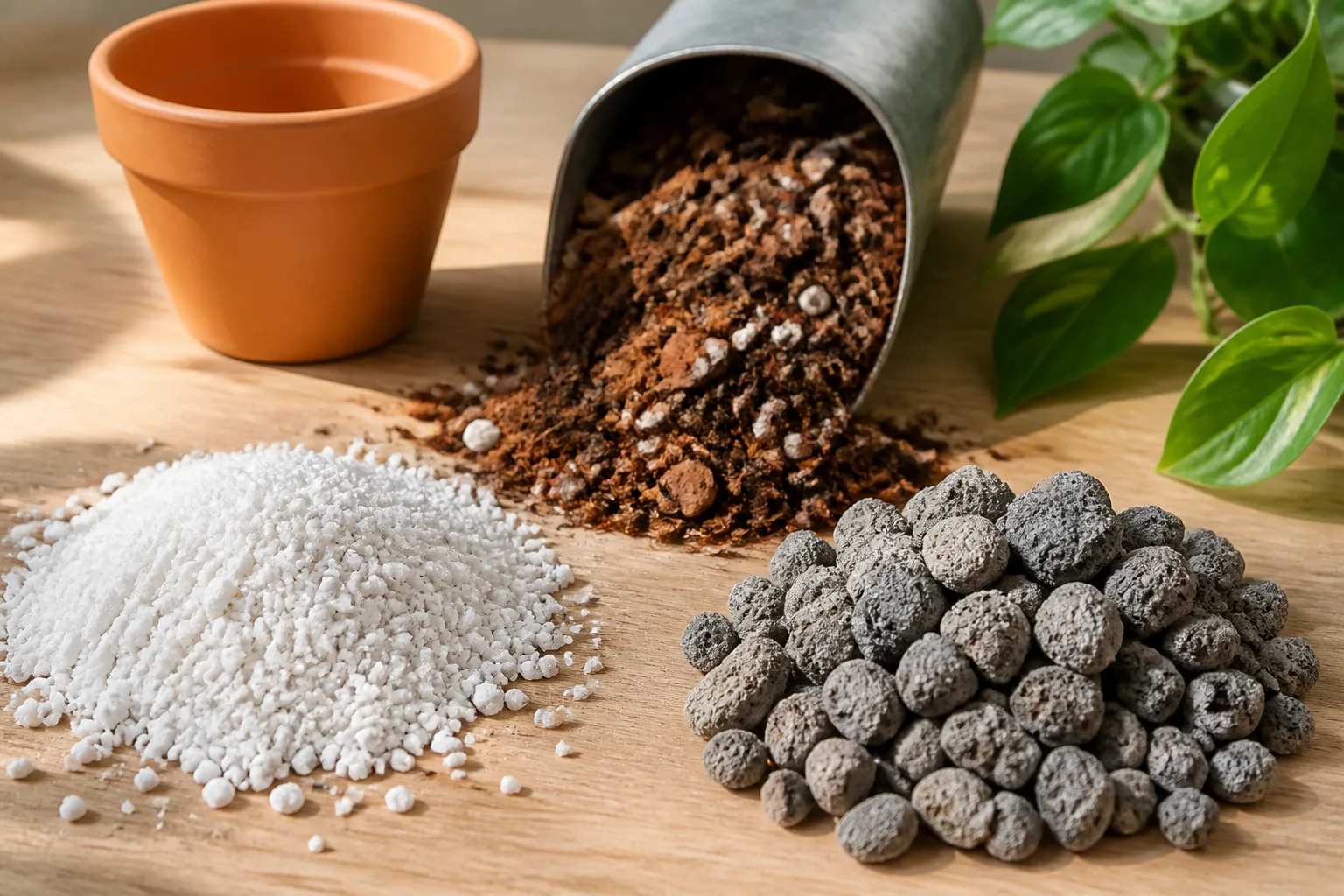
Perlite and pumice both open up potting mix so roots get air and excess water can leave the pot. They are not interchangeable in every situation. Perlite is cheaper, lighter, and easier to find. Pumice is denser, stays distributed in the mix, and holds its particle shape through more watering cycles. Pick based on plant type, pot weight, budget, bag grade, and how much dust you are willing to manage — not on which one sounds more “premium.”
On our own shelf mixes, the difference shows up fast: after a few thorough waterings, coarse perlite migrates into a white surface cap, while horticultural pumice at the same volume percentage stays mixed through the root ball. That single behavior often decides which bag is worth the money for your setup.
Quick Decision: Perlite or Pumice?
Choose perlite when you want an inexpensive, widely available aerator for general houseplants, seed starting, or large batches of DIY mix — and buy a coarse horticultural grade, not powdery fines. Choose pumice when you want a heavier amendment that will not float to the surface, especially for succulents, top-heavy plants in light plastic pots, or mixes you plan to keep a long time between repots.
Both beat dense, unamended bagged soil for container roots. Neither replaces a full potting strategy. For recipes by plant type, start with the site’s best soil for indoor plants guide, then use this page to decide which mineral amendment fills the drainage slot.
Vermiculite is a different tool. It holds much more water than either aerator and is the wrong one-for-one swap when your goal is faster dry-down.
Side-by-Side Decision Table
| Factor | Perlite | Pumice |
|---|---|---|
| Weight | Very light | Heavier; helps stabilize pots |
| Porosity / aeration | Excellent open pore space | Excellent; open, irregular particles |
| Water retention | Low; sheds water quickly | Low–moderate; some surface moisture hold |
| Dust when handling | Often high; wet and mask | Usually lower with quality grades |
| Cost / availability | Lower cost; common in garden centers | Higher cost; sometimes online-only |
| Longevity in mix | Can crush into fines over time | Structure holds longer in practice |
| Best plant types | General foliage, seed starting, budget aroid mixes | Succulents, long-term aroid mixes, top-heavy plants |
| Main downside | Floats; dusty; fines can slow drying | Price; harder to find locally |
Use the table as your first filter, then refine with plant type:
| Plant type | Prefer | Why |
|---|---|---|
| Aroids (Monstera, Philodendron, Pothos) | Either; coarse grade | Need air around thick roots; pair with bark — see Monstera soil mix |
| Succulents and cacti | Pumice (or coarse perlite) | Fast dry-down; pumice will not float or blow around |
| Orchids / chunky epiphyte mixes | Coarse perlite or pumice | Supplement bark; fine grades hold too much water |
| Seed starting | Fine–medium perlite | Light, sterile aeration; often paired with peat or coir |
| Large floor plants in plastic pots | Pumice or less perlite | Extra weight reduces tip-over risk |
| Budget bulk mixing | Perlite | Lower cost per bag for high amendment volume |
What Perlite and Pumice Actually Are
Both materials start as volcanic rock, but they end up in your bag through different paths. That origin story explains weight, dust, and how they behave when you water.
How Perlite Is Made
Perlite is volcanic glass that is mined, crushed, and heated until it expands like popcorn. Colorado State Extension describes it as heat-expanded volcanic rock used to increase pore space and promote drainage in potting and planter mixes. UConn notes the finished product as white, non-toxic, sterile, and odorless, added specifically to improve drainage and aeration.
Those closed, popcorn-like cells make perlite extremely light. The same structure is why particles can ride water upward and why dry bags throw a cloud of dust when you scoop them. Cornell Cooperative Extension notes that perlite, vermiculite, and peat or coir help keep mixes fluffy enough for air and water to move through the pores.
How Pumice Forms
Pumice is frothy volcanic rock formed when magma cools and depressurizes quickly. The Royal Horticultural Society lists pumice as an aerator: bulky, irregular particles that create air pockets, improve drainage, and still hold some water in their porosity. RHS also notes it works well for thick-rooted plants and can be used as a propagation medium.
Unlike perlite, horticultural pumice is typically screened rather than expanded in a furnace. The particles are denser, often gray or off-white rather than bright white, and they sit in the mix instead of bobbing to the top. Penn State indoor-garden guidance makes the same practical contrast: pumice is used as mined rock, is not heated like perlite, and will not float to the top of a potting mix even with frequent watering — at a higher price and with scarcer local stock.
Weight, Porosity, and Water Behavior
Roots need oxygen as much as water. When a mix stays dense and wet, water fills the spaces where air should be. Aerators — bark, pumice, clay pellets, perlite — create those spaces on purpose. High porosity in the growing medium means more space for water and air, which helps prevent waterlogging around container roots.
Perlite’s closed cells drain fast and hold relatively little water inside the particle. Pumice’s interconnected pores still drain well but can hold a thin film of moisture on and in the rock. In practice, both keep potting mix looser than peat or coir alone.
UF/IFAS lists perlite as a sterile, pH-neutral lightweight volcanic rock that increases air space, improves drainage, and can replace sand when you want a lighter mix. That is the shared job. The decision is how each material delivers that job in your pots.
| Job | Perlite | Pumice | Vermiculite |
|---|---|---|---|
| Primary role | Aerate / drain | Aerate / drain (+ slight surface moisture) | Hold moisture and some nutrients |
| Typical houseplant use | Push bagged mix open; seed trays | Succulents; long-term chunky mixes | Seedlings that must stay evenly damp |
| Wrong use | Ultra-fine grade packed into gaps | Waiting weeks for stock when a plant is rootbound | Swapping it in when you wanted faster drying |
Why Perlite Floats (and How Coarse Grade Helps)
Perlite is so light that repeated watering lifts particles toward the surface and out drainage holes. You will see a white “cap” on the soil after a few waterings. Penn State’s indoor-garden notes call float-up the one downside of an otherwise cheap, effective drainage additive. Surface-heavy perlite is doing less work down in the root zone where you wanted it.
Fine grades worsen the problem. Tiny pieces wash out, create dust, and can pack into gaps that actually slow drying — the opposite of what you bought perlite for. Coarse horticultural perlite stays put better, creates larger air channels, and is usually the smarter buy for houseplant mixes. Read the bag: look for “coarse,” “horticultural,” or a particle size aimed at containers, not ultra-fine propagation dust sold only for seed trays.
Why Pumice Stays Put Longer
Pumice is dense enough to remain distributed through the root ball after many watering cycles. That stability matters for succulents and for tall plants in light plastic pots, where a featherweight mix tips easily. Both materials are inorganic and do not rot like bark or peat. Perlite, though, can crush under root pressure and handling into powdery fines — the same Penn State note describes how it crushes into a powder when pressed. In grower practice, pumice generally keeps its particle structure longer, so the aeration you paid for lasts through more seasons between refresh cycles.
Dust, Handling Safety, and Mixing Tips
Dry perlite dust can irritate eyes, nose, and throat. People with asthma or other respiratory sensitivity should be especially careful. Do not intentionally inhale near an open bag “to check dustiness,” and keep children and pets from playing in dry product.
Practical handling that works in a home setup:
- Moisten the bag or scoop before mixing.
- Rinse perlite in a fine mesh colander outdoors, or poke a few small holes in the bag and run water through it until the dust settles.
- Wear a dust mask and eye protection when pouring dry product.
- Mix outdoors or near a window when you can.
- Prefer coarse grades for houseplants — they dust less and drain better than powdery fines.
Pumice is usually cleaner to handle, but any dry mineral dust deserves basic caution. Never treat “natural volcanic rock” as harmless to inhale in quantity.
When you blend, start with damp base mix (peat or coir can be hydrophobic when bone-dry — UConn recommends moistening media before use), then fold in the amendment until white or gray particles look evenly distributed. Dry base mix plus dry perlite is the dustiest combination.
Mix Ratios by Plant Type
Ratios are starting points. Pot size, plastic vs terracotta, light level, and your watering habits change dry-down speed. Clemson HGIC peat-lite style recipes often use roughly one part perlite among peat and sand or bark (for example, two parts peat, one part perlite, and one part coarse sand, or one part peat, one part pine bark, and one part perlite). UF/IFAS homemade mixes use similar peat–perlite–sand proportions for foliage and succulent blends. Seed-starting soilless mixes frequently use a high share of fine perlite with peat or coir; Penn State notes that seedling mixes commonly combine peat with vermiculite or perlite for water-holding capacity plus aeration.
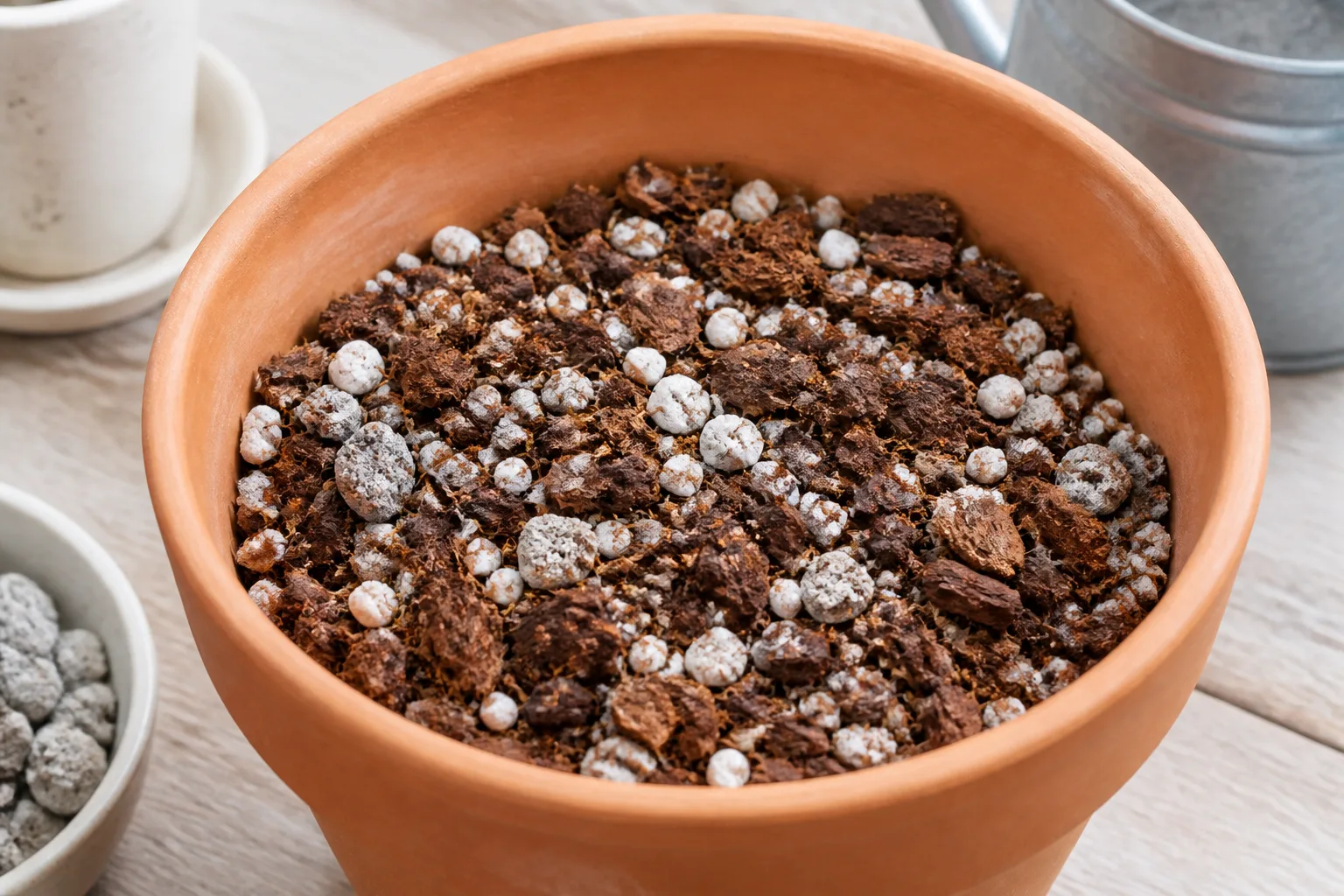
General houseplants and aroids. Amend a quality indoor potting mix with 15–30% perlite or pumice by volume, often plus bark for chunkiness. A practical aroid starting point used on LeafyPixels for Monstera is about 60% potting mix, 20% perlite or pumice, 20% orchid bark. Increase mineral and bark if the pot stays wet for days; ease back if the root ball dries in under two days in bright light. Pothos, Philodendron, and similar vines usually tolerate a slightly finer mix than Monstera, but they still benefit from the same aerator.
Succulents and cacti. Push mineral content higher — often 30–50% pumice or coarse perlite in the finished blend. Pumice is the cleaner long-term choice because it will not float into a crust on top of a shallow pot. Coarse perlite still works if you rinse it and accept some surface migration.
Orchids and epiphytes. Bark-heavy mixes already drain aggressively. Add coarse perlite or pumice as a minority fraction as bark ages. Fine perlite in orchid mix is a common mistake — it behaves more like silt than like an aerator.
Seed starting and cuttings. Fine-to-medium perlite is the usual pick: light, cheap, and easy to blend at about 25–50% of a peat/coir seed mix depending on how wet you keep trays. Cuttings of aroids and herbs often root in pure perlite or a perlite-dominant blend because oxygen around the stem base stays high while moisture stays available on particle surfaces. Pumice works for chunkier cuttings, but its weight and cost are rarely worth it for trays of seedlings.
First-Hand Notes From Mixing Both
These are single-setup LeafyPixels editorial observations from a north-central Ohio apartment (plastic nursery pots unless noted). They are not universal lab thresholds — use them as decision texture, then watch your own dry-down.
Monstera in a 6-inch plastic pot (60/20/20). Same bagged indoor mix + orchid bark, with either 20% coarse horticultural perlite or 20% medium horticultural pumice. After three thorough top-waterings over about two weeks, the perlite blend showed a clear white surface cap and a few chips in the saucer; the pumice blend still looked evenly speckled when we tipped the root ball out. Lift weight felt similar when dry, but the pumice pot was noticeably harder to tip when the plant leaned toward a west window.
Jade in a shallow 4-inch plastic pot (about 40% mineral). Coarse perlite migrated into a visible crust after four waterings; the same volume of pumice stayed mixed. Dry-down to “light pot” was roughly a day longer with pumice in our cool spring room — close enough that watering habit mattered more than the mineral brand, but the float crust alone made pumice the less annoying choice for a shallow dish.
Dust and tip-over. Dry-scooping a fresh bag of fine-leaning perlite indoors left a visible haze; pre-wetting the bag outdoors cut that to almost nothing. A tall snake plant in a light plastic grow pot tip-tested more stable after we swapped a high-perlite refresh for a pumice-forward blend at similar volume — useful when you refuse a heavy terracotta cache for style reasons.
Equal-volume swap note. In the 6-inch Monstera pair above, swapping perlite for pumice at the same 20% did not transform a wet mix into a dry one by itself. Light, pot material, and bark fraction still dominated. What changed was particle placement after watering and pot stability — the reasons most people actually regret perlite, not a mythical “always dries twice as fast” claim.
When to Choose Perlite
Reach for perlite when cost and availability matter, when you are amending many bags of mix at once, when you need a light pot for shelves or hanging planters, or when you are building seed-starting media. It is also the default white mineral already present in most commercial potting soils — buying a bag of horticultural perlite lets you push a dense bagged mix toward the drainage level tropical houseplants actually need. UNH Extension notes that quality container mixes stay lightweight and fluffy with ingredients such as peat, coir, bark, perlite, or vermiculite; your job is often to add more drainage material than a cheap bag already contains.
Skip ultra-fine “dusty” bags when you can. Coarse horticultural grade solves most home complaints about floating and mud-like wetness.
When to Choose Pumice
Reach for pumice when pots tip, when white chips floating on the surface annoy you, when you want the amendment to stay where you mixed it for years, or when you grow succulents and other plants that hate lingering moisture at the crown. It is also a strong pick for statement plants in lightweight plastic that still need a chunky aroid mix.
If local nurseries only stock perlite, do not delay a needed repot waiting for pumice. Perlite, used at a sensible ratio and preferably coarse, still beats an unaerated peat brick. You can also blend both: coarse perlite for cheap bulk aeration plus a smaller pumice fraction for weight and stay-put particles in the lower half of the pot.
Common Mistakes When Amending Potting Mix
Using only fine perlite “because more white bits look healthier” can keep the mix wet longer once those bits crush and pack. Leaving drainage holes blocked or adding a rock layer under the mix does not fix a dense substrate — aerate the whole root zone instead. Treating perlite and vermiculite as twins is another frequent error: vermiculite holds much more water and is the wrong swap when you wanted faster drying.
Overdoing either amendment in moisture-loving plants (ferns, some prayer plants) can force constant watering. Match the mineral percentage to the plant, then adjust after watching one full wet-to-dry cycle — the same moisture-first habit as watering indoor plants the right way. Mixing bone-dry perlite indoors without wetting it first is unpleasant and unnecessary. Waiting weeks for a specialty pumice bag while a plant sits rootbound is also a mistake — fix the potting problem with the amendment you can buy this weekend.
How This Fits With Broader Soil Choices
Perlite and pumice are one slot in a larger recipe. Base moisture usually comes from peat or coco coir. Structure often comes from bark. Fertility comes from compost, castings, or fertilizer — not from perlite, which is essentially inert. Pumice may carry minor mineral content, but you should not count on it as fertilizer.
UConn also notes that heavier mixes with sand or mineral soil suit large or top-heavy houseplants — the same stability logic that makes pumice attractive in plastic pots. Build the mix around the plant, then decide which aerator fills the drainage role. Pair this amendment choice with a full soil or potting-mix recipe, a chunky aroid blend when needed, and species hubs such as snake plant and ZZ plant when watering and soil notes matter more than the amendment brand.
Related Guides
- Best soil for indoor plants — brand picks and DIY recipes; use this page to choose the mineral aerator inside those recipes.
- Best potting mix for indoor plants — what actually works in bagged mixes and how to amend them.
- Monstera soil mix — chunky aroid ratios using perlite or pumice with bark.
- Terracotta vs plastic pots — how pot material changes dry-down and tip-over risk alongside amendment weight.
- Repotting houseplants — when and how to refresh substrate so amendments keep working.
- Indoor succulent care — fast-draining mixes where pumice often outperforms fine perlite.
- Monstera deliciosa — species hub for watering, soil, and repotting context.
Conclusion: Test-Pot Checklist
- Match the plant type in the decision tables (aroid, succulent, seed tray, or floor plant that tips).
- Buy the right grade — coarse horticultural perlite or screened horticultural pumice; skip ultra-fine dust for houseplant pots.
- Wet dusty perlite before mixing, mask if needed, and blend into already-damp base mix.
- Start with a known ratio (about 15–30% mineral for general foliage; higher for succulents; 60/20/20 with bark for chunky aroids).
- Mix one test pot, water thoroughly, empty the saucer, and watch one full wet-to-dry cycle in your light and room.
- Adjust on evidence — if a white float cap bothers you or the pot tips, shift toward pumice or less perlite; if the mix stays heavy for days, raise the coarse mineral/bark fraction; if it dries too fast, ease the mineral percentage back.
Perlite wins for seed starting, budget bulk mixes, and everyday foliage when you buy a coarse grade and wet it before mixing. Pumice wins when you want the amendment to stay put for succulents, top-heavy plants, and long-lived chunky mixes. Both improve aeration and drainage when they stay where the roots are — not when they sit as a decorative crust on top.