Native Asters: The Best Fall Mum Replacement
Garden pros recommend native asters over potted mums for cold-hardy fall color. Compare species, planting timing, pinching, and when mums still win.
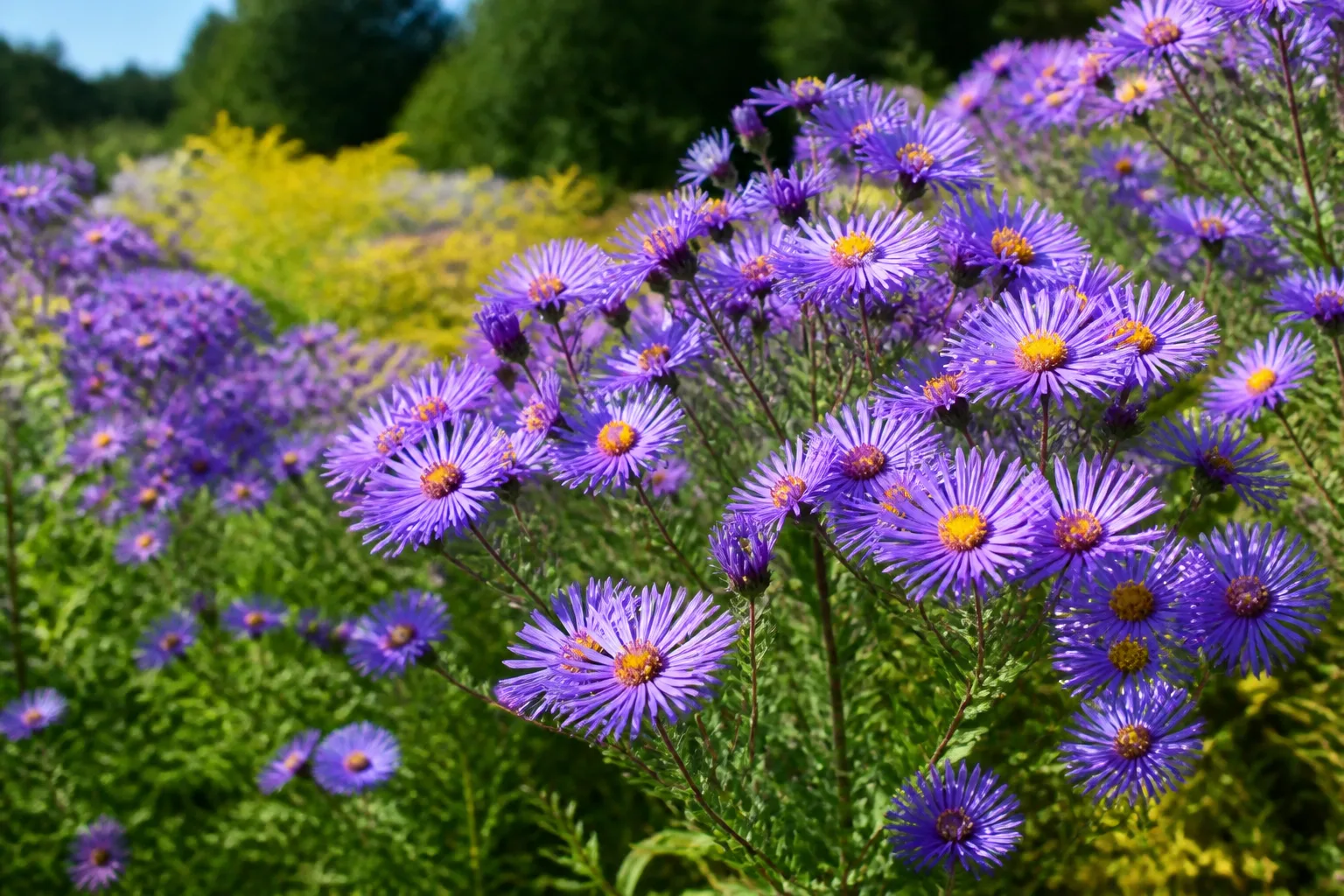
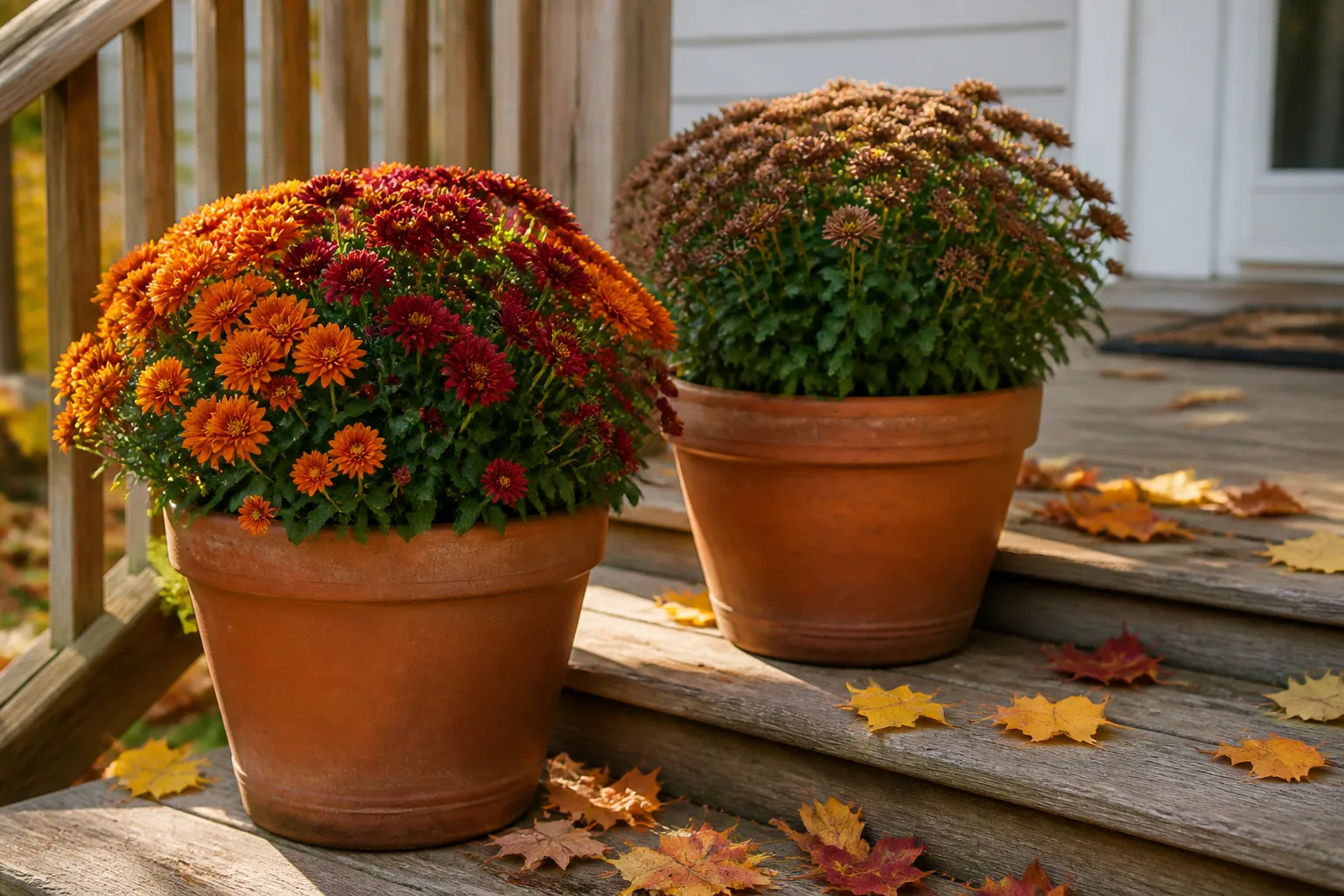
Every September, garden centers stack pots of chrysanthemums by the entrance, and porches across the country fill with bronze, burgundy, and gold mum domes. The display looks perfect for about three weeks. Then watering slips, a hard frost arrives early, or the plant simply never settles in—and another round of mums heads to the compost bin by Thanksgiving.
If that cycle sounds familiar, you are not failing at gardening. You may be using the wrong plant for the job you actually want done. Native asters—now classified botanically as Symphyotrichum—deliver a similar daisy-like burst of late-season color, but they are built to return from the same root crown year after year, tolerate cold and dry spells better than most potted mums, and feed pollinators when nectar is scarce. Landscape designers and native-plant advocates have been steering clients toward asters for years; the shift is less about rejecting mums entirely and more about matching the plant to whether you want a one-season porch prop or a permanent fall performer.
Why Garden Mums Disappoint So Many Fall Gardens
Mums are not bad plants. They are misassigned plants in many home gardens. The pots you grab at the grocery store in early fall are often florist mums (Chrysanthemum × morifolium hybrids) bred for greenhouse forcing and tight mounded form, not for surviving winter in a border. Even hardy garden mums sold as perennials can behave like short-lived seasonal décor if they are planted too late, kept in small pots, or selected from varieties that do not reliably overwinter in your zone.
Florist Mums vs Hardy Garden Mums
Florist mums are manipulated with growth regulators and long-night treatments to bloom on a retail schedule. Their root systems are frequently cramped in nursery pots, and their stems may not harden off before cold weather. Treat them as temporary color—similar to a potted poinsettia—unless you are willing to experiment with overwintering in a protected cold frame.
Garden mums labeled with a USDA hardiness range can persist when planted in spring, given full sun, and allowed to establish before fall. Andrew Bunting, VP of Horticulture at the Pennsylvania Horticultural Society, notes that many garden mums purchased in autumn are used for short seasonal impact and discarded because they were never meant to be planted as long-term garden residents when bought at peak bloom in a small container (PHS: Fall Blooming Perennial Alternatives). The label “perennial” is not a guarantee if the plant arrives root-bound and flowering on the shelf in October.
The Hidden Cost of Treating Mums as Throwaway Decor
The real expense of disposable mums is not just the receipt—it is the lost establishment time. A mum bought in full bloom in September has spent its energy on flowers, not roots. You pay premium fall prices for a plant that has little runway to anchor itself before freeze-thaw cycles begin. Perennial fall flowers planted once in spring—or in early fall with six to eight weeks before hard freeze—amortize that cost across many seasons.
If your goal is a photo-ready porch for four weekends, mums can still earn their keep. If your goal is a border that looks intentional in October and comes back next year without a nursery run, asters solve the problem more cleanly.
Why Native Asters Are the Fall Flower Gardeners Keep Recommending
Asters are true short-day bloomers: flower initiation tracks declining daylight, which is why they peak as summer annuals finish. North America hosts dozens of native species—landscape designer Ward Dilmore and native-plant educators frequently highlight their hardiness, naturalistic form, and similarity to mum flowers without the forced, uniform dome shape (KW Garden Design: Asters as a Fall Powerhouse).
Unlike the mum aisle, aster color runs from white and pink through lavender, blue-purple, and deep violet, often with bright yellow disc flowers that read clearly from the curb. Heights range from compact 18-inch mounds to 6-foot back-of-border specimens, so you can match scale to beds, hellstrips, and large containers.
Cold Hardiness and Low-Maintenance Returns
Most native asters sold in garden centers are root-hardy across USDA zones 3–8, with some species stretching into zone 9 in cooler microclimates. Once established, they tolerate occasionally dry soil better than mums in tight pots, and many species show moderate deer resistance—a meaningful advantage in suburban gardens where mums get nibbled the week you set them out.
NC State Extension describes New England aster (Symphyotrichum novae-angliae) as a herbaceous perennial that returns from crown and roots each season, producing masses of composite flowers from late summer into fall without requiring annual replanting (NC State: New England Aster). Aromatic aster (S. oblongifolium) and smooth blue aster (S. laeve) extend that reliability with slightly different habits—mounding versus upright—so you can choose structure as well as color.
Pollinators, Birds, and Late-Season Wildlife Value
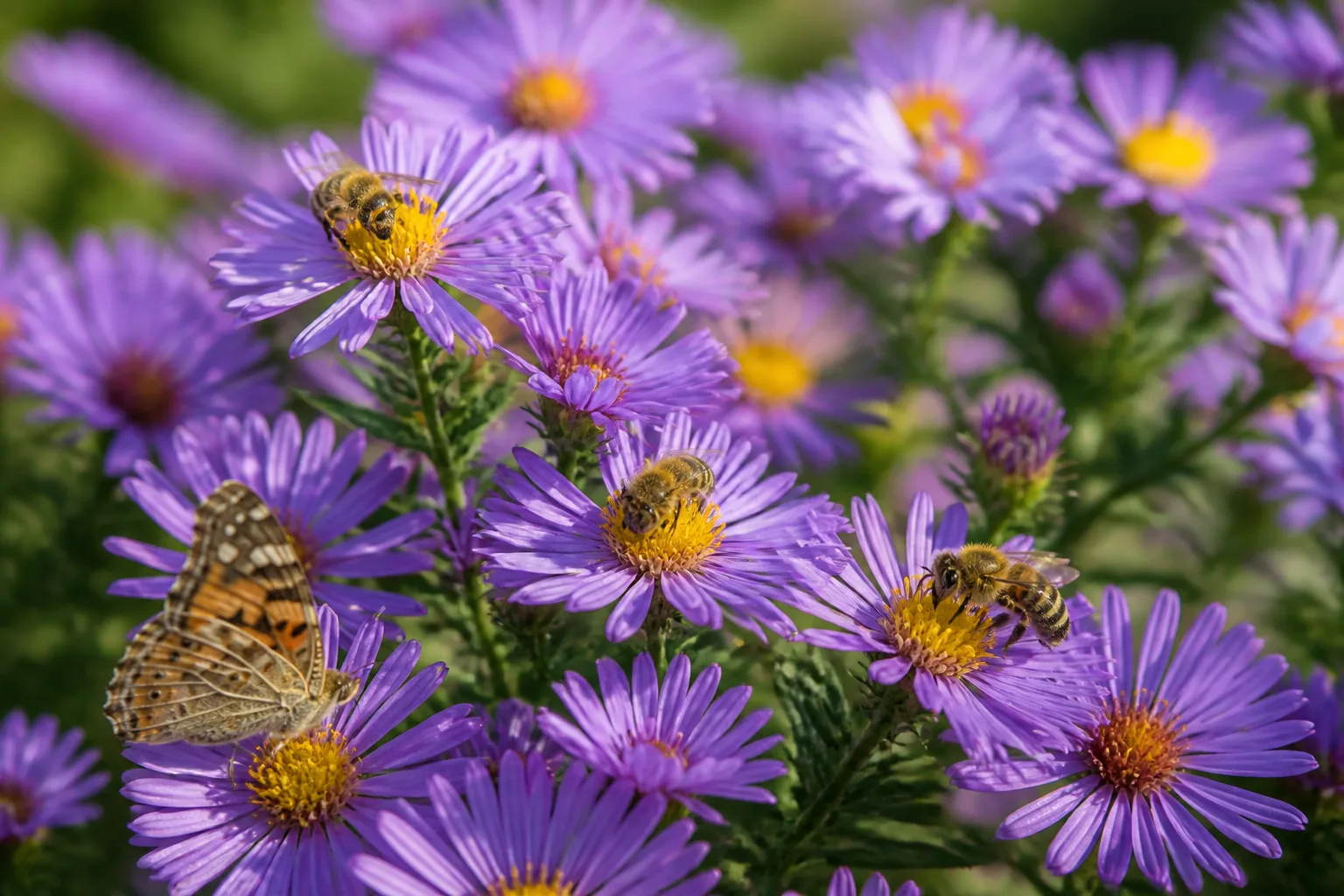
Late-season nectar is ecologically valuable. Monarchs migrating south, native bees finishing brood cycles, and hover flies all use aster flowers when many summer sources have shut down. NC State notes that Symphyotrichum species support specialized native bees and serve as larval host plants for pearl crescent butterflies, while songbirds and small mammals eat the seeds that follow bloom (NC State: New England Aster).
Mums can attract some pollinators when open, but heavily doubled cultivars often offer little accessible nectar. Native asters—with simple ray and disc flowers—tend to deliver more consistent forage. If you are building a fall garden that still works for wildlife after the camera goes away, asters align with that priority in a way disposable mums usually do not.
Asters vs Mums: A Practical Comparison
Use this table as a quick decision filter before you load the cart:
| Factor | Potted garden/florist mums | Native perennial asters (Symphyotrichum) |
|---|---|---|
| Typical lifespan in home gardens | One season unless planted early and well | Many years with division every 3–4 seasons |
| Best purchase timing | Early fall for instant color | Spring or early fall for establishment |
| Cold tolerance | Variable; often poor in tight fall pots | Strong; species hardy to zone 3–4 |
| Water needs | High in small containers | Moderate; ~1 inch/week when establishing |
| Fertilizer | Often pushed for retail bloom | Light; excess causes floppy, leafy growth |
| Pollinator value | Low to moderate (depends on cultivar) | High for native species |
| Deer pressure | Frequently browsed | Moderate resistance on many natives |
| Form | Uniform mounded dome | Naturalistic mounds to tall sprays |
| Cost over 5 years | Rebuy annually | One purchase + occasional division |
Neither column “wins” on every row. Mums still take the instant-gratification category. Asters win on return on effort when you want fall color integrated into a bed, meadow strip, or large container that persists.
Know Your Aster: Symphyotrichum and What Changed
If you have not shopped for asters since the last decade, the tags may look unfamiliar. Botanists split many North American “asters” out of the old Aster genus into Symphyotrichum, Eurybia, and related groups. European asters still carry the name Aster in many catalogs. For fall mum replacement in U.S. gardens, Symphyotrichum is the group you want on the label.
Do not let the Latin intimidate you. At the garden center, look for common names—New England aster, aromatic aster, smooth aster, heart-leaved aster—and match them to your height and moisture conditions. For deeper species profiles and year-round care, the perennial aster growing guide on LeafyPixels walks through planting, pinching, and division in detail.
Aromatic Aster for Compact, Mum-Like Mounds
Aromatic aster (Symphyotrichum oblongifolium) is the closest aesthetic substitute for mounded mum color without the disposable habit. Cultivars like ‘Raydon’s Favorite’ and ‘October Skies’ form 18-inch-tall, equally wide cushions smothered in lavender-blue flowers with yellow centers from early October onward (PHS: Fall Blooming Perennial Alternatives). Crush a leaf and you get a clean, balsam-like scent—hence “aromatic.”
Choose aromatic aster for front-of-border slots, sunny foundation plantings, and medium containers where you want mum-like density without staking. It is one of the most forgiving species for dry edges once established.
New England Aster for Bold Purple Impact
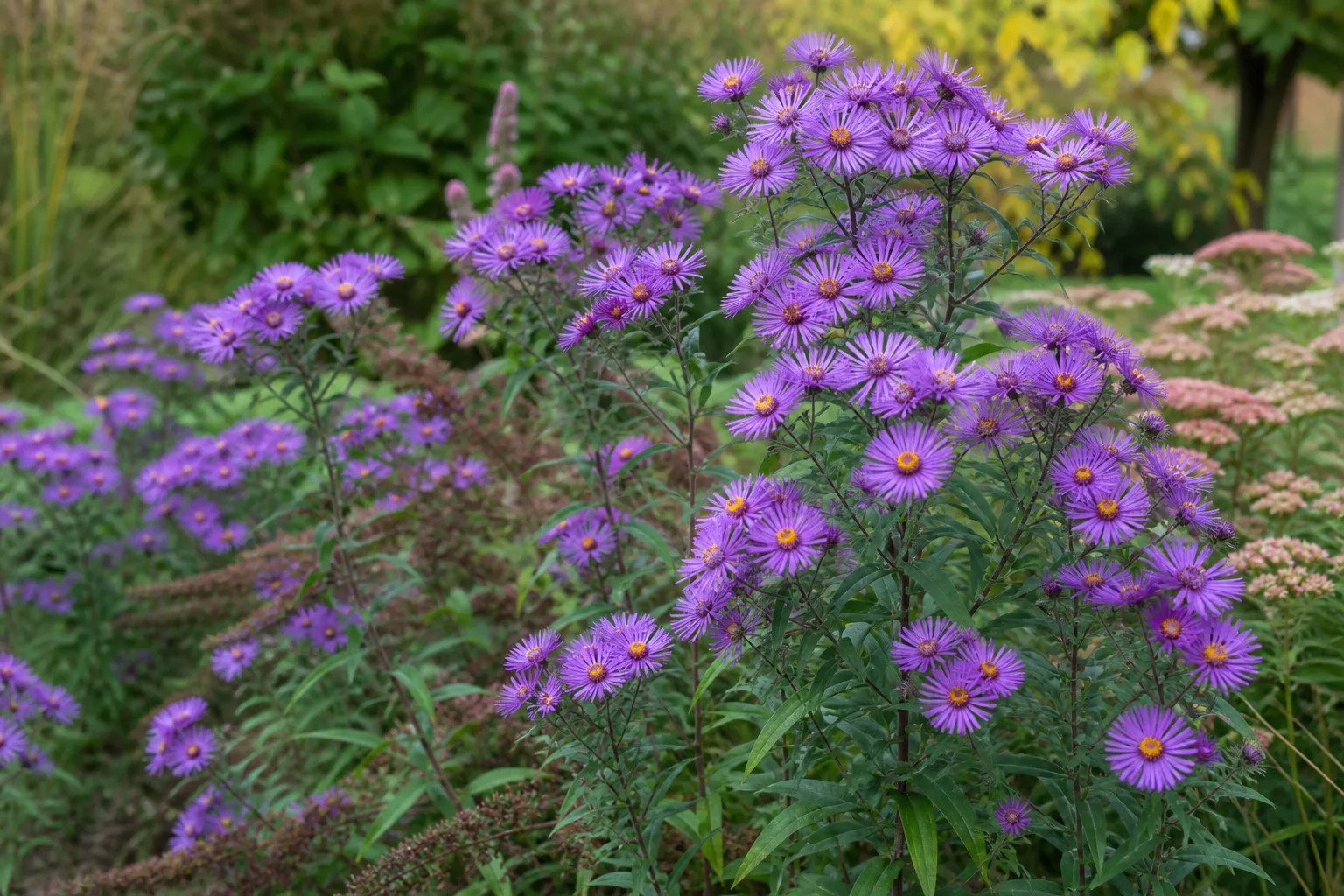
New England aster (Symphyotrichum novae-angliae) is the showboat: 3–6 feet tall in species form, with hundreds of purple rays around yellow discs. In small gardens, skip the species and plant ‘Purple Dome’, a 2-foot mound with saturated purple flowers that reads like a mum from the street (NC State: New England Aster). Taller cultivars like ‘Purple Cloud’ belong at the back of a border paired with ornamental grasses.
New England aster wants moist, fertile, well-drained soil and full sun. Pinch stems in late spring if you are growing taller selections, and expect to divide clumps before the center dies out—usually every three years.
Smooth Blue Aster for Upright Structure
Smooth blue aster (Symphyotrichum laeve ‘Bluebird’) grows more upright than aromatic types, with blue-purple flowers and cleaner foliage that tolerates humidity better than some tall New England strains. PHS highlights it as a keystone native—a plant disproportionately valuable for supporting biodiversity (PHS: Fall Blooming Perennial Alternatives).
Use smooth aster when you need vertical accent beside paths, in mixed native borders, or behind lower mounding perennials. Its structure contrasts beautifully with flat-topped sedums and feathery grasses in fall compositions.
When Mums Still Make Sense
Replacing mums with asters does not require burning your porch display. Keep mums when:
- You need guaranteed bloom this weekend for an event, open house, or photo shoot.
- You are designing a temporary container you plan to empty after frost.
- You want a specific doubled flower form or bicolor pattern asters do not replicate.
- You are in a warm climate where asters finish early and you want a second punch of forced color in November.
Shift to asters when:
- You are planting in-ground beds or large permanent containers.
- You want pollinator value and seed for birds through winter.
- You are tired of rebuying the same fall color annually.
- Your site is dry, sunny, or deer-prone—conditions where asters often outperform stressed mums.
Many strong fall designs combine both: asters in the border for longevity, a single mum pot on the step for immediate saturation. The mistake is using only mums everywhere and expecting perennial performance.
Where and When to Plant Asters
Site choice matters as much as species choice. Asters are adaptable, but they are not shade plants or bog plants. Match the species to drainage and height, then give roots time to establish before you judge the display.
Spring vs Fall Planting Windows
Spring planting after the last frost is the safest default in cold zones (3–5). You get a full growing season for root development before the first fall bloom cycle.
Fall planting works well in zones 6–8 when you plant six to eight weeks before the first hard freeze and keep soil consistently moist until freeze-up. PHS recommends fall-blooming perennials can be added from spring through fall, with the caveat that late purchases in full bloom still need establishment time (PHS: Fall Blooming Perennial Alternatives).
Avoid planting potted asters in full flower the same week as a hard freeze unless you are willing to mulch heavily and water through dry autumn spells. The flowers you see at purchase are not a substitute for rooted stability underground.
Sun, Soil, and Spacing Rules
Most border asters need at least six hours of direct sun daily for dense bloom. Partial shade is tolerable for some woodland-edge species, but flower count drops—relocate rather than fertilizing harder.
Soil should be well-drained. Clay is acceptable for New England aster if you avoid standing water. Spacing depends on mature width: allow 18–36 inches between compact cultivars and up to 4 feet for tall species to maintain airflow.
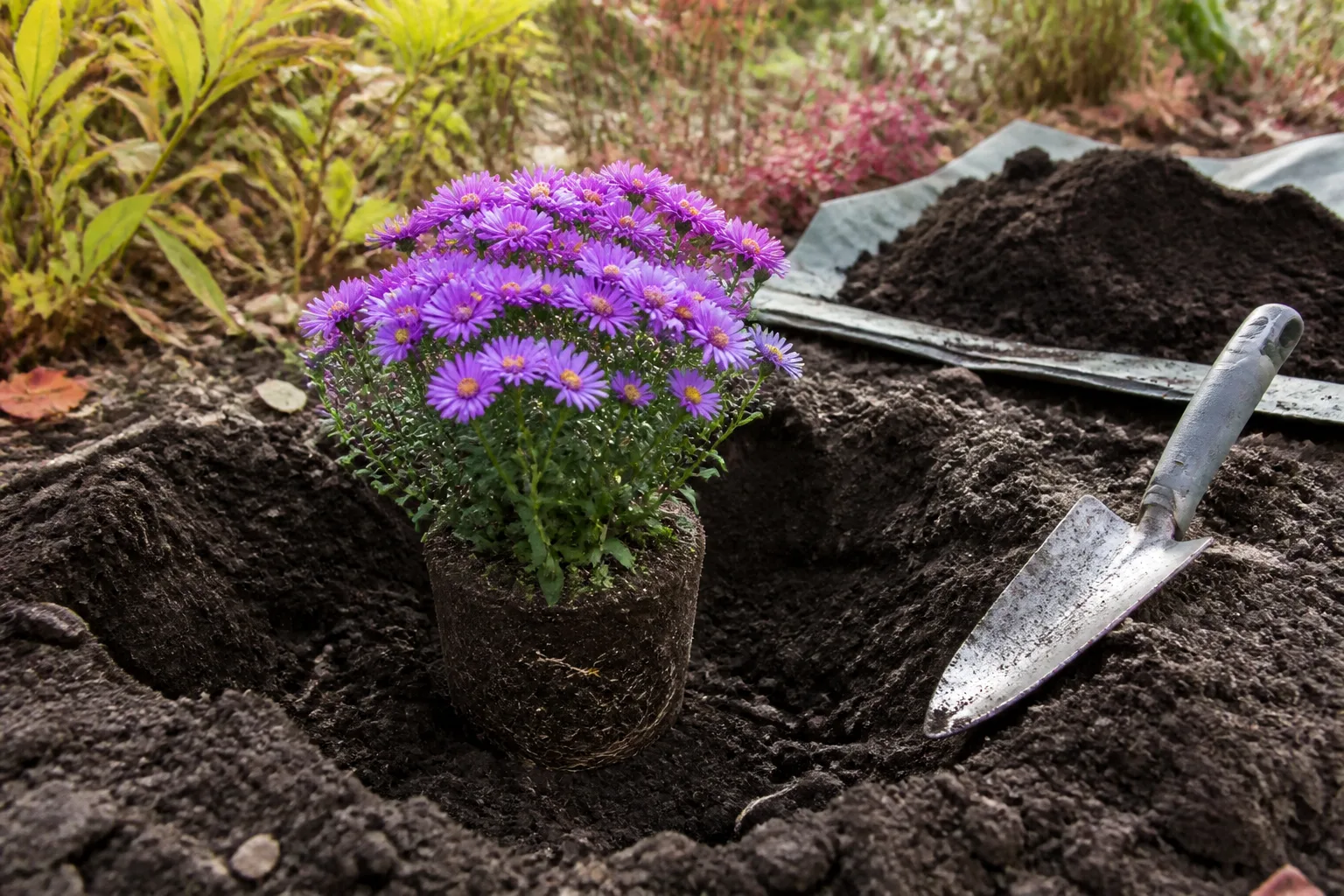
Set the crown at the same depth it grew in the nursery pot—never bury stems deeply. Water weekly (~1 inch) during the first season; established clumps tolerate occasional dry stretches better than mums in small pots.
Water, Fertilizer, and the Pinch That Prevents Flopping
Asters reward restraint. Overwatering and overfeeding produce lush foliage and weak stems—the opposite of the crisp fall color you want.
Water at the base, especially if powdery mildew has been an issue. Established plants tolerate dry soil between rains; containers need more frequent checks because potting mix dries faster than garden beds.
Fertilizer should be light. Native asters often perform best with no synthetic feed, or a single spring top-dressing of compost. Rich soil can suppress flowering and cause stems to flop (PHS: Fall Blooming Perennial Alternatives). If your bed is already heavily amended from vegetable gardening, choose a leaner edge or expect to pinch and stake.
Pinch in late spring to early summer, cutting stems back by one-third to one-half before bud set. This encourages branching and keeps mounds dense rather than tall and leggy. Stop pinching by early July in most climates so you do not delay fall bloom into frost. Tall New England asters especially benefit from this habit; compact cultivars like ‘Purple Dome’ may need little or none.
Growing Asters in Containers and on Porches
Asters can replace mums on porches if you respect root space. Choose compact cultivars—‘Purple Dome’, aromatic aster selections, or Kickin’ series hybrids—and pot them in containers at least 12–16 inches wide with drainage holes. Epic Gardening notes that asters spread roots horizontally and bloom best with room to grow (Epic Gardening: Mum Alternatives for Fall Porch).
Use quality potting mix, not garden soil, and place pots where they receive six or more hours of sun. Water when the top inch of mix dries; porches under eaves often stay dry even when borders get rain.
In zones 5 and colder, winter survival in pots is harder than in-ground planting. Options include sinking pots to the rim in a garden bed before freeze, grouping pots against a sheltered wall with mulch, or treating container asters as a multi-year experiment while keeping border plantings as your reliable core. For instant porch-only color with zero winter expectations, mums may still be simpler—just know you are renting, not buying.
Powdery Mildew, Pests, and Division
Asters are generally low-drama once established, but powdery mildew is the most common cosmetic issue—white coating on leaves in humid summers with poor airflow. Reduce risk by spacing generously, watering at soil level, and choosing species with cleaner foliage like smooth blue aster. Severely infected leaves can be removed in fall or spring; do not compost heavily mildewed material if spore load is high (NC State: New England Aster).
Watch for aster wilt, stem rot on waterlogged sites, and occasional aphids or spider mites during hot dry spells. Taller plants may need staking if you skip spring pinching or overfeed.
Divide clumps every three to four years, or when flowering occurs only around a dead center. Early spring, as shoots emerge, is easiest; fall right after bloom also works if six weeks remain before freeze. Replant vigorous outer divisions and discard woody centers.
Self-seeding is a feature or a flaw. Allow seed heads to stand if you want volunteers and bird food; deadhead before seeds ripen if you want tight control. For cutback timing and wildlife trade-offs, see when to cut back asters for winter.
Design Ideas: Pair Asters With Grasses and Goldenrod
Fall beds look flat when everything is the same height and texture. Asters solve color; companions solve structure.
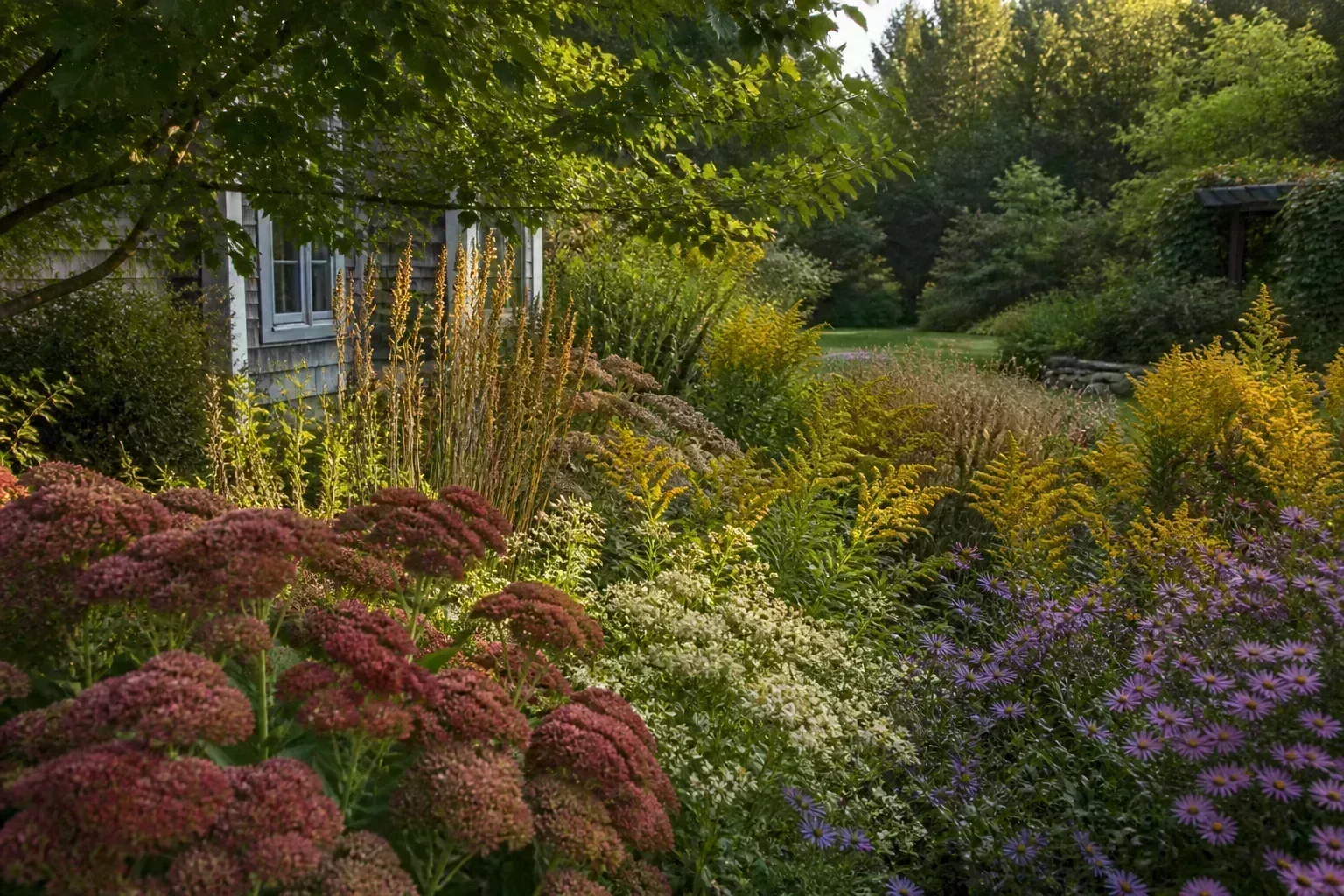
Ornamental grasses—little bluestem, switchgrass, or fountain grass in warmer zones—provide movement and seed heads that persist after aster bloom. Goldenrod (Solidago) is the classic native pairing: yellow plumes alongside purple aster rays, both feeding pollinators without clashing forms. NC State explicitly recommends pairing New England aster with fall-blooming Solidago for display impact (NC State: New England Aster).
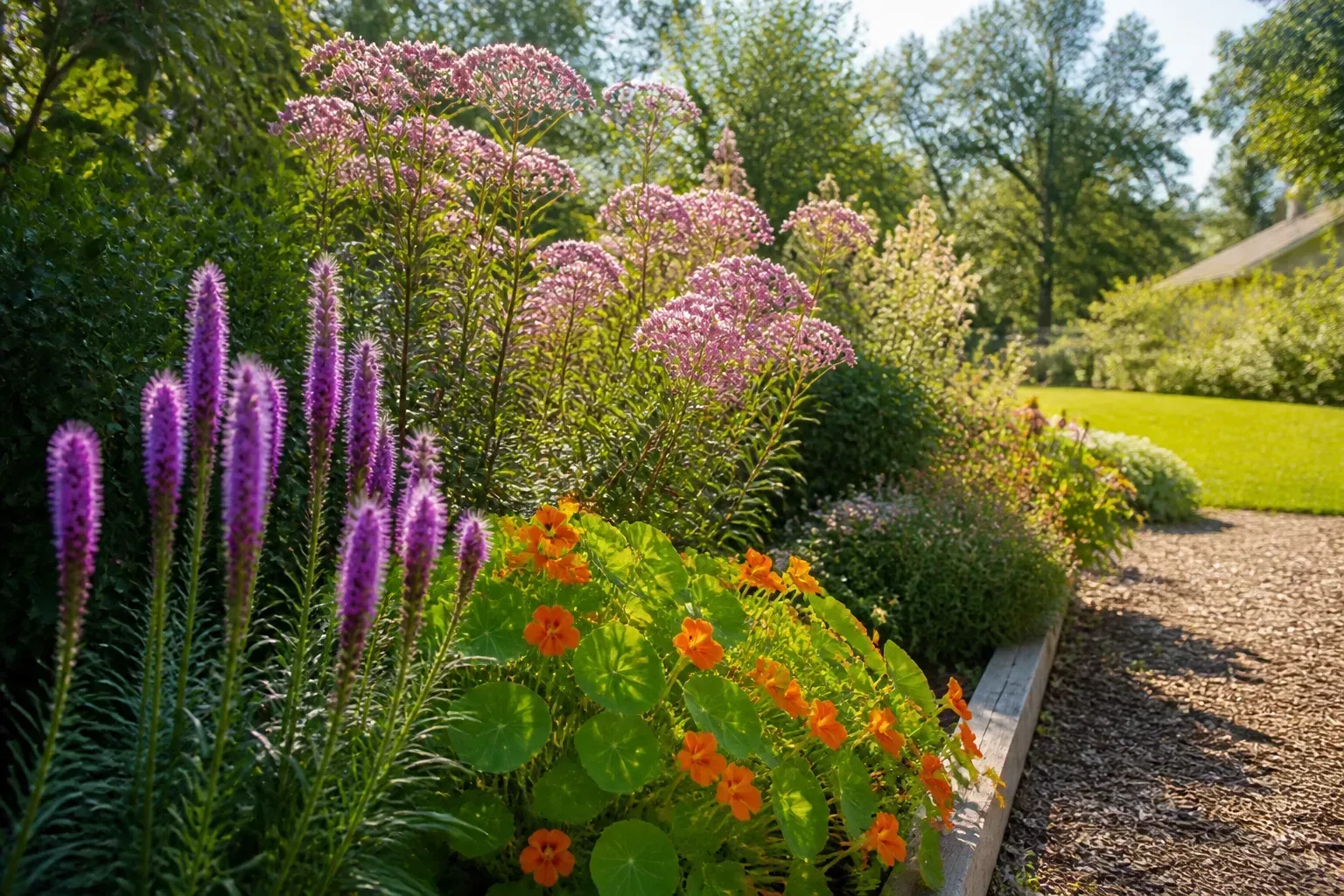
For cottage-garden nostalgia without mums, add Montauk daisy (Nipponanthemum nipponicum)—white daisies on 2-foot stems in September and October (PHS: Fall Blooming Perennial Alternatives). Layer early, mid, and late aster species so bloom rolls from late August into October rather than peaking in a single week.
If you are planning seasonal containers alongside borders, combine compact asters with ornamental kale, pansies, or sedums for texture contrast—then let the aster move into the ground next spring if the pot was always a temporary stage.
Conclusion
The case against mums is not snobbery—it is fit. Potted mums excel at delivering immediate, saturated fall color for a few weeks. Native asters excel at returning that color year after year with less water fuss, stronger cold tolerance, and real wildlife value. If you have been treating mums like perennials and wondering why they vanish, switching to Symphyotrichum species—especially aromatic aster, compact New England cultivars like ‘Purple Dome’, and upright smooth blue aster—gives you mum-like impact without the rebuy cycle.
Plant in full sun with well-drained soil, go easy on fertilizer, pinch tall selections in late spring, and divide before centers hollow out. Keep a mum pot on the porch if you want instant punch this weekend; put asters in the beds you actually live with through winter. For species-level care, planting windows, and container rules in one place, use the perennial aster growing guide as your next step—and let this fall be the last time you confuse a disposable mum with a long-term garden plan.



