How to Grow and Care for Miscanthus (Silvergrass)
Learn how to grow Miscanthus with the right cultivar, sun, drainage, watering, pruning, division, container care, and invasive-spread precautions.
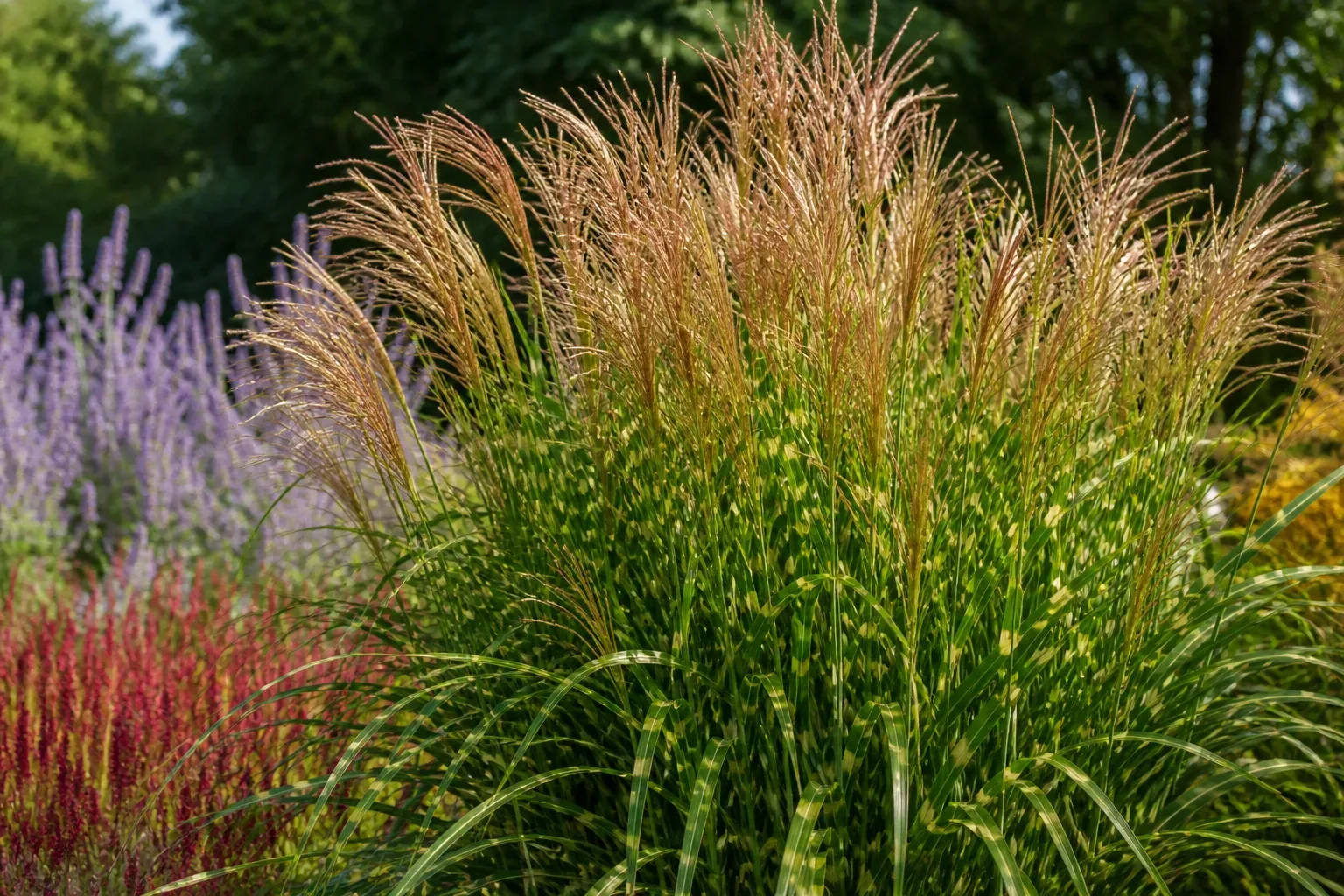
Miscanthus is a warm-season ornamental grass with a useful combination of height, movement, and winter structure. The clump may stay quiet in spring, surge through summer, and finish with feathery panicles that catch low autumn light. Many forms are forgiving once established, but they are not interchangeable: a compact, low-seed cultivar behaves differently from a tall, fertile Miscanthus sinensis planted beside a meadow.
The smartest way to grow silvergrass is to make the regional and site decision first. Check whether the species or cultivar is invasive or restricted where you live, especially if your garden borders a natural area, roadside, or open field. If it passes that test, give it sun, drainage, room to expand, and a late-winter cleanup rather than treating it like a thirsty bedding plant.
Is Miscanthus Right for Your Garden?
The name “silvergrass” usually points to Miscanthus sinensis, also called Chinese silvergrass, maiden grass, eulalia, or Japanese silver grass. The genus contains multiple perennial grasses, so the nursery label matters more than the common name. A plant sold simply as “miscanthus” may mature anywhere from a modest border clump to a 12-foot screen, depending on species and cultivar.
There is also an ecological question that belongs at the top of the care guide, not in a footnote. The Invasive Plant Atlas of the United States documents M. sinensis escaping ornamental plantings, forming large clumps in disturbed areas, displacing native vegetation, and increasing fire risk because the dry grass is highly flammable. NC State Extension flags maidengrass as invasive in North Carolina and difficult to remove once the rhizomatous root mass is established.
That does not make every garden planting equally risky. Fertility varies by cultivar, local climate changes how readily seedlings establish, and a contained patio pot has a different escape pathway from a planting beside prairie. It does mean you should check your state or regional invasive-plant list before buying, then choose a lower-fertility cultivar or a native grass when the site is close to unmanaged habitat.
Identify the Plant and Choose a Cultivar
Start with the botanical name and mature dimensions on the label. Missouri Botanical Garden lists M. sinensis as a clumping ornamental grass for zones 4 through 9, with typical forms reaching about 4 to 9 feet tall and 3 to 6 feet wide, while Fine Gardening’s Miscanthus guide notes that the genus includes grasses from moist meadows and marshes and that mature size and flower display vary widely.
Look at the habit as carefully as the stripe pattern. Arching forms create a soft fountain and can spill over paths, while upright forms hold a narrower vertical line. A plant that looks perfectly proportioned in a one-gallon pot can become a four- to six-foot-wide clump in only a few growing seasons, so measure the mature width before you place it in a narrow border.
Cultivars by size, habit, and seed set
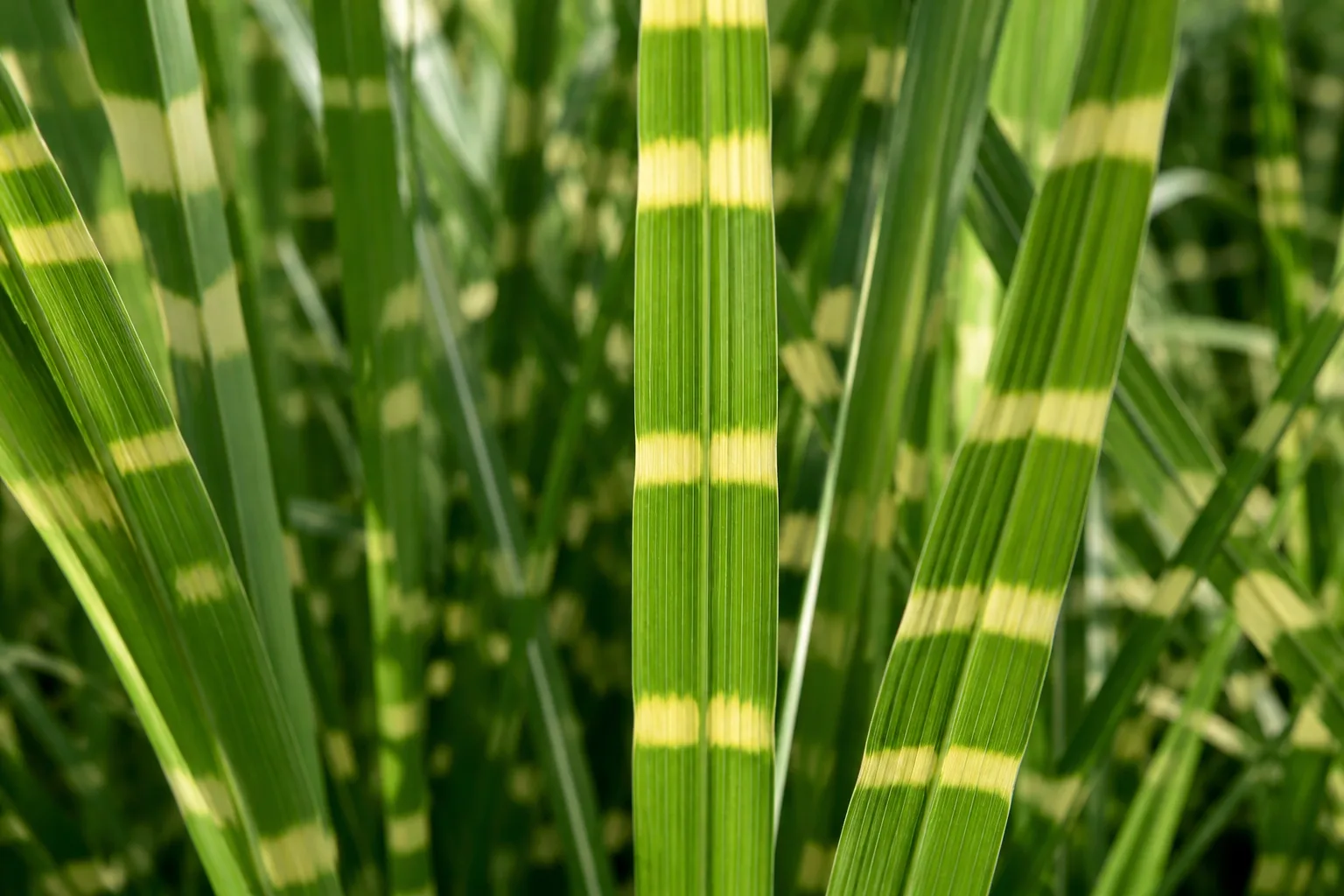
For bold horizontal bands, zebra grass (Miscanthus sinensis ‘Zebrinus’) is an arching choice. Porcupine grass (‘Strictus’) has similar transverse bands but a more upright, columnar habit. Fine-textured ‘Gracillimus’ and ‘Morning Light’ suit a softer border, while ‘Little Zebra’ is more manageable in a small bed. Tall ‘Goliath’ and other large selections belong at the back of a spacious border or as a deliberate screen.
Cultivar fertility is a practical environmental trait, not a marketing detail. NC State lists reduced-fertility choices such as Bandwidth™, My Fair Maiden™ ‘NCMS1’, and ‘Scout’; the same reference still recommends considering alternatives because reduced seed set is not a universal guarantee of zero spread. Read the current nursery label, avoid assuming that “sterile” claims apply to every plant with a similar trade name, and never discard seedheads where wind can carry them into wild land.
Give Miscanthus Enough Sun and Room
Choose a site with at least six hours of direct sun for the strongest growth and most reliable flowering. Missouri Botanical Garden reports that too much shade reduces vigor and flowering and increases the tendency to flop. Morning sun with light afternoon shade can be useful in an exceptionally hot, dry site, particularly for a variegated form whose pale leaf tissue scorches easily, but deep shade is not a workable long-term location.
Space the plant by its mature width, not its current root ball. A small cultivar may need roughly two to three feet of elbow room, while a large M. sinensis can require four to six feet between clump centers. Keep the crown away from a downspout, roof runoff, path edge, or foundation where wet soil, falling snow, or arching blades will create a maintenance problem.
Wind is not automatically a problem. Air movement can make the plumes more attractive and reduce stagnant humidity, but a very exposed site may bend tall flower stems or dry a young root ball quickly. If the grass flops every year, moving it into a little more sun usually helps more than tying it upright after the fact.
Get Soil and Drainage Right Before Planting
Miscanthus tolerates sand, loam, and even heavy clay, but it does not tolerate a crown that remains saturated. The Missouri Botanical Garden profile describes it as adaptable to well-drained soils from sandy ground to heavy clay, while still noting that excessive winter moisture is a problem. Aim for soil that holds enough moisture for steady summer growth but drains freely after rain.
Test drainage before you improve the planting hole. Dig a hole about 12 inches deep, fill it with water, let it drain, then fill it again and watch whether the second fill disappears within a reasonable period. If water lingers for hours or collects over a hardpan, do not create a small pocket of rich soil that acts like a bowl. Plant on a broad low mound, use a raised bed, or choose a different plant for that spot.
Compost can improve structure, but it is not a cure for a high water table. Work a modest amount through a wide planting area rather than filling one narrow hole with a radically different mix. Keep mulch two to three inches deep and several inches away from the crown so the center stays airy.
Plant Miscanthus Step by Step
Spring is the safest planting season in cold climates because the grass can root before its first winter. Early fall can work in mild climates if the soil remains workable and you can water during dry weather, but avoid planting a small root ball into baked midsummer soil unless irrigation is reliable.
- Prepare a wide hole. Make it about twice the width of the root ball and no deeper than the root ball’s height. Loosen the surrounding soil so new roots can move outward.
- Inspect the roots. If the nursery plant is tightly circling, tease the outside roots loose or make a few shallow vertical cuts. Do not shred the crown.
- Set the crown correctly. Place the top of the root ball level with the surrounding soil, or just slightly high in slow-draining ground. Deep planting is a common route to crown rot.
- Backfill without packing. Firm the soil enough to remove large air gaps, but do not stamp wet clay hard around the roots.
- Water the entire root ball. Saturate the planting area slowly so water reaches the bottom of the root ball and the loosened soil around it.
- Mulch and label. Apply a thin, broad mulch layer, leave the crown clear, and keep the cultivar label for future division or replacement decisions.
Establish the root zone in year one
Newly planted miscanthus needs consistency while it builds roots, not a permanently wet bed. Check the soil several inches down; when that zone begins to dry, water deeply enough to moisten the full root area, then allow excess to drain before watering again. In hot, windy weather that may mean more frequent checks, while cool spring rain may mean no supplemental water at all.
The goal is to prevent repeated severe drying without encouraging shallow, constantly wet roots. A two- to three-inch organic mulch layer reduces evaporation and suppresses volunteer seedlings, but it cannot compensate for planting in a puddle or for watering on a fixed schedule after heavy rain.
Water Established Clumps Without Creating Rot
Established miscanthus is more drought tolerant than a newly planted division because its rhizomes and deeper roots can access a larger soil volume. Water during a prolonged dry spell when the foliage rolls, the tips brown progressively, or the soil is dry well below the surface. Give a slow, deep soak at the root zone rather than frequent sips that only wet the top inch.
Narrow-leaved forms often handle dry conditions especially well, but drought tolerance is not permission to ignore a young plant, a container, or a hot reflected site. In contrast, a wet winter is a bigger danger than a missed summer watering for many established clumps. If the center turns soft, shoots collapse in damp soil, or the plant declines despite moisture, inspect drainage and crown depth before adding more water.
Fertilize Lightly to Prevent Flop
Miscanthus is usually a light feeder. A spring layer of finished compost or a single application of a balanced slow-release fertilizer is enough for most garden soil. Use a soil test if growth is weak across the whole plant or the soil is unusually poor; do not reach automatically for high-nitrogen lawn fertilizer.
Excess nitrogen creates lush, soft leaves that are more likely to lean, especially when combined with shade or wet soil. If a clump is green but floppy, more fertilizer is usually the wrong first move. Correct light, drainage, spacing, or cultivar habit before you increase feeding.
Prune Miscanthus and Preserve Winter Structure
Leave the dried leaves and flower stems standing through winter when local fire guidance permits. The tan structure catches frost and snow, gives the crown some insulation, and provides a useful winter silhouette. The RHS profile for M. sinensis ‘Cosmopolitan’ likewise recommends removing dead foliage and old flowering stems in spring rather than treating the grass as an autumn-cut perennial.
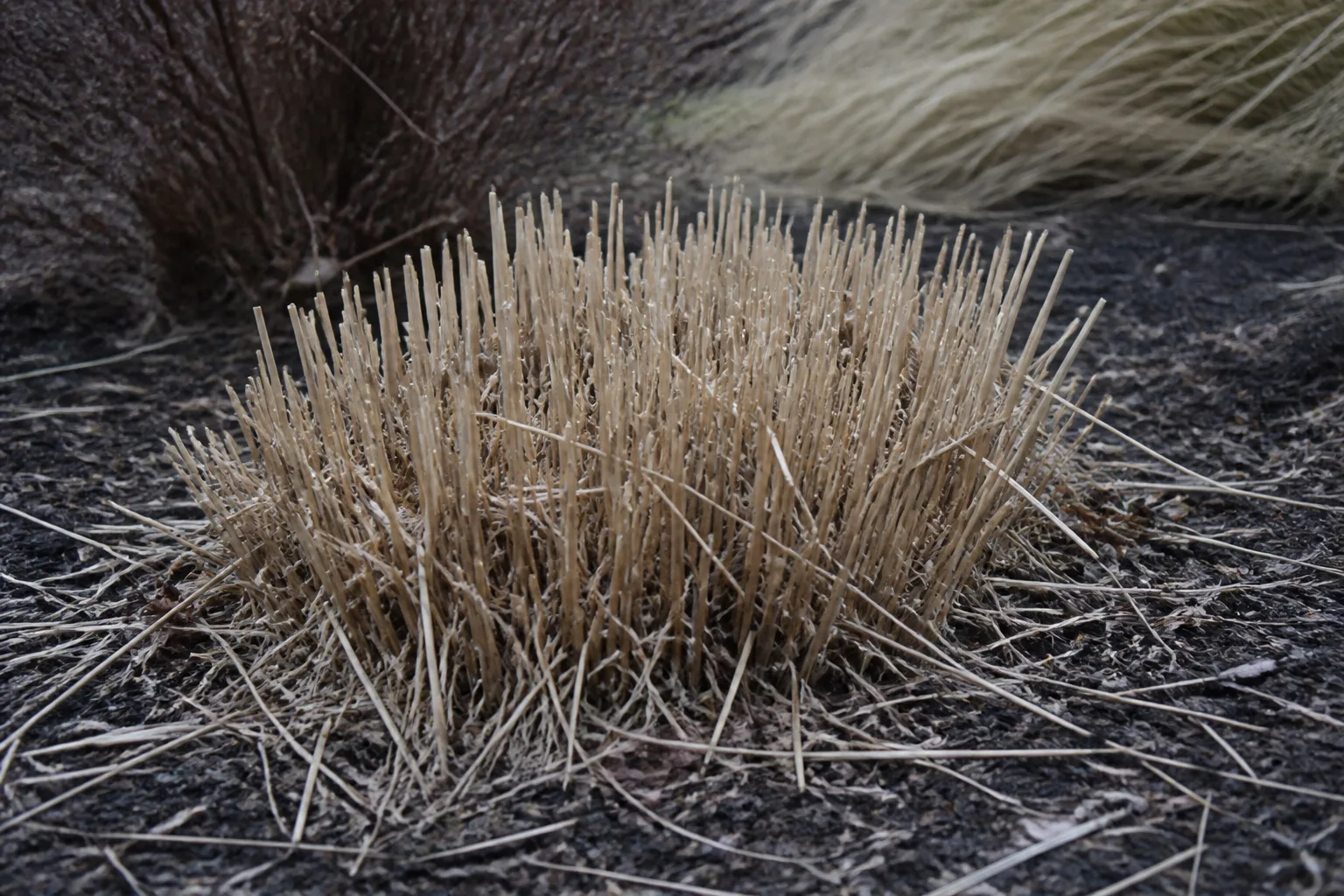
Cut the clump close to the ground in late winter or early spring, just before new shoots emerge. Tie the old stems into a bundle first if you want a cleaner cut and easier removal. Wear sturdy gloves and long sleeves because miscanthus leaf margins can be rough and sharp; use hedge shears, loppers, or a serrated knife for a large crown.
There is an important exception to the winter-display rule. NC State gives maidengrass a high flammability rating and advises against planting it in the defensible space nearest a home. In a fire-prone area, follow local defensible-space guidance even if that means removing dry foliage earlier or replacing the plant. Aesthetic winter interest never outweighs a site-specific fire risk.
Divide and Propagate Miscanthus
Divide an established clump when the center becomes woody or bare, the plant outgrows its space, or new growth forms a weak ring around the outside. Early spring, as shoots begin to show but before the plant is tall, is the easiest time to handle the work. Water the parent plant a day ahead if the soil is dry, then keep exposed roots shaded and moist.
- Cut the old foliage down to make the crown visible and manageable.
- Dig a broad circle around the clump and drive the spade deeply under the root mass.
- Lift the crown with help; large miscanthus divisions are heavy and can be surprisingly woody.
- Split the crown with a sharp spade, root saw, or two back-to-back garden forks. Each division needs living buds and a substantial portion of root tissue.
- Discard dead, hollow center material and trim badly damaged roots.
- Replant divisions promptly at the original depth, water thoroughly, and keep them evenly moist while they re-root.
Division versus seed
Division is the dependable way to reproduce a named cultivar because the new plant is a piece of the parent. Seedlings are genetically variable and may not retain the parent’s striping, height, flowering time, or reduced-fertility trait. That variability can be interesting for a breeder, but it is a poor shortcut when you are trying to preserve a particular ornamental grass.
Seed can germinate in cool conditions, but it is also the route most likely to multiply a fertile plant beyond the bed. If local guidance permits seed propagation, grow it in a controlled tray, remove seedheads before they mature outdoors, and never compost mature panicles where viable seed could spread. Epic Gardening’s maiden-grass guide also emphasizes that divisions reach landscape size faster than seedlings.
Grow Miscanthus in Containers
A large container can be a sensible way to enjoy a suitable cultivar where in-ground spread is a concern, or where you need a movable patio accent. Choose a heavy pot at least 18 to 24 inches wide and deep for a medium clump, with several drainage holes. Use a quality potting mix that drains freely; garden soil compacts in containers and can leave the crown wet.
Container grass dries faster and heats up more than an in-ground clump, especially in a dark pot on paving. Check moisture more often during active growth and water thoroughly when the upper portion of the mix has dried, allowing the pot to drain completely. Do not let the container sit in a saucer of runoff.
Expect to divide or repot when the plant is packed with roots, dries out immediately after watering, or produces a smaller canopy despite good light. Do not move a large pot merely to avoid division; a crowded container eventually produces the same weak, congested growth that appears in an old garden clump.
Protect Containers and Young Crowns in Winter
Roots in a pot have less insulation than roots in the ground. In colder climates, sink the container to its rim in a garden bed, move it to an unheated sheltered space after dormancy, or insulate the pot on all sides while keeping drainage open. The plant does not need a heated room, and warm indoor air can trigger weak out-of-season growth.
Young in-ground plants also deserve closer attention in their first winter than mature clumps. Leave the foliage standing if it is safe to do so, keep winter soil from staying saturated, and avoid piling wet mulch against the crown. Hardiness varies with the species, cultivar, exposure, and establishment age, so use the nursery label and local climate rather than relying on a single zone number.
Get Better Plumes and Seasonal Color
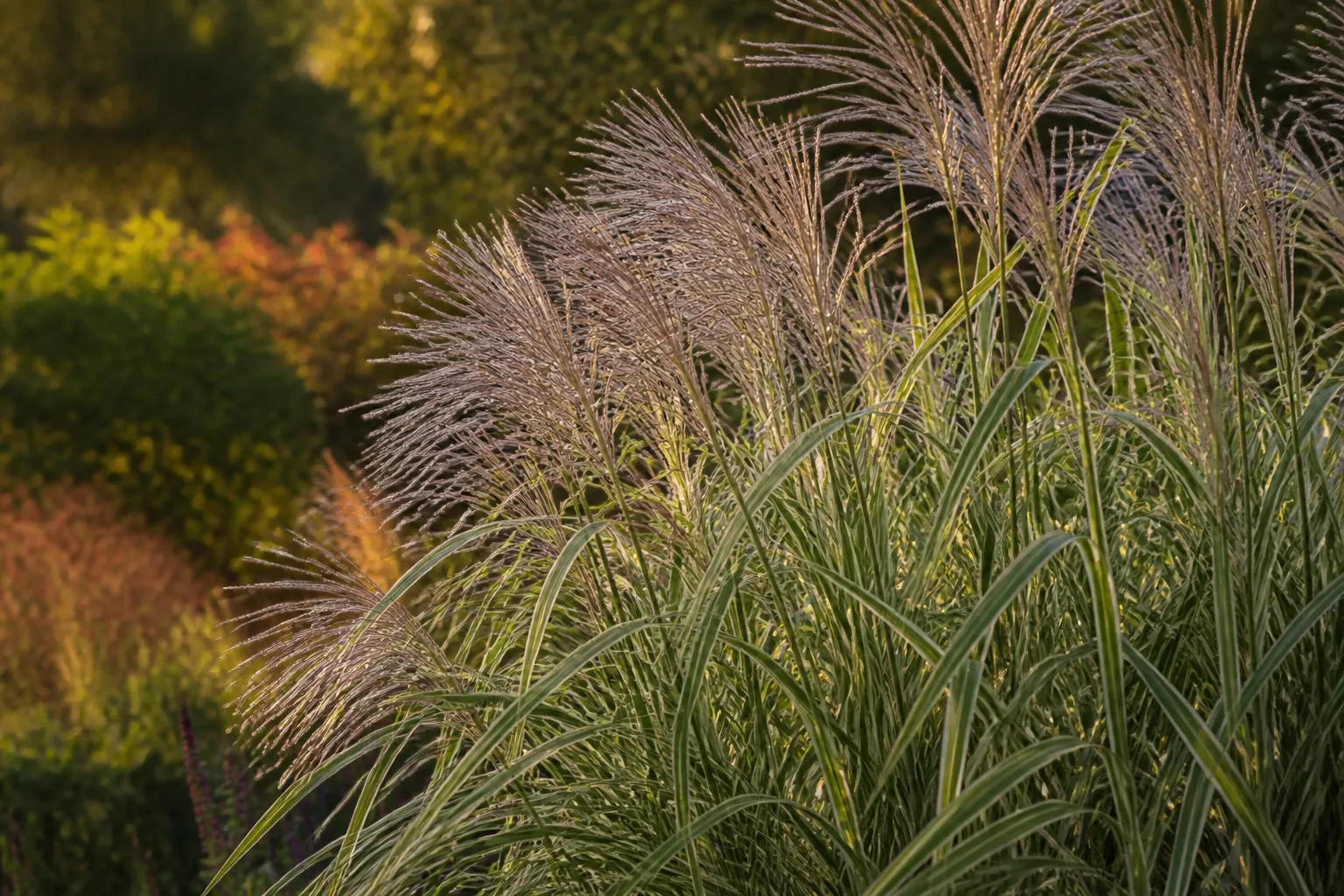
Miscanthus flowers in late summer or fall after a long, warm growing season. The feathery panicles may open pink, copper, burgundy, or silvery and gradually fade to tan. Fine Gardening notes that flower heads are more numerous after long, hot summers, while the RHS uses Miscanthus as a planting partner for movement in the breeze and late-season structure.
Full sun is the best bloom insurance. A clump that stays green but produces no plumes may be too shaded, too young, overfertilized, or growing in a cool short-season site. Do not dig it up after one quiet year: confirm the cultivar’s bloom timing, give it a full season of adequate light, and avoid cutting fresh growth during spring cleanup.
If you want the plumes for dried arrangements, cut them when they are fully open but before they become brittle. If seed escape is a concern, remove the flowerheads as they begin to mature rather than waiting until wind is already carrying them. Deadheading reduces seed production but does not erase rhizomes or make an invasive species harmless.
Troubleshoot Flopping, Brown Leaves, and Poor Growth
The clump flops. Check light first, then nitrogen, water, and crowding. Too much shade weakens stems, high nitrogen makes soft growth, waterlogged roots reduce support, and an old congested crown may need division. A ring or plant support can hold stems temporarily, but repeated flop means the underlying site or cultivar choice needs attention.
Leaves roll inward or develop brown tips. Extended drought is a common cause, particularly in a new planting or container. Check soil below the surface before watering; if it is dry, soak deeply and add mulch. If the soil is wet, look for poor drainage or root damage instead. Crispy edges on a variegated plant in intense reflected heat may call for afternoon protection, not more irrigation.
The plant is yellow and weak. Do not assume a nutrient deficiency. Inspect crown depth, drainage, root congestion, and the amount of direct light. A soil test can confirm fertility or pH questions, but fertilizer cannot repair roots that are suffocating in a saturated planting hole.
The center dies out. A dead center with vigorous outer growth is a classic sign of an aging, congested clump. Divide in spring and replant the healthy outer sections. If the whole crown is soft or foul-smelling, suspect rot and correct the site before putting another grass there.
Manage Pests, Disease, and Unwanted Spread
Miscanthus is generally low-maintenance and relatively pest-free, but it is not immune. Miscanthus mealybugs can hide inside stems and cause stunted growth, making them difficult to reach with a casual spray. Remove badly affected stems, keep tools clean, and seek local extension guidance before using a pesticide; any product must be labeled for the site and pest.
Miscanthus blight and leaf rust are more likely to persist in dense, wet plantings. Improve airflow by spacing correctly, water the soil rather than repeatedly wetting the foliage, remove heavily affected debris, and correct irrigation or drainage. Fungicides are not a substitute for site correction and should be used only according to the product label and local rules.
For unwanted plants, act while the clump is small. Digging must remove the crown and as much rhizome as possible, and follow-up is essential because small pieces can regrow. Do not rototill an unwanted clump into fragments. For a large established invasion, use the control method recommended by your local extension or land-management authority; repeated cutting alone may not exhaust the roots.
Use Miscanthus in the Landscape—or Choose an Alternative
Where it is appropriate, miscanthus gives a border height, a moving screen, a focal point, erosion-holding roots, and dried material for winter arrangements. Use one large clump as a punctuation mark, or repeat a compact cultivar at a distance that lets each plant keep its shape. Pair the grass with plants that have contrasting leaf size and a lower, denser habit rather than placing several floppy fountains shoulder to shoulder.
The RHS describes M. sinensis ‘Cosmopolitan’ as suitable for architectural borders, cottage gardens, coastal sites, and courtyard gardens when grown in moist but well-drained soil. That is a useful design lesson: the right plant is not simply the prettiest one; it is the one whose mature scale, moisture needs, fertility, and maintenance fit the setting.
If your state lists Chinese silvergrass as invasive, your property borders wild habitat, or dry ornamental grass would sit inside a high-risk home ignition zone, choose a different plant. Native switchgrass (Panicum virgatum), Indian grass (Sorghastrum nutans), and little bluestem (Schizachyrium scoparium) can provide warm-season movement and seedhead structure; NC State’s plant profile lists these among native alternatives or similar-niche choices. A native selection may not duplicate every stripe or plume, but it can make the overall landscape more resilient and responsible.
For related care decisions, see the LeafyPixels guides on zebra grass, maiden grass, and ornamental grasses for containers. Those pages are useful when you have narrowed the choice to a particular cultivar or growing situation.
Conclusion
Miscanthus can be a durable, dramatic perennial when the plant matches the place. Verify regional invasive and fire guidance, choose by mature size and fertility rather than appearance alone, plant the crown high enough for drainage, and give the clump full sun with room to expand.
After establishment, the routine is simple: water deeply during meaningful drought, feed lightly, leave safe winter structure standing, cut back before spring shoots emerge, and divide when the crown becomes congested. When those conditions do not fit your site, a native warm-season grass is not a compromise—it is often the better long-term design decision.