When to Cut Back Asters: Fall or Spring?
Should you prune asters in fall? Use this practical guide to choose fall cleanup or spring cutback, make the right cut, and avoid fewer blooms.
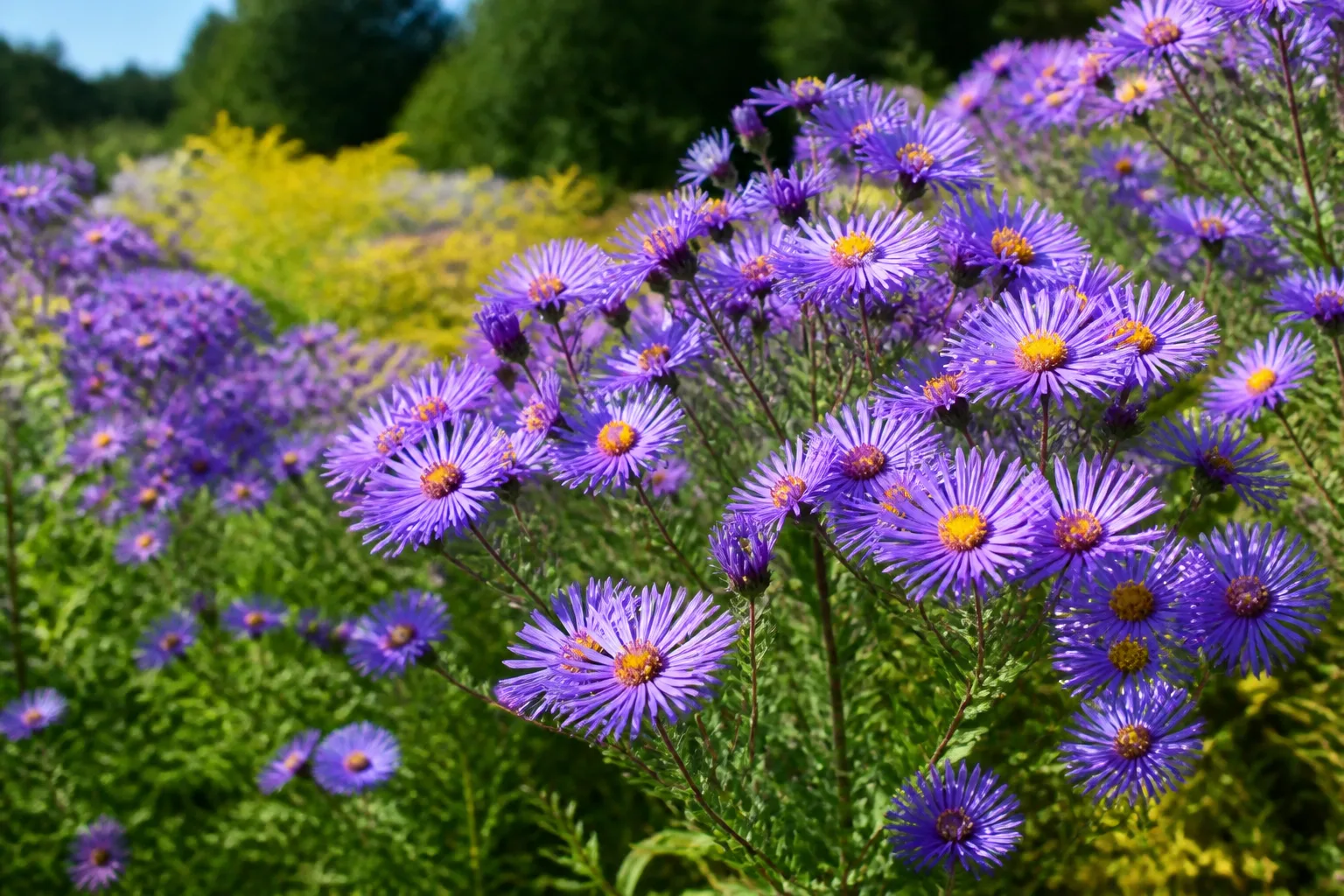
The short answer: fall cutback is optional
You can cut back perennial asters in fall, but you do not need to do it automatically. Wait until flowering has finished and the plant has mostly gone dormant, then cut it down if you want a tidy bed, need to remove diseased growth, or want to stop seed from spreading. If the stems are healthy and you value winter structure, bird food, and insect shelter, leave them standing and clean the clump in early spring.
The key distinction is easy to miss: fall pruning is mainly cleanup, not the step that creates next year’s flowers. The bloom-building work happens while asters are actively growing. Sun, steady moisture, good spacing, timely pinching, and dividing an overcrowded clump matter far more than whether you make a low cut in October or wait until March.
Identify the aster before you prune
The word “aster” covers a large group of plants with different winter habits. Many North American garden asters are now classified as Symphyotrichum or Eurybia, although nurseries still commonly use “aster,” “New England aster,” “New York aster,” or “Michaelmas daisy.” NC State Extension notes that aster-like plants vary from mounding forms only inches tall to species that can reach 8 feet, so the label’s species or cultivar name is more useful than the common name alone (NC State Extension’s Aster Plant Toolbox).
Perennial asters and their basal crowns
Hardy border asters are usually herbaceous perennials. Their leafy stems die back above ground, while a crown and roots remain alive below the soil to produce new shoots next season. You can cut the dead stems low without removing the crown, provided the plant has finished its active growth and you do not slice into the crown itself.
The exact species still matters. Tall New England asters may benefit from early-season pinching or staking, while a compact cultivar may need little shaping. Stokes’ aster has evergreen or semi-evergreen foliage in some climates and a different bloom pattern, so do not apply a ground-level winter haircut to every “aster” you encounter; UF/IFAS recommends checking the plant’s growing conditions and notes that mature clumps may need division and that deadheading can encourage more flowers (UF/IFAS Stokes’ Aster).
China asters are annuals
China asters, Callistephus chinensis, are annuals rather than returning perennials. The plant may finish its entire life cycle after flowering, so cutting it to the ground will not preserve a perennial crown for the following year. The Royal Horticultural Society separates China asters from the perennial group in its overview, and recommends treating them as annual bedding, container, or cut-flower plants (RHS Aster Growing Guide).
If you want China asters again, collect seed only from healthy plants and expect seedlings to vary unless the seed came from a stable named selection. Otherwise, remove the spent annual when the bed is ready for its next crop. This plant-identity check prevents the common mistake of assuming that every aster will return just because a perennial aster did last year.
Choose fall cleanup or spring wildlife habitat
Before reaching for shears, decide what you want the bed to do over winter. There is no single “correct” height or season for every garden, because a manicured border, a mildew-prone planting, and a pollinator garden have different priorities.
| Your priority | Best default |
|---|---|
| Clean, visible beds before snow | Cut healthy perennial asters after natural dieback, leaving a short stub. |
| Recurrent mildew or spotted foliage | Remove infected material after dieback and keep it out of the compost pile. |
| Winter birds and insect habitat | Leave sound stems and seed heads; clean them in early spring. |
| Fewer volunteer seedlings | Deadhead before seed dispersal or remove seed-bearing stems after flowering. |
| More flowers next year | Review sun, moisture, pinching, spacing, and clump age; do not rely on fall cutback alone. |
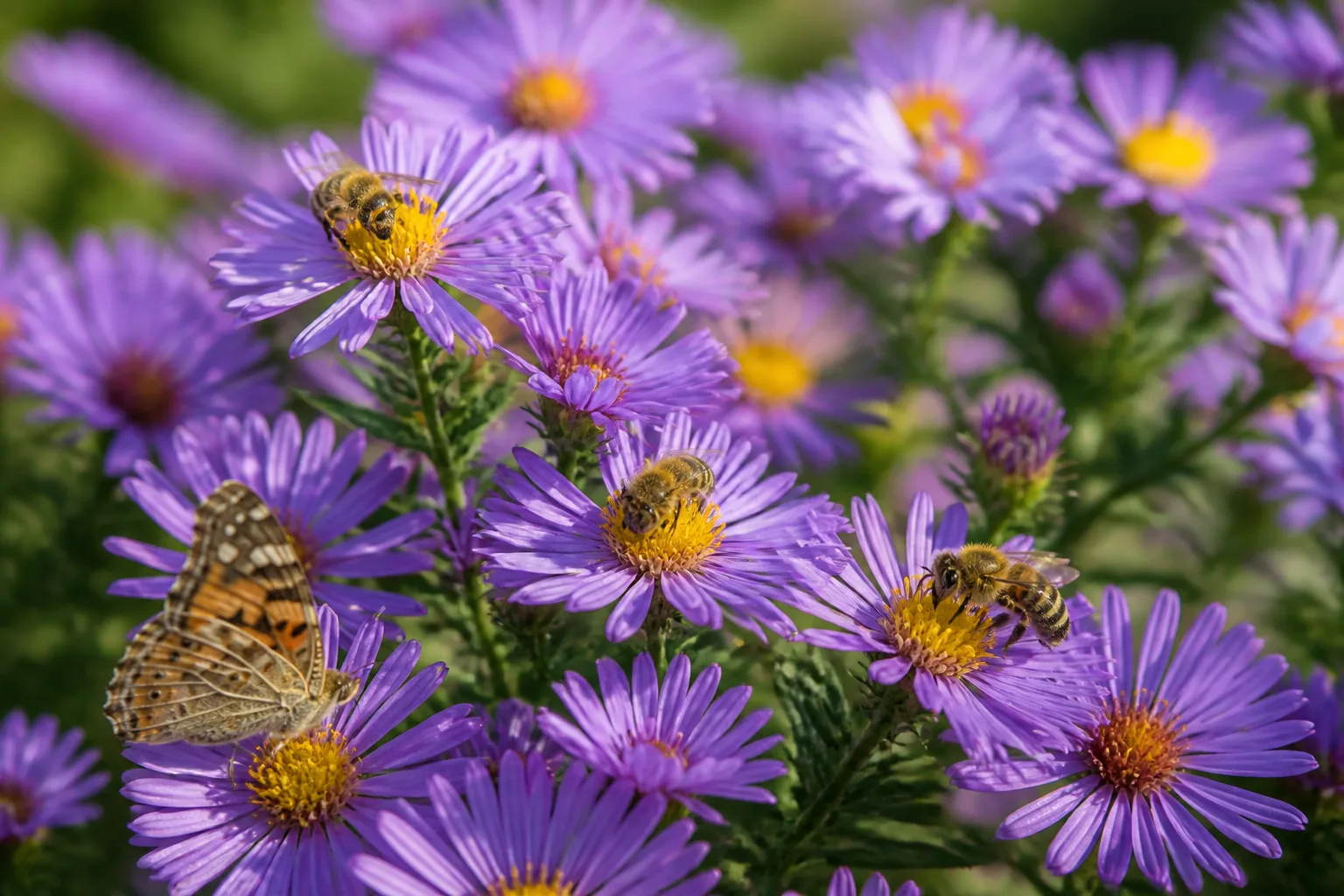
Cut in fall when sanitation or tidiness matters
Fall cleanup is sensible when stems have collapsed into a wet mat, foliage had powdery mildew or rust, or the planting is blocking a path. Removing visibly infected tissue and debris reduces the amount of contaminated material sitting at the crown, although it does not sterilize the soil or guarantee a disease-free season next year. The practical improvement is greatest when you also correct the cause: crowding, overhead irrigation, poor air movement, or a cultivar that does not suit the site.
It is also a good choice for small formal beds where aster seedlings land in paths and between slower perennials. Aster seed heads can be valuable in a naturalized border but surprisingly mobile in a windy yard. If you do not want new seedlings, remove the heads before they become fully fluffy rather than waiting for the first snow to scatter them.
Leave stems when structure and wildlife matter
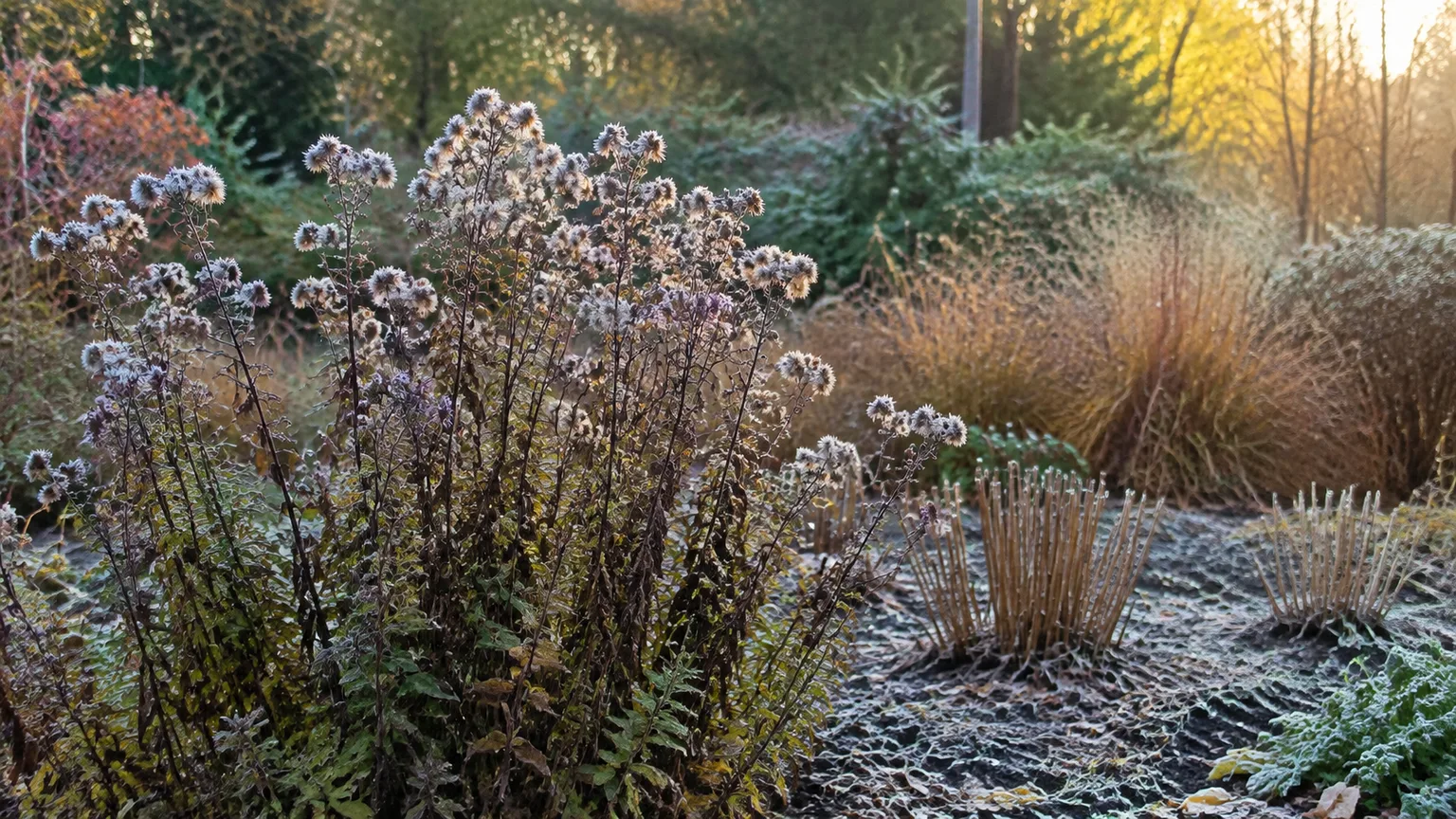
Healthy stems and seed heads can hold winter shape, give birds something to forage on, and provide shelter for insects. BBC Gardeners’ World Magazine includes autumn asters among perennials that may be cut back for tidiness but also explains that perennials with useful seed heads can be left for wildlife (BBC Gardeners’ World: What to Prune in Autumn).
Leaving stems does not mean leaving diseased foliage indefinitely. Remove the worst-affected material, leave the soundest stalks at varied heights, and plan a careful spring cleanup before new basal shoots become tangled in old stems. That compromise often gives you most of the habitat value without keeping a collapsed, moldy mass pressed against the crown.
Wait for dormancy, not a calendar date
The best fall timing cue is finished flowering plus natural dieback, not a particular week. A first hard frost is a useful signal in many cold-winter gardens because it usually ends active top growth, but a light frost does not always make every plant dormant. In a warm autumn, asters may still have green leaves, late buds, or visiting pollinators after the first chilly night.
Cutting green plants too early removes foliage that is still contributing to the plant’s seasonal shutdown. It can also shorten the final display and encourage tender regrowth during a warm spell. If the stems are still actively flowering, keep deadheading selectively or simply wait; a neat bed is not worth sacrificing the late-season food source you planted the aster to provide.
The University of Washington’s Elisabeth C. Miller Library describes early summer cutting as the appropriate window for shaping tall asters, while the RHS says results from the Chelsea chop vary by species, year, and weather (Miller Library: On Pruning Asters; RHS Aster Growing Guide). Those cautions apply to fall, too: local weather and the plant’s growth stage are better guides than a universal date.
The three different pruning jobs asters need
Gardeners often use “pruning” to describe three separate actions. Keeping them distinct makes timing much easier: pinching shapes the plant before buds form, deadheading manages individual finished flowers during the season, and dormant cleanup removes the year’s dead top growth.
June pinching and the Chelsea chop
The Chelsea chop is a late-spring or early-summer cut that removes part of the soft new growth before flowering. On suitable tall asters, pinch growing tips or shear back roughly one-third of the plant around late May or June, then stop early enough for side branches to mature. The Miller Library’s summary of extension guidance says this can produce a shorter, more branched plant and may delay bloom only slightly, but the response is not identical for every cultivar.
Use this cut when the problem is height, flopping, or a bare-looking lower half—not as a last-minute fall rescue. A compact aster may not need it, and a plant you want to bloom as early as possible may be better left alone. Never assume that cutting a tall aster by half in September will recreate the same effect; late cuts remove developing flower sites and can leave you with fewer blooms.
Deadheading during the bloom season
Deadheading means removing a spent flower or completed flowering stem while the plant is still in season. Cut the stem back to a strong side shoot or its point of origin, depending on how the plant branches. This keeps the clump tidy, limits seed production, and may encourage additional side flowers on cultivars that rebloom.
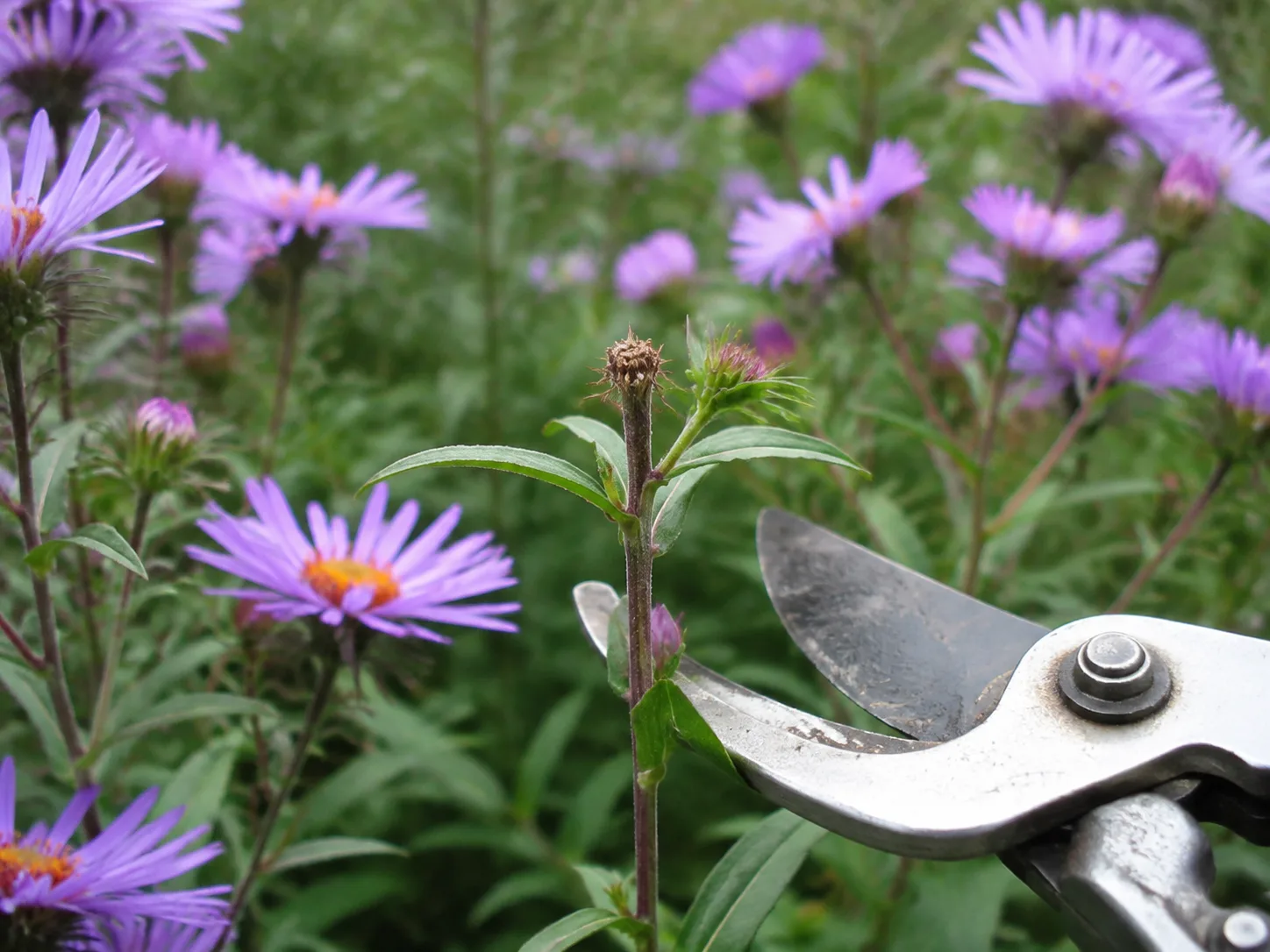
Deadheading is optional for many perennial asters. The RHS notes that the profusion of flowers means deadheading is not always necessary for a good display, while it can be useful for extending flowering or preventing seed production. If you want a simple primer with the cut location illustrated by the site’s existing guide, see how to deadhead asters.
End-of-season dormant cleanup
Dormant cleanup is the winter decision this article is about. Once flowering is over and the stems have died back, remove the dead top growth to the height that suits your soil, crown, wildlife, and winter conditions. Most gardeners use hand pruners or shears; the goal is a clean, controlled cut, not a dramatic shearing contest.
How to cut back asters after frost
Use this sequence for an established perennial aster that you have decided to clean up in fall:
- Confirm the plant and inspect it. Look for a perennial crown, note whether the foliage is green, and separate healthy stems from material with mildew, rust, leaf spots, or rot.
- Choose a dry morning. Wait until dew has dried so you are not working through a wet canopy, and avoid cutting saturated soil where your feet will compact the bed.
- Use sharp, clean pruners. Bypass pruners handle individual stems; long-handled shears are faster for a broad clump. Disinfect tools before moving between plants, especially when you see disease.
- Remove diseased sections first. Bag or otherwise dispose of badly infected material according to local yard-waste rules. Do not mix it into a cool home compost pile and assume the problem is gone.
- Cut the remaining dead stems to your chosen height. For a tidy dormant clump, leave about 1–3 inches above the soil or crown. Make individual cuts rather than hacking into the crown with a spade or hedge trimmer.
- Clear loose debris from the crown. Lift out cut pieces and fallen diseased leaves, but do not scrape or rake aggressively across emerging basal buds.
- Mulch only after the soil has cooled. Apply a light, even layer around the crown if your climate needs winter protection, keeping the material off the plant’s center.
The “dry morning” detail is practical, not ceremonial. Gardener’s Path recommends pruning after dew evaporates and emphasizes that sharp, sanitary tools make cleaner cuts and reduce the chance of carrying problems from plant to plant (Gardener’s Path: How to Prune Perennial Asters).
How far back should asters be cut?
For most dormant perennial asters, 1–3 inches above the soil line is a useful fall-cleanup range. Leave the low stub visible if you need to find the crown in spring, especially where late snow or mulch can hide planting locations. Cutting lower is not automatically better; the crown is the living growth point, and a careless slice into it can do more harm than a short stem ever would.
| Situation | Sensible cut height |
|---|---|
| Healthy clump, neat winter bed | About 1–3 inches above soil or crown. |
| Diseased stems | Remove the affected stems fully without gouging the crown. |
| Wildlife-friendly partial cleanup | Leave sound stems and seed heads at varied heights. |
| Spring cleanup | Cut old stems as low as practical after locating new basal shoots. |
The cut height does not determine next year’s flower count by itself. A slightly taller stub will not compensate for inadequate sun, drought during bud formation, a late summer haircut, or a clump that has outgrown its center. Pick a height that protects the crown, lets you find the plant, and suits the way you manage the bed.
Handle trimmings, disease, and winter mulch correctly
Healthy, dry aster stems can be chopped and added to a well-managed compost system. Diseased foliage is a different category. Powdery mildew, rust, leaf spots, and soft rot are all reasons to keep suspect debris out of a small home pile unless you know your compost reaches and maintains the temperatures needed to destroy the relevant pathogens.
Do not pile heavy mulch directly over the crown. A two- to three-inch layer of shredded leaves, clean straw, or another suitable mulch can buffer freeze-thaw swings after the soil cools, but a wet, thick collar around the stems can hold moisture against the crown and invite rot or rodents. The RHS emphasizes that many asters dislike prolonged winter wet; drainage is often more important than adding more cover (RHS: How to Grow Asters).
If fall is dry before the ground freezes, water the root zone deeply when the soil is workable rather than sprinkling the leaves. Established asters tolerate short dry spells, but a plant entering winter severely dehydrated is under more stress than one going dormant with adequate root-zone moisture.
Will fall pruning create more blooms next year?
Not on its own. Removing old stems can improve the bed’s sanitation, reduce unwanted seedlings, and make spring maintenance easier, but a fall haircut does not create additional flower branches after the season has ended. The RHS and practical pruning guidance point to earlier actions—appropriate pinching, adequate moisture, good light, airflow, and division—as the levers that shape the next display.
Start with a sun audit. Most border asters flower best in full sun, while some woodland types tolerate partial shade; NC State Extension describes a broad range of sun and moisture needs across the group. If the plant gets only a few hours of direct light, adding fertilizer will not solve the underlying problem and may produce lanky foliage instead of a denser bloom.
Next, check water and airflow. Water at the soil line during dry stretches, space plants for their mature width, and avoid trapping wet foliage in a dense thicket. Powdery mildew is common on some asters, especially where nights are humid and air movement is poor; thinning crowded stems or choosing a more resistant cultivar is a better long-term response than simply cutting the dead plant shorter in November.
Finally, look at the season’s timing. A June pinch can encourage branching on a tall cultivar, but pinching too late can postpone bloom into frost. Aster clumps that flower only around a woody or empty center usually need division, not more fertilizer. For a broader look at the plant’s site, watering, division, and cultivar choices, use the existing perennial aster growing guide.
Divide old aster clumps for renewed vigor
Division is one of the most useful answers when an aster becomes crowded, hollow in the middle, weakly flowering, or difficult to keep upright. RHS recommends lifting and dividing most asters about every three to five years, with early spring a particularly useful time; Gardener’s Path likewise treats division as a way to restore vigor and improve airflow.
In early spring, dig around the entire clump and lift it with as many roots as possible. Separate it into vigorous sections with healthy roots and fresh shoots, discard the woody or declining center, and replant the outer divisions at the same depth they were growing. Water them in and keep the soil evenly moist while new growth establishes.
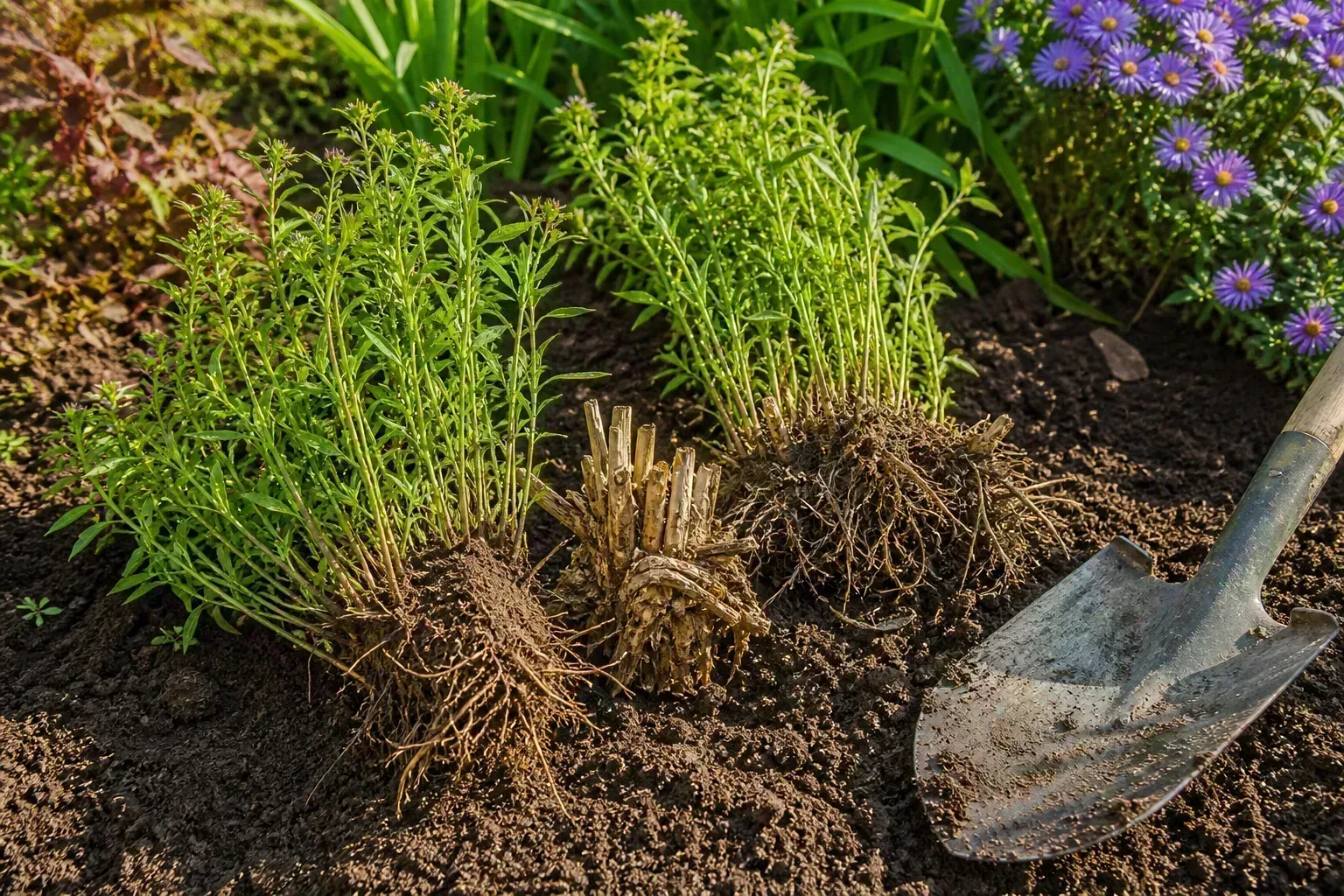
Fall division can work in mild climates or when flowering has just finished, but the plant needs time to produce roots before the ground freezes. If your first hard freeze is close, wait for spring rather than combining a rushed division with a late-season cut. A division is a more disruptive operation than dormant cleanup, so treat those decisions separately.
Common mistakes that cost flowers
Cutting while the plant is still green. The calendar can say “fall” while the plant is still flowering and storing energy. Wait for natural dieback unless disease requires earlier removal of a specific stem.
Treating June pinching like fall pruning. A third-height cut before buds develop can make a tall aster bushier. The same cut late in the season can remove flower-bearing growth and leave fewer blooms.
Assuming every aster wants the same treatment. A compact cultivar, a tall New England aster, Stokes’ aster, and an annual China aster are not interchangeable. Read the tag or identify the botanical name before making a low cut.
Removing every stem in a wildlife garden. A bare bed is tidy, but it loses winter structure, seed, and shelter. Leave a portion of healthy stems if those benefits fit your garden, then clean them in spring before new shoots are damaged.
Composting infected debris automatically. Moldy or rusted leaves should not be treated like clean, dry stems. Remove them from the bed and use your local waste guidance when you are unsure.
Solving poor blooms with fertilizer alone. Excess nitrogen can promote soft leafy growth without fixing shade, drought, crowding, or an old clump. Diagnose the site and plant structure before feeding harder.
Mulching over the crown. Mulch belongs around the root zone, not packed against the center. Keep the crown visible enough to drain and to show you where spring shoots will emerge.
Conclusion: make the cut fit the plant and the garden
Cut back perennial asters in fall after flowering and natural dieback if you need a tidy bed, want to remove diseased material, or need to limit self-seeding. Leave healthy stems until spring when winter habitat, seed heads, and structure matter more. For more flowers next year, focus earlier on sun, moisture, airflow, appropriate June pinching, and dividing an aging clump; fall cleanup is useful, but it is not a bloom-making shortcut.
When in doubt, make the smallest decision that solves the actual problem. Remove the infected section, leave a sound section standing, or wait until spring rather than cutting every green stem simply because winter is on the calendar.



