How to Clean Plant Leaves Correctly
Clean houseplant leaves safely: remove dust, protect fuzzy and succulent foliage, avoid leaf-shine hacks, and spot when sticky residue means pests.
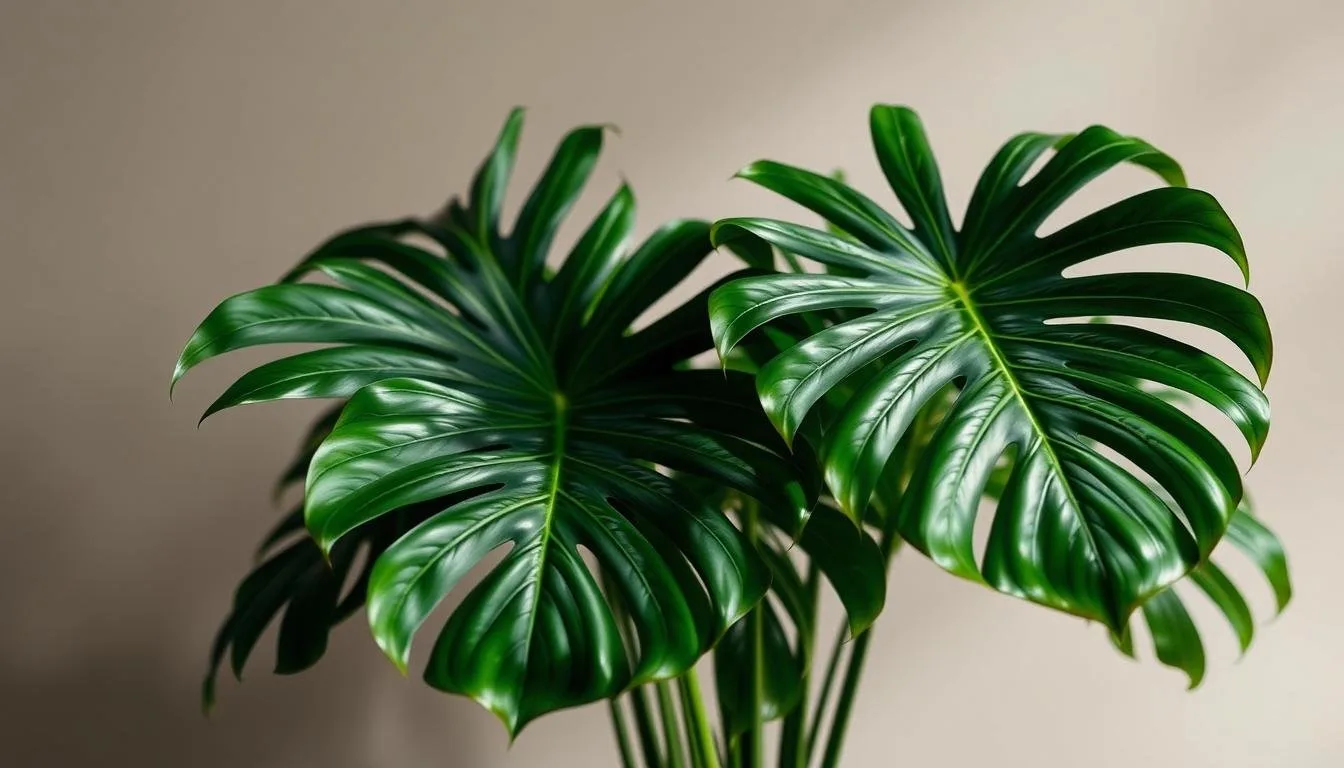
For most smooth-leaved houseplants, the safest way to remove ordinary dust is to support each leaf and wipe it with a clean, soft cloth dampened with lukewarm water. Use a gentle rinse for plants with lots of small, sturdy leaves, and a dry soft brush for fuzzy or water-sensitive foliage. Skip oil-based shine products and household cleaners; first check whether a dull, sticky, or spotted surface is actually dust.
Check what is on the leaf before you clean it
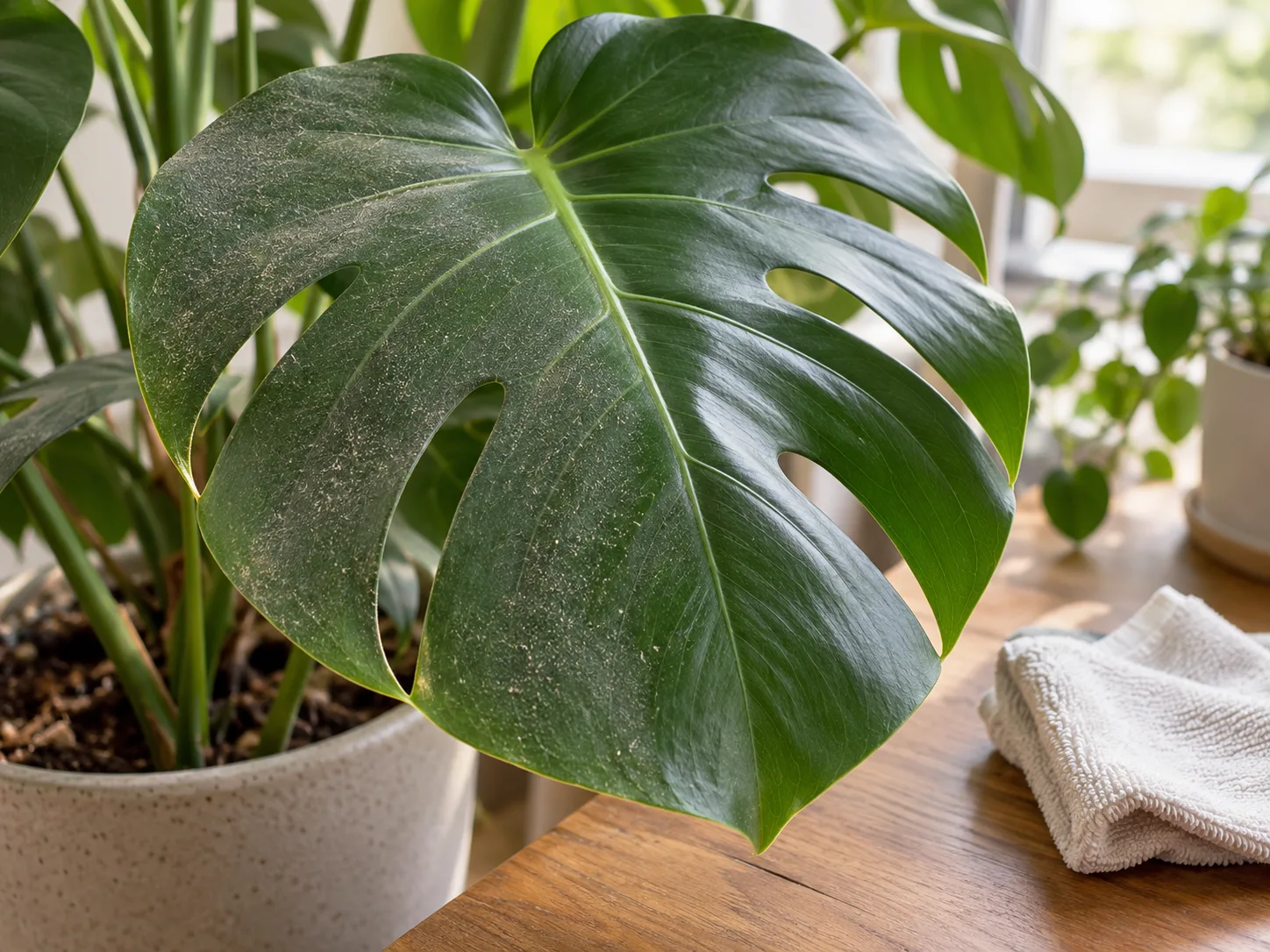
Take a close look before reaching for a cloth. Ordinary dust usually forms a loose, fairly even film and lifts when you brush or wipe one small area; the cloth picks up gray or brown particles and the leaf underneath looks like itself again. Pet hair, lint, and cooking grease can cling more than dust, but a gentle wipe should still make progress.
A white ring or crust that stays in place may be mineral residue from hard water or fertilizer splash rather than dust. A mark that is fixed in the tissue, such as a bleached patch, brown edge, or sharply outlined spot, will not wipe away and should not be scrubbed. Cleaning can reveal the leaf’s actual condition, but it cannot reverse old sun scorch, bruising, disease, or pest damage.
Sticky surfaces need a different check. Soft scales and aphids can leave honeydew, while spider mites may cause pale stippling or fine webbing; look under leaves, along midribs, and where petioles meet stems.
The Connecticut Agricultural Experiment Station’s houseplant handbook describes these signs for common indoor pests. If you find insects or webbing, isolate the plant and identify the pest before choosing a treatment; routine dusting is not a substitute for pest control.
Pick a method by leaf texture and plant type
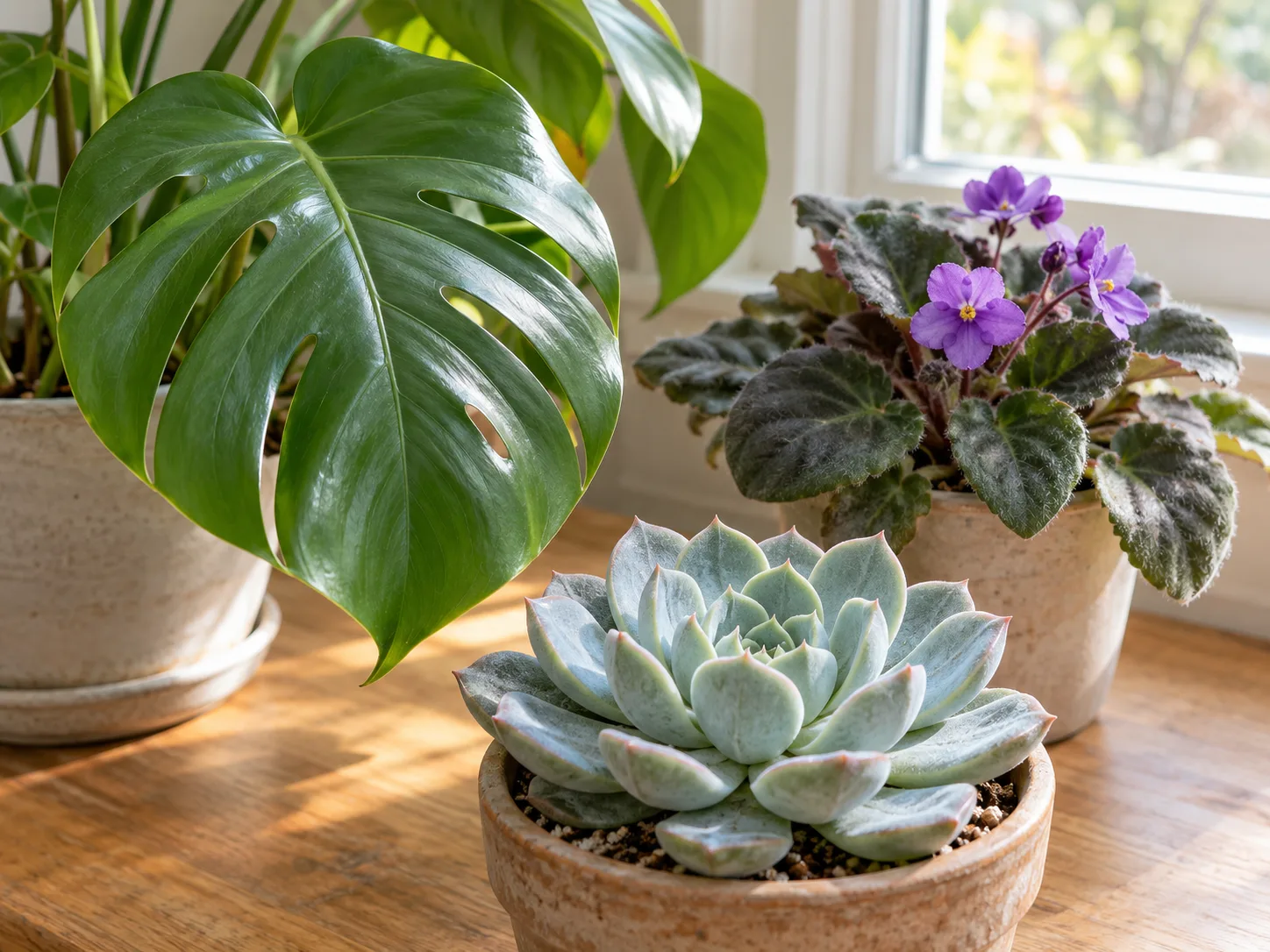
Match the cleaning method to the leaf and the plant’s structure, not simply to the amount of dust. A broad, flexible leaf can tolerate a damp cloth that would snag or mat a fuzzy leaf. A shower rinse saves time on dense, sturdy foliage but can soak a small pot that is already wet or leave water trapped in a tight crown.
Smooth, broad leaves
Rubber plants, many philodendrons, pothos, and Monstera have smooth surfaces that are easy to wipe individually. Support the leaf as you clean so pressure does not travel down the petiole and crease the blade. For these plants, a soft damp cloth is more controlled than spraying every surface and hoping the dust runs off.
Fuzzy, waxy, or delicate leaves
African violets, some begonias, and other velvety or hairy plants can trap water among leaf hairs. Use a clean, very soft brush to lift dust rather than rubbing with a wet cloth; if you are unsure, test one inconspicuous leaf and follow species-specific care advice. For waxy or powder-coated leaves, including some succulents, avoid vigorous wiping that can disturb the natural coating and leave permanent-looking fingerprints.
For plants with many small leaves, a light rinse can be practical if stems hold up well and the soil drains freely. If stems are brittle, flowers are open, or the root ball is already saturated, work in sections with a soft brush or cloth instead. Oklahoma State University Extension notes that houseplants differ in how they handle water and recommends tepid water and a spray that is not too forceful when showering foliage.
Gather a simple cleaning kit and protect the pot
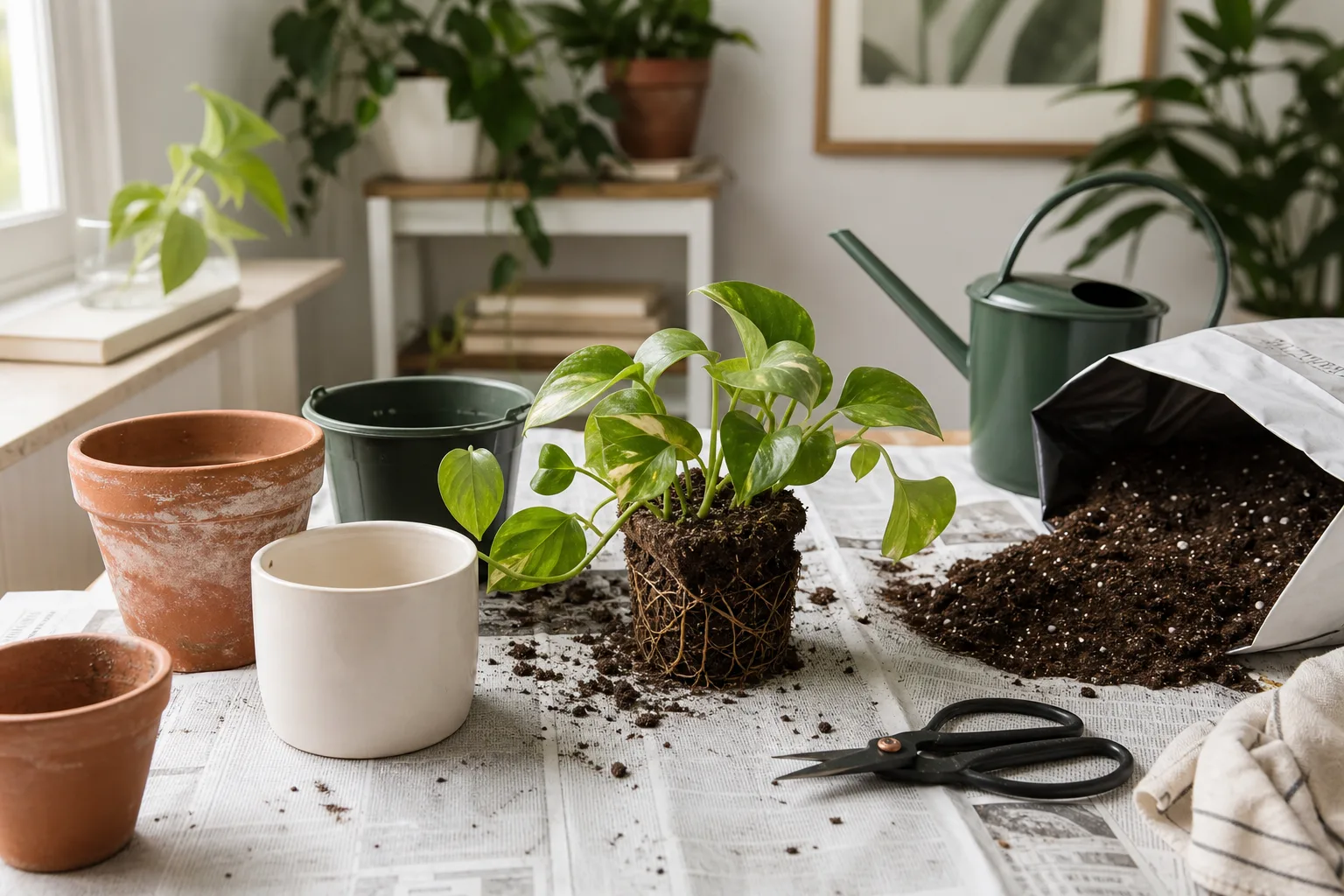
You need very little for routine dust: a soft microfiber or lint-free cloth, a bowl of clean lukewarm water, and a towel for the work surface. Keep a second clean cloth nearby if you have several plants, especially if one plant is sticky or has possible pests. Reusing a dirty cloth can transfer grit between leaves or move an insect from one plant to another.
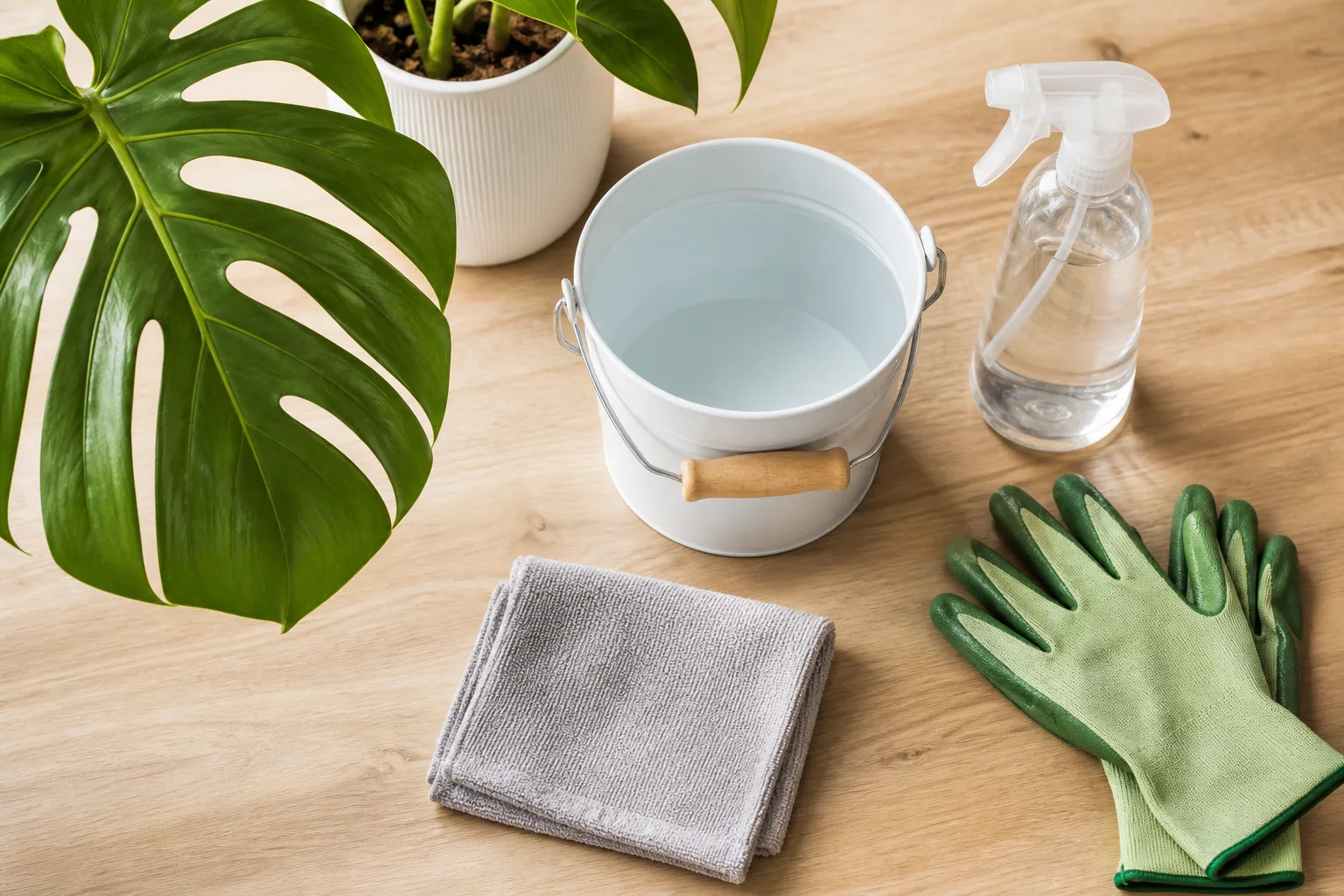
Move a manageable plant to a stable counter or sink before cleaning, and remove its decorative cachepot if water could collect inside. Large pots can stay where they are; place a towel around the base and work slowly so the pot does not tip when you reach behind the foliage. If the soil is freshly watered or the drainage is poor, keep moisture away from the mix rather than adding an unnecessary rinse.
Use plain water first. If your tap water dries with a chalky film, try filtered, distilled, or rainwater on one leaf before treating the whole plant; local water mineral levels vary, so the plant’s own marks are a better guide than a universal rule. Do not add dish detergent, vinegar, lemon juice, alcohol, oils, or “leaf shine” to the bowl for ordinary dust.
Wipe broad leaves gently, one at a time
Dampen the cloth and wring it until it is just moist, not dripping. Set one hand behind or beneath a leaf to support its full blade, then make light passes with the cloth from the midrib toward the edge. Turn or fold the cloth to a clean surface as dust collects, and clean the underside too if it is dusty or you are inspecting for pests.
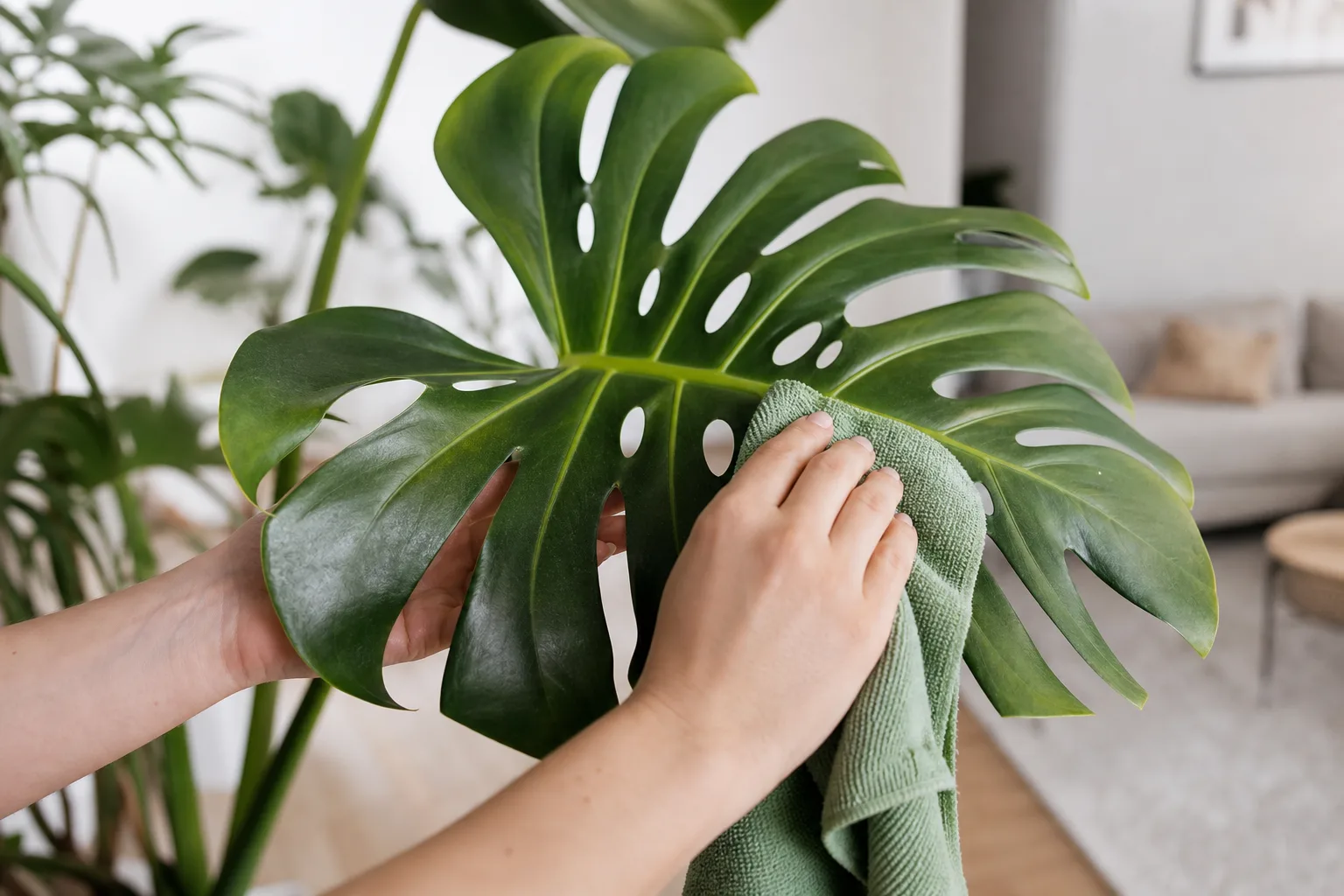
Think of the cloth as lifting the film, not polishing the plant. Pressing harder can scuff a waxy surface, snap a thin tip, or crease a leaf where it joins the petiole. If the cloth drags, add a little water; if water beads and runs into folds, wring it more thoroughly.
Work from the cleaner upper growth toward the dustier outer and lower leaves, rinsing the cloth when it looks dirty. That keeps you from dragging grit across the same surface. After one pass, pause and check whether the leaf is actually clean; repeated rubbing after the dust is gone adds wear without improving the result.
When a gentle rinse is the better choice
A sink, tub, or shower can be easier than wiping dozens of small leaves, especially on a healthy plant with flexible foliage and a pot that drains well. Oklahoma State University Extension recommends tepid water and a spray that is not too hard; it notes that a shower can remove dust, dirt, and some insects. Epic Gardening and Gardening Know How also describe a rinse as a practical option for sturdy foliage, while reserving brushing or less water for leaves that do not tolerate wetting well.
Before moving the plant, check whether it needs watering. If its mix is already damp, cover the pot with a reusable cover or plastic bag secured loosely around the stems so extra water does not saturate the root zone. Keep the bag away from delicate stems, and remove it as soon as the rinse is over.
Set the spray to a soft, dispersed stream and test the temperature on your wrist: it should feel neutral to lukewarm, not hot or cold. Tilt the plant so water runs off the leaves instead of pooling in the crown, and support heavy branches rather than forcing them sideways. Rinse both leaf surfaces, but stop if the spray bends or tears the foliage.
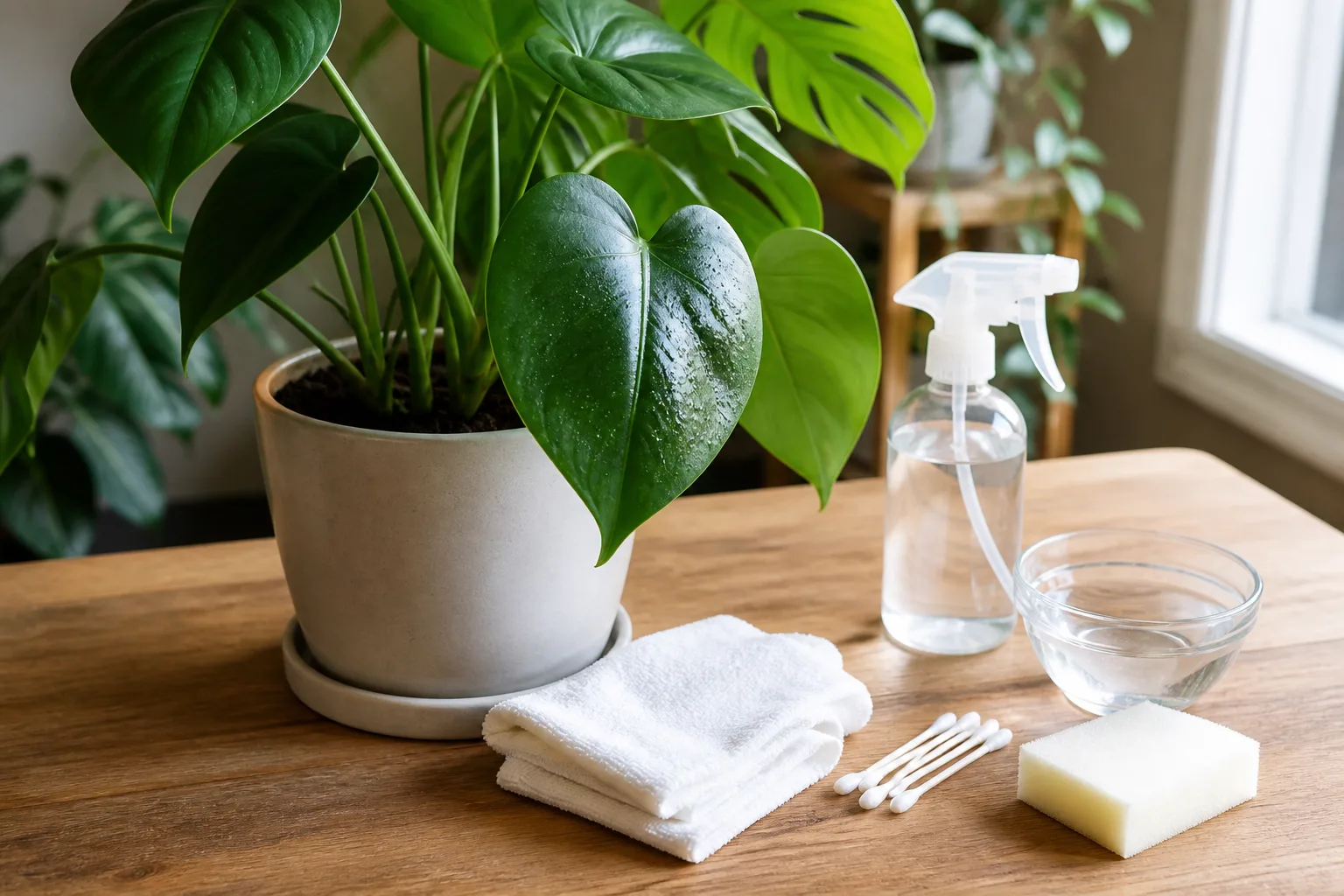
Let the plant drain fully in a warm room with ordinary air movement before returning it to a dim shelf or placing it in direct sun. Blot water sitting in leaf joints with a corner of clean cloth, especially on plants with overlapping leaves or a tight central rosette. Never leave a nursery pot sitting in the water that drains into its cachepot or saucer.
Dust fuzzy, tiny-leaved, and succulent plants carefully
A soft brush is the better tool for hairy foliage because water can cling between hairs and make the leaves look matted. Use a clean makeup brush, artist’s brush, or soft plant duster; hold the leaf from underneath if it is sturdy enough, and sweep lightly from the base toward the edge. Do not use a rough paintbrush, feather duster with stiff quills, or compressed air close to the plant.
For very small leaves on a plant that handles water well, a gentle shower may be less tiring and less likely to break stems than trying to clean each leaf. Keep the spray broad and low-pressure, and let the plant drain afterward. For fragile trailing stems, clean the most exposed surfaces with a soft brush instead of lifting or turning the whole plant.
Succulents and cacti are not all alike. Smooth, non-waxy succulent leaves can usually be brushed or wiped with a barely damp cloth, but dusty rosettes and powdery, farina-covered leaves are best dusted dry so you do not rub away their protective-looking bloom. Avoid spraying water into a tight rosette, where moisture may linger, and do not wet spines if a brush can do the job safely.
If the plant has a specific care guide, use it for unusual leaf surfaces or growth forms. Cleaning is maintenance, not a reason to handle every leaf: remove only the debris you can reach without bending the plant or scraping its coating. If a leaf is soft, newly unfurled, or already damaged, leave it alone until it hardens unless a pest problem requires a targeted response.
Soap, vinegar, and leaf shine: what to skip
Routine dust does not need soap. Oklahoma State University Extension allows a weak mild-soap solution for a shower but says to rinse away soap residue with clear water; that is a cautious fallback for grime, not a universal recipe for every houseplant. Household dish liquids vary in fragrance, degreasers, dyes, and other additives, and leaf tolerance varies by species, so do not assume that a kitchen detergent is equivalent to a labeled insecticidal soap.
If sticky residue or an identified pest makes a wash necessary, isolate the plant first and test the chosen product on a small area. For a pesticide or insecticidal soap, follow its label exactly, including plant suitability, dilution, application conditions, and rinse directions. Do not improvise a stronger mixture or treat a plant in direct sun or heat; an unsuitable product can injure foliage.
Skip vinegar and lemon juice as routine leaf cleaners. Their acidity is not needed to remove loose dust and can irritate tissue if the concentration or exposure is wrong; if a mineral spot does not lift with plain water, identify whether it is a deposit or damage before trying an acid. Never mix household cleaners, and do not use bleach on living leaves.
Leaf-shine sprays, oils, mayonnaise, milk, and cooking oil are cosmetic shortcuts, not substitutes for cleaning. A coating may collect dust, change how the leaf surface behaves, or leave residue that is harder to remove than the original dust. A clean leaf’s natural finish is enough; matte, textured, or powdery leaves are not supposed to look glossy.
Tell dust from sticky residue and pest signs
After cleaning, the cloth should carry away visible dirt and the leaf should feel clean without a film. If a surface remains sticky, check nearby stems and the undersides of leaves for scale, aphids, or other sap-feeding insects before wiping again. A sticky patch that returns is a reason to inspect the plant, not to scrub harder.
Spider mites are tiny and can be hard to see without magnification, but stippling, a dusty appearance that returns quickly, or fine webbing between leaf and stem can point to a problem. White cotton-like clusters may be mealybugs, while raised brown or tan bumps along stems can be scale. The Connecticut Agricultural Experiment Station’s houseplant handbook discusses these signs; a rinse may physically dislodge some pests, but it does not confirm that the infestation is gone or replace a suitable treatment plan.
Keep plants with suspected pests apart from others, then examine the whole plant, including new growth and the stem joints. Use a magnifier if needed and take a clear photo for identification. If you treat a pest, choose a product labeled for that plant and pest, follow the label, and repeat inspections at the interval appropriate to the treatment; cleaning only addresses what is on the surface that day.
White spots that remain after wiping may be hard-water minerals, fertilizer splash, dried spray, or damage in the leaf tissue. Try a clean damp cloth on a small spot and stop if the leaf’s color or texture changes. When in doubt, leave a fixed mark rather than applying acids, oils, or abrasive scrubbing to “correct” it.
Keep water out of crowns, flowers, and potting mix
Some plant problems come from the way water sits, not from the water itself. For plants with dense crowns, overlapping leaf bases, or delicate flowers, avoid soaking the center and shake off large drops gently. Water trapped in low-airflow folds may take longer to dry, so use a cloth or soft brush around the base rather than aiming a spray into it.
Do not confuse an occasional leaf rinse with misting as a humidity strategy. Misting adds brief surface moisture and does not reliably change room humidity for long; repeatedly wetting leaves is also not a necessary routine if they are clean. For moisture-loving plants, adjust the growing environment separately instead of keeping foliage damp.
Covering the pot is optional, not mandatory. It helps if a shower would wash away loose mix or if the soil is already wet, but it can trap water around stems or damage brittle petioles if tied tightly. You can also clean only the leaf surfaces that need it and keep the root zone dry with a towel beneath the plant.
Let foliage dry, then check for water marks
After wiping, let leaves air-dry in bright, indirect light and normal room airflow. Do not leave a plant in harsh sun while its leaves are wet, and do not place it in a cold draft straight from a warm rinse. These are simple ways to avoid adding temperature or light stress during a routine task.
Inspect the plant again once it is dry. If a pale ring appears where a droplet dried, switch to lower-mineral water next time and wipe droplets from especially visible leaves. If the spot stays embedded in the tissue, the cause is probably not a surface deposit, so another cleaning round is unlikely to help.
Wash the cloth with ordinary laundry detergent, rinse it well, and let it dry before using it on another plant. Use separate cloths or clean sections when you move from a plant with sticky residue or suspected pests to a healthy one. This small hygiene step keeps a simple cleaning session from becoming a way to transfer debris or insects around a collection.
How often to clean houseplant leaves
There is no useful universal schedule. Check leaves when you water or rotate the plant, then clean when dust is visible or when a finger or cloth picks up a noticeable film. Homes near an open window, construction, a busy road, a kitchen, pets, or forced-air vents often collect debris faster than quiet, low-traffic rooms.
A light wipe every few weeks may be enough for broad leaves in a dusty room, while a cleaner space may need attention only every few months. Treat those as reminders to inspect rather than deadlines. Cleaning too often can crease leaves, disturb natural wax, and turn a low-risk chore into repeated handling.
The goal is not a mirror shine. The useful result is a leaf surface free of loose dust, with no detergent film, no standing water, and no new scratches. Combine cleaning with a quick pest check and you will catch changes earlier without turning every care day into a full inspection.
Common mistakes that damage foliage
The most common mistake is assuming every plant can be hosed down. Fuzzy, waxy, fragile, newly unfurled, or tightly rosetted leaves often need less water or less contact; use a dry soft tool when a rinse would leave moisture trapped or rub away a coating. A plant’s tolerance also depends on the pot, soil moisture, room temperature, and airflow, so the right choice can change from one cleaning session to the next.
Another mistake is scrubbing a leaf until it shines. A cloth should move easily and lift debris with light pressure; stop if the blade bends, surface color changes, or the cloth catches on hairs. Never use a stiff brush, abrasive sponge, concentrated soap, alcohol, vinegar, or lemon juice on a routine basis.
Do not spray products just because a leaf is dull. If it is dusty, remove dust; if it is sticky, inspect for honeydew; if it has fixed spots, consider water deposits, sun, disease, or old damage. Cleaning first and diagnosing second can smear pests, leave chemical residue, or conceal the symptom you needed to understand.
Finally, do not return a freshly rinsed plant to a cold, dark corner or leave it standing in drained water. Give foliage a chance to dry, empty the saucer, and check that the plant is stable. That is enough follow-through for ordinary cleaning; extra products and repeated wiping rarely make it safer.
Conclusion
To clean plant leaves safely, begin by identifying the residue and matching your method to the leaf. Wipe smooth, broad foliage with a damp soft cloth, rinse sturdy dense growth with gentle lukewarm water, and dust fuzzy, powdery, or water-sensitive leaves with a soft dry brush.
Skip shine products and kitchen mixtures for routine dust, protect the pot when a rinse would add unwanted water, and let foliage dry before returning it to its usual spot. If leaves are sticky, stippled, webbed, or spotted in a way that does not wipe away, pause the cleaning and diagnose the plant; the right response depends on what is actually on the leaf.