How to Get Rid of Ants in Your Car Quickly
Get rid of ants in your car by removing food, vacuuming hidden crumbs, cleaning trails safely, and deciding when outdoor bait or a professional makes sense.
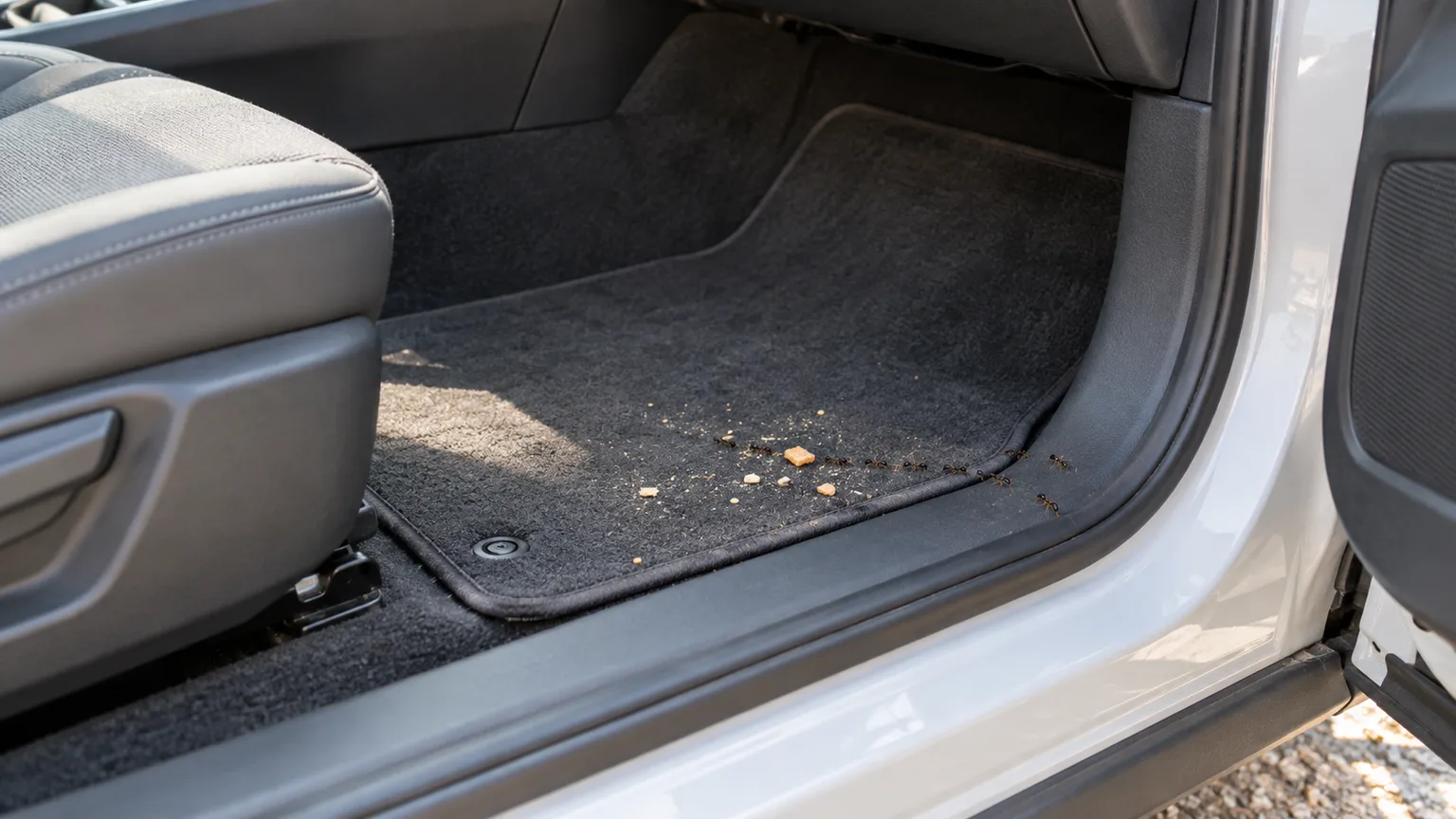
If ants are crossing the console or gathering around a floor mat, the quickest useful response is a thorough clean, not a blast of insecticide. Remove every food source, vacuum hidden crumbs, wipe the surfaces with a cleaner compatible with the material, and move the car away from the spot where the ants are entering. Then watch for a fresh trail before deciding whether the problem is over.
That last step matters. A few worker ants may be exploring from a nest outside the vehicle, but ants can also hitchhike on personal cars, and repeated activity may mean the source is not just a dropped snack. The right plan distinguishes those patterns while keeping pesticides away from upholstery, vents, electronics, and passengers unless a product label explicitly allows the exact use.
The Fast Answer: Remove Food, Clean, Then Check the Source
Use this sequence when you need a practical first pass:
- Park safely and get passengers out before cleaning. If ants are distracting you while driving, pull over in a safe place first.
- Remove food, wrappers, cups, bags, and child-seat snack debris. Check the trunk and reusable containers too.
- Vacuum the cabin thoroughly, especially under and between seats, seat rails, floor mats, cup holders, and the cargo area.
- Wipe hard surfaces and spot-clean fabric with a compatible product. Apply cleaner to a cloth rather than spraying it into seams, switches, or vents; let the cabin dry.
- Move the vehicle and inspect the former parking space. Look for a trail, nest, or recurring access route, then monitor the cleaned car over the next day.
This can remove the visible workers and the food trail quickly, but it does not necessarily eliminate an outdoor colony. If ants return after a complete cleaning and a change of parking spot, treat that as diagnostic information: trace where they travel and consider a pest professional instead of repeatedly spraying the cabin.
Why Ants Show Up in Cars
A car is not automatically attractive to ants. It becomes worth exploring when a scout finds a reliable food or water source: a soda drop in a cup holder, crumbs beneath a booster seat, a sweet coffee spill in the console, pet food in a travel bag, or sticky residue on a floor mat. Food odors from a bag or takeout container can also draw workers even when nothing has been spilled directly on the seat.
Ants use chemical trails to guide other workers toward food. A single scout that finds something edible may be followed by more workers, so a sudden line does not necessarily mean a large nest is inside the dashboard. UC IPM’s ant management guide explains that workers forage from a colony and carry food back to nestmates; that behavior is also why cleaning the attractant and the path matters more than killing only the ants visible on top of a seat.
The parking spot can matter as much as the cabin. A vehicle left for hours beside a ground nest, leaf litter, mulch, overhanging vegetation, or a wall with an active ant trail is easier for foragers to reach. A clean car parked over an active route can still get visitors, while a dirty car moved to a different location may stop receiving them.
Read the Pattern Before You Choose a Treatment
Look at where the ants appear, how many there are, and whether they keep returning after you clean. Those observations are more useful than guessing a species from a blurry phone photo or choosing an insecticide based on the word “ant” on the front of a package.
A few ants after parking may be foragers
If you see a small number of ants once, especially after parking near grass or landscaping, remove them with a vacuum or damp cloth and do the full food-and-crumb cleanup. Check whether they form an organized line, where that line starts, and whether it leads out through a door edge or floor-level opening. If no ants return after moving the vehicle and cleaning, the episode may have been temporary foraging.
That is a working explanation, not proof that the source is gone. Ant activity changes with species, weather, and colony conditions, and visible ants do not identify the nest location. Clean first, record where you saw the trail, and use what happens next to decide whether to escalate.
Repeated trails need an exterior and vehicle check
Ants returning to the same seat seam, dashboard edge, or footwell after the car is clean suggest an ongoing route or a source that travelled with the vehicle. Check the ground and nearby plants where the car was parked, but also inspect bags, sports gear, potted items, firewood, or other objects recently carried into the cabin. Do not dismantle dashboard panels, wiring, or trim to hunt for ants; those areas may contain electrical components and safety systems.
The possibility of a colony travelling with a car is documented, though it should not be assumed from every sighting. Virginia Tech reported observations of nine ant species hitchhiking on everyday vehicles in Taiwan from 2017 to 2023; seven were considered invasive in the places where they were found. The study shows that vehicles can transport ants, including colony members, but it does not establish that a few ants in an American car usually mean a nest is inside it. Virginia Tech’s report on ants hitchhiking in vehicles gives the useful distinction: a car can be a route of transport as well as a place where foragers find food.
First Response: Stop Safely and Keep Ants Off Passengers
If you notice ants while driving, do not reach across the cabin, wipe at the dashboard, or use a spray while the vehicle is moving. Pull into a safe location, stop, and ask passengers to stay still while you determine whether the insects are on clothing, a bag, a child restraint, or the interior. If anyone has a known severe reaction to stings, avoid handling unknown ants and get help if a sting or bite causes concerning symptoms.
Remove loose items carefully and shake them out away from the car, especially food bags, blankets, sports gear, and reusable shopping totes. Vacuuming is often the cleanest way to collect visible ants from carpet or crevices; a damp cloth works for an isolated ant on a hard, non-electrical surface. Avoid crushing a large group into textured upholstery, where debris and residue can be harder to remove.
Do not use a household insecticide as an emergency shortcut. A vehicle is a small, enclosed space with surfaces people touch and air ducts that distribute air; the correct treatment depends on the product label and where it permits use. Keep children and pets away while cleaning or handling any pesticide product, and do not restart a trip until the cabin is free of insects that could distract the driver.
Vacuum the Places Crumbs Hide
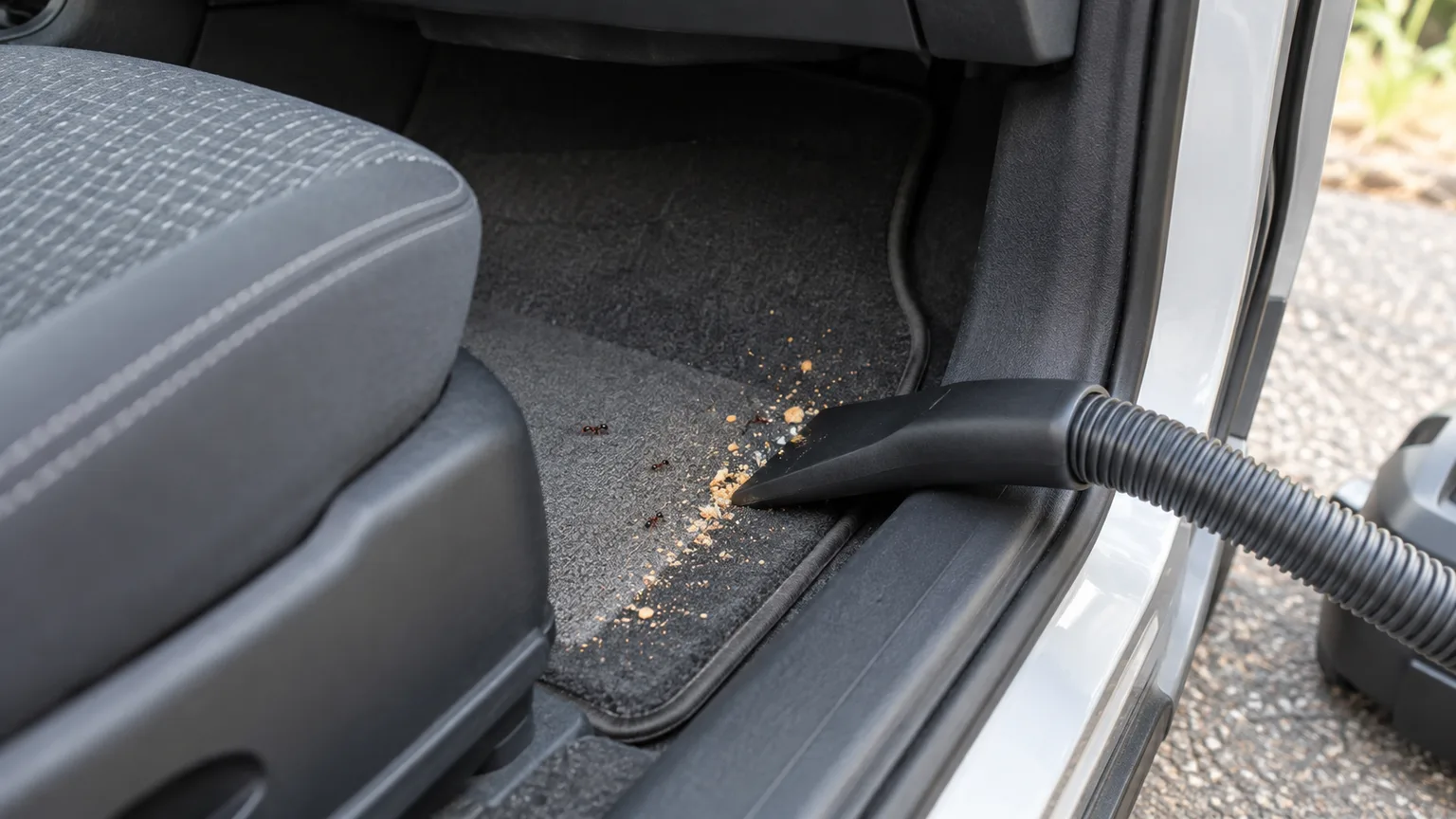
Take out floor mats and empty the cabin before vacuuming. Remove trash, water bottles, snack containers, tote bags, child items, and anything stored in seat-back pockets. Ants can keep returning if food is left in a bag or under a liner even after the visible trail on the seat has disappeared.
Use a narrow vacuum attachment to work through the edges of seats, the gap between the seat and center console, seat rails, stitching, door pockets, cup-holder edges, and the carpet beside the pedals. Slide seats forward and backward to reach underneath them, and check the carpet under removable mats. In the cargo area, inspect the spare-tire well or storage bins only if they can be opened normally; do not pry panels off or reach into areas that expose electrical components.
Vacuum the mats separately on both sides. If a mat is washable, follow its care instructions and let it dry fully before putting it back. Empty the vacuum canister or bag into a sealed trash container away from the parking spot so crumbs and live ants are not dumped beside the car and mistaken for a successful cleanup.
When crumbs are packed into fabric, one slow pass with the crevice tool is more useful than a quick sweep across the top. For sticky dried spills, loosen residue with a material-compatible upholstery cleaner after vacuuming; do not soak foam, seat seams, or carpet padding. Excess moisture can create a separate odor or mold problem and may carry liquid toward wiring below the carpet.
Wipe Trails Without Damaging Upholstery or Controls
On hard, non-electrical surfaces, use a clean microfiber cloth lightly dampened with a car-interior cleaner or mild soap solution that the vehicle manufacturer allows. Wipe cup holders, door pockets, the console, and other surfaces where food or drink may have left a film, then follow with a separate clean damp cloth if the product directions call for it. Dry the surface instead of leaving moisture pooled along seams.
For fabric, carpet, or leather, check the vehicle manual and product directions before spot-cleaning. Test an inconspicuous area, use a small amount on a cloth, and blot rather than scrubbing liquid into the material. Never spray cleaner directly into seat controls, air vents, dashboard buttons, the steering column, seat-belt retractors, or a child restraint.
Child car seats need extra care because strong cleaners, oils, or a changed harness installation can affect how the seat is used. Follow the restraint manufacturer’s cleaning and removal instructions, and reinstall it exactly as directed if you take it out. Safe in the Seat’s car-seat cleaning guidance also stresses manufacturer-approved cleaning methods and cautions against using ant killers on the seat itself; the vehicle’s and seat’s own manuals should govern your choices.
Soap and water can lift food residue from many washable surfaces, but no single cleaner is safe for every coating. Avoid assuming vinegar, essential oils, bleach, ammonia, or an all-purpose household spray is harmless just because it is familiar; a cleaner can stain, soften, discolor, or leave a smell in an enclosed cabin. The goal is to remove residue without saturating the material or leaving a new attractant behind.
Follow the Trail Outside the Cabin
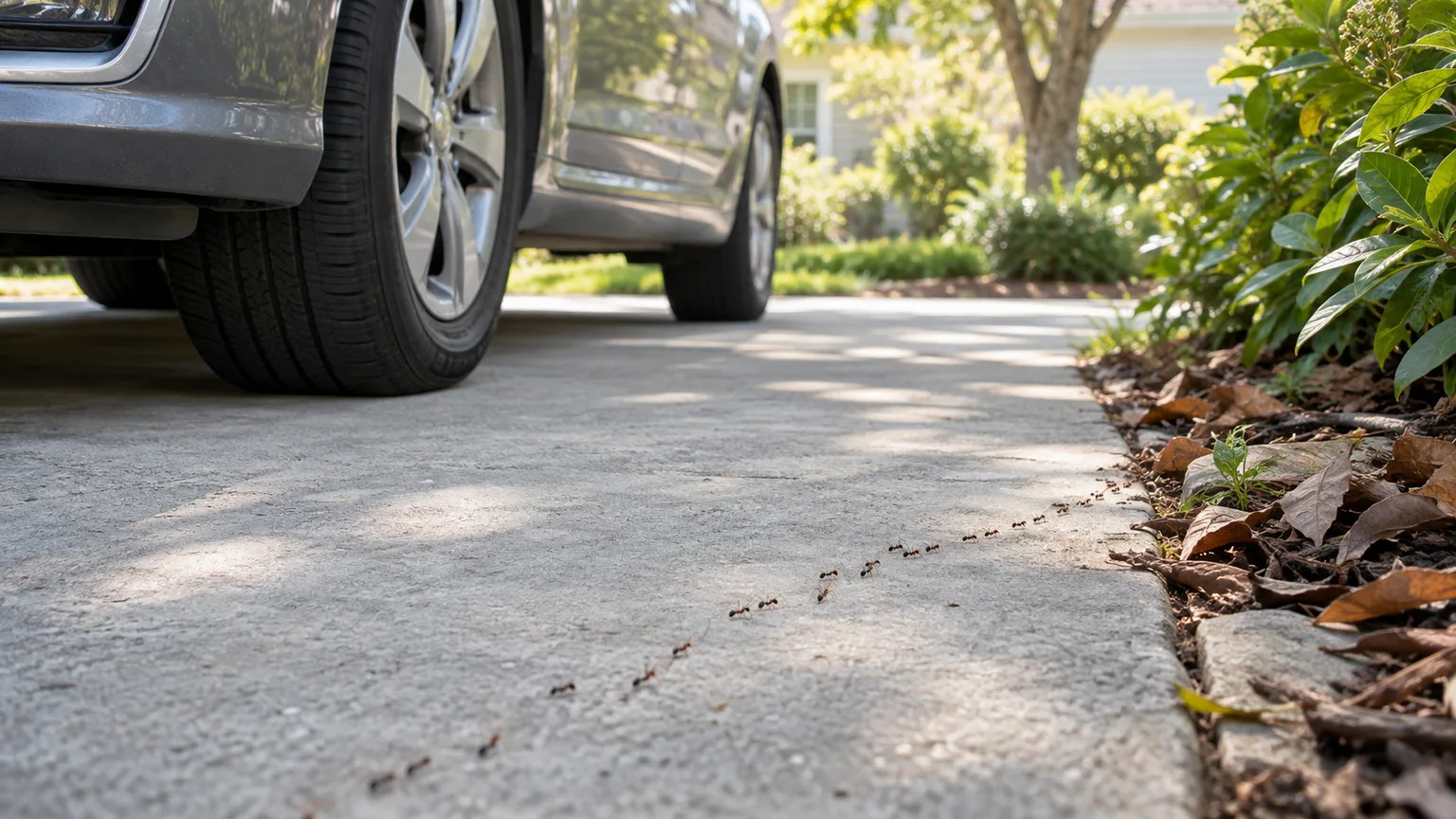
Once the interior is clean, look for the route the ants used. With the vehicle parked and off, observe the exterior from a safe distance: ants may follow a line across pavement, climb a tire, or disappear near a door or trunk edge. Check the ground where the car sat and the nearest landscaping, but do not put your hands into an ant mound or disturb stinging ants to collect a sample.
If you can, park in a different clean location for a day or two and see whether the ants return. A change of location is a low-risk test: if activity stops, the original parking area may have been feeding the trail; if ants continue to appear in the same cabin area, inspect carried-in items and seek help with hidden routes. This test does not prove the nest’s exact location, but it separates a parking-site issue from a problem that travels with the vehicle.
Ants outdoors are not automatically a problem that needs to be eradicated. The Royal Horticultural Society notes that ants are part of garden ecosystems and generally do not need control simply because they are present; the practical aim here is to keep them out of the passenger area and remove the route to the car. If a trail runs through a garden bed, avoid blanket spraying soil or plants just to protect a parked vehicle.
Can Ants Establish a Colony in a Car?
It is possible for ants to travel in a vehicle, and Virginia Tech’s observations show that even everyday personal cars can carry ants. That does not mean an established nest is the most likely explanation whenever a driver sees several workers. A nearby colony may be sending foragers toward crumbs, while a colony transported in a bag or vehicle could create activity that persists after the cabin is cleaned.
Look for a pattern rather than trying to diagnose from one clue. Repeated activity from the same seam or interior panel, ants appearing when the car has been parked in different places, or ants emerging from a bag or stored item warrant a closer inspection. A one-time line that disappears after moving the car and removing food is less concerning, but continue monitoring for several days.
Do not pull up carpet, remove door panels, or spray into the cabin air intake to find a nest. Modern vehicles contain wiring, sensors, airbags, and sensitive trim behind those surfaces. If activity appears to come from a vent, dashboard, or inaccessible panel, a pest professional can inspect for ants while an automotive technician can check any vehicle system that behaves abnormally.
Are Ant Baits Appropriate Inside a Vehicle?
Do not put a household ant bait in the cabin as a default fix. Baits work by attracting ants to a food-like material, so a station placed on a seat or in a console can concentrate workers in the space where people ride. More importantly, a product’s indoor-use permission does not automatically mean the label permits placement in a passenger vehicle, on upholstery, or near air-handling components.
Slow-acting baits can reach nestmates because workers share food with other ants, but they are selective only when the bait matches the species and is placed according to the label. UC IPM notes that different ants respond to different bait ingredients and food types, and that bait control can take more than a week. A bait that is wrong for the ant, dried out, contaminated by other food, or sprayed over may not be carried back to the colony.
If a product label allows outdoor use, an enclosed bait station may be appropriate at an active exterior trail or nest area, away from the car, children, and pets. Do not place stations under the vehicle, at the door sill, or where the bait could draw workers toward the cabin. If you cannot identify a permitted and safe location, skip the DIY bait and ask a licensed pest professional to select and place a product.
Use Pesticides Only for a Label-Permitted Site
The product label is the decision rule, not the package front or a general claim such as “for indoor ants.” Labels specify permitted sites, application methods, precautions, first aid, and restrictions. The National Pesticide Information Center’s label guidance says to use products only as directed and not assume that a product intended for one setting can be used in another; it specifically notes that off-label use is unlawful.
For a car, treat that as a strict boundary. Unless the directions explicitly permit the vehicle interior and the exact surface or application method, do not spray, dust, fog, or place bait in the cabin. Avoid steering wheels, pedals, seat belts, child restraints, electronics, vents, fuse areas, and anything that a passenger touches or breathes around. Do not use a total-release fogger in a vehicle or run a car’s ventilation system to spread pesticide.
Even when a label permits some indoor use, a car’s confined air volume and mixed materials make casual treatment a poor choice. NPIC’s safe-use guidance advises removing children and pets from the treatment area, following label protection requirements, and ventilating indoor spaces when sprays are used. If a pesticide spill or exposure occurs, follow the label’s first-aid directions and contact Poison Control or NPIC for appropriate guidance rather than improvising a cleanup.
A licensed pest professional should be told that the infestation is in a vehicle, not just “indoors.” Ask what product and site the label permits, what must be removed or covered, how long the car must remain out of use, and what ventilation or re-entry steps apply. A professional who cannot answer those questions clearly is not a safe shortcut.
Do Heat, Cold, or Vinegar Solve the Problem?
Do not rely on a hot sunny parking spot, a freezing night, or a long drive to kill every ant. Temperatures inside a vehicle change with sunlight, shade, ventilation, season, and where an ant is sheltered, and a brief exposure is not a controlled treatment for a colony. A North Carolina State University study of ants in forest environments found that species differed in their thermal preferences and activity patterns; it was not a test of ants in vehicle cabins, so it cannot support a precise “leave the car this hot for this long” remedy. NC State’s summary of that research is a reason to avoid making the weather your pest-control plan, not a formula for treating a car.
Vinegar may clean some household surfaces, but a homemade vinegar spray is not a dependable way to eliminate a colony. It can leave a strong odor, damage some interior materials, and does not solve food hidden in a seat seam or an ant trail outside. If you use any cleaner, select it for the material and wipe the actual residue; do not put vinegar or any liquid into vents, switches, leather, or child restraints without manufacturer approval.
Keep Ants From Returning
The most reliable prevention is routine removal of food and periodic checks of the places where snacks collect. Empty trash after trips, take food bags and lunch boxes out of the vehicle, wipe fresh spills promptly, and vacuum under child seats and floor mats on a schedule that fits how often the car is used. A quick weekly check is more effective than waiting until a visible trail appears.
Use closed containers for dry snacks if food must travel in the car, but do not leave the container or crumbs behind. Keep pet treats, groceries, plant pots, and reusable bags off the floor when possible, and check them before putting them back in the vehicle. If children eat in the car, focus cleaning on the seat rails and the carpet below the restraint rather than only the seat surface.
If ants appeared after parking in one location, try another spot and inspect the old area for a trail or nest. Keep loose leaf litter and food debris away from the parking area, and avoid putting ant bait where it will attract workers toward the car. These steps reduce the chance of repeat visits; they do not promise that all ants will disappear from the surrounding landscape.
When to Call a Pest Professional or Mechanic
Call a licensed pest professional when ants keep returning after the interior is clean and the vehicle has been moved, when activity seems to come from inside a panel or vent, or when you see a large number of ants that you cannot safely identify. Ask for an inspection and a treatment plan that names the suspected source, product, allowed use site, and steps needed before people ride in the car again.
Bring the vehicle to a mechanic if ants are accompanied by an electrical warning, a component that stops working, unusual ventilation behavior, or visible damage around wiring. Ants are not proof of electrical damage, and the presence of ants on a dashboard does not mean wires have been chewed. A technician should diagnose the car rather than a driver spraying into a circuit area or removing panels around airbags.
If you suspect a stinging species, avoid touching nests or swarms and keep passengers away from the affected area. A professional can identify the ants and coordinate treatment with vehicle-safe procedures. In regions where invasive ants are a concern, mention any recent long-distance transport or relocation of the car; the Virginia Tech research shows personal vehicles can move ants between places.
Common Mistakes That Make Car Ants Harder to Manage
Spraying the visible line kills or repels some workers but may leave the food source and colony untouched. It can also contaminate surfaces, push ants into harder-to-reach areas, or prevent foragers from reaching a bait station used outside. Clean first and choose a targeted next step only after you know where the route leads.
Putting a bait station in the cabin can attract more ants to a passenger space and may not be a use allowed by the product label. Wiping only the dashboard misses crumbs under mats, seat seams, cup holders, and stored bags. Using vinegar everywhere risks material damage and still does not remove the outside trail or hidden food.
Assuming the car’s heat will finish the job is not a safe treatment plan, and it creates no reliable endpoint. Removing a child restraint without reinstalling it correctly creates a separate safety risk. Treating the whole garden or driveway can expose people, pets, plants, and beneficial outdoor insects when the actual problem may be a small food spill or one trail crossing the parking space.
Conclusion
To get rid of ants in your car quickly, remove food and trash, vacuum the cabin completely, wipe residue with a material-safe cleaner, and move the vehicle while you check the original parking spot. This sequence removes what is keeping foragers interested and helps you tell a one-time visit from a route that keeps sending ants back.
Keep pesticides out of the cabin unless the product label explicitly permits the exact vehicle use, and follow the vehicle and child-seat makers’ cleaning instructions. If ants persist, emerge from a vent or panel, or appear alongside a vehicle fault, get a professional inspection instead of escalating to a stronger spray.



