Identifying 19 Common Lawn Diseases
Compare symptoms of 19 common lawn diseases with lookalikes, then use weather, grass type, and a diagnosis-first checklist to choose a safe next step.
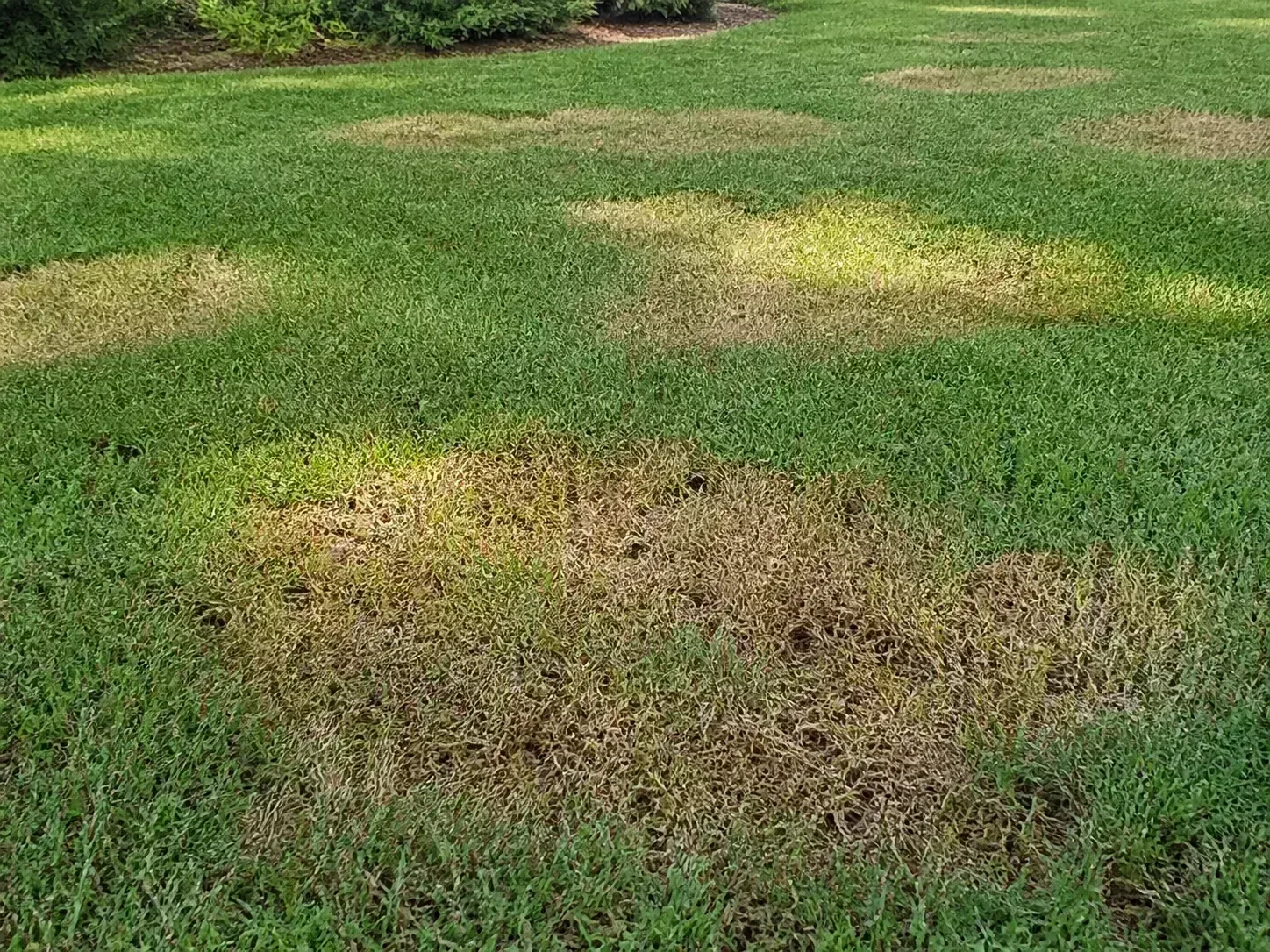
Brown patches, orange blades, white growth, and rings can all look alarming, but a photo rarely identifies what is happening underground or on a grass blade. Heat, drought, dog urine, fertilizer spills, dull mower blades, compaction, insects, and uneven irrigation can mimic disease. Treat the pattern as a clue, not a diagnosis. The most useful next step is to compare the grass species, recent weather, soil moisture, and the appearance of individual blades before you change the lawn-care routine or reach for a fungicide.
This guide covers 19 diseases and disease-like conditions commonly discussed in turf care. The nineteenth item, slime mold, is a harmless lookalike rather than a disease. Many lawn problems improve when stress is corrected; a persistent or spreading patch may need a local turfgrass diagnostician. University extension sources caution that summer patch, for example, can resemble heat or drought injury and may require microscope examination for confirmation (Penn State Extension).
Start with the pattern, then check the grass
A circular edge can suggest certain turf diseases, but circles also form when a sprinkler misses a spot, a dog urinates repeatedly, water runs off compacted soil, or a fertilizer spill burns grass. Rings may be greener than surrounding turf, dead in the center, or simply marked by mushrooms. Those differences narrow the questions; none proves a cause on its own. Brown patch symptoms also vary with turf species, weather, mowing height, and site conditions (Better Homes & Gardens).
Begin with four observations:
- Where and when did it start? Note whether symptoms appeared after a hot, humid stretch, a cool wet spring, drought, snowmelt, new seed, or a change in mowing or irrigation.
- What grass is growing there? Cool-season lawns such as Kentucky bluegrass, ryegrass, and fescue face a different disease profile from warm-season lawns such as St. Augustinegrass and Bermudagrass. A mixed lawn complicates visual diagnosis.
- What does the blade show? Look for lesions, orange powder, pink threads, a greasy appearance, or growth on the blade. Check at dawn if dew is present; some signs disappear as the lawn dries.
- What is happening below the canopy? Feel the soil at the patch and a healthy area nearby. Check whether roots and crowns are firm and pale or brown and rotting, but don’t pull up large sections before photographing the pattern.
| What you notice | Useful next check | Common lookalikes |
|---|---|---|
| Brown or straw-colored patch | Soil moisture, blade lesions, recent weather, and whether roots remain healthy | Drought, dog urine, fertilizer burn, scalping, grubs |
| Small bleached spots after dewy nights | Inspect leaves for tan lesions and note prolonged leaf wetness | Low mowing, drought stress, nutrient stress |
| Orange powder on shoes or fingers | Rub a blade gently over white paper and look for orange spores | Soil or pollen dust; other leaf discoloration |
| Rings, arcs, or mushrooms | See whether the grass inside is greener, dead, or unaffected | Buried roots, uneven irrigation, soil compaction |
| Browning after snowmelt | Check for a gray or pink mat and see whether injury is limited to leaves | Matting, winter desiccation, salt, debris |
Better Homes & Gardens and Family Handyman both emphasize comparing conditions and close-up blade clues rather than identifying turf disease from patch shape alone (BHG; Family Handyman).
A quick triage for brown or thinning turf
Before taking action, photograph the whole patch, its edge, and several individual blades. Include an object for scale, record the date, and take another photo from the same angle after a few days. Write down recent rain and watering, mowing height, fertilizer or herbicide applications, foot traffic, pet use, and whether the area stays shaded or wet. That record can reveal a repeating irrigation pattern or a treatment injury that a single close-up misses.
If the turf is dry, compare soil moisture two or three inches below the surface in affected and healthy areas. A dry patch may need a corrected irrigation pattern, but daily light watering is not automatically the answer: it can leave leaves wet for long periods while roots remain shallow. If soil is soggy or water pools, examine drainage and compaction before adding more water. If the grass is recently seeded or has been cut too short, reduce stress and allow recovery before diagnosing a pathogen.
Avoid piling on fertilizer as a generic cure. A nutrient deficiency can contribute to some disease susceptibility, including red thread and dollar spot, but excess nitrogen can create lush growth and make other conditions worse. A soil test and local recommendations are more useful than guessing from color alone. Likewise, don’t apply a broad-spectrum lawn product because a web photo looks similar; the product may not target the cause or may not be labeled for the site.
19 lawn diseases and one harmless lookalike
The profiles below are field clues, not a guarantee. Some names refer to a group of related diseases, and common names have changed as scientists revise pathogen classification. The same organism can cause different symptoms in different grasses or weather. Look for a combination of host grass, season, patch behavior, and close-up signs.
Warm, humid weather and leaf diseases
-
Brown patch often develops as tan, brown, or straw-colored patches in warm, humid weather, especially where nights remain warm and air circulation is limited. The affected grass species matter: cool-season tall fescue and ryegrass can be susceptible, while symptoms in other turf may look different. Check the lawn’s moisture, mowing height, shade, thatch, and nitrogen history. Watering or fertilizing harder without checking those factors can add stress rather than solve it.
-
Powdery mildew looks like a light, dusty coating on blades, most often in shaded areas with limited air movement. It is more likely to affect certain cool-season grasses, including Kentucky bluegrass, than a sunny, well-ventilated lawn. A pale lawn in shade does not prove mildew; inspect leaves closely and check for low light, poor drainage, and weak growth. Reducing shade may help where practical, but don’t remove trees solely because of one uncertain patch.
-
Red thread can leave pink or reddish threadlike strands extending from leaf tips, especially in cool, humid conditions. Fine fescues, perennial ryegrass, and Kentucky bluegrass may be affected. Penn State Extension describes the disease as more common during rainy periods in late spring and early summer and notes that low nitrogen can make symptoms more likely; a soil test is a better reason to fertilize than the color alone (Penn State Extension). In many lawns, the disease is mainly a cosmetic leaf problem and growth can recover as conditions improve.
-
Dollar spot may begin as small bleached or light-tan spots that merge into larger areas, with leaf lesions that have darker margins. On dewy mornings, short white fungal growth may be visible. NC State Extension notes the pathogen is favored by long periods of leaf wetness and can be encouraged by drought stress, low mowing, excessive thatch, and poor air movement—so “wet lawn” is not the only possible stress (NC State Extension). Turfgrass cultivar and species also affect susceptibility.
-
Leaf spot is a broad label for diseases that leave small dark, brown, or reddish lesions on individual blades. Lesions may develop pale or tan centers and darker margins, but symptoms depend on the pathogen and grass. Examine the blade with a hand lens and consider whether recent cool, wet or warm, damp conditions fit. Leaf spot on blades is not the same as a confirmed root disease; don’t assume the lawn needs a fungicide because a few leaves have spots.
-
Melting-out disease describes a more severe stage of some leaf spot complexes when injury moves into crowns and roots and turf thins. Look for ongoing decline rather than isolated marks on a few blades. Species, weather, mowing, and stress can all alter the pattern, and similar thinning may result from insects or root damage. If the turf is losing plants year after year, seek a diagnosis before reseeding with a different species or changing fertility.
-
Gray leaf spot can produce elongated or irregular grayish lesions, sometimes with a fuzzy or velvety look in humid conditions. It is especially associated with susceptible grasses and hot, humid weather; young or newly established turf may be vulnerable. It can progress rapidly under favorable conditions, but brown young grass also has non-disease causes such as drought, herbicide injury, or uneven establishment. Photograph the blades and note species and recent weather before deciding whether professional diagnosis is needed.
-
Ascochyta leaf blight may appear as sudden tan or brown patches after stressful weather, with healthy and damaged blades mixed together. Colorado State University Extension characterizes it as a leaf blight that often resolves when environmental stress improves; the apparent overnight change can reflect leaf injury becoming visible, not necessarily an epidemic moving through the lawn (Colorado State University Extension). Check heat, drought, mowing, and irrigation history and avoid a fungicide application based only on sudden browning.
Cool weather, rain, and snow cover
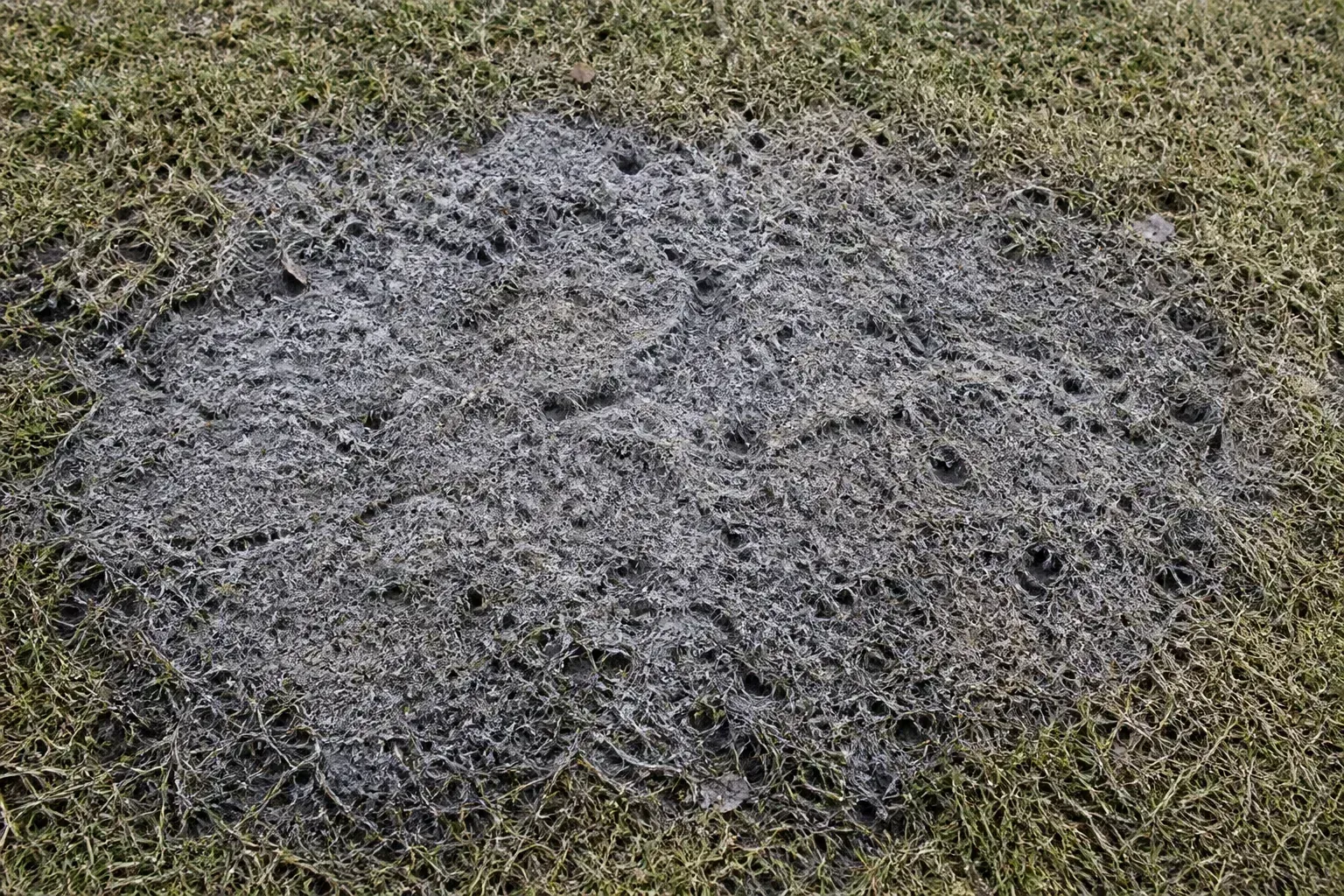
- Typhula blight, or gray snow mold, may show up as grayish circular areas after the snow melts, especially where snow sat for a long time over unfrozen ground or grass was matted by leaves. Injury is often concentrated in leaf tissue, and a lawn may fill back in as it grows. Once turf is dry, a gentle rake can loosen matted grass and improve airflow; aggressive raking of wet, fragile crowns can cause more damage. Don’t apply a spring fungicide as a rescue treatment without local diagnostic guidance.
-
Pink snow mold, often called Microdochium patch, can appear as pinkish or salmon-colored patches after cold, wet weather or snow cover. It may injure more than leaf blades, but color alone is not enough to distinguish it from other winter damage. Compare its distribution with snow banks, leaf piles, and areas of prolonged wetness. Family Handyman’s disease chart likewise distinguishes snow-mold symptoms by post-snow timing and patch color while urging attention to conditions (Family Handyman).
-
Fusarium patch or Fusarium blight are names used historically for different turf symptoms, and “Fusarium” naming can be confusing as disease taxonomy changes. Some ringed, straw-colored, or reddish patches may be mistaken for summer patch or other root diseases. Do not infer the pathogen from a green center or a donut-shaped patch. Record grass type, season, and whether the crown and roots are firm or decayed; a diagnostic lab is more reliable when the distinction changes management.
-
Yellow patch can produce irregular yellowish patches or rings in cool, wet periods in susceptible cool-season turf. It may resemble other Rhizoctonia-related problems and is not reliably diagnosed by the shade of yellow. Check whether the affected grass is actively growing, whether the site remains wet, and whether there is a history of late-season heavy fertilizer. If it recurs or expands, ask a local extension office to help separate disease from nutrient or root stress.
Rings, roots, rust, and other stress clues
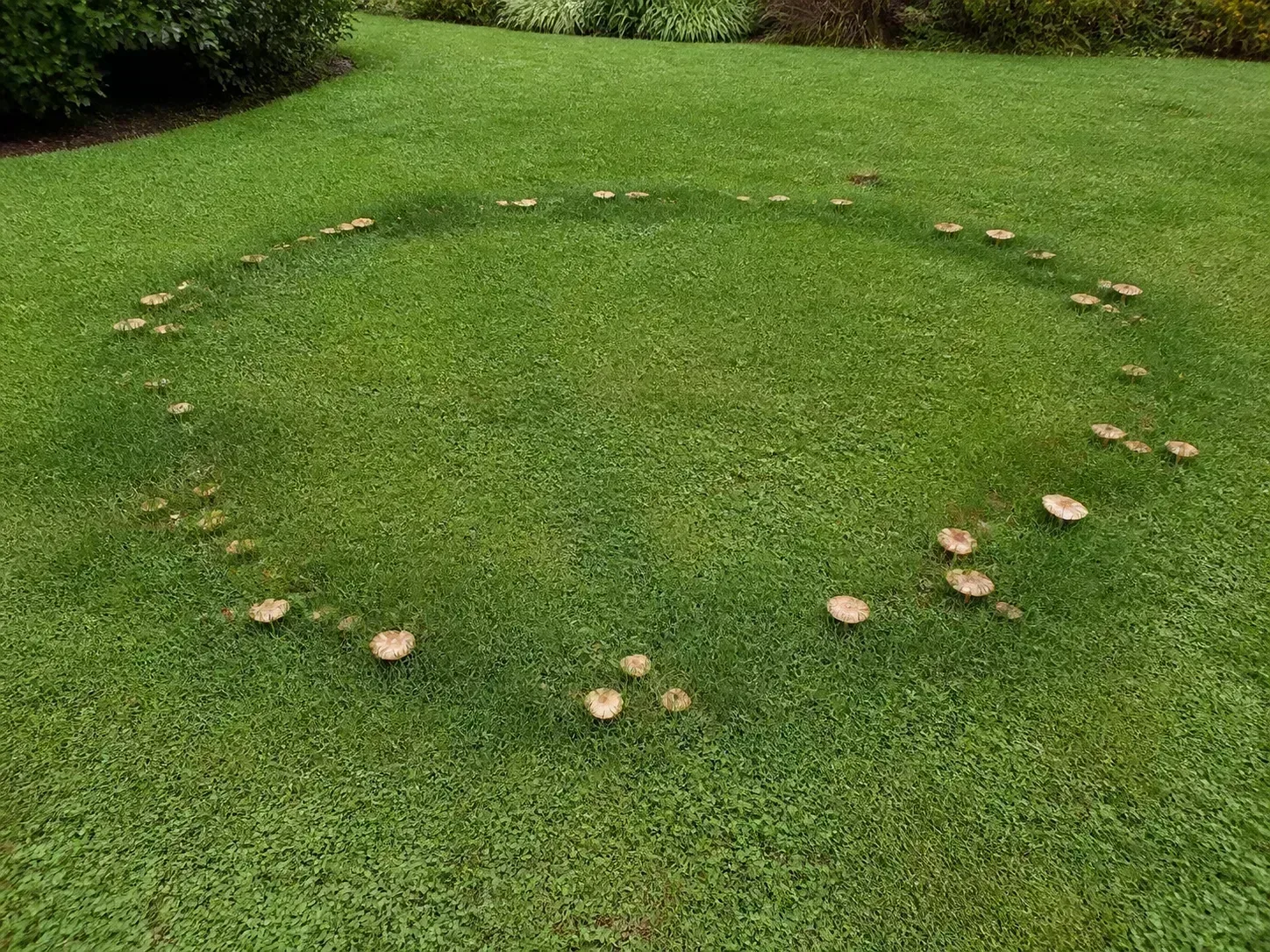
- Fairy ring appears as a circle or arc that may be dark green, dead, or marked by mushrooms. Different fairy rings behave differently: some fungi alter soil water movement and can dry the turf, while others release nutrients that make a green band; mushrooms may follow rainy weather. NC State Extension explains that fairy-ring fungi often do not directly infect grass, and the visible type can change with conditions (NC State Extension). A mushroom ring is not proof that the lawn is dying, and mushrooms should not be eaten unless identified by an expert.
-
Summer patch is a root and crown disease associated with susceptible Kentucky bluegrass and fine fescues during hot weather. It may begin with wilted circular areas, then become reddish-brown or light-brown sunken patches, sometimes with a healthy tuft in the center. Penn State emphasizes that heat stress and drought can look similar and that positive identification may require a qualified diagnostician and microscope. Improving drainage, reducing compaction, and avoiding very low mowing can support root health, but these steps do not prove that summer patch caused the damage.
-
Necrotic ring spot can form recurring rings, crescents, or patches in bluegrass and other susceptible cool-season turf. It may be confused with summer patch or other root diseases, especially when patches have green centers. Root and crown examination and grass identification matter more than the ring shape. If the same spots return each year, keep dated photos and send a representative sample to a local turf diagnostic service before investing in a preventive treatment program.
-
Rust can leave yellow-orange powdery spores on grass blades that rub off on shoes, mower wheels, or a white tissue. It often shows up when turf grows slowly or is under stress, though exact conditions and susceptible species vary. Unlike a root disease, rust primarily marks foliage; correct the underlying growth stress where possible and maintain the lawn normally. A rusty smear is a useful clue, but confirm that it is on the grass itself rather than soil or another plant.
-
Pythium blight can cause rapidly expanding, water-soaked or greasy-looking patches during hot, humid weather, sometimes with cottony growth visible in the early morning. Penn State’s Turfgrass Pest Diagnostic Lab identifies Pythium blight among Pythium diseases of turf; Pythium organisms are oomycetes, not true fungi, despite common use of “fungal disease” as a broad label (Penn State Turfgrass Pest Diagnostic Lab). Because severe turf decline can have several causes, document the speed of spread and contact a local extension or diagnostic specialist promptly rather than treating by appearance alone.
-
Anthracnose may cause irregular browning and blade lesions, and in some cases can affect crowns or roots in stressed turf. Heat, drought, low mowing, and other stresses can predispose a lawn to damage, while similar patching may be caused by other diseases or environmental conditions. It is a poor candidate for diagnosis from a distant photo; look for close-up signs and consider a lab test when decline persists. Favor practices that reduce stress, such as appropriate mowing and moisture management for the grass type.
-
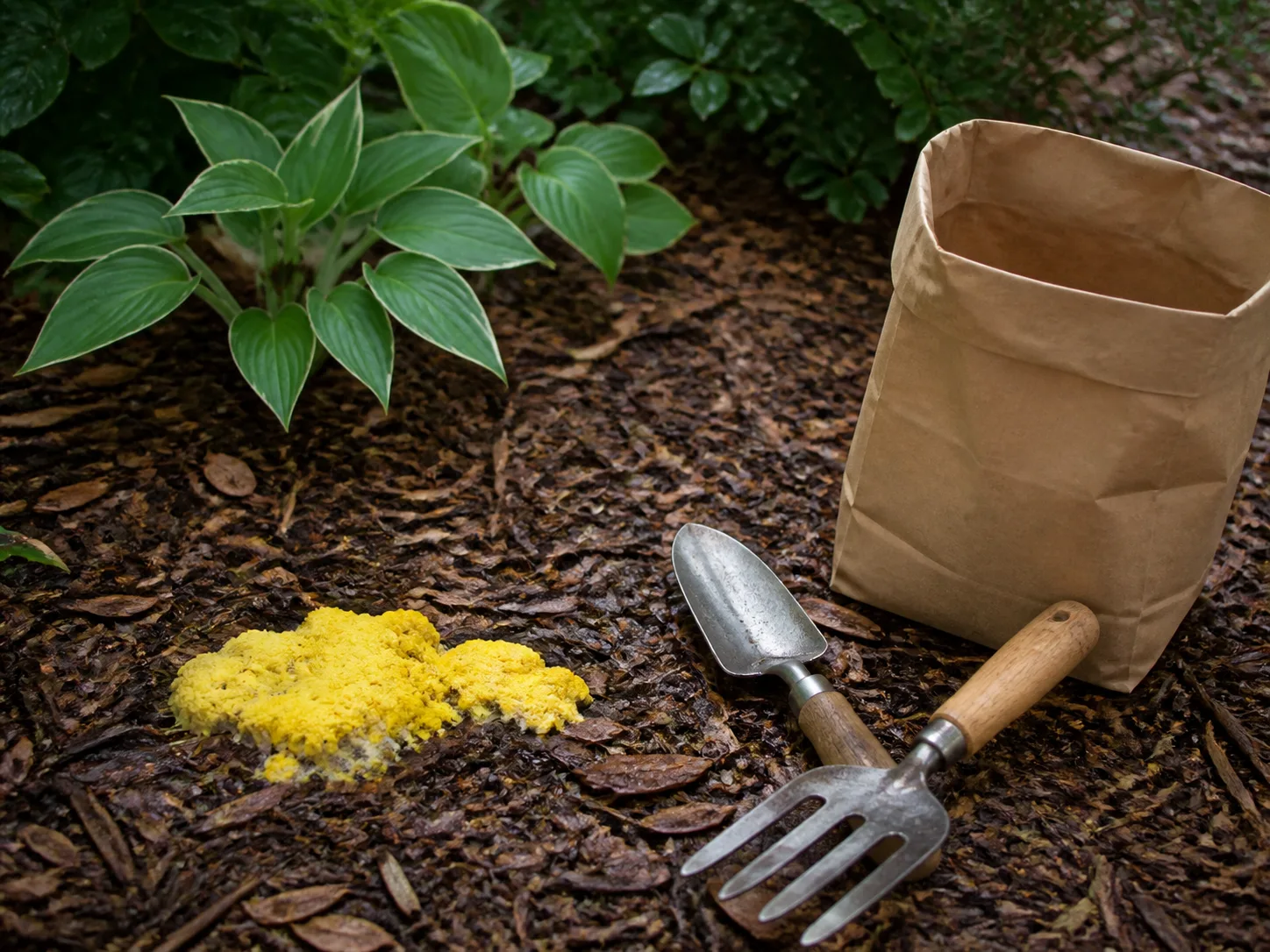
Slime mold is the harmless lookalike in this list, not a lawn disease. It can form yellow, gray, orange, or dark crusty or foamy masses on grass, mulch, or plant debris after warm, wet weather. It feeds on microorganisms and may temporarily coat blades, but it does not infect grass roots like a pathogen. Penn State Extension notes that chemical control is unnecessary; once dry, the material can be brushed or washed from the surface (Penn State Extension). Avoid applying fungicide to a slime mold patch.
What to do in the first 48 hours
First, stop any action that could add stress: pause fertilizer, herbicide, or fungicide applications until you understand what has changed. Don’t abruptly flood the patch or scalping-mow it. Photograph the area and inspect a few blades while dew is present, if practical. Then check irrigation coverage with a simple observation: run the system briefly and watch for missed zones, runoff, or a broken head; avoid changing the entire watering schedule from one patch alone.
Next, compare one affected spot with healthy turf nearby. Look for sharp boundaries aligned with a spill or sprinkler, repeated pet paths, shallow roots, compacted soil, or a low area that stays wet. Check the last several weeks of weather and lawn work. A recent application, construction activity, mower repair, or tree-root disturbance may explain the timing better than disease. If you need to mow, use a sharp blade and avoid mowing when the grass is wet; clean equipment before moving from a confirmed diseased area into clean turf if your extension diagnostician advises it.
Finally, decide whether the damage is stable, improving, or expanding. A leaf-only cosmetic issue can often be watched while normal growth resumes. Rapidly spreading wilt, dying roots, repeated seasonal rings, or uncertainty that affects a pesticide decision deserves expert help. Don’t wait for a large area to decline if the turf is collapsing quickly; prompt identification can prevent wasted treatments.
When a lab or extension office can help
Contact your county or state Cooperative Extension office when the patch is spreading, returns in the same location, affects a large area, or could lead you to use a pesticide. A turfgrass diagnostic lab can examine grass and roots and may request a particular sample size or submission form. North Carolina State’s Turfgrass Diagnostic Lab directs homeowners and general turf inquiries to local county extension first, a useful starting point even if you live elsewhere; follow your own state’s process (NC State Turfgrass Diagnostic Lab).
Before collecting anything, check the lab’s current instructions. In general, diagnosticians need the boundary between healthy and affected turf rather than a bag of completely dead grass; however, sample dimensions, packaging, and timing vary by lab. Include photos of the whole patch and close-ups, note grass type if known, dates, weather, and any products recently applied. Keep the sample fresh and deliver it as instructed. A clear description of the lawn’s history can be as useful as the sample itself.
Treat the lawn without guessing
Why fungicide is not a default first step
A fungicide treats only certain disease organisms; it does not correct drought, fertilizer burn, insects, poor drainage, dog urine, scalping, or compaction. A treatment chosen for the wrong pathogen may fail, delay proper correction, or expose people, pets, and non-target organisms without benefit. Some turf diseases are best managed preventively and may not respond once symptoms are visible, while others are usually managed by relieving stress or allowing new leaves to grow. This is one reason golf-course disease programs do not translate directly to an ordinary home lawn.
Start with cultural correction that fits the evidence: repair a misdirected sprinkler, reduce unnecessary leaf wetness, improve drainage where feasible, mow at a locally appropriate height, or use soil-test results to guide fertility. Don’t aerate or dethatch a lawn merely because those words appear in a disease article; timing and turf condition matter, and disruptive work can worsen heat or drought stress. University turf guidance often pairs any chemical recommendations with species, timing, and site-specific limits, including explicit distinctions between managed greens and home lawns (Penn State Extension: summer patch; NC State Extension: dollar spot).
If a pesticide is appropriate
Use a pesticide only after a credible diagnosis and only if the current product label specifically permits the product, disease, turf site, and application method. Read and follow the complete label, including protective equipment, re-entry, watering, storage, and disposal directions; the label is legally important, not optional fine print. Product registrations, approved uses, and local restrictions can change, so check the current label and state or municipal rules before application. The U.S. Environmental Protection Agency explains how pesticide labels communicate legally enforceable use directions and precautions (U.S. EPA). If you cannot confirm the intended use, do not apply it; ask your extension office or a licensed local professional.
Never mix or increase a product rate to “make sure,” combine products without label authorization, or use a professional turf product on a home lawn because a university disease page lists it. Keep people and pets away according to the label, and prevent drift or runoff into drains, ponds, or neighboring property. For many homeowners, a correct diagnosis and nonchemical management are more economical than repeated applications.
Prevention through everyday lawn care
Choose grass species and cultivars suited to the local climate, sun exposure, soil, and intended use. A grass that struggles in dense shade or summer heat will remain vulnerable even with careful watering. Where a lawn is being installed or renovated, use local university recommendations and consider a mix of suitable cultivars rather than a single highly susceptible variety.
Mow often enough to avoid removing too much leaf at once, and set the mower to a height recommended for the grass species and season. A sharp blade leaves a cleaner cut than a dull one. There is no one universal mowing height for all grasses; cutting too low can weaken roots and increase stress, while letting turf grow excessively tall before a severe cut also shocks it. Keep clippings only when they are healthy and the lawn-care plan allows; if a diagnostician confirms a disease that spreads with clippings, ask how to handle debris locally.
Water based on soil moisture and weather rather than a rigid calendar. When irrigation is needed, apply enough to moisten the active root zone without creating runoff, and, where possible, water early enough for leaf surfaces to dry during the day. Avoid prolonged evening leaf wetness in disease-prone settings, but don’t let turf reach severe drought stress to avoid wet leaves. Soil texture, rainfall, root depth, and local restrictions shape the right schedule. Check the soil before turning the system on.
Improve airflow and drainage only where it is practical and relevant. Redirect downspouts, correct low spots, reduce chronic compaction, and avoid heavy traffic on saturated soil. Prune shrubs or tree limbs selectively if shade and poor airflow are persistent problems, but protect established trees and don’t remove valuable canopy without considering other impacts. Remove excessive thatch only when measured and when the grass can recover from the work.
Fertilize to support the species and season, not to force a quick green-up. A soil test can identify pH or nutrient issues; local extension recommendations help interpret results. Avoid heavy nitrogen during heat or before dormancy when local guidance warns against it, and don’t assume that every red or yellow patch needs fertilizer. Balanced growth and strong roots help turf recover from many stresses, while excess fertilizer can pollute waterways or stimulate tender growth.
Help a damaged lawn recover
After the likely cause is corrected, give surviving grass time to fill in. If the injury is limited to leaves and crowns remain alive, normal seasonal growth may cover the patch. Keep foot traffic light while turf is stressed. If soil is dry, water according to local guidance; if it is waterlogged, solve drainage or irrigation issues before reseeding. Avoid combining aggressive aeration, dethatching, herbicide, and renovation in one stressful period.
When a patch remains bare, identify the grass and the underlying cause before reseeding. Match the seed to region, sun, soil, and the existing lawn, and follow local recommendations for timing and seed-to-soil contact. A seed blend marketed as “disease resistant” is not a substitute for a suitable species or diagnosis. If a disease recurs in exactly the same spot, investigate drainage, buried wood, compaction, shade, or irrigation patterns before replacing the turf again.
For winter-damaged areas, wait until the turf is dry enough to work without pulling up healthy plants. Rake lightly to loosen matted leaves, then watch for new growth. Snow mold often looks worse before the lawn resumes growth; avoid applying a spring rescue fungicide just because the patch is visible. The right recovery plan depends on whether the crowns survived and what type of damage occurred.
Mistakes that can make symptoms worse
- Treating a color instead of a cause. Brown, yellow, or white grass is a symptom shared by disease and non-disease problems.
- Using fungicide on every ring or patch. Many common lookalikes do not respond to fungicides, and some harmless organisms need no chemical control.
- Adding water without checking the soil. More irrigation can worsen poorly drained soil and extend leaf wetness; too little can stress roots.
- Applying fertilizer by appearance. Nutrient excess can injure grass, create runoff, or increase vulnerability to other problems.
- Copying golf-course schedules. Professional turf programs rely on different grass cultivars, equipment, budgets, and labeled products than most home lawns.
- Raking or renovating wet, weak turf. Heavy work can tear out living crowns and spread soil or plant material.
- Ignoring local conditions. Disease timing and pesticide rules vary by climate, grass species, and jurisdiction.
Conclusion
The fastest route to a healthier lawn is usually a better diagnosis, not a stronger treatment. Check the weather and grass type, inspect blades and roots, compare affected soil with healthy turf, and document recent lawn-care changes. Some disease-like symptoms are temporary stress; slime mold is harmless; and several true diseases need lab confirmation because their patterns overlap. Correct the cause you can verify, follow local extension advice, and use a pesticide only when the diagnosis, current label, and local rules support it.