65 Container Garden Ideas for Any Space
Explore 65 container garden ideas for porches, balconies, patios, kitchens, and tiny yards, with practical notes on light, pot choice, drainage, and watering.
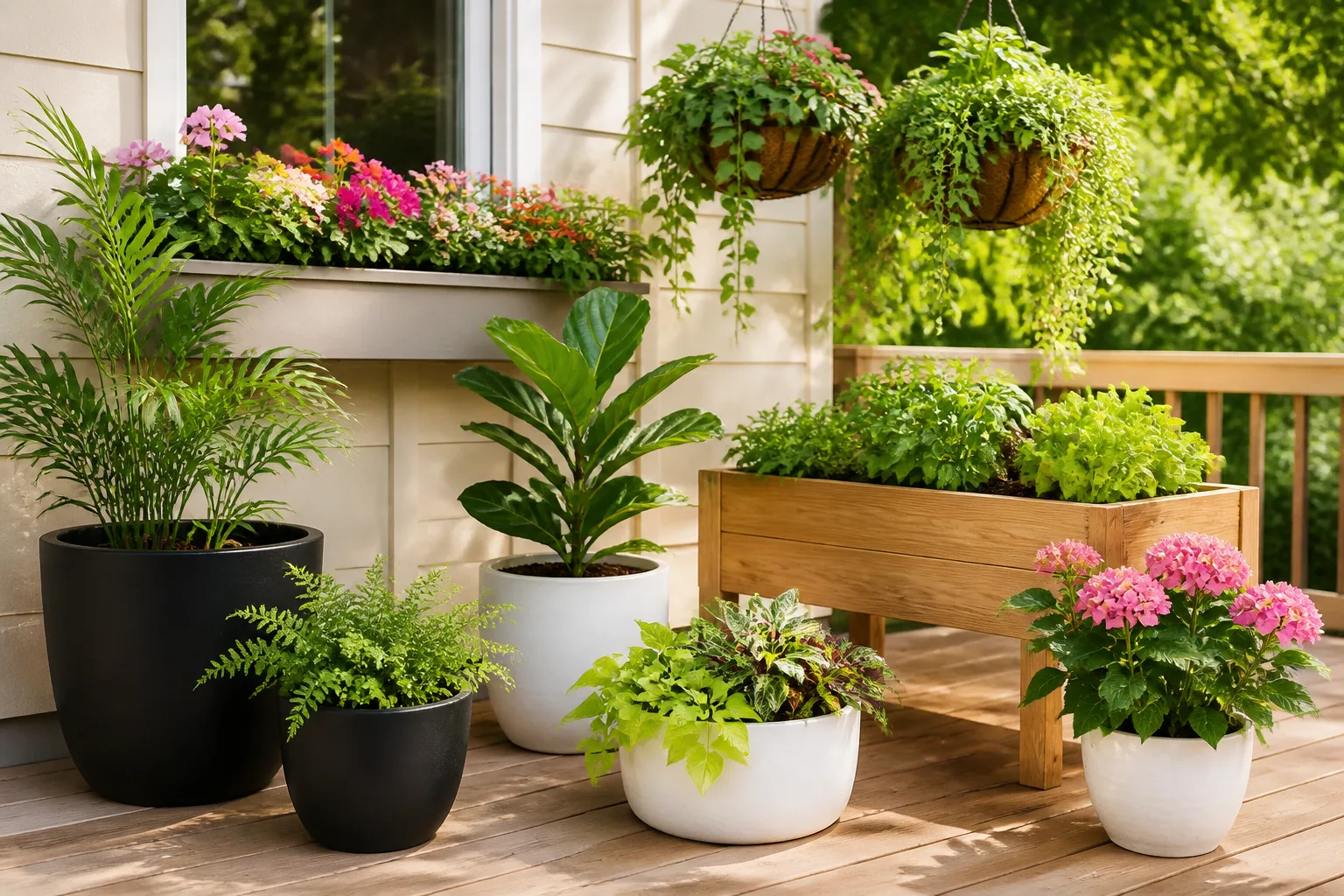
Container gardening lets you put plants where the ground cannot help: beside a front step, along a sunny balcony rail, on a patio table, or near a bright indoor window. The strongest displays do more than look full. Their plants share compatible light and moisture needs, their pots have room for roots, and you can reach every container to water it.
Use these 65 ideas as adaptable starting points. Before you buy anything, watch the spot through the day, note wind and heat from walls or paving, and decide where excess water can drain. A sunny-looking balcony may have only a few hours of direct light, and a large planter filled with wet mix can be far heavier than it appears.
Make the site work before you choose the pot
Start with the location, not the container. Fruiting crops and many flowering annuals need several hours of direct sun; leafy greens and many foliage plants tolerate less. BBC Gardeners’ World Magazine uses six hours as a practical benchmark for sun-loving plants, but the plant tag and local heat matter too. Count direct sun on the actual pot, including shade cast by railings, awnings, and neighboring buildings.
Next, choose a container with drainage holes and enough root volume for the mature plant. A waterproof decorative pot without holes can still work as a cachepot: keep the plant in a draining nursery pot, lift it out to water, and empty the outer vessel. For outdoor containers, use potting mix made for containers rather than dense garden soil. University of Georgia Cooperative Extension explains why container mixes need porosity and drainage; roots in saturated, poorly aerated mix can struggle.
Front-door and window container gardens
These ideas make a house feel cared for from the sidewalk while using narrow strips of space. Keep walkways clear, leave room for doors to swing, and put the heaviest pots on stable ground where wind cannot tip them.
Frame an entrance with shape and repetition
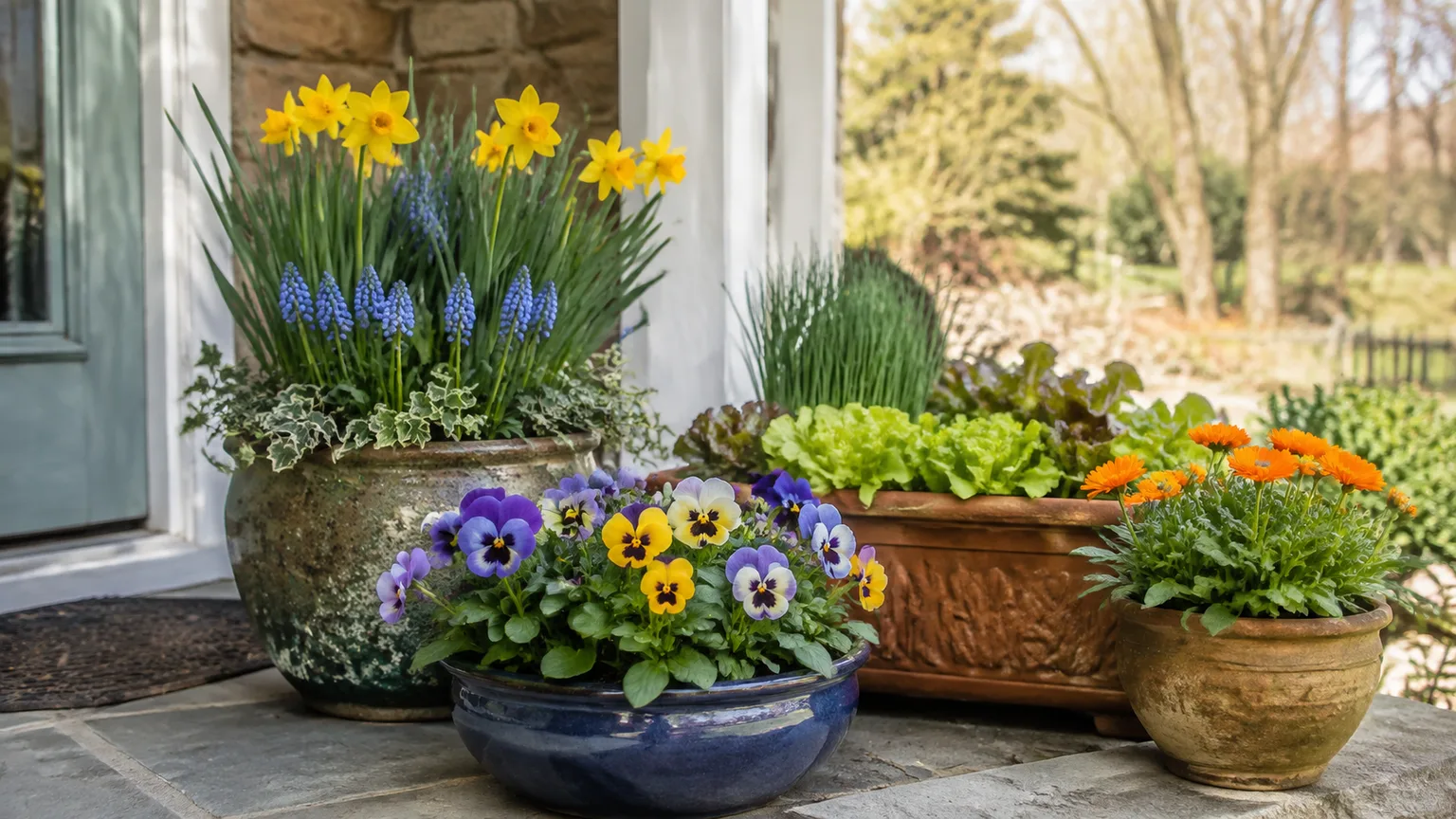
1. Matched porch urns. Place one substantial urn on each side of the entrance and repeat the same plant structure in both: an upright focal plant, a low mound, and one soft trailing edge. Repetition looks intentional, while a broad, heavy base resists gusts; select sun or shade plants for the doorway’s actual exposure.
2. One oversized statement pot. If the stoop is narrow, a single tall, sturdy container is easier to navigate than a pair. Use a compact evergreen, ornamental grass, or seasonal annuals suited to the light, and set the pot on feet so drainage stays open after rain.
3. A three-pot entry grouping. Arrange a tall, medium, and low pot as a triangle rather than a straight row. Repeat one color or material to connect the shapes, and keep the smallest containers toward the front because they dry first and need more frequent checks.
4. A spring bulb bowl. Plant a wide, draining bowl with spring bulbs at the depth and spacing on their package, then tuck low cool-season annuals around the rim. The bulbs need a seasonal rest after flowering; plan to replace the display or store the dormant pot where it will not stay soggy.
5. A shade-porch foliage pot. In a covered, low-sun entrance, pair coleus with begonias or another locally suitable shade annual for color that comes from leaves as well as flowers. Use a moisture-retentive mix and check the pot beneath the eaves, where rain may never reach it.
6. A fall urn with a living centerpiece. Set ornamental kale or cabbage in a roomy urn and surround it with pansies, trailing ivy, or small gourds. The living plants can handle cool weather better than tender summer annuals, but decorative produce is temporary and should not block drainage.
7. A fragrant doorway herb pot. Combine thyme, sage, and compact rosemary in a sunny container if your climate supports them. These Mediterranean herbs prefer sharper drainage and a drier interval than parsley or basil, so keep thirsty herbs in a separate pot rather than forcing one watering routine on all of them.
Use the walls, sill, and steps
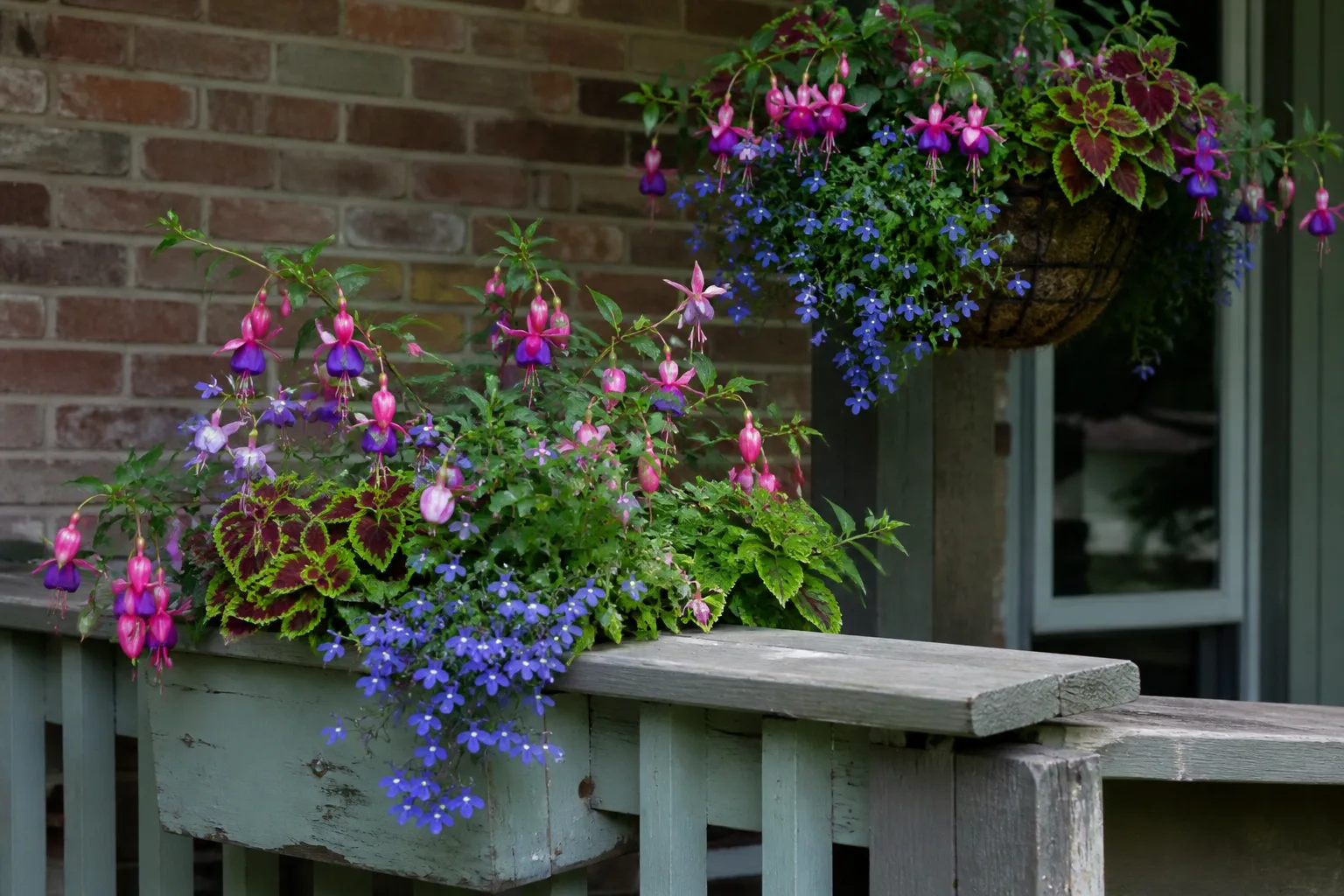
8. A layered window box. Put compact upright flowers toward the back, mounded plants in the center, and a controlled trailer at the front edge. Secure the box to structural framing, not trim alone, and route drainage away from siding so repeated runoff does not stain or damage the wall.
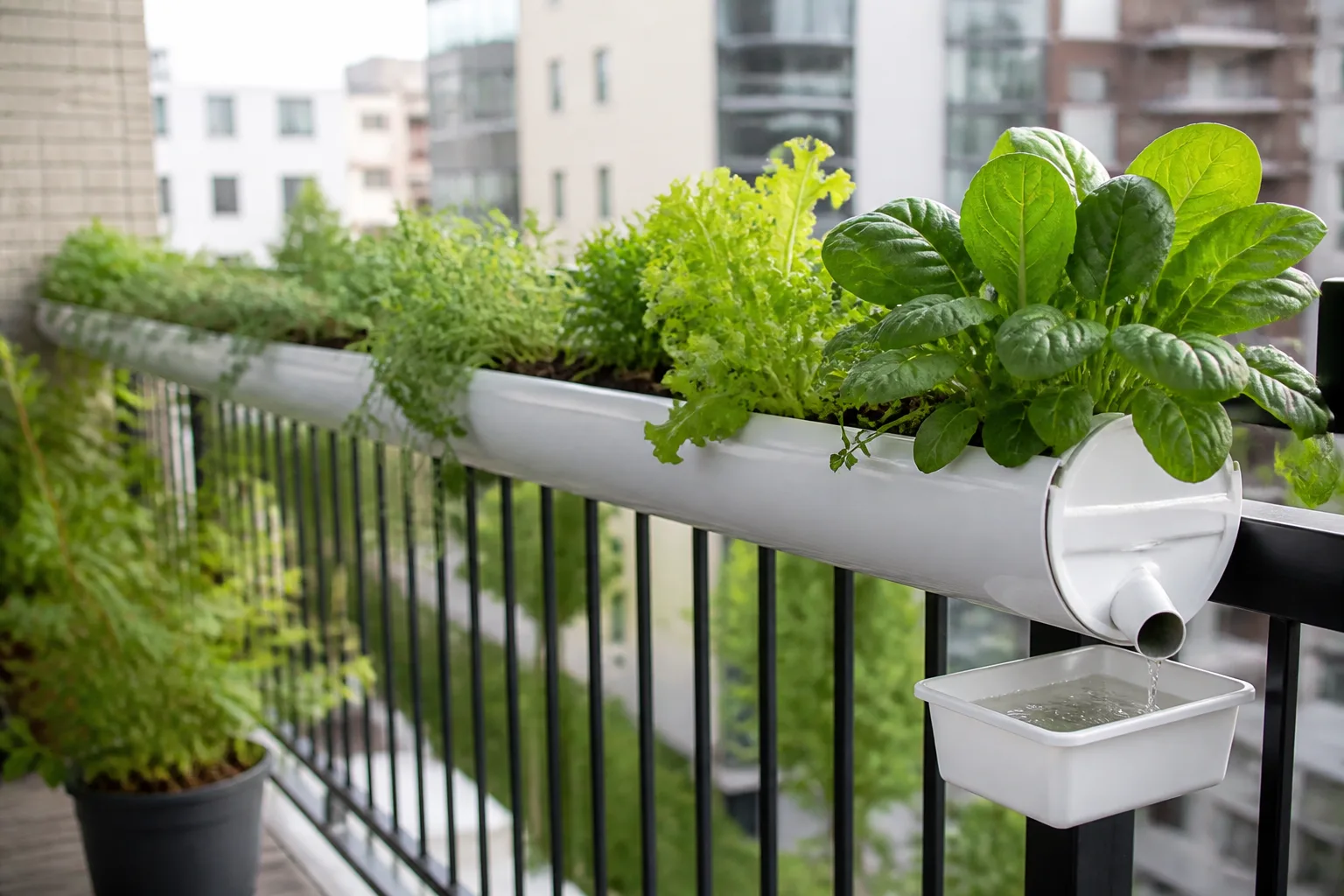
9. A railing trough for greens. A long trough can hold shallow-rooted lettuce, arugula, or compact flowers on a sunny rail. Use hardware rated for the planter and its wet weight, keep the center of gravity inside the balcony, and choose a trough deep enough that roots do not dry by midday.
10. A single-color window display. Repeat one flower color across several separate pots instead of mixing every variety together. This makes a small sill or ledge read as one composition and lets you remove or rotate a pot without disturbing the roots of its neighbors.
11. A stair-step planter arrangement. Put pots on a low, stable tiered stand beside the stairs, with heavier and taller containers at the bottom. Check that the stand does not narrow the walking line; choose plants with similar light needs for each level, since the top tier often receives more sun and wind.
12. A wall-mounted herb shelf. Fix a narrow shelf into studs or masonry and line it with individual draining pots of frequently used herbs. Keep the thirstier basil and parsley separate from rosemary and thyme, and use a removable waterproof tray that can be emptied after watering.
Patio, balcony, and deck displays
Outdoor living areas can hold everything from one low-maintenance succulent bowl to a productive salad garden. The useful test is whether each pot is stable, accessible, and compatible with the site. On upper floors, check building rules and load guidance before adding large, water-filled planters or hanging anything beyond the railing.
Make a comfortable container cluster
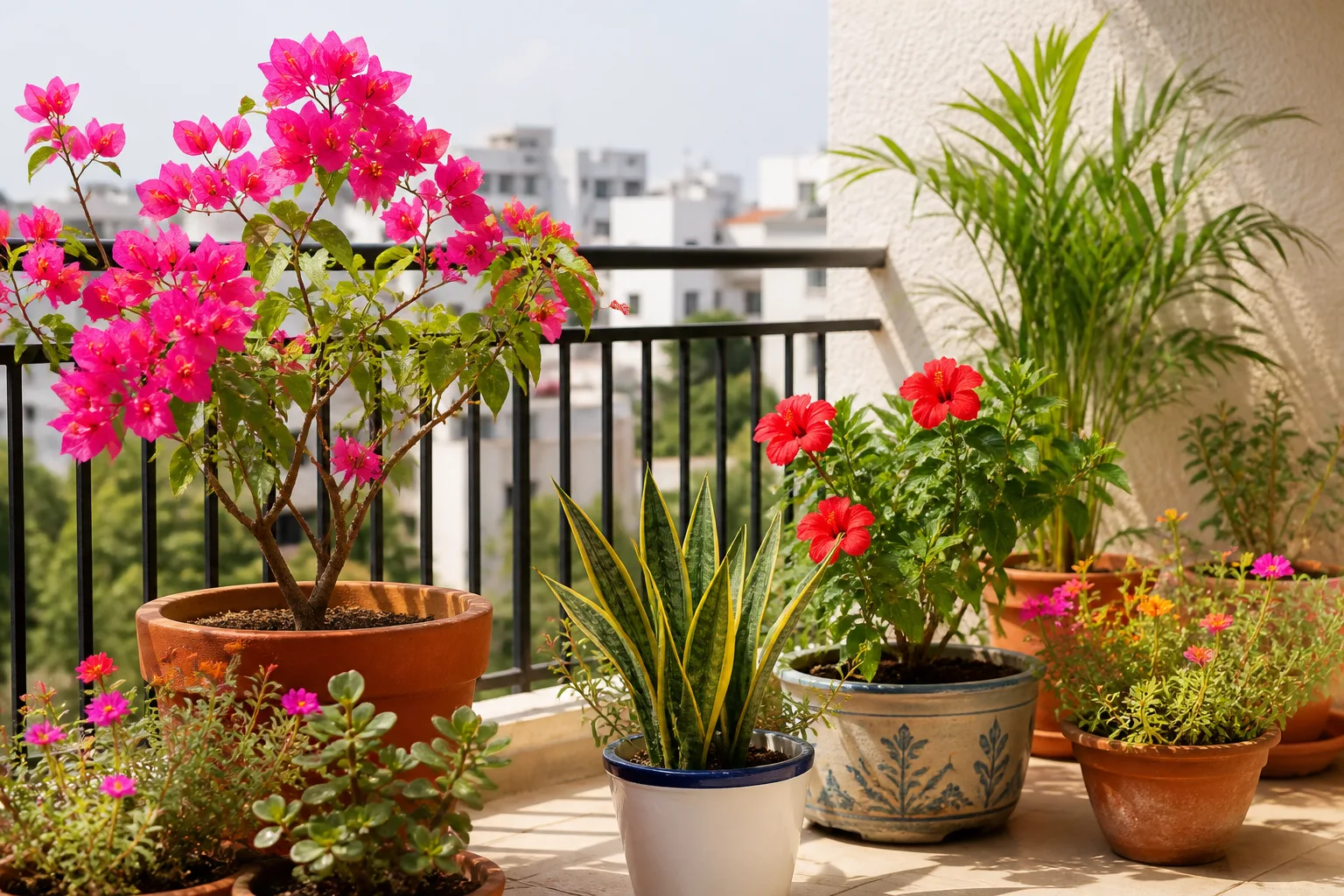
13. A three-height patio cluster. Group a tall specimen, a mid-height flowering pot, and a low bowl near a seating area. Leave a hand-width of space to reach behind them for watering and air movement; do not crowd plants so tightly that foliage stays damp after rain.
14. A cottage-style mixed bowl. In a sunny spot, pair a compact petunia or verbena with a mounded annual and one trailing plant. Match their labels for sun and water, and use a wide pot with open drainage; a shallow decorative bowl can dry quickly in hot, breezy weather.
15. A white-and-green modern grouping. Use white flowers with silver or deep-green foliage in simple pale planters. This restrained palette works across several pot shapes, but pale ceramic still needs drainage and can be heavy; keep large pots where you will not need to move them full.
16. A pollinator stopover. Fill a wide tub with several nectar-rich flowers whose bloom times overlap, such as locally appropriate salvias, zinnias, or compact native species. Choose flowers for the site’s sun, avoid pesticides on blooms, and place the pot where visitors can reach it without blocking a path.
17. A tall tropical focal point. Use a large container for a warm-season hibiscus, canna, or other tropical plant suited to your region, with smaller pots around it rather than competing root systems in the same pot. Move tender plants before cold weather and account for the weight of the damp container.
18. A hydrangea in a roomy pot. A compact hydrangea can soften a patio corner if the variety suits your winter climate and light. Give it generous root space and a steady moisture check; small terracotta pots can dry too fast for a thirsty shrub in afternoon sun.
19. A compact evergreen anchor. A dwarf conifer or boxwood in a substantial container gives a patio year-round structure. Select a variety that fits the pot for the long term, keep drainage clear through winter rain, and protect the root ball in climates where containers freeze harder than garden soil.
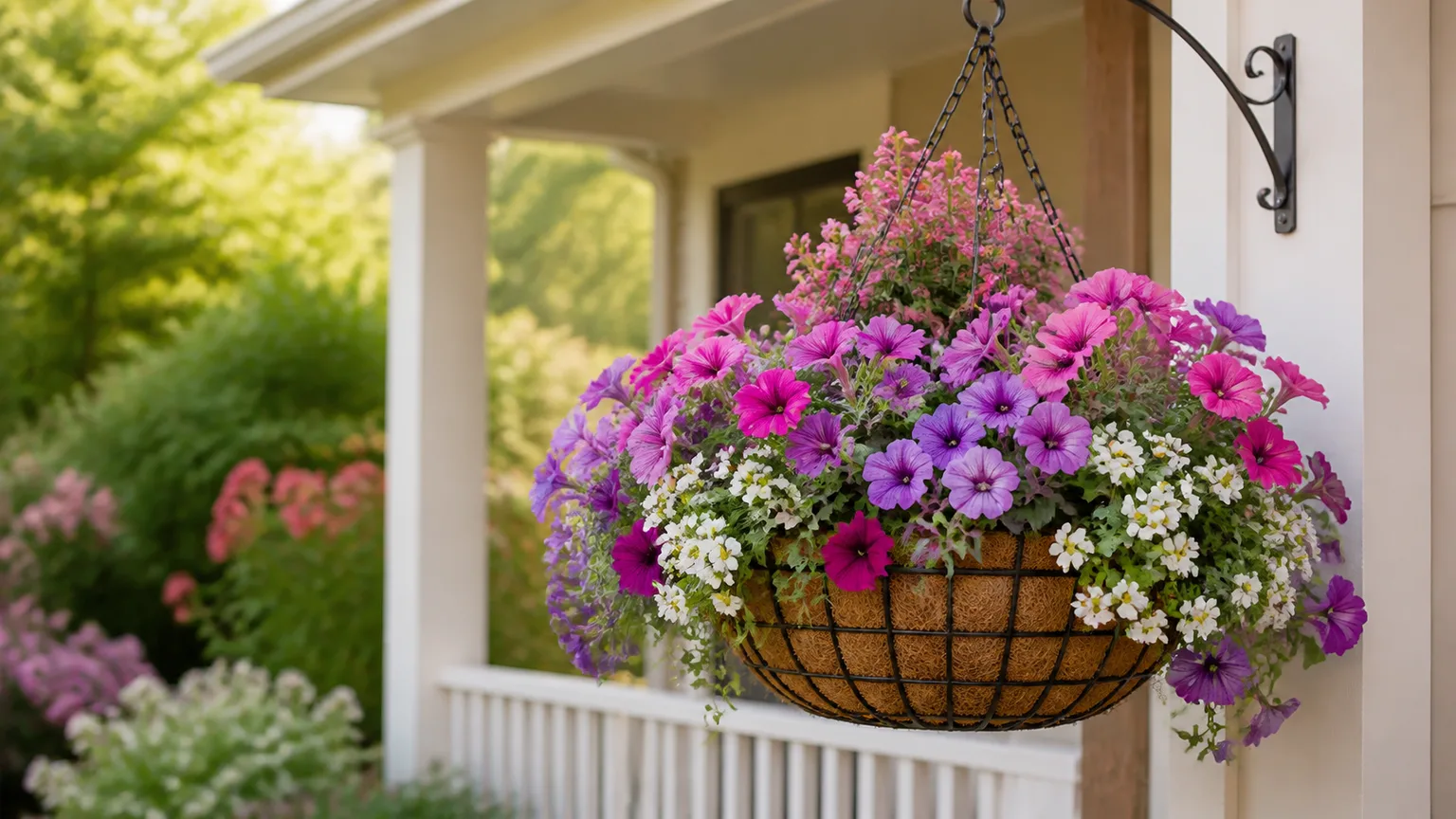
20. A hanging basket over a sitting area. Plant a basket with sun-loving trailers such as petunia or shade-tolerant fuchsia, depending on the location. Baskets dry faster than floor pots because air reaches their sides; hang them where you can water thoroughly and where drips will not fall onto furniture or passersby.
Build upward without making watering harder
21. A fence-line planter screen. Line a patio fence with long troughs of compact herbs or flowers to soften a blank boundary. Fasten brackets into the fence structure, verify the weight limit, and use plants that tolerate the warmer, windier conditions near exposed boards.
22. A trellised pot for climbers. Put a tomato, pole bean, or compact cucumber in a deep pot with a trellis anchored before the vine gets large. The structure catches wind, so use a broad, heavy base, train stems early, and keep the pot where fruit is reachable.
23. A strawberry tower. A tiered strawberry planter saves floor space and keeps fruit easy to see. The upper pockets can dry faster than the lower ones, so water slowly from the top and inspect each tier rather than assuming a filled reservoir wets every root ball evenly.
24. A ladder display for small pots. Use a weatherproof ladder shelf with a broad, stable footprint and set light pots across the steps. Check sun at each height and group plants with similar needs; a ladder is a display stand, not a substitute for secure railing hardware.
25. A group of terracotta herbs. Arrange separate terracotta pots for rosemary, thyme, oregano, and basil on a sunny table. The porous clay dries faster than plastic or glazed ceramic, which helps some Mediterranean herbs but means basil may need a different schedule and a larger water reservoir.
26. A succulent gravel bowl. Combine succulents with similar light and watering needs in a wide, shallow planter with drainage and a gritty succulent mix. Use gravel as a surface finish if you like, not as a hidden drainage layer; the bowl still needs a real outlet for excess water.
Backyard container garden ideas
Containers can define a destination in the yard, repeat a color along a path, or add height where a planting bed is empty. They are especially useful for seasonal displays and plants that need different soil from the ground, but remember that big vessels take effort to fill, move, and water.
Use statement vessels and coordinated color
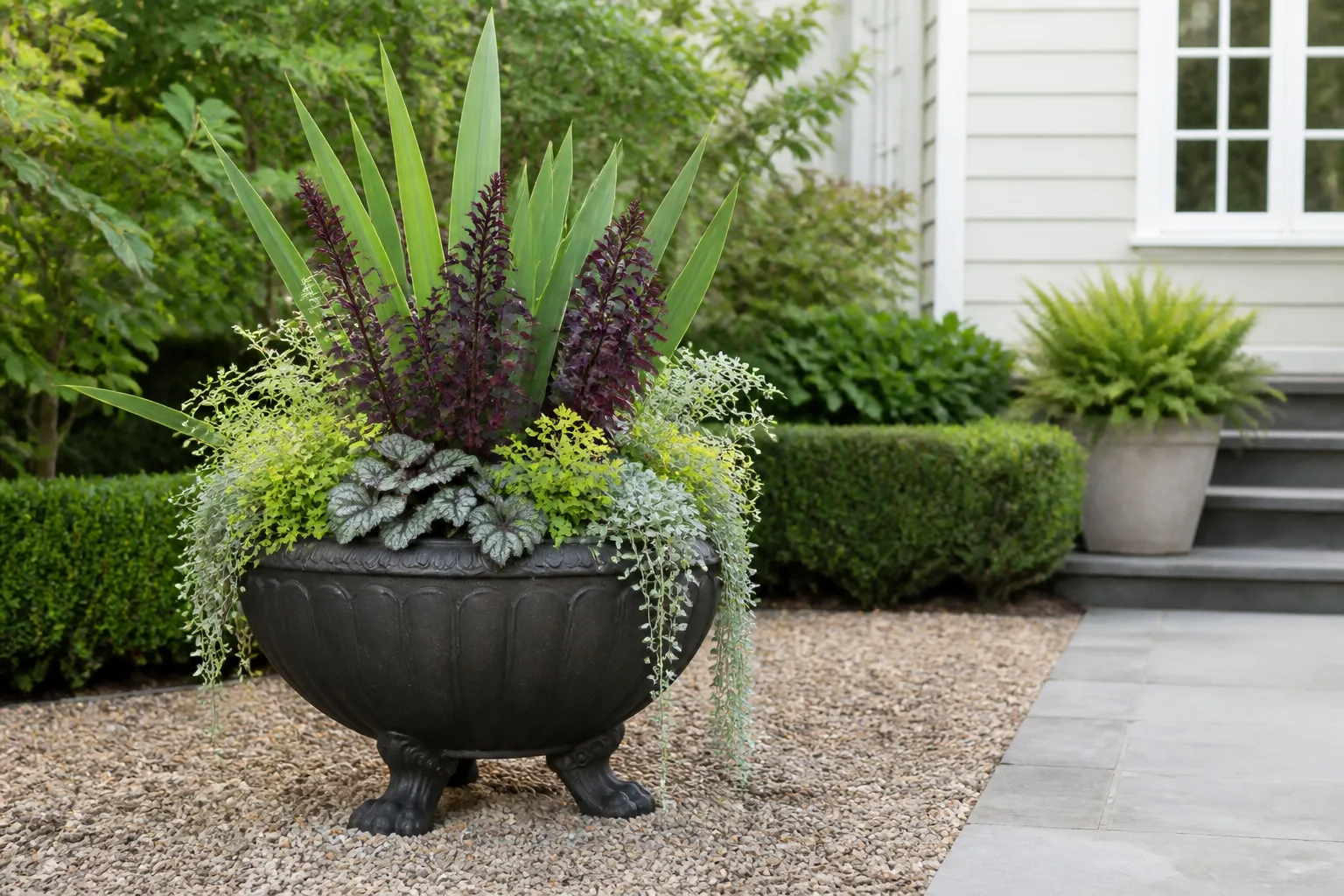
27. A vintage urn as a focal point. Use one salvaged urn to anchor a patio turn or garden gate, then plant it with a central upright form and low seasonal color. Check that it has drainage and is stable on its pedestal; a top-heavy design can catch wind.
28. A barrel planter for deep roots. A half-barrel suits a larger edible crop, dwarf shrub, or mixed display better than a tiny decorative pot. Drill or confirm drainage holes before planting, and choose its permanent spot first because the filled barrel may be too heavy to move safely.
29. Repeated color in mismatched pots. Group different pot shapes but repeat one bloom color across them to create rhythm without buying a matching set. Better Homes & Gardens’ container garden examples also show how repeating a plant or color can tie separate vessels together. Keep sun-loving plants together and shade plants elsewhere; color cannot make incompatible water needs disappear.
30. A green-on-green foliage garden. Combine leaves with contrasting size, edge, and texture—such as a bold upright foliage plant beside fine ornamental grass and a trailing vine. This approach stays interesting between bloom cycles; choose each plant for the same light and seasonal temperature range.
31. A blue-and-purple flower cluster. Repeat blue, violet, and white flowers in three or four containers for a calm color scheme. Use plants that bloom in the same season and exposure, and keep one pot as a nursery-pot insert so you can swap it out if flowering pauses.
32. A warm red-and-orange summer display. Pair red geraniums or salvia with orange marigolds and green foliage in full sun. Dark pavement reflects heat and can stress roots, so place the containers on risers, choose a lighter-colored pot, and check moisture during hot spells.
Change the scene with seasons and texture
33. A seasonal “insert pot” urn. Keep a large decorative container planted with one or more nursery pots that can be switched for spring bulbs, summer annuals, or fall foliage. This reduces heavy replanting and lets each seasonal insert drain outside the outer shell.
34. A winter evergreen arrangement. Anchor a winter container with a small evergreen and add cut branches, berries, or weatherproof accents around it. Use a frost-tolerant vessel with a drainage route; do not expect tender flowering annuals or a sealed cachepot to survive freezes.
35. A spring bulb-and-pansy planter. Layer bulbs below shallow-rooted pansies in a broad outdoor pot for early color at two heights. Use bulbs that share a chill requirement and bloom window, then let the foliage yellow naturally after bloom if you want the bulbs to return.
36. An ornamental grass in a tall pot. Place a compact, non-spreading ornamental grass in a vertical container to add movement and height beside a path. Confirm mature height and winter hardiness for your area, and choose a heavy, draining pot so wind does not topple the stems.
37. A scented patio collection. Arrange lavender, scented geranium, and thyme in separate pots near a bench where their foliage can be enjoyed. These plants generally prefer strong light and a drier root zone; keep them away from frequent irrigation from thirstier flowers.
Repurpose, raise, or add water
38. A wheelbarrow flower garden. A retired wheelbarrow becomes a movable flower bed for annuals, bulbs, or trailing plants. Drill several drainage holes through the lowest point, protect the metal from sharp edges, and park it in full sun only if the chosen plants tolerate heat.
39. A raised trough beside the kitchen. Place a waist-height planter near a door for salad greens, compact flowers, or culinary herbs. Confirm the legs are braced for saturated mix and harvest access, and position it so the drain outlet does not discharge onto a step or walkway.
40. A small container water garden. Use a watertight basin for aquatic plants, which require a different setup from ordinary planters. Choose water plants appropriate to your climate and vessel depth, keep the basin clean, and do not treat gravel or ordinary potting soil as a substitute for aquatic planting media.
Edible container garden ideas
Edibles are most rewarding when the pot matches the crop rather than the other way around. Light, root volume, support, and water all affect harvest. Penn State Extension notes that fruiting crops such as tomatoes and peppers need more sun and container space than leafy greens; compact or patio varieties can make a small footprint more realistic.
Grow vegetables in the space they need
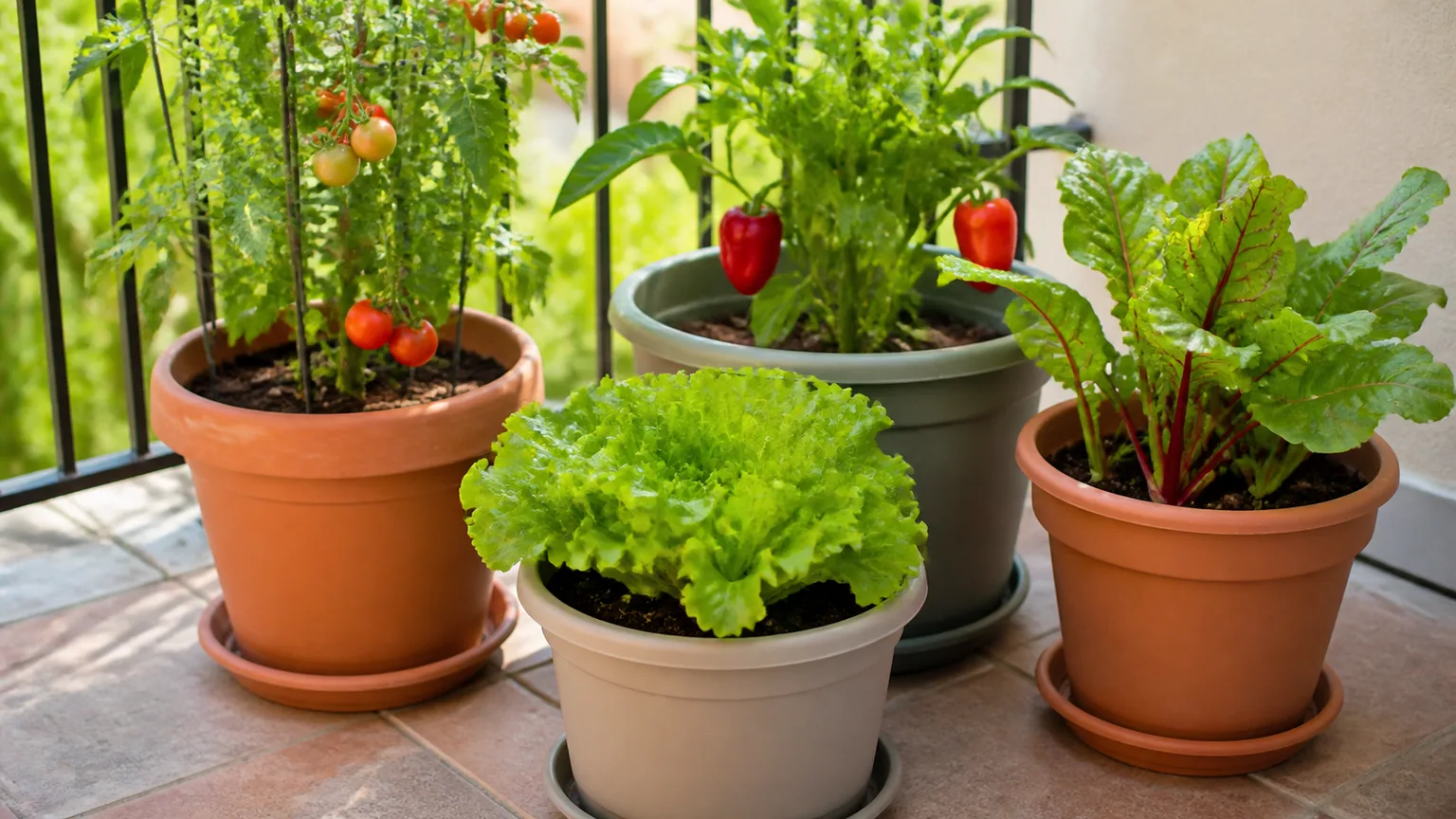
41. One tomato per large pot. Give a tomato its own deep, sturdy container and install a cage or stake at planting. Penn State’s guidance calls for a pot at least 20 inches wide for one plant; dwarf types may need less, but verify the variety and expect regular watering in summer.
42. A compact pepper pot. A single pepper plant can produce in a smaller footprint than a sprawling vegetable, especially a compact variety. Place it where it gets strong direct sun, use a pot with drainage, and avoid crowding its roots with a fast-growing companion.
43. A salad bowl you can harvest. Fill a wide trough with loose-leaf lettuce and baby greens for repeated picking. Leafy crops tolerate some shade better than tomatoes, and a shallow container is workable, but it loses moisture quickly in wind and needs consistent checks.
44. A succession-sown lettuce box. Sow a short row every couple of weeks instead of planting the whole planter at once. This staggers harvest and avoids a glut, while a box with several inches of mix gives roots more buffer than a very shallow decorative dish.
45. A cucumber with a narrow trellis. Put one compact cucumber variety in a deep pot and guide it up a sturdy support. The vine needs sunlight, root room, and evenly available water while fruit forms; set the trellis securely so a gust does not pull over the pot.
46. A potato grow bag. Grow potatoes in a dedicated fabric bag where you can add mix around developing stems as they grow. Fabric dries quickly and needs more frequent watering than a plastic pot, so place it near a hose and check the root zone in warm weather.
47. A compact zucchini container. Choose a bush or patio zucchini and give it a very large container with ample room around the leaves. It is possible, but not the easiest tiny-space crop: broad foliage needs airflow and sun, and the plant drinks heavily while producing fruit.
Keep herbs, fruit, and edible flowers usable
48. A kitchen-window herb trio. Grow basil, parsley, and chives in individual pots on the brightest practical sill. These herbs appreciate regular moisture, but indoor light can be weaker than it looks; rotate pots and move them outdoors when the weather suits them.
49. A dry-herb terracotta row. Put rosemary, oregano, and thyme in separate terracotta pots on a sunny step. Their soil can dry between waterings more than basil’s, and individual pots make it easier to change position if rosemary needs more room.
50. A mint-only container. Give mint a pot of its own because runners can escape through drainage holes and root in nearby soil. Keep the planter on a hard surface, trim it often, and water when the top begins to dry rather than letting the root ball bake.
51. A strawberry rail box. Plant strawberries in a wide, deep trough where flowers and berries can be reached from the safe side of the rail. Leave room for runners, use secure mounting, and check moisture often because a shallow box exposes roots to sun and wind.
52. A blueberry in an acid-loving mix. Grow a compact blueberry in a large pot filled with an acidic mix formulated for acid-loving plants, with a compatible pollination partner if the variety needs one. Keep moisture even and do not use ordinary lime-rich potting mix without checking its suitability.
53. An edible flower pot. Grow nasturtiums, calendula, or another positively identified edible flower in a clean, draining container. Use seed or plant stock intended for edible use, avoid treated ornamental nursery plants, and harvest only flowers you can identify with confidence.
Indoor and vertical container gardens
Indoor containers offer year-round greenery, but a room is not automatically a good growing site. Window distance, season, and direction change usable light, while saucers and cachepots protect surfaces only if you empty them. Keep indoor displays small enough to inspect for standing water and pests.
Bring plants into a bright room
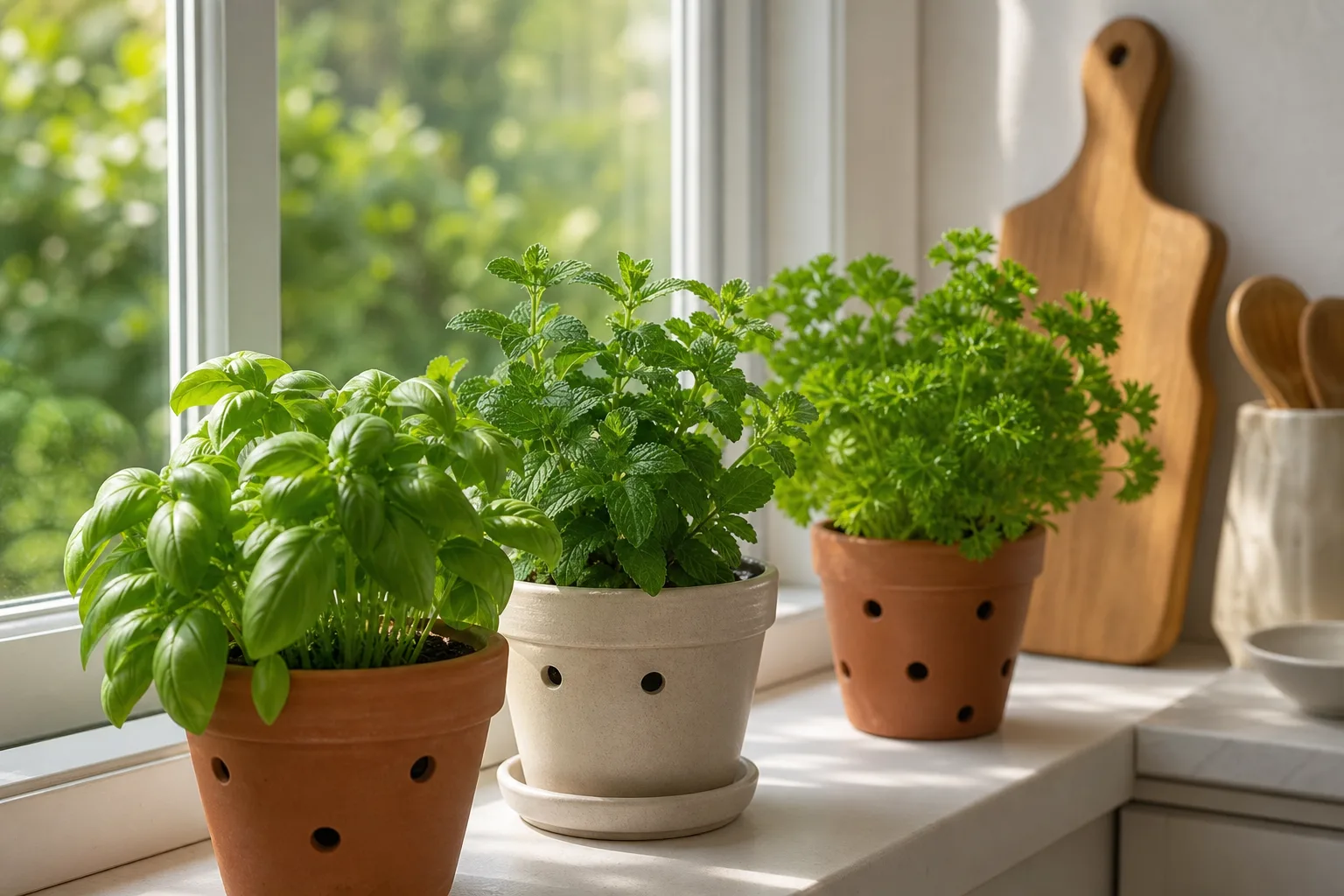
54. A bright-window herb rail. Set a narrow tray of individual herb pots at the brightest window you have, leaving room for airflow around leaves. The visual line looks tidy, while separate pots let you water basil and rosemary according to their different needs.
55. A succulent dish for a sunny sill. Arrange rosette succulents in a broad, shallow pot with a gritty mix and drainage holes. Give them bright light and let the mix dry substantially between waterings; do not pair them with ferns simply because their colors look good together.
56. An open terrarium of moisture-loving plants. Use a glass vessel for small ferns or fittonia in bright, indirect light, with a thin, airy planting layer and careful watering. Open designs are easier to ventilate than sealed ones; keep water low because excess moisture has nowhere to drain.
57. A closed terrarium for tiny tropicals. A lidded glass container can support small humidity-loving plants when light is bright but indirect. Start with very little water and watch for heavy condensation or mold; it is a controlled miniature environment, not a pot to water on a weekly schedule.
58. An orchid on a removable tray. Display a blooming orchid in a decorative outer pot while keeping it in its ventilated nursery pot. Lift it to water and drain fully before returning it; a centerpiece is attractive, but standing water around roots is not.
59. A low-light foliage shelf. Combine plants that tolerate the available indirect light on a shelf, using individual cachepots rather than planting different species into one deep bowl. Keep leaves clear of cold glass, and rotate the display if growth begins leaning toward the window.
Grow upward with a plan for light and runoff
60. A hanging herb caddy. Repurpose a clean utensil caddy with drainage holes into a portable set of herb compartments. It works best outdoors in bright light; line each compartment only if water can still escape, and lift it from a table before moving it indoors.
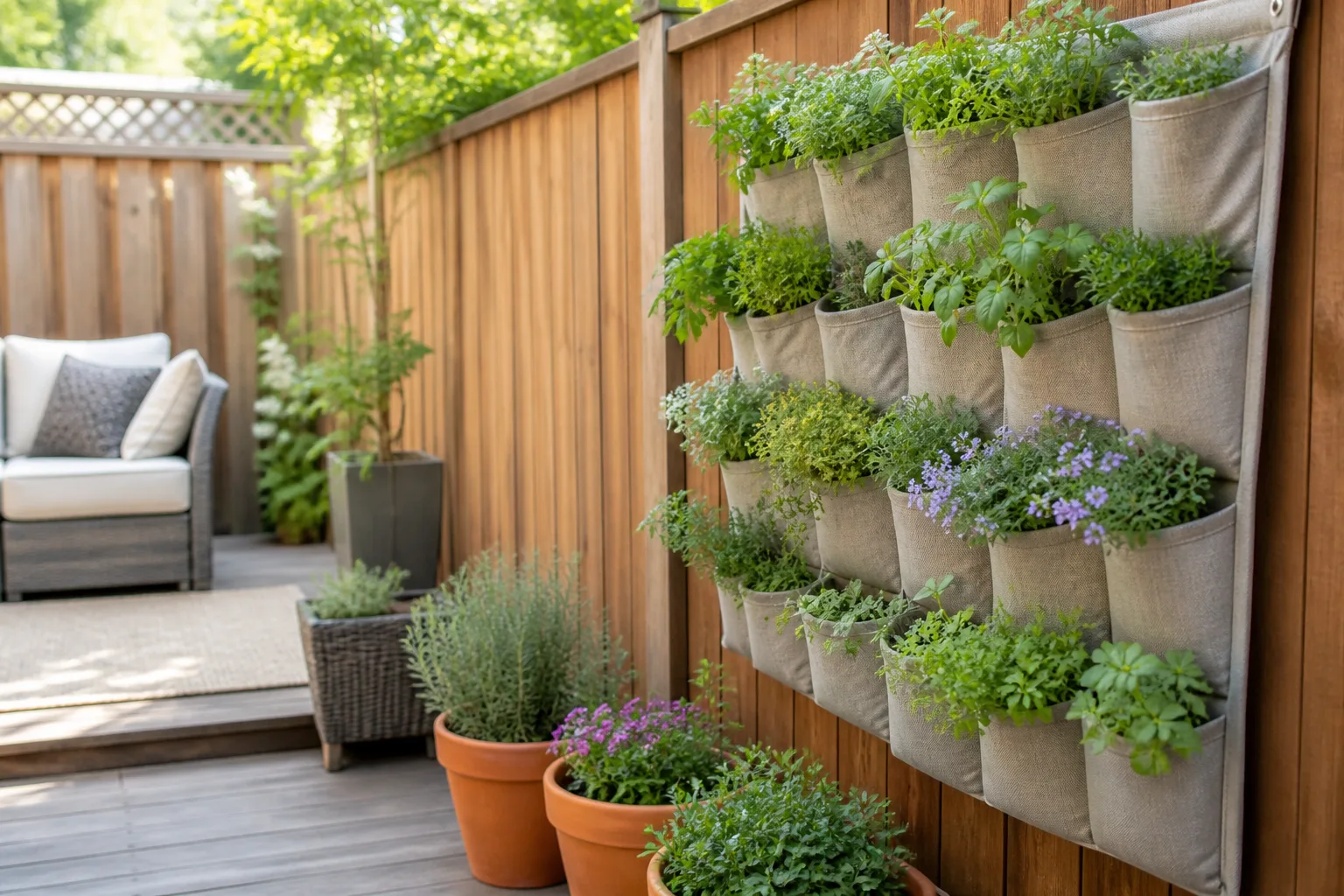
61. A gutter garden on a fence. Mount several short, well-drained troughs vertically for shallow-rooted herbs or greens. Space tiers so lower plants still receive light, fasten the system into sound supports, and direct each outlet into a catch basin rather than onto a neighbor’s balcony.
62. A pocket planter for a sheltered wall. Plant compact annuals or small foliage plants into a wall pocket system designed to hold wet mix. Use a waterproof backing, provide an easy way to water the top row, and choose the same light and moisture class for pockets that share a reservoir.
63. A macrame hanging basket. Hang one lightweight basket from a ceiling joist or a rated outdoor hook, and choose a plant whose light needs fit the spot. Use a nursery pot inside the basket or a fitted liner, and take it down to water if runoff could damage the floor.
64. A rolling plant cart. Put several smaller indoor pots on a locking cart so you can move them toward a brighter window or away from a draft. The wheels make seasonal adjustment simple, but lock them before watering and keep the heaviest pots on the bottom shelf.
65. A movable summer-to-winter plant station. Group tender patio plants in individual pots on a cart or bench that can be relocated before cold weather. Keep only species suited to your indoor light, inspect leaves before bringing them inside, and leave space to water without soaking the floor.
Make the display easier to care for
The right visual idea should fit the time and tools you have. A dozen small pots can look charming, but each has little soil volume and may need frequent checks; fewer larger containers usually give roots and water more room. Choose a watering point first, especially for hanging baskets and balcony troughs. BBC Gardeners’ World Magazine likewise recommends placing containers where care is convenient, not only where they look good.
Use potting mix formulated for containers and keep drainage holes clear. Do not add a gravel layer to the bottom as a shortcut; it does not replace an outlet and can leave a wetter layer above it. When a pot drains freely, water the whole root zone until excess exits, then empty saucers and cachepots. Garden Betty’s practical container guidance highlights pot size, material, wind, and soil drying as causes of fast moisture loss, so check the mix rather than following a calendar blindly.
For group plantings, combine plants that want the same light, moisture, and seasonal temperature. The familiar upright, mounding, and trailing arrangement is a useful design tool, but it is not a reason to plant incompatible species together. If you are unsure, use separate nursery pots inside a shared decorative container; the display stays coordinated while each plant keeps its own drainage and watering routine.
Conclusion
Container garden ideas work best when they solve two jobs at once: they make a space feel more alive and give each plant conditions it can handle. Pick the spot first, choose one of the 65 layouts that fits its sun and footprint, then size the container and confirm drainage before buying plants.
Start with a few pots you can reach easily. Once you know how quickly they dry in your weather, you can add height, color, herbs, or vegetables without turning a relaxing display into a daily rescue routine.