How to Grow and Care for Impatiens in Beds and Pots
Learn how to grow impatiens with the right shade, steady moisture, and well-drained soil. Compare standard and New Guinea types, and prevent downy mildew.
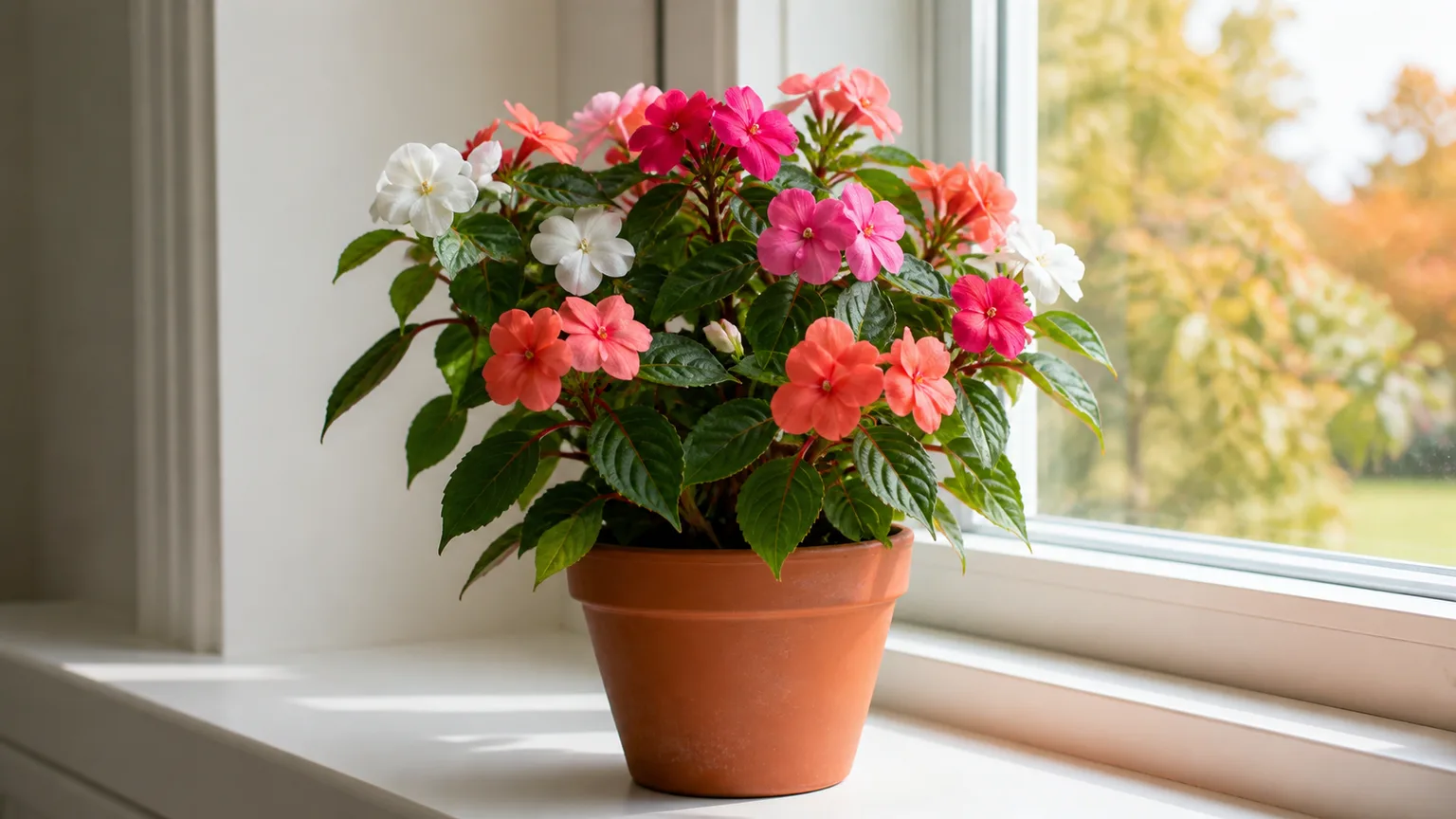
Impatiens are an easy way to fill a shady bed, porch pot, or hanging basket with color, but the name covers plants with different needs. The familiar bedding impatiens, Impatiens walleriana, likes bright shade and even moisture; New Guinea impatiens and some newer hybrids tolerate more sun. Choosing the right kind for the site matters more than following a one-size care schedule.
For most gardeners, the winning setup is a spot with filtered light or morning sun, soil that stays evenly moist without staying soggy, and planting after frost danger has passed. Give foliage room to dry, water containers before they wilt, and keep an eye out for impatiens downy mildew, which can quickly strip standard bedding impatiens of their leaves.
Choose impatiens for your light and disease history
Before buying, check the botanical name and the cultivar series on the tag. “Impatiens” may refer to standard garden impatiens, New Guinea impatiens, sun-tolerant hybrids, or many other species; a label that only gives a color may not give enough information to judge sun exposure or disease resistance. If you have had downy mildew in a bed, identify that history before bringing home standard I. walleriana again.
Standard impatiens are commonly grown as warm-season annuals in places with freezing winters, although the plants are tender perennials where winters stay mild. New Guinea types, often labeled I. hawkeri, usually have larger leaves and flowers and tolerate more sun than standard bedding types. SunPatiens and some other interspecific hybrids are bred for sunnier positions; their tags should guide placement because “impatiens” alone does not tell you the whole story. Iowa State University Extension’s home-garden guide and the RHS growing guide both separate the needs of standard, New Guinea, and sun-tolerant varieties.
Standard, New Guinea, and sun-tolerant hybrids
Use standard I. walleriana where the strongest selling point is color in shade. It is the familiar mounded bedding plant with a wide range of colors, and it is the type most associated with impatiens downy mildew. New Guinea impatiens are a useful alternative where there is morning sun or brighter light, and extension sources describe them as resistant or highly tolerant to the downy mildew that attacks standard bedding impatiens. Resistant does not mean immune to every disease or stress, so still avoid poor drainage and inspect plants.
SunPatiens and other sun-tolerant hybrids are a better choice for a bright patio or sunny bed than old-fashioned shade impatiens, but their full-sun performance depends on adequate water and local heat. Their larger growth and root systems may need more space than compact bedding types. Illinois Extension’s impatiens guide notes that New Guinea types do better with some partial sun, while the Homes & Gardens guide describes the greater sun tolerance and more upright habit of New Guinea forms. Match the plant to the site instead of trying to train a shade cultivar to tolerate hot afternoon sun.
Give impatiens bright shade rather than deep darkness
Standard impatiens thrive in part shade to shade, but “shade” is not the same as no light. Filtered light beneath a high tree canopy, bright reflected light along a north-facing wall, or a few hours of gentle morning sun can support stronger flowering than a very dim corner. In dense shade, stems often stretch toward light and flower production may thin even though leaves remain green.
In Iowa State’s regional guidance, sites with roughly two to four hours of filtered light or morning sun followed by afternoon shade are a reliable starting point; impatiens can also grow in heavier shade, but flowering is often less abundant. Climate changes what that means: a little more morning sun may be workable in a cool northern site, while hot afternoon sun can scorch standard leaves or dry the root zone in a warmer one. If a plant repeatedly wilts or scorches on its sunny side, move the container before assuming it needs more fertilizer.
New Guinea impatiens and sun-tolerant hybrids can handle brighter positions, but check the cultivar label for its actual exposure range. Even sun-tolerant impatiens may need consistent water in a hot container. A spot under trees can be surprisingly dry because tree roots compete for water, so judge the site by soil moisture as well as sunlight. Clemson Cooperative Extension notes that impatiens planted beneath trees may need extra water and fertilizer because of root competition.
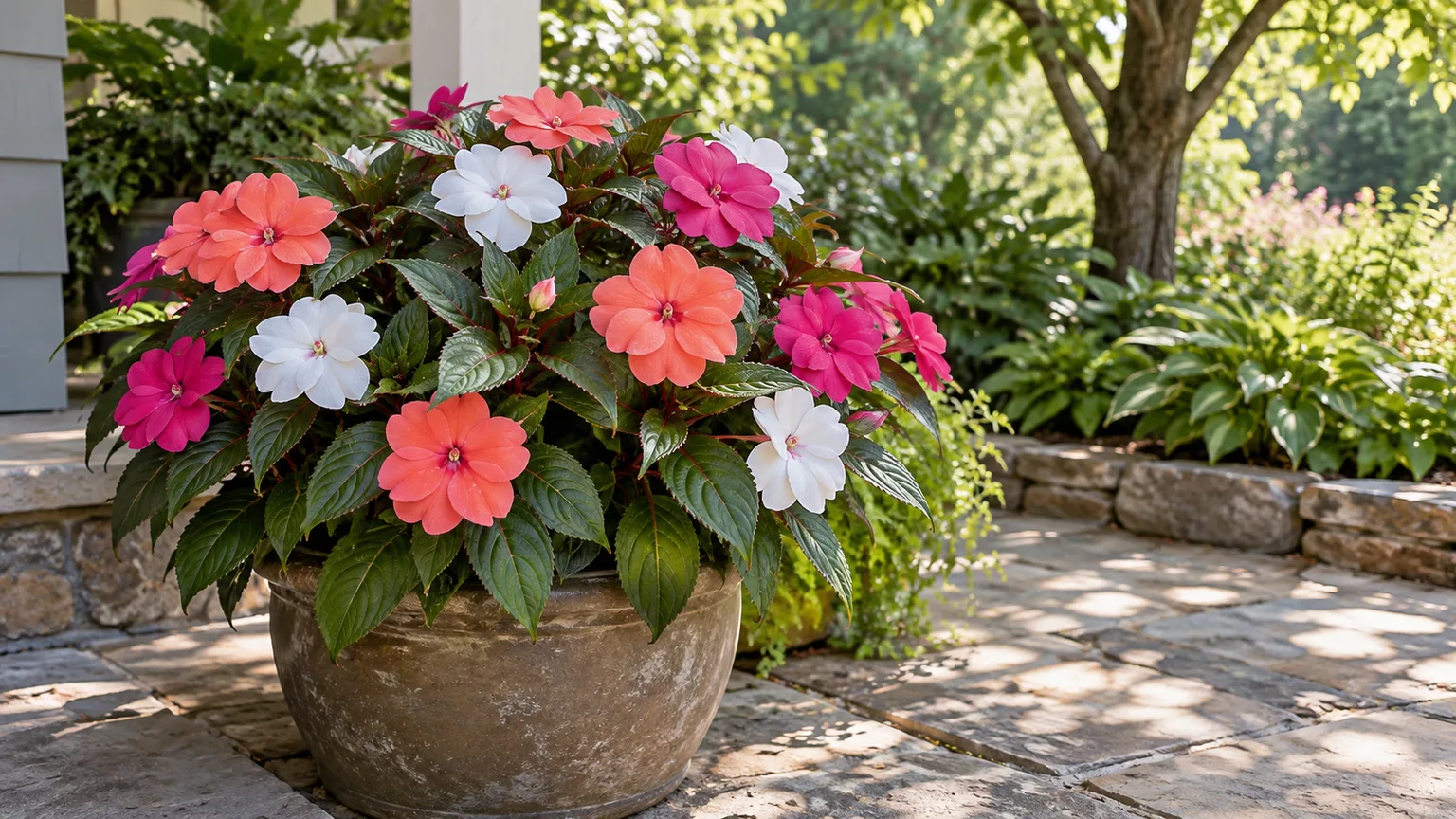
Build soil that holds moisture but drains freely
Impatiens like consistent moisture, not waterlogged roots. Choose soil that has organic matter and drains after watering; if a bed stays saturated after rain, roots can suffocate and rot even though the plant’s leaves look thirsty. In a heavy clay bed, improve the whole planting area with organic matter or use a raised bed or container rather than making a small amended hole surrounded by compacted soil.
For containers, use a fresh, quality potting mix and a pot with drainage holes. Garden soil is usually too dense in a pot, while a potting mix that dries immediately may need more frequent watering or a larger container. Do not add a layer of gravel to the bottom as a substitute for drainage; the hole and mix need to let excess water leave the root zone.
When planting beneath established trees, account for the root competition before you choose the number of plants. A rich, moist planting pocket can dry faster than the surrounding bed, so check it regularly after planting. A thin mulch layer can help reduce evaporation, but keep it pulled back from the stems and do not use mulch to hide a site that remains waterlogged. The RHS guide recommends improving light, poor soil with organic matter and choosing well-drained soil that does not dry completely.
Plant after frost and leave room for airflow
Set impatiens outdoors only after frost danger has passed. These tropical plants are cold-sensitive, and a late frost can damage or kill young growth; in a warm climate, the season may start earlier, while a cool region should use its local frost calendar rather than a national date. If you buy greenhouse-grown plants, harden them off by moving them into a protected outdoor spot for several days and gradually increasing their exposure before planting.
Water the root ball before planting if it is dry, then set the plant at the same depth it grew in its pot and water it in. Space plants according to the mature width printed on the cultivar label, not according to the small size of a nursery plug. Crowding can make a new bed look full quickly, but dense wet foliage dries slowly and restricts airflow, which increases disease pressure for susceptible varieties.
For a continuous border, group a single cultivar or repeat small clusters rather than spacing every plant in a rigid line. In containers, leave room for the mature plant to spread around the rim and combine impatiens only with companions that share similar light and moisture needs. Iowa State Extension recommends hardening purchased or indoor-started plants before setting them outdoors, and the Clemson guide emphasizes that these annuals naturally develop a good shape without heavy pruning.
Water by checking the soil and the container
Water when the root zone is beginning to dry, then soak the soil thoroughly enough to reach the roots. Do not wait until leaves collapse every day: impatiens can wilt dramatically when thirsty, and repeated drying stresses them and reduces flowering. At the same time, do not keep the mix saturated or leave a container standing in its drained water; overwatering can cause root damage that looks like drought stress above ground.
Check the soil with a finger just below the surface. A bed in rich soil and shade may need less frequent watering than a hanging basket exposed to wind, which loses moisture from every side. During hot, dry, or windy weather, check containers daily and water when the mix is drying; a deep container with larger plants may need more than a shallow pot. The right schedule changes with the container material, plant size, weather, and drainage, so a fixed “two inches per week” rule can mislead.
When a container dries so completely that water runs down the sides, water slowly in two passes so the mix has time to absorb it. If the plant wilts during the afternoon but recovers by evening and the soil is damp, heat may be part of the stress; adding more water to already wet soil can make roots worse. Water at the soil line when practical and give crowded plants enough space for leaves to dry. Iowa State Extension advises watering when the soil surface becomes dry and using moist, well-drained soil.
Feed lightly for steady flowers
Start with the planting medium in mind. A bed with compost or a container mix that already contains slow-release fertilizer may need little additional feeding at first; too much fertilizer, especially excess nitrogen, can push leafy growth at the expense of flowers. If plants show weak growth or a container has been watered repeatedly through the season, a balanced fertilizer applied at the label rate can replenish nutrients without turning feeding into a weekly guessing game.
For a garden bed, Iowa State Extension says incorporating a slow-release fertilizer before planting may be enough for the season. For pots, use the product label for whether the mix is pre-fertilized and how often to reapply; frequent watering can wash nutrients out more quickly than in-ground soil. Avoid feeding a plant that is wilting in dry soil or sitting in saturated soil until you have corrected the water problem, because fertilizer will not fix either one and can add stress.
If a plant has lush green leaves but few flowers, check light and fertilizer before adding a bloom booster. Heavy shade can limit flowering, while excess nitrogen encourages more foliage. Fine Gardening’s shade-garden notes illustrate how cultivar and local conditions can change care; its gardener reports a low-maintenance impatiens planting with only occasional water during very hot spells and a couple of summer feedings, not a universal calendar for every site.
Pinch leggy stems; deadheading is optional
Most impatiens shed spent flowers on their own, so you do not need to remove every faded bloom to keep the plant flowering. If flowers look untidy, pinch or snip off a few spent stems while cleaning the plant, but avoid spending time deadheading healthy plants that are already dropping blooms. The more useful maintenance task is to inspect stems and foliage as you water.
If growth becomes long and sparse, pinch the tips of a few stems just above a leaf node to encourage branching below the cut. Do this gradually rather than shearing the whole plant at once, since hard pruning temporarily removes flowers and foliage. Keep the pinched material if you want to try rooting it; otherwise compost healthy trimmings. Standard plants grown in good light and not overfed often remain naturally mounded. RHS likewise says impatiens are naturally bushy and that pinching or snipping the tops is mainly useful when stems become leggy.
Remove yellow or dead leaves so they do not sit wet under the plant, but do not mistake every yellow leaf for a fertilizer problem. Check soil moisture, leaf undersides, and the rest of the plant first. Downy mildew has a distinct symptom pattern and needs a different response from routine cleanup.
Grow new impatiens from seed or cuttings
Buying bedding plants is the fastest route to summer color, especially if you only need a few plants. Starting seed or taking cuttings is useful when you want a larger number of plants, a specific color, or a way to carry a favorite through winter. Remember that many named cultivars are protected by plant-breeder rights; check the tag or breeder’s terms before propagating them for sale.
Start seeds indoors for an early display
Impatiens grow slowly enough that an early indoor start gives them time to become flowering-size transplants for spring. Count backward from your local safe planting date using the seed packet’s timing; Iowa State suggests sowing in early to mid-February for spring planting in its climate, but a colder or warmer region will have a different window. Use clean cells with drainage and a fine seed-starting mix, moisten it evenly, then press the small seeds onto the surface and cover them only lightly.
Keep the covered tray warm and bright but out of direct sun, which can heat the medium too much. A medium temperature around 70–75°F supports germination, which may take about two to three weeks; remove the cover once seedlings emerge and provide strong light for roughly 12–16 hours a day to prevent spindly growth. Pot seedlings up soon after germination, water without leaving the mix soggy, and harden them outdoors gradually for about a week before planting after frost. Iowa State’s seed-starting guide gives the complete germination and acclimation sequence.
If you buy seeds, be aware that some modern disease-resistant cultivars may not come true from seed, or seed may not be available for the exact hybrid you want. For a dependable named color or disease-resistance series, buying a labeled transplant may be easier than saving seed from an open-pollinated flower.
Root cuttings to keep a favorite variety
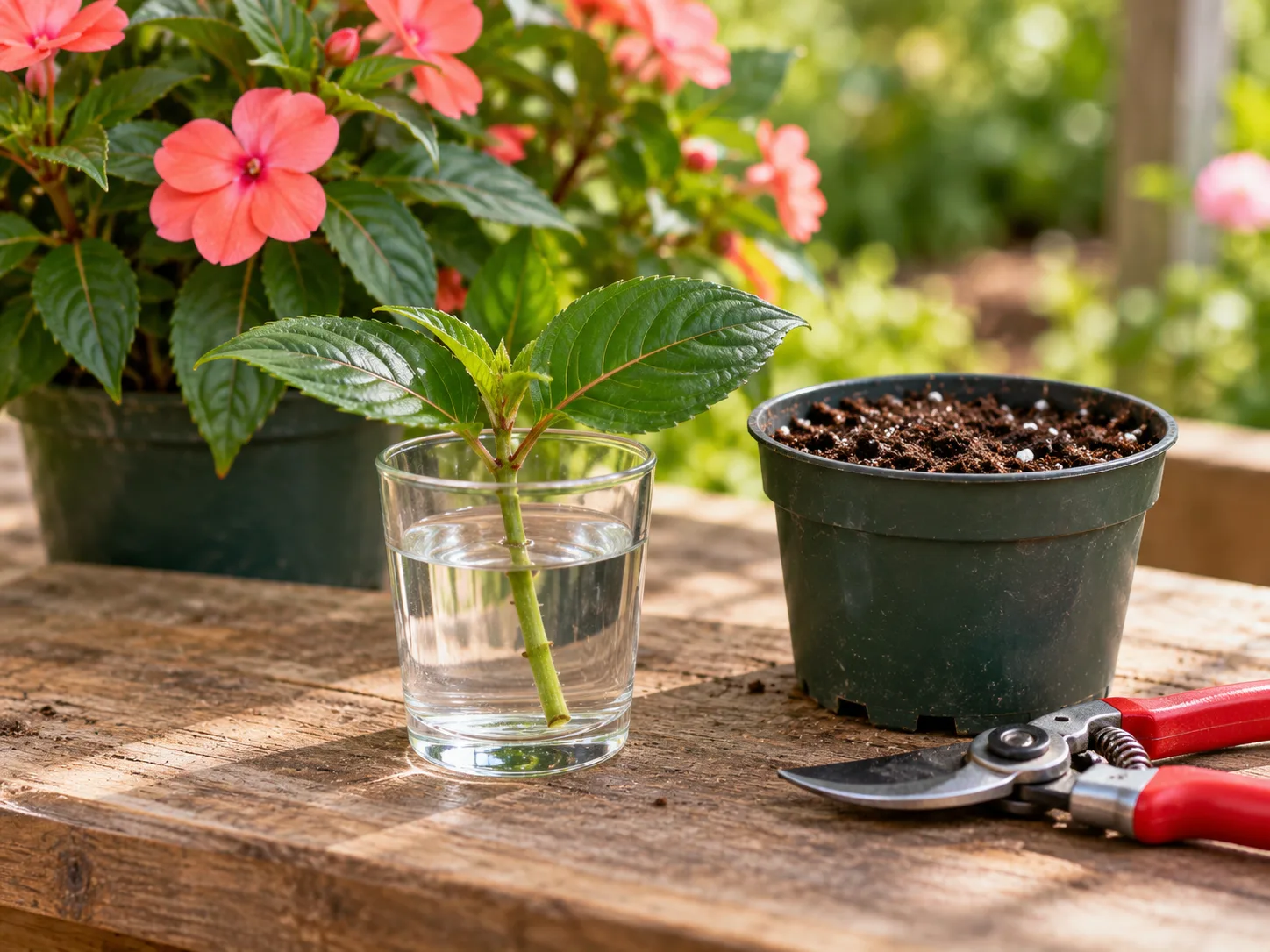
Take a healthy, non-flowering tip cutting from a vigorous plant and remove the lower leaves so no foliage sits under water or in the rooting medium. Place the cut end in clean water or a moist, free-draining propagation mix in bright indirect light; replace cloudy water and pot the cutting once it has a useful root system. Keep the new plant warm and evenly moist while it establishes, then grow it in bright light away from hot direct sun.
If your goal is to save a tender plant over winter, taking several cuttings is often safer than trying to keep one large, stressed plant alive indoors. The RHS propagation advice notes that impatiens root readily from softwood cuttings and that the lower leaves can be removed before placing stem cuttings in water. The existing cutting photo below shows the simple setup; new roots still need suitable warmth and light, so replace a cutting that turns soft or black rather than potting it into a new container.
Prevent and recognize impatiens downy mildew
Downy mildew is the main disease to understand if you grow standard bedding impatiens. The water mold Plasmopara obducens infects I. walleriana and can cause the plant to lose leaves and flowers, then collapse. Cool, moist weather, wet foliage, overhead watering, and crowded plants encourage disease, but good care cannot guarantee that windborne spores will stay out of a garden.
Prevention starts with spacing plants so air moves through them, watering the soil rather than splashing foliage, and avoiding dense sites where leaves remain wet for hours. If downy mildew has appeared in a bed before, do not replant susceptible I. walleriana there the next season; choose a different shade plant or a cultivar series with documented resistance. New Guinea impatiens are generally considered resistant or tolerant to this specific disease, and Iowa State lists newer resistant series such as Beacon, Bounce, and Imara XDR, but check the current cultivar tag rather than assuming every plant sold as “impatiens” has the same resistance. UMass Extension’s home-garden disease guide and Iowa State Extension provide the key host and prevention distinctions.
What the symptoms mean and what to do
Look for a pattern rather than diagnosing from one yellow leaf. Early downy mildew can show as slight yellowing or mottling and downward-curling leaves; check the undersides for fine white growth. As the disease advances, flowers and leaves drop, bare stems remain, and the stems may become soft before the plant collapses. University of Maryland Extension’s symptom guide describes this progression and notes that the disease favors cool, moist conditions.
If you see likely downy mildew on standard impatiens, remove the entire symptomatic plant and bag it for disposal; do not put it in a home compost pile. Pruning off the worst leaves or applying a home fungicide will not cure an infected plant, and leaving infected debris can allow resting spores to persist in the bed. Avoid replanting susceptible standard impatiens in a site with a disease history; use New Guinea impatiens or a different shade annual such as wax begonia, torenia, or coleus.
If leaves are yellow but there is no white growth or progressive leaf drop, check for other causes before removing a healthy plant. Waterlogged roots, a dry container, fertilizer buildup, transplant stress, or too much sun can also yellow foliage. If symptoms are ambiguous and the plant matters to you, ask a local extension plant clinic for a diagnosis rather than treating every yellow leaf as mildew.
Overwinter plants or start fresh next season
In most cold-winter gardens, standard impatiens are treated as annual bedding plants and replanted after frost each spring. They will not survive an outdoor freeze. If you want to preserve a color, take cuttings in late summer or early fall and keep them indoors in bright indirect light; a mature plant can also be brought in, but it may shed leaves, attract pests, or become lanky without enough light.
In frost-free climates, impatiens may persist as tender perennials, but growth and disease pressure still change with the season. New Guinea types and named hybrids have their own cold limits, so do not infer winter hardiness from disease resistance or sun tolerance. When bringing any plant indoors, inspect it for pests, isolate it from houseplants at first, and reduce watering to match slower winter growth without letting the root ball dry completely.
If a plant is already declining at the end of the outdoor season, it may be simpler to discard it and buy a fresh transplant in spring. Do not keep an impatiens that you suspect has downy mildew; propagate only from healthy, symptom-free material, and avoid taking cuttings from a diseased bed. That saves indoor space and lowers the chance of carrying pests or disease into the next year.
Troubleshoot yellow leaves, wilt, and sparse blooms
Start with the soil, light, and pattern across the plant. A dry pot and widespread limp foliage usually point to a watering gap; water thoroughly and reassess after the mix has absorbed moisture. A plant that remains wilted in wet soil may have root damage, so stop adding water, check whether the container drains, and let the root zone regain air before watering again.
Scorched leaf edges or bleaching on the sun-facing side suggest too much direct sun for that variety. Move standard impatiens into filtered light or morning sun with afternoon shade; for brighter spots, replace them with a cultivar labeled for more sun. Yellow leaves with white fuzz underneath, downward curl, and rapid leaf drop call for the downy mildew response above, not extra fertilizer or routine pruning.
If plants are leafy but flower sparsely, check whether they are in deep shade, overfertilized, or repeatedly drying out. If they are leggy, increase available light within the cultivar’s tolerance and pinch a few stem tips; if they are crowded, thin or move plants to improve airflow. If a hanging basket wilts daily despite watering, the root mass may have filled the container or the pot may be too small for the site; move it to a larger container or choose a spot with less heat and wind.
Conclusion
For dependable impatiens, start by matching the type to the site: standard bedding impatiens belong in bright shade, while New Guinea and sun-tolerant hybrids handle more light. Plant after frost in moist, well-drained soil, water according to the actual root zone, and avoid crowding susceptible plants. With those basics in place, regular cleanup is light, propagation is straightforward, and downy mildew is easier to recognize before it spreads.



