How to Grow Rodgersia in Moist Shade and Garden Beds
Give Rodgersia a moist, sheltered site—not a waterlogged one. Get species and cultivar guidance, spacing, seasonal care, propagation, and troubleshooting.
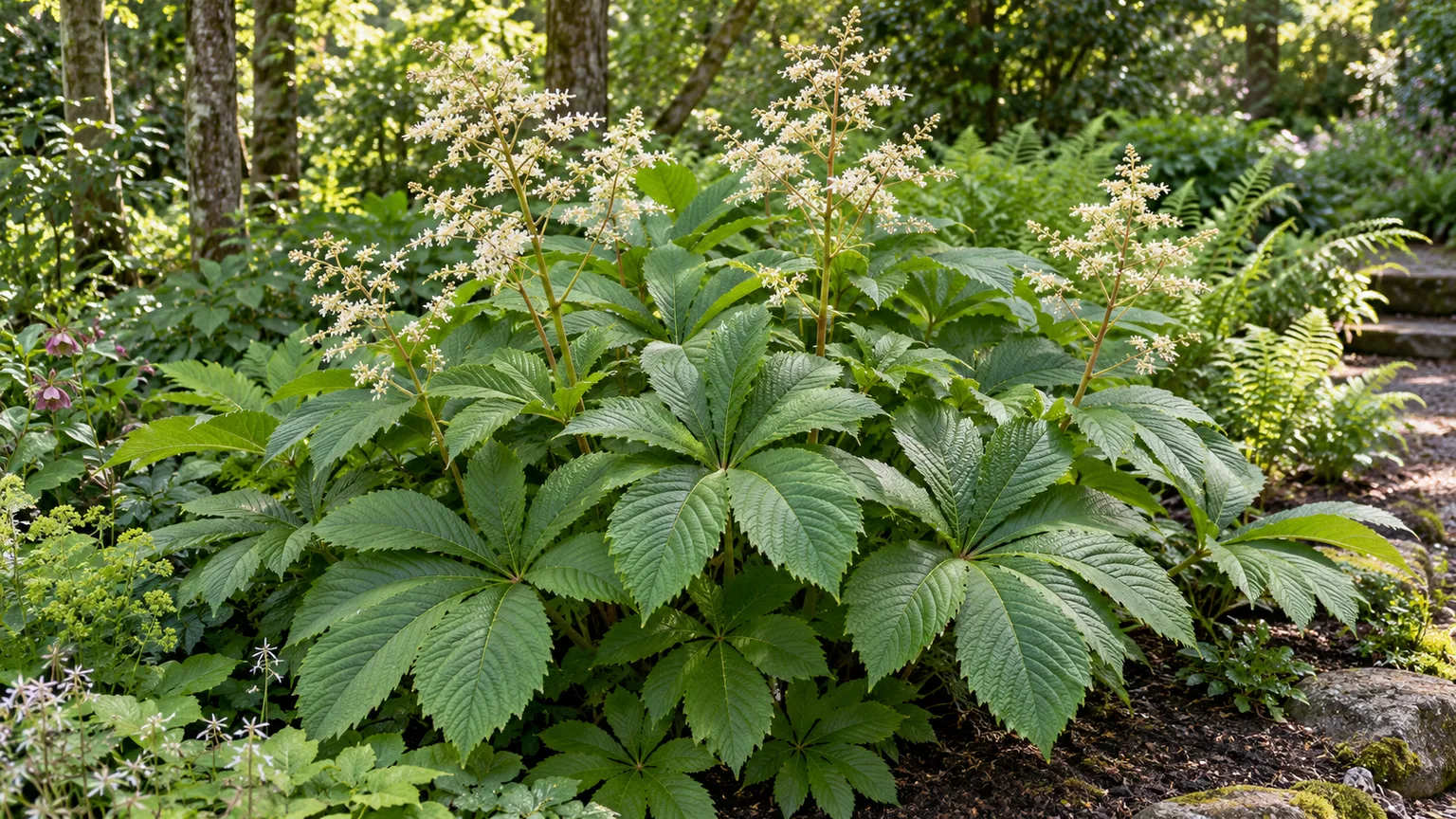
Rodgersia earns space through its enormous, deeply veined leaves, then sends up airy flower plumes above them in early or midsummer. It is easiest to grow where the soil stays reliably moist, the afternoon sun is softened, and the plant has room to widen into a substantial clump. A pond edge or stream bank can suit it, but the roots should sit in damp, aerated garden soil rather than remain submerged.
The name covers several species and many garden selections, so mature size, leaf shape, spring color, bloom, and frost response are not identical. Choose a labeled species or cultivar for the job you want it to do, then build the care around that plant’s site—not around a single generic “Rodgersia zone” or a promise of constant bronze foliage.
Know What Rodgersia Is Before You Choose a Plant
Rodgersia is a genus of rhizomatous, deciduous perennials in the Saxifragaceae family. Kew’s Plants of the World Online accepts five species and places the genus’s native range from the Himalaya through parts of China and Myanmar to Korea and Japan. The large leaves rise from the base on long petioles; depending on species, the leaflets radiate from one point like fingers or line up along a central axis like a feather. In summer, upright panicles carry many small flowers, often cream, white, or pink, above the foliage. Kew Plants of the World Online and the Royal Horticultural Society’s Rodgersia guide describe this shared structure, but the genus still has meaningful differences among species and cultivars.
Do not confuse every giant, umbrella-like shade leaf sold for pond gardens with Rodgersia. Astilboides tabularis has a single shield-shaped leaf with the petiole attaching underneath, while Rodgersia leaves are divided into separate leaflets. The two have sometimes been grouped together under older horticultural names, including “Rodgersia tabularis,” but they are distinct plants; check the current botanical label and leaf shape when you buy. Chicago Botanic Garden’s comparative trial explains the difference and records how the plants performed over years in a Midwestern garden.
Think of Rodgersia primarily as a foliage plant with flower interest, not as a perennial that must deliver a dense flower show every year. In the Chicago Botanic Garden trial, flowering across the evaluated taxa was low and inconsistent from year to year, while mature clump habit and leaf texture became more impressive over several seasons. The trial’s researchers found that mature sizes were often not apparent until plants had been in the garden for five or six years, a useful reminder not to judge a young plant by its first summer.
Choose a Rodgersia That Fits Your Garden
A generic “Rodgersia” tag is not enough for a small border: compare the species or cultivar name, leaf form, mature spread, spring color, and bloom. Use the types below as reference points, not size guarantees; site, age, and selection matter.
Fingerleaf Rodgersia (R. aesculifolia)
Fingerleaf or chestnut-leaved Rodgersia has a palmate leaf: several broad, toothed leaflets fan from a central point, a little like a horse-chestnut leaf. The leaves can reach a dramatic scale, and an established clump may span about five feet in a good site. Chicago Botanic Garden’s plant profile lists R. aesculifolia for USDA Zones 4–7 and describes cream-colored flower plumes that can rise above roughly 20 inches of foliage; its trial recorded about 32 inches from soil to flower tops. Those are garden observations, not a guarantee for every nursery clone or climate. The Chicago Botanic Garden profile and RHS species profile provide separate regional reference points.
Bronzeleaf Rodgersia (R. podophylla)
Bronzeleaf Rodgersia has a bold, jagged edge to its large palmately divided leaves. Fresh leaves often open with a bronze cast before maturing greener, and the early emergence can put them at risk from late spring frost in colder gardens. In the Chicago Botanic Garden trial, R. podophylla foliage was about 32 inches tall, its flower stalks reached about 60 inches, and its clump width was about 60 inches; several cultivars differed substantially. The RHS profile for R. podophylla recommends reliably moist soil and shelter from cold, drying winds. It is a better choice for a spacious, damp border than for a narrow path edge or a bed that dries out each afternoon.
Featherleaf Rodgersia (R. pinnata) and Cultivars
Featherleaf Rodgersia has leaflets arranged along a short central axis; closely spaced leaflets can make a leaf look almost palmate, so leaf shape alone is not always enough to confirm the label. ‘Chocolate Wing’ is valued for brown-bronze spring foliage that turns greener as the season advances and pale-pink flowers. In the Chicago trial, this selection grew to about 21 inches in foliage and 32 inches to the flower tops, with a spread of about 37 inches. Other selections such as ‘Fireworks’ or ‘Kupfermond’ can show stronger spring bronze or red-bronze tones, but that color is often temporary. Fine Gardening’s account of the Chicago Botanic Garden trial, the Garden’s ‘Chocolate Wing’ profile, and the RHS cultivar profile describe its foliage, flowers, and light preferences.
The trial found that spring foliage color often faded by late May, and several hybrids flowered only in a few years of the evaluation. Buy a named cultivar for the leaf architecture and the color it is likely to show in your climate, but treat heavy or repeat bloom as a bonus. If flowers are the reason you want the plant, ask a local nursery which selection has bloomed dependably nearby rather than relying on a catalog image taken at peak spring color.
Choose a Site With Reliable Moisture
Rodgersia suits a cool, sheltered woodland edge, damp border, or soil beside—but above—the usual waterline of a pond or stream. It is a poor fit for a hot, dry slope or dry shade under thirsty trees. Shade alone is not enough: tree-root competition can leave a dark bed dry, producing scorch on oversized leaves.
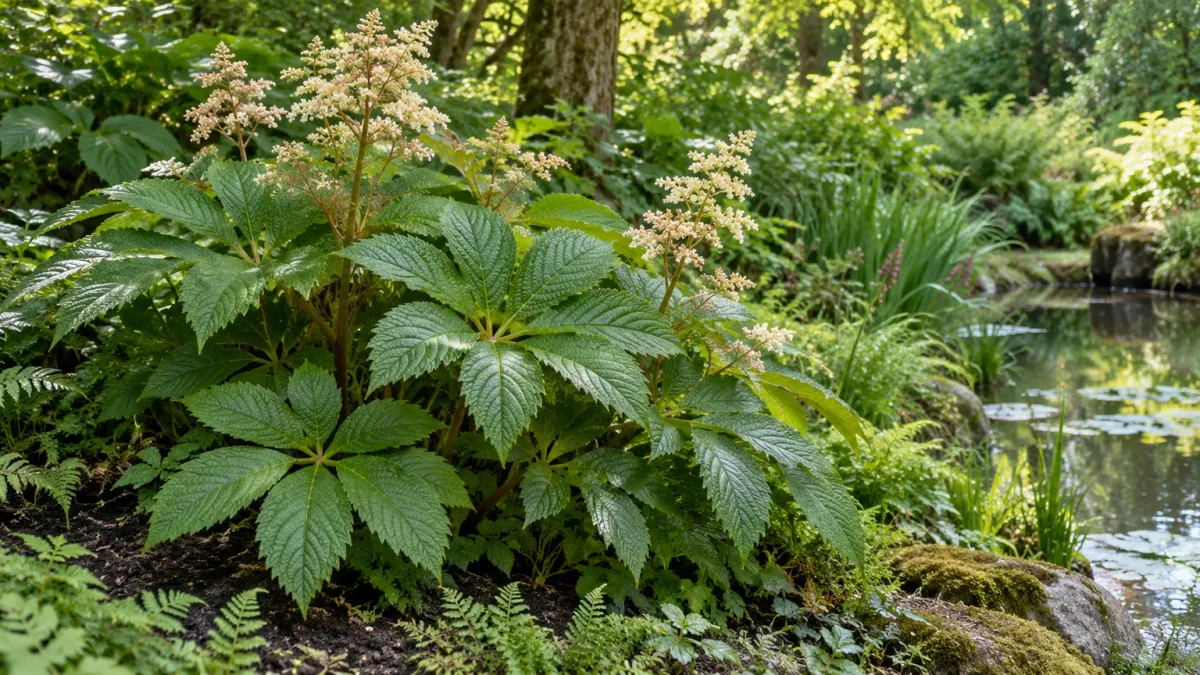
How Much Sun Rodgersia Can Take
Partial shade is the safer starting point for most gardens, especially where summers are hot or afternoon sun is intense. In a cooler climate with dependable soil moisture, a plant can tolerate more sun; brighter light may also strengthen some spring foliage colors. But moving a shade-grown plant abruptly into several hours of direct sun can burn leaf margins, particularly when hot days coincide with dry soil. If you want to test a brighter position, start with morning sun and afternoon shade, then watch the leaves through the warmest part of the season.
A long-term Chicago Botanic Garden evaluation experienced a real change in exposure when the trees that shaded part of its trial bed were removed. Several Rodgersia taxa later showed periodic scorch after receiving up to six hours of direct sun, even though the trialists tried to keep soil moist. The result does not mean every Rodgersia must be in full shade; it does show that cultivar, heat, water, and exposure interact. The Garden’s report is more useful than treating “full sun to part shade” as a universal instruction.
Moist Soil Is Not the Same as Standing Water
Rodgersia needs a steady supply of moisture while it grows, but it still benefits from air in the root zone. Aim for deep, humus-rich soil that holds water without staying saturated for long periods. RHS profiles describe Rodgersia as moisture-loving and recommend reliably moist soil; RHS also notes that some types dislike waterlogged conditions. Planting near water can reduce drying, but do not bury the crown at a pond’s edge or set it where seasonal flooding leaves roots submerged.
If your soil is sandy or the site is exposed to wind, organic matter and mulch can help the root zone hold moisture between rains. If it is heavy clay, improve the bed with compost and assess drainage before you plant; adding a small amount of compost to a hole will not correct a basin that collects water. The Chicago trial grew Rodgersia successfully in moist, well-drained clay loam, showing that clay is not automatically a problem—the key is whether water lingers around the crown and roots.
Plant Rodgersia at the Right Depth and Spacing
Plant a nursery-grown Rodgersia in spring or early autumn when the soil is workable and naturally moist. Spring gives a young plant time to establish before winter in cold regions; early autumn works where there is enough mild weather for roots to settle before a hard freeze. Avoid planting into frozen soil, a heat wave, or a bed that is already parched. If the plant arrives while the weather is unsuitable, keep its pot evenly moist in a sheltered spot until planting is practical.
Prepare a broad planting area rather than a narrow hole in compacted ground. Loosen the soil around the hole, mix in finished compost if the bed is low in organic matter, and set the plant at the same level it grew in its pot. Spread the roots outward without forcing them flat, firm soil gently, and water the whole root area. Keep the crown at the soil surface; covering it with a deep layer of wet soil or mulch can trap moisture where new shoots emerge.
Leave enough room for the mature clump instead of spacing by the small nursery pot. Many Rodgersias will eventually occupy several feet, and R. aesculifolia can form a clump close to five feet across in suitable conditions. Use the plant’s own label for a cultivar’s expected width, and add clearance from a path or low companion plants so the large leaves can expand without being crushed. The rhizomes spread slowly rather than racing across the bed, but a mature clump is not a compact edging perennial.
Water to Keep the Root Zone Evenly Moist
Water newly planted Rodgersia deeply after planting and check it regularly while it establishes. Once the top few inches begin to dry, water the root zone rather than giving frequent surface sprinkles; adjust the interval for rainfall, soil texture, wind, and heat. There is no dependable weekly schedule for every garden. Soil that remains cool and moist below the surface may not need another soak, while an exposed bed can dry much faster than a sheltered woodland border.
During hot, dry spells, check before the foliage droops rather than waiting for the entire clump to wilt. Large leaves lose water quickly in wind and heat, so a plant may look stressed on a sunny afternoon even if the deeper soil is still damp. If the ground is dry at root depth, water slowly enough to soak the bed, then mulch to reduce evaporation. If it stays wet for days, pause irrigation and correct drainage rather than adding water because a leaf has browned.
The Chicago Botanic Garden trial offers a useful recovery clue: plants that wilted or developed marginal desiccation during hot, dry periods recovered after adequate moisture was restored, and further leaf-edge damage stopped. That does not mean a brown leaf turns green again; damaged tissue remains visible. The right success measure is that the plant stops deteriorating and produces sound new foliage after moisture becomes more consistent. Fine Gardening’s trial summary discusses this heat-and-moisture relationship.
Mulch and Feed Without Forcing Soft Growth
Apply a thin layer of compost or another fine organic mulch each spring to help the soil hold moisture and stay cool. Keep it a little away from the crown so new shoots are not smothered. A mulch ring also reduces competition from weeds, but do not mound leaves or bark several inches deep against the crown in a damp site; the goal is to conserve soil moisture, not keep the growing point wet.
Rodgersia usually needs less feeding than a plant in a pot or a depleted bed. If the soil is reasonably fertile, finished compost added as a surface dressing may be enough. Avoid reaching for a high-nitrogen fertilizer whenever leaves look small or flowers are scarce: inadequate moisture, excess shade, poor drainage, and a recently divided clump can all produce weak growth, and fertilizer will not fix those conditions. If the plant remains weak after the site is corrected, use a soil test or local extension advice to decide whether a nutrient correction is warranted.
In the Chicago Botanic Garden trial, plants grew for years in a well-drained clay-loam bed, received composted mulch, and were not fertilized. That is not proof that every soil needs no fertilizer, but it is strong evidence against treating routine feeding as the main driver of Rodgersia success. Stabilize moisture and light first, then feed only when the soil or plant response gives you a reason.
Grow Rodgersia in a Container Only if You Can Keep Up With It
Most Rodgersias make more sense in the ground because their leaves and rhizomes become broad and their root zone needs steady moisture. A pot can work with a smaller cultivar, a large, stable container, and a gardener who can monitor water during hot weather. A small patio pot dries quickly, while a huge container filled with wet mix can hold excess moisture if it lacks drainage; choose a container with generous drainage holes and enough volume for the variety’s mature size.
Use a moisture-retentive but open potting mix rather than dense garden soil. Place the container where it gets bright shade or gentle morning sun, and check moisture more often than you would for a plant in the ground. Water fully when the root zone begins to dry, then let excess run out; do not let the pot sit in a saucer of water as a shortcut to humidity. Container-grown rhizomes eventually fill their space and may need spring division or a larger pot.
A container exposes roots to colder winter temperatures than garden soil. In cold regions, shelter or insulate the pot using local advice for the cultivar; do not move a hardy perennial into a warm room. Protecting the root ball from repeated freeze-thaw and drying wind is usually the main task.
Divide Mature Clumps in Spring
Divide Rodgersia only when you have a reason: a clump has outgrown its allotted space, the center is losing vigor, or you want to propagate a plant you have positively identified. It grows from stout rhizomes and is not a fast, invasive runner, but it can form a broad patch over time. Because the plant may take several years to reach its mature habit, avoid dividing it every few seasons by rote if it is healthy and still fits its site.
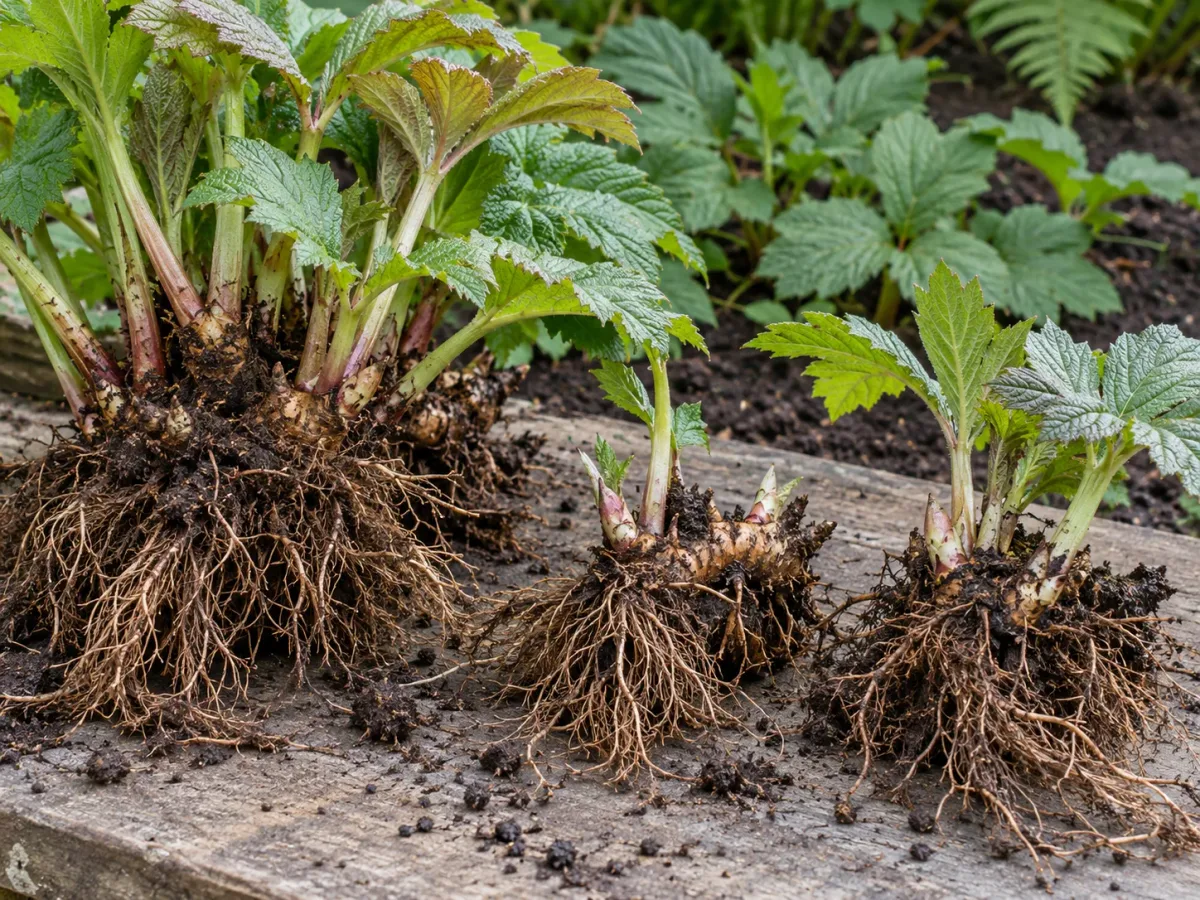
Early spring, as shoots begin to appear and before leaves expand, is the recommended division window in RHS profiles. Water the soil the day before if it is dry, then lift the clump with a garden fork placed outside the crown. Tease or cut the rhizome into sections, making sure each division carries at least one firm growing point and a useful portion of roots. Discard only mushy or dead material; keep healthy buds and roots intact rather than chopping the clump into the smallest possible pieces.
Replant each section at the same depth as the original crown, firm the soil, and water thoroughly. Keep new divisions shaded from intense sun and evenly moist while they rebuild roots, especially if spring turns windy or dry. Label cultivars as you work, because the spring leaf color can fade and several selections look more alike by summer. RHS cultivation notes for R. aesculifolia recommend spring division; the slower growth noted in the Chicago trial is another reason to divide selectively rather than on a fixed calendar.
Start Rodgersia From Seed for Species Plants
Seed is a patient way to raise a species Rodgersia, but it is not the best route when you want an exact named cultivar. Seedlings from a hybrid or open-pollinated garden plant may differ from the parent in leaf color, flower traits, or growth habit; division is the more reliable method for preserving a cultivar. Expect a slower process than buying a mature plant, and do not assume a seedling will flower in its first season.
The RHS Members’ Seed Scheme lists Rodgersia seed as a slow germinator: sow in spring at about 13–16°C (55–61°F), leave it uncovered because it needs light, and allow more than 90 days; chilling may improve germination. That guidance is more cautious than a fixed “60-day cold stratification” rule for every species. Use a shallow pot of clean, fine seed-starting mix, surface-sow the seed, and keep it evenly moist without letting the pot stand in water. A covered tray can help moisture stay consistent, but ventilate it and remove the cover after germination to reduce damping-off risk. The RHS germination guide provides genus-specific instructions.
Give seedlings bright light without harsh midday sun and pot them on when they can be handled without disturbing the roots. Keep them protected through their first winter and transplant them only after they have enough growth to withstand outdoor conditions. Seed is worthwhile if you enjoy raising variable plants or want to increase a species population; if you want ‘Chocolate Wing’ or another named form, ask for a division or true-to-name nursery stock instead.
Protect New Leaves From Frost, Wind, and Slugs
Established Rodgersia can be cold-hardy, but winter survival and spring leaf survival are different questions. The Chicago Botanic Garden report lists the genus broadly for USDA Zones 5–7/8 and recorded no winter-killed Rodgersias during its trial, yet late spring frost repeatedly damaged emerging foliage on some taxa. R. podophylla and some of its selections emerged earlier than many others, which increased their frost exposure in the trial. Do not read one broad hardiness range as a guarantee for every species, cultivar, microclimate, or spring. The Chicago Botanic Garden lists R. aesculifolia at USDA Zones 4–7, while RHS rates it H6 on the separate UK hardiness scale; these ranges are not interchangeable or universal for the genus. Use a local listing for the cultivar you buy and factor in spring frost, summer heat, and soil moisture.
If the forecast calls for a hard late frost after shoots emerge, cover a small clump overnight with breathable frost fabric and remove it when temperatures rise. Avoid pressing plastic onto the leaves or covering a wet crown with heavy, compacted mulch. In exposed sites, a fence, hedge, or larger shrubs can reduce cold, drying wind without shading the plant all day. A sheltered position also helps prevent wind from shredding or drying the broad leaves.
Slugs and snails are the pests most likely to leave visible damage, especially on young leaves. Check for irregular holes and silvery trails after damp nights, then reduce hiding places next to the crown and remove pests by hand when practical. Rodgersia is not immune to browsing: Chicago Botanic Garden observed occasional rabbit damage during its trial, even though the damage was infrequent. If rabbits or deer are active in your garden, protect new growth rather than trusting a “resistant” label to be absolute. BBC Gardeners’ World’s Rodgersia guide also flags slugs and snails as likely foliage pests.
Cut Back Foliage and Prepare for Winter
Rodgersia is deciduous, so the foliage naturally declines after frost in autumn. During the growing season, remove leaves that are fully brown, torn, or badly damaged to keep the clump tidy, but leave healthy foliage in place; it continues to support the rhizome. Flower stalks can remain after bloom while their seedheads still add structure, then be cut near the base once they turn brown and no longer look attractive.
After a hard frost has collapsed the leaves, cut the dead foliage back to the ground and clear diseased or slug-ridden debris. A light layer of compost or leaf mold can protect and enrich the bed, especially in colder or wind-exposed locations, but avoid burying dormant buds under a thick wet blanket. In a region with early, unreliable spring weather, keep the site’s existing mulch nearby so you can cover the soil again if new growth appears before a late frost.
Rodgersia is deciduous, not winter groundcover. Pair it with an evergreen or winter-interest plant if the bed needs structure after dieback, and leave space for its large leaves during the growing season.
Troubleshoot Brown Leaves, Sparse Flowers, and Slow Growth
Brown or crispy margins usually call for a check of water, exposure, and wind before fertilizer. Feel the soil several inches down: dry soil combined with hot sun, warm wind, or a recently planted clump points to water stress. If the soil is reliably moist but scorch appears on the side facing afternoon sun, increase shade gradually. A blackened early shoot after a cold night may be frost injury rather than drought; leave the crown in place and wait for replacement growth before deciding that the whole plant has failed.
If the leaves are yellowing while the soil stays saturated, inspect drainage and the planting depth. Rodgersia likes moisture but not a root zone that remains airless. Move standing water away from the crown, improve the bed around the plant, and avoid watering by calendar until the soil begins to dry at root depth. If a plant wilts in heat but recovers after a deep watering, keep the moisture steadier and add mulch instead of immediately lifting or dividing it.
Sparse flowering does not always mean the plant is unhealthy. Too much shade, an immature clump, a recent division, or cultivar-specific low flowering can all reduce the number of stems; the Chicago Botanic Garden trial found bloom sporadic across many taxa even when foliage performed well. Confirm the species and growing conditions before moving the plant, then give it time. If the leaves are large, healthy, and appropriately colored, treat the foliage as the main display and let flowers be a bonus.
A clump that stays small for several years may simply be establishing; the trial saw mature size develop slowly, often by year five or six. If growth remains weak, check root competition from nearby trees, summer moisture, crown depth, light, and slug damage in that order. Correct the clearest site problem first, then assess the next flush rather than stacking fertilizer, extra water, and division into the same season.
Conclusion: Match Rodgersia to the Site First
Rodgersia is most rewarding when its large leaves have enough moisture, shelter, and room to grow. Choose the species or cultivar for its real mature size and foliage, give it partial shade in hot climates, and keep the root zone moist without leaving it submerged. Once established, it needs little intervention beyond seasonal cleanup, mulch, and selective spring division; its flowers and spring color are welcome extras, not promises every plant makes on schedule.



