Cutting Grass Too Short? Set the Right Lawn Height
Cutting grass too short can stress turf, but the right height depends on grass type. Use the one-third rule, set your mower, and handle scalped spots wisely.
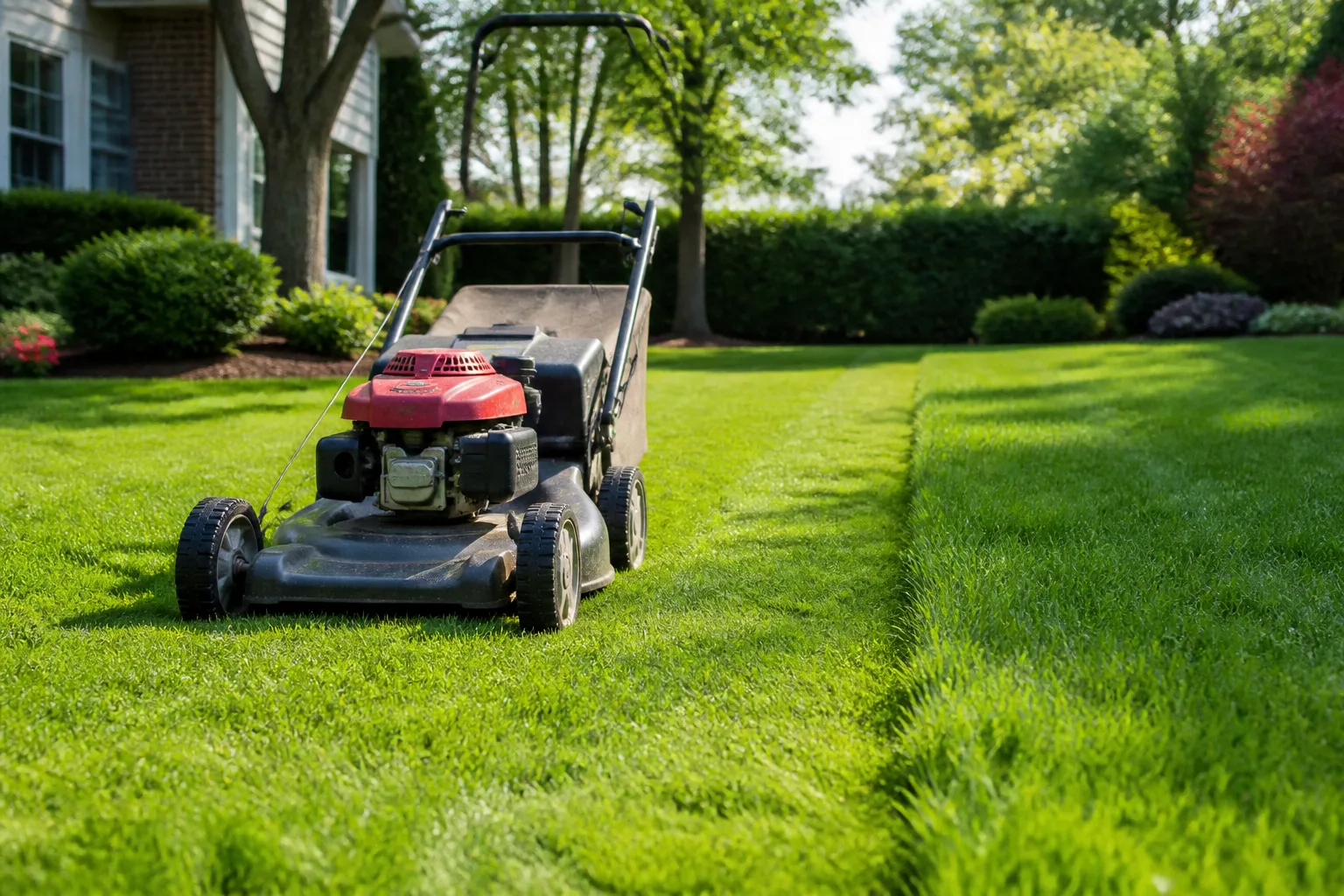
If you mow low to make the next cut come later, the lawn may end up needing more attention, not less. Repeatedly removing too much leaf leaves grass with less working surface, exposes soil to sun, and opens thin areas where weeds can take hold. The trouble is not that every short lawn is automatically unhealthy; it is that a cut below the grass’s useful range, or a cut that removes too much at once, makes recovery harder.
The right correction is simple to state but depends on your lawn: choose a suitable height for the grass you have, then remove no more than one-third of the leaf at a time. A three-inch target, for example, means mowing before the lawn grows much past four and a half inches. That rule keeps the next cut from turning into a damaging haircut.
The short answer: cut by species, not by habit
For most home lawns, a higher cut within the grass’s recommended range builds denser, more stress-tolerant turf. But “higher” is not a single setting. Tall fescue may be maintained around three to four inches in summer, while some warm-season lawns are routinely kept closer to one or two inches. Use local university guidance for the species and cultivar in your yard, not a mower setting borrowed from a neighbor.
University of Minnesota Extension recommends keeping typical Midwest lawns at three inches or higher, while University of Florida IFAS gives different ranges for Bermuda, St. Augustine, centipede, and zoysia. Those numbers differ because grass growth habit, blade width, local climate, cultivar, and desired finish all matter. The useful principle that travels well is to avoid removing a large share of the blade in one pass and to keep turf in its own appropriate range. (UMN Extension’s mowing guide, UF/IFAS guidance for Florida lawns)
Why a low cut weakens a lawn over time
Grass is not a uniform green carpet that can be shortened without consequence. Each blade is a leaf that captures light; the crown and roots below it depend on the leaves’ ongoing production to maintain and replace growth. One slightly low pass usually does not kill a healthy, actively growing lawn, but repeating that cut at the wrong height removes protection and recovery capacity again and again.
It removes working leaf area
When you cut off a large portion of each leaf, you leave less surface to make carbohydrates through photosynthesis. The plant must rebuild foliage, and repeated close mowing can reduce root growth and turf vigor. That relationship does not mean roots shrink instantly after one mow; it means a lawn kept below its best height is less able to build the dense, deep-rooted stand that helps it handle heat, drought, and traffic. (University of Florida IFAS explains the effects of mowing height on roots and stress)
The visible clue is often a washed-out or yellow-green lawn right after mowing. You may be seeing the less-green lower portions of the leaves that were previously shaded by the upper canopy. If the whole lawn turns pale immediately after every cut and then slowly greens up, examine the height setting before assuming it needs fertilizer. A symptom that appears in distinct circles, spreads independently of mowing, or persists after new leaves emerge deserves a separate diagnosis.
It exposes soil and gives weeds an opening
A dense canopy shades the soil surface and makes it harder for some weed seedlings to establish. Very low mowing reduces that shade, heats the top layer of soil, and leaves open space for opportunistic plants to germinate. Low cutting does not create every weed—weed seed supply, soil disturbance, light, moisture, and existing turf density also matter—but thin turf gives them an easier start. (UMN Extension on mowing height and weed germination)
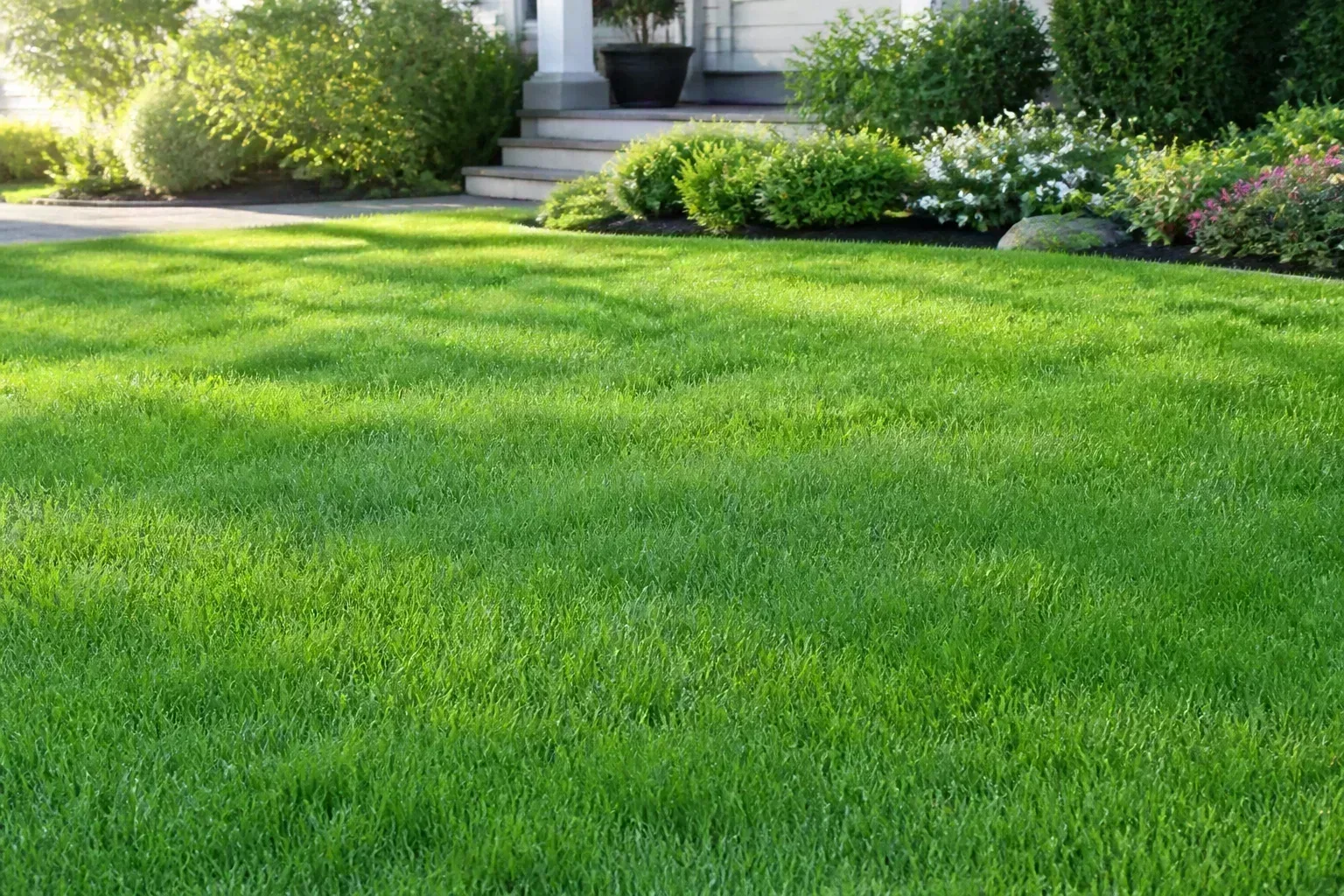
The trade-off is that a lawn also should not be allowed to flop or mat simply because “longer is always better.” If a delayed cut leaves long, wet clumps on top of the grass, those clippings can smother patches and spoil the finish. The goal is not maximum blade length; it is a strong, even canopy cut often enough that clippings remain small and the grass stays inside its useful height range.
Actual scalping is more serious than an ordinary low mow
An evenly short lawn still has leaf tissue across the surface. Scalping is a more severe, often localized cut in which the mower removes most of the green canopy—sometimes exposing pale stems or soil—because the deck is too low for the terrain or the wheels sink into soft ground. It commonly appears on bumps, slopes, tree roots, and fast turns, even if the mower is set at a reasonable height on flat ground. The RHS identifies raised or uneven areas as common places where low cutting can weaken or kill grass. (RHS guidance on mowing and dead patches)
Do not blame every bare or brown patch on scalping. A patch that appears right after the mower passes over a high spot points to a cutting problem; a patch that develops between mowings may be drought, disease, animal damage, chemical injury, or another issue. The pattern and timing matter, and treating the wrong cause with more water or fertilizer can make the actual problem harder to identify.
The right mowing height depends on the grass
The range below is a starting point for established home lawns, not a universal prescription. Sources vary because regions grow different cultivars and manage lawns for different uses; shade, soil, mower type, and local growing conditions also change the best setting. When recommendations from another climate conflict, follow the land-grant extension service that covers your area.
| Grass type | Useful home-lawn starting range | Practical adjustment |
|---|---|---|
| Tall fescue | About 2½–4 inches | Use the upper part of the range in summer heat or drought |
| Kentucky bluegrass | About 2–3½ inches | Keep more leaf in hot weather; local guidance may set a lower cool-season range |
| Bermudagrass | About 1–2 inches for many home lawns | Cultivar and mower type matter; do not scalp to compensate for missed cuts |
| Zoysiagrass | About 1–2½ inches for many home lawns | Coarse and fine cultivars differ; stay within local guidance |
| St. Augustinegrass | About 2½–4 inches | Cultivar matters; some dwarf types tolerate a lower cut than standard types |
| Centipedegrass | About 1–2 inches in some southern guidance | Avoid dropping below the local target simply because it is warm-season turf |
These ranges synthesize recommendations from Illinois, Missouri, Georgia, Maryland, and Florida Extension; they intentionally show overlap rather than a false exact setting. For example, Illinois lists tall fescue at 2½–3½ inches, while Missouri recommends as much as three to four inches during summer. Florida guidance separates St. Augustine cultivars and gives Bermudagrass a much lower range than coarse St. Augustine. (Illinois Extension’s species table, Missouri Extension’s seasonal recommendations, UGA Extension’s lawn guidance, University of Maryland Extension, UF/IFAS species ranges)
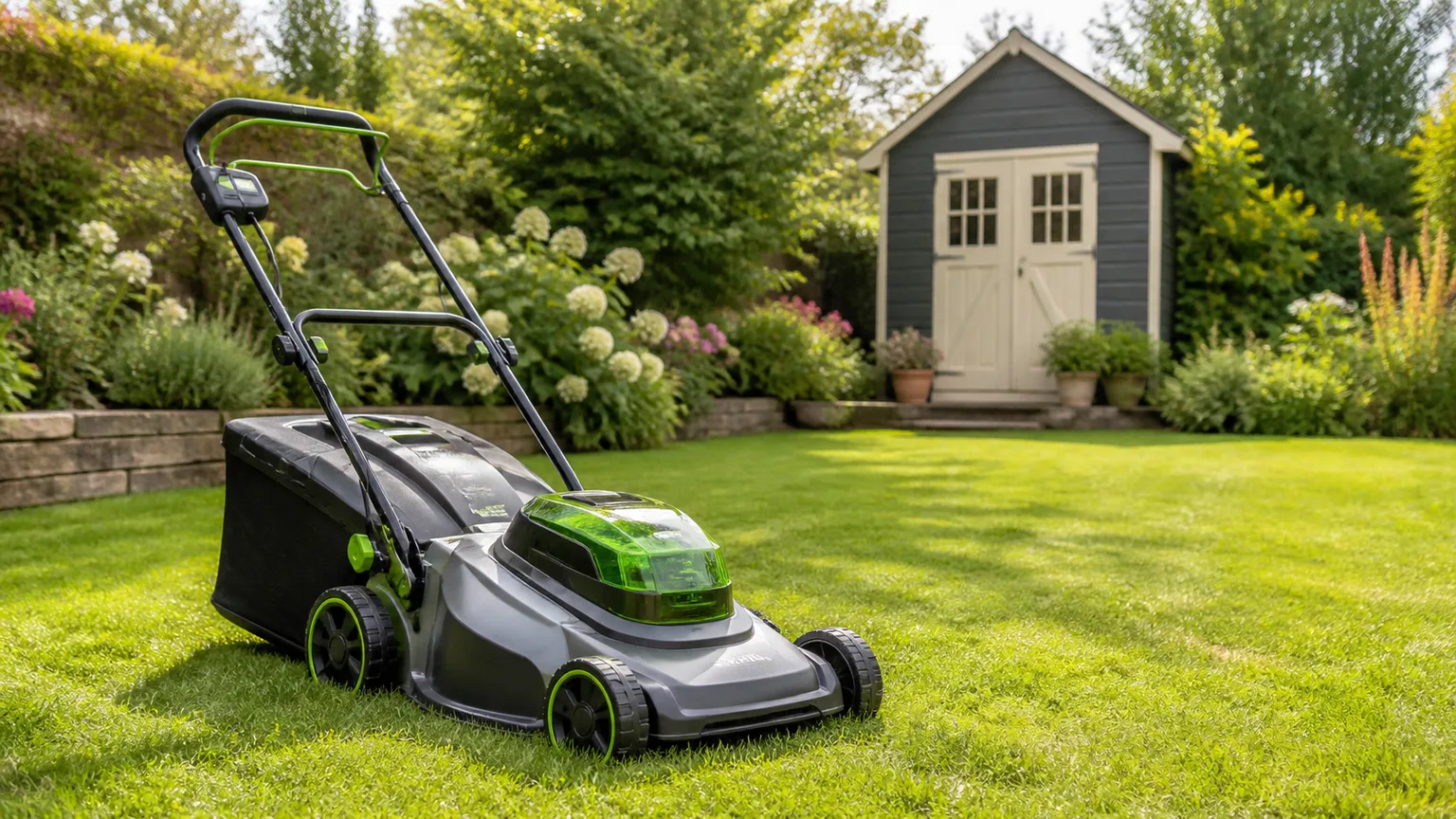
Cool-season lawns need more leaf in summer
Tall fescue, Kentucky bluegrass, perennial ryegrass, and fine fescues grow most actively in cooler weather. In summer heat or drought, many cool-season lawns slow down or enter dormancy. Keeping the mower high while grass is growing preserves more shade and leaf area; mowing brown, inactive grass does not wake it up. If the lawn is dormant, pause mowing until active growth resumes rather than trimming dry blades for appearance.
Tall fescue is often maintained higher than Kentucky bluegrass or fine fescue. The difference matters in mixed lawns: follow a range that suits the dominant grass and the most vulnerable portion of the yard, then avoid cuts that violate the one-third rule. A shady patch and a full-sun patch may grow at different speeds, so the same weekly schedule can be too frequent for one and too infrequent for the other.
Warm-season grasses tolerate a different range
Bermuda, zoysia, centipede, and St. Augustine are warm-season grasses, but they are not interchangeable. Fine-bladed Bermuda is commonly cut shorter than coarse-bladed St. Augustine; a UF/IFAS table, for instance, gives Florida home-lawn ranges from ½–1½ inches for Bermuda to 2½–4 inches for standard St. Augustine cultivars. Centipede and zoysia recommendations also vary by region and variety. (UF/IFAS mowing guidance)
Warm-season grass may be actively growing through a summer when a cool-season lawn has nearly stopped. That changes how often to mow, but not the one-third rule. Forcing a missed cut back to the usual height in one pass can still weaken a warm-season lawn, even if its runners and rhizomes allow some cultivars to fill damaged spots more readily than bunch-forming grasses.
Fine turf and specialized lawns are exceptions
Putting greens and some ornamental lawns are kept exceptionally short, but they are managed as specialized turf systems. They use grass varieties and mower equipment suited to close cutting, frequent mowing, and careful irrigation and fertility management. That does not make the same height a sensible goal for a typical mixed lawn cut once a week with a rotary mower.
If you inherited a very short lawn and do not know its grass type, identify it before making a dramatic change. Raising the cut modestly within the likely species range and observing the response is safer than switching from a close cut to a very tall setting in one pass, especially if the lawn has been allowed to overgrow.
Set a target, then use the one-third rule
The one-third rule is a ceiling on how much to remove at one mowing: do not take more than one-third of the current leaf height. It is not a recommendation to always cut exactly one-third. A lighter trim is fine, particularly during stressful weather or when the lawn is approaching the top of its species-specific range. (UMN Extension’s mowing practices)
Work backward from the finished height
Choose the height you want the lawn to have after mowing, then calculate when to mow. If your target is three inches, the grass should be cut before it grows beyond about four and a half inches: removing one and a half inches leaves three, which is one-third of the current 4½-inch height. If you want a 3½-inch finish, mow by roughly 5¼ inches.
This also explains why lowering the deck rarely saves mowing time. A 1½-inch target gives you only about three-quarters of an inch of growth before the next cut reaches the one-third limit; a three-inch target gives you about 1½ inches. Shorter turf therefore reaches its mowing threshold sooner, and the grass is less protected between cuts. Missouri Extension notes that shorter turf must be mowed more frequently, which is the opposite of the usual “cut low and mow less” plan. (Missouri Extension’s seasonal mowing guidance)
If a lawn is already six inches tall and your target is three, do not lower the mower and make one aggressive pass. Cut only the top third first, wait for the grass to settle and grow, then lower the deck toward the normal target on a later mowing. Missouri Extension specifically advises bringing an overgrown lawn partway back, then returning to the intended height a few days later; that staged approach limits leaf loss and keeps a heavy mat of clippings from being dropped all at once. (Missouri Extension’s mowing recommendations)
Measure the actual cut, not the mower dial
Mower labels such as “3” or “high” are not consistently calibrated in inches across brands. Tire size, deck design, a bent blade, soft ground, or a slope can make the actual cut lower than the number suggests. On a level surface, follow the mower manual to check blade-to-ground clearance safely; a simple test strip followed by a ruler beside the freshly cut grass is another practical check. UF/IFAS also recommends checking actual blade height from a level driveway or sidewalk rather than guessing from the handle setting. (UF/IFAS mower setup tips)
Use a ruler on a typical part of the lawn after mowing, not just beside the driveway edge where the ground is flat. If the cut length is below the species range, raise the deck one setting and recheck after the next mow. If only high spots are shaved, keep the main deck height and address the terrain or steer more carefully over those areas; lowering the mower everywhere will make the rest of the lawn too short.
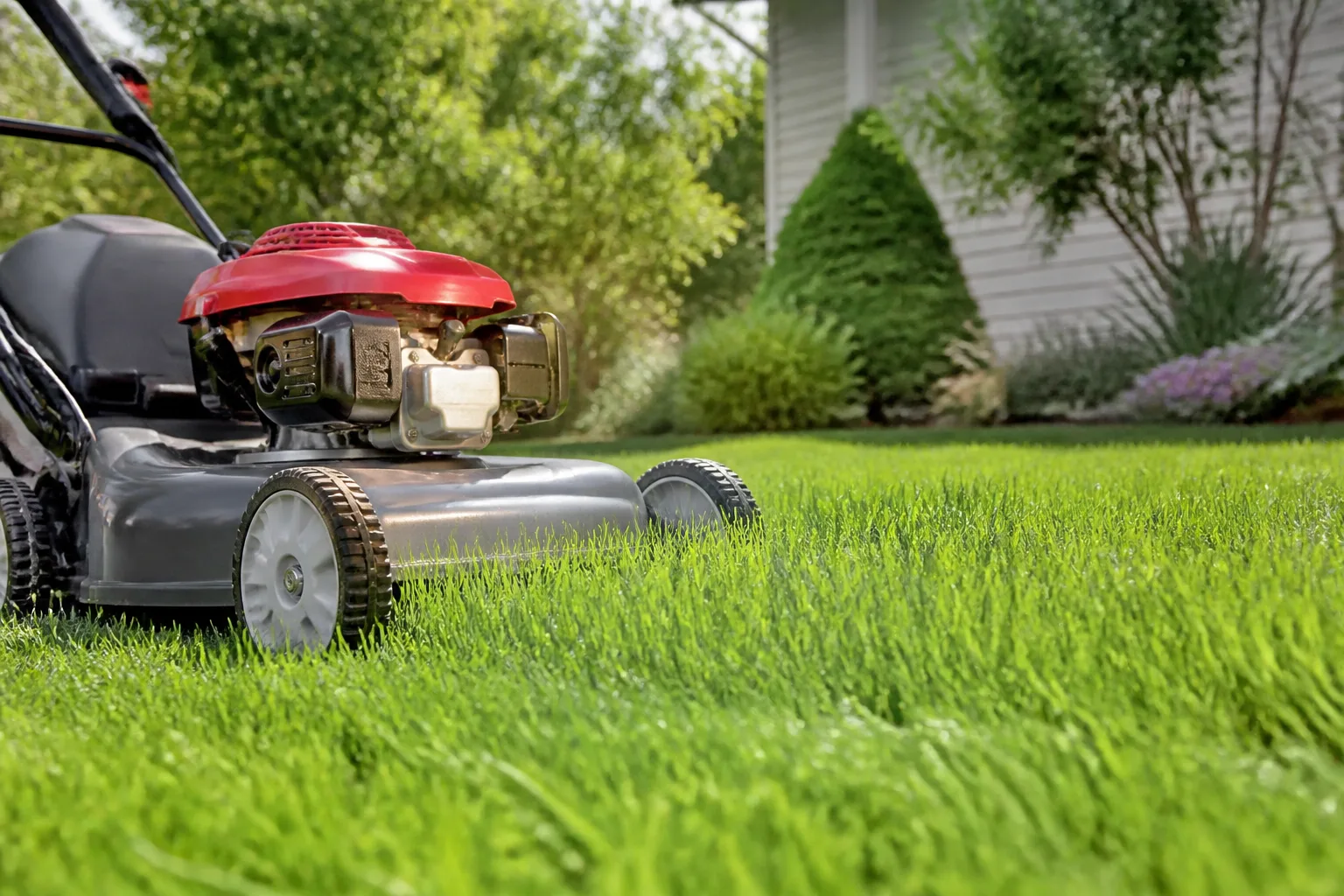
How to correct a lawn that has been cut too short
Start by separating a low, uniformly trimmed canopy from true scalping. Look across the lawn at eye level, check whether the soil is visible, and note if the pale areas appeared immediately after mowing. Then stop repeating the stress: do not mow again until the grass has regained enough height to cut without removing an excessive share of the leaf.
If the lawn is pale but still covered
Raise the mower to the recommended range and let new leaf growth replace the cut canopy. Keep normal foot traffic light while the lawn is visibly stressed, and do not try to force a fast green-up with a heavy fertilizer application. Extra nitrogen can push more top growth when the plant is already trying to recover; fertilizer needs should be based on season, species, and soil conditions, not on a single rough-looking cut.
Water only if the soil and weather indicate the lawn needs it. A short cut exposes more soil, so it may dry faster, but adding frequent shallow sprinkling without checking the root zone is not a repair strategy. If the lawn is dormant because of drought, repeated mowing and attempts to keep it green can add stress; wait for active growth and follow local watering rules.
If mowing has exposed soil
A small scalped patch may recover if crowns or lateral runners remain alive, but recovery depends on grass type, season, moisture, and how much tissue was removed. Some warm-season grasses spread by stolons or rhizomes and can fill small gaps when actively growing; bunch-forming turf may not close a bare spot as readily. A practical Gardening Know How guide to scalped lawns makes the same useful distinction between surviving turf and a patch where the grass has been nearly removed, though local Extension advice should guide reseeding and timing.
Pause mowing over the damaged area until you see new growth. If the soil stays bare, the crown is dead, or weeds take over, identify the grass and local reseeding window before repairing it; seed or sod that matches the existing turf is more likely to blend than a generic mix. Also fix the reason for the scalp: raise the deck, slow down on turns, avoid mowing saturated soil, and correct sharp bumps or hollows where practical. Brown patches have many causes, so do not reseed or water every spot until you have checked that mowing actually caused it. (RHS advice on raised-area scalping and other dead-patch causes)
Mowing habits that prevent repeat damage
Most preventable scalping comes from combining the wrong height with timing or terrain. Let growth—not the calendar—set the interval. Rapid spring growth may mean mowing more than once a week; a lawn slowing under summer heat may need longer between cuts, and dormant grass may need no mowing at all. A higher target does not make the lawn grow more slowly; it gives the plant more leaf to work with and still requires mowing whenever growth crosses your one-third threshold.
Adjust for weather, equipment, and terrain
Mow when the blades are dry and the ground is firm enough that mower wheels do not sink or leave ruts. Wet grass clumps and can clog a mower, while soft ground lets the deck ride lower than expected. In hot, dry weather, many extension services recommend moving toward the higher end of a species’ normal range; do not keep mowing a cool-season lawn that has stopped growing from drought stress. (RHS mowing guidance, UGA Extension mowing recommendations)
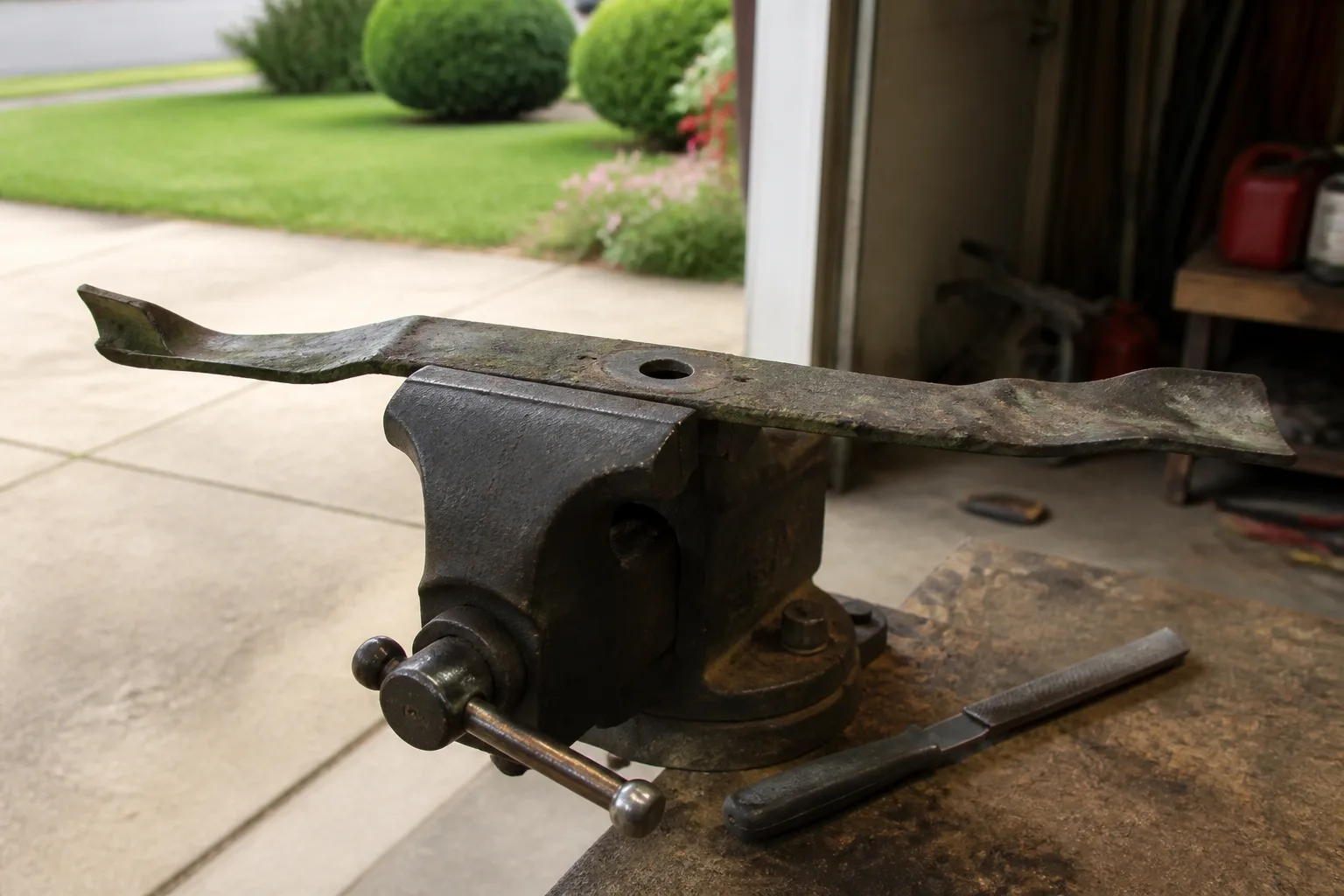
Keep the blade sharp. A dull blade tears the leaves instead of slicing them cleanly, leaving ragged tips that can look brown and increase stress. Sharpness does not compensate for a deck set too low, but a clean cut helps the grass recover. Inspect mower height and blade condition at the start of the season and again if the lawn suddenly looks shredded after a pass. (Illinois Extension’s mowing guide)
Finally, treat uneven areas as their own mowing problem. Slow before turns, use a slightly higher cut on severe slopes, and avoid letting the wheels drop into ruts. If a raised root or mound repeatedly gets scalped, adjusting the terrain is a lasting fix; lowering the blade to make the flat areas look shorter only spreads the damage. Leave ordinary short clippings where they disperse into the turf, but rake or redistribute heavy clumps after an overgrown cut so they do not smother the grass below.
Conclusion
Cutting grass too short is a damaging habit because it removes the leaf area and canopy the turf needs to grow dense roots, shade soil, and recover from stress. A single low mow is usually fixable, but repeated close cuts and true scalping can thin the lawn and invite other problems.
Identify the grass, pick a suitable local height, measure the actual cut, and mow before more than one-third of the blade would come off. If the lawn is already pale or patchy, raise the mower, wait for new growth, and diagnose bare spots before reaching for fertilizer, extra water, or seed. A healthy cut is the one your grass can recover from—not the shortest your mower can make.



