Fertilizer for Herbs: How and When to Feed Them Safely
Learn when fertilizer for herbs is useful, what to use, and how often to feed garden beds, containers, indoor pots, and hydroponic herbs without overdoing it.
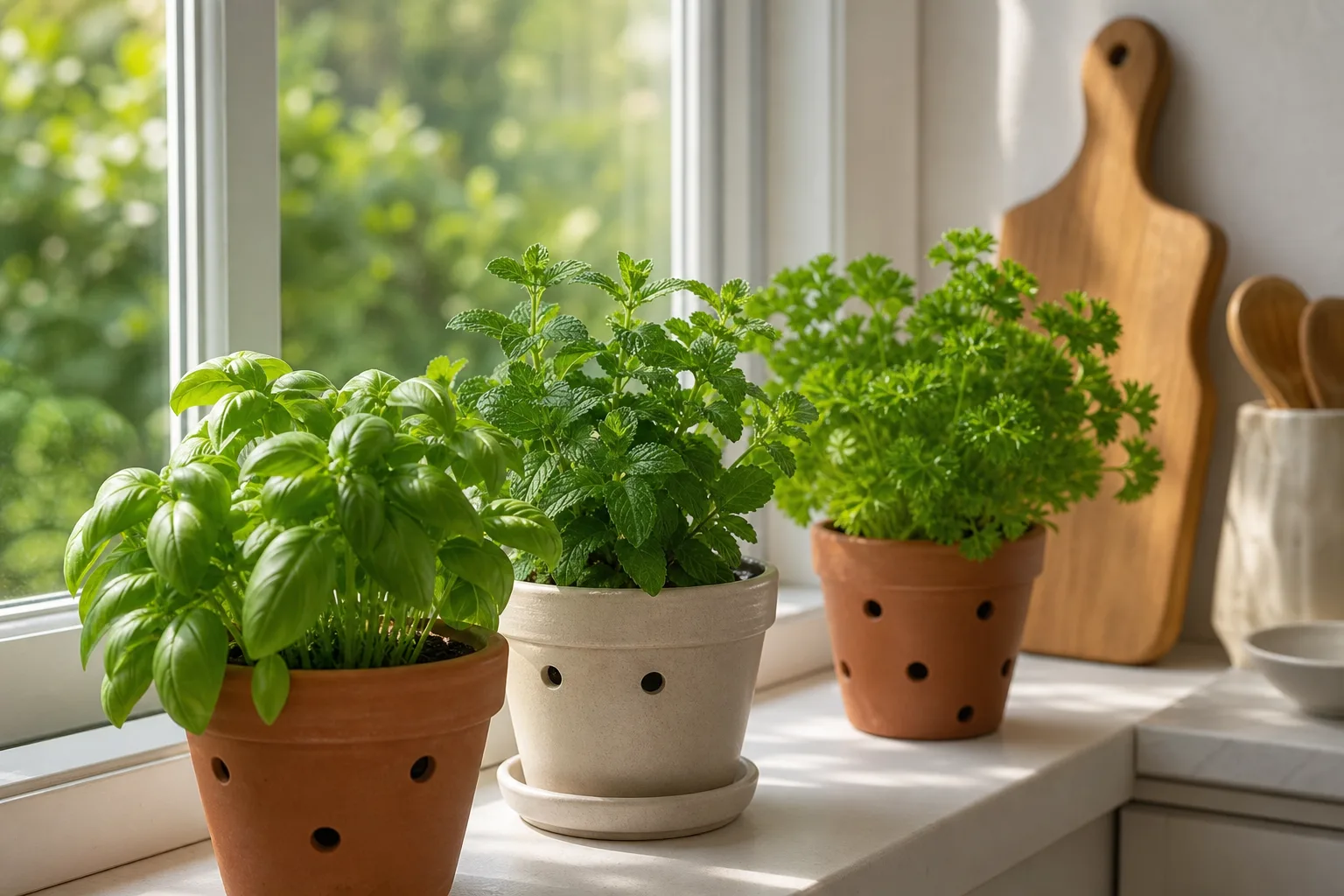
Most culinary herbs need less fertilizer than tomatoes or other heavy-producing vegetables, but “less” does not mean “never.” An established rosemary bush in a sunny garden bed may grow well with no routine feeding, while basil harvested repeatedly from a small pot can use the nutrients in that potting mix faster.
The useful rule is to match fertilizer to the plant’s growth and growing setup. Check whether the plant is actively growing, whether its soil or potting mix already contains nutrients, and whether another issue—especially low light, soggy roots, or drought—better explains the symptoms before you feed.
The quick rule: feed active growth, not the calendar
Fertilizer supplies mineral nutrients, including nitrogen (N), phosphorus (P), and potassium (K), that plants use to build leaves, roots, stems, and flowers. The package’s three N-P-K numbers show the proportions of nitrogen, phosphate, and potash in the product; they do not tell you how much a particular herb needs. For a home herb garden, a complete all-purpose fertilizer used according to its label is usually enough when feeding is warranted.
In a garden bed, roots can explore a much larger volume of soil than roots in a pot, and the soil may already provide what the herb needs. In a container, frequent watering can carry nutrients out through the drainage holes, so potted herbs generally need more regular replacement. Either way, fertilize when the plant is established and growing—not merely because a month has passed.
A new potting mix may include starter fertilizer or controlled-release granules. Read the bag before adding anything: some mixes are formulated to feed for weeks or months. For containers, University of Minnesota Extension’s container-feeding guidance suggests beginning routine applications about two to six weeks after planting, depending on the mix, watering, and growth rate; follow the mix’s stated feeding period when it is available.
Which herbs need more fertilizer?
Herbs vary more by growth habit, harvest, and growing conditions than by a simple annual-versus-perennial rule. A culinary herb repeatedly cut for leaves may benefit from a modest nutrient supply as it replaces growth, but a slow-growing plant adapted to lean, fast-draining soil can be damaged or become lanky when pushed with frequent high-nitrogen fertilizer.
The University of Minnesota Extension groups many common herbs by botanical family and growing traits: basil, rosemary, thyme, oregano, and sage are in the mint family, while parsley, dill, cilantro, and fennel are in the carrot family. That family grouping does not prescribe fertilizer, but it is a reminder that “herb” covers plants with different root habits, preferred moisture, and harvest goals. Choose a feed plan for the herb and pot or bed in front of you.
Lean feeders: rosemary, thyme, sage, oregano, and lavender
Rosemary, thyme, sage, oregano, and lavender usually do not need frequent feeding when they grow in sunny, well-drained soil. Many come from Mediterranean climates and tolerate relatively lean conditions once established. A bed with decent soil and a light spring layer of finished compost may be all they need; adding fertilizer every few weeks can push soft, rapid growth that needs more pruning and may not match the plant’s natural compact habit.
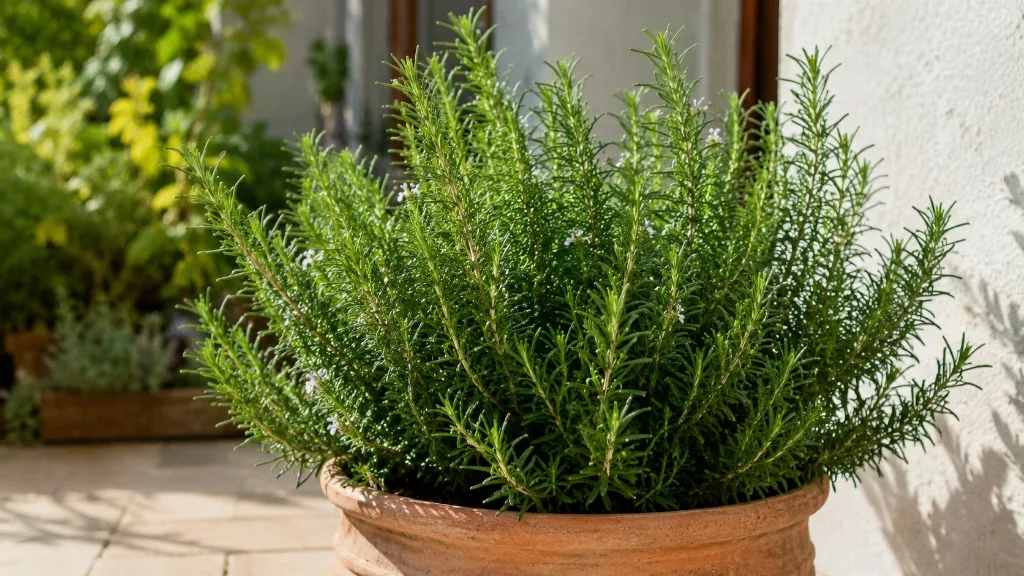
Do not read slow growth in rosemary as proof that it is hungry. First check light and drainage: a shaded plant can become sparse, and a rosemary plant that stays wet can decline even if the soil has abundant nutrients. For container rosemary and thyme, RHS guidance for a Mediterranean herb pot starts a general-purpose liquid feed after a couple of months, then every two or three weeks; that is a container example, not a requirement for an established outdoor plant. The Old Farmer’s Almanac thyme guide likewise describes early-spring compost as optional and says little soil amendment is necessary.
Faster leafy growers: basil, parsley, mint, chives, cilantro, and dill
Basil, parsley, mint, chives, cilantro, and dill can produce a lot of tender leaves during a growing season. If you pick them often, keep them in a small pot, or grow them in a mix with little stored nutrition, a light feed can support continued growth. A vigorous mint or basil plant in rich outdoor soil, however, may already have more than enough; feeding is not a substitute for pruning or good light.
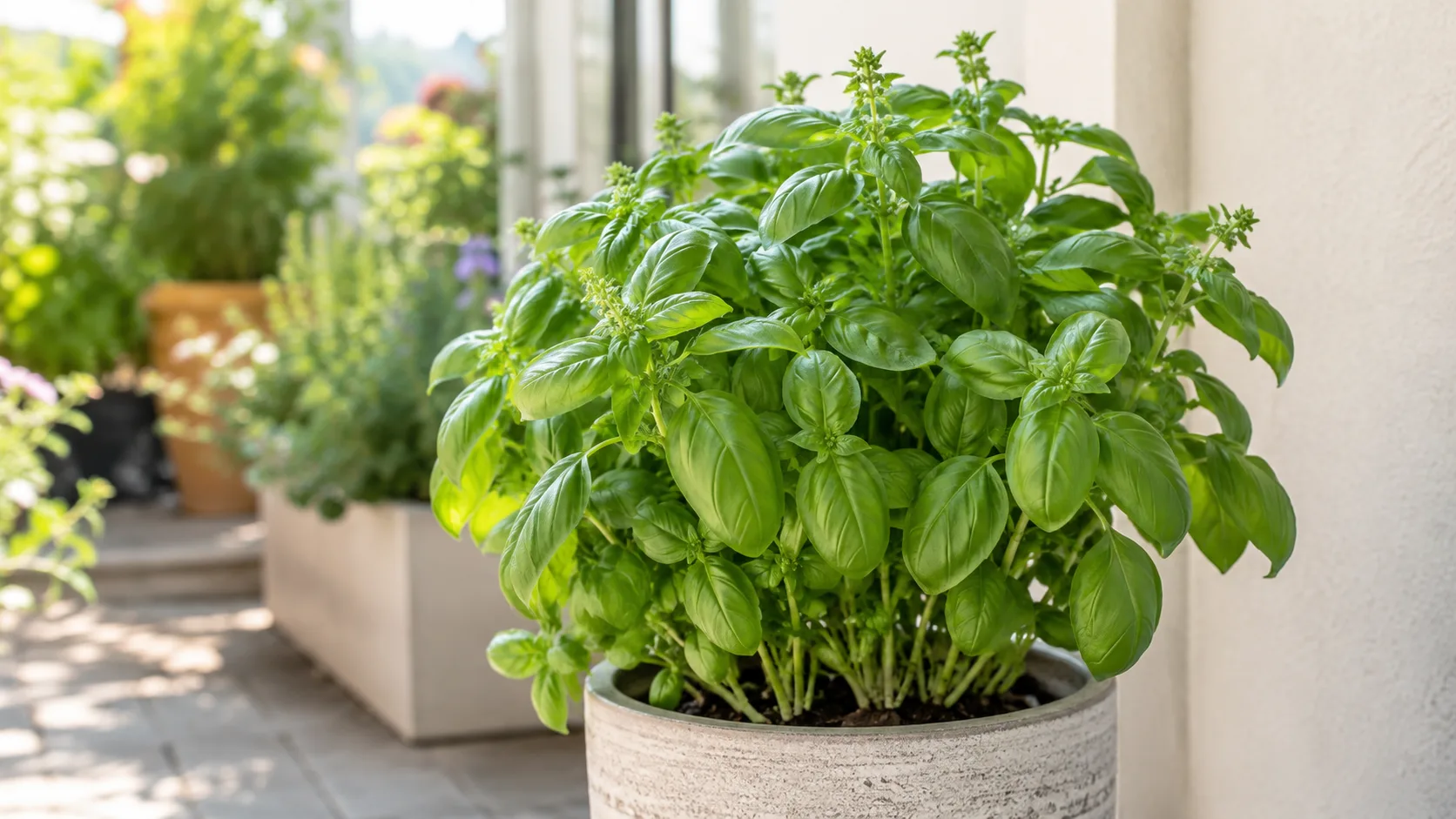
Leafy growth is the goal for many cooks, but more fertilizer is not automatically better. If a plant is pale, small, or growing slowly, compare its light, watering, root room, and growing medium before increasing nitrogen. For herbs such as chervil, fennel, lovage, and summer savory, Oregon State’s herb-growing guide notes that moderate fertilizer can be useful; the same guide recommends little or no fertilizer for many other garden herbs.
What fertilizer should you use for herbs?
For most soil-grown and potted culinary herbs, look for a complete fertilizer that includes N, P, and K, then use the rate and timing on its label. You do not need a product marketed specifically for herbs. An all-purpose fertilizer is a sensible starting choice for containers, and nitrogen-forward products such as some fish fertilizers should be used cautiously with slow-growing, aromatic herbs.
“Organic” and “synthetic” describe how a product is made, not whether it is impossible to overapply. Compost and many organic granular feeds release nutrients gradually, while soluble fertilizers make nutrients available quickly and allow you to adjust the dose from one watering to the next. Use a product intended for edible crops, do not exceed its label rate, and avoid stacking a liquid feed on top of a potting mix that is already supplying fertilizer.
Compost and fertilizer for garden beds
Finished compost can improve soil structure and add a modest, variable supply of nutrients. Mix it into a new bed before planting or spread a thin layer around established plants without burying crowns or stems. Compost is a useful soil amendment, but it is not a predictable substitute for a specific nutrient recommendation if a soil test finds a deficiency.
For established herbs in a reasonably fertile bed, skip routine fertilizer unless a soil test or the plant’s consistent growth pattern points to a need. The Penn State Extension soil-testing guide explains that a soil test measures available nutrients and pH, then provides lime and fertilizer recommendations for the crop. This is more reliable than guessing from leaf color or applying a high-phosphorus blend “just in case.”
Advice about fertility and flavor can sound contradictory. The University of Minnesota Extension and the Oregon State University Extension herb guide warn that overly fertile soil can produce lush foliage with less flavor or essential-oil intensity. Illinois Extension, by contrast, says adequate fertility can support abundant growth and flavor oils. The practical distinction is between enough nutrition to sustain useful growth and excess fertilizer that forces growth beyond what the plant can use. Aim for healthy, steady growth rather than maximum leaf size.
Liquid and slow-release feeds for pots
Both soluble liquid fertilizer and controlled-release granules can work in containers. A liquid feed dissolves in water and gives you control over the dose each time you apply it; a slow-release product delivers nutrients over a longer period as watering and temperature release them. The Illinois Extension container-fertilizing guide notes that some container products feed for three to four months, with the actual duration depending on moisture and temperature.
Choose one feeding plan and track when it started. If you mix controlled-release fertilizer into potting media and also use liquid plant food each week, you may be providing two overlapping doses without realizing it. When a pot’s instructions are missing or uncertain, begin with a dilute liquid feed only after the plant is established and actively growing; do not use full-strength fertilizer as a rescue treatment for a stressed herb.
When and how often to fertilize herbs
Use the table as a conservative starting point, then adjust for the product label, climate, plant growth, and any starter fertilizer already in the soil or mix. “Active growth” means the plant is making new leaves or stems; it does not mean a particular month. In cold-winter climates that may be spring through summer outdoors, while a brightly lit indoor herb can grow at other times of year.
| Growing setup | Practical starting schedule | Skip or delay fertilizer when |
|---|---|---|
| Established herb in a garden bed | No routine feeding if soil is fertile; use a soil-test recommendation or address clearly poor soil before planting | The plant is dormant, waterlogged, or showing symptoms that could come from light or root trouble |
| New outdoor bed | Add finished compost if needed; use bagged fertilizer only at a rate suited to the soil-test recommendation and crop label | You do not know what is already in the soil and have no sign of a nutrient issue |
| Outdoor container | Once established, a half-strength liquid feed every three to four weeks during strong growth is a useful baseline if the mix has no ongoing feed | The potting mix contains starter or controlled-release fertilizer, or the herb is slowing down |
| Indoor container | Half-strength liquid feed about every six weeks while actively growing in good light | Winter growth is slow, light is weak, or the plant is dormant |
| Hydroponic system | Use a complete hydroponic nutrient formula at the system’s crop rate; monitor solution pH and EC as directed | You are using an ordinary soil fertilizer or have not checked whether the system’s existing solution needs topping up or replacement |
These container intervals are based on University of Minnesota Extension’s herb guidance, which suggests half-strength liquid feed every three to four weeks for outdoor containers and every six weeks indoors. Other reliable guides use different intervals: Iowa State University Extension recommends periodic light feeding without a fixed calendar, while the RHS gives a two-to-three-week interval for its specific Mediterranean container planting. Use the shorter interval only when the plant is growing strongly, the product label supports it, and the mix is not already fertilized.
Outdoor garden beds
For established herbs in open soil, start by learning what the bed contains rather than applying a generic “herb fertilizer” dose. A soil test is especially useful when you are starting a new bed, repeatedly growing crops in the same space, or seeing weak growth despite adequate sun and watering. Follow its crop-specific recommendations; a test may call for no phosphorus or potassium at all if levels are already sufficient.
Before spring growth begins, gardeners often add compost to improve the bed, but compost should not be piled against stems or crowns. If an annual leafy herb has been harvested heavily and soil fertility is low, a measured application of complete fertilizer may help. Apply it at the label rate, water it in as directed, and avoid spreading granules onto leaves that you plan to eat.
Outdoor herb containers
Containers lose nutrients faster because water drains through a small volume of potting mix. A basil plant in a hot, windy patio pot may need more frequent watering and nutrient replacement than basil planted in a bed, but more watering alone does not mean more fertilizer is always needed. If the mix includes slow-release fertilizer, wait until its advertised feeding period has passed or until the manufacturer says to begin supplemental feeding.
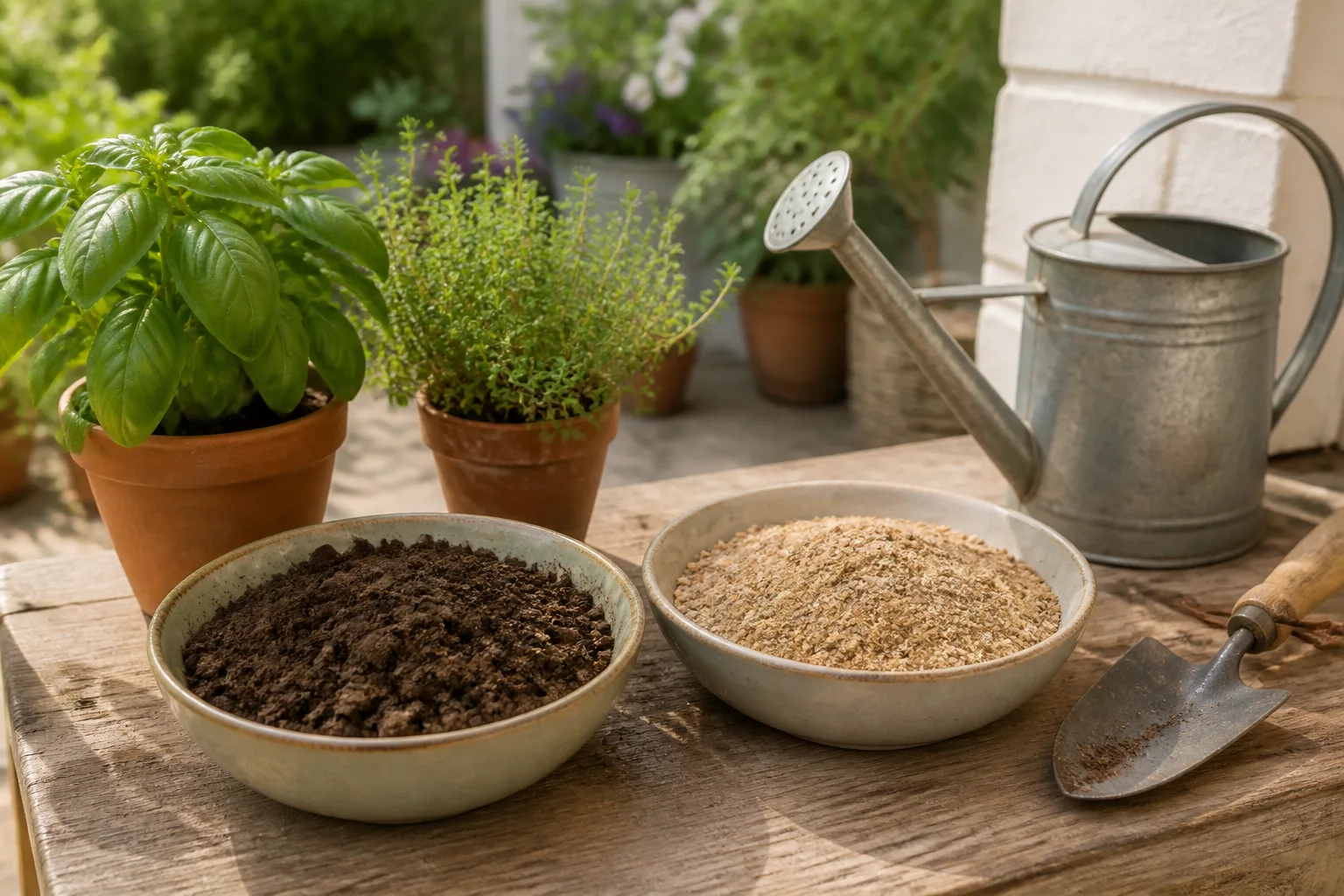
A liquid fertilizer gives you the most control when you are unsure about the plant’s appetite. Start at half the label concentration, apply to already-moist mix, and watch the next several weeks of growth before repeating. If new growth is healthy and the plant is producing leaves, keep the same schedule; if it grows excessively soft and leggy, back off and check whether it also needs stronger light or more frequent harvesting.
Indoor herb pots
Indoor herbs often grow more slowly than patio herbs because window light is weaker and day length changes through the year. Fertilizer cannot compensate for inadequate light: adding extra feed to a dim windowsill can encourage thin, stretched stems rather than a useful harvest. A grow light and active new growth matter more than a weekly fertilizer routine.
During winter, reduce or stop feeding herbs that have stopped growing. If you grow basil, parsley, or chives under a grow light and they continue to put out fresh leaves, use a dilute complete liquid feed about every four to six weeks, then adjust only if growth and watering suggest the plant is using nutrients faster. Water the pot thoroughly when needed and allow it to drain; do not let the container stand in runoff.
Hydroponic herbs
Herbs in hydroponics do need regular nutrients because the roots do not draw from a reservoir of garden soil or potting mix. Use a complete hydroponic nutrient product made for edible crops, prepared for the system and crop according to its instructions. Do not substitute an arbitrary dose of houseplant fertilizer: hydroponic formulas and nutrient concentrations are designed for delivery through water.
In a recirculating or reservoir system, pH and electrical conductivity (EC) help you monitor whether nutrients remain available and whether total dissolved salts are becoming too concentrated. The University of Missouri Extension guide to hydroponic nutrient solutions explains that water quality and nutrient-solution management affect uptake; Oklahoma State University Extension describes EC as an indicator of salt concentration and pH as a factor in nutrient availability. Follow your system’s basil or other crop targets rather than borrowing a soil-garden schedule.
How to apply fertilizer without damaging herb roots
A careful application is more useful than a stronger one. Before feeding, check the potting-mix label or your soil-test report, choose a complete product suitable for edible crops, and measure the amount instead of estimating by eye. If the label describes a full dose, a half-strength solution is a reasonable conservative first application for a potted herb that is actively growing.
Apply liquid fertilizer to moist growing media, not to bone-dry roots. If the pot is very dry, water it lightly first and wait until the mix is evenly moist; then use the prepared fertilizer solution at the normal watering. For granular feeds, keep prills away from stems and follow package directions for the container diameter or garden area. Water afterward if the label requires it.
Keep fertilizer off edible leaves and stems where possible, and never mix stronger than the label says. If a product label gives a preharvest interval or other edible-crop precautions, follow them; wash harvested herbs as you normally would before cooking. Write down the application date, product, and amount so you do not accidentally feed twice with products that overlap.
Yellow or weak herbs: check the cause before feeding
Yellow leaves can result from a nutrient shortage, but color alone does not identify the problem. Overwatering, poor drainage, drought, compacted or depleted potting mix, root crowding, pests, and insufficient light can all cause pale leaves or stalled growth. In a pot, first check moisture below the surface, drainage holes, the plant’s access to light, and how long it has been in the same mix.
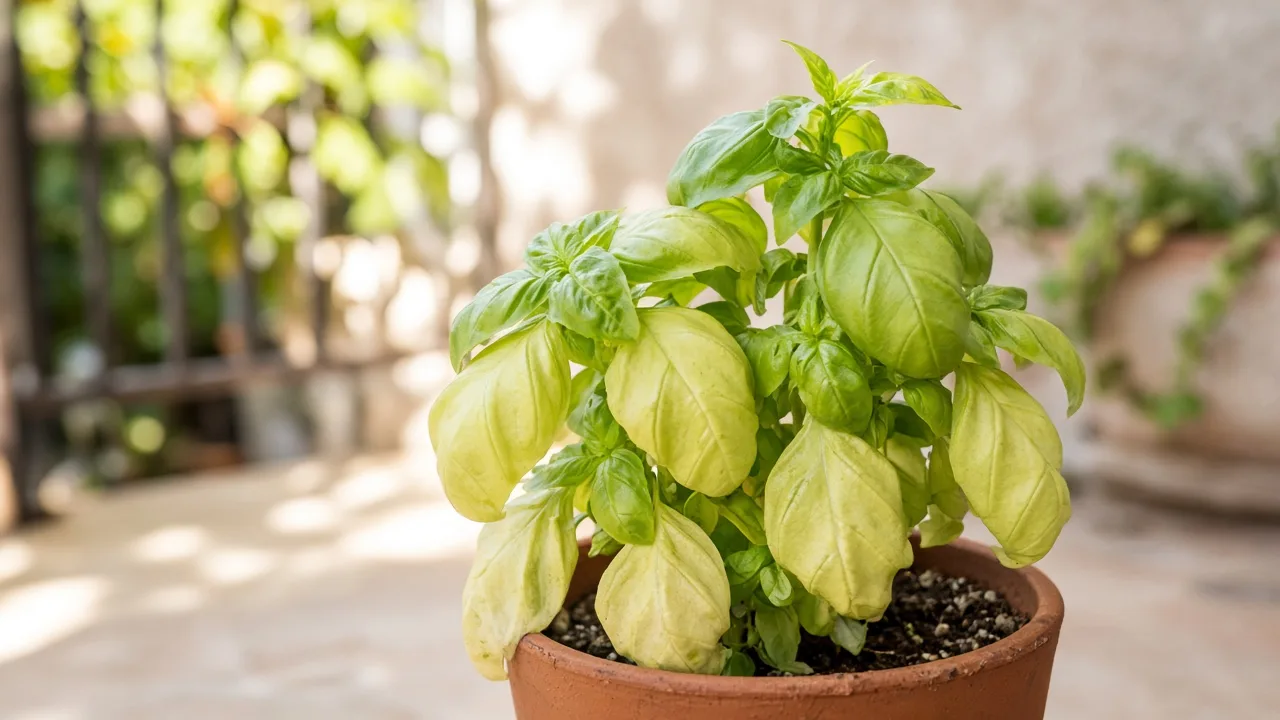
Nitrogen deficiency often begins on older leaves because nitrogen can move from older tissue to new growth, but a yellowing pattern is not a reliable diagnosis by itself. A small herb with dark green leaves and little new growth is not necessarily underfed; it may be cold, root-bound, or short on light. In a garden bed, use a soil test before adding a specific nutrient, especially phosphorus or potassium.
If an indoor basil plant is pale and leggy, improve its light before increasing fertilizer. If a container herb has been watered frequently and the soil stays soggy, improve drainage and let the mix approach its normal watering point; extra fertilizer will not fix damaged roots. Feed only after you find evidence that nutrition is likely limiting growth, or after you have corrected the more obvious care problem and the plant resumes active growth.
When a potted herb develops brown leaf margins, a crust on the mix, wilting despite moist soil, or decline soon after feeding, suspect excess soluble salts as one possibility. Stop fertilizer and check whether the pot drains freely. If the plant is otherwise healthy and the mix is open and well drained, plain water passed through the pot can leach accumulated salts; discard runoff. Do not repeatedly flush a waterlogged or rotting pot, and remember that salt injury can look like drought or nutrient deficiency.
Fertilizer mistakes that make herb care harder
The first mistake is fertilizing by calendar alone. A garden rosemary that is dormant in winter does not need the same feeding as a basil plant making leaves under a grow light. Use seasons as a reminder to check the plant, not as an automatic instruction to pour fertilizer.
The second is using a fertilizer high in nitrogen for every herb. Nitrogen can support leaf growth, but an excess may produce long, soft stems, increase pruning needs, and make a woody herb less compact. If a label has a high first number, that product is likely designed to supply more nitrogen relative to phosphorus and potassium; choose it only when that kind of growth suits the herb and stage.
Another common mistake is treating organic products as impossible to overuse, or assuming fish emulsion is a universal herb tonic. Organic feeds can still contain concentrated nutrients, and some fish products are nitrogen-rich. Read the N-P-K label and use the same restraint you would use with any fertilizer.
Do not automatically add Epsom salts, bone meal, eggshells, coffee grounds, or multiple “natural” amendments when a plant looks off. They supply particular substances, not a guaranteed balanced diet, and a garden bed can already have enough phosphorus, magnesium, or calcium. Use soil-test findings for beds and the potting mix’s instructions for containers; do not add a nutrient just because it is commonly recommended online.
Finally, do not feed a drought-stressed, waterlogged, newly transplanted, or dormant herb as a quick fix. Fertilizer salts make it harder for damaged roots to take up water, and fresh transplants may need time to establish. Correct the growing condition first, then consider a light feed only after the plant resumes steady new growth.
Conclusion: feed lightly, then watch the plant
Most herbs do not need a strong, frequent fertilizer routine. In garden soil, start with the soil and feed only when there is a reason; in pots, account for starter fertilizer and replace nutrients modestly as water and active growth use them. Hydroponic herbs need their own complete nutrient solution and monitoring rather than garden-bed fertilizer advice.
If you remember one sequence, make it this: identify the herb and setup, check light and root-zone moisture, read the soil or potting-mix information, and feed at a measured label rate only while the plant is actively growing. A plant that responds with healthy new growth has probably had enough; more fertilizer is not a shortcut to better flavor or a larger harvest.



